

Part III – Stark and New York
Emerging Revolutionary War welcomes back guest historian and park ranger Eric Olsen. Ranger Olsen works for the National Park Service at Morristown National Historical Park. Click here to learn more about the park.
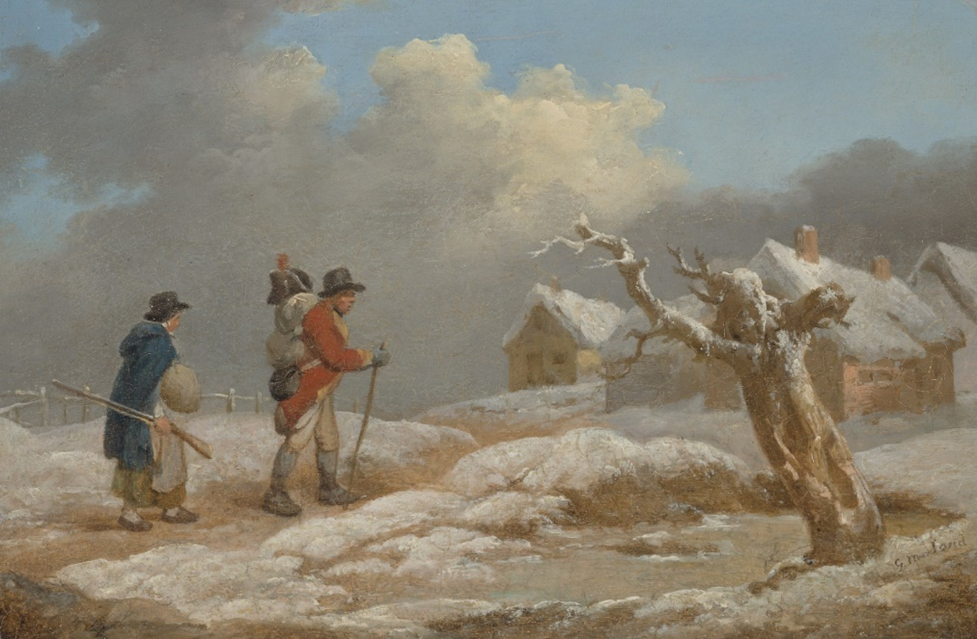
What do poor health, a dead mother, a need to shop for new clothes, a pregnant wife, army business, a wife’s mental illness, family financial problems, and a desire to see family and old friends all have in common?
They are all reasons officers gave for asking for furloughs during the winter encampment of 1779-1780.
While the regulations and the various orders issued give us a general idea of the problems related to furloughs, we can get a different viewpoint by looking closer at the different Divisions, Brigades, and individuals who made up the army. The individual soldiers’ correspondence can also give us a more personal take on the furlough story. This paper will be far from comprehensive. It will just cover the furloughs that turn up in the surviving documentation. To make it easier to follow I have grouped the numbers and correspondence regarding furloughs by divisions and brigades.
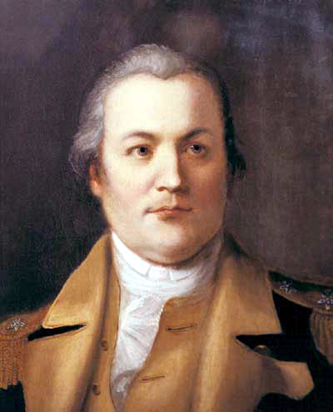
Major General William Alexander [Lord Stirling]
Lord Stirling had commanded the Virginia Division/Line but when they marched south to join the Southern Army he chose to remain with the Main Army and was given command of a Division made up of the New Jersey Brigade and Hands Brigade.
Lord Stirling made his headquarters at his own home in nearby Basking Ridge. He was the overall commander of the January 1780 raid on Staten Island Raid. After the raid his health weakened, and he returned to his home in Basking Ridge. While he was officially on duty, being sick at home was more like a leave of absence or a furlough.
A poor report for the army early during the encampment caused Washington to send out letters to all his brigade commanders demanding to know the reasons why. With so many officers away on furlough, many of the responses came from lower ranking officers in “acting” positions. Washington was particularly annoyed with Lord Stirling. Washington, ever the gentlemen, sent a “private letter” to Lord Stirling in which he pointed out that, “That orders, unless they are followed by close attention to the performance of them, are of little avail. …This my Lord is a free and friendly representation of facts.” It was his polite way of telling Lord Stirling that he could not just stay at home and issue orders. He needed to be in camp following up on his orders.
Lord Stirling, writing from his home in Basking Ridge, replied complaining about his health, “…No one can be more thoroughly convinced of the necessity of the principal officers of the Army attending personally to the discipline and police of it had it been possible for me to have performed this service I should have been with the Division I have the honor to command as often as the weather permitted, but I have not for these two months been able to be on horseback with so firm a seat as was necessary in extreme bad roads; besides getting my feet wet which was scarce avoidable I was sure would have been attended with very serious consequences to me…
as far as the situation of my health would admit, the warm weather coming on I hope will soon enable me to be abroad and your Excellency may be assured that I shall devote as much of my time as I can in frequent personal inspections and reviews of the different regiments of this division and close attention to the whole economics of the camp.”
Hand’s Brigade
Hand’s Brigade was commanded by Brigadier General Edward Hand. The brigade included the First and Second Canadian Regiments and the Fourth and Eleventh Pennsylvania Regiments. In December, Hand’s Brigade had 985 men present and fit for duty. The monthly number of furloughs from the brigade’s rank and file were.
Hand’s Brigade Rank & File on Furlough
Nov. 1779 – 11
Dec. 1780 – 21
Jan. 1780 – 41
Feb. 1780 – 33
Mar. 1780 – 26
Apr. 1780 – 6
May 1780 – 6
Jun. 1780 – 5
Note – While it would make sense that the Pennsylvanians in the brigade could take furloughs to nearby Pennsylvania, surprisingly some soldiers from the Canadian regiments also got furloughs that winter. It is unlikely they were returning to British occupied Canada. However, some of the Canadian soldiers had families that lived in a refugee camp at Fishkill, New York. Additionally, the two Canadian regiments were allowed to recruit in any state. Consequently, some of the soldiers on furlough of the Canadian regiments were probably men from New York and New Jersey.
Brigadier General Edward Hand
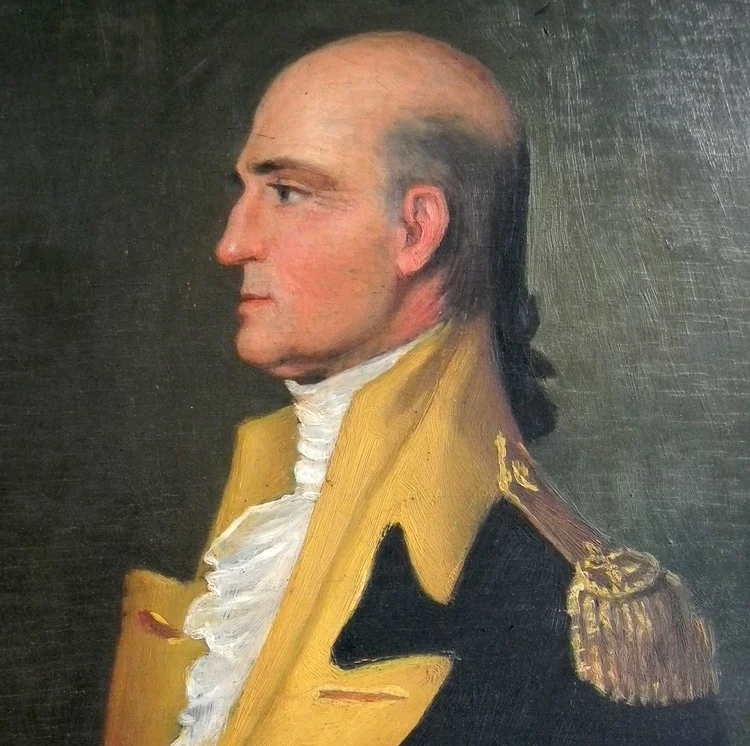
In December General Hand wanted a furlough to return home to his wife who was expecting a baby. He wrote to Washington on December 17, 1780, “I am perfectly satisfied that your Excellency’s reasons for desiring the continuance of the General Officers in camp for the present are good. Yet as my case is somewhat singular and as leave of absence at any other time than the present can’t answer the purpose for which I wished to obtain it…My wife who is very dear to me is in daily expectation of being brought to bed & has not been able to make the necessary provision for such an event.”
Apparently General Hand got his furlough because on February 6, 1780, Washington wrote to Hand asking him to come back to camp. Washington wrote, “The number of Genl. Officers in Camp is so Small, and of that number, several very anxious for leave to be absent that I am, exceedingly distressed, and put to it to conduct the ordinary business of the Army, with the smallest degree of propriety. I must therefore request, that upon receipt of this Letter you will repair to Camp.” General Hand was back in camp by early March 1780.
Lieutenant Erkuries Beatty, Regimental Paymaster, 4th Pennsylvania Regiment
Lt. Beatty, like most officers, wanted to go home on a furlough during the winter of 1779-1780. He wrote to his brother on December 22, 1779, “I intend going home in about two weeks or three. I would go sooner only as I am Pay Master to the Regt. I have the Cloathing to give out and money to pay the men which will take me that time.”
Unfortunately for Beatty his paymaster duties prevented his departure. On Christmas day he wrote, “I am very busy in delivering the mens cloathing in about two weeks I’ll set off for home I hope.”
But on January 25, 1780, Beatty was still in camp complaining that he was “obliged to answer it from Camp, which is very Disagreeable to me, but how can I help it, – I must tell that I have lately involved myself in the greatest trouble believe I was ever in, which is this, after we came off the expedition [Sullivan Campaign] there was no Pay Master to the Regt. The officers thought proper to appoint me, when we join’d the Army I found I had to do the Duty of Regiment Clothier to, which is the cause of all my trouble.”
But he did get a small respite from camp adding, “Yesterday I rode out as far as our Brothers quarters and spent the day with him & his wife who came up from Princeton to see him, which is the only agreeable Day I have had this 4 Weeks…”
Quite frustrated, he was still in camp on March 13th when he wrote, “I don’t doubt but you will be somewhat surprised when you see me write from camp and no News from Penna but I can soon give you a very good Reason for it, and that greatly to my mortification, in a very few words, that is, I could not get home, I have made frequent applications to the Genl. But as oftentimes Refused, till I was quite tired and mad.”
However, he did get another break noting, “I thought I might as well submit to my hard fortune and endeavour to spend my time in camp as agreeable as I could…I got leave of absence for three days to go see Aunt Mills and Uncle Read who lives about 12 miles from here it was excessive bad riding and it was near night when I got at Aunt Mills…set off a Slaying with a number more young people and had a pretty clever kick-up…spent the day very agreeably romping with the girls…the whole bunch of us went out Slaying…my time being expired
I had return to Camp the next day, after a very agreeable J’ant [jaunt].”
New Jersey Brigade
The New Jersey Brigade was commanded by Brigadier General William Maxwell. The brigade included the 1st, 2nd, 3rd Regiments and Spencer’s Regiment. In December the New Jersey Brigade had 1,122 men present and fit for duty. The monthly number of furloughs from the brigade’s rank and file were.
N.J. Brigade Rank & File on Furlough
Nov. 1779 – 39 [
Dec. 1780 – 34
Jan. 1780 – 118
Feb. 1780 – 80
Mar. 1780 – 61
Apr. 1780 – 28
May 1780 – 18
Jun. 1780 – 13
Note: Since NJ troops were camped in Morristown, it was easier for these soldiers to get home.
Colonel Israel Shreve of the Second New Jersey Regiment was looking forward to his furlough so he could visit his family in Burlington County, New Jersey. He wrote to his wife Polly on November 6, 1779,“Last night Our Brigade arrived and encamped at this place [Scotch Plains] after eleven days hard marching from Easton a long round about road, great part very rough and stoney…Am now making ready to come home but am not certain what day. Major Ross and myself will let out perhaps Tuesday if no alarm happens…I hope to stay several weeks…”
While the records are sketchy it appears that Shreve did return to his wife in Burlington County because in January 1780, Col. Shreve was assigned to collect that county’s quota of supplies for the army in Morristown. When he returned to camp, from March through May Shreve served on the boards of various court-martials. He wrote to his wife on May 3, 1780, “I have been President of a General Court Martial of the Line about two weeks and how much longer before I am released I know not. If it is soon and the General Returns, I am in hopes of getting a few days to come home.” I don’t think he got a second furlough.


Pingback: Morristown’s Individual Furlough Stories – Maryland Line – Emerging Revolutionary War Era