

Part V – Maryland Line
Emerging Revolutionary War welcomes back guest historian and park ranger Eric Olsen. Ranger Olsen works for the National Park Service at Morristown National Historical Park. Click here to learn more about the park.
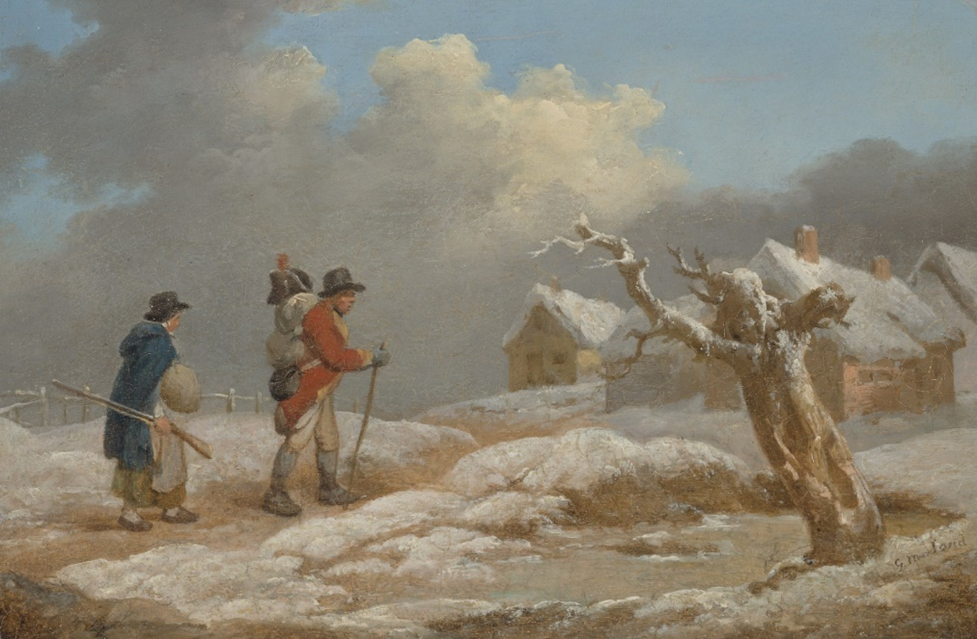
What do poor health, a dead mother, a need to shop for new clothes, a pregnant wife, army business, a wife’s mental illness, family financial problems, and a desire to see family and old friends all have in common?
They are all reasons officers gave for asking for furloughs during the winter encampment of 1779-1780.
While the regulations and the various orders issued give us a general idea of the problems related to furloughs, we can get a different viewpoint by looking closer at the different Divisions, Brigades, and individuals who made up the army. The individual soldiers’ correspondence can also give us a more personal take on the furlough story. This paper will be far from comprehensive. It will just cover the furloughs that turn up in the surviving documentation. To make it easier to follow I have grouped the numbers and correspondence regarding furloughs by divisions and brigades.
Artillery Brigade
The Artillery Brigade was commanded by Brigadier General Henry Knox. The brigade included the 1st, 2nd, 3rd and 4th artillery regiments. In December the Artillery Brigade had 1,017 men present and fit for duty. The monthly number of furloughs from the brigade’s rank and file were.
Artillery Brigade Rank & File on Furlough
Nov. 1779 – 1
Dec. 1780 – 54
Jan. 1780 – 94
Feb. 1780 – 97
Mar. 1780 – 81
Apr. 1780 – 25
May 1780 – 16
Jun. 1780 – 5
Sorry, I haven’t run across any personal stories of furloughs for the Artillery Brigade
The Adjutant General
The Adjutant General was one of the highest staff positions in the Continental Army. The Adjutant General distributed Washington’s orders to the army on a daily basis, plus he added more mundane duties to the orders such as what units were assigned various guard duties.
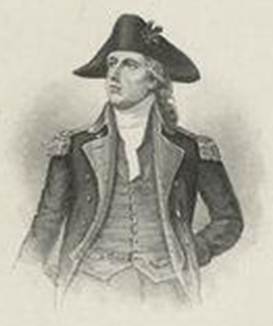
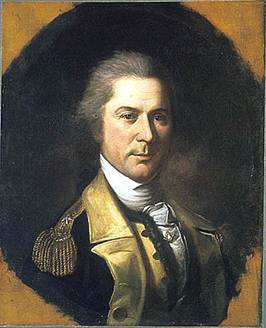
Alexander Scammell, a New Hampshire officer, [far left] served as Washington’s Adjutant General. He reported to General Washington daily to receive the General Orders for the Army. Then he returned to the Adjutant General’s office where he added in more mundane orders about guard and fatigue duties. Brigade Majors and Generals’ Aides then reported to the Adjutant General to receive the orders and distribute them to their portions of the army. It was a job that never stopped.
But Scammell got a break from his duties in the General Orders on Christmas Day which stated, “The Adjutant General [Scammell] having leave of absence, Colonel Williams [Col. Otho Holland Williams, 6th MD, above right] is appointed to perform the duties of the office until his return: He is to be respected and obeyed accordingly.
The Commander in Chief takes occasion to thank Colonel Scammell for his indefatigable and useful services hitherto.”
Everyone prefers their own system, and Col. Williams, the acting Adjutant General made some changes which were mentioned in the General Orders on March 10, 1780. “As a multiplicity of business in the Adjutant General’s office renders it extremely difficult for him to attend at the Orderly-Office [in camp] every day, the acting brigade Major of the day therefore after the duty of the grand parade is over, will attend at the Adjutant General’s Office in Morristown to take the general orders which he is to communicate at the place appointed to the other Brigade Majors and officers intitled to receive them; This duty to be performed daily ’till further orders, except on saturday when the Adjutant General will attend in person.”
But not everyone likes change, including the Brigade Majors. They preferred receiving the orders in the Orderly Office at the Grand Parade in camp. But now Williams, instead of going to camp, was requiring one Brigade Major to travel to the Adjutant General’s office in Morristown to receive the orders. Then he had to return to camp to distribute them at the Orderly office in place of Williams.
Major Nicholas Fish of the New York Brigade complained about it in a letter to Headquarters and Washington’s aide, Richard Kidder Meade replied on March 23rd., “I recd yr favr of Yesterday I find as I supposed, that necessity was the sole cause of the additional & unusual trouble given the Brigade Majors—The orderly office is undoubtedly the proper place for Issuing Genl Orders & that to be done by the Adjt Genl—but this from the immensity of business on his hands, & having only one assistant rendered it impossible for him or that assistant to attend at all times, & in consequence of it, the present mode of distributing the Orders was thought of. It is to be wished under these circumstances that yourself and the other Gentn in whose behalf you made the representation would cheerfully continue yr aid to Col. Williams until the arrival of Col. Scammell who is dayly expected with both Capt. Gilmer & Capt. Dexter, when the business of his Office will go on in its regular channel”
Undoubtedly, the Brigade Major were happy when the General Orders of Aprill 11, 1780 announced Scammell’s return after a furlough of three and a half months. The orders said,
“Colonel Scammell having returned will resume the duties of his Office.
The Commander in Chief requests Colonel Williams to accept his Thanks for the attention assiduity and propriety with which he has conducted the office in the absence of Colonel Scammell.”
 Emerging Revolutionary War Era
Eric,
A very interesting series of articles. Thank you very much. Do you know where the adjutant general’s office was in Morristown?
Bill Welsch
LikeLike
Hey Bill,
We sent your comment to Eric Olsen and this was his reply. “Unfortunately, we do not know the location of the adjutant general’s office in Morristown.”
LikeLike
Pingback: Morristown’s Individual Furlough Stories – Who Didn’t Go on Furlough? – Emerging Revolutionary War Era