

Situated one block from where independence was declared, the structure was home to two presidents as the building served as the third residence of United States presidents. Built in 1767 by Mary Masters, the home was familiar with tenants of great importance. During the American Revolutionary War, British general Sir William Howe during the British occupation of the city. Months later Benedict Arnold, then a general in the Continental Army, moved in as he served as the military governor of Philadelphia.
After the war and a disastrous house fire, Robert Morris, the great financier, purchased the property and rehabilitated the structure. When the United States capital moved to Philadelphia, Morris offered the residence to President George Washington, and the Morris family moved next door to another property. Washington insisted that Morris receive rent for the use of one of his dwellings.
Months later, in November 1790, more people arrived to inhabit the house. Though unlike those previously mentioned, these souls did not come willingly. Washington brought eight enslaved African Americans from Mount Vernon to serve the needs of the first family, their guests, and maintain the house. One of the enslaved, Ona Judge, took the opportunity of being in a northern state to abscond from the Washingtons, never to be caught and returned. To avoid the Pennsylvania law, the Gradual Abolition of Slavery Act of 1780, which read that any enslaved person residing within the state boundaries for six months or longer owned by a non-resident would gain their freedom. Washington rotated the enslaved back to Mount Vernon in Virginia.
Besides Ona, who left the President’s House in May 1796 to gain her freedom and made her way to Portsmouth, New Hampshire. She did correspond with George and promised to return to the Washingtons’ under the condition that she would be freed upon their deaths. Belonging to Martha Washington, though, George did not have the legal right to agree to that promise. Judge created a life in New Hampshire, marrying and having three children before she passed away on February 25, 1848.
After Washington’s two-terms as president expired, John Adams, the second president of the United States, moved into the residence. On November 1, 1800, near the end of his four years, Adams relocated to the yet-unfinished White House in the new capital of the United States at Washington, D.C.
A century and a half later, the house’s remaining walls were accidentally demolished. Through the advocacy of historians and African American remembrance groups, the site was commemorated, with some of the foundation displayed under plexiglass covering. Information panels discussed those enslaved who served the house. A ghost structure showed the outline of the original structure, and the entire area was administered by the National Park Service.
The site became the center of attention again in January 2026 with the removal of those panels discussing the African American and enslaved experiences in the house that served presidents and hosted dignitaries. Their stories, though, remain as part of the fabric of the complete history of the United States. Very much including the role slavery and the enslaved played in the early American republic.
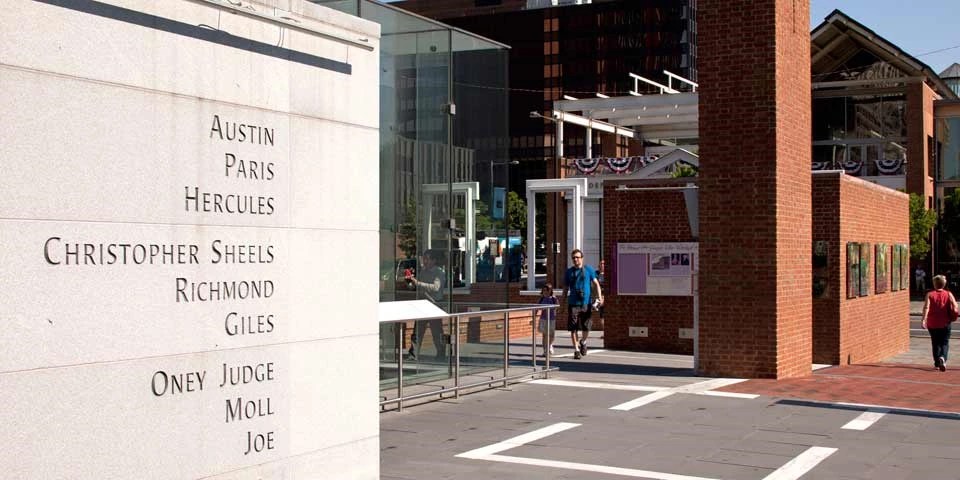
(courtesy of the NPS)
As this blog post publishes, the plight of the panels, the history of African-Americans in general, and the enslaved at the President’s House remain a topic of conversation and controversy. Continue to check the National Park Service website (click here) or other history-focused webpages for updates. Emerging Revolutionary War encourages dialogue and discussion on this topic.
 Emerging Revolutionary War Era
Thank you for this timely post. I had actually seen the panels a few months ago, having spent an afternoon in Philly following ERW’s bus tour. I have seen instances where I have felt disproportionate emphasis was placed on slavery, but this was not one of those times. I think the signs were appropriate and look forward to them being reinstalled.
LikeLike