

Halifax in northeastern North Carolina is one of the state’s most significant historic sites. This small town in rural Halifax County can rightly claim to be North Carolina’s Independence Hall.
Royal Governor Josiah Martin had fled the capital at New Bern in 1775. Relocating to Fort Johnston on the Cape Fear River, he fled again to a warship and tried to run the colony from offshore. With the departure of the Royal Governor, legislators met in Halifax to run the colony. Following the battle of Moores Creek in February, 1776, their efforts took on new urgency. While they had survived a failed Loyalist uprising and an aborted British invasion, they knew war would return.
At Halifax in April, delegates from across North Carolina met to take part in the Fourth Provincial Congress. Previous Provincial Congresses had met to take on the role of running the state with the Royal Governor’s departure. Some of the prisoners captured at Moores Creek arrived and placed in the jail, tangible proof that war had come to North Carolina.
Many felt it was too late for compromise and the only recourse was independence. At the time the Continental Congress in Philadelphia was debating that very topic. On April 12, 1776, the 83 delegates of the Provincial Congress unanimously ratified the Halifax Resolves. It was the first official act by any of the thirteen colonies calling for independence from Great Britain. While Virginia’s delegates in the Continental Congress in Philadelphia proposed it, North Carolina was the first colony to authorize it.
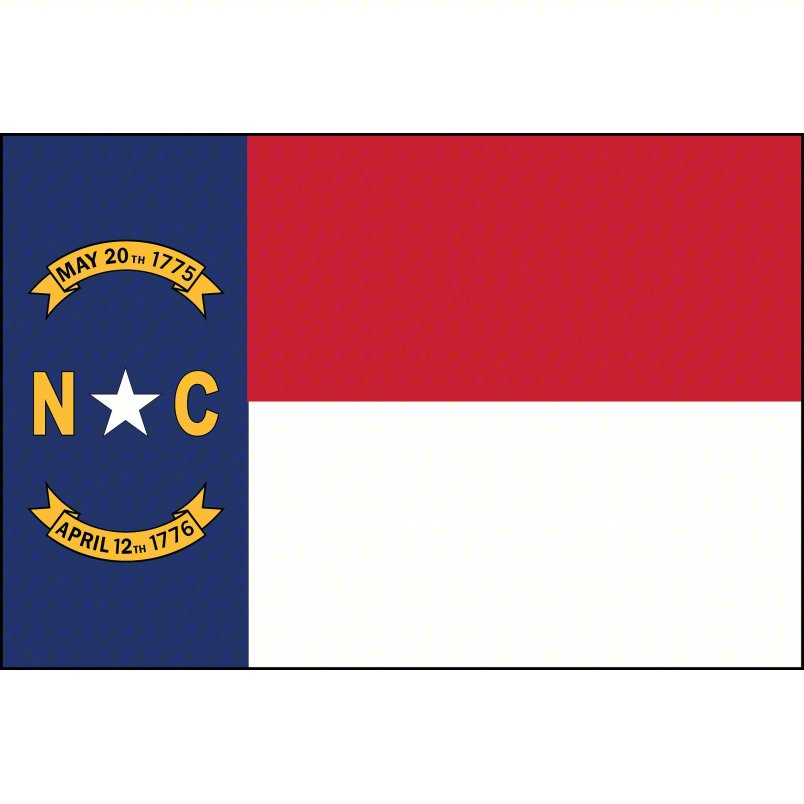
The date of April 12, 1776 is one of two on the state flag, the other, May 20, 1775 refers to the Mecklenburg Declaration, another Revolutionary event (though one whose accuracy is debated).
Since the 1960s a state historic site has preserved and interpreted the events in Halifax. A new visitor center with expanded exhibits opened last month to commemorate the 250th anniversary of the Resolves.
The exhibits cover a wide range of topics, including Halifax’s economy, Native American and African American perspectives on the Revolution, the village’s role in the war effort, and its early preservation and interpretation. A highlight is an original copy of the Halifax Resolves on display. Exhibits explore the document in detail, discussing what it calls for and how the delegates debated it.
The museum is outstanding, with a mixture of attractive panels, artifacts, and videos and sound. Outside, the site of the original courthouse, where the Resolves were discussed, is marked. Archaeologists verified the site and markers describe how it was located. The historic site also includes many other late eighteenth and early nineteenth century buildings. Guided tours are available.
Halifax State Historic Site is just five miles off Interstate 95, not far from the Virginia state line. The museum and grounds are well worth a visit if you’re passing by.
https://historicsites.nc.gov/all-sites/historic-halifax

