Rev War Revelry: Lafayette Returns

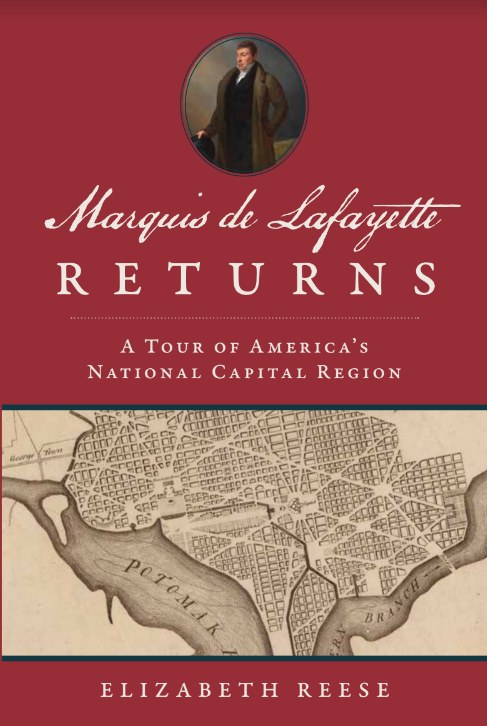
Join us for our next ERW Revelry on November 2 at 7 pm with author and historian Elizabeth Reese as we delve into her book, Marquis de Lafayette Returns: A Tour of America’s National Capital Region. Reese’s book explores the farewell tour of the beloved Revolutionary War hero, the Marquis de Lafayette, and his journey through Washington, D.C., Virginia, and Maryland during his grand return to the United States in 1824–1825.

In Marquis de Lafayette Returns, Reese traces Lafayette’s final visit to the young United States. Amid a contentious election season, Lafayette was embraced by Americans as a living link to the Revolution—a symbol of the ideals for which they strived.

Elizabeth Reese is a Maryland native who has spent more than a decade interpreting history at sites like Hamilton Grange National Memorial and the U.S. Capitol Visitor Center. Her writing has appeared in TIME, The New York Times, the Journal of the American Revolution, and her talks have been featured on C-SPAN. She currently serves as Senior Manager of Public Programs & Interpretation at Woodlawn & Pope-Leighey House and is completing her M.A. in American History from Gettysburg College.

This Revelry is pre-recorded and will be posted to our Facebook page at 7pm on November 2, 2025. It will then be posted to our Spotify and You Tube Channels.

250 Years Ago: The Second Continental Congress Adjourns

On August 2, 1775, the Second Continental Congress wrapped up its summer session 250 years ago. Philadelphia’s heatwave that summer—described as “Very Close & Hot”—was too much for the delegates. “We have sat much longer than expected,” one Congressman grumbled. “We are all exhausted.”

The Congress had been working tirelessly since its session began on May 10, 1775. In just 12 weeks, the body accomplished an impressive list of tasks, many of which escalated the growing tension with Great Britain:

  • Declared a state of military readiness across the colonies
  • Appealed to Canadians for support in the Revolution
  • Raised companies of riflemen in Pennsylvania, Maryland, and Virginia to reinforce the Boston Army
  • Elected George Washington as Commander-in-Chief
  • Appointed four major generals and eight brigadier generals
  • Adopted the Olive Branch Petition in a final effort for peace
  • Released the “Declaration of the Causes and Necessities of Taking Up Arms”
  • Rejected Lord North’s Plan for Reconciliation
  • Established a postal department
  • Appointed commissioners to negotiate peace with Indian tribes

Rather than resting from the sessions of the last 12 weeks, many members of the Second Continental Congress continued to work tirelessly to support the colonies’ efforts against Great Britain. Many returned home to ensure these measures were implemented at the local level. But there was still uncertainty about how King George III would respond to the Olive Branch Petition. Would the King accept the offer of peace? Only time would tell.

The Beeline March Begins 250 Years Ago

The “Shot Heard Round the World” on April 19, 1775, hurled the American colonies into a fever pitch and a war footing. But in the 18th century, slow travel and communication meant the news spread gradually. It took 21 days for word of the fighting at Lexington and Concord to reach the town of Mecklenburg, in Berkeley County, Virginia (now Shepherdstown, in Jefferson County, West Virginia).

On May 10, the citizens of Mecklenburg learned of the battles between colonial militiamen and British troops. Combined with reports that Virginia’s royal governor, Lord Dunmore, had seized gunpowder from the magazine in Williamsburg, the townspeople prepared to support their fellow patriots in any way they could.

Local militia members began to drill and ready themselves for action. On June 10, they gathered on the property of Colonel William Morgan, just outside of town, for a patriotic barbecue. Songs were sung, and those present made a solemn pledge to return to the same spot—Morgan’s Grove—fifty years later to commemorate the day.

The rallying point for the Beeline March

After the festivities, drilling resumed, though the men still wondered whether they’d truly be called to arms. That call came on June 14, when the Continental Congress resolved that “six companies of expert riflemen be immediately raised in Pennsylvania, two in Maryland, and two in Virginia.” Once formed and equipped, the companies were to “march and join the army near Boston, to be there employed as light infantry under the command of the chief Officer in that army.”

Virginia’s quota fell to two experienced frontiersmen: Daniel Morgan, who raised a company in Winchester, and Hugh Stephenson, who assembled his company at Mecklenburg. The recruits signed one-year enlistments.

Henry Bedinger, one of Stephenson’s men, noted that “none were received but young men of character, and of sufficient property to clothe themselves completely, find their own arms and accoutrements—that is, an approved rifle, handsome shot pouch and powder-horn, blanket, with such decent clothing as should be prescribed.” It took fewer than seven days to raise a full complement of 100 men. Only a delay in procuring enough rifles kept the company from marching immediately.

Stephenson and Morgan agreed to rendezvous in Frederick, Maryland, before continuing to Boston. Morgan’s men departed first, on July 15. Stephenson’s company followed from Morgan’s Grove on July 17.

“Morgan having the start, we used every exertion to overhaul him—in vain,” wrote Bedinger, “although we marched (always in single file) from 30 to 36 miles a number of days.”

Along the way, Stephenson’s men were greeted by cheering citizens and well-supplied with food. Their grueling pace—averaging over 20 miles per day—became legendary. Only two men failed to complete the full journey: one was court-martialed, the other accidentally wounded.

On August 11, after marching more than 500 miles in just 25 days, Stephenson’s company arrived in Cambridge, Massachusetts, just behind Morgan’s men. There, they halted before General George Washington.

Stephenson’s company reporting to General Washington at Cambridge (My Ride to the Barbecue)

As the riflemen presented arms, Bedinger recalled, the general “slowly rode by us looking attentively and affectionately at the soldiers from his native state. When he shook hands with our captain, it was said they both shed tears.”

The journey became known as the Beeline March for its quick and direct route to join the Continental Army. Fifty years later, on June 10, 1825, the veterans honored their pledge to return to Morgan’s Grove. Of the original company, only five men were still alive, and just two were able to attend the reunion. One of them was Michael Bedinger, who recalled the events of 1775 and sang “two patriotic songs…the very same that had been sung at that spot fifty years before.”

Today, two markers commemorate the Beeline March’s origin. In Morgan’s Grove Park, a 1988 monument marks the “Shepherdstown Rally Point.” Down the road, in Elmwood Cemetery, a 1932 monument erected by the Daughters of the American Revolution lists the names of the commissioned and non-commissioned officers of Stephenson’s company.

For a fledgling armed force preparing to challenge one of the world’s greatest military powers, the Beeline March demonstrated the resolve, discipline, and patriotic fervor of early American soldiers—and set a standard for those who would follow.

A British Newspaper Editor’s Opinion on Taxation without Representation, 250 Years Ago

“No taxation without representation” was one of the political cries of American colonists before the American Revolution. While the slogan inspired colonial enmity of the British Parliament and spearheaded efforts by prominent Americans and Britons to achieve some form of representation in the British government, it fell on deaf ears of common British citizens, including one correspondent of The Newcastle Chronicle, published in Newcastle upon Tyne, Tyne and Wear, England.

250 years ago today, this unknown correspondent’s opinion of the matter was printed for British citizens to read and consider:

When we consider (says a correspondent) in our present dispute with America, that there are large manufacturing towns in England, who, though they have no direct representative, yet pay the same taxes as those who have; that there are many thousands of merchants, manufacturers and others in Britan, who never had a vote for a representative, and therefore cannot be said to have consented to the taxes imposed upon them by the constituent powers of the legislature; and when we consider that the people of the Isle of Man, who once had superior privileges to any province in America, are deprived of all trade but with Britain, and obliged to pay taxes by British acts, without having one representative in the British Parliament. When we consider these things, how ill grounded must the complaints of the Americans appear to every man of feafe, and how necessary does it become to exact that obedience from their fears, which is neither to be hoped from their gratitude nor from their justice.

Rev War Revelry: Holding the Shots Heard Round the World with Jarrad Fuoss

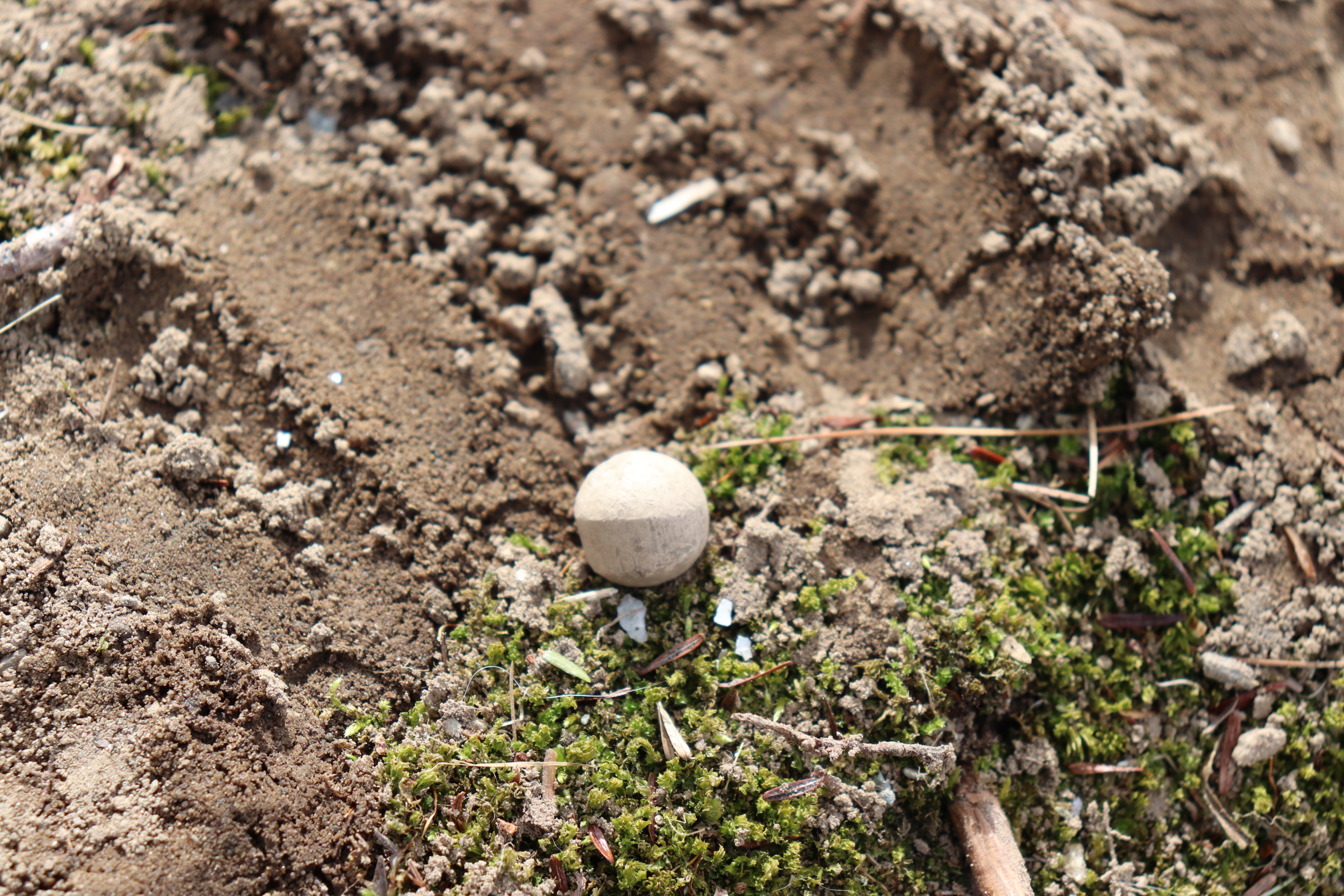
In July 2024, Minute Man National Historical Park announced the discovery of five musket balls fired at Concord’s North Bridge on April 19, 1775. Park Ranger Jarrad Fuoss will join Emerging Revolutionary War on Sunday, January 5, 2025, at 7 pm, for a behind-the-scenes look at how the bullets were unearthed and will also provide a preview of the park’s 250th-anniversary events this April.

This interview will be posted to the Emerging Revolutionary War Facebook page: https://www.facebook.com/emergingrevwar

ERW Revelry: George Washington in the French & Indian War

Join us on our Facebook page at 7 pm on Sunday, September 1 for a discussion with historian and author Scott C. Patchan about George Washington’s role in the French and Indian War. Patchan will be discussing his latest book, George Washington in the French & Indian War, published earlier this year by the History Press.

George Washington has frequently been criticized for his first military campaign, which sparked the French and Indian War. This backwoods campaign between British and French colonials eventually grew into the Seven Years’ War, a global conflict between these European empires. In 1754 Washington was an ambitious yet inexperienced young officer, eager to carry out his orders and mission on behalf of Virginia and the British king. While his campaign failed to meet its objectives, Washington experienced his first taste of military command, dealing with situations that ultimately proved beyond his control, and learned lessons that made him into the man who led the Continental Army to victory in the Revolutionary War. Historian Scott Patchan delves deep into Washington’s correspondence to tell the story of his training as an officer.

Scott’s interest in history began at a young age when his parents took him to Fort Necessity National Battlefield in Fayette County, Pennsylvania. This visit initiated a lifelong love of history that has resulted in Scott’s writing of six books, most prominently Shenandoah Summer, Second Manassas: The Struggle for Chinn Ridge and The Last Battle of Winchester, as well as dozens of articles. He is a sought-after speaker and popular guide for tours on colonial American history, the Revolutionary War and the Civil War for the last twenty-five years across the eastern United States.

The Experience of Freehold’s Civilians during the Battle of Monmouth Courthouse

Amid the hot weather of June 28, 1778, the British army under General Henry Clinton battled General George Washington’s Continental Army in the fields outside Freehold, New Jersey. The Battle of Monmouth Courthouse ranks as the eleventh deadliest battle of the Revolutionary War, claiming at least 700 casualties between the two armies. While the armies moved on after the sharp fight, the citizens of Freehold were left to deal with the battle’s aftermath.

Below are excerpts from two letters written by citizens of Freehold in the immediate aftermath of the battle that describes the toll the armies and battle took on their homes.

An unidentified “young gentleman, an inhabitant of Freehold,” penned the first letter on June 29, 1778. This citizen marched during the battle with Nathanael Greene’s troops, who only arrived on the battlefield proper near the end of the fight. Thus, he could “form an idea of the particular movements of the…engagement only from the dead…” There was abundant evidence provided by the corpses on the battlefield as the British “left very many dead upon the field of action…” Beyond the furrowed ground sliced by artillery shots and musket balls, the British columns left a path of destruction in their wake. “The destruction the enemy have made is dreadful. A great number of houses, barns and out-houses, on and near the public roads, are entirely reduced to ashes. They have been all round us, and yet we have escaped.”

A lady of Freehold wrote her letter two days after the battle. She equally said the horrid aftermath of an 18th-century conflict. “The enemy declared, at Robert McKnight’s, they intended to pay us a visit the next day, as they went down to the Court-house, and said their orders were to burn all the houses in this neighborhood. Doctor Henderson is burnt out, as also Peter Foreman, David Foreman, Benjamin Covenoven, George Walker, Mr. Solomon, David Covenoven, Garret Vanderveer, David Clayton, and a number of others. Most of the people on the public road have lost every thing the enemy could carry off or destroy.”

This anonymous woman was pleased that the British army had passed on, though they left their dead behind “as thick as bees round Mr. Sutfin’s.”

The occupation of the area by the warring armies “I fear…will make a famine among us,” she sadly concluded.

The Battle of Monmouth Courthouse was only one of a long stretch of days for central New Jersey’s civilians between 1775 and 1783.

This sketch of British troops burning homes around Lexington, Massachusetts, is a view similar to the one had by Freehold’s citizens as the British army passed through their homes.

Prisoner of Washington and Napoleon: A Brief Sketch of Charles O’Hara

If not for his connections to some of the most famous commanders and events of 18th-century military history, British general Charles O’Hara might only get a passing mention in many history books. He still hardly gets more than that.

Charles O’Hara

Charles O’Hara came into this world unceremoniously as the illegitimate son of James O’Hara, a British baron. The younger O’Hara cut his teeth in military matters at the young age of 12 in the 3rd Dragoons before receiving an officer’s appointment in the Coldstream Guards. He served in an officer’s capacity in Germany, Portugal (with Charles Lee), and Africa. O’Hara was strict but liked by the men who served under him.

O’Hara’s years of military service brought him to North America in July 1778. Lieutenant General Henry Clinton appointed him to command the troops at Sandy Hook, New Jersey, to protect New York City because of his engineering skills and a recommendation from Admiral Richard Howe. Two years later, O’Hara wound up under the command of Lord Charles Cornwallis in the Southern theater. He performed ably there, leading the pursuit of Cornwallis’ army toward the Dan River in early 1781 and leading the British counterattack at the Battle of Guilford Courthouse. O’Hara led from the front and received two wounds to show for it. His nephew died during the battle.

At Yorktown, O’Hara drew the duty of surrendering Cornwallis’ army to General George Washington and Comte de Rochambeau. As the surrendering British columns approached the Allied lines, O’Hara asked to see Rochambeau. Whether this was a slight against Washington or not is unclear, but Rochambeau referred him to Washington. O’Hara apologized to Washington and explained why Cornwalls was not in attendance. Then, O’Hara handed Cornwallis’ sword to Washington, who refused it and passed O’Hara along to Benjamin Lincoln. O’Hara handed the sword to Lincoln. He looked it over, held it for a brief moment, and returned it to O’Hara. The surrender of the British army then began.

After dining with Washington following the surrender proceedings at Yorktown, O’Hara became Washington’s prisoner until receiving his exchange on February 9, 1782. He returned to England with Cornwallis’ praise and a promotion to major general. Back home in England, O’Hara fell into hard financial times from a gambling debt and ran away from them to mainland Europe. In stepped his old friend and commander Charles Cornwallis, who helped O’Hara offset the debts.

O’Hara received another promotion in 1792 to lieutenant general and lieutenant governor of Gibraltar, a post he long desired. There, misfortune found him once more when he faced the young Napoleon Bonaparte on the battlefield of Toulon. On November 23, 1793, the defeated O’Hara surrendered to Napoleon.

Labeled an insurrectionist, O’Hara found himself in prison in Luxembourg. During his nearly two years there, he befriended American Thomas Paine until his exchange in August 1795. Ironically, the man exchanged for him was the Comte de Rochambeau. He once again took the post of Governor of Gibraltar, where he died in 1802 from the effects of his war wounds suffered two decades earlier. 

Despite taking part in one of the most famous events of the Revolutionary War, O’Hara has faded into general obscurity even though he bears the distinction of being the only person to surrender to both Washington and Napoleon. 

He is featured regularly on the screen in The Patriot, but most people likely do not even know the character’s name or backstory. There is plenty more to be told in his story.

Transcribe Revolutionary War Veteran Pensions

The National Archives and the National Park Service recently announced a collaborative project that allows members of the public to transcribe Revolutionary War Pension Files. This initiative has been launched in celebration of the upcoming 250th anniversary of America’s independence.

During the Revolutionary War, the Continental Congress offered pensions to American soldiers for their service. Later, they extended the pensions to the widows and orphans of deceased soldiers. Each pension file contains a wealth of information about the common Continental or militia soldier who fought for American independence.

As you might expect, the public transcription project is a large undertaking. The National Archives reports that they have 2,322,134 objects digitally scanned and ready for transcription.

If you want to help keep the story of a Revolutionary War Patriot alive and accessible, consider joining the National Archives’ Citizen Archivist program to get started today. For more information and to sign up, visit https://www.archives.gov/citizen-archivist/missions/revolutionary-war-pension-files.