The Jefferson Bible

Emerging Revolutionary War welcomes back guest historian Michael Aubrecht.

Thomas Jefferson rejected the “divinity” of Jesus, but he believed that Christ was a deeply interesting and profoundly important moral or ethical teacher. He also subscribed to the belief that it was in Christ’s moral and ethical teachings that a civilized society should be conducted. Cynical of the miracle accounts in the New Testament, Jefferson was convinced that the authentic words of Jesus had been contaminated.

His theory was that the earliest Christians, eager to make their religion appealing to the pagans, had obscured the words of Jesus with the philosophy of the ancient Greeks and the teachings of Plato. These so-called Platonists had thoroughly muddled Jesus’s original message. Firmly believing that reason could be added in place of what he considered to be “supernatural” embellishments, Jefferson worked tirelessly to compose a shortened version of the Gospels titled The Philosophy of Jesus of Nazareth. The subtitle stated that the work was “extracted from the account of his life and the doctrines as given by Matthew, Mark, Luke and John.”

 In 1820, Jefferson returned to his controversial New Testament research. This time, he completed a much more ambitious work titled The Life and Morals of Jesus of Nazareth Extracted Textually from the Gospels in Greek, Latin, French and English. The text of the New Testament appears in four parallel columns in four languages. Jefferson omitted the words he thought were inauthentic and retained those he believed were original. The resulting work is commonly known as the Jefferson Bible.

Using a razor and gum, Jefferson committed blasphemy. He cut and pasted his arrangement of selected verses from a 1794 bilingual Latin/Greek Bible using the text of the Plantin Polyglot, a French Geneva Bible and the King James Version. He selected excerpts from the gospels of Matthew, Mark, Luke and John in chronological order and combined the narrative with those of another to create a single chronicle.

No supernatural acts of Christ are included, as Jefferson viewed Jesus as strictly human. He also believed that Jesus himself recognized a more deistic belief system. In a letter to Benjamin Rush, Jefferson wrote, “I should proceed to a view of the life, character, and doctrines of Jesus, who sensible of incorrectness of their ideas of the Deity, and of morality, endeavored to bring them to the principles of a pure deism.” Jefferson also completely denied the resurrection. The book ends with the words: “Now, in the place where He was crucified, there was a garden; and in the garden a new sepulchre, wherein was never man yet laid. There laid they Jesus. And rolled a great stone to the door of the sepulchre, and departed.”

Jefferson engraving from 1867. Library of Congress.

Jefferson described the work in a letter to John Adams, dated October 12, 1813:

In extracting the pure principles which he taught, we should have to strip off the artificial vestments in which they have been muffled by priests, who have travestied them into various forms, as instruments of riches and power to them.…We must reduce our volume to the simple evangelists, select, even from them, the very words only of Jesus, paring off the Amphibologisms into which they have been led, by forgetting often, or not understanding, what had fallen from him, by giving their own misconceptions as his dicta, and expressing unintelligibly for others what they had not understood themselves. There will be found remaining the most sublime and benevolent code of morals which has ever been offered to man. I have performed this operation for my own use, by cutting verse by verse out of the printed book, and arranging the matter which is evidently his, and which is as easily distinguishable as diamonds in a dunghill. The result is an 8vo of 46 pages of pure and unsophisticated doctrines.

In a letter to Reverend Charles Clay, Jefferson described his results: “Probably you have heard me say I had taken the four Evangelists, had cut out from them every text they had recorded of the moral precepts of Jesus, and arranged them in a certain order; and although they appeared but as fragments, yet fragments of the most sublime edifice of morality which had ever been exhibited to man.” Most historians feel that Jefferson composed the book for his own satisfaction, supporting the Christian faith as he saw it. He did not produce it to shock or offend the religious community; he composed it for himself, for his devotion and for his own personal assurance.

After completion of the Life and Morals, Jefferson shared it with a number of friends, but he never allowed it to be published during his lifetime. The most complete form Jefferson produced was inherited by his grandson Thomas Jefferson Randolph.

The Life and Morals of Jesus of Nazareth.Monticello.org.

“the Americans have hoisted their standard of liberty at Salem.” The Salem Alarm, February 26, 1775 – In Their Own Words

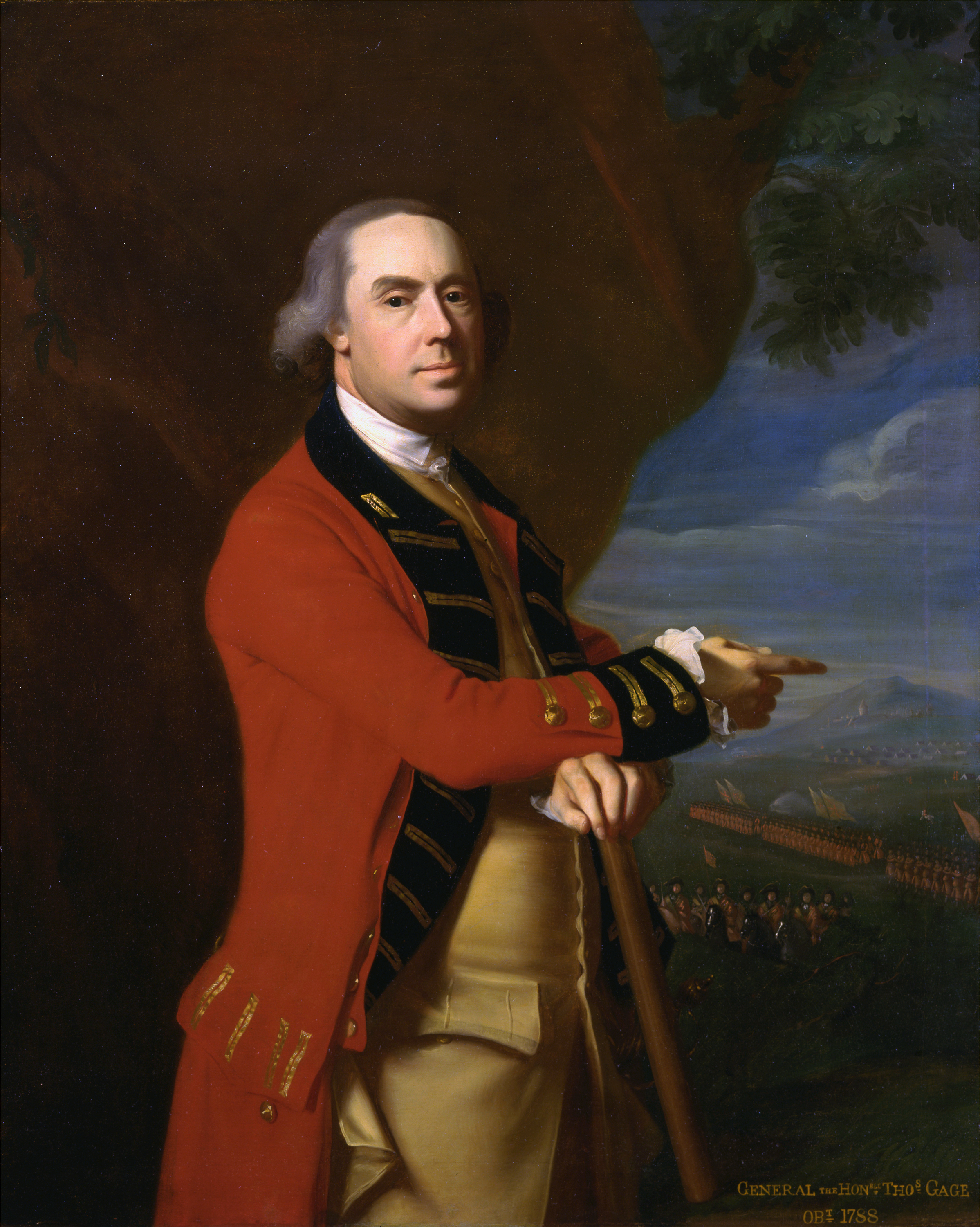
Next week on February 26, 2025, Salem, MA will mark the 250th anniversary of the Salem Alarm, or more commonly known today as “Leslie’s Retreat.” As British Gen. Gage received word from his spies that the local towns around Boston were securing various cannon for a possible war, he sent out Col. Leslie from Boston with several hundred British Regulars to Salem. Here Gage believed several of these cannon were we being refit and stored. Gage believed these cannon were to be used against him in a possible rebellion and were above and beyond a militia’s regular armament. After a tense stand off at the draw bridge across North River Bridge, Leslie returned to Boston without finding any cannon (which were removed during the stand off). This event was a critical step towards the open revolution that would take place on April 19 in Lexington. Though violence was avoided, the situation intensified the apprehension between Gage and the colonial leaders and militia of the towns around Boston. Below are two newspaper accounts of the events on February 26, 1775. One from Essex, Massachusetts and the other from London.

Essex Gazette, Feb. 28, 1775; an 1856 history of Leslie’s Retreat by Charles Endicott references the account was written by Col. Timothy Pickering.

” Last Sabbath the peace of the town was disturbed by the coming of a regiment of the King’s troops, the particulars relative to which are as follows. A transport arrived at Marblehead apparently manned as usual. Eetween 2 and o o’clock (as soon as the people had gone to meeting) the decks -were covered with soldiers, who having loaded and fixed their bayonets, landed with great dispatch, and instantly marched off. Some of the inhabitants suspecting they were bound to Salem to seize some materials there preparing for an artillery, dispatched several messengers to inform us of it. These materials were at the north side of the North River, and to come at them it was necessary to cross a bridge, one part of which was made to draw up for the convenience of letting vessels pass through. The inhabitants kept a look out for the appearance of the troops. The van-guard arrived, and took their route down in town as far as the Long-wharf; perhaps to decoy the inhabitants thither, away from the place to which the main body were destined. The main body arrived soon after and halted a few minutes by the Town-House. It is said inquiry was immediately made by some of the officers for a half brother of Col. Brown- the mandamus counsellor. Be this as it may, he was very soon whispering in the Colonel’s ear, in the front of the regiment and when he parted from the Colonel, the regiment marched off with a quick pace, in a direct course for the North Bridge ; just before their entrance upon which the draw-bridge was pulled up. The regiment however rushed forward till they came to the draw-bridge, not observing (as it seemed) that it was drawn up. The Colonel who led them expressed some surprise : and then turning about, ordered an officer to face his company to a body of men standing on a wharf on the other side the draw-bridge, and lire. One of our townsmen! (who had kept along side the Colonel from the time he marched from the Town House) instantly told him he had better not fire, that he had no right to fire without further orders, ” and if you do fire (said he) you will be all dead men.” The company neither faced nor fired.

Salem Alarm Monument at North River Bridge. Photo by Author

The Colonel then retired to the centre of his regiment, assembled his officers, and held a consultation ; At which being ended the Colonel advanced a little, and declared he would maintain his ground, and go over the bridge before he returned, if it were a month first. The same townsman replied, he might stay there as long as he pleased, no body cared for that. The half brother before mentioned (it is said) made towards the bridge, but seeing the draw-bridge up, says ” it is all over with us.” He has since disappeared. Meanwhile two large gondolas that lay aground (for it was low water were scuttled, lest they should cross the channel in them. But whilst one gentleman with his assistants was scuttling his own gondola, a party of about twenty soldiers jumped into it, and with their bayonets charged against our unarmed townsmen (some of whom they pricked) compelled them to quit it ; but before this a sufficient hole had been made in the bottom. This attack of the soldiers, and some other occurrences, occasioned a little bickering, but by the interposition of some of the inhabitants the disputes subsided.

At length some gentlemen asked the Colonel what was his design in making this movement and why he would cross the bridge? He said he had orders to cross it, and he would cross it if he lost his life, with the lives of all his men. And now (or before) asked why the King’s highway was obstructed? He was told it was not the King’s road, but the property of the inhabitants, who had a right to do what they pleased with it. Finally the Colonel said he must go over; and if the drawbridge were let down so that he might pass, he pledged his honor he would march not above thirty rods beyond it, and then immediately return. The regiment had now; been on the bridge about an hour and an half ; and every thing being secured, the inhabitants directed the drawbridge to be let down. The regiment immediately passed over, marched a few rods, returned, and with great expedition went back again to Marblehead, where they embarked on board the transport without delay. The regiment brought with them, lanthorns, hatchets, pickaxes, spades, hand-spikes, and several coils of rope.

When all the circumstances are considered, there can remain no doubt that the sole purpose of the menoeuvre was to steal away the artillery materials before mentioned. In the first place the regiment was taken from the Castle, so that the inhabitants of Boston might be prevented giving us any intelligence: The transport arrived at Marblehead a considerable time before the regiment was landed, but the men were kept snug under hatches: As soon as the inhabitants of Marblehead had got to meeting, the troops landed, and pushed on their march to Salem, and proceeded to the very spot where the materials for the artillery were lodged. But meeting with this sad rebuff and finding their plot was discovered, they then made a retreat. ‘Tis regretted that an officer of Colonel Leslie’s acknowledged worth, should be obliged, in obedience to orders to come upon so pitiful an errand.

Various reports were spread abroad respecting the troops —the country was alarmed ; and one company arrived in arms from Danvers just as the troops left the town. We immediately dispatched messengers to the neighboring towns to save them the trouble of coming in; but the alarm flew like lightning (and fame doubtless magnified the first simple reports) so that great numbers were in arms, and soon on the march before our messengers arrived.”

The news of the events at Salem were published in the Gentleman’s Magazine of London on April 17th. By a ship just arrived at Bristol from America, it is reported that the Americans have hoisted their standard of liberty at Salem.

Little could the residents of London know that two days after the news of Salem was received in London, their American colonies would be in open rebellion.

The Death and Life of Bazabeel Norman, Veteran & “Man of Color”

Emerging Revolutionary War welcomes back guest historian Eric Olsen. Eric is a historian with the National Park Service at Morristown National Historical Park. To learn more about the site, click here.

The following obituary of a Revolutionary War veteran appeared in a Marietta, Ohio newspaper in 1830.“Saturday, July 24, 1830

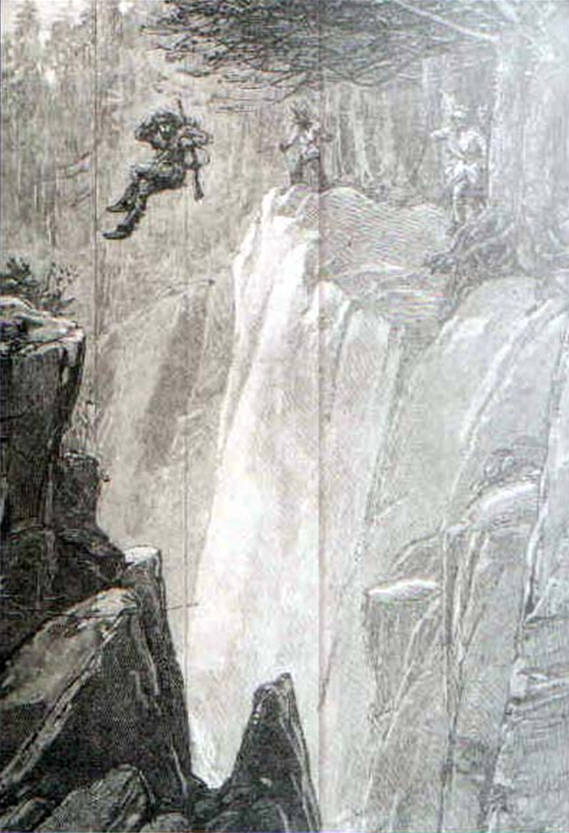
Casualty – On Saturday evening last, Mr. Bazil Norman of Roxbury township, a man of color, left his house to go to watch a deer lick, and not returning in the course of the night, the next day a search was commenced under the belief that some accident had befallen him; after a diligent search by his family and neighbors, he was found dead having fallen from a precipice about twelve feet.  From appearances he had been to the lick and stayed the usual time, and late in the evening attempted to return, by the aid of a torch-light; having a narrow pass to descend between some rocks about a half mile from his house, he missed his way a few yards, fell, and broke is neck. Mr. Norman was aged about 73 – was a soldier in the revolutionary war, and at the time of his death received a pension from the United States.” -American Friend & Marietta Gazette, July 24, 1830.

Bazabeel Norman was an African American private in the Maryland Line of the Continental Army and most likely part of the 1779-1780 encampment at Jockey Hollow. I haven’t been able to find any muster rolls or service records to confirm this, but fortunately Norman did apply for a veteran’s pension in 1818 in which he summarized his military service.

“ enlisted in fall of the year 1777 into the company of Capt. Richard Anderson as a private soldier in the regiment commanded by Col. John Gumby in the Maryland line and served my Country against the common enemy until the close of the war…I was in the battles of Monmouth, Camden, Cowpens, Guilford Courthouse & Eutaw Springs. I am now 67 years old…”

In 1818 the only veterans who could apply for a pension were for men who were infirm or indigent. Bazabeel Norman apparently fit the requirements and was granted a pension. But too many men were granted pensions and Congress suspected that undeserving men were cheating the system. In 1820 veterans who had been granted pensions in 1818 were now required to make a list of their possessions and prove they were needy. In his July 25, 1820 application, Norman summarized his family life.

“As to my family I have none at home but my wife, one son & a Grand child, an orphan. My wife is 63 years of age & very infirm, my son wants only about a month of being 21 years of age. My Grandchild is a Girl about eight years old & very weakly. The rest of my children are of age & doing for themselves. I am by occupation a farmer but owing to age & infirmity I am unable to do very little toward supporting myself.”

After his death in 1830 his wife “Fortune” applied for and obtained a widow’s pension [W 5429]. In her application, she mentioned that they were married before the end of the war but did not provide any more interesting information.

The only reason I was able to research Bazabeel Norman was because of an email from Michael Shaver, Acting Chief of Interpretation of Morristown NHP & Thomas Edison NHP. I’m quoting from his email, because frankly I never heard of the person he makes reference to and it easier than rewriting his email. Michael wrote, “A few weeks ago on the PBS series, Finding Your Roots, one of the genealogies that Henry Louis Gates was exploring was that of actress, Rebecca Hall. Hall, the daughter of Sir Peter Hall, founder of the Royal Shakespeare Company, and Maria Ewing, an American-born opera star of the 1970s and 1980s.  Hall has appeared in Iron Man 3 and last year’s King Kong movie, along with a host of highly acclaimed independent films. What prompted her appearance on the program was her directorial debut of the Netflix film, Passing. Hall now lives in Brooklyn and the Hudson Valley…

At about 30 minutes in, Gates is taking Hall back into the earlier generations of her family. He closes out with the discovery of Bazabeel “Basil” Norman, a free black from Maryland at about 36 minutes who was discovered through documentation of a veteran’s land grant in Ohio in 1818.

Basil Norman came from Frederick County, Maryland joined the 7th Regiment in the fall of 1777, under the command of Colonel John Gumby, in the company commanded by Captain Richard Anderson “and served my country against the common enemy until the close of the war under the continental establishment and discharged under a general order.

So Norman was probably hung his hat in Jockey Hollow.”

A big shout out/thank you to Michael for the tip which has revealed another African American soldier from Jockey Hollow.

Sources:

American Friend & Marietta Gazette, July 24, 1830, page 3, column 1, Ancestry online

Pension Application of Bazabeel Norman and his widow Fortune Norman, W5429, National Archives, Fold 3, Ancestry Online.

Finding Your Roots | Hidden in the Genes | Season 8 | Episode 1 | PBS

Final, Final Resting Place

Situated along East Monument Street is a stone monument surrounded by a black iron fence. A wayside informational marker is placed right outside the fence. Underneath this monument rests the remains of Daniel Wells and Henry McComas. On September 12, 1814, one of their firearms changed the entire scope of the Battle of North Point, part of the Chesapeake Bay Campaign during the War of 1812.

Both young militia members, sent to the frontlines to skirmish and harass the approaching British infantry, fired a musket round that slammed through the left elbow and into the chest of Major General Robert Ross, British land commander, mortally wounding him. Both Wells and McComas, aged 19 and 18 respectively, would be killed during the day’s fighting. A third soldier, Aquila Randall, also slain that day, has his own small monument and crediting him with firing the fateful shot.

Although most historians credit either Wells or McComas. Both soldiers were reinterred here, the second time their remains had been moved, in 1858 when the monument was completed and a funeral song and dramatic play rounded out the day’s commemoration.

The site is part of the Star-Spangled Banner National Historic Trail. To learn more about the trail, click here.

The Price is Right: Comparing Prices in 1794

Emerging Revolutionary War welcomes back guest historian Eric Olsen. Eric is a historian with the National Park Service at Morristown National Historical Park. Click here to learn more about this site.


Visitors always want to know, “How much did “that” cost back then?” We used to tell them because of inflation and the conversion from pounds to dollars it was really hard to give a definitive answer. It is even harder to figure during the American Revolution when the value of the dollars changed dramatically just over the course of a few months. There are all sorts of fancy conversion sites on the internet today but since math was not my strong point, I don’t know how accurate they are. 

One book tried another approach to explain 18th century vs. modern prices. “A person today, purchasing the same product made the same way out of materials made the same way, will pay roughly the same percentage of their wages for the product as a person of equal economic status in the past would have. For comparison, at the present time [1997 book] an average shop rate runs thirty-five dollars an hour for labor. If you make ten dollars an hour, this costs you three and a half hours of work, and the same ratio applied to a craftsman making thirty pounds a year or two pence per hour.” Makes sense but seems a bit too complicated.

However, I did find one primary source that can give a clue to the relative value of items. It comes from Theophile Cazenove, a Dutchman who traveled through New Jersey and Pennsylvania in 1794 looking for investment opportunities for Dutch bankers. At his various stops in Morris County, Cazenove recorded the prices of farms, livestock, and even labor.

Sometimes the prices were in pounds, other times they were in dollars. When he included both prices for one item, I did some very simple math and found that it took eight shillings to make one dollar, and that $2.50 equaled one pound. According to the online conversion applications, one pound in 1790 equaled 167.58 pounds today. One dollar in 1790 equaled 32.20 dollars in today’s money.

But without doing any math or conversions if we look at the prices Cazenove listed we can see what items were more expense than other ones. From that we can also assume the more expensive items were more highly valued.   

Keep in mind, on the local level in 18th century America, it was not a cash driven economy. Specie, Hard Money or coins, made of valuable metals such as silver and gold were in short supply in North America and used infrequently. Paper Money was rarely used, appearing briefly during periods of war when armies needed a large source of money to buy goods and services.

Continue reading “The Price is Right: Comparing Prices in 1794”

Rev War Revelry: Fort William and Mary, December 1774

Many have heard of Paul Revere’s ride to Lexington and the shot heard round the world at Concord (and Lexington) but few know about the December 1774 raid and skirmish at Fort William and Mary in New Castle, New Hampshire. Here, inspired by news from Paul Revere, local militia attacked and captured a small British garrison at Fort William and Mary. Join us as we welcome Dr.
Dr. Cynthia Hatch to discuss this much over looked action leading up the American Revolution.

Dr. Hatch is an Oklahoma State University Institute of Technology instructor specializing in Revolutionary War history. With a PhD in History, she explores the intricate political, social, and cultural dynamics of the 18th century, with a particular focus on the colonial legal system and the pivotal role of local narratives in shaping historical interpretations during the Revolutionary Era.

Join us as we discuss the events leading up and during the raid of Fort William and Mary and learn, were these the FIRST shots of the American Revolution? This Rev War Revelry will be pre-recorded and posted to our Facebook page at 7pm on Sunday, December 8th.

Rev War Revelry: The Battle of Menotomy and the Jason Russell House, April 19, 1775

The Fight at the Jason Russell House, bicentennial painting by Ruth Linnell Berry (1974). Appearing with permission from the Arlington Historical Society.

Though the American Revolution started on the green at Lexington and North Bridge in Concord, the bloodiest part of April 19, 1775 took place in the community of Menotomy (modern day Arlington). Join us as we welcome Matt Beres from the Arlington Historical Society. We will discuss the viciousness of the fighting on the afternoon of April 19th along the road back to Boston, including stories like the Jason Russell House, Cooper Tavern and more. Join us as we talk about the much overlooked part of April 19th, 1775 as we move towards the 250th anniversary. This episode is pre-recorded and will be posted on Sunday, November 24th at 7pm on our You Tube and Facebook pages.

On this date…The Jay Treaty

On this date in history…

On November 19, 1794, John Jay, representing George Washington’s administration, affixed his signature to a document bearing his name in history. The Jay Treaty. Although the official name of the pact was “The Treaty of Amity, Commerce, and Navigation, Between His Britannic Majesty and the United States of America.”

The treaty’s aim was to resolve outstanding issues from the conclusion of the American Revolutionary War and facilitate economic trade. Although some of the clauses were not fulfilled completely and another war, the War of 1812, erupted because of it, the treaty did serve a purpose. The agreement ushered in a decade of trade between the two countries and gave the fledgling nation a chance to gain footing, a major concern for George Washington, as first president. The treaty also cemented the promise that Great Britain would vacate the forts in the Northwest Territory and agreed to arbitration on the boundary between Canada and the United States and the pre-American Revolutionary War debt.

Yet, the treaty was divisive. Even Jay remarked that he could find his way in the dead of night by the illumination of his own effigy. The treaty angered the French as that country was amid its revolutionary throes, and bitterly divided the nation. Out of it came the separation into two political parties, the Federalists, who supported the treaty, and the Democratic-Republicans who stood opposed to it.

The treaty was ratified by the Senate on June 24, 1795, with an exact two-thirds majority, 20 to 10 along with being passed by William Pitt the Younger, prime minister of Great Britain and his government, and took effect on February 29, 1796.

Historian Joseph Ellis wrote that the Jay Treaty was “a shrewd bargain for the United States” and “a precocious preview of the Monroe Doctrine.” As one of Washington’s most fervent wishes, the treaty “postponed war with England until America was economically and politically more capable of fighting one.”

Civil War Nurse Saves Mount Vernon & Valley Forge

Valley Forge consists of acres of undulating countryside where General George Washington and some 11,000 Continental Army troops spent the winter of 1777-1778. Today, it is one of the nation’s most hallowed shrines. Few, if any, modern visitors recognize the woman who fought to save it, nor her heroic work as a nurse during the American Civil War.

Read more: Civil War Nurse Saves Mount Vernon & Valley Forge

Anna Morris Ellis was born in Muncy, Pennsylvania, on April 9, 1824. On September 26, 1848, she married William Hayman Holstein. At 38 years old, Anna became involved in the Union army’s war effort during the American Civil War after the battle of Antietam in September 1862. Her husband returning home after serving a 90-day enlistment, told of wounded men lying in barns and fields around Sharpsburg, Maryland because there weren’t enough medical corpsmen. Despite an overhaul to the Union Army of the Potomac’s Medical Department by Dr. Jonathan Letterman earlier that summer, the combined evacuation of the Virginia Peninsula from their failed late spring and summer campaigns and the Second Manassas campaign outside of Washington, D.C. in August had left this medical department in a state of chaos, confusion, and wholly unprepared to meet the medical needs of such another large scale engagement as Antietam. Anna and her husband William immediately left for the Antietam battlefield in response to the distressing scenes he had painted for her. 

Anna Morris Ellis Holstein

The Holstein’s served for months around the Antietam battlefield, caring for the sick and wounded. Their role as post-battle caretakers continued just a month after the battle of Gettysburg when the large army field hospital of Camp Letterman opened just east of the borough on the York Road. This time, however, Anna was already numbed to the scenes of shattered limbs and the despondently ill wearied from disease. By this time her husband had secured a position with the U.S. Sanitary Commission which also setup at Gettysburg to aid the wounded and sick in the wake of the battle. That agency, along with the U.S. Christian Commission, offered supplies and personages to aid in the aftermath of not only Gettysburg, but other battles in the final years of the war.

Anna’s role for caring for those soldiers left behind by both armies was significant. She was made matron-in-chief of Camp Letterman by Dr. Cyrus Nathaniel Chamberlain, which, under her and Chamberlain’s care, attended to over 3,000 wounded soldiers. Anna continued to work at Camp Letterman until it closed on November 19, 1863. Later that day, both her and her husband sat on the platform near Abraham Lincoln while he delivered the Gettysburg Address. Following her work at Gettysburg, Anna continued to nurse the sick and wounded back to health. By the end of the Civil War in 1865 and into 1866, she worked as a matron in a hospital in Annapolis, Maryland, caring for returned prisoners of war that were sick or wounded.

In the post Civil War years, Anna turned to the preservation of the places and material culture from America’s first war for independence. She was no stranger to the importance of this era and the necessity of keeping the memory of those that served during that turbulent era alive for future generations. Anna’s great-grandfather was Capt. Samuel Morris. Morris was the captain of the First City Troop of Philadelphia when it served as George Washington’s body guard. Captain Morris was with Washington during the Ten Crucial Days and was on the field him at the battles of Trenton and Princeton. Morris even earned the sobriquet as leader of the “fighting Quakers.” Anna’s grandfather, Richard Wells, also served the American cause. He was commissioned to provision the U.S. fleet on the Delaware River during the revolutionary war.

One of her first missions was to save and restore George Washington’s Virginia estate, Mount Vernon. The home had fallen into significant disrepair, with the recent war years only aiding to its material decay. Both Anna and her husband, who also had strong ancestral ties to the War for Independence, were among the first to promote the struggles at Mount Vernon, the necessity for saving it, and the fundraising to back those plans. It was her skills in fundraising so successfully for Mount Vernon that led her to be named as regent for the Valley Forge Centennial and Memorial Association. Anna also was one of the founders, and also named regent as well, of the Valley Forge Chapter of the D.A.R.

By 1878, The Centennial and Memorial Association of Valley Forge, was incorporated in Montgomery County, Pennsylvania. Once incorporated, she led the charge as regent to save, acquire, restore and preserve General Washington’s Valley Forge Headquarters and surrounding acreage as parcels became available. Much needed funds for this charge would be needed, however. On June 19, 1878, to commemorate the 100th anniversary of the Continental Army marching out of Valley Forge, the Association held a large, organized event. With the funds generated from the anniversary commemoration, the Association was able to not only purchase General Washington’s Headquarters, but also additional acreage around the farm complex. They were also able to purchase original artifacts to place in the home, begin renovations to restore the home back to its 1777-78 appearance, and plant a tree from Washington’s Mt. Vernon on the property.

By 1893, when the Commonwealth of Pennsylvania assumed control of the camp sites and headquarters at Valley Forge, with Anna credited as the person “to whom the Nation is indebted more than any other” for her tireless efforts to ensure this national shrine was preserved and protected in perpetuity. Decades later, the National Park Service would assume ownership and operational leadership of the park from the state of Pennsylvania.

Anna and William’s home still stands in King of Prussia, Pennsylvania today at 211 Henderson Road. In 2021 the Pennsylvania Historical and Museum Commission placed a marker at the entrance drive to the home. Anna’s work at saving material culture from the Revolutionary War and ensuring the legacy of the veterans of that conflict lived on was vast. Hopefully this small summation of her activities inspires others to dig deeper into her efforts.

Announcing our 2025 ERW Bus Tour…. Philadelphia Campaign of 1777 with Michael Harris!

We are excited to announced our FIFTH annual ERW bus tour will be on November 7-9, 2025 and will cover the 1777 Philadelphia Campaign.

Author and historian Michael Harris will join us as we cover the fall of 1777 campaign. The British Army under Gen. William Howe made a concerted effort to take the American capital of Philadelphia. George Washington and the Continental Army fought major actions at Brandywine and Germantown in an effort to hold and take back the city. The tour will cover sites associated with the Philadelphia Campaign, such as Brandywine, Germantown, Paoli and others.

Tickets are $250 per person and will include Friday night lecture at the host hotel, all day bus tour on Saturday and half day bus tour on Sunday. A lunch is included for Saturday.

Our host hotel is the Holiday Inn Express and Suites – King of Prussia. Lodging is NOT included in the registration fee. A room bloc has been established under the name of “Emerging Revolutionary War.” A link will be provided in the future for hotel lodging.

Join us for our FIFTH annual tour as we take on the beginning of the American Revolution just a few months before the 250th anniversary. Learn about the dramatic events that led to some of the bloodiest days in the American Revolution. There is no better way to experience history than to stand in the footsteps of where it happened!

To register, visit: https://www.eventbrite.com/e/battles-for-the-capital-1777-philadelphia-campaign-bus-tour-tickets-1048228358237?aff=oddtdtcreator

For more questions, please email emergingrevolutionarywar@gmail.com.