

“By no means comparable with the feats of a similar character” and “performed an act of daring” and “nay, desperate horsemanship” and “seldom been equaled by man or beast.” All these describe the amazing escape of Major Samuel McColloch in September 1777 during the attack on Fort Henry around where present-day Wheeling, West Virginia.
I first encountered this amazing, daring, and crazy eluding of capture when I took my own, well not as risky, but still a leap, moving to Wheeling to attend university there. Parents were 3,000 miles away in England and I was attempting to juggle basketball, studies, getting re-acclimated to life in the United States, and unknowingly, a left knee that was about to explode. Being a history major, this was one of the first accounts learned in a freshman year seminar class about local history to inspire the incoming students to explore the area outside of campus.
Fort Henry, built in 1774, was originally named Fort Fincastle, one of the titles of Lord Dunmore, the royal governor of Virginia. When the colonies revolted, the fortification was renamed in honor of Patrick Henry.
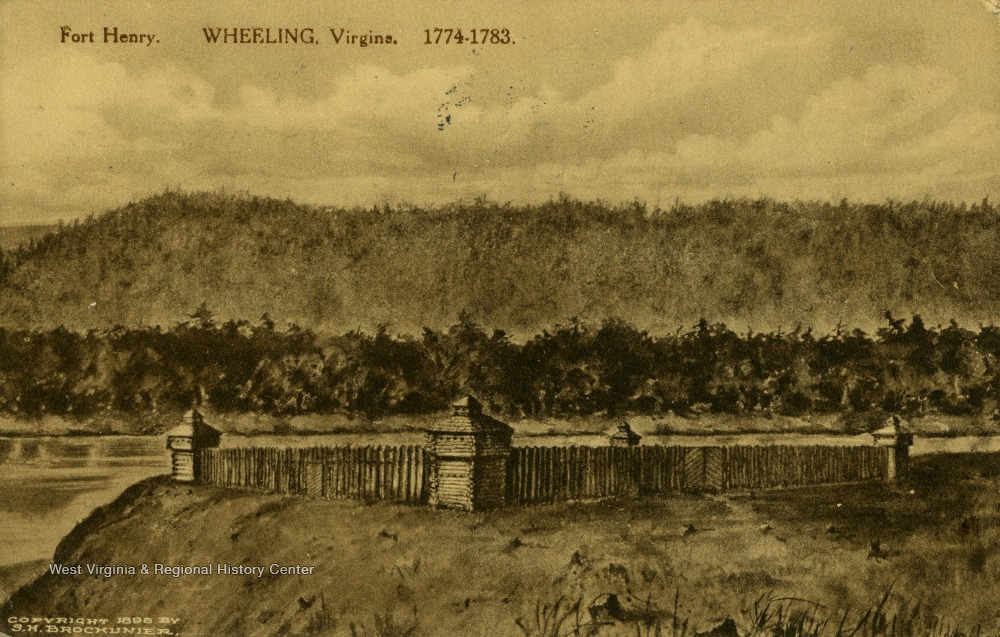
courtesy of West Virginia History OnView
https://wvhistoryonview.org/catalog/041457
 Emerging Revolutionary War Era