On April 7, 1780, 750 Virginia soldiers completed a nearly 800 mile trek from Morristown, New Jersey to Charleston, South Carolina, only to be captured and sent to prison ships in Charleston harbor.
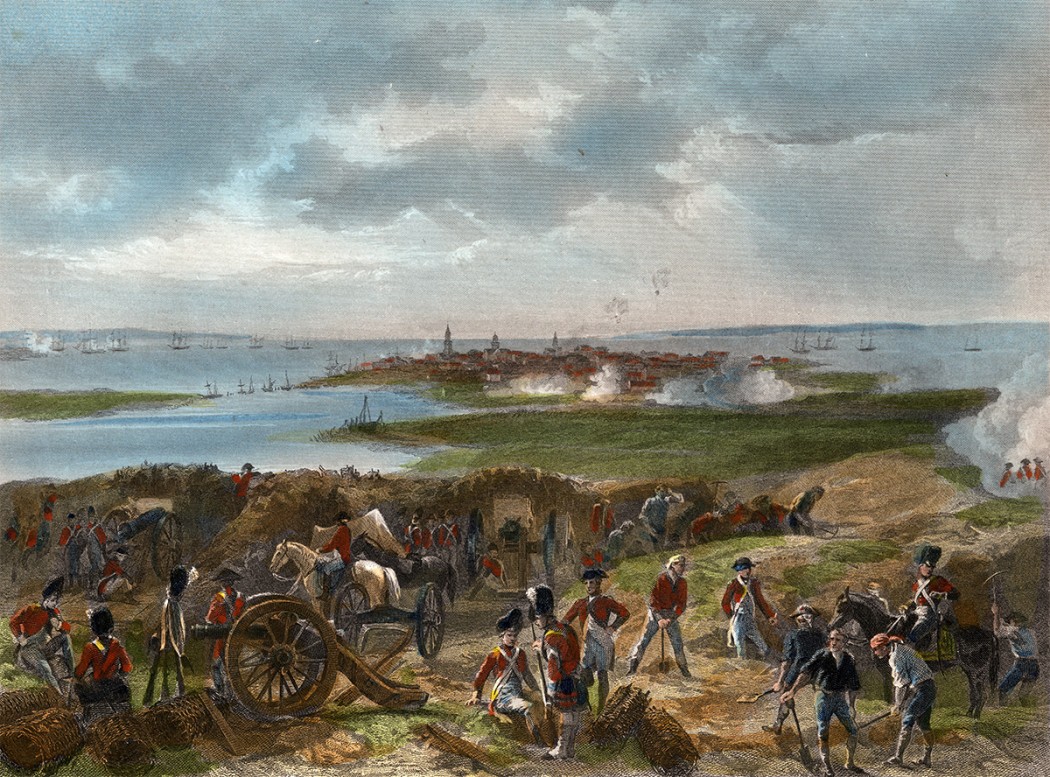
In November and December of 1779, both British General Sir Henry Clinton in New York City and American General George Washington in Morristown, New Jersey, began to turn their eyes south. A combined Franco-American force under the command of General Benjamin Lincoln and Count d’Estaing had made a bloody assault to try and capture the Southern city of Savannah to no avail. The Count d’Estaing took his French force and returned to the Caribbean, and Lincoln took his demoralized American army back to Charleston, South Carolina. With only about 2,400 Continentals and militia, Lincoln’s army (and the city of Charleston) looked like a ripe target for Clinton, who had been part of the botched attempt to capture that city in June of 1776.
Siege of Charleston by Alonzo Chappel
Clinton made the bold decision to take about 9,000 men from his army in New York City and sail them down to South Carolina to make an attempt to capture Charleston and Lincoln’s army.
Washington, learning that Clinton was preparing part of his army to disembark from New York City, began to direct efforts to help defend the city of Charleston. Washington was repeatedly receiving letters requesting troops and supplies from Lincoln and Congress. In November, Washington dispatched the North Carolina Continental line regiments (almost 1,000 men) to reinforce Lincoln, but after talking to his former aide-de-camp Lt. Col. John Laurens, who visited him personally after fighting at Savannah, Washington understood how desperate a situation Lincoln was in. Congress and Washington made the bold decision to send the entire Virginia Continental line regiments (almost 2,500 men) to join Lincoln’s army that December. Washington parted with these venerable veteran soldiers even though it weakened his position guarding against the main British Army at New York City.
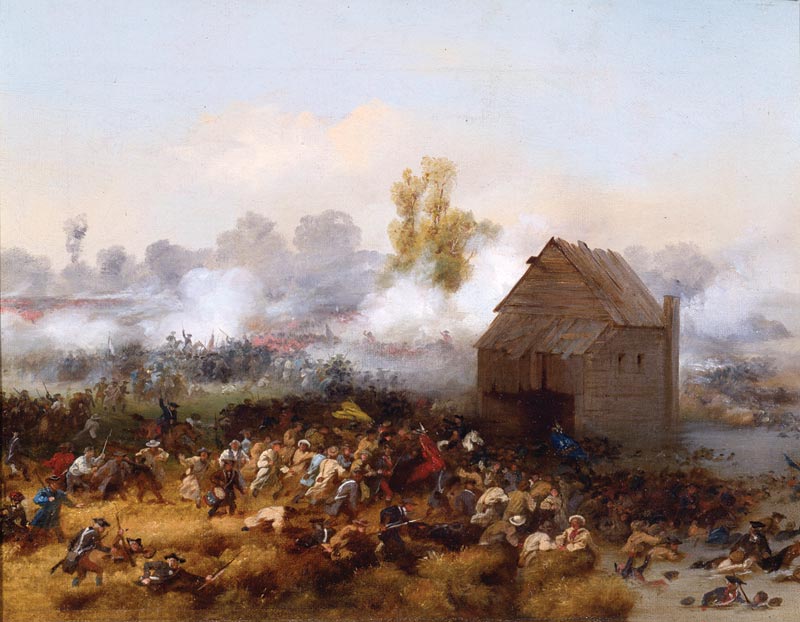
New York City is well known for skyscrapers, pizza, Broadway, and the Statue of Liberty. What is less known, is the fact that it was the site of one of the largest and most consequential battles of the Revolutionary War. Major fighting occurred all over New York City at Brooklyn, Kips Bay, Harlem, and Fort Washington and Fort Lee.
The Battle of Long Island
These were major battles that cost Washington some of his best soldiers. Though the Americans were driven from the city, the area became the center of focus for the Northern theater for the remainder of the war. Today, though these battlefields have been greatly altered and built over, remnants and markers of this important military history still exist.
Grab your favorite adult beverage and join us for the next “Rev War Revelry” historian happy hour on Easter Sunday (April 4) at 7 pm ET on our Facebook page as we discuss the Battles of New York with Mark Maloy, Dan Welch, and Adam Zielinski. To watch, simply click this link to our Facebook page. If you can’t make it at that time, you can watch it later on our YouTube page. There you will find dozens of hours of videos about all sorts of topics related to the Revolutionary War. Enjoy!
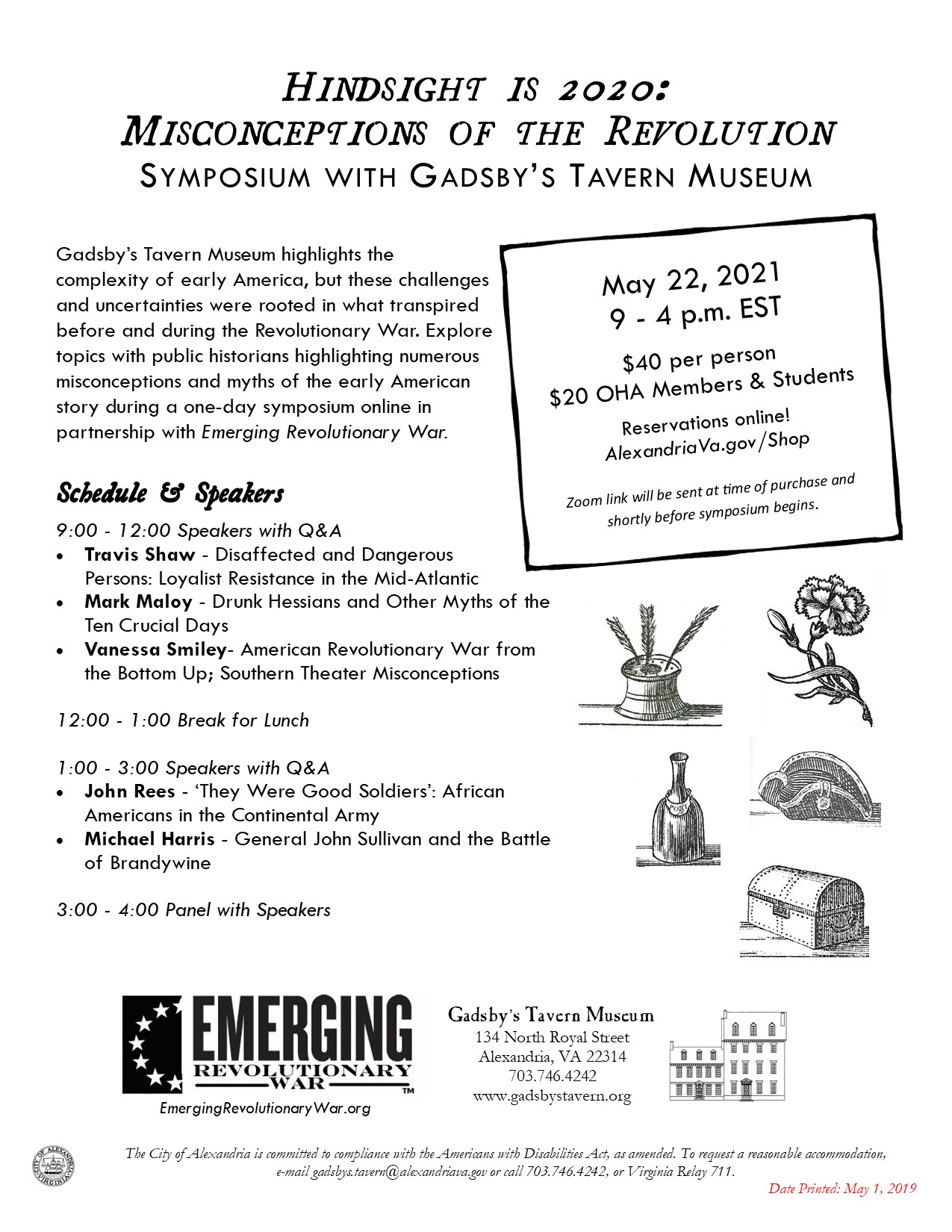
Over the next few months, we will be highlighting the speakers and topics for our 2021 Symposium, Hindsight is 2020: Revisiting Misconceptions of the Revolution, taking place on May 22nd. Due to the COVID 19 pandemic, the Symposium will be virtual. Today we highlight historian Travis Shaw who will be covering the role of American Loyalists during the Revolution. Not all Americans supported the “patriot” and many sided with the British.
Travis Shaw is currently the Public Programs Coordinator for the Virginia Piedmont Heritage Area. He brings nearly two decades of experience in the fields of historic preservation, archaeology, and museum education, working with both private and public institutions. Prior to joining VPHA he spent time at Historic St. Mary’s City, The Maryland Archaeological Conservation Lab, Mount Vernon, and Oatlands Historic House and Gardens. He holds a BA in history from St. Mary’s College of Maryland and an MA in history with a concentration in public history from American University. His areas of research include the material culture of colonial America, the American Revolution, and maritime history. In his free time, Travis enjoys exploring historic sites with his family and participating in 18th and early 19th century living history events.
He will be presenting his talk “Disaffected and Dangerous Persons”: Loyalist Resistance in the Mid-Atlantic at the May symposium.
Doyou believe the study of Loyalists in the American Revolution has been overlooked and why?
It absolutely has been overlooked for most of the post-Revolutionary era. As the saying goes, history is written by the winners, and loyalists have largely been written out of the national narrative. If they get mentioned at all they are portrayed as a small and unimportant group of weak and cowardly traitors. In reality loyalists hailed from nearly every background and every colony and represented a sizable minority in the colonies. They played an important role in the political and military conduct of the revolution. Following the war tens of thousands would flee the newly independent states, while many more remained behind and had to reintegrate into society. In the interest of post-revolutionary unity their story was suppressed, ignored, and villainized and it’s only been in the last few decades that academics have given their stories serious study.
What first attracted you to the study of early American history? What keeps you involved in the study of this history? Do you find these things are the same or different?
For me, the study of history has always been intensely personal. I grew up near Frederick, Maryland, and so history was all around me. I used to spend countless hours wandering Civil War battlefields or exploring colonial cemeteries. It grounded me in the past and made history a very tangible thing for me. I could immerse my self in the landscape and literally touch it. This led me to archaeology. Uncovering artifacts and knowing that you are the first person to have touched that object in hundreds or even thousands of years is an incredibly powerful feeling.
One of the big missions of the Virginia Piedmont Heritage Area is the preservation of the historic landscape in northern Virginia. Being able to share this passion with others makes it easy to stay involved.
What is the biggest myth about the role Loyalists played in the war, and how did it come about?
I think that the biggest myth about loyalists is that they were all wealthy, deeply conservative people who adhered to the British cause to protect their financial and social status. There were certainly were some who fit this description, such as the influential New Yorker James De Lancy, but the vast majority of loyalists during the revolution came from the middle and lower classes of society, representing a full cross-section of the population. Their reasons for choosing loyalty were just as varied. For some it was driven by a real respect for the British constitution and way of government, which at the time represented the freest and most prosperous government on earth. For many ethnic and religious minorities there was a real fear of oppression at the hands of the local majority if British legal protections disappeared. As the war raged many enslaved people saw an opportunity for freedom with the British, while Native Americans saw British rule as the best bulwark against expanding colonists. For many loyalists, however, their decision was a deeply personal one, based on family and community ties and personal ideas of patriotism and honor. Many others were forced into loyalist after suffering at the hands of their patriot neighbors. There were as many motivations for loyalism as there were loyalists.
Do you think there are common misconceptions of the era of the American Revolution among the American people? If so, what are they and have they ever affected your work?
I come across a number of misconceptions in studying loyalism during the American Revolution. One of the biggest is the idea that the revolutionary movement was wildly popular during the period. Even by the best estimates, the patriot cause never held the majority in many regions during the war, and that the plurality of people just wanted to get by and survive. As with any conflict there are a lot of shades of gray, and an individual could move fluidly between categories of patriot, loyalist, and neutral. It’s also important to note that enthusiasm for the revolutionary cause waxed and waned dramatically depending on the fortunes of war. This is a topic that I’ll be examining at the symposium – how war weariness in communities led to resistance against the patriot government.
In a broader sense, I have always been irritated by the term “founding fathers,” as if all the founders were a monolithic block that all believed the same thing. It gets thrown around by modern people on both ends of the political spectrum as if their very invocation gives their argument indisputable weight. What this obscures is that the founders were individuals who held a wide range of sometimes conflicting political, religious, and cultural beliefs. Some were deeply conservative, others were radically progressive, but they managed to win a war and form a nation.
Join us for our SECOND annual Emerging Revolutionary War Symposium, co-hosted by Gadsby’s Tavern Museum, speakers and topics include:
Michael Harris on Misconceptions of Battle of Brandywine Vanessa Smiley on Myths of the Southern Campaigns Travis Shaw on American Loyalists John U Rees on African American Continental Soldiers Mark Maloy on myths of the Battle of Trenton
Our registration fee is now only $40 per person and $20 for students. This will allow us to broaden our audience with the virtual program. We hope that 2022 will allow us to come together again in Alexandria for our third annual symposium. To register, visit: https://shop.alexandriava.gov/Events.aspx
Stay tuned as we highlight our speakers and their topics in future blog posts.
“I remember all the accounts there given of the battle fields and struggles for the liberties of the country, and none fixed themselves upon my imagination so deeply as the struggle here at Trenton, New Jersey. The crossing of the river; the contest with the Hessians; the great hardships endured at that time, all fixed themselves on my memory more than any single revolutionary event.” – Abraham Lincoln, Trenton, NJ, February 21, 1861
The Civil War generation of Americans knew the story of George Washington and the Revolutionary War very well. Their letters and writings often harkened back to the days of 1776. However, now almost 250 years, the stories and battlegrounds of that war are often overlooked or forgotten.
Here is your opportunity to visit some of the most important and overlooked battlefields in the United States. Emerging Civil War’s sister site, Emerging Revolutionary War, is offering a special two-day tour of the Trenton and Princeton battlefields.
In ten days, George Washington orchestrated an ingenious military campaign that shocked the British empire and saved the Patriot cause in the American Revolution. Frederick the Great remarked that the campaign was “the most brilliant of any recorded in the annals of military achievement.”
Though the current health conditions are improving as they relate to the COVID-19 pandemic, we decided that our 2021 symposium will have to be virtual. We felt that by May, restrictions for groups will still be limited and we wanted to make a decision soon so that our speakers and registrants can plan accordingly. The date is still set for May 22, 2021 but time for some good news. Our registration fee is now only $40 per person and $20 for students. This will allow us to broaden our audience with the virtual program. We hope that 2022 will allow us to come together again in Alexandria for our third annual symposium.
More information on our speakers, topics and how to register is below!
Over the next few months, we will be highlighting the speakers and topic for our 2021 Symposium, Hindsight is 2020: Revisiting Misconceptions of the Revolution, taking place on May 22nd at The Lyceum in the City of Alexandria, VA. Today we start with historian and author Mark Maloy who will be covering the myths and misconceptions from the Battle of Trenton, 1776.
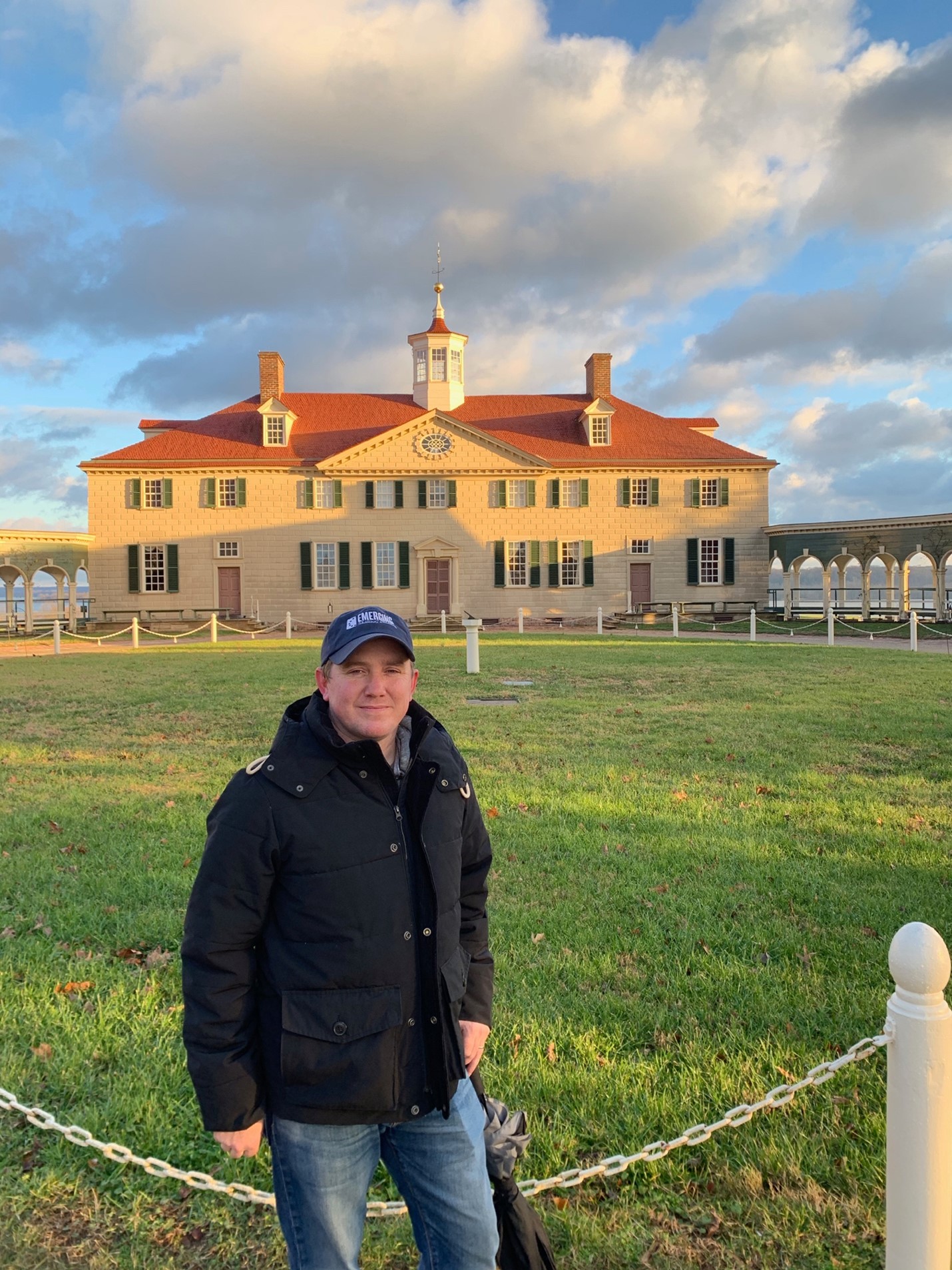
Historian Mark Maloy at Mount Vernon
Mark Maloy is a historian currently working for the National Park Service in Virginia. He holds an undergraduate degree in History from the College of William and Mary and a graduate degree in History from George Mason University. He has worked at numerous public historic sites and archaeological digs for the past ten years. He is an avid Revolutionary War reenactor and resides in Alexandria, Virginia with his wife, Lauren, and son, Samuel. He is a regular contributor to the blog Emerging Revolutionary War.
Mark’s first book, Victory or Death” The Battles of Trenton and Princeton, was released by Savas Beatie in 2018. His next book will be about Charleston, SC during the American Revolution and will be released late this year or early 2022. Both are part of Savas Beatie’s Emerging Revolutionary War series.
He will be presenting his talk: “Drunk Hessians and Other Myths of the Ten Crucial Days” at the May symposium.
Why do you believe the Battle of Trenton was a significant event in the American Revolution?
The Battle of Trenton was not just A significant event in the American Revolution, it was THE significant event of the American Revolution. This was because of the crisis the recently declared independent country was facing in December of 1776. The Americans had lost nearly every battle up until this point, confidence in General George Washington (and the United States) was at an all-time low, and the remnants of the Continental Army were evaporating. Thomas Paine declared “These are the times that try men’s souls.” The events at Trenton (and the following week at Assunpink Creek and Princeton) changed the entire course of the war and the new nation. This military campaign saved the Revolution. As one British historian aptly summed up the campaign: “it may be doubted whether so small a number of men ever employed so short a space of time with greater or more lasting results upon the history of the world.”
What first attracted you to the study of early American history? What keeps you involved in the study of this history? Do you find these things are the same or different?
Historic sites first attracted me to the study of history, and they continue to keep me involved. As a child growing up in northern Virginia, I first learned of early American history by visiting sites such as Mount Vernon and Gunston Hall. The power of visiting the places where history occurred was incredibly moving. It moved me to pursue a career in archaeology and public history, and I currently work for the National Park Service. Surprised at the lack of national recognition for the Trenton and Princeton battlefields, I worked to publish a book about the significant campaign in 2018 that offers readers a self-guided tour of the places where the history occurred.
What is the biggest myth about the Battle of Trenton, and how did it come about?
I think the biggest myth of the Battle of Trenton is the story that the Hessian soldiers were drunk and helpless when the patriots attacked on December 26, 1776. This is actually a very old myth that probably dates to the time period. Shortly after the embarrassing defeat, British officers began pedaling this story to denigrate the Hessian soldiers and the stories grew from there. While the story is fun to recount, it actually ends up belittling the actions of Washington and his soldiers. While the Hessians were surprised, they put up a tough fight, and the actual battle is often overlooked by the general public who probably think it was more an assault on a band of drunkards than the stand up fight it turned out to be.
Do you think there are common misconceptions of the era of the American Revolution among the American people? If so, what are they and have they ever affected your work?
There are plenty of misconceptions of the Revolution. Some would argue too many. The whole period is often awash in romantic hagiography. Stories of wooden teeth, cherry trees, and Betsy Ross flags surround the stories of the founding of the country. While these myths can make it difficult to learn what actually occurred, they serve as important touchstones to access the real history. While the image of Washington Crossing the Delaware is full of historical inaccuracies, it is an image many Americans have seen or can relate to, and the essence of the painting still displays the important themes of the event. So, while they can be burdensome, they can also play important roles in learning about the past.
Why do you think it is important for us to study the Revolutionary Era?
Our nation was born during the Revolution. It was during this time period we laid our highest ideals of self-government and liberty; ideals we still hold dear 250 years later. To better understand our country (the people, the institutions, the principles) we must study the Revolution. But in order for this nation to be born, a war had to be fought. Often times the military history of the Revolution is overlooked as the causes, ideals, and effects are studied more deeply. I think the military story of the war needs to be studied more, as there would be no country without the military victory, which was one of the most improbable triumphs in history.
Join us for our SECOND annual Emerging Revolutionary War Symposium. Due to the COVID 19 pandemic, we postponed the 2020 Symposium to May 22, 2021 with the same topics and speakers. Co hosted by Gadsby’s Tavern Museum, speakers and topics include:
Michael Harris on Misconceptions of Battle of Brandywine Vanessa Smiley on Myths of the Southern Campaigns Travis Shaw on American Loyalists John U Rees on African American Continental Soldiers Mark Maloy on myths of the Battle of Trenton
Stay tuned as we highlight our speakers and their topics in future blog posts.
Registration is $60 per person, $50 for Office of Historic Alexandria members and students.
During the Revolutionary War, the individual states formed their own navies for local defense and military operations. These state navies existed simultaneously with the Continental Navy. Like many state navies, Virginia’s began when the war started and there was a need to defend the state’s coastline and waterways, just as troops were organized to defend its land. The Virginia State Navy patrolled the Chesapeake Bay, provided security on its rivers, and even went to Europe and the Caribbean to bring back supplies.
After several years of inactivity, by 1781 the war had returned to Virginia. British troops occupied Portsmouth and used it as a base for raids. Governor Thomas Jefferson scrambled to get the state’s defenses ready.
British forces under General Benedict Arnold capture the fledging capital of Richmond, where he dispersed local militia and destroyed supplies. Arnold withdrew to the British base at Portsmouth, but the redcoats would soon be back in the area.
Marching south with reinforcements from New Jersey was General Lafayette. By late April he reached Hanover Court House, and continued on towards Richmond.
On April 8 General Phillips from Portsmouth up the James River to City Point. From there they moved on to Petersburg. The town was an important crossroads, port, and supply base for the Continental army. Generals Friedrich Von Steuben and Peter Muhlenberg had been gathering militia here, and they made a stand just south of the town on April 25. The British drove the defenders back, and the Americans retreated to Richmond. Phillips followed, intending to again capture the state capital.
As part of the British advance, General Arnold with the 76th, 80th, and some Jaegers (German riflemen) and Queen’s Rangers moved towards Osborn’s Landing on the James River. They arrived on April 27 and incredibly, won a naval battle without a navy!
Osborn’s Landing was a wharf about a dozen miles south of Richmond on the west bank of the James River. Assembled here were several merchant ships and the entire Virginia State Navy- nine warships with severely understrength crews. Across the river on the eastern bank were local militia from Henrico County.
This sketch of the engagement was drawn by British officer John Simcoe
Arnold sent a message to the American commander (whose identity is not recorded), “offering one half the contents of their cargoes in case they did not destroy any part.” The nameless American commander sent word, in answer, “We are determined and ready to defend our ships, and will sink them rather than surrender.” With that Arnold took them up on their offer.
The Queen’s Rangers and Hessian Jaegers charged down to the wharf, while the two British infantry regiments provided covering fire. Arnold also deployed two 3-pound and two 6-pound guns, which opened fire on the American ships “with great effect.” The Tempest became a primary target, and the Jaegers advanced, “by a route partly covered with ditches, within thirty yards of her stern.” The rifle fire prevented the crews from properly manning their guns on deck.
British artillery fire severed the rigging of the Tempest, and she began to drift, so the crew abandoned the ship. The other warships were also taking fire, and their crews abandoned them as well. Along with the Tempest, the other large warships lost were the Renown and the Jefferson.
The British destroyed the entire Virginia State Navy, and captured twelve private ships with 2,000 hogsheads of tobacco, flour, rope, and other supplies- all without a single ship of their own in the fight.
Phillips arrived at the town of Manchester, opposite Richmond, and Arnold’s forces joined them after moving up from Osborn’s. The British prepared to cross the shallow river and take the capital for the second time in three months. Yet the arrival of Lafayette on the high ground above the river convinced the British to turn back.
There are few reminders of the Revolution in the Richmond-Petersburg area. Today the site of Osborn’s Landing is inaccessible. Across the river, on the eastern shore, is a county boat landing and picnic area, with historic markers about the engagement. Ironically, Governor Thomas Jefferson’s grandfather, also named Thomas Jefferson, was born at Osborne’s Landing in 1677.
On January 29, 1756, Henry Lee III is born at Leesylvania Plantation in Prince William County, Virginia. Part of the prestigious Lee family of Virginia, his father was a cousin of Richard Henry and Francis Lightfoot Lee, two brothers who signed the Declaration of Independence.
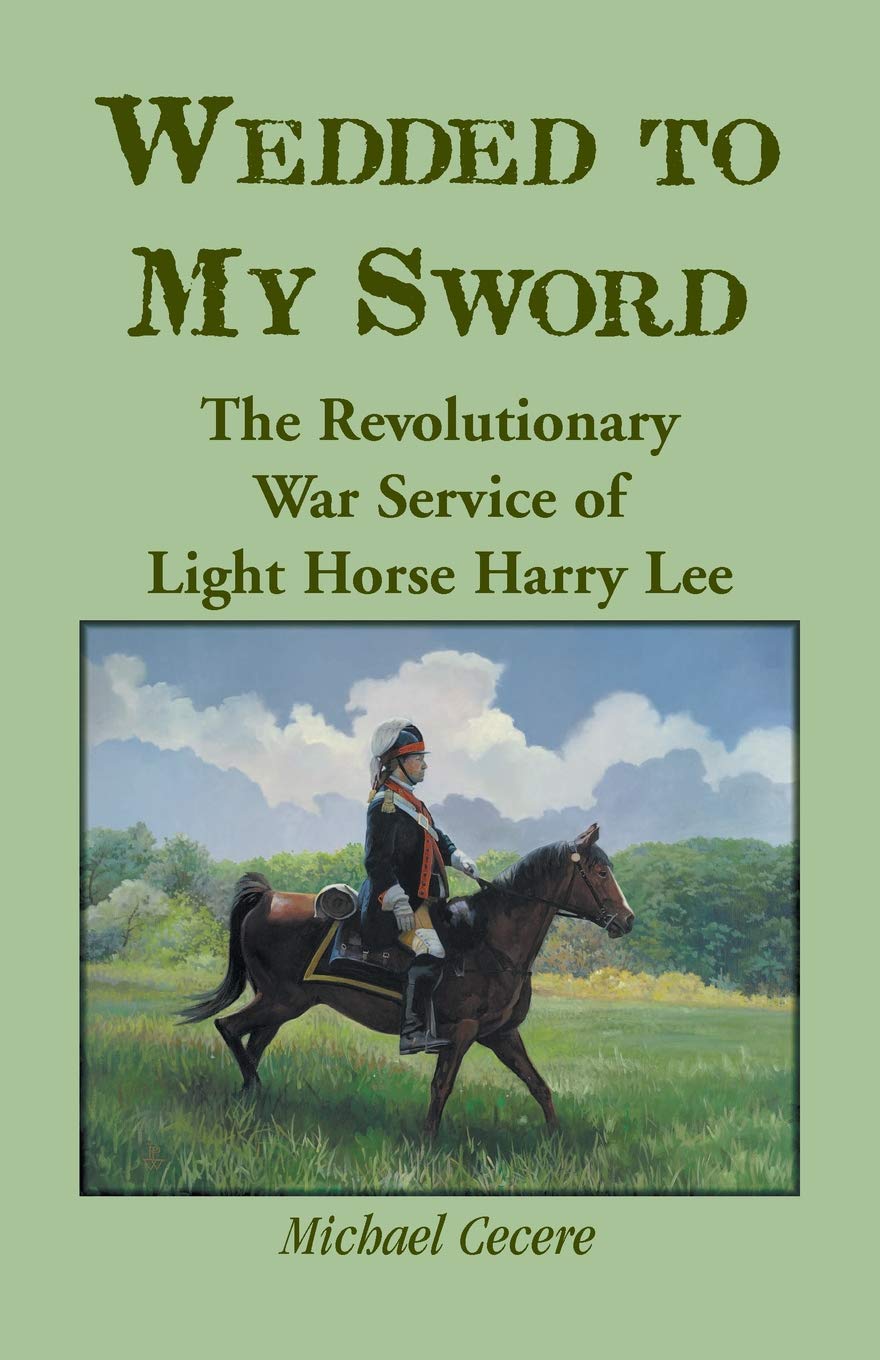
Henry Lee would blossom into one of the better cavalry commanders in the American Revolution, earning the nickname, “Light Horse Harry” Lee because of his accomplishments. With January being his birth month, Emerging Revolutionary War welcomes historian and author Mike Cecere, who will discuss his book, “Wedded to my Sword, The Revolutionary War Service of Light Horse Harry Lee.”
Cecere, former high school and community college history teacher is the author of thirteen books on the American Revolution, most focused on aspects of the colony of Virginia and/or her native sons.
This Sunday we hope you spend some time joining us on the next installment of “Rev War Revelry’ as we discuss the Lee that was born in January and became a military hero of the American Revolution. This historian happy hour will be live on our Facebook page at 7 pm EST.
(Yes, we do know there is another Lee that is born in January and plays a prominent role in history).
Westover Plantation, the beautiful Georgian-style colonial home once owned by Virginia’s Byrd family, sits atop a high bank, overlooking the James River. Located in Charles City County, Westover is a mere 25 miles from the Virginia state capital of Richmond. It was here, on January 4, 1781, that a visitor would arrive who ultimately would set Richmond “on its ear”; he was the infamous traitor, Benedict Arnold.
Westover Plantation
Throughout January 2021, Richmond National Battlefield Park, in partnership with Historic St. John’s Church Foundation, will commemorate what has come to be remembered as Arnold’s Raid through a series of three virtual presentations that will premiere on the Facebook channels of both organizations as well as on YouTube. The presentations will air on January 5, 10, and 17, all at 1:00PM.
In his first assignment as a general officer in His Majesty’s service, the newly minted Brigadier General, Benedict Arnold, sailed south from New York in late December 1780, heading to the Chesapeake Bay. The force he commanded numbered around 1,600 and was quite impressive, being comprised of both regular and loyalist troops. Upon reaching the Chesapeake, Arnold seized smaller craft that would take his strike force up the James River. Ultimately, his target would be Richmond, the new state capital of Virginia. Thus far in the Revolution, Virginia had played a critical role in the war effort in terms of supplying men and material. Knocking Virginia out of the war, therefore, could greatly aid Britain in ending the conflict. The destruction of its capital city could hasten that end. On January 4, 1781, Arnold would land his troops at Westover Plantation and begin the 25-mile march to Richmond.
Back in the 21st Century, Rangers of Richmond National Battlefield Park came to the site of beautiful Westover Plantation on the frigidly cold morning of December 26 to begin filming the presentation called “The Raid”, which will air on January 10. This video will center on Arnold’s activities before, during, and after his visit to Richmond and feature several sites around the city that figured prominently in the story. Joining the Rangers at Westover, in the icy wind from off the river, was professional living historian, Beau Robbins, who would be portraying an officer of the 60th Regiment, Royal American Legion. As Robbins, joined by his wife, walked through the main gate of Westover, his scarlet cape fluttered about him in the wind like a comic book superhero. A few visitors roamed the site as well, at a distance; the sight of an officer in scarlet certainly turned a few heads.
Living Historian, Beau Robbins
Other sites involved in “The Raid” include Chimborazo Park, where around 200 or so local militia fired a volley and fled before Arnold’s troops on January 5, 1781, St. John’s Church, where a good portion of Arnold’s command bedded down that evening in the churchyard, and the corner of 19th and Main Streets, where once stood the prosperous City Tavern and where Arnold himself would quarter. Other living historians would likewise join us, representing the local militia, British infantry, and the German (Hessian) Jaeger Corps. Social distancing was certainly the order of the day for this specific filming.
It goes without saying that 2020 was an incredibly different and challenging year due to the appearance of the COVID-19 pandemic. Individuals and businesses alike have been hard-pressed to re-think how lives should be lived, and business conducted amid the ever-tightening restrictions on social gatherings and the importance of social distancing. The history/museum world is no different. What has changed, though, for many history-based organizations is a new dependence on virtual programming in order to meet the needs and interests of our audience. This comes as somewhat of a contrast with other years as, in the past, there seemed to be an aversion by some to utilizing virtual programs. For many, the idea persisted that visitors would choose to not visit a site in person if they had already seen that site virtually. “That’s hogwash.” Beau Robbins said as we discussed this topic at Westover. “Seeing a video of an historic site only whets my appetite to go there; to see that site for myself.” As a life-long student of American history, I tend to agree.
Honestly speaking, nothing can replace the personal touch and connection with visitors that in-person history programs provide. For those who are able to visit a battlefield, an historic building or home, walking along with a guide and hearing the stories of that site is certainly a wonderful form of education and, hopefully, an experience to be remembered. But, what about those people on the other side of the country perhaps; people who may long to see those sites but who, realistically, will never be able to make the trip? There, I think, lies the true niche of the virtual program. It allows an historic site to share its storytelling with all who are interested. In some cases, as well, virtual programming may mean the difference between reaching hundreds vs. perhaps thousands. It’s certainly something to think about as we move forward into whatever our new “normal” will be.
John Trumbull’s painting depicts the mortal wounding of General Hugh Mercer, but one of those Americans mortally wounded was Lt. Bartholomew Yates.
Perhaps one of the most tragic and brutal stories from the Ten Crucial Days is the death of young Lieutenant Bartholomew Yates. Yates was an 18 year old officer in the 1st Virginia Regiment. He was originally from Gloucester County, Virginia, where his father Reverend Robert Yates was a minister of Petsworth Parish. He fought with his regiment at the Battle of Harlem Heights and at Trenton and Assunpink Creek.
However, he met his gloomy end at Princeton. The fighting on the fields south of the New Jersey town was brief but bloody. The 1st Virginia Regiment was in General Hugh Mercer‘s brigade that was the first engage the British at Princeton. The British 17th Regiment of Foot and Mercer’s men slugged it out in musket volleys in the William Clarke orchard. Shortly after the opening of the battle, Mercer discovered his 350 man brigade was greatly outnumbered and out matched. He ordered his men to retreat as the British lowered their bayonets and charged at Mercer’s men. Mercer’s men broke and ran. The British fell upon those Americans who were wounded or left behind.
Major John Fleming, commanding the 1st Virginia Regiment, had just ordered his men to dress their ranks when he was shot and killed. Mercer, on foot as his horse had been wounded, drew his sword and prepared to fight to the death. The British soldiers clubbed him on the head and bayoneted him seven times, mortally wounding him.
Yates was among those killed in the William Clarke orchard in a most brutal manner that many witnesses remembered. Captain John Chilton of the 3rd Virginia wrote, “Lieut. Yates had got a slight wound in the thigh which threw him into the hands of the enemy who immediately butchered him with the greatest Barbarity.” Dr. Benjamin Rush, who would treat many of the wounded after the battle described Lt. Yates’s death in terrifying detail:
“he received a wound in his side, which brought him to the ground. Upon seeing the enemy advance toward him, he begged for quarters; a British soldier stopped, and after deliberately loading his musket, by his side, shot him through the breast. Finding that he was still alive, he stabbed him in thirteen places with his bayonet; the poor youth all the while crying for mercy. Upon the enemy being forced to retreat, either the same or another soldier, finding he was not dead, struck him with a butt of a musket on the side of his head. He languished a week in the greatest anguish, and then died (I declare it upon my honour, as a man and a physician) of the wounds he received after he fell and begged for quarter.”







 Emerging Revolutionary War Era