“Rev War Revelry” Revolutionary Blacks, Discovering the Frank Brothers, Discussion with Dr. Shirley L. Green

Approximately 5,000 African-American or Black soldiers fought for the patriot cause in the American Revolution. Some joined state militias, some joined the Continental Army, and some sailed the seas with the fledgling navies of the United Colonies. William and Benjamin Frank were two of those 5,000. Both were free Blacks from Rhode Island who enlisted in the 2nd Rhode Island Regiment in 1777. Their father was a veteran of the French and Indian War, so the family was well-established in military tradition.

The 2nd Rhode Island fought and defended Fort Mercer during the campaigns of 1777 and survived harsh winters at Valley Forge and Morristown before returning to Rhode Island to literally defend the hearth and home from the British. Author and historian Dr. Shirley L. Green, adjunct professor at the University of Toledo, a 26-year veteran of the law enforcement community, and current Director of the Toledo Police Museum in Ohio, “takes the reader on a journey based on her family’s history, rooted in its oral tradition.”

Her book Revolutionary Blacks, Discovering the Frank Brothers, Freeborn Men of Color, Soldiers of Independence was published by Westholme Publishing in November 2023.

Furthermore, Dr. Green puts “together the pieces of the puzzle through archival research, interviews, and DNA evidence” to authenticate and expand the family history. The end result is a very readable and needed addition to the historiography of the American Revolution. Her ability to tell “a complex account of Black life during the Revolutionary Era demonstrates that free men of color…demonstrates that free men of color shared with white soldiers the desire to improve their condition in life and to maintain their families safely in postcolonial North America.”

Emerging Revolutionary War looks forward to an engaging and informative discussion with Dr. Green, this Sunday, at 7 p.m. EDT on our Facebook page. We hope you can tune in for this next episode of Emerging Revolutionary War’s “Rev War Revelry.”

For more information about the book and to order a copy, click here.

Prisoner of Washington and Napoleon: A Brief Sketch of Charles O’Hara

If not for his connections to some of the most famous commanders and events of 18th-century military history, British general Charles O’Hara might only get a passing mention in many history books. He still hardly gets more than that.

Charles O’Hara

Charles O’Hara came into this world unceremoniously as the illegitimate son of James O’Hara, a British baron. The younger O’Hara cut his teeth in military matters at the young age of 12 in the 3rd Dragoons before receiving an officer’s appointment in the Coldstream Guards. He served in an officer’s capacity in Germany, Portugal (with Charles Lee), and Africa. O’Hara was strict but liked by the men who served under him.

O’Hara’s years of military service brought him to North America in July 1778. Lieutenant General Henry Clinton appointed him to command the troops at Sandy Hook, New Jersey, to protect New York City because of his engineering skills and a recommendation from Admiral Richard Howe. Two years later, O’Hara wound up under the command of Lord Charles Cornwallis in the Southern theater. He performed ably there, leading the pursuit of Cornwallis’ army toward the Dan River in early 1781 and leading the British counterattack at the Battle of Guilford Courthouse. O’Hara led from the front and received two wounds to show for it. His nephew died during the battle.

At Yorktown, O’Hara drew the duty of surrendering Cornwallis’ army to General George Washington and Comte de Rochambeau. As the surrendering British columns approached the Allied lines, O’Hara asked to see Rochambeau. Whether this was a slight against Washington or not is unclear, but Rochambeau referred him to Washington. O’Hara apologized to Washington and explained why Cornwalls was not in attendance. Then, O’Hara handed Cornwallis’ sword to Washington, who refused it and passed O’Hara along to Benjamin Lincoln. O’Hara handed the sword to Lincoln. He looked it over, held it for a brief moment, and returned it to O’Hara. The surrender of the British army then began.

After dining with Washington following the surrender proceedings at Yorktown, O’Hara became Washington’s prisoner until receiving his exchange on February 9, 1782. He returned to England with Cornwallis’ praise and a promotion to major general. Back home in England, O’Hara fell into hard financial times from a gambling debt and ran away from them to mainland Europe. In stepped his old friend and commander Charles Cornwallis, who helped O’Hara offset the debts.

O’Hara received another promotion in 1792 to lieutenant general and lieutenant governor of Gibraltar, a post he long desired. There, misfortune found him once more when he faced the young Napoleon Bonaparte on the battlefield of Toulon. On November 23, 1793, the defeated O’Hara surrendered to Napoleon.

Labeled an insurrectionist, O’Hara found himself in prison in Luxembourg. During his nearly two years there, he befriended American Thomas Paine until his exchange in August 1795. Ironically, the man exchanged for him was the Comte de Rochambeau. He once again took the post of Governor of Gibraltar, where he died in 1802 from the effects of his war wounds suffered two decades earlier. 

Despite taking part in one of the most famous events of the Revolutionary War, O’Hara has faded into general obscurity even though he bears the distinction of being the only person to surrender to both Washington and Napoleon. 

He is featured regularly on the screen in The Patriot, but most people likely do not even know the character’s name or backstory. There is plenty more to be told in his story.

St. Patrick’s Day Rev War Revelry

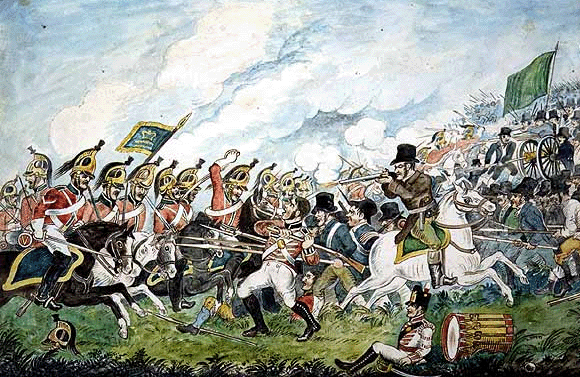
Join Emerging Revolutionary War historians Mark Maloy, Rob Orrison, and Mark Wilcox on this Sunday, March 17 at 7 p.m. on our Facebook page for a pre-recorded revelry as we discuss the Irish in the American Revolution. We’ll talk about the Irish who fought with Washington’s army (such as Colonel John Fitzgerald), those who fought with the British, and how the events in American ultimately spilled over into Ireland (the Irish Rebellion of 1798) and how we have come to remember the role of the Irish in the Revolution. Happy St. Patrick’s Day (and Evacuation Day)!

Can’t make it on St. Patrick’s Day because you’ll be celebrating? No problem, the episode will be up on our YouTube page later this week and available on our audio podcast. While there, check out our hundreds of Rev War Revelries and other videos!

The Soldier by the Road

Growing up in central Pennsylvania, the history of the Revolution seemed far away. There were no major battles here, and the big armies did not pass through here. The area produced no famous leaders or generals.

Read more: The Soldier by the Road

My hometown, Lewisburg, sits on the banks of the Susquehanna River. In the 1770s the area was the frontier, and Revolutionary connections here are few and far between. The militia served far away during the Brandywine and Germantown campaigns. There were some Indian raids through the region as well.

One thing I was always curious about, but never acted on, was the headstone of a Revolutionary soldier, literally next to Route 192. It is in the middle of nowhere, far from any towns or forts. I had moved away but on a recent visit I had the chance to pull over, look at the marker, research the name, and find out who the soldier by the road was.

The grave sits literally feet from the road. Author photo.

Christian Hettick was born in 1750 in Rheinland-Pfalz, modern Germany. He moved to Pennsylvania and settled with many other Germans in the Susquehanna Valley. He resided along the Susquehanna River in what later became the town of Lewisburg. In 1781 he was serving with the Northumberland County militia (today the area is in Union County). 

While the Yorktown campaign was underway 300 miles to the south, reports of hostile Indians brought the militia out to patrol here. Finding no hostile enemy, Christian was apparently returning home when he encountered Indians, who shot, killed, and scalped him.

His body was found by the side of the road. He left a pregnant widow, Agnes, with four children, and a daughter was born shortly after his death. His son seven-year-old son Andrew was actually with his father when he was killed. The Indians captured Andrew, but he escaped after several months. 

Another view of the grave. Author Photo.

So there he rests, literally by the side of a busy road (thankfully no cars have taken out the small marker). In this quiet corner of central Pennsylvania, far from the large battlefields and campsites, is this reminder of the Revolution.

The headstone is in remarkable condition, and a Revolutionary War service plaque with flag is next to it. Author photo.

Parliament Reacts to the Throwing of the Tea

December 16, 1773, was deep into the rear-view mirror. A new year had begun, and February 1774 lay close to the horizon. Yet, for the British Parliament, the events of what later became known as the Boston Tea Party were still very much breaking news. Word had just reached London of what had happened in Boston. Now, how would the Crown and those in parliamentary power react to this shocking news?

Read more: Parliament Reacts to the Throwing of the Tea

Most contemporary sources of the period, as well as a litany of works in the historiography of the subject, contend that Britian’s reaction to what happened in December 1773, and thus their course in handling the situation in 1774, was done so prematurely and without much rational debate and discussion. Historian Jon Ferling suggests, “the myth arose that its government, under Prime Minister Frederick, Lord North, had acted in haste.” The myth had grown during the numerous setbacks the British later suffered during the war itself. And, in the wake of their ultimate defeat, many contemporaries across the pond argued that Britain’s leaders, “had failed to comprehend the gravity of the challenge,” i.e., using the military might of their nation to quell the rebellious colonies in 1774.

If one was to examine the proceedings of Parliament during this period 250 years ago, however, they would not find hasty decisions being made based on emotional reactions to the news out of Boston the previous month. This is especially so when the use of the country’s military resources was debated as an option to deal with the rowdy and disobedient Bostonians. Nothing could be farther for the truth contends Ferling, noting that the use of their military to enforce Crown law in the colonies began in the opening days of 1774, even before the throwing of the tea reached London. Not only was this thought discussed and debated in Parliament, but the reactions the colonists would have was also heavily considered. Some openly debated that such a strong application of Britain’s military in Boston, the Massachusetts Colony, and other coercive actions, may indeed spark yet another war in North America. These arguments were then quickly followed by questions of whether Britian could win in another conflict on this continent so soon after the French and Indian War; a conflict that had drained Britain’s finances and depleted her military ranks.  

As January 1774 concluded 250 years ago, and February was just days away, these larger questions on how Parliament and the Crown should react to the Boston Tea Party and course-correct those in colonies in open rebellion against Britain were continually debated. It was not until March 1774 that a decision was made. North, and thus Parliament, opted to avoid the potential for outright war by utilizing their military might first. Instead, they chose a route of punitive measures, the Coercive Acts (also known as the Intolerable Acts). As part of this legislation, certain parts would solely focus on Massachusetts as punishment for the events of December 16, 1773, in Boston. These acts also included closing Boston Harbor until the destroyed tea’s worth had been repaid, and Gen. Thomas Gage, commander of the British Army in America, installed as the colonial governor of Massachusetts. Gage contended that these refractory Bostonians would “be lions while we are lambs; but if we take the resolute part, they will prove very meek, I promise you.”

In the end, however, this course of action was not made in haste at all, but rather after nearly four full months after the throwing of the tea in Boston harbor. And, one could argue that North and Parliament initially sought to refrain from the sole use of  Britain’s military might, rather opting for legislative settlement to the issues that arose from Massachusetts. But, as history played out 250 years ago in 1774, as historian Ferling contends, “Britain, of course, miscalculated hugely.”

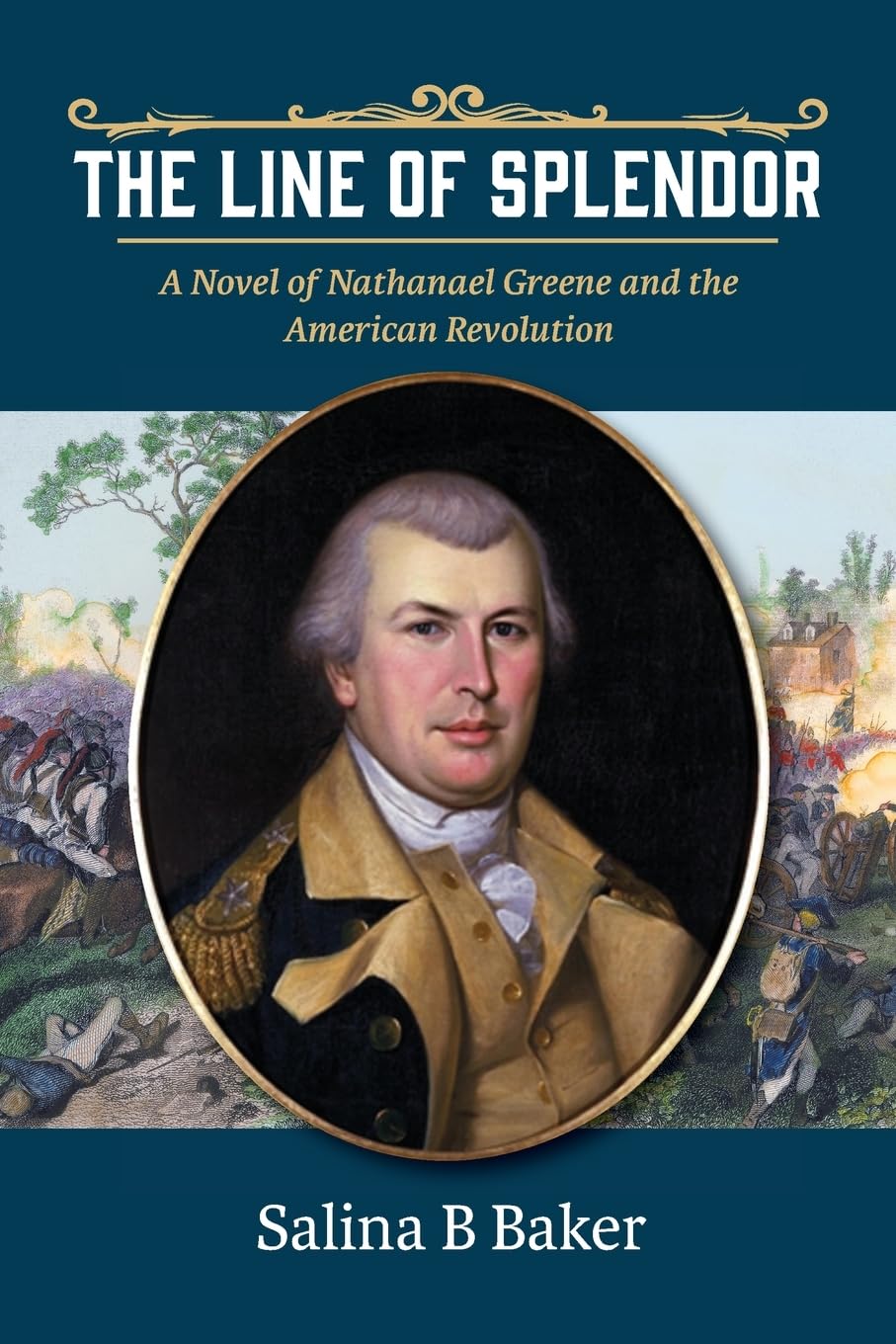
Rev War Revelry: The Line of Splendor: A Novel of Nathanael Greene with Author Salina Baker

From the hard lessons learned on the battlefields of New York, to his appointment as Quartermaster General during the harsh winter at Valley Forge, his role in convicting the British spy who colluded to obtain the plans to West Point, to the godsend who took command of the ragged remnants of the Southern Continental Army, Nathanael Greene’s complex perseverance and brilliant strategies broke military doctrines.

Join ERW LIVE this Sunday at 7pm as we welcome author Salina Baker to discuss her historic novel about Nathanael Greene. We will discuss the life of Greene, his wartime experiences, why he has been forgotten by many and why she found his life story so interesting. Grab a drink and join in on the conversation!

My Pilgrimage to Camden

Emerging Revolutionary War welcomes guest historian Eric Wiser to the blog.

This is a brief story of my first and memorable visit to the Camden Battlefield in South Carolina this September past.  I am a husband and father living in the suburbs of Chicago. I make my living as an accountant. As rewarding as my career has been, it’s my strong interest in early American history that stirs my imagination. My pilgrimage to Camden was part of a visit to my friend Phil Kondos who moved to eastern Georgia with his family over a decade ago.  Phil is a gifted musician and wonderful father and happens to share a mutual love of history. This narrative of our visit will hopefully inspire others to place Camden Battlefield on their bucket list.  

My interest in the Battle of Camden mostly derives from having a Patriot ancestor who fought there. Pvt. Michael Wiser, a 23-year-old grist miller from Frederick County, Maryland, was with the First Maryland Brigade and captured by the British at Camden.[i]  

Continue reading “My Pilgrimage to Camden”

Tour Opportunity with Historian Michael Harris on Battle of the Clouds and Battle of Paoli

On May 25th, kick off your Memorial Day weekend this year with a Revolutionary Tour led by me. Highlights of this half day tour will include the Battle of the Clouds locations, the Paoli Battlefield, and a visit to Valley Forge to discuss the September 18, 1777 skirmish that took place there.

This car pooling tour will leave from Valley Forge at 8am and end at the same location.

Cost: $35 per person.

I will have copies of my books available to be signed as well (cost of any books additional).

A minimum of 10 people will need to pre-register for this tour to take place.

There is no registration limit though.

To participate, please contact me directly. mharris28thpa@gmail.com

Happy Washington’s Birthday!

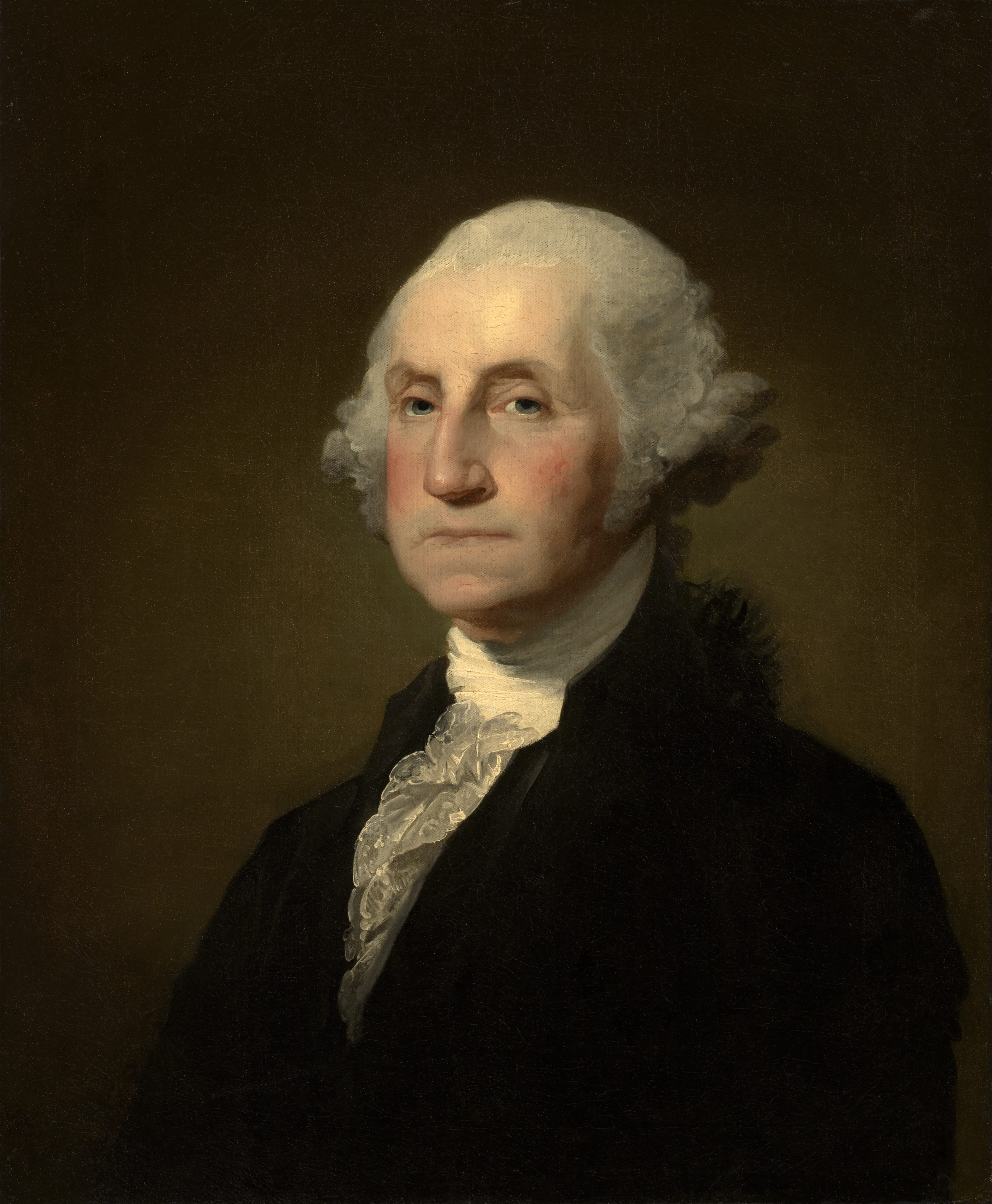
Today we celebrate George Washington’s Birthday.  You read that correctly.  While most people refer to this Monday holiday as ‘Presidents Day’, the federal holiday (and many state holidays) only celebrates one President of the United States: George Washington.

Washington’s birthday celebrations go back to the time when Washington was living.  Washington was born on February 11, 1731, but with the changing from the Julian calendar to the Gregorian calendar, it was shifted to February 22, 1732 in 1752.  (Check out a video of us visiting the site of Washington’s birth!) While there are no records of how he and his family celebrated the day privately, the first real public celebration of his birthday occurred at Valley Forge in 1778.  A fife and drum corps serenaded the commanding general outside his headquarters building at the Potts House during that dreadful winter.  Historically, the colonists had celebrated annually the birthday of the King, so it was symbolic for the Continentals to celebrate Washington’s birthday instead during the war.

After becoming President of the United States, large public celebrations of Washington’s birthday occurred across the country including large ones in Philadelphia and New York.  These celebrations included the ringing of church bells, feasts, toasts, artillery firings, and fireworks.

Continue reading “Happy Washington’s Birthday!”

Rev War Revelry: The Tory War of 1781 with Historian and Author Patrick O’Kelley

Join ERW at 7pm on February 18, 2024 as we chat with historian and author Patrick O’Kelley about the brutal civil war that broke out in North Carolina in 1781. Whigs (commonly known as Patriots, supporting American Independence) and Tories (supporting loyalty to Great Britain) fought a brutal and bloody war against each other in eastern/central North Carolina called “The Tory War.” Maj. Gen. Nathanael Green, wrote that the war in the Carolinas ‘Nothing but blood and slaughter has prevailed among the Whigs and Tories, and their inveteracy against each other must, if it continues, depopulate this part of the country.’

Patrick O’Kelley has authored numerous books on the American Revolution, including his four volume all encompassing series on South Carolina in the American Revolution titled “Nothing But Blood and Slaughter: The Revolutionary War in the Carolinas” and ““Be Cool and Do Mischief: Francis Marion’s Orderly Book.” His extensive research on the war in the South is a go too for many interested in the events in the Carolinas. Grab a drink and join us live on our Facebook page to discuss this often overlooked brutal part of the American Revolution. We will also discuss other topics that Patrick is researching and working on. See everyone this Sunday at 7pm!