Part 1 of this article showed that a total of 23 ferry trips were required to move all of Knox’s artillery men, guns, horses, and carts across the Delaware River. In addition, there were other horses needed for the march to Trenton. Many of the likely 35 horses associated with senior officers and aids could fit in with the above 23 trips at a rate of a couple per trip, especially the ferry with only one cart.
There were six ferries operating to move the Continental Army across the river at McKonkey’s ferry site. Each of the six ferries could likely carry a maximum weight of roughly 8,750 pounds. That weight estimate comes from the intelligence report from Capt. Losbiniere on 22 December 1776 concerning the “7 flat-bottom boats which may carry about 50 men each and two ferry Boats, which may carry the like number” that were with Col. Cadwalader at Bristol ferry.[i] There is no reason to believe those ferries were different from those at used at McKonkey’s. If it is assumed a man weighed 150 pounds plus 25 pounds of musket and gear, then the weight for 50 men comes to 8,750 pounds. With those capabilities the Philadelphia Light Horse needed 3 ferries for their unit (8 horses and riders per ferry).
Possibly one more ferry trip for any leftover senior officers and aids horses was necessary. That is 27 trips total needed. With six ferries working that is four trips for all with three additional trips required. Those five round trips by the ferries were estimated by Washington in his plan to require six hours; however, it actually took a nine-hour period (6 pm to 3 am). The additional hours required for the crossing was likely explained by the floating ice and the increased river current driving the ferries out of position.
The question was raised about how difficult it would have been to transport the horses across the river. The somewhat surprising answer may be that it was not as difficult as many assume. No doubt a few horses were a problem; however, the majority of the horses probably presented few problems. How we surmise this is as follows:
Firstly, we can safely speculate that at least some of the horses had participated in earlier ferry crossings during the army’s previous movements and retreats. Those horses would remember that nothing was amiss in the crossing. Secondly, many of the farm horses transferred to pull guns had previous experience pulling carts and wagons across ferries to take produce to market. Thirdly, each team had a driver who knew the horses and he could strategically place the lead horse with a horse who had experience. As for the cavalry, each horse rider likely slowly leads his horse onto the ferry. Horses who see a previous horse move onto a ferry without incident generally lose their fear.
The following picture of a contemporary ferry crossing (1779) shows a typical crossing.[ii] This period ferry appears to measure about 48 feet long (without the two four-foot ramps) by eight feet wide. If one replaces the carriage in the painting with a field gun and limber then the person holding the reins would be the driver. Note the horses are in a pair; whereas, on a gun team there would be a thill horse in front of the limber and additional horse(s) in front of the thill horse.
Many of the campaigns and battles of the Revolutionary War are better understood if a study of horses was included in the analysis. Often, it was all about horses, or the lack thereof. Both General Burgoyne’s march south in the Saratoga campaign and General de Kalb’s march toward South Carolina show that the lack of horses was very important. As for the crossing of the Delaware, General Washington showed his skill in planning. More important, Washington was lucky. It was not the horses that drove the outcome but rather the bad weather and severe river conditions. These bad conditions set in place the delay that assisted the surprise attack.
[i] William S. Stryker, The Battles of Trenton and Princeton (The Riverside Press, Cambridge, 1898), 338
Everyone has heard about how Washington crossed the Delaware River on Christmas night in 1776, but now you can learn the fuller story. We’ll be talking on the 244th anniversary of the actual Ten Crucial Days, which occurred between December 25, 1776 and January 3, 1777. We’ll discuss the important events that occurred and look at some of the myths, misconceptions and lesser-known people involved. Additionally, we’ll talk about the sites where these important actions occurred and what you can see there today.
So, grab your favorite drink, this Christmastime season, and settle in to learn more about the ten days that saved the Revolution and changed the course of American history.
December 1776 was one of the darkest months in American history. The American Revolution was on the brink of collapse. New York City had fallen, George Washington’s Continental Army was disintegrating before the country’s eyes, and the British Army under Sir William Howe was steamrolling its way across New Jersey toward the Delaware River—the only barrier preventing Howe from squeezing the life out of the rebellion.
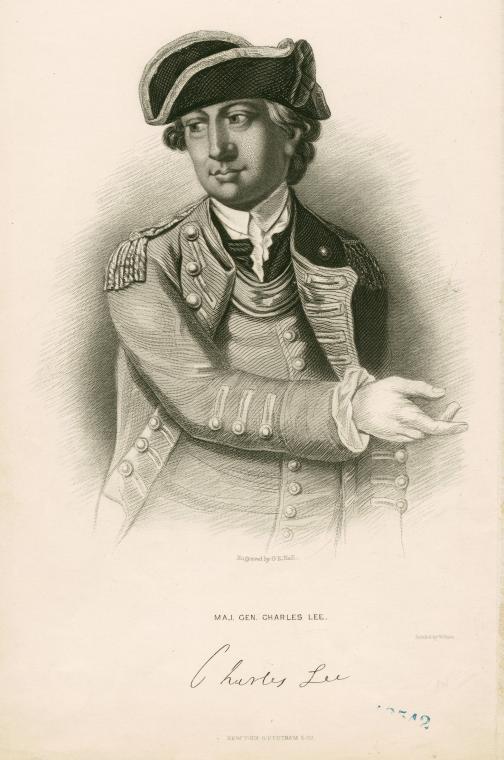
Following the fall of Forts Lee and Washington along the Hudson River the previous month, the Continental Army fled from the British in two major wings. Washington, commanding just 3,000 men, hastily made his way across the northern part of New Jersey in an attempt to get over the Delaware and into Pennsylvania. Major General Charles Lee, who the commander in chief described as, “The first officer in Military knowledge and experience we have in the whole army….,” commanded the other wing—7,000 men at White Plains situated above New York City in case Howe attempted to head north. Lee was eccentric and erratic, but was by far the American commander with the most military experience and knowledge at this early stage in the conflict, as Washington had admitted. This could not, however, protect Lee from the enemy.
Major General Charles Lee (1732-1782), the Continental Army’s second in command. New York Public Library Digital Collections
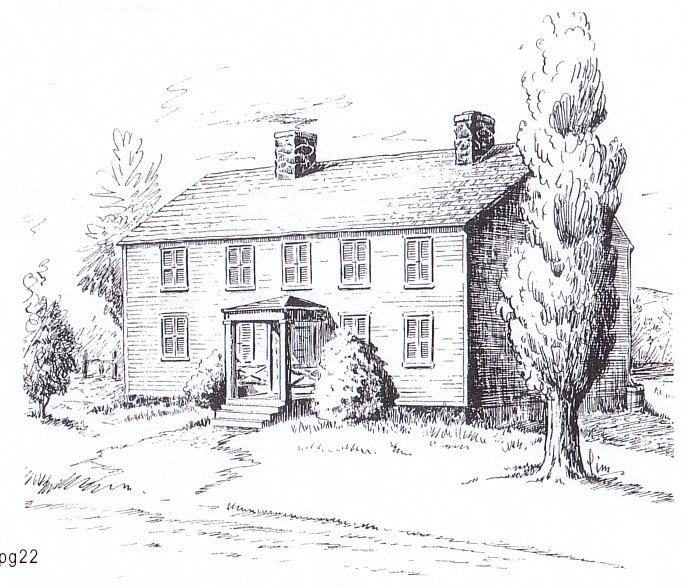
On multiple occasions at the end of November and in early December, Washington asked, requested, and then ordered Lee to bring his command into Pennsylvania so the army may be reunited. Lee hesitated, drug his feet, and then began to grow fond of the idea of having his own independent command in New Jersey away from the reigns of his superior, whose abilities he doubted. While Washington waited, Lee wrote to Congress on December 8 that he planned to stay east of the Delaware River and “annoy, distract, and consequently weaken [the British] in a desultory war.” On December 10, his command marched into Morristown, New Jersey, and two days later moved south west to Bernardsville. It was here, that Lee decided to search for more suitable conditions for a general to make his headquarters for the evening. He found what he was looking for three miles to the east in Basking Ridge at the two-story Widow White’s Tavern. With him, he took his aide, Major William Bradford, two French volunteer officers, and fifteen guards who situated themselves around the building. That evening, Major James Wilkinson, General Horatio Gates’s aide, rode to White’s Tavern with a dispatch for Lee from his superior.
The Widow White’s Tavern, Basking Ridge, NJ.
While Lee and his party got themselves comfortable that night, British dragoons were galloping about Central Jersey trying to find out all they could about Lee’s command’s whereabouts. Lieutenant Colonel William Harcourt, 22 year old Cornet Banastre Tarleton, and thirty or more horsemen of the 16th Dragoons had left General Charles Cornwallis’s headquarters at Pennington earlier in the day and rode willy-nilly to Hillsborough on their intelligence gathering mission without any success. They made their camp there in a house that was lit on fire in the middle of the night, forcing them to make a hasty escape and sleep within a hay barn. Early the next morning, they mounted up and continued on their task. Tarleton and several other dragoons were sent ahead of the rest of the group.
As the sun rose, the two groups headed in the direction of Morristown, scooping up several rebels along the way, but only receiving sketchy information about the enemy’s location. Near Basking Ridge, their luck changed as a rider from Gen. Sullivan was intercepted who had just returned from Lee’s headquarters. He led Tarleton and Harcourt within sight of White’s Tavern. Harcourt quickly formulated his plan of action—Lee was there, and he was going to capture this grand prize. Young Tarleton was ordered to rush the guards at the front of the structure, while he took his party around the back to surround and cut off their escape. It was 10 a.m.
As the dragoons prepared to make their attack, Lee was still inside White’s Tavern. Even though his command had begun to march out of Bernardsville, he chose to stay behind and finish breakfast and dictating a response to Wilkinson for Gates. His response was a clear shot at Washington: “… entre nous [between us], a certain great man is damnably deficient—He has thrown me into a situation where I have my choice of difficulties—if I stay in this Province [New Jersey] I risk myself and army and if I do not stay the Province is lost forever … unless something which I do not expect turns up we are lost—our counsels have been weak to the last degree….” Lee had no idea of the risk he was actually facing at that moment.
Shots rang out from outside after Lee finished his message. Tarleton and his dragoons swept out through the woods and violently fell upon the general’s guard. “I went on at full Speed,” Tarleton later recounted, “when perceiving 2 [guards] at a Door and a loaded Waggon; I push’d at them making all the Noise I cou’d. The [guards] were struck with a Panic, dropp’d their arms and fled. I order’d my Men to fire into the House thro’ every Window and Door, and cut up as many of the Guard as they cou’d.” Within minutes the fire ceased and the cornet demanded Lee and everyone inside the tavern to surrender or he set fire to it and kill them all. Lee was upstairs during the fighting hoping and watching for reinforcements. They would not come. Recognizing the inevitable, he sent Maj. Bradford outside to inform Tarleton that he would surrender.
The Capture of General Lee in Basking Ridge, NJ. NYPL
In the wake of the skirmish, Bradford, Wilkinson, and one of the Frenchmen managed to make their escape. Lee, however, would not be so fortunate. After surrendering himself to Harcourt, he was taken back to Pennington, sent to New Brunswick, and eventually to New York City for confinement. He would not be paroled and returned to the Continental Army for nearly sixteen months. The American army and the status of its cause for independence which it fought and bled for would be much different then.
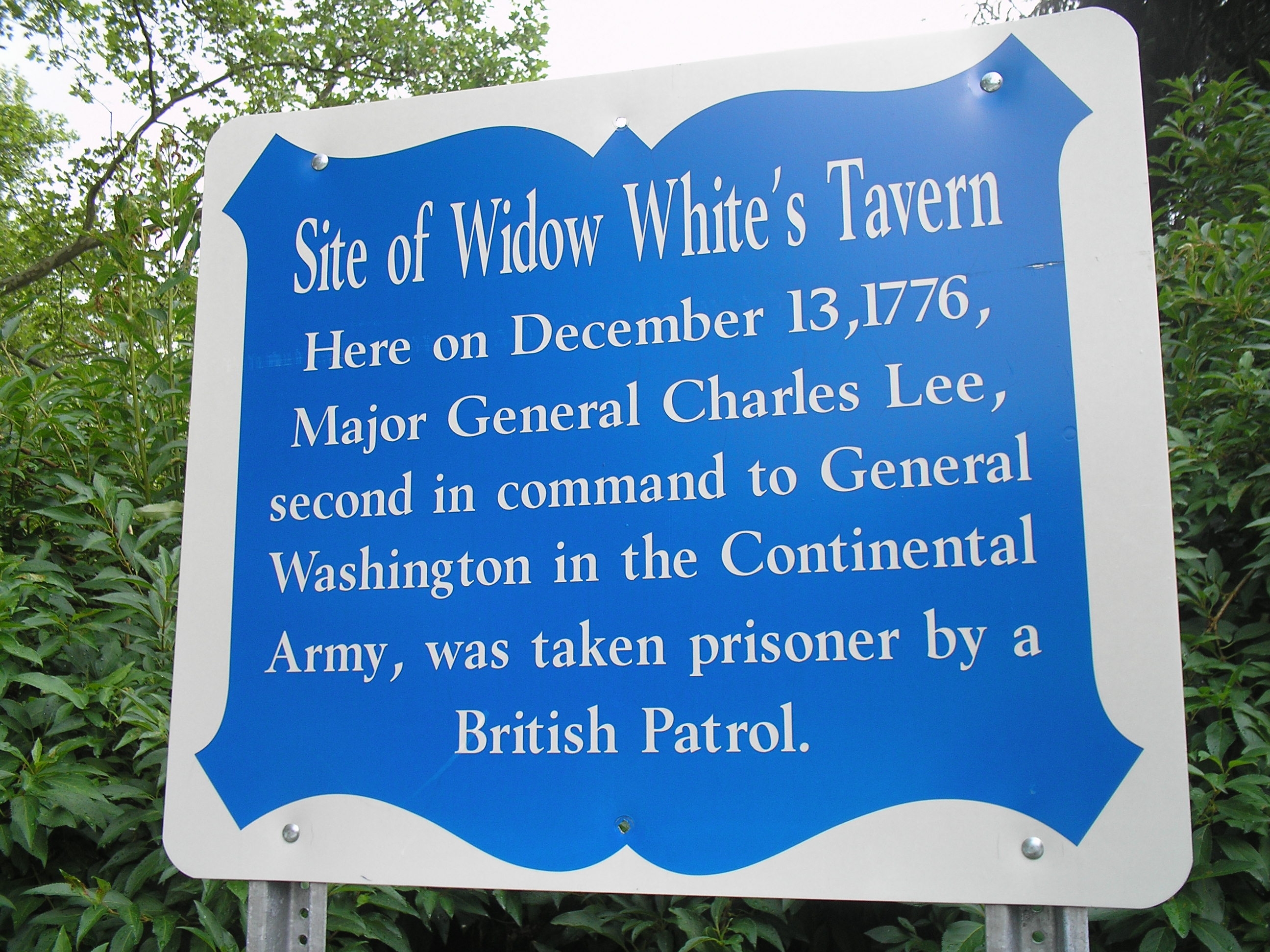
Marker at the Site of Widow White’s Tavern at the intersection of South Finley Avenue and Colonial Drive, Basking Ridge, NJ. The Historical Marker Database. http://www.hmdb.org.
Emerging Revolutionary War welcomes guest historians Karl G. Elsea and William W. Welsch. Short bios of both historians are at the bottom of this part.
Part I:
The purpose of thisarticle is to further investigate General George Washington’s Christmas night crossing of the Delaware River in December, 1776, with added emphasis on the role of the artillery and horses This is the result of discussions and collaboration between the two authors.
In an earlier article published by The Journal of the American Revolution, the second author posed the question of just how difficult was the crossing. Given the weather, the river conditions, the expertise of the crews, and available original sources, this remains an unanswerable conundrum. However, new research is able to provide a better understanding of the challenges posed in crossing the cannons and horses.
In calculating the number of horses needed to move the artillery, authors have been initially tempted to use the numbers provided from John Muller’s Treatise on Artillery. Muller (about 1757) wrote that “A 3 pounder requires but 1 horse, a 6 pounder 2, a 12 pounder 3 of the light [field artillery] sort.” That quote assumed roads as they were in England and Europe, and relatively flat and firm, dry surfaces with well-fed and conditioned horses. Those conditions do not apply well for Revolutionary War America.[i]
There is a primary source that states a three-pounders was pulled by at least 2 horses. John Greenwood, a fifer in the 15th Continental, recorded “the ball … struck the fore horse that was dragging our only piece of artillery, a 3-pounder.”[ii] This was important information because a three-pounder gun could be pulled by a single horse according to Muller. Because the weather was rainy and sleety, with the ground becoming muddy, an extra horse was required. That Patriot three-pounder gun had at least two horses.
There were old expressions that give important insight into what a horse could pull. For example, “on flat, firm ground a horse or mule can pull its own weight ten hours a day, every day.” Also, “on rough ground a horse can pull half its weight with large wheels.”[iii] While those expressions offer what a well-fed horse could accomplish, we have no way of assessing the condition of the army’s horses, given that forage was a constant problem.
There was another issue concerning horses pulling in harness. Not all of their effort can be applied to the load being pulled. If there was more than one horse pulling a gun, then they were harnessed in tandem in America. The horse between the shafts for the limber was called the thill horse. In tandem the horse in front of the thill horse only had 3/4 of its draught applied to the load. If there was a horse before that one, then only half of that horse had the draught apply to the load. If there was a fourth horse in tandem, then only 1/4 of the draught can be applied. More than four horses in tandem provided no gain in pull and might make pulling harder. For example, cresting a hill with the Fore horse on down side and the Thill horse on the rise side of the hill would result in the forces being against each other.
There was another problem, if the ground was rough or muddy then one must reduce the draught for all the horses by half. If a horse had a rider, then that horse’s ability to pull a load was reduced by half.
A typical Colonial farm horse available for pulling battalion guns in Colonial America was probably between 14 and 15 hands tall and weighed between 850 and 1,000 pounds. Large draft horses like the Conestoga were not used on battalion guns, they were reserved for large wagons.
It seems very reasonable that each gun in Washington’s force had an extra horse added due to the conditions of the ground. With the information presented above, the following presents the math for a light six-pounder guns as used by Hamilton and Forest.
The “old” six-pounder (Armstrong design 1736) with carriage and limber and everything with which to utilize the gun weighted about 1,800 pounds. Adding 24 rounds of ready fixed ammunition adds 202 pounds for a grand total of 2002 pounds that must be pulled.[iv] The “old” six-pounder would normally be pulled by two horses according to Muller. The thill horse would provide about 1000 pounds of draught and the fore horse about 750 pounds for a total of 1750 pounds of draught with 2 horses. As the math suggests, there was a shortfall in draught (2002 vs 1750) which means that the horses would likely wear out in less than 10 hours of work. The shortfall noted could be significantly greater when the condition of the ground was considered. With the thill horse and two fore horses added as a pair, then an additional 750 pounds of draught was available (for a total of 2,500 pounds of draught). Because the army was moving by a road then the horses in front of the thill horse did not have to be in tandem and could be added as a pair. This calculation demonstrates the six-pounder likely had an additional horse. The calculations would be similar for the howitzers. That means the six-pounders, the four-pounders, and the howitzers each had three horses and the three-pounders each had two horses.
A typical colonial period ferry (flat) designed to carry a large farm wagon to market, as would be case at McKonkey’s and Johnson’s ferries, would typically be about 48 feet long and 9 feet wide. A light six-pounder gun with three horses (fore horses in a pair) would be almost 40 feet long. Same for the 5.5-inch howitzer. The track of a six-pounder would be 4 feet, 8 inches leaving some room on the side(s). A three-pounder gun with 2 horses (thill and fore) would be about 35 feet long. With that information one can see that each gun would require a trip on the ferry, and there would be some space along the side(s) for some artillerymen and/or horses.
At least seven artillery ammunition carts had to be used – one for each artillery company. In addition, Forest’s artillery company needed an additional cart because he had two types of cannon, and thus a cart for each type of cannon. It may be that Moulder also required two ammo carts to carry adequate ammunition for his three guns. Each cart with horses would require about 24 feet, so two carts could be taken on a ferry.
Thus, Knox’s artillery would require eighteen ferry trips to move all eighteen cannons, one for each cannon and team. Two trips required on a ferry for the four ammo carts (two carts per ferry) associated with Greene’s column (Forest, Hamilton, Bauman). Three trips required on a ferry for the five ammo carts (two carts per ferry) associated with Sullivan’s column (Sargent, Neil, Hugg, Moulder).
Company
Number and Type Cannon
Ferry Trips
Forest
Two 6-pounder gunsTwo 5.5-inch howitzersTwo ammo carts
222
Hamilton
Two 6-pounder gunsOne ammo cart
21/2
Bauman
Three 3-pounder gunsOne ammo cart
31/2
Sergeant
Two 6-pounder gunsOne ammo cart
21/2
Neil
Two 3-pounder gunsOne ammo cart
21/2
Hugg
Two 3-pounder gunsOne ammo cart
21/2
Moulder
Three 4-pounder gunsTwo ammo carts
31
[i] John Muller, A Treatise of Artillery the second edition (John Millan, Whitehall, London, 1768), 178.
[ii] John Greenwood, Revolutionary Services of John Greenwood of Boston and New York, 1775-1783, 40-41. “the first intimation I received of our going to fight was the firing of a 6- pound cannon at us, the ball from which struck the fore horse that was dragging our only piece of artillery a 3-pounder.” Retrieved from https://archive.org/details/revolutionaryser00gree/page/38/mode/2u
[iii] First author’s grandparents (paternal and maternal) farmed with horses in early 1900’s. Grandparent that farmed in Blue Ridge Mountain’s foothills and clay mud taught these expressions. The reader may find references to a horse pulling 1.5 times its weight on a road. That reference assumes roads with firm surfaces and includes, in its averaging of 1.5, roads with asphalt and concrete from more modern times.
[iv] Adrian B. Caruana, The Light 6-Pdr. Battalion Gun of 1776, (Alexandria Bay, NY: Museum Restoration Service, 1993), 14.
*Bios*
Karl G. Elsea graduated with a B.S. in Electrical Engineering from Va. Tech. and a MBA from UNCC. Son, daughter, and I participate in Revolutionary War reenactments. Have ridden horses most of my life. Was a coxswain in the U. S. Coast Guard and earned the Trident. Taught disadvantaged youth at a juvenile detention center. Own horses and pull a bronze four-pounder cannon and limber for living history.
William M. Welsch, a retired administrator at Montclair State University in New Jersey, is the current and founding president of the American Revolution Round Table of Richmond, and co-founder of the Congress of American Revolution Round Tables. He is a tour guide of Revolutionary War battlefields, frequent presenter and author of multiple articles on the Revolution. His interest areas include the Revolution in New Jersey, Pennsylvania and the generals of the Continental Army. Welsch served in the United States Marine Corps and is married with two daughters and five grandchildren.
Emerging Revolutionary War welcomes back guest historian Dan Welch.
It’s December 9, 1775. Not only was the future of the fledgling Patriot’s cause at stake, but the future of our yet-to-be created Supreme Court was as well.
Over the previous months, rebel forces in the area had been engaged with Lord Dunmore’s troops for control of military supplies in the colony of Virginia. This eventually led towards the area around Norfolk, where Dunmore’s forces had fortified a position opposite a river crossing that was strategic both militarily and economically. The position, south of Norfolk, at Great Bridge, was not uncontested. Just opposite Dunmore’s stockade, known as Fort Murray, on the other side of the river, rebel forces settled in, arriving on December 2.
Col. William Wofford, in command of the 2nd Virginia Regiment and about 100 men of the Culpeper Minutemen battalion, began entrenching their position opposite Fort Murray while more militia from surrounding Virginia counties and North Carolina marched towards their aid. As more men arrived, as well as several pieces of field artillery, Lord Dunmore grew wary. He believed his only course of action was to attack Wofford’s men and drive them from the field. The attack was set to begin by dawn’s early light on December 9, 1775.
Found in the ranks of Wofford’s command that morning as the battle opened was a father and son, Thomas and John Marshall. Thomas, a vestryman, High Sheriff, and a member of the House of Burgesses had brought his son with him into the patriot ranks from Fauquier County. By the time of the battle, Thomas, who had been active in the organizing and raising the Culpeper Minutemen, had been appointed its major. His son John, age 20, its first lieutenant.
John Marshall’s biographer later recounted the importance of this moment on the young nineteen-year-old, writing “The young soldier in this brief time saw a flash of the great truth that liberty can be made a reality and then possessed only by men who are strong, courageous, unselfish, and wise enough to act unitedly…He began to discern, though vaguely as yet, the supreme need of the organization of democracy.”
John Marshall went on to serve as the fourth Chief Justice of the United States Supreme Court in 1801. Marshall remained at the post for thirty-four years, and, during his tenure, the Marshall Court brought the role of the Supreme Court to the fore, issued more than 1,000 decisions, and set the precedent of handing down a single majority opinion. These accomplishments and influences are just some of many that Marshall had on the Court, the federal government, and American history. Today, on the 245th anniversary of the battle of Great Bridge, it’s interesting to pause, reflect, and wonder how very different the United States and the Supreme Court might have been had Colonel Wofford’s forces, among them John Marshall, been defeated that day at the “second Bunker’s Hill affair….”
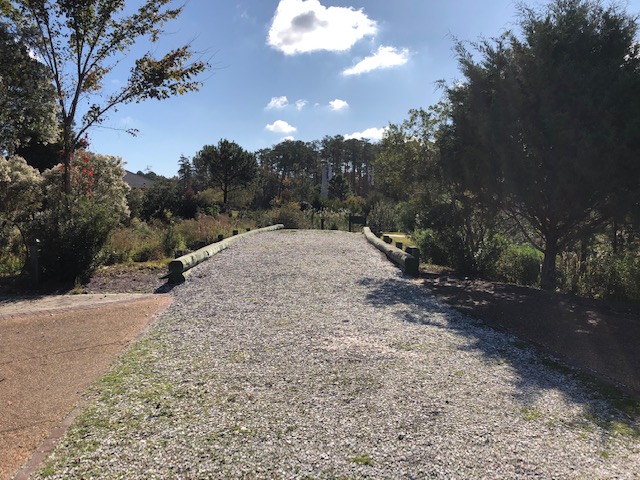
Pictures of Great Bridge Battlefield and monuments.
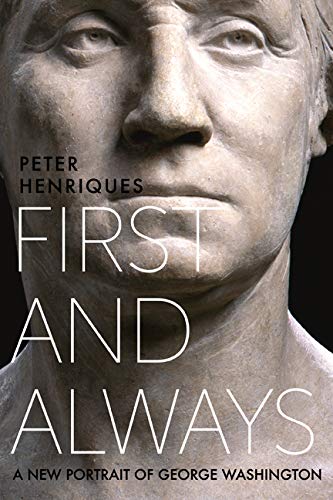
On December 13, 2020 at 7 p.m. Emerging Revolutionary War historian Mark Maloy will sit down and talk with preeminent George Washington historian Dr. Peter Henriques to discuss his latest book about the indispensable man of the Revolution, First and Always: A New Portrait of George Washington. Peter Henriques is Professor of History, Emeritus, at George Mason University and gave the keynote address at the inaugural Emerging Revolutionary War Symposium in May of 2019. You can watch this discussion live on our Facebook page.
George Washington is without a doubt the most important man in the story of America’s founding. Henriques has studied Washington for decades and in 2006 published a book Realistic Visionary: A Portrait of George Washington. Rather than a biography that covers everything in Washington’s life, both Realistic Visionary and now First and Always are “portraits.” They are broken up into individual stand-alone essays and delve in depth into some of the most interesting and at times controversial aspects of Washington’s life. Among these are Washington’s relationships with his mother, fellow Founding Fathers, and slavery. The result is a deeper and fuller understanding of who George Washington really was.
To get a signed copy of Dr. Henriques new book First and Always, you can send $27.95 to 13704 Heritage Valley Way, Gainesville, VA, 20155.
Additionally, we will be talking with Dr. Henriques on the 221st anniversary of the final illness of George Washington. Washington became ill on December 13, 1799 and died late in the evening on December 14, 1799. Henriques is an expert on the death of George Washington and the author of a book The Death of George Washington: He Died as He Lived that explores the final days of George Washington, so we will also discuss Washington’s death. We hope you are able to join us! If you miss the live talk, you will still be able to watch it on either our Facebook page or YouTube page in the future.
When thirteen North American colonies rebelled against the British crown, the future state of Florida was not part of that movement. In fact, the settled part of the future 27th state of the United States was partitioned into East and West Florida. Both colonies also declined an invitation to send delegates to the Continental Congress.
East & West Florida colonies
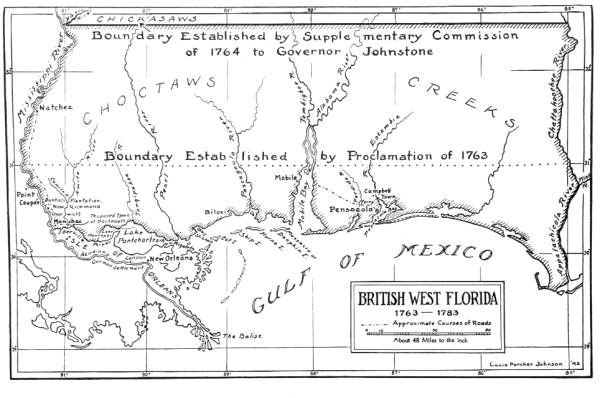
West Florida, spanned from slightly east of Pensacola, which was the capital, across to Louisiana and included parts of modern Alabama, Louisiana, Florida, and Mississippi. East Florida, spanned the rest of northern Florida from the Apalachicola River to the Atlantic seaboard and down the peninsula. The capital was located at St. Augustine, founded in 1565 by the Spanish.
During the American Revolution, both East and West Florida would play a role as the rebellion spread into a world conflict, bringing into the fighting the European nations of France and Spain. In East Florida, St. Augustine would send north British soldiers to assist in operations in Georgia and South Carolina and also house American prisoners, including three Signers of the Declaration of Independence; Arthur Middleton, Edward Rutledge, and Thomas Heyward, Jr. Other prisoners, both Americans and French were also confined to the town too.
On October 3, 1789, President George Washington issued a “Thanksgiving Proclamation” to the people of the United States. In this declaration, Washington designated “Thursday, the 26th day of November” to “the People of the United States a day of public thanks-giving.”
On Thursday, November 26, 2020, Emerging Revolutionary War will give to the “People of the United States” a live Facebook presentation of this proclamation at 7 p.m. EST.
courtesy of Mount Vernon
In addition to the reading of the proclamation, ERW invites you to gather questions and comments that you would want our historians to chat about, as we return on Sunday, November 29 with the next historian happy hour. Our historians will recap some of their favorite moments of research, of the annual trip, and some of the happenings on tap.
But, mostly, it will be an hour dedicated to good beer, good discussion, and staking opinions. So, wake up from that turkey coma by Sunday and click on over to our Facebook page for this “Rev War Revelry.”
Emerging Revolutionary War welcomes guest historian George Kotlik.
After the French & Indian War, the British Crown sought to regulate colonial westward settlement and expansion. This was done for a variety of reasons. First, British ministers believed that westward expansion would require administration over newly acquired territory.[1] British leaders also feared that unrestricted colonial expansion could lead to ungovernable colonies who would, over time, seek to split with Great Britain.[2] Most importantly, Britain had acquired Florida and almost all of the territory under New France east of the Mississippi River at the conclusion of the Seven Years’ War. British ministers sought to redirect western settlement towards Canada and the Florida’s.[3] Regulation of western land settlement also protected Indian lands from white encroachments. This measure sought to prevent further Indian wars.[4] The impositions placed on westward settlement infuriated colonial land speculators who sought to gain much wealth in acquiring western lands. After the Great War for Empire, George Washington and other veteran officers of that conflict were awarded land in exchange for their services to the Crown.[5] Many eyed lands in the Ohio Country, but after the October 7 Proclamation of 1763, most acreage in that vast wilderness lay out of reach. The account of Washington’s interest in North America’s western lands is popular and well-known. However, lesser known is the former British officer’s interest in West Florida land.[6]
Gnadenhutten. Pronounced with a silent “G” does not smoothly roll of the tongue. Nor is it a historical event that most people are aware of. Cue Eric Stener, historian with Emerging Revolutionary War, contributing historian to both the Journal of the American Revolution and Emerging Civil War while conducting a career in government and public policy, specializing on national security and aerospace.
And now specializing on the Massacre at Gnadenhutten. His latest publication, part of the Journal of American Revolution Books is a November 2020 release that examines the March 8, 1872 massacre of peaceful Native Americans under the tutelage of missionaries from the Church of the United Brethren. Conducted by western settlers, the atrocity caught the attention of revolutionaries such as Benjamin Franklin who wrote, “the abominable Murders committed by some of the frontier People on the poor Moravian Indians, has given me infinite Pain and Vexation.”
Although “ample incidents of good and evil on March 8, that summation does not explain what brought murderers and victims together on the banks of the Muskingum River in today’s Ohio.”
For that reason we turn to the next “Rev War Revelry” this Sunday, at 7 p.m. EST on our Facebook page as we discuss his latest work with author Eric Sterner. For more information or to purchase your copy of his book, click here.
We look forward to you joining us this Sunday for the next historian happy hour!









 Emerging Revolutionary War Era