Now I know what you are thinking…the famous song by The Eagles. But, no.
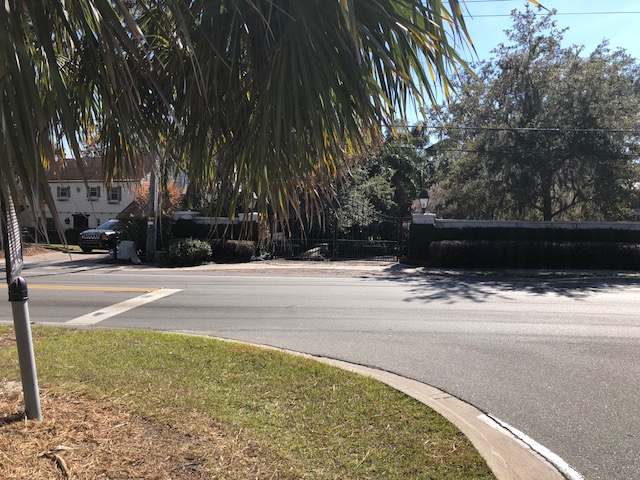
Corner where Fort Gatlin once stood, Gatlin Avenue is running left to right, South Summerlin is off the right of the photo. Historical marker sign on left side of photo, D.A.R stone marker across street (to the right of the Jeep in the driveway)
Continuing a theme from the last post, military history in Orlando, I did find myself standing on a street corner, South Summerlin Avenue and Gaitlin Avenue. That is when I noticed the small stone marker, placed by the Daughters of the American Revolution. Placed next to a hedge, on the corner of a driveway, sits until recently, the only reminder of this former military installation. Around this fort sprung a small county that became the county seat of Orange County, Florida by 1856. Which grew into Orlando.
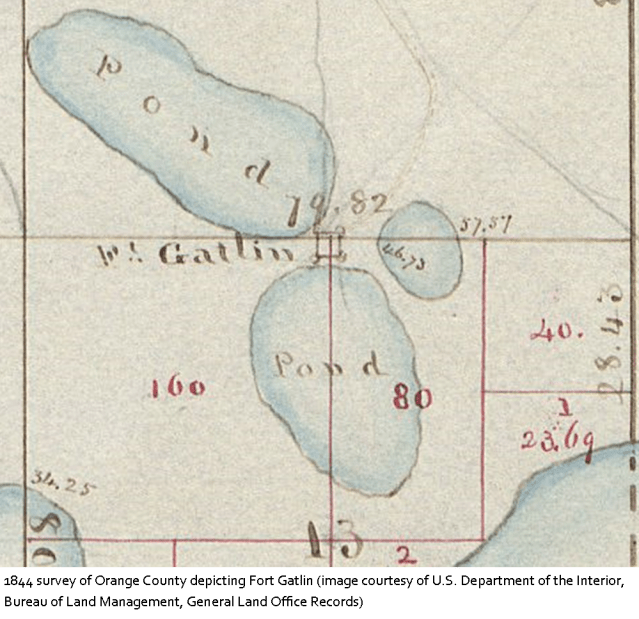
An 1844 survey of Orange County, depicting Fort Gatlin (courtesy of the Bureau of Land Management, General Land Office Records and The Florida Historical Society
Constructed on November 9, 1838, by Lieutenant Alexander Fanning and four companies of the 4th U.S. Artillery, the post was one of several built across the breadth of central Florida during the Second Seminole War. Named in honor of Dr. John S. Gatlin, who had been killed in Major Dade’s Massacre on December 28, 1835. After completing the post, which was situated on a rise that commanded three lakes, Lt. Fanning and three companies departed, leaving 1st Lieutenant F.E. Hunt.
After June 1839, the United States Army had abandoned the post, yet state militia continue to garrison the wooden ramparts. A brief return in October 1849 by the army led to it becoming an active post, briefly, until the soldiers left shortly thereafter.
One side of informational panel of the Eagle Scout project for Fort Gatlin
Abandoned, besides the stone marker, until recently. A great Eagle Scout project produced a wooden two-panel history of Fort Gatlin, Native American history, early settlers, and the 2nd Seminole War. This stands on the same corner as the Florida historical marker and across the intersection from the Daughters of the American Revolution stone marker.
Florida Historical Marker for the Site of Fort Gatlin
D.A.R. stone marker (FYI ADT sign is for the residence next door)
And standing for one day, a man on astreet corner, looking for history, a fine sight to see.
When one mentions the word “Orlando” what is the first thought to pop into your head?
Universal?
Or maybe two words; “Disney World or Walt Disney?”
In all likelihood, the name Francis Wayles Eppes, is not one of the people you would associate central Florida with. You may even be asking, who is Francis Wayles Eppes.
Francis Wayles Eppes
Born on September 20, 1801, Francis was the only surviving child of Thomas Jefferson’s daughter Maria and her husband, John Wayles Eppes. When his mother died in 1804, his grandfather, the third president of the United States at the time, took young Francis under his care and the child resided at Monticello, Jefferson’s Virginia estate.
As young Francis grew, he spent time at Poplar Forest, Jefferson’s estate near Lynchburg, Virginia, which was bequeathed to him by his grandfather after the grandson married Mary Elizabeth Randolph in 1822. Francis, prior to marriage, studied law at both Georgetown College and South Carolina College.
With the death of his father and grandfather within three years of each other; 1823 and 1826 respectively, Francis and his wife joined the movement south, leaving Virginia for sunny Florida.
Initially settling outside Tallahassee and was instrumental in the formation of one of the first Episcopalian churches in the Florida territory, when he donated $500 to a construction of St. John’s Episcopal Church. He was a vestrymen, delegate to the Episcopalian convention in Florida, and also secretary of the local diocese for many years.
After a long public service record in Tallahassee, including serving as intendant or mayor of the capital for a few terms and being an early proponent of a school of higher learning–Jefferson-esque–which became the precursor to Florida State University, Eppes relocated to central Florida in 1869.
Even in his 60’s, Eppes stayed active, becoming a citrus farmer and was part of the group that founded the Cathedral Church of St. Luke in Orlando, the first Episcopal church in the growing town.
Eppes’s home in Orlando. Plaque on front porch reads; “Site and home of Francis Eppes Grandson of President Thomas Jefferson Original House Built in 1868 Marker Placed by Orlando Chapter NSDAR December 3, 1998”
A historian, writing about Eppes’s contributions of that era summarized the Virginian in the following words; “Through the 40’s, 50’s, and 60’s [1800s] there were few civic, religious, or educational affairs in which he did not have a prominent part.”
On May 30, 1881, Francis Wayles Eppes passed away at his home and would be buried in Greenwood Cemetery. He was 79 years old.
On New Year’s Day 1777, Robert Morris wrote to George Washington and said: “The year 1776 is over, I am heartily glad of it and hope you nor America will ever be plagued with such another.” While many of us have similar thoughts every New Year’s about the previous year, the year 1776 was exceptionally bad for the patriot cause, despite the Declaration of Independence being signed that summer. After losing New York and a string of battles, Washington had shocked the world at Trenton on the day after Christmas. This glimmer of hope was almost crushed by the fact that most of his army’s enlistments expired on January 1st.
“Washington’s men had sacrificed much in the past few weeks and suffered greatly. Many believed they had done their duty, and rightly so. But at this moment, they were needed more than ever before. All day on December 31, 1776, Washington’s generals appealed to the soldiers to reenlist. Washington authorized an exorbitant $10 bounty
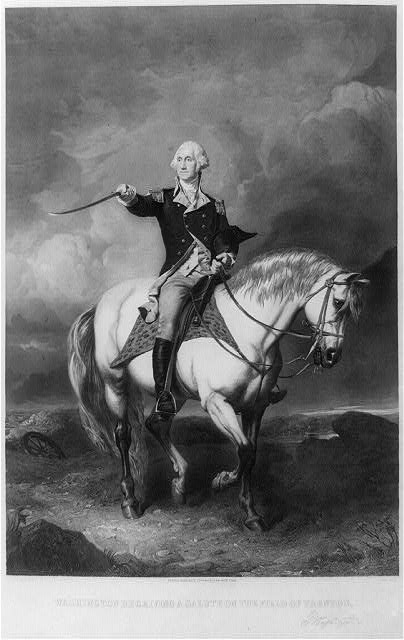
to those men who agreed to remain, this being funded by financier Robert Morris in Philadelphia. Some of his generals, such as Gen. Thomas Mifflin, a politician and public speaker from Philadelphia, were successful in retaining some of the men, others were not as successful. However, the most affecting scene was when Washington himself personally appealed to the patriotism of the men who had campaigned by his side. Washington paraded Gen. John Sullivan’s and Gen. Nathanael Greene’s divisions just outside Trenton. He entreated the men to stay on just a few weeks more. He asked those who wished to reenlist to move forward, but at that point no one moved. Sergeant Nathaniel Root of the 20th Continental Regiment (Connecticut) remembered that the men were “worn down with fatigue and privation” and had their “hearts fixed on home.” Washington, pleading with his brave soldiers wheeled his horse in front of the men and declared to them, “My brave fellows, you have done all I asked you to do, and more than could be reasonably expected; but your country is at stake, your wives, your houses and all that you hold dear. You have worn yourselves out with fatigues and hardships, but we know not how to spare you. If you will consent to stay only one month longer, you will render that service to the cause of liberty and to your country which you probably never can do under any other circumstances. The present is emphatically the crisis which is to decide our destiny.” After considering their commander’s words, more than two hundred of these men stepped forward to stay on and fight, and some of these men would be killed in the coming battles. The combination of patriotic pleas and hard currency helped persuade many more to
stay. Washington retained a force of about 3,000 men from his army. These veterans would prove invaluable in the coming days.”
In preparation for an upcoming publication by Emerging Revolutionary War’s historian Mark Maloy, I was doing some light reading about the Battles of Trenton and Princeton. That is when I came across the following quote by the late Albert Chestone;
“The great Christmas raid in 1776 would forever serve as a model of how a special
operation–or a conventional mission, for that matter–might be successfully
conducted. There are never any guarantees for success on the battlefield; but with a
little initiative and a handful of good Americans, the dynamics of war can be altered
in a single night.”
There is no doubt that the actions that followed the daring enterprise of crossing the Delaware was a turning point in the long road to independence of the American colonies. Yet, sometimes we overlook the entire operation as a fait accompli. Continue reading “Christmas 1776”→
Emerging Revolutionary War is pleased to share the following information from our friends at Campaign 1776 managed by the Civil War Trust.
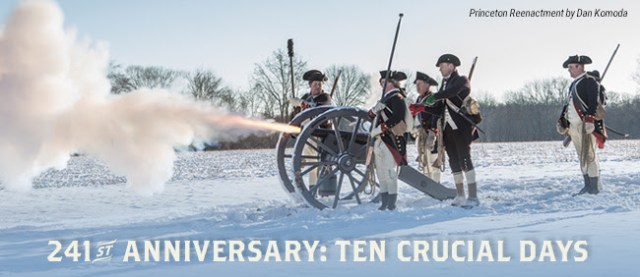
“As many of you may know, this winter marks the 241st anniversary of the American victories at the battles of Trenton and Princeton. The Continental Army’s triumphs in the Ten Crucial Days campaign proved instrumental to rekindling Patriot morale and keeping the cause for American independence alive in the wake of early defeats.Continue reading “From Campaign 1776: Ten Crucial Days”→
Emerging Revolutionary War welcomes guest historian Paige Gibbons Backus to the blog. This Weekend marks the 244th anniversary of the Boston Tea Party.
We all know the holidays are some of the heaviest travelled times of the year and over my Thanksgiving holiday, I had the opportunity visit Boston for a day. When in the city for only one day, what do we go and see? Do you go to the U.S.S. Constitution, Bunker Hill, Faneuil Hall, or the Paul Revere House? Do you go to the colonial meetinghouses, the historic cemeteries, or just walk around the historic sections of the city? One of the sites that I decided to visit was the Boston Tea Party Ships & Museum. I heard many good things about it from online reviews and professional colleagues about the interactive exhibits and experiences available there. Working at an immersive historic site myself, I was definitely curious to see what they had done to make their history exciting to audiences, and despite the museum’s shortcomings, make it interesting they did.
One of the highlights of the Boston Tea Party Ships is that they did a decent job creating an interactive experience for visitors. After purchasing tickets outside, visitors receive an identity card and a feather, and are then invited into a room meant to replicate the South Meetinghouse. From there, first-person actors serving as tour guides take visitors through the planning, implementation, and effects of the Boston Tea Party. For example, Sam Adams rallied the crowd weaving in the events leading to the Boston Tea Party, even teaching visitors how to show approval or displeasure in a public setting, (to which I was hissing before it was cool). He even called on visitors with various identity cards to voice their opinion, bringing in interesting, albeit reluctant, audience participation. After the visitors were riled up, we donned our feathers in our hair and were lead onto the ships to commence tossing the tea. Continue reading “Emerging Revolutionary War Weekender: The Boston Tea Party Ships & Museum”→
I think it would be fair to say that John Adams spent the last 25 years of his life feeling sorry for himself. He was a grumpy and vain old man searching for the respect he thought he deserved.
If Adams were to read the highly anticipated new book by Pulitzer Prize-winning author Gordon Wood, the old curmudgeon would be no happier. In fact, the final lines of the book, handed down like a final judgement, would only confirm what Adams believed would be the view of historians forever. “To be an American,” Wood wrote, “is not to be someone, but to believe in something. And that something is what Jefferson declared. That’s why we honor Jefferson and not Adams.”[i]
Emerging Revolutionary War welcomes guest historian Bill Backus to the blog.
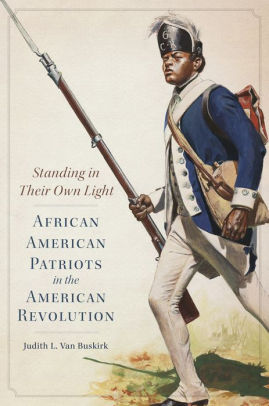
Fighting for Independence, Patriots commonly argued they were combating an attempt by the English Crown to reduce the American colonies to slavery. The irony that most leaders crowing against “English slavery” owned enslaved African-Americans is one of the greatest contradictions of American history. In a struggle about slavery, enslaved people played an important role. In her new book, Standing in Their Own Light: African-American Patriots in the American Revolution, Professor Judith L. Van Buskirk explores African-American participation in the Patriot cause.
“Standing in Their Own Light” by Judith L. Van Buskirk
The foundation for Van Buskirk’s study is the pension claims for nearly 500 soldiers made decades after the war. To obtain a pension, veterans had to prove in a county court that they had served in the military during the war. In addition to their recollection of when they enlisted, with whom they fought with, and where they campaigned, aspiring pensioners routinely recruited serving comrades and officers to offer testimony on their behalf. While the pension records are an important source for historians, these documents were intended to prove wartime service and thus offered only a cursory examination of their military career. The limitations of using these sources become apparent throughout the study
The book is divided into six chapters. Van Buskirk first examines slavery prior to the American Revolution with South Carolina standing in for the Deep South, Virginia for the Upper South, Pennsylvania for the Middle Atlantic, and Massachusetts for New England. In the second chapter, Van Buskirk utilizes the pensions to explore the life of an African-American patriot soldier, from enlistment, to camp life, and battle. The subsequent two chapters explore two case studies of attempts to recruit, African-American soldiers: the segregated 1st Rhode Island Infantry and the story of the Laurens family connection of the recruit of African-Americans in South Carolina. The final two chapters explore the pensions after the war.
The study on the 1st Rhode Island is outstanding. On May 14,1781, a detachment of the regiment on picket duty was ambushed outside of Peekskill, New York, by a local loyalist unit. In the space of a few minutes, the Continentals lost eight killed, including both its colonel and major killed or mortally wounded, four wounded and twenty-four captured. The majority of the killed were black while those captured tended to be white. Stories of the field officers either bayonetted or shot while in their beds added a salacious detail to this American disaster. While its unknown if race played a crucial factor, the Battle of Pines Bridge foreshadowed the bloody battles involving African-American soldiers 80 years later in the Civil War.
While inconclusive, enough evidence survives in various pension claims that some of the first soldiers who entered the British fortifications at the Battle of Stoney Point weren’t officers, but black enlisted men. Finally how subsequent generations of Americans used black soldiers involved in the Revolutionary War is another important contribution to the literature.
The limitation of the source material becomes evident in several places throughout the study. For example in exploring the Battle of Stoney Point, Van Buskirk prefaces many observations with “probably” and “likely”. At other sections, Van Buskirk generalizes the service of the men, an example being Jacob Francis and his military career. Van Buskirk fleshes out Francis’ pension claim with an overly generalized overview of a battle experience in a Revolutionary Era army. Sources for 18th century battles can be somewhat sparse compared with other events, but the qualifying terms that Van Buskirk uses diminishes some of the conclusions that she reaches
These quibbles aside, Standing in Their Own Light: African-American Patriots in the American Revolution is a tremendous addition to the historiography of the American Revolution, such as the sections about the 1st Rhode Island and black patriots after the war. Anyone interested in African-American history or the Continental Army should pick up this book.
*Bio*
A native of Connecticut, Bill Backus graduated from the University of Mary Washington with a bachelor’s degree in Historic Preservation. Currently working as a historian for multiple Civil War sites in Northern Virginia, Bill has worked for the National Park Service at Vicksburg National Military Park and Petersburg National Battlefield. Bill currently resides in historic Brentsville, Virginia, with his wife, Paige, and their dog, Barley.
Emerging Revolutionary War welcomes guest historian Michael Aubrecht. A biography of Mr. Aubrecht is attached below.
In 2011 an exhibit titled “Slavery at Jefferson’s Monticello: Paradox of Liberty” started running at the Smithsonian’s American History Museum from January 27, 2012 – October 14, 2012. This somewhat controversial exhibition explored slavery and enslaved people in America through the lens of Jefferson’s plantation and was a collaborative effort between the Thomas Jefferson Foundation at Monticello and the African American History and Culture Museum in Washington DC. It helped to instigate public discussion about the dichotomy between the Founders and freedom. The paradox of course is that Thomas Jefferson drafted the Declaration of Independence and called slavery an “abominable crime,” yet he was a lifelong slaveholder. The exhibition provides a glimpse into the lives of 6 slave families living at Monticello and reveals how the paradox of slavery in Jefferson’s world is relevant for generations beyond Jefferson’s lifetime.
From all of us here at Emerging Revolutionary War, we want to wish you and yours a “Happy Thanksgiving.” Below is the official proclamation by President George Washington dedicating a day of “public thanksgiving.” in 1789.
Federal Hall, New York City, where George Washington was sworn in as president in 1789.
By the President of the United States of America. a Proclamation.
Whereas it is the duty of all Nations to acknowledge the providence of Almighty God, to obey his will, to be grateful for his benefits, and humbly to implore his protection and favor—and whereas both Houses of Congress have by their joint Committee requested me “to recommend to the People of the United States a day of public thanksgiving and prayer to be observed by acknowledging with grateful hearts the many signal favors of Almighty God especially by affording them an opportunity peaceably to establish a form of government for their safety and happiness.”
Now therefore I do recommend and assign Thursday the 26th day of November next to be devoted by the People of these States to the service of that great and glorious Being, who is the beneficent Author of all the good that was, that is, or that will be—That we may then all unite in rendering unto him our sincere and humble thanks—for his kind care and protection of the People of this Country previous to their becoming a Nation—for the signal and manifold mercies, and the favorable interpositions of his Providence which we experienced in the course and conclusion of the late war—for the great degree of tranquillity, union, and plenty, which we have since enjoyed—for the peaceable and rational manner, in which we have been enabled to establish constitutions of government for our safety and happiness, and particularly the national One now lately instituted—for the civil and religious liberty with which we are blessed; and the means we have of acquiring and diffusing useful knowledge; and in general for all the great and various favors which he hath been pleased to confer upon us.
and also that we may then unite in most humbly offering our prayers and supplications to the great Lord and Ruler of Nations and beseech him to pardon our national and other transgressions—to enable us all, whether in public or private stations, to perform our several and relative duties properly and punctually—to render our national government a blessing to all the people, by constantly being a Government of wise, just, and constitutional laws, discreetly and faithfully executed and obeyed—to protect and guide all Sovereigns and Nations (especially such as have shewn kindness unto us) and to bless them with good government, peace, and concord—To promote the knowledge and practice of true religion and virtue, and the encrease of science among them and us—and generally to grant unto all Mankind such a degree of temporal prosperity as he alone knows to be best.
Given under my hand at the City of New-York the third day of October in the year of our Lord 1789.







 Poor John Adams.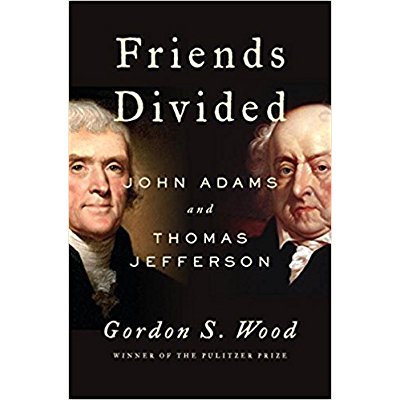


 Emerging Revolutionary War Era