

A Woman’s Place –Women’s Contribution in the Revolutionary War

Emerging Revolutionary War is honored to welcome historian Malanna Henderson to the blog. A biography of Mrs. Henderson is at the bottom of this post. 

Historical records are generally written by men about men.

When most of us think about the role women played in the Revolutionary War, Betsy Ross comes to mind.  Why did early historians choose to recognize the contributions of Betsy Ross instead of others? We all know the answer to that question. Her contribution was sewing the American flag. Sewing, a traditional “female” occupation, was elevated to heroic heights by the legacy of Ross. Most historians today don’t name Betsy Ross as the designer of the first American flag, but that’s another story.

Women whose contributions didn’t fall neatly into categories that weren’t exclusively defined as “feminine” were intentionally excluded; and yet, without their contributions, big and small during the years that the war ensued, the war could have raged on longer or dare I say, we might be flying the Union Jack instead of the Stars and Stripes.

Heroism has many forms.

On the home front women maintained the farms, took care of livestock and fed, clothed and educated their children while their husbands took up arms against the British. That was how most women supported the war effort. However, as in the Civil War women were camp followers, accompanying their husbands and sons to the battlefield. For these women, the army could supply food and protection since they could no longer support themselves after their men left for war. In the military camps, women nursed the sick and wounded, laundered and mended uniforms and cooked meals. At some time in the war, women were paid for providing these services.

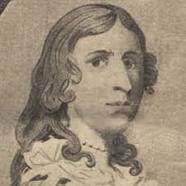
Then there were women who chose to pursue more daring endeavors, like spying or binding their breast, cutting their hair and donning men’s clothing to enlist in the war under an alias.
deborah-sampson
Deborah Sampson (courtesy of Fold3 by Ancestry.com)

One in particular, Deborah Sampson answered the call to freedom by enlisting in the in the 4th Massachusetts Regiment, under the alias Robert Shurtliff. Continue reading “A Woman’s Place –Women’s Contribution in the Revolutionary War”

1st Maryland’s 2nd Last Stand

I was recently reading the superb book by Patrick O’Donnell on Washington’s Immortals, which brought me back to a talk I did about the same Marylanders in the American Revolution a few years back. Below is an excerpt of that talk and highlights the second last stand for a regiment with a tradition of being steadfast when deadly duty called.

On March 15, 1781, approximately 20 men stood in the 1st Maryland Continental Regiment staring at the an eerie and familiar scene. It must have seemed that history was cruelly repeating itself once again. These men had survived the forlorn assault in New York in 1776, the ugly repulse at Camden in 1780, and now stood on third line of General Nathanael Greene’s defense at Guilford Court House.

Battle of Guiliford Courthouse 15 March 1781.jpg
Famous painting of the 1st Maryland at the Battle of Guilford Court House by H. CHarles McBarron, Jr. 

Besides the 20 men who could be traced back to that fateful day in New York, the men that shouldered muskets in line with them were all veterans of indefinite periods of service as well.

The 1st Maryland and the men they confronted, 2nd Guards Battalion of Guards, were very similar, according to historian Lawrence Babits, who states that “the 1st Maryland was arguably one of the finest regiments produced by the Continental Army.

What ensued next was the defining moment of the battle and in essence the campaign. As the Guards officers gathered their men into a new line, the Marylanders came on at a rush. The Guards responded largely without specific commands…facing the oncoming Continentals, who fired several platoon volleys as they came. At a range of less than 12 yards, both lines fired again, so close that muzzle flashes overlapped into a wide sheet of flame and the heat from the volley could be felt.

Casualties mounted and at close range the musket balls shattered bone and even passed through the bodies of their targets.

SANY2634.JPG
Modern view from the location of Greene’s Third Line which the 1st Maryland held. Coming up the slight rise toward the photo was how the British approached. 

The two sides then resorted to the bayonet and Williams recounted “the first Regiment embraced the opportunity…bayoneted and cut to pieces a great number of the British.”

Although the melee only lasted a few minutes, the Marylanders had checked the advance and with the dragoons of William Washington, allowed for Greene to begin to pull back and start the retreat. In another important position, Williams helped lead the rear-guard away from Guilford C.H. The Marylanders lost 15 killed, 42 wounded and 97 missing. Most of the missing could have came from the 2nd Maryland which broke in disorder on the left flank of the 1st Maryland.

Not only did the Marylanders suffer on that fateful March day in 1781, they did so with a lack of, well, everything. According to one inventory report, the entire regiment, numbering little over 300 men had not a single jacket, two-thirds were without proper footwear, and every man was destitute of a full complement of clothing. In addition, the men had served, fought courageously, and bled tremendously, without receiving one cent as pay.

A remarkable “band of brothers” that “held the line for independence.”

Which, in case you were wondering, was the name of the talk.


*Guilford Court House National Military Park is now preserved by the National Park Service, to plan your visit, click here.

*For information on Mr. O’Donnell’s book, click here.

Mercer’s Grenadier Militia

RevWarWednesdays-header


Emerging Revolutionary War and Revolutionary War Wednesday is pleased to welcome back guest historian Drew Gruber.

Part 1

When we think about American militia during the Revolutionary War, the image of an untrained rifle-toting citizen turned soldier comes to mind. This stereotype of the American soldier, popularized by movies like The Patriot is not completely false but such generalizations should give us pause and inspire us to investigate the roll of American militia, independent companies, and ‘irregular’ troops a bit closer. For example, how was it that on October 3, 1781 a group of Virginia militiamen defeated an elite British force? The story of Lieutenant Colonel John Mercer’s Grenadier Militia during the battle at Seawell’s Ordinary has been told and retold since 1781, however the formation of this illustrious group is often ignored and deserves a closer look. Continue reading “Mercer’s Grenadier Militia”