Emerging Revolutionary War welcomes guest historian Dr Lawrence Howard
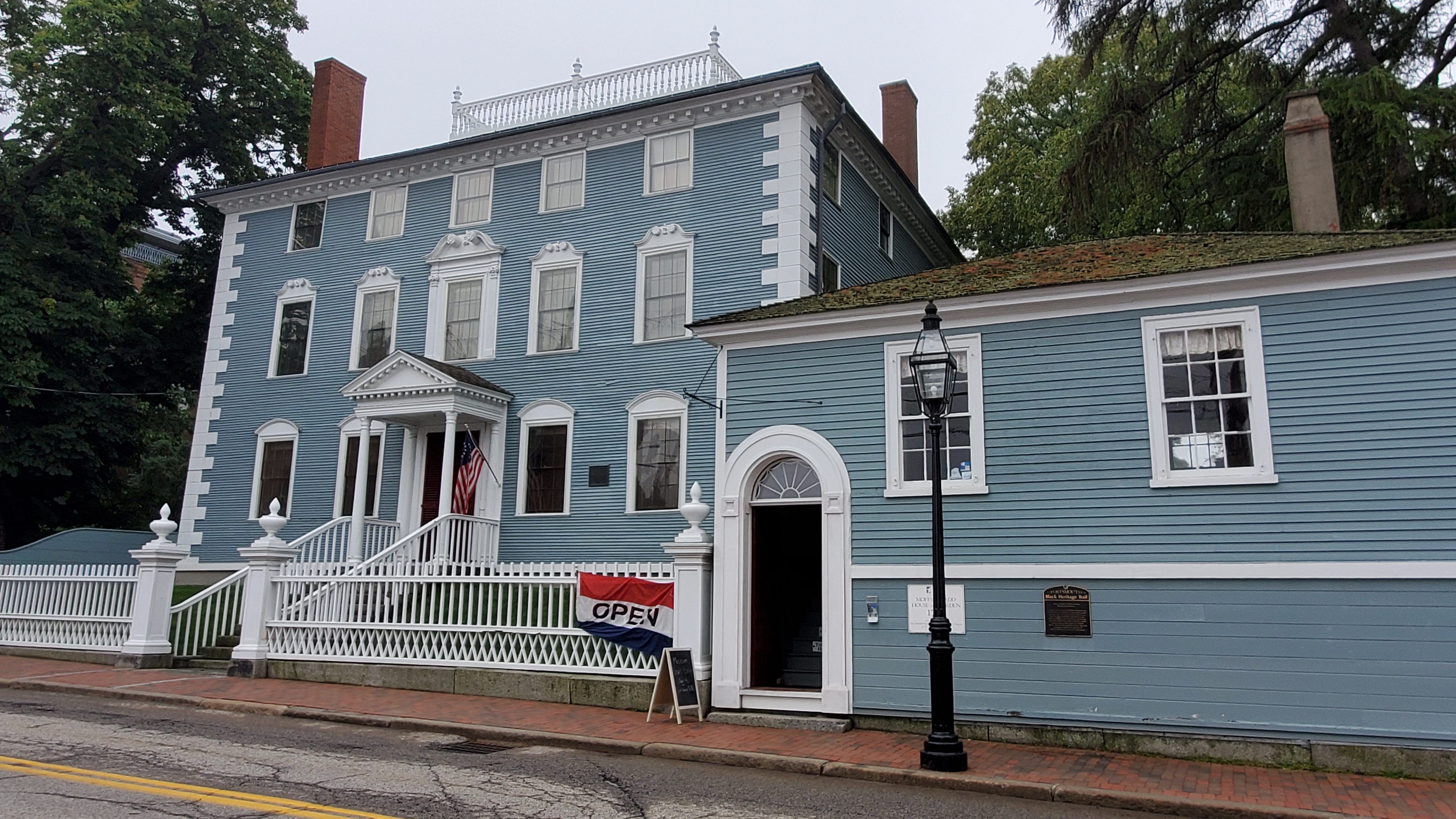
Many people have not been taught that slavery was practiced in early America’s northern colonies, later states. Though fewer people were enslaved in the north than in the south, where the plantation economy was highly reliant on enslaved labor, people were also held in bondage in the north. Also not often taught is the contribution such enslaved persons made to the success of America’s Founding, though recent scholarship seeks to amend this. This article explores the 1779 Petition to the New Hampshire Government, written by Prince Whipple – born in Africa in 1750 and purchased by William Whipple of Portsmouth, New Hampshire at a young age. In this petition, twenty black men requested emancipation from slavery. The African American petitioners echoed some of the same political ideas that the delegates to the Second Continental Congress had staked their own lives on just three years earlier in the Declaration of Independence, announcing American political independence from Britain.
Emerging Revolutionary War welcomes back guest historian Evan Portman
Most historians credit Ann Pamela Cunningham with kickstarting the historic preservation movement with her purchase of Mount Vernon in 1858. However, preservation of historic sites began long before the Mount Vernon Ladies’ Association. In fact, the storied walls of Fort Ticonderoga became the object of a preservation movement 38 years before the Ladies’ Association purchased George Washington’s ancestral home.
Fort Ticonderoga—known as the Gibraltar of North America—played an integral role in both the French and Indian War and the American Revolution. The fort was originally constructed by the French in 1755 on a portage known to the Iroquois as ticonderoga, meaning a “land between two waters.” Fort Carillon, as it was known to the French, stood strategically between Lake Champlain and Lake George, thereby controlling both the Hudson River Valley and St. Lawrence River Valley. On July 8, 1758, an outnumbered French army successfully defended the fort against British forces in the bloodiest battle of the French and Indian War.[1] However, the following year British General Jeffery Amherst captured the fort and renamed it Fort Ticonderoga.[2]
By the American Revolution, the fort had fallen into disrepair but was still guarded by a small British garrison. In 1775, it was the scene of one of the most famous dramas in American history. On May 10, Col. Benedict Arnold and Col. Ethan Allen led a combined force of the Green Mountain Boys and Massachusetts and Connecticut militiamen across Lake Champlain to capture the fort. “Come out you old Rat!” Allen famously cried to the fort’s commander, Capt. William Delaplace, and demanded he surrender the garrison “in the name of the Great Jehovah and the Continental Congress.”[3] Delaplace agreed, and Ticonderoga quickly fell into American hands.
Emerging Revolutionary War welcomes guest historian David Stowe.
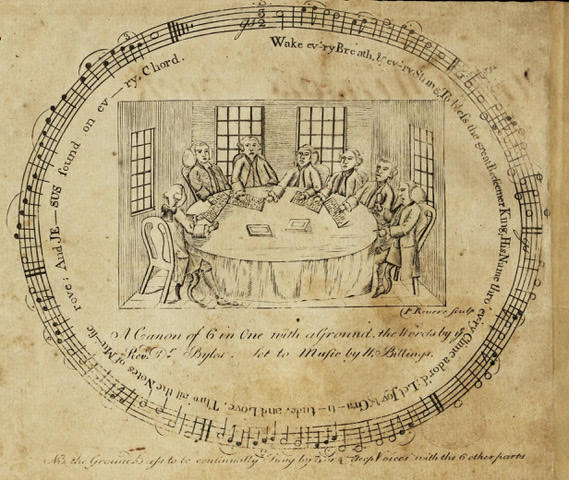
William Billings looked like an oaf, wrote poetry, snuffed small fistfuls of tobacco in company, taught himself to write music, was a street-cleaner, was an artist.
-David McKay and Richard Crawford, William Billings of Boston (1980)
I knew I wanted to write a book about William Billings. I just wasn’t sure which kind would be possible. I’ve been writing about the quirky Boston composer since my second book, How Sweet the Sound (2004) and always find more to say about him. His colorful adaptation of a Hebrew psalm to the American Revolutionary cause helped fuel my interest in what became Song of Exile: The Enduring Mystery of Psalm 137 (2016).
So how did I come to write a historical novel about him?
Partly because I came to the end of my sources and didn’t have nearly enough to tell the story I thought he deserved. There were many parts of Billings’s experience, including the most important ones, I’d never have access to. But his life was too rich and interesting to leave alone. So I was left with no choice but to make it up.
There were some other, possibly better reasons. One had to do with audience.
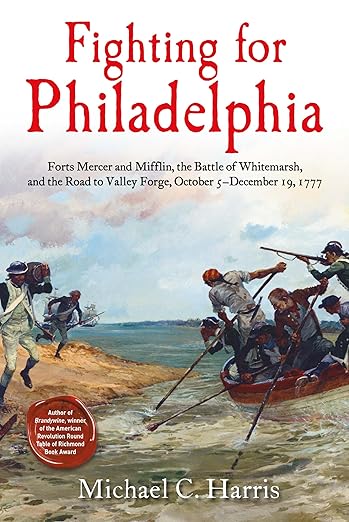
Fort Mercer. Fort Mifflin. The Whitemarsh Campaign. Names of battles and maneuvers that “receive but scant attention in the literature of the American Revolution.” Until now. Award-winning author and historian Michael C. Harris returns to Emerging Revolutionary War to discuss his latest book.
Finishing the trilogy, started with Brandywine, continued with Germantown, and now Fighting for Philadelphia. Just released by Savas Beatie this month!
Enjoy this pre-recorded “Rev War Revelry” and get a synopsis of why this book is needed on your bookshelf. Join Emerging Revolutionary War Sunday at 7 p.m. EDT.
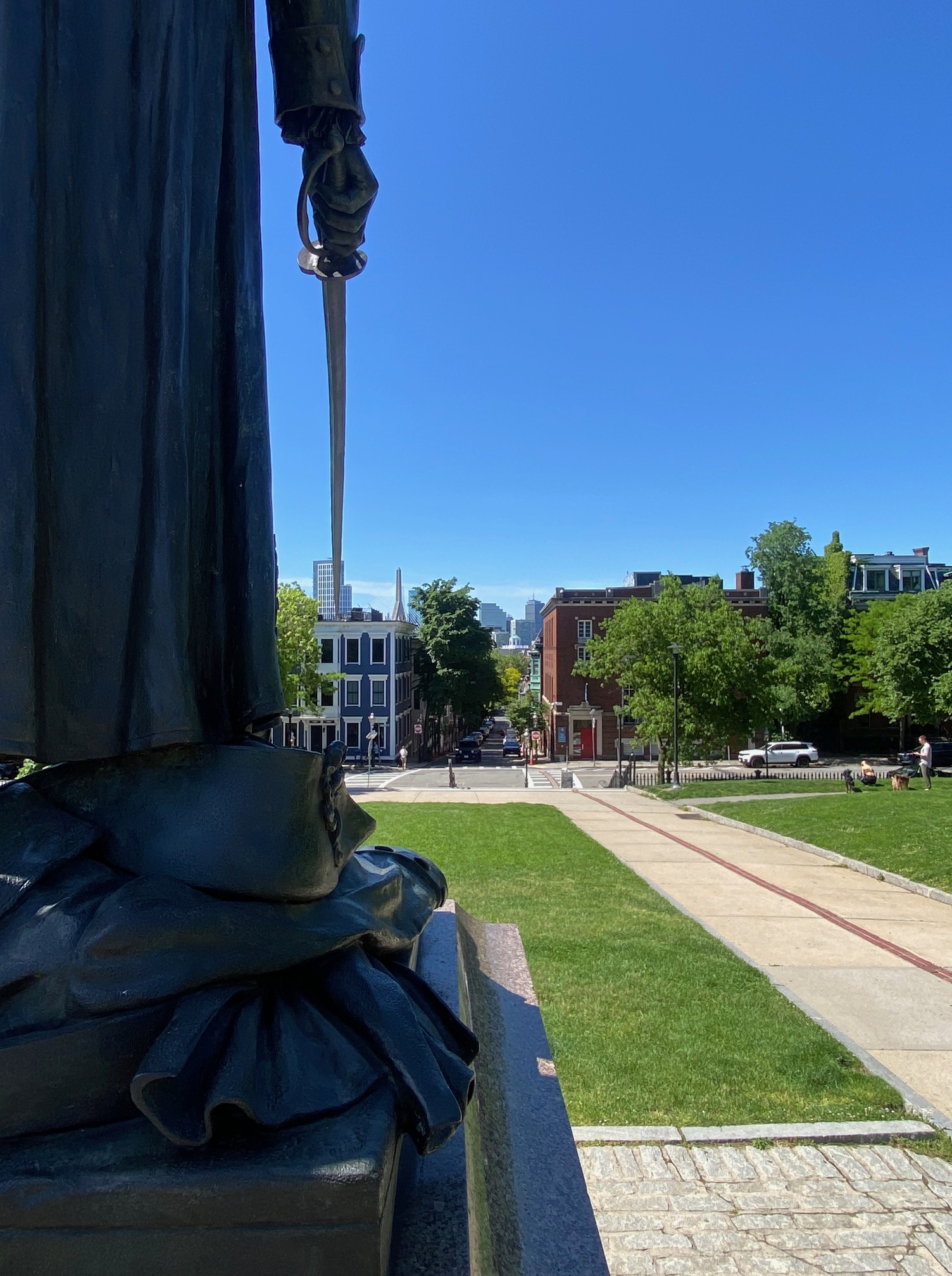
Dedicated in 1881 and made of bronze, the statue of Colonel William Prescott stands over nine feet tall. Although the man who stood steadfast on the earthen parapet of Bunker Hill was not quite that tall. Yet, on June 17, 1775, the men of New England looked up to the approximately 50-year-old that day.
A National Park Service page on Colonel Prescott and Bunker Hill is titled, “A Glorious Immortality.”An account that was passed down about the Massachusetts militia officer vividly describes why he deserves that moniker.
“The breast work or redoubt was only constructed of such earth as the party had thrown up after the middle of the night and was not more than breast high to a man of medium height. Colonel Prescott being a very tall man, six feet and two or three inches in height, his head and shoulders and a considerable portion of his body must have been exposed during the whole of the engagement. He wore a three-cornered cocked hat and a ban-yan or calico coat. After one of his men was killed by cannon ball, Prescott, perceiving that this had made some of the soldiers sick at heart, mounted tile para-pet and walked leisurely around it, cheering his soldiers by approbation and humor. His clothing was repeatedly spattered with the blood and the brains of the killed and wounded.”
Leadership. Example. Personal bravery. He was also one of the last to leave the earthwork as the British captured it.
He now stands, in bronze, watching over the scene where he proved he was a match for the moment.
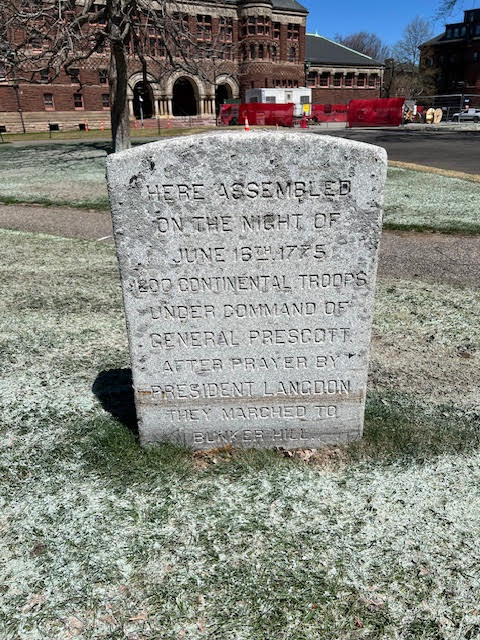
Shortly after 11 p.m. on the night of June 16, Colonel (although the monument calls him general) William Prescott led approximately 1,200 Massachusetts soldiers toward the Charlestown Peninsula from Cambridge Common. These men would spend the night fortifying Breed’s Hill before spending the majority of the next day defending the earthen redoubt from successive British attacks. Although forced to evacuate due to low ammunition and the British breaching the redoubt, the defeat had a positive impact on the morale of the “Grand Army” as the New England militia soon-to-be-Continental Army.
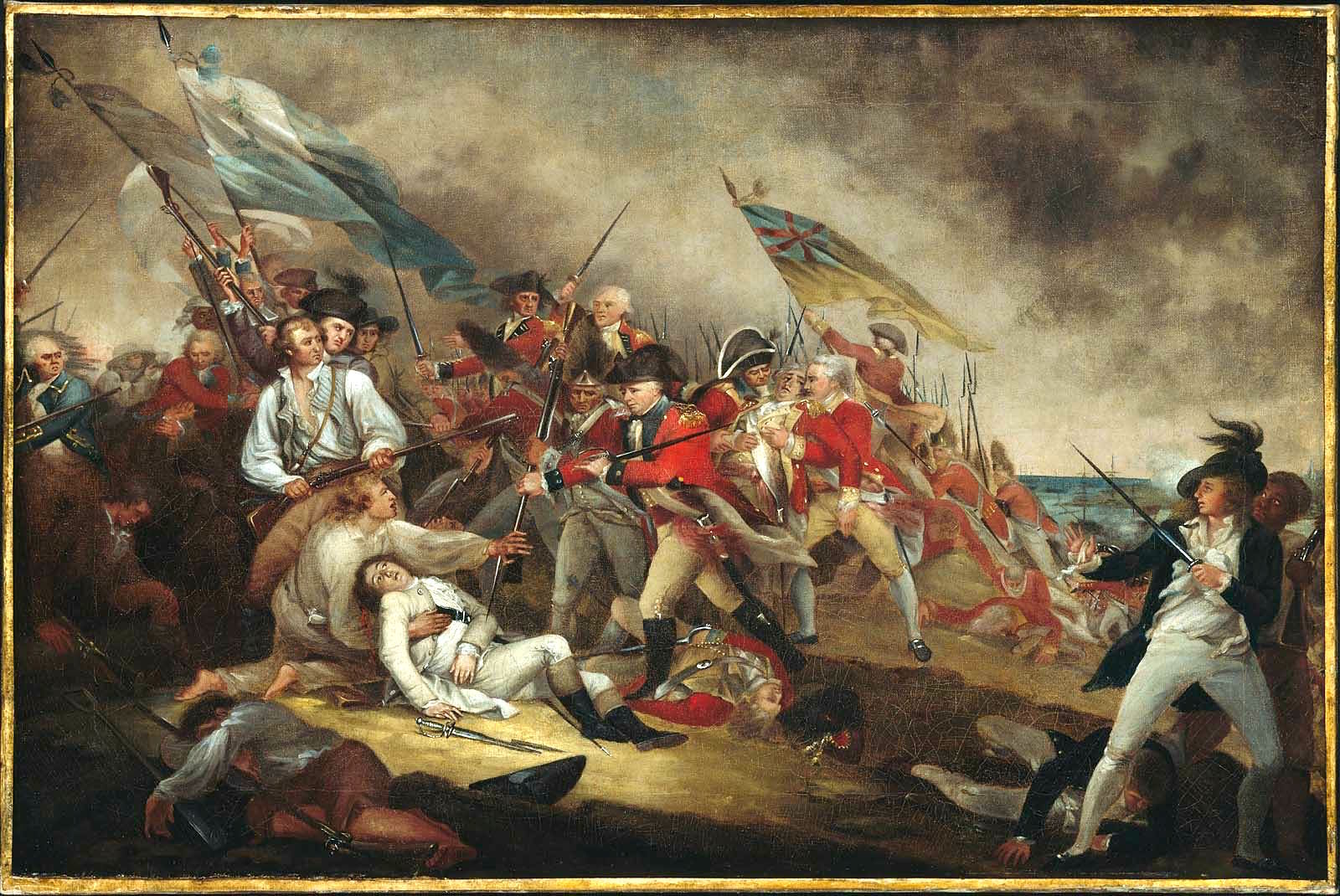
On Tuesday, the 250th anniversary of the Battle of Bunker Hill, fought on Breed’s Hill on Charlestown Peninsula, will be remembered. On June 17, 1775, the last major engagement before George Washington arrived in Massachusetts to take command was fought between militia under Colonel William Prescott and British forces under General William Howe. Although a defeat for the patriots, resulting in the death of Dr. Joseph Warren, the victory was a pyrrhic one for the British.
Join Emerging Revolutionary War historians as they discuss the engagement, the personas, and the ramifications of the Battle of Bunker Hill. Also, stay tuned until the end for an announcement as well.
So, two days before the 250th, grab your favorite beverage and tune into our Facebook page at 7 p.m. EDT and have your questions ready. If you are unable to attend the live on Sunday evening, don’t fret, the video will be posted to YouTube by the anniversary and to our podcast channel as soon as possible
Emerging Revolutionary War welcomes guest historian Riley Sullivan, Professor of History at San Jacinto College in Houston, Texas.
While many might be familiar with famed engagements at places like Bunker Hill, Saratoga, and Yorktown during the Revolutionary War, few are familiar with the actions that took place near New London, Connecticut in September of 1781. However, for the people of Connecticut, the battles that took place near Groton Heights and New London have been immortalized as a campaign highlighted by treachery and massacre. Largely, this interpretation has been adopted due to the commander of the British forces who engaged in this raid, Benedict Arnold.
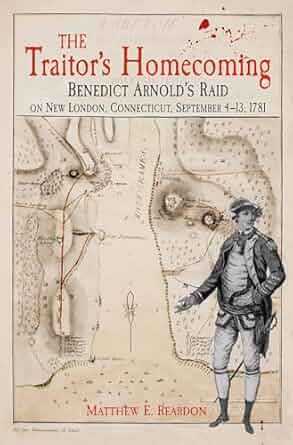
Perhaps no other name in American History brings about more scorn than that of Benedict Arnold. Having defected to the British cause late in the Revolutionary War, for Americans at the time–and even today–he is viewed as a modern day Judas. However, with such infamy ultimately comes much misinterpretation of this historical figure and the events he was involved in. In Matthew E. Reardon’s recent study The Traitor’s Homecoming, he attempts to undo much of this misinterpretation. Drawing on previously unused primary sources, Reardon constructs an engaging argument that challenges the traditional view of Arnold’s conduct in the New London raid.
To construct this narrative of the New London raid, Reardon attempts to place into context the setting of the New London raid. By this stage in the war, the conflict in New York had been a state of stalemate for the previous few years. However, with Generals Washington and Rochambeu’s combined Franco-American forces on the move, the British commander in the region, Henry Clinton—informed by faulty intelligence as Reardon demonstrated—was convinced that an attack on New York was imminent. As a result, to divert Washington’s attention away from a possible attack on New York, Clinton authorized Arnold to lead a contingent of British troops to attack the vulnerable Connecticut coastline.
New London made the ideal target for a British raid as it had been a hotbed for commerce and privateering for the Patriot cause. To conduct such a raid, Clinton turned to Arnold as he was both a native of Connecticut and familiar with the New London area. Largely only being contested by militia behind a number of forts that guarded approaches to both the town and the Thames River, Arnold’s combined force of Loyalists, Hessian Jaegers, and British regulars made quick work of the Patriot militia throughout the campaign. Even with New London in their hands, outside events–notably Clinton’s realization that Washington was moving on Cornwallis at Yorktown–led to Arnold having to relinquish his gains. However, with the high casualties suffered by both sides during the raid, coupled with the burning of much of the town, the events “cemented Benedict Arnold’s reputation for villainy.” (x)
When considering the traditional interpretation of Arnold’s raid on New London, Reardon makes it clear throughout his work that a “distorted interpretation” of the events had emerged (ix). From veterans to the Groton Battle Monument at Fort Griswold Battlefield State Park, the events that took place in Connecticut in 1781 have been enshrined as a massacre of Connecticut militia at the hands of Arnold. However, when looking at contemporary letters, diaries, and later pension records, Reardon demonstrates that there are some noticeable gaps within the traditional account of this campaign. In particular, when examining the death of Colonel William Ledyard–who was alleged to have been killed while attempting to surrender–Reardon concluded that through these sources, the traditional accounts accepted proved to be inconsistent with contemporary accounts of the campaign.
But, even with these inconsistencies, this is not to say that the fighting at Fort Griswold and the subsequent burning of New London was less than brutal. Reardon wrote that “the immediate reaction of the community was shock” and that “for many it was beyond comprehension.” (339) To no surprise, this sheer shock of the fighting coupled with Arnold’s involvement led to this distorted narrative of the campaign.
Through the examination of contemporary letters, diaries, and later pension applications, Reardon is able to reconstruct in great detail the events of Arnold’s New London raid and offer an unbiased narrative. By providing these fresh sources in The Traitor’s Homecoming, Reardon effectively builds on the existing literature of the subject and demonstrates how public perception can lead to the misinterpretation of historical events like that of the New London raid.
Details:
Matthew E. Reardon, The Traitor’s Homecoming: Benedict Arnold’s Raid on New London, Connecticut, September 4-13, 1781. Published by: Savas Beatie LLC. Summer 2024. 448 Pages.
*Check out Emerging Revolutionary War’s YouTube page as well for a “Rev War Revelry” interview with author Matthew E. Reardon.*
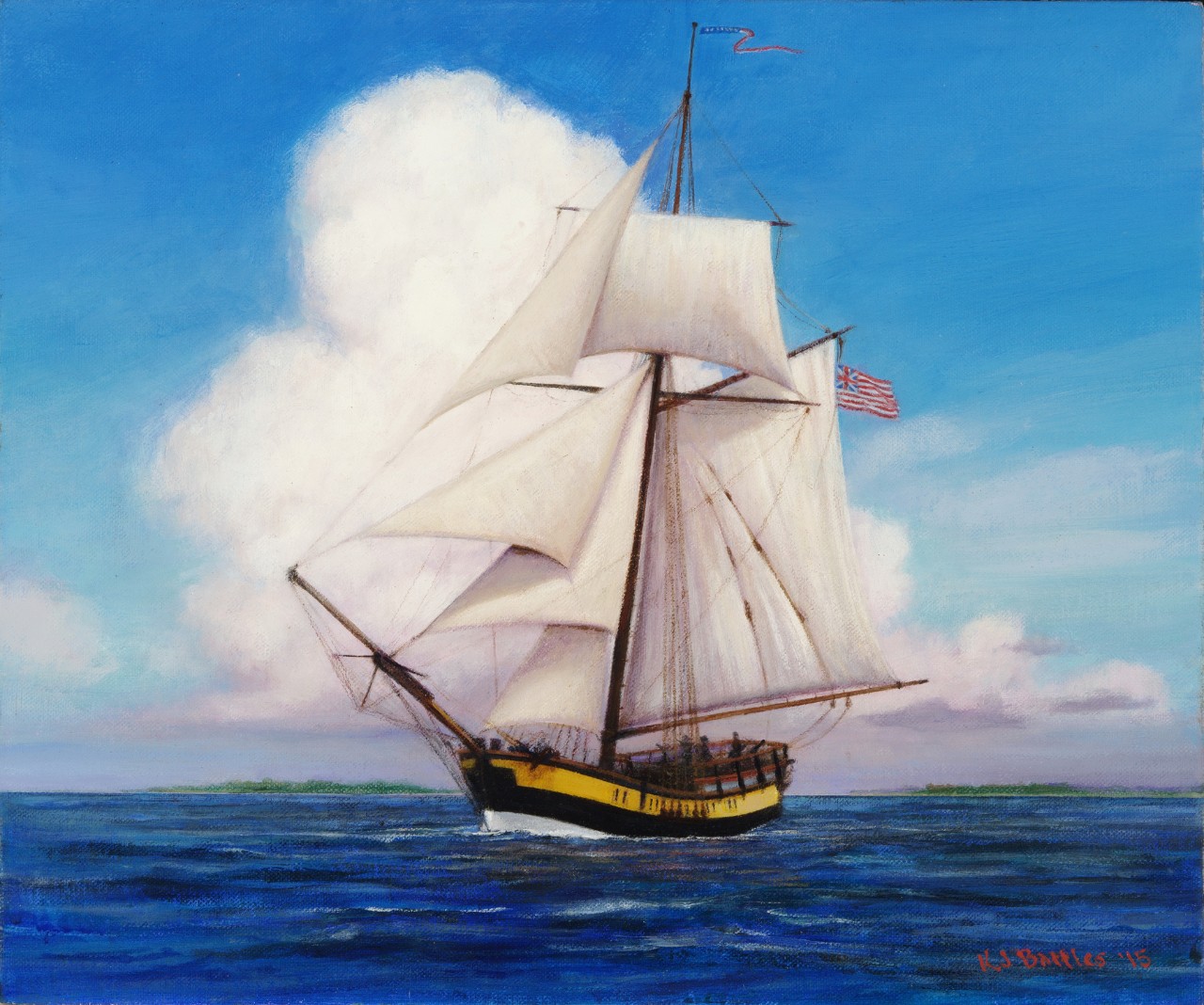
Katy in her later service as the Continental Navy ship Providence. “Sloop Providence under Sail by Kristopher Battles” (Naval History and Heritage Command)
Since his brief visit in November 1774 and his longer term stay commencing in December, Captain James Wallace of the British ship Rose (20 guns), had patrolled Narragansett Bay to enforce the Coercive Acts and prevent Britain’s rebellious colonies from importing gunpowder and armaments. Loyalists had taken heart and rebels had been frustrated with his presence. Not only were his patrols interfering with local commerce by seizing ships and their cargos—his main mission—but he created a more visible symbol of Britain’s ability and willingness to force its colonists to comply with Parliament’s laws.
One of the loyalists encouraged by the Royal Navy presence in Narragansett Bay was a Newport merchant named George Rome. Wallace had visited Rome and was dining with him when a breathless messenger warned the captain that a mob was out to tar and feather him back in December, 1774. In the moment, nothing came of it, but Governor Joseph Wanton warned Wallace that the town was not safe for British officers, sailors, or loyal subjects. Things remained at a low simmer that winter and spring, including the initial weeks after the Lexington and Concord. Tensions, however, could not help but rise. Diarist Ezra Stiles, recorded on May 23 that some 90 Rhode Island soldiers under the command of Captains [John] Topham and [Thomas] Tew marched from the Newport courthouse and through town beating up volunteers to join the nascent American Army. Wallace was dining in town that day and no doubt heard the racket.[1] Stiles wrote, “The Tories were greatly mortified to see the daring Boldness of the Rebels as they called them. The Tories had said that the Men o’War would fire the To[wn] if any Soldiers were raised in it. But there was no Molestation.” From Stiles’ version of events, the march appears as nothing less than a provocation to determine whether the rumored threat of Wallace and his ships to Newport proper was a bluff. The lack of an immediate response may have demonstrated that it was. In truth, a significant portion of Newport’s population opposed the rebels and voluntarily supplied Wallace and contracted for grain to provide to the British army.
Much has been written about the “shot heard around the world,” as the poet Ralph Waldo Emerson eloquently wrote in the 19th century. Yet, what about those actual shots? The musket balls fired on April 19, 1775? What was the damage, and how does this material culture history add to our overall understanding of the events that unfolded on that fateful day? Thanks to historian Joel Bohy, who is part of a duo of historians, along with Doug Scott, we now have insight into that answer.
Using forensic techniques, seemingly straight out of CSI, the authors have done painstaking research into the bullet holes and artifacts struck by bullets to shed even more light on the events that unfolded along Battle Road, Lexington, and Concord on the first day of the American Revolution.
Join Emerging Revolutionary War for this pre-recorded “Rev War Revelry” this Sunday evening at 7 p.m. EDT with author Joel Bohy as he explains the history and research behind this book. A much-needed addition to any Revolutionary War enthusiast’s bookshelf!



 Emerging Revolutionary War Era