

ERW welcomes back historian Keith J. Muchowski as he concludes his series.
A new Brooklyn, a new century
This all happened at a moment of great economic, political, and demographic transformation in Brooklyn. For many residents of Dutch colonial heritage, life had changed surprisingly little since the seventeenth century. Well into the twentieth century, families like the Lotts, Bergens, Kouwenhovens, and Remsens and others lived comfortably in houses built by their ancestors. Some even continued farming the same fields that their forbears had tilled centuries earlier.1 Besides enjoying a domestic life that would have been recognizable to their ancestors, many worshipped in the same Dutch Reformed Churches those ancestors had built. When the time came, they often buried their loved ones in plots beside family members who had been resting there for centuries.
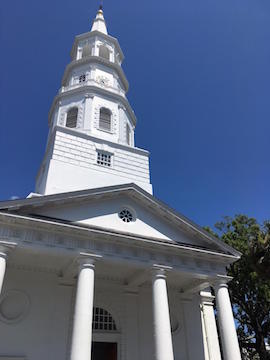 While Charleston, South Carolina, absolutely overflows with history dating all the way back to colonial times, I had the chance to explore a particularly historic churchyard recently.
  Emerging Revolutionary War Era