North Carolina’s Regulators, the Battle of Alamance, and Public Memory

Emerging Revolutionary War welcomes guest historian Jeremiah DeGennaro, Historic Site Manager for Alamance Battleground

In the summer of 1773, Josiah Quincy made a trip to North Carolina. A well-known lawyer and Son of Liberty in Boston, Quincy headed south with the aim of gauging support for a coming revolution, and establishing correspondence with those who were “warmly attached to the cause of American freedom.” Quincy was received by many of the movers and shakers of North Carolina politics. The same men who hosted him—Cornelius Harnett, William Hooper, Robert Howe, and others—later became influential figures in the American Revolution. But upon his arrival, Quincy was quite curious about a different group of North Carolinians: the Regulators. Years before, this group of poor and middling farmers in backcountry North Carolina organized a grassroots movement that called for an end of government corruption, reformation of the rigged justice system controlled by elite “courthouse rings,” and progressive taxation in which citizens paid according to their wealth. At their peak they had thousands of supporters. Their detractors called it a rebellion. In 1773, it had been less than two years since they had been defeated at the Battle of Alamance by Governor William Tryon and his volunteer militia, the movement abruptly crushed. Quincy must have been curious about the motives of former Regulators as potential allies to what he called the “Cause of America.” How warmly attached to the cause of American freedom were they?

He spoke to three different sources, all with firsthand knowledge of events. He sat through a 3-hour lecture against the Regulators by Robert Howe, who commanded the artillery that devastated the Regulators at Alamance. The next day, Quincy met Colonel William Dry for breakfast. Quincy identified Dry as “a friend to the Regulators…he gave me an entire different account of things.” After hearing a few different accounts of the now-defunct Regulators, Quincy abandoned the topic, noting in his journal: “I am now left to form my own opinion.”

Continue reading “North Carolina’s Regulators, the Battle of Alamance, and Public Memory”

“Rev War Revelry” 18th Century Weaponry

Brown Bess. Grasshopper. Charleville. May seem like random names with no connection to the title of this post. On the contrary though, these names, be it nicknames or the actual name, of the firearm or artillery piece were all used by the soldiers and militia of the American Revolution.

This Sunday, at 7 p.m. EST, on Emerging Revolutionary War’s Facebook page, the next “Rev War Revelry” will dive into the weaponry that was prevalent during the era of the American Revolution. Joining ERW will be T. Logan Metesh of High Caliber History LLC of which he is the founder.

With over a decade of experience working for the Smithsonian Institution, National Park Service, and the National Rifle Association Museums, Metesh is a sought after consultant, writer, and museum professional. He will use his interpretive ability to present history and research on firearms and firearms development to this historian happy hour.

We look forward to welcoming Logan Metesh to the “Rev War Revelry” Sunday night chat and hope you will join us as well.

Hindsight is 2020 (or 2021)

Emerging Revolutionary War welcomes guest historian Liz Williams, from Historic Alexandria, the host of the second annual symposium

When we planned our 2nd Annual Revolutionary War Symposium for 2020, our theme came easily – Hindsight is 2020. Little did we know that our cheeky title would take on a different meaning as we had to navigate a global pandemic. But I am excited that we can still offer our symposium (yes 6 months later) and virtual!  In this format, we can zoom our experts to computers and smartphones across the country. And this year we have a great variety of topics – from Drunken Hessians to African American Continentals. Learn about Loyalists, battles in the Southern Theatre, and along a creek in southeastern Pennsylvania.

As we move toward the 250th anniversary of the nation, it is critical for us all to look with fresh eyes at our founding. At Gadsby’s Tavern Museum, we engage with the complexity and challenges of early America, many of which were rooted in what transpired before and during the Revolutionary War. By understanding our past, we can continue the work of creating a better United States for all.

The Symposium costs $40 per person, $20 OHA Members & Students and reservations can be made at AlexandriaVa.gov/Shop. Looking forward to seeing everyone on May 22!

“Rev War Revelry”: The Battle of Alamance

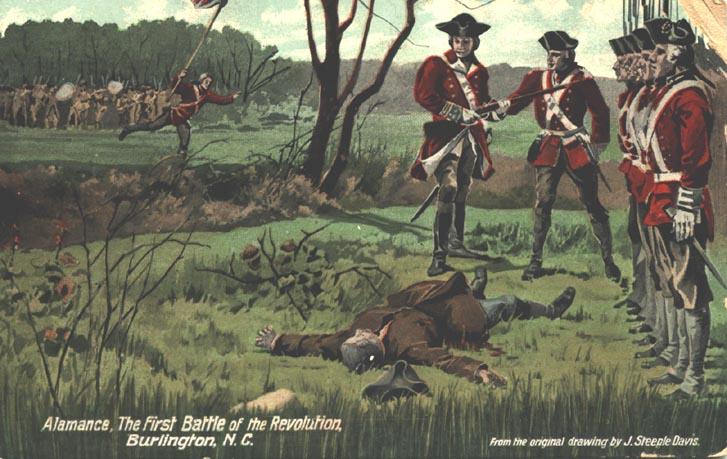
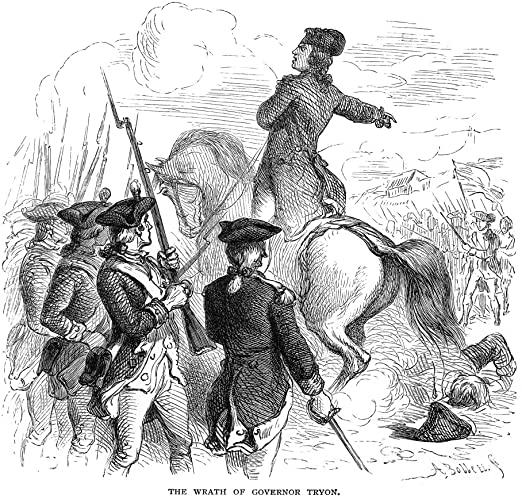
The month of May will mark the 250th anniversary of a little known event that occurred in the North Carolina piedmont called the Battle of Alamance. This battle was the result of an uprising of western North Carolinians who were opposed to the corruption in the colonial government and called themselves “Regulators.” The North Carolina colonial militia under the command of Royal Governor William Tryon marched from the east to quell the rebellion. The two North Carolina forces met at Alamance in May of 1771.

Emerging Revolutionary War welcomes Jeremiah DeGennaro, Historic Site Manager of Alamance Battleground to the “Rev War Revelry” historian happy hour. We will discuss the history of the Battle of Alamance, from what unfolded in North Carolina in 1771 to how this engagement has been remembered. Most recently, the battle was featured in an episode of the TV show, “Outlander.”

Some have suggested that this engagement was the “First Battle of the American Revolution.” But was it? Tune in on May 2 at 7 p.m. ET on the Emerging Revolutionary War’s Facebook page to hear the discussion on this and other questions. If you can’t make it on Sunday night, remember you can watch it later (and all our past “Rev War Revelry’s”) on our YouTube page.

North Carolina’s Response to the 1775 Battle of Lexington and Concord

Emerging Revolutionary War welcomes guest historian Travis Copeland

Rumors roared throughout the Colonies in the Spring of 1775. From Watertown, Massachusetts with an earnest pen, a letter was taken down at 10am on Wednesday Morning, April 19, 1775. Reports had been sent to New London, Rhode Island, and we’re beginning to extend south to the Carolinas. There were reports that, “action had happened between the King’s Troops and the inhabitants of Boston.” The shot fired in Lexington, Massachusetts on April 19 was “heard around the world,” and North Carolina would be no exception. The above, brief sentence recount of the battle was enclosed with the expanded statement,

To All Friends of American Liberty let it be known,

That this morning before break of day a [British] Brigade consisting of about one thousand or twelve hundred men landed at Phipp’s farm in Cambridge, and marched to Lexington, [Massachusetts] where they found a Company of our Colony Militia in arms upon whom they fired without any provocation and killed six men and wounded four others. By an Express from Boston we find that other Brigades are upon their march from Boston supposed to be about one thousand…I have spoken with several who have seen the dead and wounded.[1]

In the age of foot-speed news, a letter penned on April 19 could take weeks to reach the inhabitants of North Carolina. From the Massachusetts committee of safety, the letter was dispatched with earnest haste to Worcester and then beyond the Massachusetts borders. Connecticut, New York, and British Canada were given a recount of the events by April 25, although news by mouth spread as rapid as fire.[2] In the last week of April, no news had yet reached deep South. New Jersey and Maryland were informed by pen just before April became May, but the southern colonist was still much in the dark. Finally, on Friday, April 28th at 8pm colonists from Alexandria, Virginia sent the statement and letter to Fredericksburg and from there to Surry County, Chowan, and Onslow, North Carolina. A flurry of exchange between Virginia and North Carolina created a clamor. War! 

Each county repeated to the next, “disperse the material passages through all your parts.”[3] On May 3, Edenton and Chowan passed-on the news of the clash with his Majesty’s troops.[4] The delegates at Craven County received the news on May 6th. It was ordered that they, “in haste have sent to request you will pursue the enclosed papers and you will do by opening the packet herewith sent the moment it comes your house.”[5] No more important news than the coming of the Revolution, although unknown in the fullest sense, could create such an exasperated command. Yet, the Bath delegates were not done with their orders. They further demanded that Craven county, “get three or four of your Committee to write a line and send the whole enclosed to the next Southward Committee with the utmost dispatch.”[6]

The clamor of excitement came from a colony that was thought to be deeply sympathetic to the British. Regards for the crown were certainly present in the Southern colonies, but the circular letter’s earnest nature displays the patriotic fervor that ran through the colonists. Finally, the letter was directed to Abner Nash, who represented the provision rebel government in North Carolina. As the news reached the upper echelons of society, directions were given to extend the news to anyone using a horse or bearer.[7] Cornelius Harnett, prominent Patriot politician in Wilmington, directed those who would receive the letter to, “for God’s sake send the man on without the least delay and write…to forward it by night and day.”[8] Others shared Harnett’s tone, writing, “Pray don’t neglect a moment in forwarding” and “I cannot avoid writing to you to beg you to forward the Paper containing such important news and pray order the express you send to ride night and day.”[9] Finally, directions were given to move the letter to South Carolina, “to be forwarded to Charlestown.”[10]

Several weeks after the initial fury of letter exchange, another letter was written from Lieutenant Governor Bull of South Carolina to the Earl of Dartmouth. The provisional governor allied with the Crown reflected on the disposition of the Carolinas. Despite the growing desire to show British force against the rebellious colonists, Lt. Gov. Bull stated plainly that, “The account of the Skirmish or Engagement between the King’s Troops and the Provincials of Massachusetts near Lexington on the 19th of last month, seems to produce effects here [the Carolinas] very different from intimidation.”[11] The southern colonist of North and South Carolina would not be thrown back or made afraid by the acts of British commanders and their regulars in the North.

The Continental Congress would not be intimated. It’s North Carolina representatives William Hooper, Joseph Hewes, and Richard Casewell issued a circular letter which shared the tone of Lt. Gov. Bull’s correspondence. They stated plain, with the April 19, 1775 battles of Lexington and Concord in mind, 

Heaven seems to have assumed the protection of the injured insulted Colonists and signally to have appeared in their Favour: when in the last Battle at Lexington six hundred raw, undisciplined Provincials defeated eighteen Hundred regular Troops and pursued them into their Camp…It becomes the duty of us in whom you have deposited the most sacred trusts to warn you of your danger and of the most effectual means to ward it off. It is the Right of every English Subject to be prepared with Weapons for his defense. We conjure you by the Ties of Religion Virtue and Love of your Country to follow the Example of your sister Colonies and to form yourselves into a Militia. The Election of the officers and the Arrangement of the men must depend upon yourselves. Study the Art of Military with the utmost attention, view it as the Science upon which your future security depends.[12]

The colony of North Carolina and its leadership was moved by the initial recount of battle and the circular letter’s news of Massachusetts. The waters of Revolution were rising and the Patriot leaders were beginning to call for more than just a uniform exchange of words. They desired for the state to take its formidable place in as rebels in the South. Further, the flurry of response to the Lexington engagement shows the prominent place of North Carolina in the revolution from the earliest days. Leaders in the South did not wait until the war moved South in 1779, 1780, and 1781 to throw their pens, support, and persons behind the cause of Gen. Washington, the Continental Congress, and the New England colonies. North Carolina was revolutionary from the start.

Sources:

[1] “Letters Concerning the News of the Battle of Lexington in Massachusetts, April 20 – May 9, 1775,” Colonial and State Records of North Carolina, vol. 9, p. 1234.

[2] “Letters Concerning the News of the Battle of Lexington in Massachusetts, April 20 – May 9, 1775,” Colonial and State Records of North Carolina, Documenting the American South, https://docsouth.unc.edu/csr/index.php/document/csr09-0412. vol. 9, p. 1230-31.

[3] “Letters Concerning the News of the Battle of Lexington in Massachusetts, April 20 – May 9, 1775,” Colonial and State Records of North Carolina, vol. 9, p. 1236.

[4] “Letters Concerning the News of the Battle of Lexington in Massachusetts, April 20 – May 9, 1775,” Colonial and State Records of North Carolina,. 9, p. 1237.

[5] “Letters Concerning the News of the Battle of Lexington in Massachusetts, April 20 – May 9, 1775,” Colonial and State Records of North Carolina, vol. 9, p. 1237.

[6] “Letters Concerning the News of the Battle of Lexington in Massachusetts, April 20 – May 9, 1775,” Colonial and State Records of North Carolina, vol. 9, p. 1237.

[7] “Letters Concerning the News of the Battle of Lexington in Massachusetts, April 20 – May 9, 1775,” Colonial and State Records of North Carolina, vol. 9, p. 1238.

[8] “Letters Concerning the News of the Battle of Lexington in Massachusetts, April 20 – May 9, 1775,” Colonial and State Records of North Carolina, vol. 9, p. 1238.

[9] “Letters Concerning the News of the Battle of Lexington in Massachusetts, April 20 – May 9, 1775,” Colonial and State Records of North Carolina, vol. 9, p. 1238.

[10] “Letters Concerning the News of the Battle of Lexington in Massachusetts, April 20 – May 9, 1775,” Colonial and State Records of North Carolina, vol. 9, p. 1239.

[11] “Letter from William Bull to William Legge, Earl of Darmouth, May 15, 1775,” Colonial and State Records of North Carolina, Documenting the American South, https://docsouth.unc.edu/csr/index.php/document/csr09-0426. vol. 9, p. 1258-1260.

[12] “Letter from William Hooper, Joseph Hewes, and Richard Casewell to the Inhabitants of North Carolina, June 19, 1775,” Colonial and State Records of North Carolina, Documenting the American South, https://docsouth.unc.edu/csr/index.php/document/csr10-0011. vol. 10, p. 20-23.

Travis Copeland is a North Carolina native with a love for early American history. He holds a B.A in History and Humanities and is studying for a postgraduate history degree. His research interests include North Carolina history and the early southern United States from the Revolutionary War to the Civil War with a particular interest in military conflict, political-social integration, and local history. When not researching and writing, he enjoys teaching, the outdoors, gardening, and good food and beer. Travis lives and teaches in North Carolina.



The Forgotten Woman of Valley Forge from America’s Forgotten Ally

During the winter encampment at Valley Forge, as thousands of men huddled around drafty wooden cabins, with dwindling supplies, and battled boredom and disease, a relief effort was organized hundreds of miles away.

George Washington, ensconced at the Potts House in the heart of the Valley Forge encampment, was very aware of the dire straights that his forces were exposed to. Throughout the winter he sent missives, directly and through intermediaries, discreetly asking for more aid, for supplies, for changes to military bureaucracy. He even consented to a delegation of congressmen to visit Valley Forge and see first-hand the situation in the winter of 1777-1778.

In a proverbial sense, he did not leave any stone unturned to try and ease the plight of his forces or continue to stay abreast of British designs, less than twenty-miles away in Philadelphia, Pennsylvania.

After hearing of the contributions of the Oneidas and Tuscaroras at the Battle of Oriskany in New York, Washington sent a letter of invitation for the Native Americans to visit his army. Approximately 50 warriors along with supplies made the few hundred mile journey from upstate New York to eastern Pennsylvania. They left their villages on April 25 and arrived on May 15,1778 in Valley Forge. The leaders of the Oneida party dined with Washington. Five days later some of the warriors participated in the engagement at Barren Hill under the Marquis de Lafayette. Six of the warriors gave their life in service to their ally.

In 2007 historian Joseph T. Glatthaar published a book about the Oneidas and their contributions to the American victory in the war. The title, in part, is Forgotten Allies. A fitting testament to the service and sacrifice this tribe underwent in their partnership with the fledgling American nation.

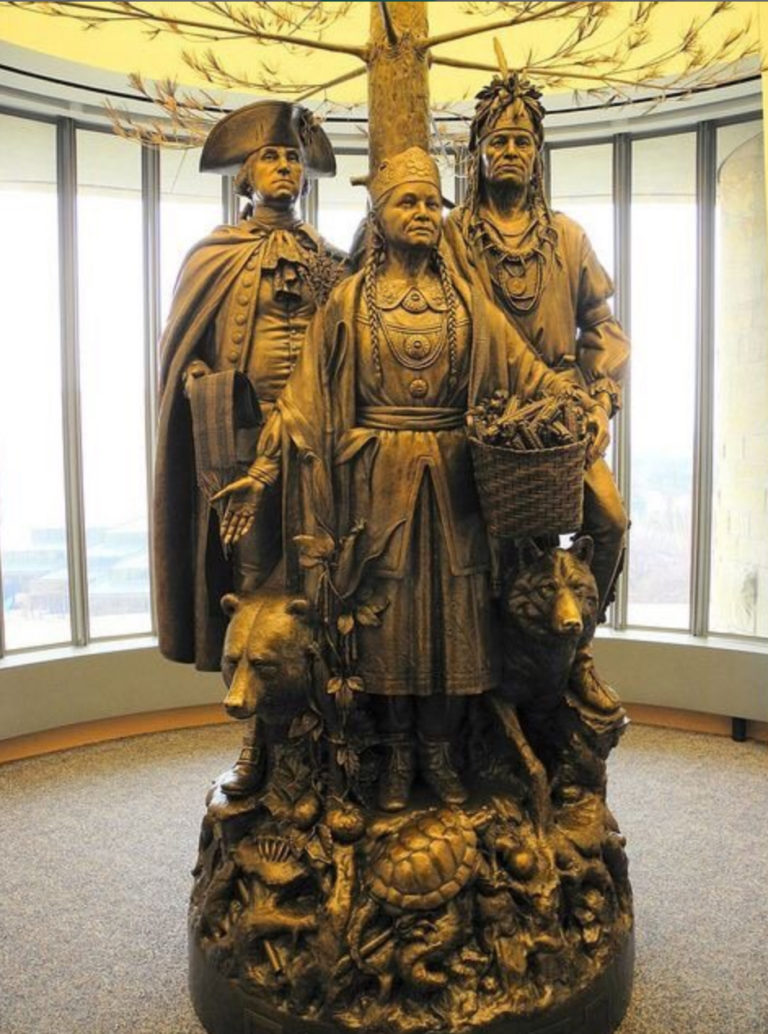
In 2004 a sculpture was completed of Polly Cooper, Chief Skenandoah, and George Washington
(courtesy of King of Prussia Historical Society)

If the Oneidas were the “forgotten allies” than in the winter encampment at Valley Forge there was a forgotten woman that tramped south with her fellow Oneidas. Her name was Polly Cooper.

Along with the warriors, whom Washington wanted to serve as scouts, the Oneidas brought much needed supplies, including bushels of white corn. While the leaders dined at the Potts House, Cooper established a de-facto cooking show. She handed out the white corn to the soldiers and taught them how to use husks to make soup and ground grain to make it palatable.

This much needed food sources, along with an improved supply chain under quartermaster Nathanael Greene rounded out the bleak winter with the glimmer of hope for better supplies in the upcoming campaign season.

The Oneida, including Polly Cooper for her services, refused any and all payment. Friends help friends in need is what the Oneida told Washington and his officers. However, a tradition exists in the history of the Oneida nation. That story, passed down orally from generation to generation, highlights that Marth Washington, in her gratitude for what Polly Cooper did for the rank-and-file of the Continental army, presented the Oneida heroine with a shawl and bonnet.

Another account reads that Cooper was gifted a black shawl that she saw for sale in a store window. The Continental Congress appropriated the money for the clothing item and gifted it as their thanks to her. This shawl is still in the ownership of her descendants and has been loaned to the Oneida cultural center from time to time.

The black shawl that Polly Cooper received for her services to the Continental Army at Valley Forge
(courtesy of the Oneida Indian Nation
http://www.oneidaindiannation.org)

“Rev War Revelry” Returns to Lexington with Alex Cain

Approximately one year ago, Emerging Revolutionary War began a historian happy hour virtual chat on Sunday evenings. The goal was to share our passion for history, connect with each other during the pandemic, and have an excuse to drink a beer. Pretty much what we would be doing if we could gather in person.

Fast forward one year and the “Rev War Revelry” that was created has now become a fixture of our Sunday evenings; well every other Sunday after 36-consecutive weeks from April 2020 to November 2020.

The brain trust at Emerging Revolutionary War convened to discuss what we should do for the one-year anniversary. One logical conclusion came up. A return to Massachusetts!

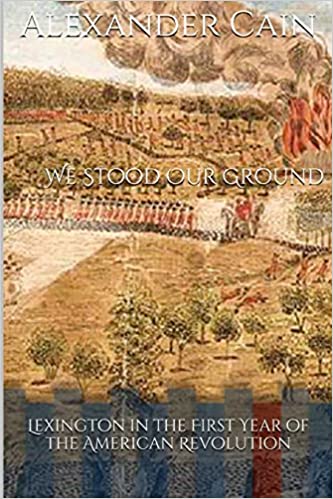
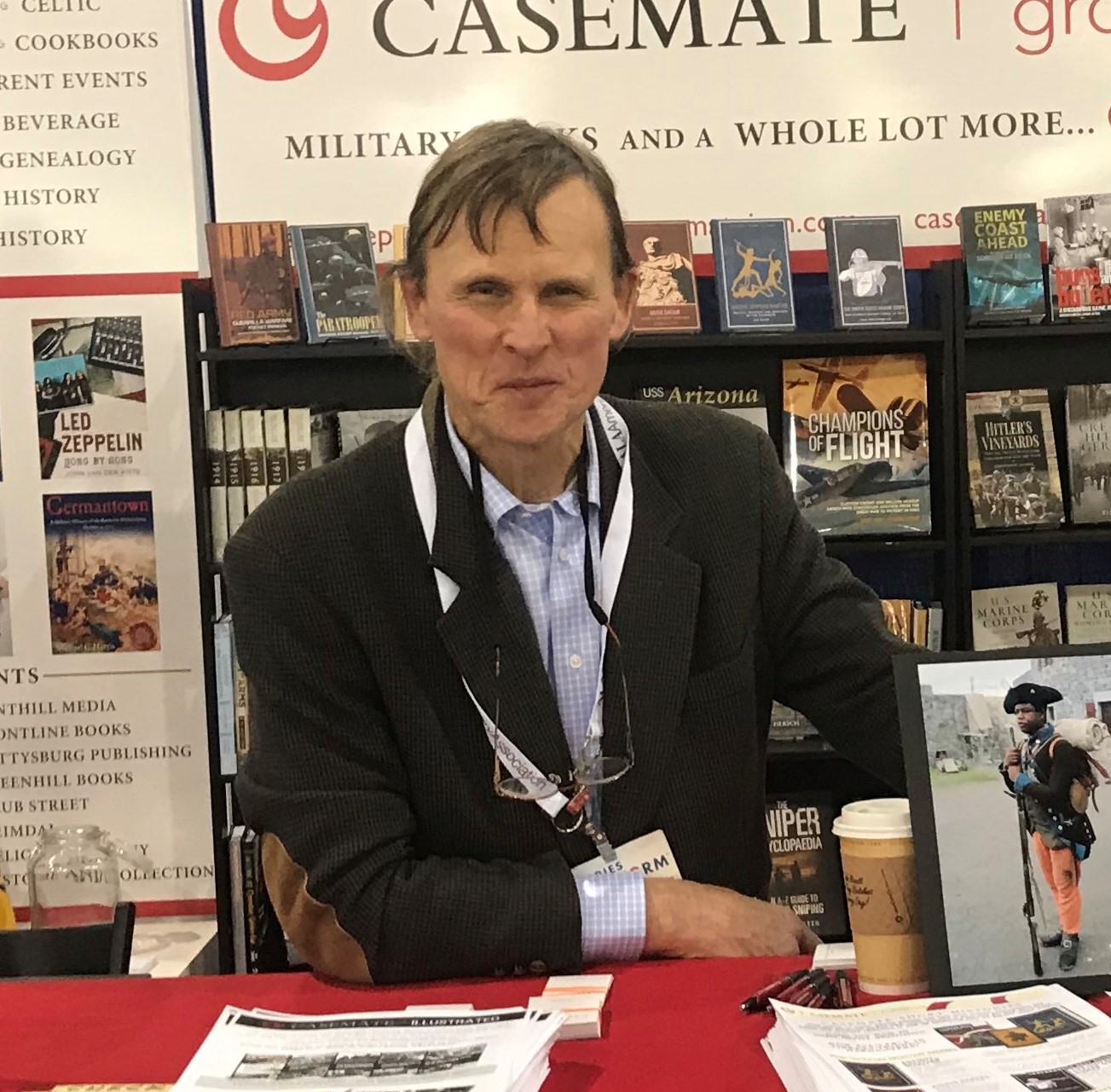
ERW welcomes guest historian Alex Cain, a Lexington historian and author, who will discuss what the Massachusetts town was like in 1775, the details of what happened on both April 18 and 19, 1775, and the misconceptions that sprung up from the beginning of the American Revolution. Of course, we welcome comments and questions through the hour.

Thank you for being part of the “Rev War Revelry” experience as we enter the second year of the historian happy hour. We look forward to seeing you on Sunday evening at 7pm EST on our Facebook page with your favorite beverage and question in hand.

The program can be accessed through Emerging Revolutionary War’s Facebook page. For those that cannot make the program when it is live, there will be a recording posted to our YouTube page within a few days following.

2021 Symposium Highlight: John U. Rees

Over the next few months, we will be highlighting the speakers and topics for our 2021 Symposium, Hindsight is 2020: Revisiting Misconceptions of the Revolution, taking place on May 22nd. Due to the COVID 19 pandemic, the Symposium will be virtual. Today we highlight historian and author John U. Rees who will be covering a much overlooked and misunderstood part of the Revolution, the role of African American Continental soldiers during the war.

John Rees is an independent writer and researcher specializing in the common soldiers’ experience during the War for American Independence, and North American soldiers’ food, 1755 to the modern era. Since 1986 he has produced almost 200 monographs on these and associated subjects. His work has been published in a number of journals and books, including Military Collector & Historian, the Oxford Encyclopedia of American Food and Drink, and the Thomson Gale edition of Boatner’s Encyclopedia of the American Revolution. His first book, “They Were Good Soldiers”: African Americans Serving in the Continental Army, 1775-1783 was published by Helion Books in 2019. 

A list of his publications, plus a number of complete works, may be viewed online at https://tinyurl.com/JohnURees-articles . He will be presenting his talk  “They Were Good Soldiers”: An Overview of African Americans in the Continental Army at the May symposium.


Do you believe the study of African American soldiers in the American Revolution has been overlooked and why?

To my mind the core cause for this lack of knowledge is American willingness to gloss over history, in this case American history. Add to that, many of our fellow citizens, past and present, through wilfulness, mis-education, or lack of caring, think of the American Revolution as a white man’s conflict, with little to no contribution by Americans of African descent. Artwork and films portraying the period have done little to disabuse us of that notion. 

I think, in the 1960s and 70s, many Americans knew of Crispus Attucks’ participation and death in the 1770 Boston Massacre; I know I learned of him as a child in the early 60s. Others may have seen the U.S. Postal Service stamp in the mid-70s featuring Massachusetts African American soldier Salem Poor, but other than those instances most people didn’t (and don’t) really consider black participation on either side of the American Revolution. It also seems that when Americans do become aware of their role as soldiers, they learn about the “black” 1st Rhode Island Regiment (which only existed for two and half years of an eight-year war), when the greatest number of African Americans fighting for the cause of American independence were in integrated units. And then, there were the black women and children, among the hundreds of women and children who accompanied the troops and contributed to their welfare, who no one is aware of.

What first attracted you to the study of early American history?

My parents, especially my mother, were avid readers, and I followed suit very early on. I read many of the Landmark history and biography books, and those likely guided my interest in stories of individual people in extraordinary circumstances. I loved military history early on, and in my pre-teens focused on the Second World War; I then moved on to the Napoleonic era and the American Civil War, all the while reading a great deal of fiction. In 1984 I got involved with Revolutionary War living history, and the fact I had a hard time getting answers about the unit we portrayed led me to begin researching that regiment.

I had the good fortune to live very close to the David Library of the American Revolution, and in 1986 I produced my first (never published) manuscript. As I pored through books and microfilmed manuscript collections, I came across tidbits of interesting information I then had no need of; I copied it and put it aside for possible future use. It was not until 1990 that my first article was published; since that year until now I’ve published almost 200 articles, mostly on the Revolutionary War, but a substantial number on military food and other miscellaneous subjects. At some point in the 1990s I realized that the Revolutionary period was a relatively wide-open field for anyone who wished to study and write about it.

What keeps you involved in the study of this history?

There remain so many stories to tell, too many “small things forgotten,” I still want to write about, I feel the era is still wide open for anyone who wishes to focus on it.

What is the biggest myth about African American soldiers in the Continental Army, and how did it come about?

Likely that the segregated 1st Rhode Island Regiment is the best example of African American soldiers’ participation in the war, when, in fact, the largest proportion of African Americans served in integrated units, in the Continental Army and state militias. Add to that, there were two other segregated regiments during the war, one in the French Army that served for four to five years, and one Loyalist regiment, that existed for only a year.

Do you think there are common misconceptions of the era of the American Revolution among the American people? If so, what are they and have they ever affected your work?

My short list contains two things, one pertaining to Revolutionary ideals, the other to the military side. First is the contention by many people that it was a conservative Revolution, when in actuality the core concepts were quite radical, and significant portion of Revolutionaries retained that radical view, during and after the Revolutionary period.

Regarding the military aspects, I think the idea is still common that American militia forces won the War of the Revolution, which was not the case, and (okay a third item) that the American troops fought using innovative tactics (you know, fighting from behind walls and trees), and the Crown forces were militarily conservative. The facts are too long to go into, but on the last point I highly recommend Matthew Springs book With Zeal and With Bayonets Only.

Why do you think it is important for us to study the Revolutionary Era? 

At this point in our country’s history, it seems we, as a society, need go back and look at our beginning, to see how both leaders and other participants comported themselves and sacrificed attempting to gain not only independence from Britain, but in support of the high ideals of the 1776 Declaration.

On a lesser, but to me still important, note, we need to study the lives of ordinary people of every side – civilian and military; men, women, and children of all creeds and colors – in order to gain a truer understanding of our founding era, and, perhaps, ourselves.

Join us for our SECOND annual Emerging Revolutionary War Symposium, co-hosted by Gadsby’s Tavern Museum, speakers and topics include:


Michael Harris on Misconceptions of Battle of Brandywine
Vanessa Smiley on Myths of the Southern Campaigns
Travis Shaw on American Loyalists
John U Rees on African American Continental Soldiers
Mark Maloy on myths of the Battle of Trenton

Our registration fee is now only $40 per person and $20 for students. This will allow us to broaden our audience with the virtual program. We hope that 2022 will allow us to come together again in Alexandria for our third annual symposium. To register, visit: https://shop.alexandriava.gov/Events.aspx

Stay tuned as we highlight our speakers and their topics in future blog posts.

“I gave my parole once…”

On the morning of August 27, 1780 there was a knock on the door of the Charleston, South Carolina residence of Christopher Gadsden, lieutenant governor of South Carolina. He had stayed when the city capitulated to British forces in May. Gadsden had represented the civil government and handed the city over to the British commander, Sir Henry Clinton. He was released on parole.

Christopher Gadsden

Now, approximately three months later, Clinton was back in New York, and the new British commander Lord Charles Cornwallis had reneged on the parole agreement. Along with another 20 civil officers, Gadsden was led through the town to the docks to a waiting ship, set to sail for St. Augustine in British East Florida.

Upon arrival in the oldest city in European North America, Gadsden was given the opportunity by Governor Tonyn to avoid incarceration in Florida. This is when the 56-year old patriot probably uttered the phrase below.

“I gave my parole once, and it has been shamefully violated by the British Government: I shall not give another to people on whom no faith can be reposed.”

With that decision, Gadsden landed himself in Castillo de San Marcos the large coquina stone fortress that stood guard over St. Augustine. Not only was the South Carolinian kept in a cell, he was kept in solitary confinement for the next 42 weeks!

Upon his release in September 1781, Gadsden and the rest of the civil prisoners were sent by merchant vessel to Philadelphia. Gadsden wasted no time in hurrying southward to South Carolina and a return to the state House of Representatives. He served in various political roles, although he had to decline the governorship because of the affects of his imprisonment. He died in 1805. A grandson, James Gadsden would give his name to the Gadsden Purchase.

Gadsden was held in the cell to the right
(author photo)

Today one can visit Castillo de San Marcos, a national park unit within the National Park Service. When touring the Castillo you can view the cell where Gadsden spent his solitary confinement and read the accompanying exhibits.

The First American Civil War

Emerging Revolutionary War welcomes guest historian Sean Chick

On October 7, 1780, Britain’s attempt to regain at least part of the rebellious North American colonies was dealt a major blow at King’s Mountain. The rebels rejoiced, since it was their first major victory since 1777 and it came after the twin disasters at Charleston and Camden. Thomas Jefferson, then governor of Virginia, considered it the decisive battle of the war. Years later, Theodore Roosevelt echoed that sentiment. In 1930, when the site was set to become a national park, Herbert Hoover gave a speech. For the embattled president, it was an attempt to shore up his falling support and vindicate his strategy to peel southern states away from the Democratic Party. Hoover said “This is a place of inspiring memories. Here less than a thousand men, inspired by the urge of freedom, defeated a superior force entrenched in this strategic position. This small band of Patriots turned back a dangerous invasion well designed to separate and dismember the united Colonies.”

Hoover, understandably, never mentioned the atrocities committed. Many were executed after the battle. Nor did he mention that King’s Mountain was not a contest between redcoats and rebels, but brother against brother. The only British man present was Major Patrick Ferguson. His command was made up entirely of Loyalists. His second in command, Captain Abraham de Peyster, was from New York City.

Joseph Galloway
(courtesy of NYPL)

Few groups in American history are as forgotten as the Loyalists and few were as complex. They were a varied lot, often making up the highest in colonial society, including wealthy merchants and colonial officials. They often included the very lowest in the society, such as recent immigrants, slaves, indigenous, and subsistence farmers. Their ideology was in many ways not radically different from those who rebelled. They were generally not in favor of absolute monarchy or the supremacy of Parliament but simply favored union with Britain and slow reform. A few, such as Joseph Galloway, were part of early protests against British colonial policy, but were unwilling to jump into the chasm of revolution. Some, such as South Carolina merchant David Fanning, were merely aggrieved and sought to settle scores. Others were on the margins of society and saw the colonists, or at least the revolutionary colonial elite, as their real oppressors.

The Loyalists were at first spurned by the British high command. Major General William had over 30,000 men under his command in 1776 and Loyalists would have added to the logistical strain. He also thought a soft war policy that he hoped would induce the colonies to return, and therefore it was reasonable to avoid civil war. Yet, by 1777 the British were using some Loyalist regiments. They would fight in John Burgoyne’s ill-fated drive on Albany and served as rangers at Brandywine.

Continue reading “The First American Civil War”