The Crawford Campaign, 1782: Rout, Retreat, and Recovery

(part four of five)

As the night of June 5 gave way to a dark retreat on June 6, the militia struggled eastward, attempting to reimpose some order on their main body.  According to Rose, Crawford set out after one wayward company that had decided on a more circuitous route of retreat that separated it from the main body.  While he was gone, the Indians began firing into the militia camp in the dark.  At “that instant, every Body was pushing as if it had been a signal agreed for that purpose.”[i]

Rose fell in with a group of about fifty men, who pushed south back toward the abandoned Wyandot town on the Sandusky they had passed through just a few days earlier, seeking to avoid the Shawnee, and then rejoined Williamson with the main body of men as it returned the way the expedition had come.[ii]  In the rush, they lost track of Colonel Crawford.  They moved directly to the route east without much order, placing speed over the coherence of a fighting unit.  Williamson did manage to separate his best horsemen into a smaller group to contest any light horsemen they encountered on the Sandusky plain, but expected to find relative safety when they reached more heavily timbered areas.  On June 6, Rose had a close call.  Riding ahead while trying to keep the group from breaking up into smaller parties, mounted Indians charged him and his companions from a wooded area on the left.  Rose managed to make it back to the main body, which promptly counter-charged with the light horse Williamson had created.[iii] In the process, he lost contact with his two companions, Colonel William Harrison (Colonel Crawford’s son-in-law) and Mr. William Crawford, (Colonel Crawford’s nephew).[iv]

IMG_2448
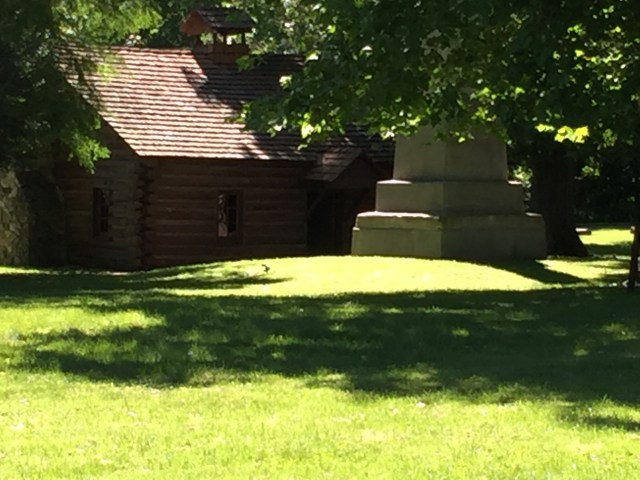
The monument to the “Battle of the Olentangy.”  The battle was more of a skirmish, but marked the end of British pursuit of Williamson’s retreating force.  Native Americans continued to chase and harass the Americans.  (Author Photo)

Later that day, about 24 miles into their march, the militia paused to rest along Olentangy creek.  Their mounted pursuers promptly fired into the main body from behind and the militiamen detected a light screen moving into place ahead of them, the beginning of an encirclement.[v]  The militia started skirmishing while Rose rode to the rear, nearly through the Native Americans behind them, retrieved the rear body, which contained a substantial portion of the light horse, and sent them to clear the woods of enemy skirmishers in front.  The maneuver succeeded and the militia were able to enter the woods, losing three dead and eight wounded in the hour-long fight.  Despite anticipating a degree of relative safety there, pursuers continued to harass the flanks and the rear.  Simultaneously, the poorly organized militia lost still more cohesion as a fighting unit as the woods broke up formations and isolated men in small groups. To make matters worse, the skies opened up and a heavy downpour soaked everyone to the bone.[vi]

Continue reading “The Crawford Campaign, 1782: Rout, Retreat, and Recovery”

The Crawford Campaign, 1782: Birth of an Expedition

(part two of five)

Wiliam Crawford at 40 (Wikimedia Commons)
Colonel William Crawford (Wikimedia Commons)

In April, 1782 local leaders, in particular David Williamson, petitioned Irvine to lead a punitive raid to the Sandusky River aimed at the Wyandot and Hopocan’s Delaware.[i]  While he could provide no material support or leadership, Irvine approved the attack and laid down several conditions: that the expedition operate under laws governing the militia, that their purpose not extend beyond protecting the border, that the force assembled be large enough to accomplish the task, that the raiders equip and sustain themselves on horseback at their own expense, and that the expedition conduct the raid on behalf the United States with an eye toward bringing honor to the United States.  Perhaps he had the brutality of the Gnadenhutten raid in mind and sought to avoid a repeat.[ii]

This Sandusky raid did not reflect Irvine’s strategy of either reducing Detroit or bringing the tribes to battle; it was simply another American raid on Indian towns, which would likely be abandoned by the time the expedition arrived.  Irvine informed Washington that the expedition was going forward and did not seek permission.  Indeed, he may not have had the power to stop it given the restlessness of the local population on the frontier.  Rather that departing in early August, this raid would leave in late May, before the summer heat dried out the countryside.  Speed and surprise would be important, perhaps explaining Irvine’s requirement that every man be mounted, that the expedition dispense with artillery, and that it limit baggage and supplies to 30 days’ worth.[iii]  Irvine wrote Washington, “If their number exceeds three hundred, I am of opinion they may succeed, as their march will be so rapid they will probably in a great degree effect a surprise.”[iv]  But, it would be a risky enterprise.  Continue reading “The Crawford Campaign, 1782: Birth of an Expedition”

The Crawford Campaign, 1782: American Strategy in Ohio, 1781-1782

General William Irvine
General William Irvine (Wikimedia Commons)

(part one of five)

War on the American frontier was generally brutal, but few incidents inflamed American passions in the country’s early history as much as the torture and execution of Colonel William Crawford in June 1782 in Northwestern Ohio.  Crawford’s death marked the emotional climax of another patriot attempt to neutralize British power at Detroit, generally exercised through Native American proxies who had their own reasons for fighting the Americans, and halt the raids against American settlers on the frontier.  The Huron and Wyandot who lived about the Sandusky River, and the Shawnee to their South on the Scioto and Miami Rivers, both occasionally aided by various clans of the Delaware and Mingo tribes, were particularly troublesome in the Ohio River valley.  Colonel Crawford’s campaign, which resulted in his death, was meant to punish the tribes for past raids to forestall future raids.

Continue reading “The Crawford Campaign, 1782: American Strategy in Ohio, 1781-1782”

Burning Colonel Crawford

Last year I came across Dr. John Knight’s account of the torture and execution of Colonel William Crawford by members of the Delaware Indian tribe in 1782.  It was a vicious execution, but not unheard of in the wars on the American frontier, where violence and brutality from both sides were common.

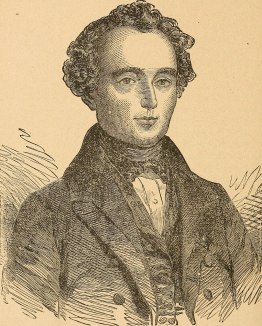
Wiliam Crawford at 40 (Wikimedia Commons)
Crawford at about 40, twenty years before his execution (Wikimedia Commons)

Born in 1722, Crawford was a long-time business partner of George Washington, particularly in the acquisition of land in the Ohio River valley.  A veteran of frontier conflicts, during the Revolution he had served as the Lieutenant Colonel of the 5th Virginia Regiment, commanded the 7th Virginia in the east, and then returned to the Pittsburgh area to raise the 13th Virginia.  Sidelined during the war’s last years, he commanded local Pennsylvania militia and was largely retired by 1782.  For years, settlers in the Ohio Valley had agitated for punitive raid against the Ohio Tribes along the Sandusky River in today’s northwestern Ohio.  Their goal was to retaliate for Indian raids across the Ohio and spoil future raids.  By the spring of 1782, they could not be restrained.  After the militia massacred defenseless Christian Indians at Gnadenhutten in March, Brigadier General William Irvine, the Continental Commander at Pittsburgh, arranged for Colonel Crawford to lead the inevitable militia expedition, likely in hopes that Crawford could prevent a repeat.  (Crawford had taken no part in the Gnadenhutten Massacre).

Continue reading “Burning Colonel Crawford”

Visiting a Tragedy: Gnadenhutten, OH

Few places in the American Revolution evoke sorrow like Gnadenhutten, Ohio.  There, in March 1782, militia from Western Pennsylvania bludgeoned, scalped, and burned to death some ninety-six bound Indians who had adopted the Christian faith preached by missionaries from the church of the United Brethren.  Thirty-four of the victims were children.  Benjamin Franklin called the killings “abominable murders.”[1]

IMG_2540
The Chapel at Gnadenhutten with the 1872 memorial.  The Cooper’s Hut is to the right.  (ES Photo)

Continue reading “Visiting a Tragedy: Gnadenhutten, OH”

Chief Cornstalk’s American Revolution (part two)

Fort Randolph (Wikimedia Commons).jpg

Modern Replica of Fort Randolph in Point Pleasant, WV (Wikimedia Commons)

At Fort Randolph, erected on the old Point Pleasant battlefield, Captain Matthew Arbuckle decided to take matters with the Shawnee into his own hands.  He was already suspicious of the Shawnee in general, and Cornstalk in particular.  In 1776, he reported that Cornstalk had traveled to Detroit and was “Treating with the English.”[i]  Of course, this was William Wilson’s attempt to preserve the neutrality of tribes nearer Detroit by inviting them to a pace conference.  Cornstalk had gone on the mission to lend weight to Wilson’s voice with those tribes.  Arbuckle did not know that.  Continue reading “Chief Cornstalk’s American Revolution (part two)”

Chief Cornstalk’s American Revolution (part one)

Chief Cornstalk (Wikimedia Commons).jpg

Chief Cornstalk after an 1870 rendering (Wikimedia Commons)

The American Revolution on the frontier was brutal.  Neutrality was difficult position to maintain, but some Native American tribes attempted it.  In the Ohio River Valley, it was particularly challenging.  But, for a time the Shawnee and Delaware tribes in modern-day Ohio sought to navigate their way between British power in Detroit and the Americans in Pittsburgh.  Chief Hokoleskwa, known as Cornstalk among the whites, was a leader of the pro-peace factions of the Shawnee.  Unfortunately, it got him killed. Continue reading “Chief Cornstalk’s American Revolution (part one)”