“Rev War Revelry” Author Interview: Christian McBurney

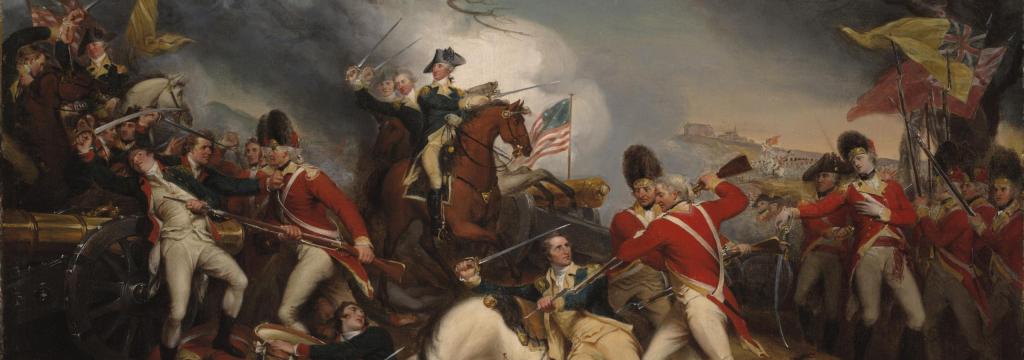
The hottest part of the hotttest temperature engagement in the American Revolution happened on June 28, 1778 at Monmouth Court House in New Jersey. The portion that gets the most attention out of this entire battle was the supposedly heated exchange between General George Washington and his second-in-command, General Charles Lee.

What ensued was the end of an American military career, as Lee would face a court martial, a suspension from duty, and a fall into obscurity. Historians have sorted through the primary sources of the time period to reconstruct what exactly happened on that balmy June day.

Yet, for the first time, a dedicated study, from the lens of both a historian and a practicing attorney, brings into focus the details of that fateful day in New Jersey. That topic, his new book, and historian Christian McBurney will be the focal point of this week’s “Rev War Revelry” as a Facebook live, this Sunday at 7 p.m. EST.

McBurney, an attorney in Washington D.C. and president of the George Washington American Revolution Round Table of Washington D.C. will speak on his latest publication, George Washington’s Nemesis, The Outrageous Treason and Unfair Court Martial of Major General Charles Lee during the Revolutionary War. This book is one of five that McBurney has written on the subject of the American Revolution.

For more information on those books, click here. To read up or read the synopsis of the book at the center of the historian happy hour this Sunday, click here.

We look forward to welcoming you this Sunday; whether you read the book or on the fence about adding this volume to your expanding library or just want to know the history behind this last major battle in the northern theater in the American Revolution. Or all three! Remember to bring your comments, questions, and a favorite beverage to sip on as you tune in.
“Rev War Roundatble with ERW” Discusses “The Cabinet” with Dr. Lindsay Chervinksy

George Washington’s first presidential cabinet included many luminaries of the American Revolutionary era; Thomas Jefferson as Secretary of State and Alexander Hamilton as Secretary of the Treasury to just name two. When studying the formation of the present United States government and the creation of cabinets that serve the president, we tend to gloss over it, as a sort of bygone conclusion, that this was a natural product out of this creation.

A closer reading of the United States Constitution, however, does not include the executive branch having a cabinet of secretaries to assist the president. George Washington, as first president, was entirely on his own in creating one, and the first cabinet meeting was not called into session until two and a half years into his first term.

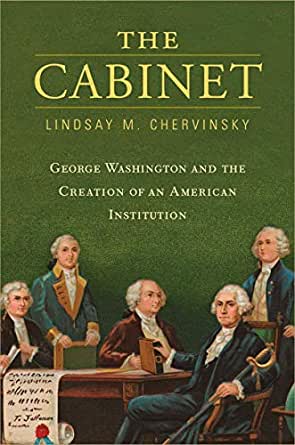
The creation of this American institution is the basis of this week’s “Rev War Revelry” as Emerging Revolutionary War welcomes historian and author Dr. Lindsay Chervinsky as she discusses the history in and surrounding her publication, The Cabinet, George Washington and the Creation of an American Institution.

When discussing the importance of the cabinet, Chervinsky said:

“The best way to better understand the creation of the presidency, presidential leadership, or Washington’s legacy is through the cabinet.”

But this story isn’t just one about the early Founding Era. As Chervinsky writes in her work, “we can’t evaluate the cabinet without examining Washington’s use of councils of war from the Revolution. He developed critical management strategies in the councils that he replicated as president. The war shaped Washington as president.”

Chervinsky is an early American historian and is currently the Scholar-in-Residence at the Institute for Thomas Paine Studies at Iona College and a Senior Fellow at the International Center for Jefferson Studies. In addition, she is teaches courses on the presidency at George Washington University’s School of Media and Public Affairs.

For a sneak peak into the book and its history, click here to access Chervinsky’s talk at the Virginia Historical Society.

“Rev War Roundtable with ERW” Brandywine Campaign

The largest, in terms of military forces deployed, engagement in the American Revolutionary War occurred on September 11, 1777 in southeastern Pennsylvania. The Battle of Brandywine was a pivotal moment in the British campaign that captured the patriot capital in Philadelphia. With the anniversary of the engagement happening the Friday before, the Emerging Revolutionary War crew will make this engagement and campaign the focal point of Sunday’s “Rev War Roundtable with ERW.”

Joining the “Rev War Revelry” this Sunday, at 7pm on Emerging Revolutionary War’s Facebook page will be Michael C. Harris, historian and author of Brandywine: A History of the Battle that Lost Philadelphia but Saved America, September 11, 1777, which was published and is available for purchase by Savas Beatie. Click here to order.

Besides authoring the history mentioned above, Harris has an upcoming release, on another important battle in Pennsylvania, Germantown, fought on October 4, 1777. Rumor on the street has it that he will be joining ERW at a future date to discuss this important battle and talk about his new book.

A bit of a background on Harris. He is a graduate of the University of Mary Washington and the American Military University. He has worked for the National Park Service in Fredericksburg, Virginia, Fort Mott State Park in New Jersey, and the Pennsylvania Historical and Museum Commission at Brandywine Battlefield. He has conducted tours and staff rides of many east coast battlefields. Michael is certified in secondary education and currently teaches in the Philadelphia region. He lives in Pennsylvania with his wife, Michelle and son, Nathanael.

Although the battle lost Philadelphia for the patriots, Harris does not hold back on the culprit for the setback:

“Washington failed the army, the army did not fail Washington.”

To hear the reasoning behind that emphatic quote we hope you join us this Sunday!

“Rev War Roundtable with ERW” Talks Treason & Benedict Arnold

Benedict Arnold, the mere mention of the name seems permanently intertwined with the word “treason.” His name has even made it into popular vernacular, being called a “Benedict Arnold” as an insult. Yet, there is more to the man than just that infamous moment along the banks of the Hudson River in West Point, New York in 1780.

Prior to that turning point, Arnold was one of the greatest battlefield leaders the Americans had at that rank. His inspiring leadership on the field of battle at Saratoga led to a climactic charge and one of the greatest monuments to a leader on any hallowed ground. He survived the cold and assaults in Canada in the winter of 1776 as well.

After being a turncoat he was a menace in Virginia in 1781, raiding in Richmond and the Tidewater of Virginia. One of ERW’s historians will discuss Arnold’s role in the state capital of Virginia.

A lot to unpack and that is why this Sunday, at 7pm, live on our Facebook page, Emerging Revolutionary War historians will be joined by Dr. Powell, who spoke on the French and Indian War with us back in June, to discuss Benedict Arnold. So, bring those pre-conceived notions but an open mind to fully appreciate Arnold. This “Rev War Revelry” will discuss the before reasons for, and the after of his switching allegiances.

“Rev War Roundtable with ERW” Revolutionary Movies

The majority of military history enthusiasts, besides having a rows upon rows of books and publications gracing one room (or multiple rooms) of their dwellings, also house another collection.

Movies, films, documentaries that detail on screen the history of the American Revolution and the founding era of the United States. We can all name a few off the top of our head. We all have debated, either internally, with our significant others and family members, fellow history aficionados, or online about the historical accuracy or portrayal of those events.

This Sunday, join the Emerging Revolutionary War crew of historians in discussing this very same topic. During our historian happy hour, the ERW crew will debate, provide commentary and opinion, or possibly, just remonstrate on how the movie The Patriot is the most smeared film centered on American history that was ever produced.

With the slate of historians on tap for Sunday evening, you never know what will be debated and discussed. A safe bet is the mention of George Washington and who has depicted America’s founding father the most accurately on the big screen.

This Sunday, besides the beverage or choice, one may want to attain or make their favorite movie snack as well and tune in to ERW’s Facebook page for this lively “Rev War Revelry” discussion.

“He was everything an excellent officer should be…” Remembering Baron de Kalb

On this day, in 1780, Baron de Kalb, died at 59 years old. He had commanded admirably at the Battle of Camden, on August 16, 1780, overseeing the right of the American line where he received his mortal wounds.

Marker on the Camden Battlefield, although not in the “exact spot” that Baron de Kalb fell (author collection)

Below are a few excerpts about the German-born de Kalb.

On his deathbed, as noted by his aide, the Chevalier du Buysson, de Kalb wanted it known that:

His most affectionate compliments to all the officers and men of his division; he expressed the greatest satisfaction in the testimony given by the British army of the bravery of his troops….and the exemplary conduct of the whole division gave him an endearing sense of the merit of the troops he had the honor to command.

Although just a child, at seven years old, in August 1780, Mary Kershaw remembered the day de Kalb was buried in Camden. She lived until 1848 but would regale people with her reminiscences.

She also witnessed the burial of Baron de Kalb, with his sword at his side, between two British officers. It would later be found that “he lay, it seems, in the ‘custom of knighthood’ as last of his race, buried in his armor, that is to say his helmet, his sword, and his spurs were in the grave with him.

Original grave location for de Kalb in Camden (author collection)

General Horatio Gates, who commanded the American forces at Camden, penned the following to General George Washington, upon the news of de Kalb’s passing.

Too much honor cannot be paid by Congress to the memory of Baron de Kalb; he was everything an excellent officer should be, and in the cause of the United States he sacrificed his life.

Lastly, the French ambassador and former staff officer of de Kalb, the Duke de la Luzerne, wrote:

The fall of that excellent Officer, the Baron de Kalb–so much to be regretted by France and the United States…

Yet, the spirit of de Kalb. the resolute soldier, would live. Both within his former division and in the reconstituted Continental forces in the southern theater, as these regular army soldiers (and militia) would see the cause through to a successful conclusion.

For more information and the source of these excerpts please consult:

“De Kalb, One of the Revolutionary War’s Bravest Generals” by John Beakes

“Rev War Roundtable with ERW” Epic Moments of the American Revolution

This Sunday, at 7 pm, EST on our Facebook page, join Emerging Revolutionary War historians as they discuss “Epic Moments of the American Revolution.”

What is an epic moment? This umbrella term will be discussed by using examples from the eight-year conflict that spawned American independence. As ERW historian Mark Maloy relates, one such moment came in early 1777 at Princeton, New Jersey, as explained by a participant in that engagement:

“I saw [Washington] brave all the dangers of the field and his important life
hanging as if it were by a single hair with a thousand deaths flying around him.” –
Pennsylvania officer at Princeton”

Moments of bravery, of personal sacrifice, be it in a battle, skirmish, raid, siege, political moment or on a mission of importance, the American Revolution has a multitude of them. During the hour-ish long historian happy hour, the panel will describe the ones that they deem as important or noteworthy. Bring your own as well, as we encourage comments, opinions, and dialogue via the comments section of our Facebook live.

Looking forward to sharing a brew and an epic moment from the War of Independence with you, this Sunday, on Emerging Revolutionary War‘s “Rev War Revelry.”

ERW Statement

With the recent events facing our nation, American Revolutionary War monuments and memorials have an important role in demonstrating pride in our shared past and the highest ideals we value.  Statues and monuments to the leaders and participants of the struggle for American independence today stand on battlefields, in courthouse squares and on historic sites all across this nation.  While these statues depict very flawed and imperfect human beings, they memorialize the deeds and character that contributed to the creation of the nation we now live in. 

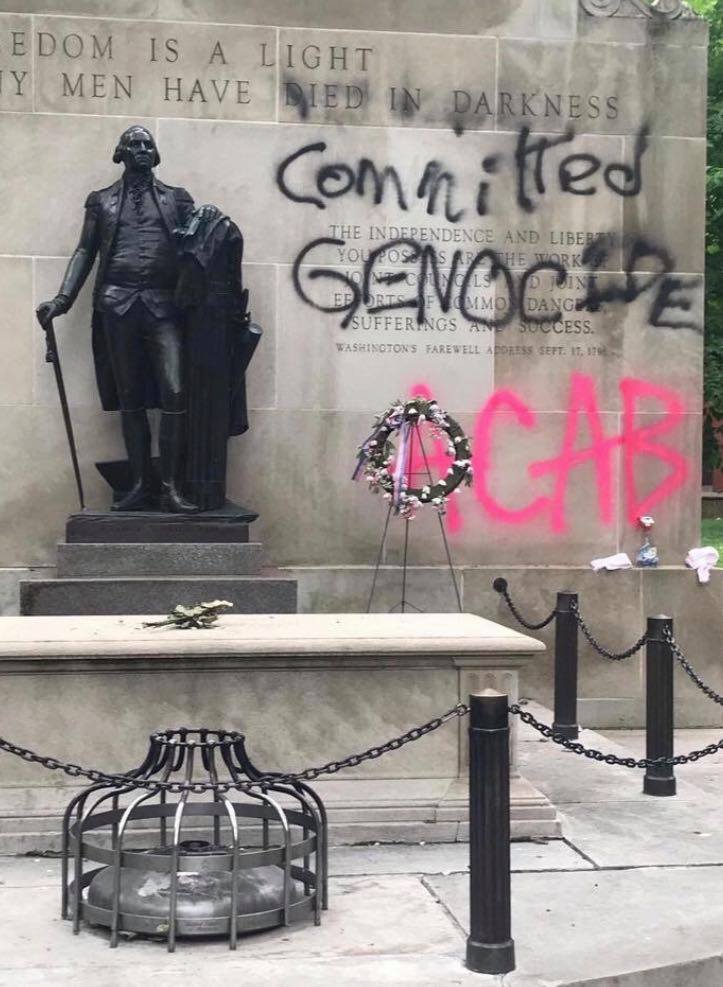
These statues and monuments not only tell an important part of the nation’s founding, they are also artifacts of the eras in which they were constructed and how we have remembered our Revolutionary struggle, and how the ideals of the Revolution continue to live to this very day. Part of what we do at Emerging Revolutionary War is connect the past to the places today. Over the past few weeks we have seen localities remove or plan to remove statues honoring Caesar Rodney in Delaware and Philip Schuyler in New York.  We have also seen statues of Marquis de Lafayette, Baron von Steuben, and Thaddeus Kosciusko vandalized in Washington, DC, a statue of George Washington vandalized in Boston, statues vandalized in Philadelphia of Washington and Benjamin Franklin, and the Tomb of the Unknown Revolutionary War in Philadelphia desecrated. 

We feel it is important that all of the United States’ Revolutionary War statues and monuments are protected so they can continue to demonstrate our highest values and ideals and the tell the story of the important figures who shaped our nation. Without these monuments, we lose vital resources to tell the important stories of our past and help unite us in moving forward as a country. As the 250th anniversary of the American Revolution draws near, rather than the removal of monuments, we hope more monuments and memorials will be erected, especially for overlooked populations that also played a role in the founding of our nation. With this more comprehensive view of history in mind, a broader and more accurate story can be told to the American public.  Emerging Revolutionary War will continue to trace the stories of the past and tie them to the places through these challenging times and we look forward to a better tomorrow.

“Rev War Roundtable with ERW” Father’s Day, Father of the Country

This Sunday, Father’s Day in the United States, join Emerging Revolutionary War for the next historian happy hour on the proverbial “Father of the Country” George Washington.

As our historians discuss, converse, and share their knowledge, the “Rev War Revelry” will not just be dedicated to one man, George Washington. But, also, to the “Fathers’ of the Father of the Country.” The generations prior to Washington who are buried in eastern Virginia, on the historic Northern Neck of Virginia, and within the boundary of George Washington Birthplace National Monument, a part of the National Park Service.

Joining the ERW crew this week will be guest historian Scott S. Hill, who is the Chief of Interpretation and Education at George Washington Birthplace National Monument and Thomas Stone National Historic Site.

So, if you are a father, we wish you a great Father’s Day. We also encourage you to share an hour and a brew, with your father, if able, and tune into our Facebook page at 7 p.m. EST to catch the discussion that ensues.

Burial Ground, George Washington Birthplace NM (courtesy of Project Gutenberg)

Return to Command

Emerging Revolutionary War welcomes back guest historian Dan Davis

Like my last post at Emerging Revolutionary War on the “Race to the Dan”, the origins of this post lie in a conversation with blog co-founder, Phill Greenwalt. The topic of our discussion revolved around the aftermath of the British victory at the Battle of Camden. The engagement ultimately brought two American officers to the Southern Theater: Nathanael Greene and Daniel Morgan. Greene accepted the position as the new head of the Southern Department’s co two months to the day after the battle while commanding the post at West Point, New York. Morgan’s story, however, is much more fascinating.

In the spring of 1779, George Washington created a light infantry corps within the Continental Army. Such a command fit Morgan’s skillset. He previously commanded the army’s provisional rifle corps. Additionally, Morgan, then a colonel, had compiled a record that arguably warranted elevation to brigadier general. After fighting broke out at Lexington and Concord, Morgan led a rifle company to the aid to the American army besieging Boston. Morgan participated in Col. Benedict Arnold’s Canadian Expedition and was captured during the assault on Quebec. He also played a critical role in the Battles of Saratoga. Morgan’s home state of Virginia, however, had met its quota for general officers and a vacancy was not available.

On June 30, 1779, Morgan learned Brig. Gen. Anthony Wayne received command of the new corps. With his pride devastated, Morgan traveled to Philadelphia. There, on July 19, Congress read his resignation.

Continue reading “Return to Command”