
Emerging Revolutionary War welcomes back guest historian Drew Palmer for Part II of his Maryland Loyalist series (for Part I, click here).
A Loyalist Provincial Regiment is Formed
In August 1777, a massive British fleet sailed up the Chesapeake Bay. On board were 17,000 men under the command of General William Howe, Commander-in- Chief of all British forces in North America. Howe’s objective was the Patriot capital of Philadelphia. As the British force moved up the Chesapeake, a contingent stopped in Chestertown. Accompanying the British in Chestertown was none other than James Chalmers. In the previous winter, Chalmers was attacked by a violent Patriot mob energized by the recent Patriot victories at Trenton and Princeton. Inspired by the recent victories, Patriot governments renewed their commitment to stamp out Tory activity, and they knew where Loyalist threats loomed the largest. Loyalist sentiment on the Eastern Shore began to threaten the stability that the Patriots had created. Maryland delegate to the Continental Congress, Samuel Chase, informed Congress of the situation in February of 1777. “The Tories in Sussex [Delaware], Somerset, and Worcester Counties, have been assembling for some days. They have 250 men collected at Parker’s Mill, about nine miles from Salisbury, and tis reported they have three field pieces, which they received from the Roebuck [44- gun British man-of-war], with some men, with the intention to seize the magazine and destroy the property of the Whigs…. There are three men of war in the bay, one at the Tangiers, one at Smith’s Point, and one in the middle…. I must repeat the necessity of a representation.”16 The insurrection continued to grow until Brigadier General William Smallwood, the commander of Maryland’s army, arrived on the Eastern Shore with three thousand soldiers; this quickly put an end to the Loyalist uprising.17 Smallwood described the Tory uprising as a movement that uses “religion as a cloak for their nefarious designs.”18
After the Patriots reestablished control on the Eastern Shore, Eastern Shore Loyalists largely went underground, some fled, and most chose to keep quiet. However, James Chalmers, not the type to stay quiet, left for New York in June 1777, where he helped advise Howe on his upcoming campaign. Chalmers had traveled through New Jersey in April and informed Howe of the weakness of Washington’s army. Chalmers informed Howe [through his aide-de-camp] that he believed Washington’s army could be defeated with relative ease, thereby clearing a path to Philadelphia, which was Howe’s goal for the upcoming campaign. In August of 1777, Howe’s army continued its journey through Maryland. After Howe’s army reached the capital of Philadelphia, they had fought in a series of engagements, diminishing its strength. It became clear to Howe that more troops were needed to guard Philadelphia and the surrounding region. Chalmers had supported Howe during the march through Maryland by procuring horses from Loyalists for Howe’s army.19 This partnership may have convinced Howe that large numbers of potential Loyalist recruits could form provincial regiments. On October 8, 1777, Howe issued a proclamation that appeared in the Pennsylvania Ledger:
Whereas for the more speedy and effectual suppression of the unnatural rebellion subsisting in North-America, it has been thought proper to levy a number of Provincial Troops, thereby affording to his Majesty’s faithful and well-disposed subjects, inhabitants of the colonies, an opportunity to co-operate in relieving themselves from the miseries attendant on anarchy and tyranny, and in restoring the blessings of peace and order with just and lawful government. As a reward for the promptitude and zeal of his Majesty’s faithful subjects who may enter into the corps now raising. I DO HEREBY, in consequence of authority to me given by his Majesty, promise and engage, that all persons who have, or do hereafter inlist into any of the said Provincial Corps, to serve for two years, or during the present war in North America, and shall continue faithfully to serve in any engagements, shall,, after being reduced or disbanded, obtain, according to their respective stations, grants of the following quantities of vacant lands in the colonies wherein their corps have been or shall be raised, or in such colony as his Majesty may think fit. Every non-commissioned officer- 200 acres. Every private soldier- 50 ditto.20 It was decided that James Chalmers would lead his own Loyalist regiment. With a pen stroke, Howe created three provincial units: the Roman Catholic Volunteers, the First Battalion of Pennsylvania Loyalists, and the First Battalion of Maryland Loyalists. Chalmers commanded the First Battalion of Maryland Loyalists and successfully recruited 336 troops for the regiment. Although small compared to other Loyalist provincial regiments, Chalmers fared much better than the 132 men raised by the Pennsylvania Loyalists Battalion and the 180 men of the Roman Catholic Volunteers. Though the Catholic Loyalists and the Pennsylvania Battalion of Loyalists are significant in their own right, this narrative will focus more specifically on Chalmers and his First Battalion of Maryland Loyalists.
The Men of the Regiment
The First Battalion of Maryland Loyalists was made up of a diverse group of men, each with their own motivations for joining the regiment. As with many lesser-known regiments, little is known about the privates. However, historians know the regiment’s officers well. Phillip Barton Key was studying law in Annapolis when the rebellion began. Key allegedly refused numerous attempts to persuade him to swear an oath of allegiance to the Patriots. He refused again in 1777. Fearing Patriot retribution, Key fled to Philadelphia in December, where he joined the regiment. Key’s brother, John Ross Key, had joined the Continental Army as an officer. It is likely that having a family member on the Patriot side lessened the risk of retaliation against Phillip Barton Key at the war’s end, allowing Phillip Barton Key to return to civilian life with relative ease after the war. Ironically, Phillip Barton Key was the uncle of Francis Scott Key, who wrote the Star-Spangled Banner decades later, during the British attack on Baltimore in 1814.21
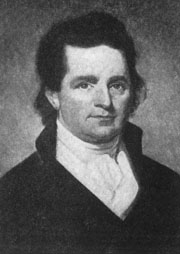
Irish-born Baltimore physician Patrick Kennedy fled to Philadelphia after the Patriot victory at Trenton, believing that harassment of Tories would increase. Kennedy was proven correct when his doctor’s office was ransacked for his medical supplies. Kennedy received one of the first captain’s commissions in Chalmers’ regiment.22 Another of the captains commissioned in the regiment was the Virginian, Dr. Alexander Middleton. Like many Loyalists who refused to swear oaths of allegiance, Middleton was jailed briefly before fleeing to Philadelphia in late 1776, where he cared for Loyalist prisoners after seeing the alarming conditions in which they were confined. Middleton bided his time until the British arrived in September, when he could, at last, be open about his beliefs. He quickly met up with Chalmers, received a captain’s commission, and recruited 52 men into the unit. However, Middleton fell from his horse while pursuing the Patriots. The injury was severe and forced him to resign his commission and sail to England with his family. Perhaps this was the first sign of the bad luck that would plague the regiment’s future.23
Well-known Eastern Shore Loyalists Levin Townsend and Isaac Costen arrived in Philadelphia in the spring of 1778 and were commissioned as lieutenant and captain. Calbe Jones, the former sheriff of Somerset County on the Eastern Shore, also arrived and soon received an officer’s commission in the regiment. Chalmers also recruited John MacDonald from the Forty-Second Royal Regiment of Highlanders and appointed him major in the Maryland Loyalists Battalion. Chalmers likely sought out MacDonald because of his military experience.24
The Reverend John Patterson was released in March 1778 after being confined in Baltimore. He immediately fled to Philadelphia, where Chalmers named him the regiment’s pastor. Fourteen-year-old William Augustus Bowles traveled from Western Maryland to Philadelphia and bought himself an ensign’s commission in Chalmers’ regiment. Bowles was energetic and adventurous. He did not know it then, but his future held plenty of adventures. As word trickled out, more men began to join the regiment, primarily from Pennsylvania, Delaware, and Maryland. From November 1777 to late spring 1778, the regiment continued to grow and began drilling its companies. Once the regiment was together, it received its uniform. The uniform closely resembled that of British regulars. The regiment was issued red coats with olive-colored facings. The buttonholes were decorated with white lace. The rest of the uniforms consisted of a white waistcoat and breeches, with black linen half-gaiters designed to protect shoes and stockings from mud and dirt. Little information exists regarding the arms and accouterments issued to the regiment. Complete uniformity was rare at this stage in the war forboth Loyalist provincial units, such as Chalmers’ regiment, and much of the Patriot forces.25
Continue reading “ A Loyalist Provincial Regiment is Formed”
