
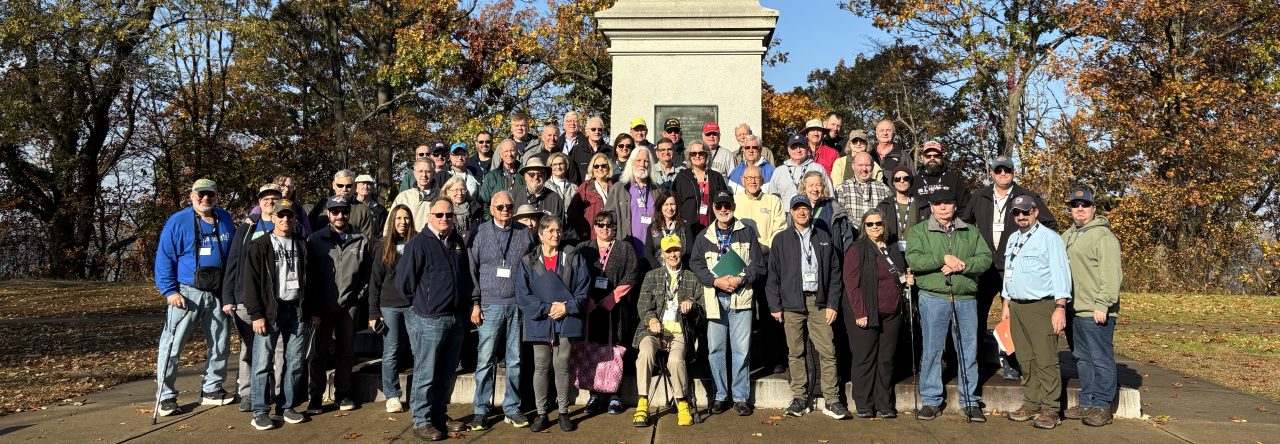
Emerging Revolutionary War welcomes back guest historian Drew Palmer for Part II of his Maryland Loyalist series (for Part I, click here).
A Loyalist Provincial Regiment is Formed
In August 1777, a massive British fleet sailed up the Chesapeake Bay. On board were 17,000 men under the command of General William Howe, Commander-in- Chief of all British forces in North America. Howe’s objective was the Patriot capital of Philadelphia. As the British force moved up the Chesapeake, a contingent stopped in Chestertown. Accompanying the British in Chestertown was none other than James Chalmers. In the previous winter, Chalmers was attacked by a violent Patriot mob energized by the recent Patriot victories at Trenton and Princeton. Inspired by the recent victories, Patriot governments renewed their commitment to stamp out Tory activity, and they knew where Loyalist threats loomed the largest. Loyalist sentiment on the Eastern Shore began to threaten the stability that the Patriots had created. Maryland delegate to the Continental Congress, Samuel Chase, informed Congress of the situation in February of 1777. “The Tories in Sussex [Delaware], Somerset, and Worcester Counties, have been assembling for some days. They have 250 men collected at Parker’s Mill, about nine miles from Salisbury, and tis reported they have three field pieces, which they received from the Roebuck [44- gun British man-of-war], with some men, with the intention to seize the magazine and destroy the property of the Whigs…. There are three men of war in the bay, one at the Tangiers, one at Smith’s Point, and one in the middle…. I must repeat the necessity of a representation.”16 The insurrection continued to grow until Brigadier General William Smallwood, the commander of Maryland’s army, arrived on the Eastern Shore with three thousand soldiers; this quickly put an end to the Loyalist uprising.17 Smallwood described the Tory uprising as a movement that uses “religion as a cloak for their nefarious designs.”18
After the Patriots reestablished control on the Eastern Shore, Eastern Shore Loyalists largely went underground, some fled, and most chose to keep quiet. However, James Chalmers, not the type to stay quiet, left for New York in June 1777, where he helped advise Howe on his upcoming campaign. Chalmers had traveled through New Jersey in April and informed Howe of the weakness of Washington’s army. Chalmers informed Howe [through his aide-de-camp] that he believed Washington’s army could be defeated with relative ease, thereby clearing a path to Philadelphia, which was Howe’s goal for the upcoming campaign. In August of 1777, Howe’s army continued its journey through Maryland. After Howe’s army reached the capital of Philadelphia, they had fought in a series of engagements, diminishing its strength. It became clear to Howe that more troops were needed to guard Philadelphia and the surrounding region. Chalmers had supported Howe during the march through Maryland by procuring horses from Loyalists for Howe’s army.19 This partnership may have convinced Howe that large numbers of potential Loyalist recruits could form provincial regiments. On October 8, 1777, Howe issued a proclamation that appeared in the Pennsylvania Ledger:
Whereas for the more speedy and effectual suppression of the unnatural rebellion subsisting in North-America, it has been thought proper to levy a number of Provincial Troops, thereby affording to his Majesty’s faithful and well-disposed subjects, inhabitants of the colonies, an opportunity to co-operate in relieving themselves from the miseries attendant on anarchy and tyranny, and in restoring the blessings of peace and order with just and lawful government. As a reward for the promptitude and zeal of his Majesty’s faithful subjects who may enter into the corps now raising. I DO HEREBY, in consequence of authority to me given by his Majesty, promise and engage, that all persons who have, or do hereafter inlist into any of the said Provincial Corps, to serve for two years, or during the present war in North America, and shall continue faithfully to serve in any engagements, shall,, after being reduced or disbanded, obtain, according to their respective stations, grants of the following quantities of vacant lands in the colonies wherein their corps have been or shall be raised, or in such colony as his Majesty may think fit. Every non-commissioned officer- 200 acres. Every private soldier- 50 ditto.20 It was decided that James Chalmers would lead his own Loyalist regiment. With a pen stroke, Howe created three provincial units: the Roman Catholic Volunteers, the First Battalion of Pennsylvania Loyalists, and the First Battalion of Maryland Loyalists. Chalmers commanded the First Battalion of Maryland Loyalists and successfully recruited 336 troops for the regiment. Although small compared to other Loyalist provincial regiments, Chalmers fared much better than the 132 men raised by the Pennsylvania Loyalists Battalion and the 180 men of the Roman Catholic Volunteers. Though the Catholic Loyalists and the Pennsylvania Battalion of Loyalists are significant in their own right, this narrative will focus more specifically on Chalmers and his First Battalion of Maryland Loyalists.
The Men of the Regiment
The First Battalion of Maryland Loyalists was made up of a diverse group of men, each with their own motivations for joining the regiment. As with many lesser-known regiments, little is known about the privates. However, historians know the regiment’s officers well. Phillip Barton Key was studying law in Annapolis when the rebellion began. Key allegedly refused numerous attempts to persuade him to swear an oath of allegiance to the Patriots. He refused again in 1777. Fearing Patriot retribution, Key fled to Philadelphia in December, where he joined the regiment. Key’s brother, John Ross Key, had joined the Continental Army as an officer. It is likely that having a family member on the Patriot side lessened the risk of retaliation against Phillip Barton Key at the war’s end, allowing Phillip Barton Key to return to civilian life with relative ease after the war. Ironically, Phillip Barton Key was the uncle of Francis Scott Key, who wrote the Star-Spangled Banner decades later, during the British attack on Baltimore in 1814.21
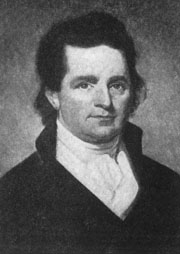
Irish-born Baltimore physician Patrick Kennedy fled to Philadelphia after the Patriot victory at Trenton, believing that harassment of Tories would increase. Kennedy was proven correct when his doctor’s office was ransacked for his medical supplies. Kennedy received one of the first captain’s commissions in Chalmers’ regiment.22 Another of the captains commissioned in the regiment was the Virginian, Dr. Alexander Middleton. Like many Loyalists who refused to swear oaths of allegiance, Middleton was jailed briefly before fleeing to Philadelphia in late 1776, where he cared for Loyalist prisoners after seeing the alarming conditions in which they were confined. Middleton bided his time until the British arrived in September, when he could, at last, be open about his beliefs. He quickly met up with Chalmers, received a captain’s commission, and recruited 52 men into the unit. However, Middleton fell from his horse while pursuing the Patriots. The injury was severe and forced him to resign his commission and sail to England with his family. Perhaps this was the first sign of the bad luck that would plague the regiment’s future.23
Well-known Eastern Shore Loyalists Levin Townsend and Isaac Costen arrived in Philadelphia in the spring of 1778 and were commissioned as lieutenant and captain. Calbe Jones, the former sheriff of Somerset County on the Eastern Shore, also arrived and soon received an officer’s commission in the regiment. Chalmers also recruited John MacDonald from the Forty-Second Royal Regiment of Highlanders and appointed him major in the Maryland Loyalists Battalion. Chalmers likely sought out MacDonald because of his military experience.24
The Reverend John Patterson was released in March 1778 after being confined in Baltimore. He immediately fled to Philadelphia, where Chalmers named him the regiment’s pastor. Fourteen-year-old William Augustus Bowles traveled from Western Maryland to Philadelphia and bought himself an ensign’s commission in Chalmers’ regiment. Bowles was energetic and adventurous. He did not know it then, but his future held plenty of adventures. As word trickled out, more men began to join the regiment, primarily from Pennsylvania, Delaware, and Maryland. From November 1777 to late spring 1778, the regiment continued to grow and began drilling its companies. Once the regiment was together, it received its uniform. The uniform closely resembled that of British regulars. The regiment was issued red coats with olive-colored facings. The buttonholes were decorated with white lace. The rest of the uniforms consisted of a white waistcoat and breeches, with black linen half-gaiters designed to protect shoes and stockings from mud and dirt. Little information exists regarding the arms and accouterments issued to the regiment. Complete uniformity was rare at this stage in the war forboth Loyalist provincial units, such as Chalmers’ regiment, and much of the Patriot forces.25
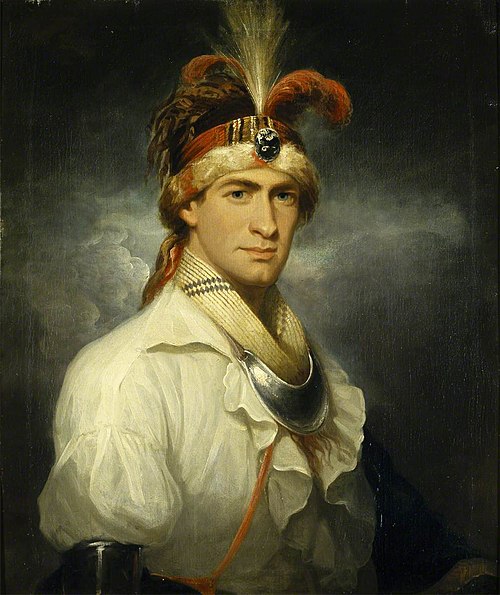
as a Native North American (Creek) Chief; National Trust, Upton House;
http://www.artuk.org/artworks/william-augustus-bowles-17631805-as-a-native-north-american-creek-chief-131852
Life on Garrison Duty
The First Battalion of Maryland Loyalists had very little to do during the British occupation of Philadelphia. In June 1778, British forces evacuated Philadelphia to consolidate in New York after France entered the war as an American ally. William Howe was replaced by General Sir Henry Clinton as commander-in-chief of British forces in North America. After the army packed up and left for New York, security– that is, protecting the army’s march back to New York– became of the utmost importance. Under the command of German General Wilhelm Knyphausen, Chalmers’ regiment was ordered to guard artillery baggage and provisions when the army marched out of Philadelphia. The troops were reminded “to hold themselves in readiness to march on the shortest notice.” The password given to the men was “New York.”26
On June 25, Chalmers and the corps marched into Freehold, New Jersey, guarding the left flank of the army’s artillery baggage. Pursuing the retreating British Army was General Washington’s fast-approaching army from the West. Eventually, Washington’s army caught up with the British rearguard near Monmouth Courthouse, where the Battle of Monmouth was fought. The battle was technically a draw and fought in scorching-hot conditions. The First Battalion of Maryland Loyalists was a day’s march away at Middleton and missed the battle. However, Chalmers was kept busy arranging “Safeguards”, designed to prevent plundering and the destruction of civilian buildings. Eventually, Clinton’s army reached New York. Though provincial units were typically looked down upon by British regulars, ten men from Chalmers’s regiment were detached to Clinton’s guard detail, and three others to guard Sir William Erskin, the quartermaster general who commanded the eastern district of Long Island. Both assignments were considered honors for the regiment. After this assignment and the regiment’s role in protecting baggage on the march to New York, Chalmers expected his regiment would be involved in combat, specifically raids into Connecticut. Chalmers wanted the regiment to prove itself through combat. However, Chalmers’s men found themselves in a dizzying routine of marching and waiting for orders, only to do the same thing again the next day. The lack of meaningful operations inevitably led to low morale and boredom. Moreover, many men in the regiment still had not received regimental clothing.27
After being marched to the eastern edge of Long Island, far from New York City and a safe distance from rebel skirmishers, the men’s morale continued to plummet. The final straw seemed to be when the regiment was ordered to escort cattle. Within the next two weeks, twenty- four members of the regiment deserted.28 As the days went on, discipline broke down. The troops were given rum to boost morale. Marching to do nothing continued. On September 5, another major round of desertions occurred. Around this time, it was announced that the Maryland and Pennsylvania Loyalist Battalions would be sent to British West Florida to fight Britain’s lesser-known enemy: Spain.
The War Against Spain
At the end of the French and Indian War in 1763, West Florida fell into British hands. Spain gave West Florida to England. In return, the British returned Havana [which they captured from the Spanish] to Spain. Possession of West Florida gave the British a port on the Gulf of Mexico to protect. When France joined the conflict on the side of the United States, it seemed almost inevitable that the British would fight the Spanish as well. After Patriot raids in 1778, the British decided to reinforce their forgotten posts at St. Augustine and Pensacola. When Clinton planned who would reinforce these posts, he decided to send provincial troops, such as the First Battalion of Maryland Loyalists. At the time, Clinton clearly deemed many of his provincial troops disposable. He wrote, “for the garrisons at [St. Augustine and Pensacola, I have employed foreign troops and provincials, whose loss to this army will not be so much felt.”29
Clinton initially sent around 1,000 provincials, including the Maryland Loyalists. As one might expect, the news was highly unpopular. Edward Winslow, Muster Master General of provincial forces, echoed the disapproval of the orders. “The sending [of] Provincial troops on such services has become [a] matter of consideration among em; they have generally censured the measure as unjust and not consistent with the original compact. This assertion rises from an idea that all or most of the provincial corps were local and intended to defend particular provinces from which they could not be removed but by their own consent. Contracted as this sentiment may at first appear, there is some reason for it…. Most of the ecruits enlisted expressly for the term of two years, or during the continuance of the rebellion; there is not wanting among them men of sufficient cunning to suggest that those terms imply an option in the soldier whether he will continue in service after the expiration of the first period; quibbling and dishonorable as this suggestion may seem to a European gentlemen, its is a tolerable pretence for an American labourer.”30
By October 1778, the Maryland Loyalists were shipped out of New York City. Winslow described the cast of men being sent to West Florida as “miserable and unhappy.” When the men enlisted in the regiment, being sent to Florida was likely beyond their imagination. The fleet carrying the provincials docked in Jamaica and stayed for many weeks as the ships were repaired and provisioned. By the time the Maryland Loyalists left Jamaica for Pensacola, smallpox had spread through the regiment.31 The regiment landed in Pensacola in January 1779 and documented their negative impressions of the place. The chaplain of the German Waldeck Regiment, a part of the corps sent to West Florida with the Maryland Loyalists, described West Florida as a “desolate, uncultivated, waste…. wholly cut off from the world.32
Another provincial commented, “I am now in the worst part of the world.”33 As soon as the Maryland Loyalists landed in Pensacola, death spread through the regiment. One company of the Maryland Loyalists lost 17 men, while another lost 12. 34 Smallpox, again, was the culprit for such loss. General John Campbell, the commandant at Pensacola, was disappointed when he first observed the Maryland Loyalists. He described them as wearing “tatters and rags instead of uniforms.” While the Maryland Loyalists were dying every week of smallpox, their commander, Lt. Col. James Chalmers, was embroiled in a bitter rank dispute with Lt. Col. Allen, commander of the Pennsylvania Loyalists Battalion. Campbell preferred Allen and was ready to rank him higher than Chalmers should the two provincial regiments be merged. Hoping to settle the dispute in his favor, Chalmers departed West Florida for British headquarters in New York. Edward Winslow’s deputy at Pensacola clearly describes the reason for Chalmers’ departure.
There is a dispute concerning the rank of Lt. Col. Allen and Chalmers, it has been referred to General Campbell, who will not settle but conceived Allen has the preference. You must know who had the preference and I am sure, altho’ Allen’s not on the spot, you will endeavor to have justice done him. Chalmers goes to New York, and I believe principally with a view to get the rank, for fear those corps should be thrown together. For my part I ought to have some knowledge and I must confess I have no doubt but Allen should be the eldest which I told General Campbell.”
Campbell indeed planned to merge the two regiments. He sent a letter to Clinton, hoping he would approve joining the Maryland and Pennsylvania Loyalists. However, Chalmers’s plan worked. Clinton wrote Campbell that “the incorporating Allen’s and Chalmers’ corps, which you recommend, cannot possibly take place, on account of the injustice which would be thereby done to Lieut. Col. Chalmers.”35 Ironically, Chalmers did not return to Florida after his trip to New York. He used the opportunity to influence the British theater of war in West Florida. Chalmers wrote, “this province appears necessary to Spain, who at least seems invariably attached to it…. I would most humbly suggest a wish that Great Britain, in exchange for Port Rico [Puerto Rico] would cede East and West Florida. Perhaps this would tend to create a natural alliance which time must produce…. The supposed cession would most happily influence and tend to retain the Southern Colonies in obedience, and a few years’ possession of Port Rico [Puerto Rico] would evince it to be the second, if not the first sugar island of Great Britain.”36 Conversely, the British did not heed Chalmers’s strategic advice. Chalmers’ attempts to alter British strategy were nothing new to the British high command. As early as 1777, Chalmers tried to convince Howe and then Clinton to invade Maryland’s Eastern Shore. Like Chalmers’ advice on West Florida, the British did not follow through on the Eastern Shore invasion plan.37
Campbell Prepares Pensacola For Attack
While Chalmers schemed in New York, Campbell, back in Pensacola, decided the garrison was too small and vulnerable to artillery fire from the surrounding hills. One hill Campbell worried about most was Gage Hill, 1,200 yards north of the garrison. In response, he ordered the construction of a wooden stockade on the southeast side of Gage Hill called Fort George. On the northwest side of the hill, he ordered the construction of a defensive redoubt called the Queen’s Redoubt. He also established a Prince of Wales redoubt between Fort George and the Queen’s Redoubt. Next, Campbell decided to build fortifications at the entrance to Pensacola Bay, known as Red Cliffs. Maryland Loyalists, along with navy seamen, built the works at Red Cliffs, soon known as the Royal Navy Redoubt. By placing heavy artillery at the Royal Navy Redoubt, they hoped it would prevent enemy ships from forcing their way into Pensacola Bay. To the west, across the harbor from Red Cliffs, was Santa Rosa Island. Campbell had hoped to place a battery on Santa Rosa Island, correctly imagining that heavy artillery emplacements on both sides of Pensacola Harbor would greatly strengthen the garrison.38

