

Coin of the Realm

Emerging Revolutionary War welcomes guest historian Mike Busovicki

If the majority of American Colonists were from the British Isles, Africa, and Germanic States, why was Spanish currency so prevalent and how did it get here?
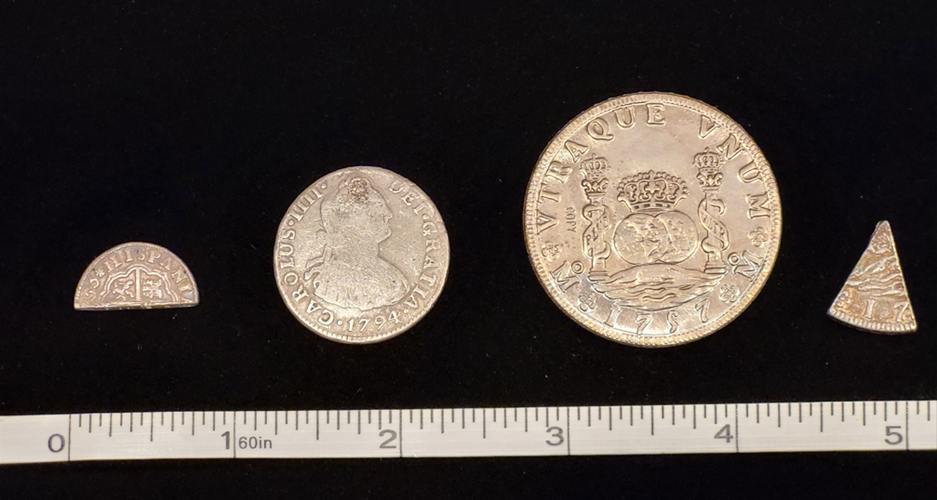
L-R: Silver half of a 1-reales coin, silver 2 reales, copy of an 8-reales (“piece of eight”) and copy of 1/8 (piece, or “bit”) of the 8-reales. Like cutting a pizza in half and cutting the halves again twice, it was easier to create a system based on “eighths” rather than a decimal one. (Photo by Mike Busovicki)

By the late 1400s, The Spanish had joined the kingdoms of Aragon and Castile through the marriage of Ferdinand and Isabela, wrested control of the Iberian Peninsula from the Islamic Moors and utilized the Catholic Church to enforce royal authority and justify brutal domestic and foreign policies.But these endeavors were expensive. Though successful in removing political opponents, it drove out or suppressed long standing medical, financial, and trade centers, especially in population hubs like Granada, Seville, and Toledo. Heavily in debt, the Spanish crown had to generate income from outside of Spain. Consolidating wealth and power into the hands of a few was expedient, but it excluded large segments of the population and resulted in domestic economic stagnation.
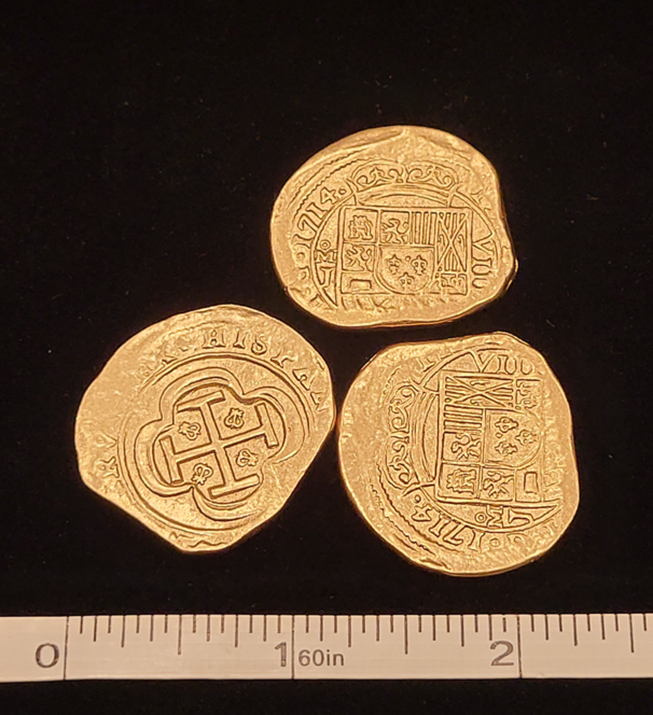
Copies of 4-Escudo coins. Escudo, meaning shield, referred to the coat of arms that validated coins. New world mines accounted for over 80% of the world’s silver and 70% of the world’s gold – it also funded conquest by the Ming, Qing, Mugul, Ottoman, and Safavid empires. (Photo by Mike Busovicki)
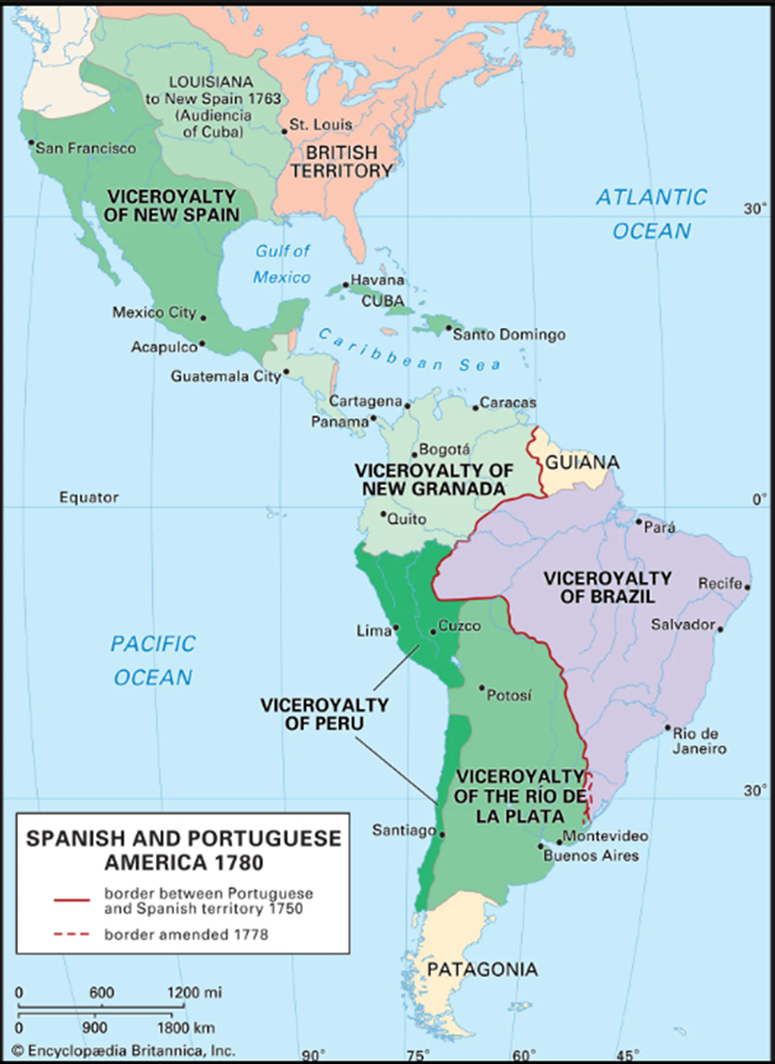
While French intervention, British politics, and German mercenaries constitute most discussions regarding European power during the Revolution, centuries of Spanish control of vast areas cannot be overstated. By courtesy of Encyclopædia Britannica, Inc., copyright 2016; used with permission.

Continue reading “Coin of the Realm”

Americana Corner

Here is what our friend, Tom Hand was up to in August on his blog, Americana Corner. Be sure to join us on Sunday, September 5th at 7pm as we host our next ERW Happy Hour where we will talk with Tom about his passion for early American history, some of his thoughts on our Founders and learn more about his project Americana Corner.

August 24th:
George Washington Discourages Debt and Foreign Entanglements

In his Farewell Address, President Washington shared his thoughts on several topics, including our national debt and the need for our country to remain fiscally prudent. Read it here.

August 17th:
George Washington Calls for Unity in Farewell Address

After eight years in office, President Washington was ready to step down. He had planned to retire at the end of his first term but was talked out of it. During this second run at saying goodbye to public life, Washington was determined to finally retire. Read it here.

August 10th:
Washington’s Farewell Address: One of Our Nation’s Most Significant Documents

George Washington’s Farewell Address is one of the greatest documents in our nation’s history. It was a letter written by President Washington to his fellow citizens as he neared the end of his second term as President. Read it here.

August 3rd:
Pickney’s Treaty Opens Up the Mississippi, Encouraging Westward Expansion

The Treaty of San Lorenzo, also known as Pinckney’s Treaty, was an agreement signed on October 27, 1795 between the United States and Spain. It settled a dispute between the two nations over the boundary of Spanish Florida and granted navigation rights on the Mississippi River to Americans. Read it here.

War of Jenkins’ Ear and the Washington Connection

Propaganda, imperial ambitions, and one small ear caused a flare-up in the New World between the European powers of Great Britain and Spain. In one of the most comical, bewildering, and interesting causes for war, the conflict known as the War of Jenkins’ Ear began eight years after the incident itself. The connections that this conflict would have with the successful outcome of the American Revolutionary War is what is most striking. Continue reading “War of Jenkins’ Ear and the Washington Connection”