Crispus Attucks. Every American school child learned that name in a social studies or history class in grade school. On the night of March 5, 1770, Attucks, an African-American was one of the six Bostonians that was killed by British soldiers.
Known in American history as the “Boston Massacre” the tragic event was used as fodder by the Sons of Liberty and pro-revolutionary minded individuals to propel the colonies toward rupture with Great Britain.
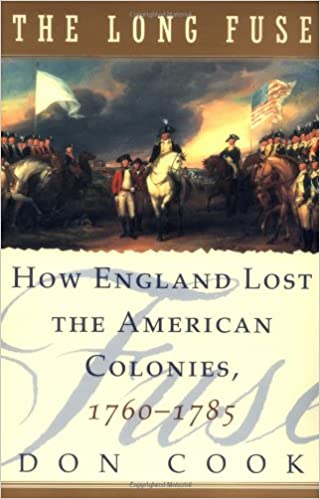
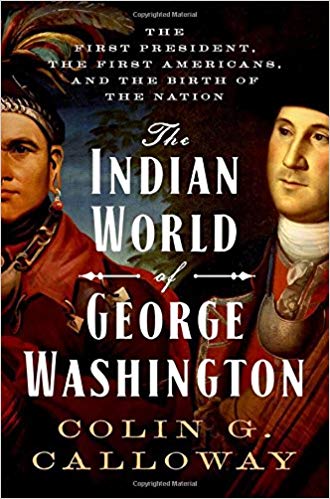
Last week, Emerging Revolutionary War‘s Phillip S. Greenwalt wrote a review of the above mentioned book. To find that review click here. Recently, through email, Emerging Revolutionary War had a chance to interview the author. The questions and his responses are below.
During George Washington’s lifetime and maybe because he was such a great man, he had two birthdays beginning in the 1750’s. Born under the Julian calendar, George was born on February 11, 1731/32. When the English Parliament decreed in 1750 that two years hence England would switch calendars and adopt the Gregorian, used by the majority of countries/states in Europe, there was a discrepancy. So, 11-days was added (some believe that the old calendar was off by a year and a eleven days thus the slash in “1731/32” above).
Regardless, Washington’s birthday was moved to what we, in the United States, are taught now, that it fell on February 22, 1732. Just don’t tell his mother, who believed to her dying day that he was born on the aforementioned date. And who argues with mothers?
What we cannot argue with is that certain birthdays were celebrated at Gadsby’s Tavern, in Alexandria (a city a young George surveyed and helped lay out), Virginia. On October 6, 1796, John Gadsby leased the City Hotel from John Wise and quickly became the epicenter of social and political discourse in Alexandria.
Today the Gadsby Tavern and Museum is open to the public and run by Historic Alexandria a department within the City of Alexandria. For more information and to plan your visit, a bite to eat, or celebrate a birth night ball like George click here.
The balcony where musicians would sit and play at Gadsby’s Tavern (author’s collection)The hall at Gadsby’s Tavern, which can still be rented out today for celebrations and ceremonies. (author’s collection)
“By no means comparable with the feats of a similar character” and “performed an act of daring” and “nay, desperate horsemanship” and “seldom been equaled by man or beast.” All these describe the amazing escape of Major Samuel McColloch in September 1777 during the attack on Fort Henry around where present-day Wheeling, West Virginia.
I first encountered this amazing, daring, and crazy eluding of capture when I took my own, well not as risky, but still a leap, moving to Wheeling to attend university there. Parents were 3,000 miles away in England and I was attempting to juggle basketball, studies, getting re-acclimated to life in the United States, and unknowingly, a left knee that was about to explode. Being a history major, this was one of the first accounts learned in a freshman year seminar class about local history to inspire the incoming students to explore the area outside of campus.
Fort Henry, built in 1774, was originally named Fort Fincastle, one of the titles of Lord Dunmore, the royal governor of Virginia. When the colonies revolted, the fortification was renamed in honor of Patrick Henry.
A few weeks ago, heading to the airport after the first Emerging Revolutionary War symposium, fellow ERW historian Rob Orrison made a pit stop in a residential neighborhood in Prince William County, Virginia.
To the average traveler to the Ronald Reagan International Washington National Airport this slight detour would not be normal. Yet, for two historians of early American history, these detours are rarely common.
This particular detour took us to a portion of the King’s Highway that has been preserved by the Prince William County Historic Preservation Division. Along this stretch soldiers in the French Army under Comte de Rocambeau and Continentals under General George Washington traversed on their way to Yorktown to entrap the British under General Lord Charles Cornwallis.
Thus, one king’s soldiers, King Louis XVI took a route named for monarch to assist rebels in trapping the ground forces of another king, that of Great Britain by using a road named for the British monarch. Interesting to think about the naming of the road in those terms.
Portions of this route are still preserved today, other sections have been modernized and blacktopped to be Route 1.
Below are a few photos I snapped, including the size 14 Nike shoe belonging to yours truly, re-enacting marching down the thoroughfare like the patriots of 1781.
On this date in 1780, Johann von Robias, Baron de Kalb, died of wounds received three days earlier during the Battle of Camden, South Carolina.
de Kalb, born on June 19, 1721 in the Principality of Bayreuth, was in charge of the American right wing during the engagement at Camden, leading the premier units, the Delawareans and Marylanders, of General Horatio Gates’ Southern Army.
When the left and center of the American line disintegrated, de Kalb’s force had to beat a hasty retreat before becoming completely surrounded. During this juncture of the fighting, the Baron’s horse was shot out from under him and the German was thrown to the ground. Before he could gain his feet, he was hit with three musket balls and bayoneted multiple times by approaching British soldiers. The wounds would prove mortal. Continue reading ““De Kalb has died, as he has lived, the unconquered friend of liberty””→
A few random musings on the importance of this date in American Revolutionary history…
President’s chair, Independence Hall, Independence National Historical Park (author collection)
This day was the date that the assembled Second Continental Congress voted on the draft of a document that was Richard Henry Lee, a delegate from Virginia had put forth in a measure, in June, to be voted on declaring;
“That these United Colonies are, and of right out to be, free and independent States, that they are absolved from all allegiance to the British Crown, and that all political connection between them and the State of Great Britain is, and ought to be, totally dissolved.”
Thomas McKean by Charles Wilson Peale
On July 4, two days after this resolution passed, the final and formal version was approved by Congress. John Hancock, president of the Continental Congress affixed his signature boldly and largely at the bottom of the document. Eventually 55 other men would place their signature on the Declaration of Independence, with Thomas McKean, generally accepted, as the last to sign the document, possibly as late as January 1777.
Copies were made and four days later, on July 8, the first public reading occurred in Philadelphia. George Washington had the document read to the Continental Army in New York on the following day, July 9.
John Adams by Gilbert Stuart
For John Adams, future second president of the United States, the second day of July would and should be the day to remember American Independence, as he wrote;
“The most memorable Epocha, in the History of America. I am apt to believe that it will be celebrated, by succeeding Generations, as the great anniversary Festival…It ought to be solemnized with Pomp and Parade with shews, Games, Sports, Guns, Bells, Bonfires, and Illuminations from one End of this continent to the other from this Time forward forever more.”
And that is how many Americans choose to celebrate the anniversary of the Declaration of Independence, however, usually two days later on July 4th. Yet, it took another war; World War II, for July 4th to become a national paid holiday for workers of the Federal government when Congress approved it in 1941.
So, happy Independence Day!
*Feel free to add any interesting historical tidbits about the Second Continental Congress, the signers, or 1776 below!*
In 2018, the inaugural two volumes, of the Emerging Revolutionary War Series published by Savas Beatie, LLC. Those first two volumes were; A Single Blow, The Battles of Lexington and Concord and The Beginning of the American Revolution and Victory or Death, The Battles of Trenton and Princeton.
In 2019, the series is set to release the next two volumes. The Winter that Won the War, The Winter Encampment at Valley Forge, 1777-1778 and A Handsome Flogging, The Battle of Monmouth, June 28, 1778. This past week, the covers of both were released by Savas Beatie so get a sneak peak below.
Both titles are scheduled for a release later this year. Stay tuned for updates!
Part of an ongoing series of about the Continental Army in Morristown, New Jersey. For the first post, click here.
Across the street from the Ford Mansion, the elegant home of the Jacob Ford, Jr. and his family, and the headquarters for George Washington during the winter encampment of 1779-1780, sits a small boulder with a iron plaque plastered on the side.
Erected in 1932 by the Tempe Wicke Society Children of the American Revolution, the monument commemorates the Life Guards that served as Washington’s headquarters command during the American Revolution. Although the unit went by different names and reorganized at least twice, including once during the winter encampment at Morristown, the company, numbering approximately 150 men, would be around for the duration of the war. Continue reading “Uncovering the Continental Army in Morristown”→
When writing a book, one of the most important initial aspects is picking a title. The author needs one that is expressive, attracts attention, but has some overall tie-in that provides a fitting capture of the essence of the book.
One of the advantages of writing history is the use of quotes. Let the participants, combatants, or witnesses of the event provide the context for a title. When one resonates, go with it!
With the recent publication, the co-author, Robert Orrison and myself bounced various potential titles off each other. Then we had a list of our favorites included in the initial information sheet sent to Ted Savas, of Savas Beatie, LLC, the publisher. Yet, one continued to stand out, as it was written in a diary by a British junior officer slightly more than a month before the Battles of Lexington and Concord.
The entire inscription is below:
“It is certain both sides were ripe for it, and a single blow would have occasioned the commencement of hostilities.” —Lieutenant Frederick Mackenzie, Royal Welch Fusiliers, March 6, 1775.
Mackenzie’s uncanny foresight predicted the exact outcome of the fighting that erupted on April 19, 1775. With casualties suffered by both sides, the war of words and near-misses became a war of shot and shell.
Hostilities had commenced and we had a title. A Single Blow: The Battles of Lexington and Concord and the The Beginning of the American Revolution.