

The Breaking of Maryland’s “Old Line”

Emerging Revolutionary War welcomes guest historian Drew Palmer. A biography follows at the end of this post.

What does it look like when veteran soldiers do not want to fight anymore? When morale plummets and the realities of war take their toll on men. This is exactly what happened to 150 men in the Maryland Line of the Continental Army in the late summer of 1780.
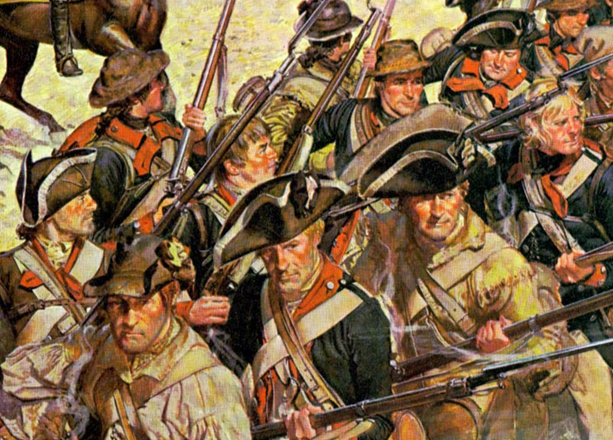
The 1st Maryland Regiment holds the line at the Battle of Guilford Courthouse, March 15, 1781

The continental regiments of Maryland that made up what became known as the “Maryland Line” or “Old Line State” had earned the reputation as a reliable, brave, and disciplined fighting force as early as 1776 after their actions in the Battle of Long Island.1 At the Battle of Camden on August 16, 1780, the 1st and 2nd Maryland Brigades offered a stout defense as  Gen. Charles Cornwallis’s British force crashed into Continental soldiers from Maryland and Delaware. In the end, though, Maj. General Horatio Gates’s Southern Continental Army was completely routed from the field, with many of the Maryland Continental troops taken prisoner and held in the small village of Camden after the battle.2

The village of Camden, South Carolina, was an unpleasant place to be after the battle. The crowded conditions and brutal summer climate of South Carolina began to produce sickness amongst Cornwallis’s men and the American prisoners that were held in Camden. To prevent further sickness from spreading, Cornwallis decided to split the American prisoners held at Camden into divisions of around 150 men. These divisions were guarded by small detachments of the British army and marched from Camden to Charlestown, South Carolina.3  One detachment of the British 63rd Regiment of Foot escorted 150 prisoners of the 1st Maryland Brigade captured at Camden. The division made it to Thomas Sumter’s abandoned plantation at Great Savannah, about 60 miles northwest of Charleston. As the Maryland prisoners and their British guards halted for the night, militia commander Francis Marion received word from a Loyalist deserter that the Marylanders were nearby and decided to ambush the British element in hopes of freeing the Maryland prisoners.4 In the early morning hours of August 25, 1780, Marion’s militia attacked.

Continue reading “The Breaking of Maryland’s “Old Line””
“The Robin Hood of the American Revolution” Walt Disney’s The Swamp Fox

Emerging Revolutionary War welcomes guest historian Tom Elmore. Brief bio is at the bottom of the post.

When Walt Disney’s Disneyland anthology series, featuring shows inspired by the themes of the park’s sections, debuted in 1954 it ended the television season at #6 in the Nielsen television ratings and improved to #4 the next season. Much of that success was due to the Davey Crocket episodes, one of the first major television phenomena.[1]

But the series dropped to #14 in the third season and was out of the top twenty in the fourth and fifth seasons. The American Broadcasting Company (ABC) which carried the program, renamed Walt Disney Presents, pressured Disney to come up with another Crockett and more westerns which made up most of the top 20.[2]

Disney later complained that “I found myself in a straightjacket. I no longer had the freedom of action…They kept insisting that I do more and more westerns and my show became loaded…with every western myth.” Consequently, relations between Disney and ABC became strained.[3]

Disney turned to one of his passions, American history, to create a series based on the partisan leader, General Francis Marion, “the Swamp Fox,” who harassed British troops in South Carolina during the American Revolution.[4]

Continue reading ““The Robin Hood of the American Revolution” Walt Disney’s The Swamp Fox”

Rev War Revelry: The Battles of Fort Watson and Fort Motte with Dr. Steven Smith

Join us as we welcome back Dr. Steven Smith as he discusses his new book “The Battles of Fort Watson and Fort Motte, 1781.”

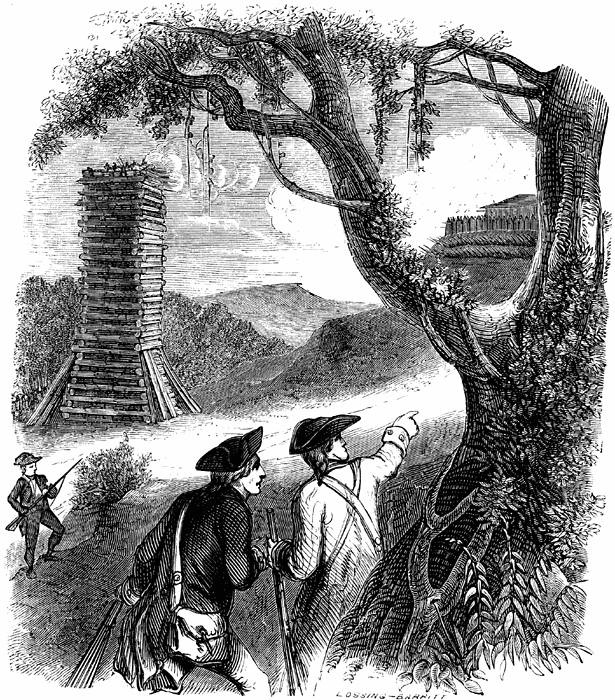
Dr. Smith will discuss the history of four critical weeks from April 12 until May 12, 1781, in which the tide of the Southern Campaign of the Revolutionary War turned in favor of the Americans. Focusing on General Francis Marion’s and Colonel Henry Lee’s capture of two key British forts, Fort Watson and Fort Motte, coordinating with Nathanael Greene in retaking the South Carolina backcountry. These posts defended the supply line between Charleston and the British-occupied villages of Camden and Ninety Six. Although there would be much more fighting to do, once the two forts were lost, the British had to abandon the backcountry or starve. The British would never again be on the strategic offensive and were confined to the Charleston environs until they abandoned the city in December 1782.

Smith will also discuss how archaeological investigations have helped change the interpretation and mythology of both battles. Join us for a livestream on our You Tube channel in what will be a great discussion. The video will be posted to our Facebook page at its conclusion