

Reflecting on ERW’s 250th Lexington and Concorgasm One Year Later

Being present at the 250th anniversary of the beginning of the Revolutionary War in Boston, Lexington, and Concord was truly a once-in-a-lifetime experience. Once because there will never be another 250th anniversary ever (and maybe never another such commemoration on this scale in my lifetime) but also once because many of the ERW historians who attended the events did something none of us will likely be fit to do in 25, 50, or more years for the next large commemorative events. We spent 32 hours in the saddle (longer than Paul Revere but with better amenities) visiting countless sites related to the Lexington Alarm of 1775. By the end of April 19, 2025, I had been awake for 40 straight hours. However, I was still on a history high from the experiences of those anniversary events.
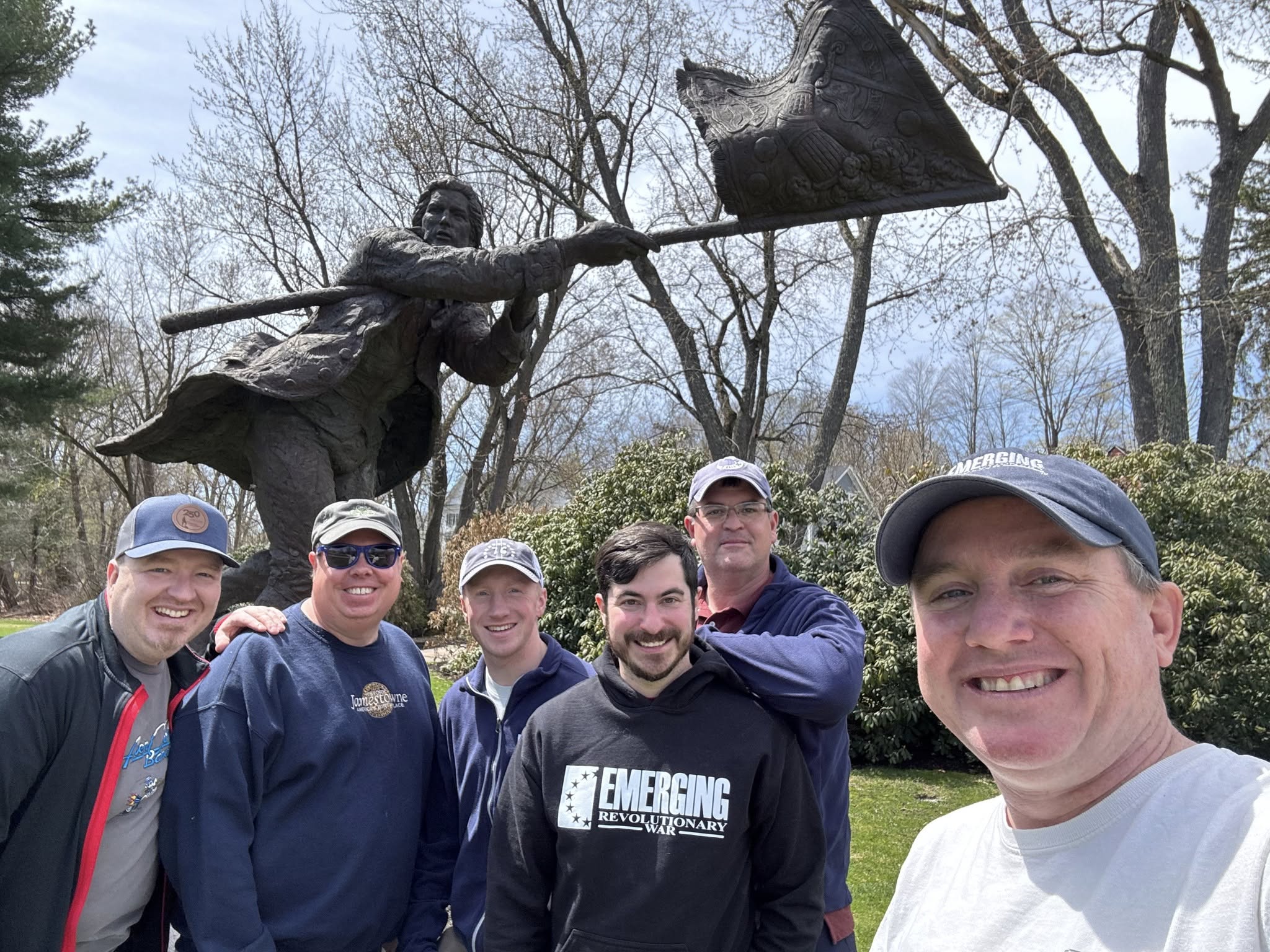
Our 250th events began by visiting the graves of some of the first fallen Americans in the Revolution in Acton. We followed that up with a trip to Bedford, another community whose men answered the calls of Paul Revere, William Dawes, and the network of colonial riders. While in Bedford, stop into the Bedford Free Public Library to see the oldest known flag in the United States. Then, onto Lexington we went for the first time this trip to visit the Scottish Rite Masonic Museum & Library which housed a new exhibit displaying artifacts from the start of the Revolutionary War.

Continue reading “Reflecting on ERW’s 250th Lexington and Concorgasm One Year Later”

Dr. Prescott, Love & War

Love brought Dr. Samuel Prescott, a practicing physician, to the town of Lexington on the night of April 18, 1775. The young doctor was courting Ms. Lydia Mulliken, when the alarm of the British soldiers marching from Boston went out to the local militia. Lydia’s brother was one of those called to gather.

Love. That emotion also drew Dr. Prescott back toward his hometown of Concord—this time to alert friends, neighbors, and family members of the urgent news of the evening. En route, Dr. Prescott along with Paul Revere and William Dawes, alerted the countryside of the moving British troops. After being vetted and vouchsafed as a true friend of liberty, Dr. Prescott rode posthaste to his hometown, where his word carried greater weight.

paul_revere
A artist’s interpretation of Paul Revere’s (or maybe William Dawes or Dr. Samuel Prescott)’s ride to warn the Massachusetts countryside. (courtesy of VFW)

Continue reading “Dr. Prescott, Love & War”

ERW Weekender: Bunker Hill Monument & Museum

Emerging Revolutionary War welcomes back guest historian Katie Turner Getty. 

Towering over Charlestown, Massachusetts, its foundation set in sacred battleground soil, the Bunker Hill Monument is a 221 foot obelisk commemorating the Battle of Bunker Hill. The cornerstone of the monument was laid by the Marquis De Lafayette in 1825, fifty years after the battle was fought on June 17, 1775.

BunkerHillMon-KTGetty
Bunker Hill Monument (author collection)

Although the land surrounding the monument has been greatly developed since the battle, visitors today can get still get a sense of the 18th-century landscape just by walking through Charlestown and climbing the hill to reach Monument Square. Approaching visitors are greeted by the statue of Colonel William Prescott, the gray granite of the monument serving as an impressive backdrop behind him. Continue reading “ERW Weekender: Bunker Hill Monument & Museum”