

Emerging Revolutionary War welcomes back guest historian and park ranger Eric Olsen. Ranger Olsen works for the National Park Service at Morristown National Historical Park. Click here to learn more about the park.
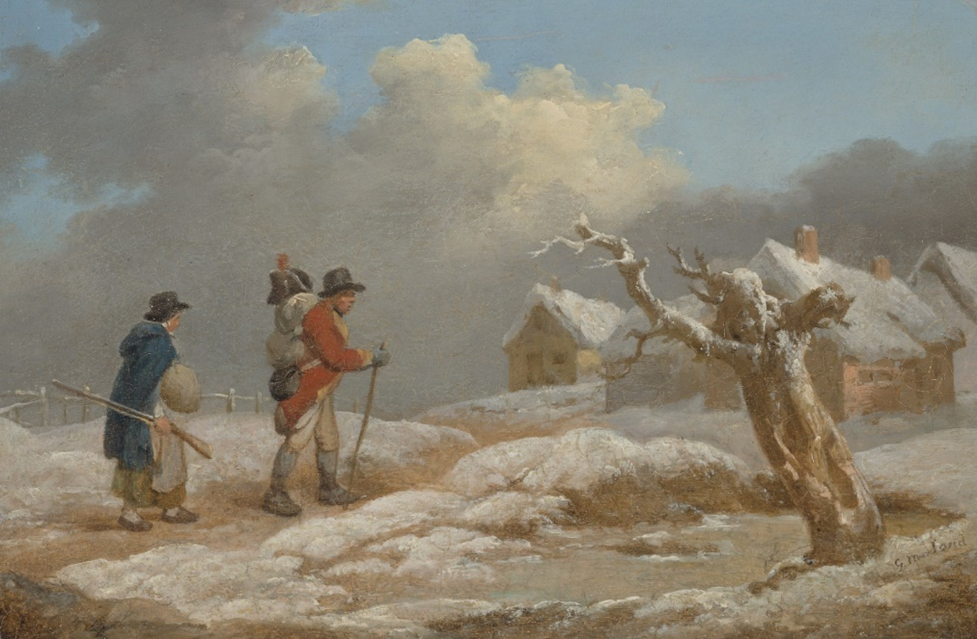
What do poor health, a dead mother, a need to shop for new clothes, a pregnant wife, army business, a wife’s mental illness, family financial problems, and a desire to see family and old friends all have in common?
They are all reasons officers gave for asking for furloughs during the winter encampment of 1779-1780.
While the regulations and the various orders issued give us a general idea of the problems related to furloughs, we can get a different viewpoint by looking closer at the different Divisions, Brigades, and individuals who made up the army. The individual soldiers’ correspondence can also give us a more personal take on the furlough story. This paper will be far from comprehensive. It will just cover the furloughs that turn up in the surviving documentation. To make it easier to follow I have grouped the numbers and correspondence regarding furloughs by divisions and brigades.
Connecticut Line
For much of the encampment, it became a cycle of furloughs. When one general returned to camp, another general was allowed to leave on furlough. This was the case in the Connecticut Line. Plus, when one officer departed, someone else had to take over that person’s responsibilities. With the Connecticut Major Generals Putnam and Arnold both away from camp, Brigadier General Parsons commander of the First Connecticut Brigad,e was temporarily in command of the entire Connecticut Line.
First Connecticut Brigade
The First Connecticut Brigade was commanded by Brigadier General Samuel Parsons. The brigade included the 3rd, 4th, 6th and 8th regiments. In December the First Connecticut Brigade had 1,489 men present and fit for duty. The monthly number of furloughs from the brigade’s rank and file were.
1st Connecticut Rank & File on Furlough
Nov. 1779 – 21
Dec. 1780 – 35
Jan. 1780 – 26
Feb. 1780 – 24
Mar. 1780 – 47
Apr. 1780 – 37
May 1780 – 28
Jun 1780 – 11
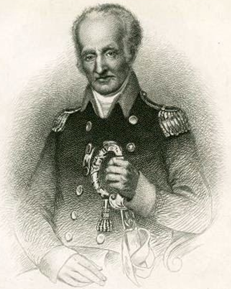
Brigadier General Samuel Parsons
Brigadier General Samuel Parsons temporarily replaced General Putnam as the commander of the Connecticut Line in December 1779. But by February 1780 Parsons was in Connecticut dealing with the state government over clothing for his troops. By April 6th he wrote that he hoped to return to camp but business was delaying him.
Washington wrote to Parsons on April 12, 1780, “The number of General Officers with the Army is so small and has been so during the Winter, that notwithstanding I am obliged to dispense with many duties properly incidental to that Rank, it falls heavy upon the few who are present. I am therefore under the necessity of requesting your return to that Rank, it falls heavy upon the few who are present. I am therefore under the necessity of requesting your return to the Army as soon as you can possibly make it convenient.”
General Parsons replied on April 25, 1780, “I am honored with your Excellency’s letter of the 12th instant in which I am desired to join the Army as soon as I can make it convenient in consequence of which I intended to have joined my Brigade next week but at present I am unable to undertake so long a journey being troubled with disorders which prevent my riding any considerable distance but I hope within ten or fifteen days to be able to join.”
Second Connecticut Brigade
The Second Connecticut Brigade was commanded by Brigadier General Jedediah Huntington. The brigade included the 1st, 2nd, 5th and 7th regiments. In December the First Connecticut Brigade had 1,265 men present and fit for duty. The monthly number of furloughs from the brigade’s rank and file were.
2nd Connecticut Rank & File on Furlough
Nov. 1779 – 19
Dec. 1780 – 44
Jan. 1780 – 35
Feb. 1780 – 20
Mar. 1780 – 37
Apr. 1780 – 20
May 1780 – 20
Jun. 1780 – 0
Brigadier General Jedediah Huntington
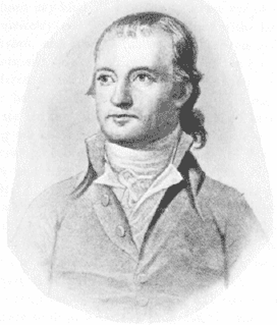
Brigadier General Jedediah Huntington, [right] the commander of the Second Connecticut Brigade, obtained a furlough before the army arrived in Morristown. Washington wrote to Huntington, on November 20, 1779, “I desired General Parsons [commander of the First Connecticut Brigade]to inform you that I had no objection to your visiting your family at this time, as he had agreed to remain with the line until your Return. I wish you a pleasant journey and a happy sight of your friends and am with great regard.” It’s not clear when Huntington returned to camp from his furlough. General Parsons, who was waiting for Huntington to return so he could leave on his own furlough, was in Connecticut by February 1780. My guess is that General Huntington returned to Morristown sometime in February.
Captain Josiah Lacey – Second Connecticut Brigade, 5th Connecticut Regiment
As General Washington’s April 1st deadline approached for furloughed soldiers to return to camp, Captain Josiah Lacey applied to Lt. Colonel Jonathan Johnson for a furlough. He applied to Johnson because at this point Lt. Col. Johnson was the acting commander of the entire Second Connecticut Brigade since General Huntington was out of the camp commanding the outposts watching Staten Island.
Not wanting to get in trouble for violating orders, Johnson wrote to General Washington on March 24th, “as Capt. Josiah Lacey of the 5th Connecticut Regiment has mad[e] Application to me for Leave of Absence on account of the Destres’d Circumstances of his Family by reason of Sickness. Considering the Late orders given by Your Excellency prohibiting Either Officer or Soldier to be absent on Furlough after the first of april next Consider my Selfe not authoris’d to grant him Leave of absence, but would Recommend him to Your Excellency for Leave of absence if Consistant with Your Excellencys pleasure.”
Busy with other matters, Washington had his aide, Richard Kidder Meade, reply. He wrote, “His Excellency has received your favor by Capt. Lacey, & has directed me to inform you that if the state of the Regt to which the Capt. belongs, will admit of his absence, that you may grant him a furlough” Lt. Col. Johnson granted Lacey a furlough starting the following day on 25 March.
Lacey, who was aged 34 at the time, had served since the alarm at Lexington in 1775. But he would resign from the army in July 1780. Lt. Col. Johnson explained to Washington it was because of Lacey’s long-standing discontentment over “the peculiar scituation of his domestic affairs, which at present are not less embarrassd.” The problem with his “domestic affairs” was the illness and eventual death of his wife in July, plus other members of his family were sick.
*Notes and sources for the entire series will be posted with the last entry in the series*
 Emerging Revolutionary War Era
Pingback: Morristown’s Individual Furlough Stories – Pennsylvania Line – Emerging Revolutionary War Era