

Part IV – Lord Stirling’s Division
Emerging Revolutionary War welcomes back guest historian and park ranger Eric Olsen. Ranger Olsen works for the National Park Service at Morristown National Historical Park. Click here to learn more about the park.
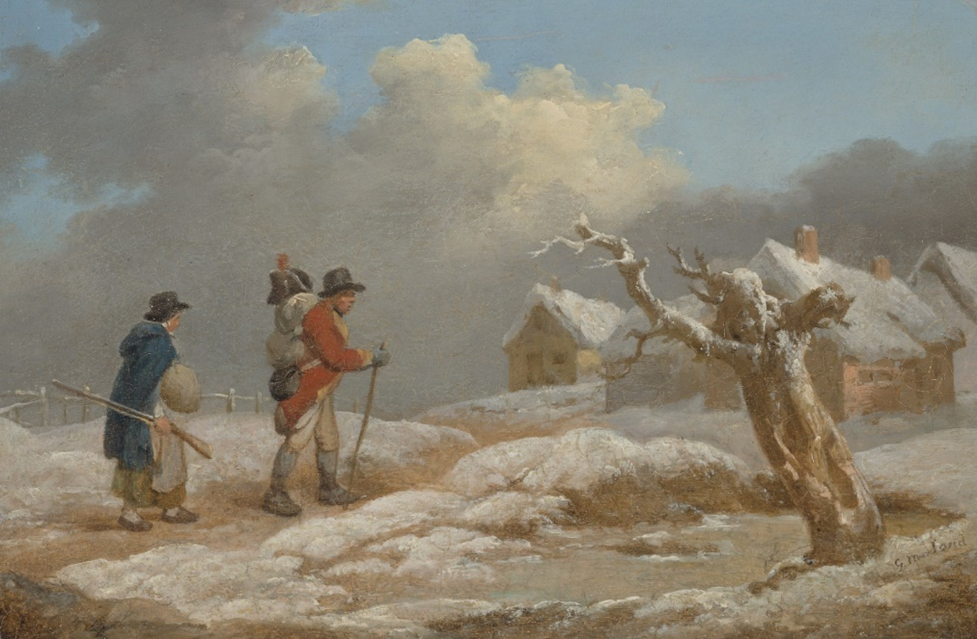
What do poor health, a dead mother, a need to shop for new clothes, a pregnant wife, army business, a wife’s mental illness, family financial problems, and a desire to see family and old friends all have in common?
They are all reasons officers gave for asking for furloughs during the winter encampment of 1779-1780.
While the regulations and the various orders issued give us a general idea of the problems related to furloughs, we can get a different viewpoint by looking closer at the different Divisions, Brigades, and individuals who made up the army. The individual soldiers’ correspondence can also give us a more personal take on the furlough story. This paper will be far from comprehensive. It will just cover the furloughs that turn up in the surviving documentation. To make it easier to follow I have grouped the numbers and correspondence regarding furloughs by divisions and brigades.
Major General Baron De Kalb
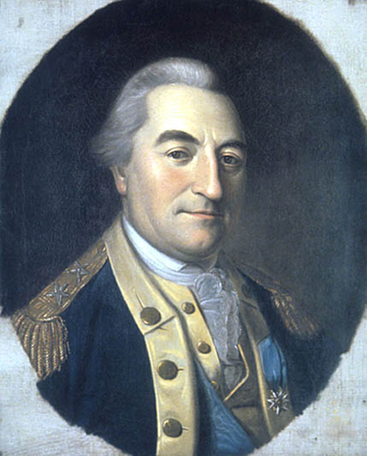
General De Kalb was placed in charge of the Maryland Line during the winter encampment of 1779-1780. I don’t know who commanded the Line prior to that. Maryland did not have a native officer holding the rank of Major General to command the Maryland Line.
Kalb responded to Washington complaints, as commander of the Maryland Line, regarding the January 1780 review of the army. From February 29 to April 12, 1780, De Kalb commanded the Continental Army outpost watching British occupied Staten Island. Then he was sent to Philadelphia to meet with the Board of War. While in Philadelphia he met and took command of the Maryland Line as they headed south to join the Southern Army.
In February 1780 General Kalb complained about his lack of clothes and pointed out another interesting aspect of furloughs. He wrote, “The times are growing worse from hour to hour. The dearth of the necessaries of life is almost incredible, and increases from day to day. A hat costs four hundred dollars, a pair of boots the same, and everything else in proportion…Being entirely in rags, I shall go to Philadelphia as soon as I can, to purchase new clothes, especially linen. The American officers have this advantage of us foreigners, that they can go home on furlough, and there recruit and reequip themselves. Besides, they are assisted by their respective States with additional pay, with uniforms, and with such provisions as Congress does not furnish, such as tea, sugar, coffee, and chocolate. The foreign officers have none of these little, but acceptable privileges, and are moreover, compelled to pay with six dollars what an American buys for one.”
Kalb was European. He had been born in Germany and had served in the French Army. Unlike most officers of the Continental Army, he did not have a home in America to return to on a furlough. Philadelphia, America’s biggest city and close to the camp, was a logical place for a potential furlough. He could buy new clothes and take advantage of Philadelphia’s social scene.
Thinking along the same lines, when Washington ordered General Kalb to leave the outposts and proceed to Philadelphia to meet with the Board of War, he added the following postscript, “P.S. Let your going to Philadelphia be under the Idea of a Furlough.”
First Maryland Brigade
The First Maryland Brigade was commanded by Brigadier General William Smallwood. The brigade included the 1st, 2nd, 5th and 7th regiments. In December the First Maryland Brigade had 1,254 men present and fit for duty. The monthly number of furloughs from the brigade’s rank and file were.
1st MD Brigade Rank & File on Furlough
Nov. 1779 – 12
Dec. 1780 – 22
Jan. 1780 – 130
Feb. 1780 – 128
Mar. 1780 – 123
Apr. 1780 – with Southern Army
May 1780 – with Southern Army
Jun. 1780 – with Southern Army
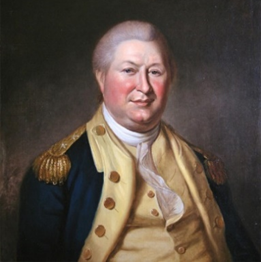
Brigadier General William Smallwood
General Smallwood, who was quartered at Peter Kemble’s house, may have had some type of short furlough but it’s hard to pin down from the existing documents.
The General Orders of December 19, 1780, called for Smallwood to be part of the Board of General Benedict Arnold’s court martial. But Smallwood must have objected to Washington and suggested the other Maryland Brigadier General Mordecai Gist take his place. Washington replied to Smallwood request the next day, “I have reconsidered the point, with respect to placing General Gist on the Court Martial for the trial of Genl Arnold, in your room—and as there are reasons to induce me to wish, that the Court first appointd should suffer no change but such as very pressing circumstances require—it is my desire that you should continue, if it can be done without an essential injury to You. The Trial I hope will not take up a great deal of time—and as the Evenings are long—You may still be preparing and making your arrangements for your journey.”
Washington’s reference to preparing for a journey makes it sound like Smallwood was planning a furlough, though being on the Board of a Court Martial would greatly delay any trip. But Smallwood must have pressed his case further because the General Orders for December 21, 1779 stated, The General Court Martial whereof Majr. General Howe is President will assemble tomorrow at Norris’s tavern in Morristown. Brigadier General Gist is appointed a member of the Court, vice Brigadier General Smallwood, who is obliged to be absent.”
Unfortunately, that’s as far as the documentation takes us in this story.
Second Maryland Brigade
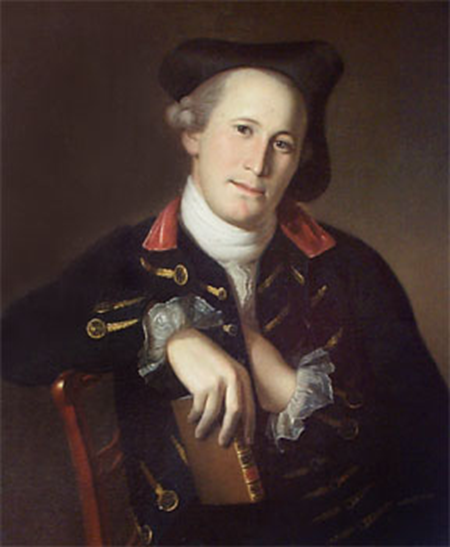
The Second Maryland Brigade was commanded by Brigadier General Mordecai Gist. The brigade included the 2nd, 4th and 6th Maryland regiments, plus Hall’s Delaware Regiment. In December the Second Maryland Brigade had 1,299 men present and fit for duty. The monthly number of furloughs from the brigade’s rank and file were.
2nd MD Brigade Rank & File on Furlough
Nov. 1779 – 12
Dec. 1780 – 35
Jan. 1780 – 77
Feb. 1780 – 128
Mar. 1780 – 124
Apr. 1780 – with Southern Army
May 1780 – with Southern Army
Jun. 1780 – with Southern Army
Sorry, I haven’t run across any personal stories of furloughs for the Second Maryland Brigade.
 Emerging Revolutionary War Era
Pingback: Morristown’s Individual Furlough Stories – Artillery Brigade & Adjutant General – Emerging Revolutionary War Era