

Emerging Revolutionary War welcomes guest historian Tom Elmore.
Throughout history many battles have been decided by little things, sometimes even before the battle. This is true of the Battle of Kings Mountain in South Carolina whose outcome was influenced by a little-known battle about thirty miles away on July 26, 1780, at Fort Thicketty in modern-day Cherokee County, S.C.
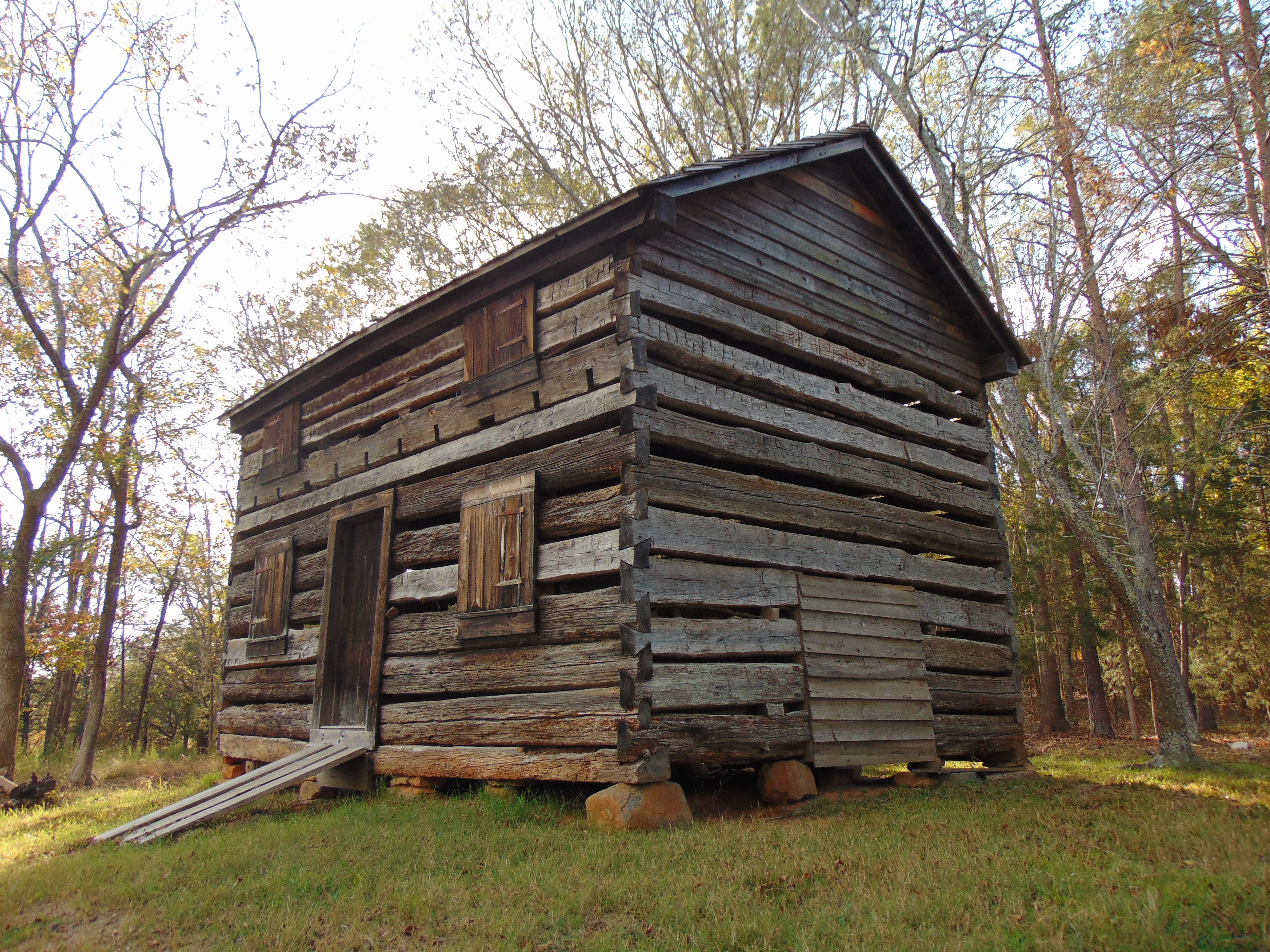
The fort was built circa 1769 when local farmer David Anderson converted his barn into a blockhouse outpost. Originally called Fort Anderson, it became known as Fort Thicketty (or Thicketty Fort) after a near-by creek that had unusually thick vegetation along its banks. Though the fort was intended to defend the area population from hostile Native Americans, it mainly saw action against outlaw gangs.[i]
In early June 1780, the fort was occupied by Captain Patrick Moore and his Loyalist followers. Moore was born in Virginia in 1750. Since 1768 he had lived about a mile southwest of the fort along Thicketty Creek. He was described as a fierce, intimidating man who stood six foot seven.[ii]
Moore’s men used the fort as a base of operations for raiding Patriot’s homes and farms. One historian described his men as “politically neither British nor American. They were simply robbers…preying upon defenseless women and children.” Another historian noted that “[Fort Thicketty] became a great place of resort and protection for Tory parties. They would sally forth and plunder Whig families in every direction – so that women and children were often left without clothing, shoes, bread, meat, or salt.” [iii]
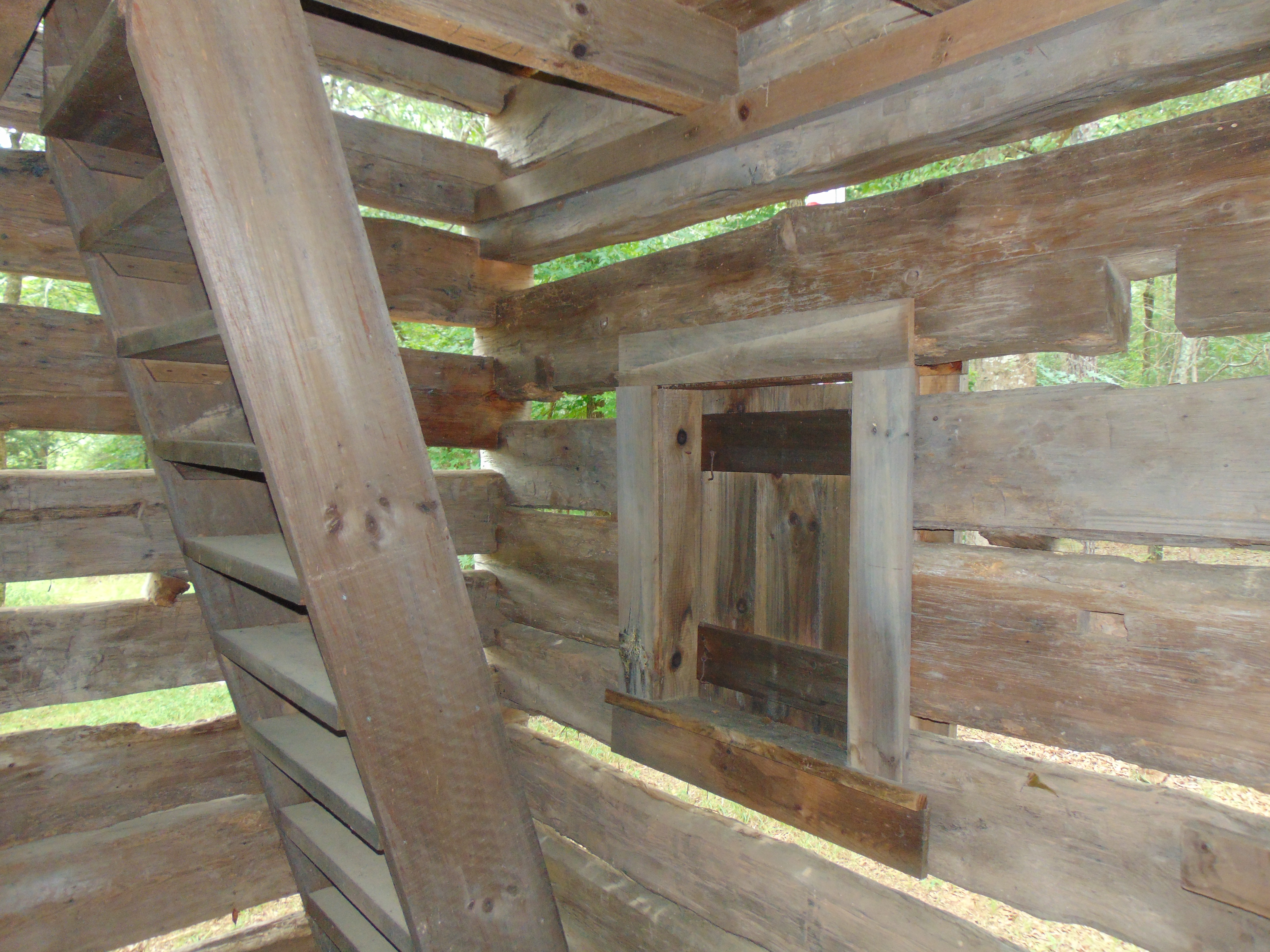
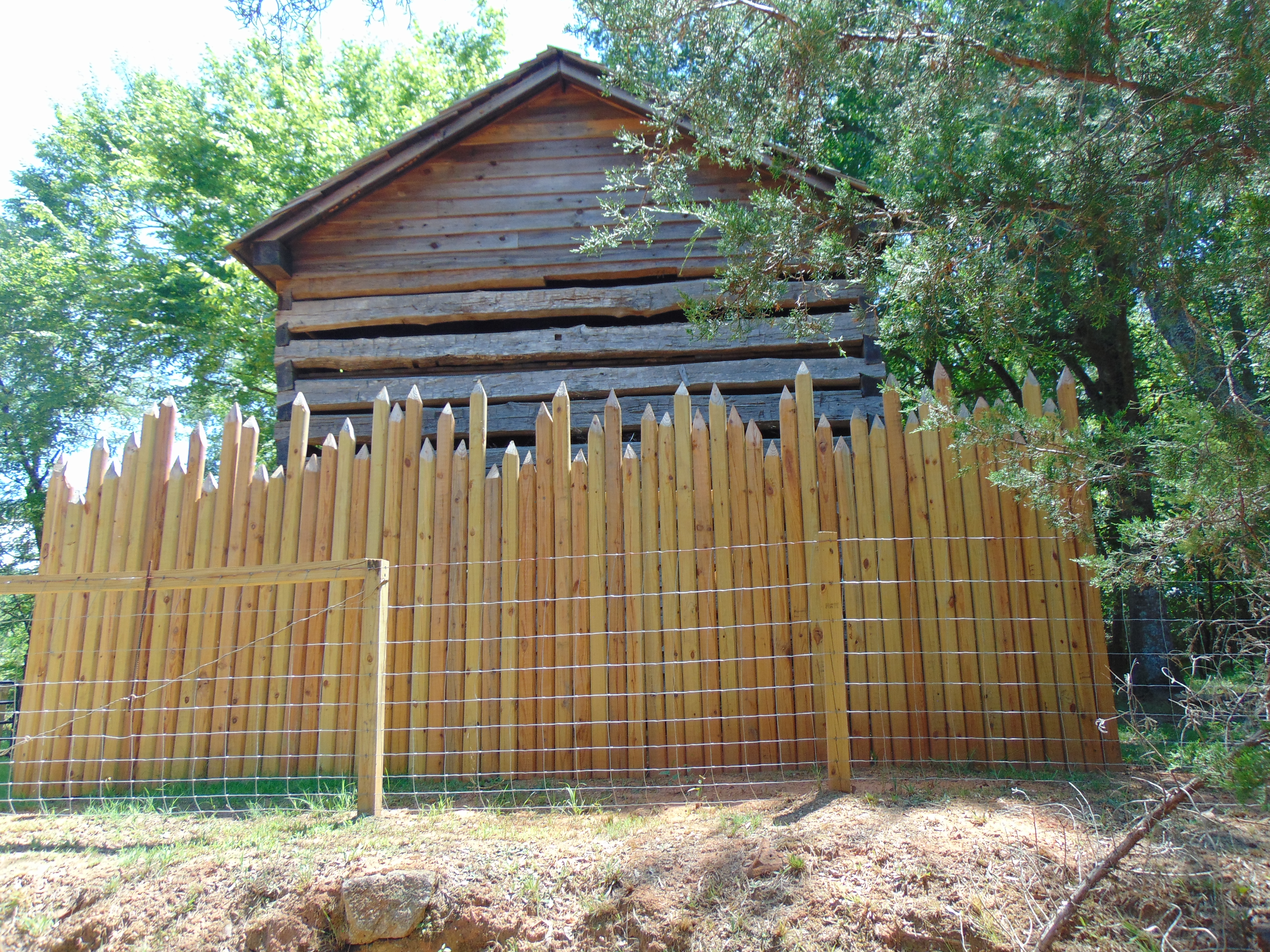
Moore made improvements to the fort’s defenses, surrounding the blockhouse with a palisade wall and large pointed spikes to impale any potential attacker. The fortifications took up an area about the size of a football field. The Tories believed that Fort Thicketty could withstand arrows and gunfire but not cannon fire. Major Patrick Ferguson, the British Army commander of Loyalist forces in the region, described the fort, and its improvements in an undated letter to General Lord Charles Cornwallis:
It had an upper line of loopholes, and was surrounded by a very strong abatis, with only a small wicket to enter by. It had been put in thorough repair at the request of the garrison, which consisted of neighboring militia that had come to [the fort]; and was defended by eighty men against two or three hundred banditti without cannon, and each man was of opinion that it was impossible [for the Rebels to take it]. [iv]
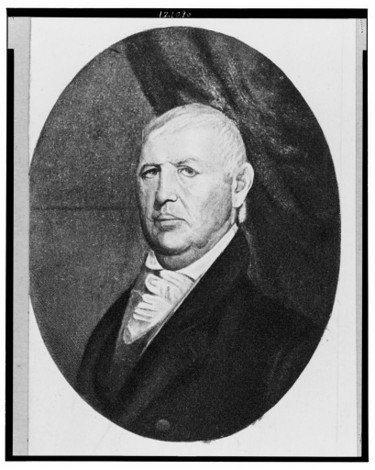
On July 26, 1780, Colonel Isaac Shelby surrounded the fort with 600 men. Shelby was born in Maryland in 1750 and moved to what was then Virginia in 1770. He worked as a surveyor and served in Virginia militia from 1774 until 1779 when a new survey placed his home in North Carolina. After the fall of Charleston on May 12, 1780, Shelby organized the Sullivan County Regiment and led his men to South Carolina to fight the British.[v]
Besides his regiment, Shelby commanded two other North Carolina militia units. These three primarily consisted of “Over the Mountain Men” who hailed from the Appalachians. He also commanded one militia regiment from Georgia and one from South Carolina.[vi]
Despite a 6 to 1 advantage in manpower, Shelby’s men were armed with only riffles and muskets which were almost useless against Fort Thicketty’s defenses. Nonetheless, Shelby sent an emissary to Moore demanding the fort’s surrender [vii]
Moore had orders from Ferguson to hold the fort at all costs. Furthermore, Ferguson was enroute with one thousand loyalist militiamen to relieve the fort. Consequently, the emissary was told that Moore would defend Fort Thicketty to the end. [viii]
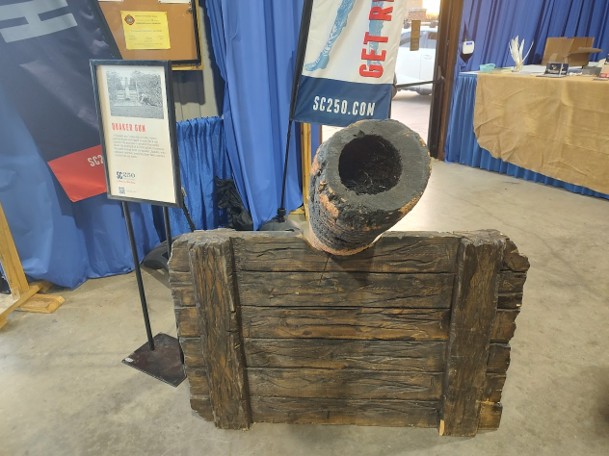
Shelby knew that a direct assault was useless, so he decided to trick Moore into surrendering by making a “quaker cannon,” a log made to look like a cannon. Upon the “cannon’s” completion, Shelby rolled it out and lined up his men in battle formation. The envoy was sent back to parlay with Moore threatening no mercy if he did not surrender. [ix]
The bluff worked. Moore took a closer look at his opposing forces, and their “cannon” and capitulated without firing a single shot. (No one on either side was either killed or wounded.) The loss of the fort so angered the British that they censured Moore, who already had a reputation for not following orders. One loyalist officer described the surrender as “shameful.” Ferguson noted:
The officer next in command, and all the others, gave their opinion for defending it, and agree in their account that Patrick Moore, after proposing a surrender, acquiesced in their opinion, and offered to go and signify as much to the Rebels, but returned with some Rebel officers, whom he put in possession of the gate and place, who were instantly followed by their men, and the fort full of Rebels, to the surprise of the garrison. He plead cowardice, I understand.[x]
Shelby captured 250 muskets, some of them already loaded, and a sizeable amount of ammunition. He took his spoils to a North Carolina militia camp at Cherokee Ford on the Broad River. [xi]
The Patriots also captured 94 men, all of whom were paroled. (Shelby did not want to be weighed down by prisoners.) Moore would break his parole and was killed by a group of Patriots near Ninety-Six, S.C. in 1781.[xii]
About two and half months later, on October 7, 1780, some of the captured guns and ammunition from Fort Thicketty aided Shelby in the Patriot militia’s victory against Ferguson’s Loyalists at Kings Mountain. Ferguson was killed during the battle.[xiii]
Though a small American victory, the Battle of Fort Thicketty had a domino effect. The loss of the fort resulted in the British briefly losing control of the region. This forced Ferguson to revise his plans for invading North Carolina, which resulted in the Battle of Kings Mountain. In turn, Ferguson’s defeat forced Cornwallis to abandon his plans for a North Carolina invasion and relocate his forces to Winnsboro, S.C. to protect his western flank.[xiv]
After the war Fort Thicketty was converted back into a barn. Today the fort is located about 8-10 miles southwest of modern-day Gaffney in Cherokee County on Goucher Creek Rd (GPS: 34.98422ºN 81.71218º W). The site is owned by the Cherokee County Historical and Preservation Society who has undertaken the restoration and preservation of the fort.[xv]
Special thanks to Wes Spencer of the Cherokee County Historical and Preservation Society for his assistance.
Tom Elmore has a B.A. in History and Political Science from the University of South Carolina and is a member of the Richland County, S.C. 250 Committee. Elmore previously wrote about Walt Disney’s Swamp Fox TV series. His family has lived in the Gaffney area for over 200 years.
[i] Meeham, Richard C., Jr. The Taking of Fort Thicketty, The Journal, South Carolina American Revolution Trust, Vol. 25, No. 3, June 2025, Pgs. 9, 10, 11, Landrum, J.B.O, Colonial and Revolutionary History of Upper South Carolina, Greenville, S.C.: Shannon & Co. Printers and Binders: 1897, Pg. 86. Draper, Lyman C., Kings Mountain and Its Heroes. Cincinnati, Ohio, Peter G. Thompson Publisher,1881, Pg. 86.
[ii] Landrum, Pg. 114, Meeham, Pg.20, 41. Moore was sometimes referred to as a colonel.
[iii] Landrum, Pg. 130, Cann, Katherine, Turning Point: The American Revolution in the Spartan District. Spartanburg, S.C. Hub City Press: 2014, Pgs. 20-21, Meeham, Pgs. 11, 15, 22, 23, 41, Saye, Rev. James Hodge, Memoirs of Major Jospeh McJunkin. Richmond, Va., Watchman and Observer: 1847,Pgs. 24-25, Rhyne, Martha McJunkin, McJunkin: A Family of Memories, Greenville, S.C., A PRESS Printing Company:1989, Pg.50, Draper, Pg. 86.
[iv] Ramsey, J.G.M., A.M., M.D., The Annals of Tennessee to the End of the Eighteenth Century. Charleston, S.C., John Russell: 1853, Pg. 215. Meeham, Pg. 28 The letter was found on Ferguson’s body after the Battle of Kings Mountain. It is unclear if Cornwallis received a copy of it.
[v] Isaac Shelby, American Battlefield Trust, http://www.battlefields.org/learn/biographies/isaac-shelby, Lewis, J.D., Thicketty Fort, The American Revolution in South Carolina:2025, http://www.carolana.com/SC/Revolution/revolution_thicketty_fort.html
[vi] Lewis, Scoggins, Michael C., The Day it Rained Militia-Huck’s Defeat and the Revolution in the South Carolina Back Country May-July 1780. Charleston, S.C.: The History Press, 2005, Pg. 141.
[vii] Meeham, Pg. 28
[viii] Meeham, Pg. 28
[ix] Meeham, Pg. 28, 30
[x] Meeham, Pgs. 29-30, Ramsey, Pg. 215,
[xi] Landrum, Pg. 133, Jones, E. Alfred, Ed., The Journal of Alexander Chesney: A South-Carolina Loyalist in the Revolution and After. The Ohio State University Bulletin, Vol. XXVI, No. 4, October 20, 1921, Pg. 11, Parker, John C. Jr., Parker’s Guide to the Revolutionary War in South Carolina. West Conshohocken, Pa. Infinity Publishing: 2013, Pg.139, Scoggins, Pg.141, Meeham, Pg. 30, 31, Saye, Pg. 25.
[xii] Landrum, Pg.134, Wheeler, John H., North Carolina From 1584 to 1851. Philadelphia, Lippincott, Grambo and Company: 1851, Pg. 231, Meeham, Pg. 31, Jones, Pg. 11, Parker, Pg.139
[xiii] Lewis, J.D., Kings Mountain, The American Revolution in South Carolina:2015, http://www.carolana.com/SC/Revolution/revolution_battle_of_kings_mountain.html. After the war Shelby moved to Kentucky and was the state’s first governor. He died in 1826. Ferguson was buried on the battlefield.
[xiv] Draper, Pgs. 171, 527. Parker, Pg.139.
[xv] Thicketty Fort, ccmuseumsc.org/thicketty-fort
“Battle” of Fort Thicketty photo captions:
Note: Unless otherwise noted, all photos are by the author. Photo captions are in in order as pictures are shown in post (left to right)
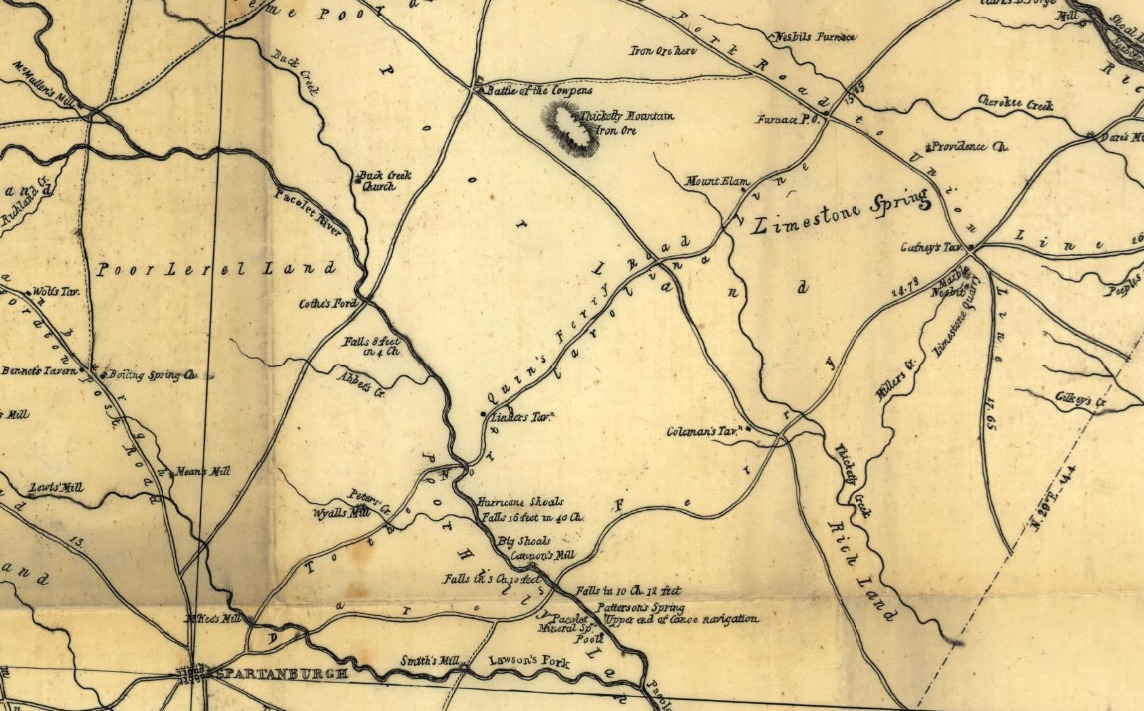
- From Robert Mill’s 1825 Atlas of the Spartanburg District, S.C.
Thicketty Fort was located near where Coleman’s Tavern is on this map. Limestone Springs is where the modern town of Gaffney is today. Note that in the map shows in its upper center the location of the Battle of Cowpens. Most of the places shown in this map would become a part of the newly created Cherokee County in 1897.
Library of Congress
- Fort Anderson/Thicketty
David Anderson converted a barn into a blockhouse circa 1769. Originally called Fort Anderson, its name was later changed to Fort Thicketty.
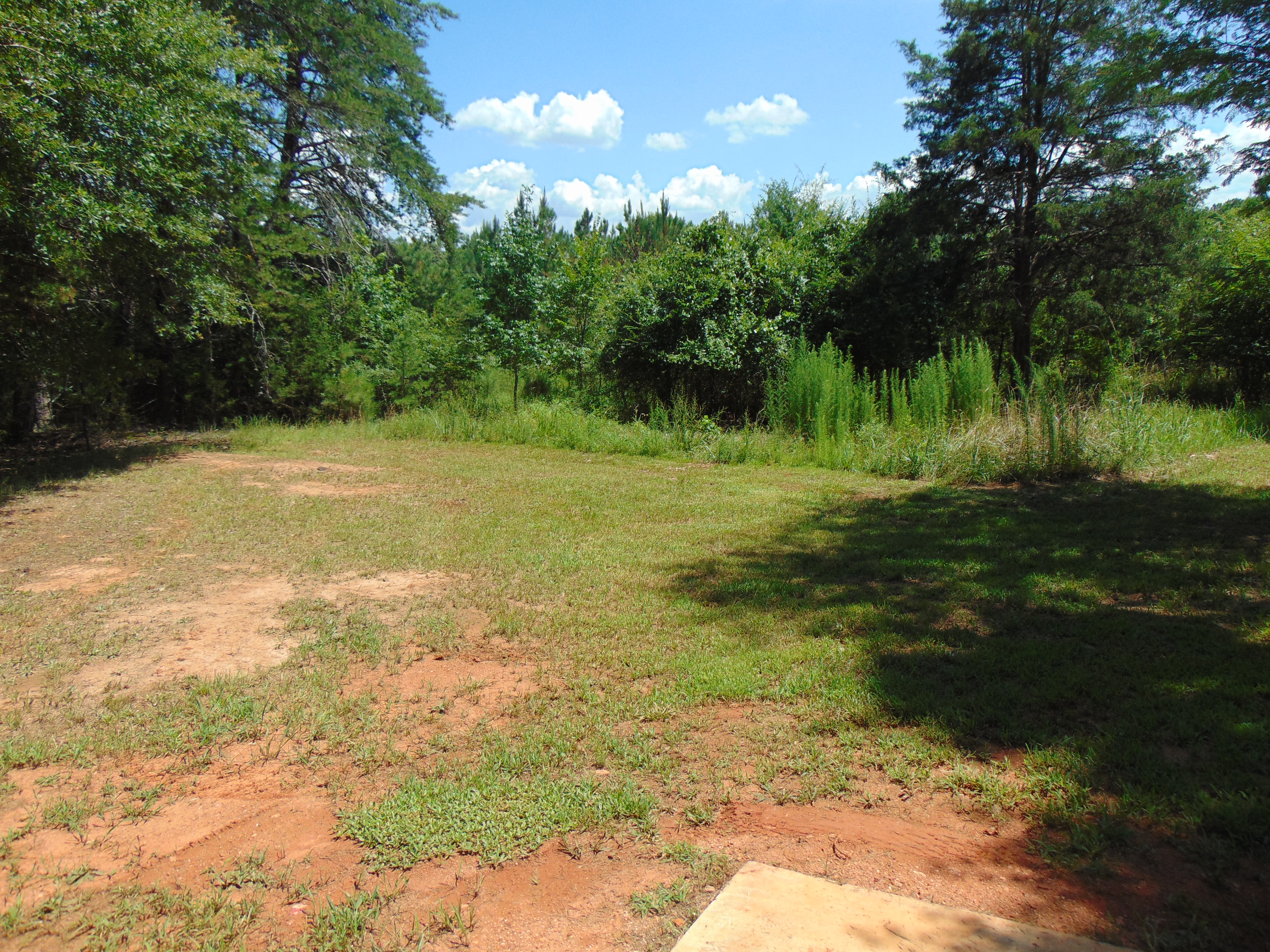
- The Field in Front of the Fort.
This picture gives an idea of the thick vegetation in the area which led to the fort being called Fort Thicketty.
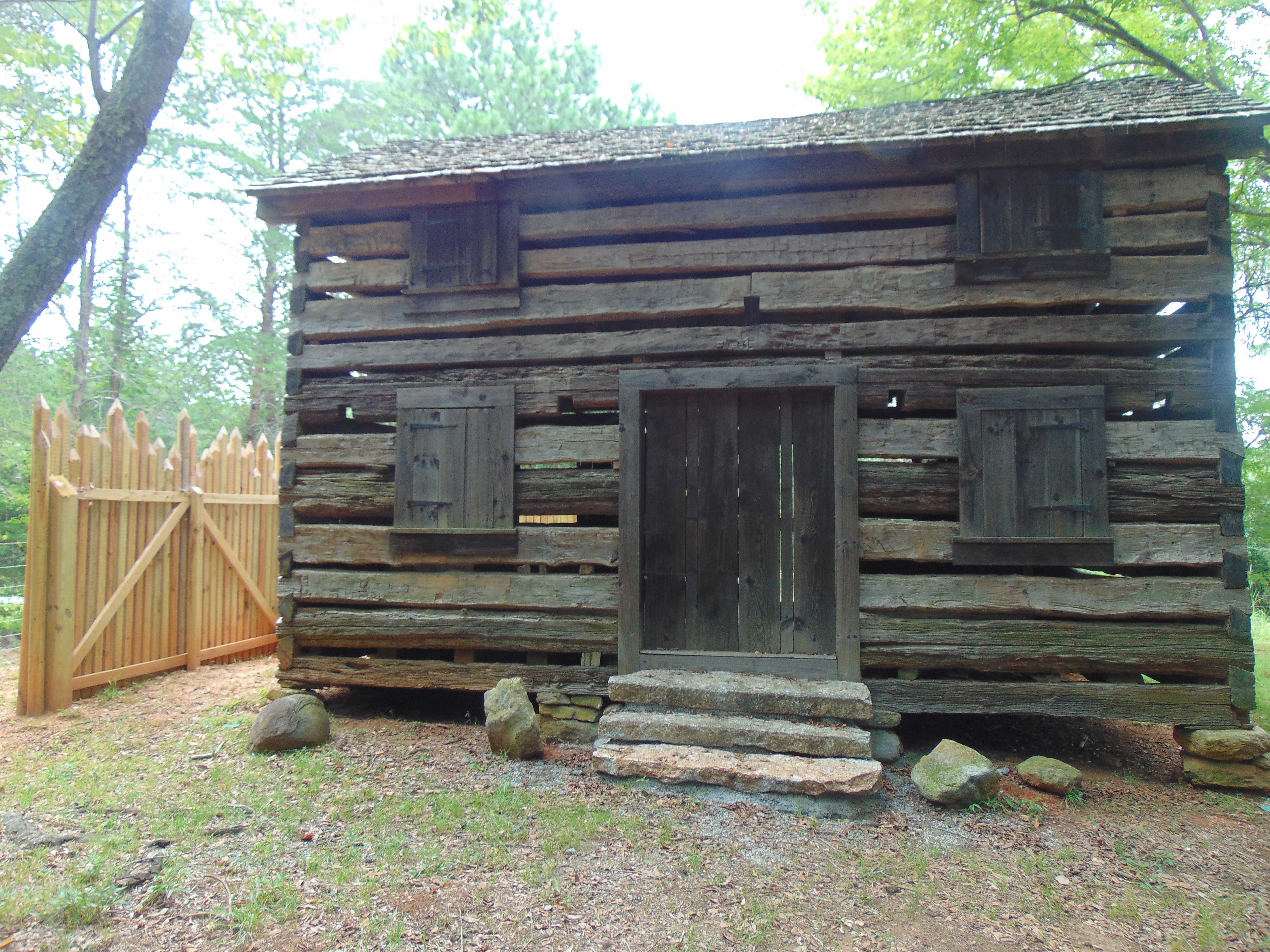
- The Fort’s Rear
Note the notches in the walls which were used as musket placements.
- The Fort’s Interior.
This photo shows the two ways that militiamen could fire at attackers. The musket placement on the far right and the gaps between the boards in the wall.
- Stockade Wall
A partial reconstruction of the stockade wall that surrounded the fort.
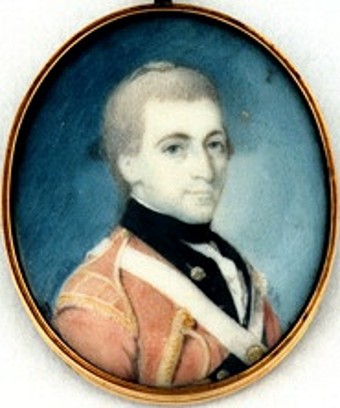
- Maj. Patrick Ferguson
The British commander of Loyalist troops in the South Carolina Backcountry wanted Fort Thicketty held at all costs.
World History Encyclopedia
- Col. Isaac Shelby
The patriot militia commandeer led 5 regiments consisting of 600 men. Three months later he would be a hero at the Battle of Kings Mountain.
Library of Congress
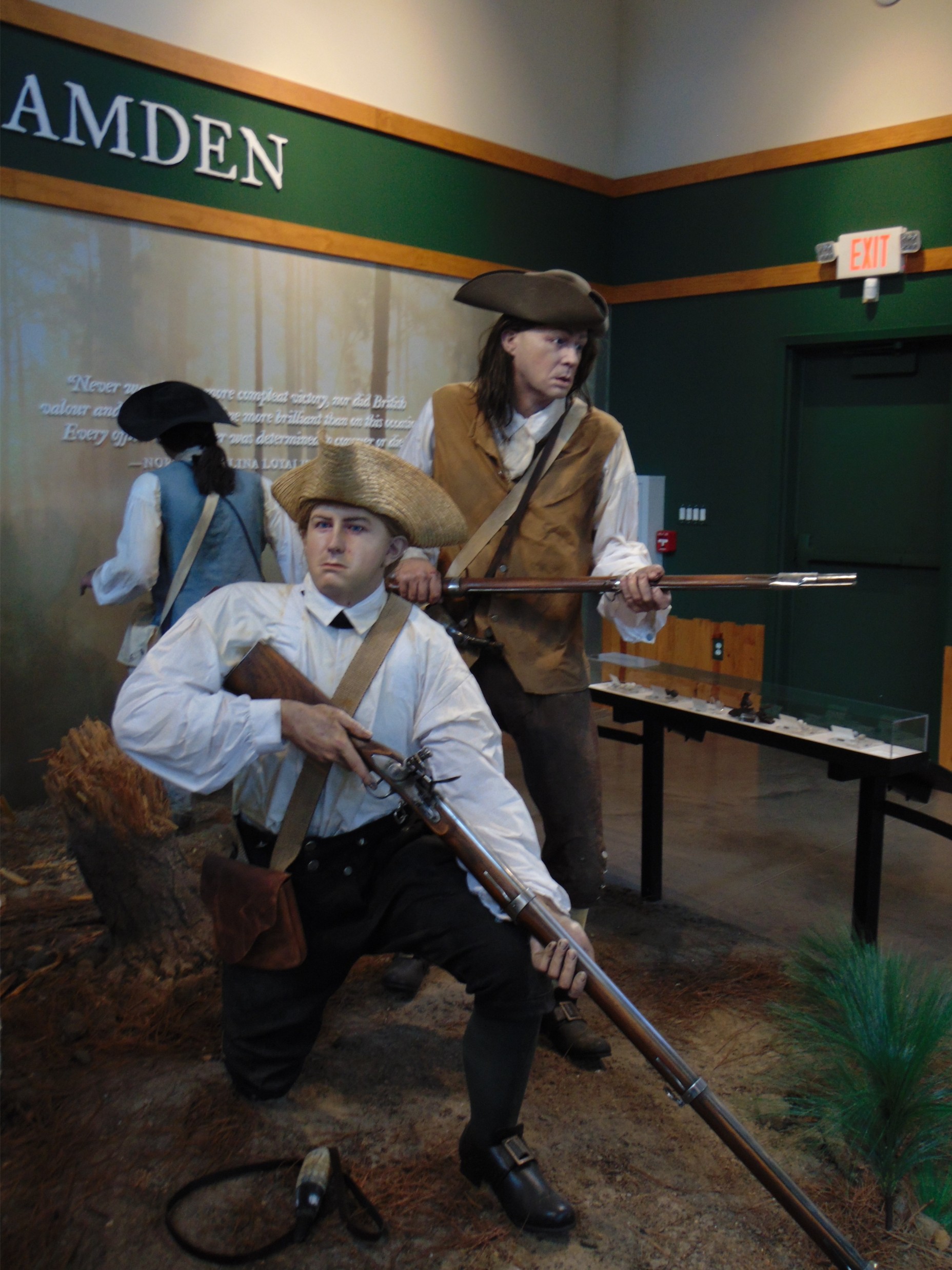
- Backcountry Militiamen
This display at the Revolutionary War Visitor’s Center in Camden, S.C. shows the typical garb settlers in the South Carolina Backcountry. It is probable that the militiamen on both sides at the Battle of Thicketty Fort wore something similar.
- Quaker Gun
Shelby won the “battle” by fashioning a quaker gun out of a log, like this replica on displayed at the South Carolina 250 Discovery Center on the South Carolina State Fairgrounds in Columbia, S.C.
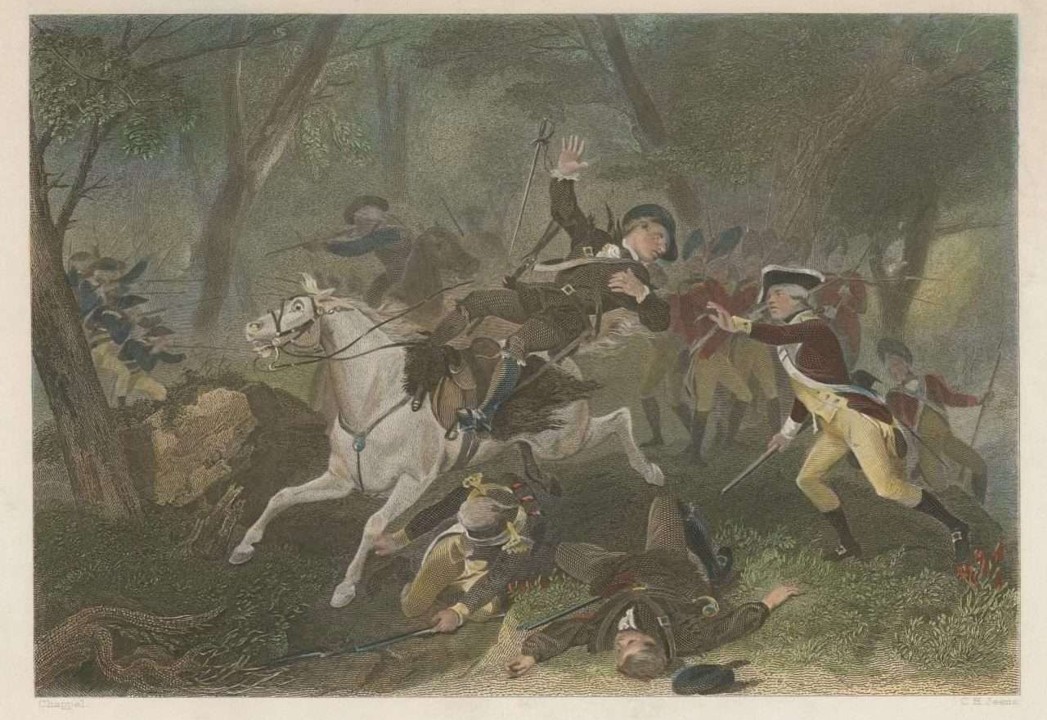
- Death of Maj. Patrick Ferguson.
Ferguson was killed in action rallying his men at the Battle of Kings Mountain on October 7, 1780, a battle that was a result of the loss of Fort Thicketty. Ferguson is buried on the battlefield.
Anne S. K. Brown Collection at Brown University.


Thank you for this article. Glad to hear that it is being preserved!
LikeLike
A very well written and researched article. Thank you very much for sharing.
LikeLike