Book Review: One if by Land, Two if by Submarine, by Eileen Schnabel

erw-book-reviews-11

A few months ago, author Eileen Schnabel sent us her young adult novel, “One if by Land, Two if by Submarine” for a gander.  Not being specialists in middle school fiction, we turned to an expert, my 13-year old daughter, Abigail, who is a voracious reader and read the novel over the holiday break.   Here is her review:

Abigail Sterner, Book Review of Eileen Schnabel, One if by Land, Two if by Submarine, (Reston, VA: Curiosity Quills Press, 2018), Digital Edition.

One if by Land, Two if by Submarine, by Eileen Schnabel, is a perfect blend of historical and science fiction. The story centers around Kep, a 13-year-old boy who enjoys swimming. He and his genius, history-obsessed younger brother Max, go to a Revolutionary War reenactment camp for a competition with a grand prize of $200 dollars. It isn’t clear exactly what the competition involves, but it serves the purpose of bringing several main characters together into a team.  The team starts out with Max and Kep. They are later joined by the daughter-of-a-Senator-turned-animal-rights-activist named Tella. The fourth and final member of the team is an aspiring actor named T.J. During the competition, the four discover that they must travel back in time to prevent someone from foiling the famous ride of Paul Revere.  Thus, the kids have to save the American Revolution before it can even begin.

Continue reading “Book Review: One if by Land, Two if by Submarine, by Eileen Schnabel”

The Battle of the Kegs (January 5th, 1778)

Francis Hopkinson
Francis Hopkinson, Signer of the Declaration and Satirical Lyricist

The Philadelphia Campaign did not end well for the Continental Army after three separate defeats at Brandywine, Paoli, and Germantown followed by the British occupation of the new nation’s capital.   Among other things, however, it would produce an amusing little ditty commemorating an attack on the British on January 5, 1778 for American audiences eager to poke fun at the British.

When informed that the British had occupied his adopted hometown, Benjamin Franklin reportedly waved off his concern and replied, “No, Philadelphia has captured Howe.”[i]  Franklin was more militarily astute than many politicians observing the war.  When his army captured Continue reading “The Battle of the Kegs (January 5th, 1778)”

Hamilton Recaptures Fort Sackville: Norman MacLeod’s Campaign Journal, December 17, 1778

(An occasional series highlighting British Lieutenant Governor Henry Hamilton’s march south from Detroit to recapture Vincennes (Indiana) on its 240th anniversary through the entries in Captain Norman MacLeod’s diary.)

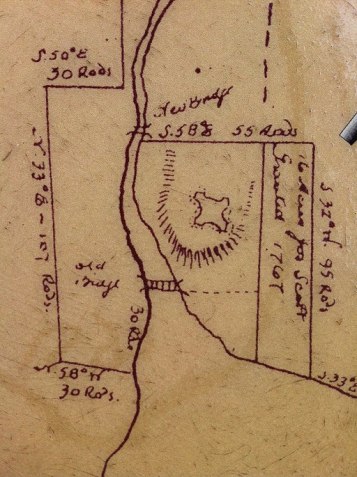
Fort Sackville Map Inset, (Nova Scotia Archives and Record Management, Wikimedia Commons)
Fort Sackville Map Inset, Nova Scotia Archives and Records, (Wikimedia Commons)

As Lieutenant Governor Henry Hamilton’s army arrived on the lower Wabash, the river widened and deepened, enabling his much-fatigued army to spread out and make better progress to Vincennes and Fort Sackville.  All along the way, the governor’s efforts to grow his army through the addition of Indian allies had largely succeeded, not only increasing his numbers but improving his intelligence about the American forces awaiting him.  Those were paltry, indeed.

Continue reading “Hamilton Recaptures Fort Sackville: Norman MacLeod’s Campaign Journal, December 17, 1778”

Book Review: Bob Drury & Tom Clavin, Valley Forge, Kindle ed., (New York: Simon & Schuster, 2018).

erw-book-reviews-11

Bob Drury and Tom Clavin have spent years writing books, both individually and as a team.  Between the two of them, they have explored topics ranging from baseball and golf to the old west and America’s 20th century wars.  With Valley Forge (Simon & Schuster, 2018), Clavin and Drury have turned to the American Revolution.  The result is another successful collaboration. (I’m biased as I have enjoyed several of their earlier books.)

Valley Forge tackles the Philadelphia Campaign, the winter encampment at Valley Forge (and elsewhere in truth), and the Continental Army’s emergence as a quality army capable of fighting the British on their own terms, which it demonstrated at Monmouth.  The focus is on Washington and the main army with him.  The reader sees both of them grow as Washington defeats political attempts to undermine his leadership and struggles to hold the army together in the face of harsh conditions and insufficient support from the rebelling states, Continental Congress, and local farmers.  Meanwhile, the Army develops into a core of hard-bitten professionals suitably trained in European methods specifically adjusted for their circumstances. After undergoing Steuben’s training program, it had the military skills needed to match its fighting spirit. By and large, it marked a turning point in the war.  Thus, at the end, the authors argue, “For those who survived, not least their inspired and inspiring commander in chief, the hardships they overcame had not so much transformed their innate character as revealed it.”[i] Continue reading “Book Review: Bob Drury & Tom Clavin, Valley Forge, Kindle ed., (New York: Simon & Schuster, 2018).”

Norman MacLeod’s Campaign Journal, November 27, 1778

(An occasional series highlighting British Lieutenant Governor Henry Hamilton’s march south from Detroit to recapture Vincennes (Indiana) on its 240th anniversary.)

As fall progressed, cold set in and the weather began to catch up with Hamilton’s advancing army.  By November, it regularly dealt with freezing rain, snow, mud, and ice on the river and nearby trails.  MacLeod’s November 27th entry alludes to a few of those logistical challenges and the rather low opinion that the captain had of American soldiers, which began to place higher in MacLeod’s thinking as the army neared the territory so recently conquered by George Rogers Clark.

“Embarked at eight as usual, met with Great fields of ice this day But pretty good water.  So that we made us of our Oars only in two Rapids where most of the men was obliged to drag especially those in Boats because they draw more water than the Perogues, besides this the channels in the River are as if cut Purposely for no other Craft than Perogues.  We arrived at K [one or two words illegible] at 4 oClock called [sic; camped?] 10 miles from Weatono.  Us as our tents were Pitched five Savages from that Plase Arrived in camp, who acquainted us that there was no less than 200 of their nation ready to Join us the moment we arrived at the above Place.  They further told us that the Rebels had abandoned Au Post.  How true this is alittle more time we discover.  But it agrees with my own opinion for I never once thorough they would make a Stand either there or at the Illinois with So numbers especially on hearing that the Lieut. Govr. was coming who they know had all the Indians read at [hi]s call.”

William A. Evans and Elizabeth S. Sklar, eds., Detroit to Fort Sackville, 1778-1779: The Journal of Norman MacLeod, (Detroit: Friends of the Detroit Public Library/Wayne State University Press, 1978), 87.  The spelling and grammar errors are all from the original as transcribed by Evans and Sklar.  Evans and Sklar suspect “Weatono” is MacLeod’s reference to “Ouiatenon.”

Thanksgiving with the Continental Army, 1777

Abraham Lincoln usually gets the credit for establishing Thanksgiving as a national holiday in 1863.  He deserves much of it for making it an annual event.  But, Lincoln was harkening back to an earlier practice of giving thanks amidst the trials and tribulations of war, whether it was going well or not.  The tradition predated the Revolutionary War generation, but they were as apt to a hold national day of giving thanks as any of their predecessors or successors in American history.  Continue reading “Thanksgiving with the Continental Army, 1777”

Norman MacLeod’s Campaign Journal, November 7-14, 1778

(An occasional series highlighting British Lieutenant Governor Henry Hamilton’s march south from Detroit to recapture Vincennes (Indiana) on its 240th anniversary through the entries in Captain Norman MacLeod’s diary.)

Lieutenant Governor Hamilton’s army continued its progress towards Vincennes, but it was slow and backbreaking work.  Building dams to raise river levels did not work everywhere and his army often had to resort to the simple and monotonous task of unloading its vessels, dragging them through the shallows, carrying supplies forward, and then reloading boats to continue making progress the next day.  MacLeod’s diary entries for November 7th and 14th highlight the sheer fatigue involved in moving supplies on the frontier.

Continue reading “Norman MacLeod’s Campaign Journal, November 7-14, 1778”

Norman MacLeod’s Campaign Journal, October 31, 1778

(An occasional series highlighting British Lieutenant Governor Henry Hamilton’s march south from Detroit to recapture Vincennes (Indiana) on its 240th anniversary through the entries in Captain Norman MacLeod’s diary.)

This year marked the 240th anniversary of George Rogers Clark’s “conquest of the Illinois country” in modern-day Illinois and Indiana.  During the summer, he led a small force of Virginia militia down the Ohio River and eventually captured the towns of Vincennes in modern-day Indiana as well as Cahokia and Kaskaskia in modern-day Illinois.  The British Lieutenant Governor of Quebec, Henry Hamilton, could not abide such American audacity and set out to recapture the town of Vincennes and the British fort that had ostensibly protected it, Fort Sackville.  On his march south from Detroit, he prodded, pleaded, and encouraged Native American tribes to join his force, significantly swelling his numbers for the late-fall offensive.  By October, Hamilton’s army was regularly struggling with low water and ice on the rivers it needed to move supplies while freezing rain, snow, and falling temperatures plagued men on the march.

Continue reading “Norman MacLeod’s Campaign Journal, October 31, 1778”

Norman MacLeod’s Campaign Journal, October 13, 1778

Sketch of Wabash River, 1778
Sketch of the Wabash River Made During Hamilton’s 1778 Campaign (Wikimedia Commons)

In the summer of 1778, Lieutenant Colonel George Rogers Clark of the Virginia militia launched one of the most daring American military operations of the Revolutionary War when he invaded the “Illinois country” and captured Cahokia and Kaskaskia in modern-day Illinois and Vincennes in southern Indiana, effectively neutralizing British power on the Illinois, Wabash, and Mississippi Rivers.  Henry Hamilton, Lieutenant Governor of Quebec and Britain’s Superintendent for Indian Affairs in Detroit, could not allow such audacity to succeed, lest Britain’s influence with the western Indian nations wane.  Learning of Fort Sackville’s fall at Vincennes on the Wabash River, he set out to recapture it.

Continue reading “Norman MacLeod’s Campaign Journal, October 13, 1778”

Missionary Extraordinaire: David Zeisberger

Over the summer, I took a family excursion to several Revolutionary War sites in Ohio, some of which I recently wrote about.  In particular, I wanted to trace the experience of several Moravian missionaries and their congregations in the no-man’s land of the frontier.  Traveling a back road along the Tuscarawas River between the villages of Gnadenhutten and New Schoenbrunn, we stumbled across the graves of David Zeisberger (1721-1808) and several notable missionaries at the crossroads of Goshen.

IMG_2559
Moravian Cemetery at Goshen, Ohio.  (Author Photo)

Continue reading “Missionary Extraordinaire: David Zeisberger”