Emerging Revolutionary War welcomes guest historian Paul F. Soltis
250 years ago in 1775 John Wallace of Philadelphia was preparing to move. Born in Scotland in 1718, John was the youngest son of the minister of the Church of Scotland at Drumelizer in the Scottish Lowlands south of Glasgow and Edinburgh. While his eldest brother William would take over the ministry in the Kirk following their father’s death, John emigrated from Scotland to the colonies of British North America. Like many Scottish emigrants, Mr. Wallace entered the merchant trade, first in Newport, Rhode Island and eventually in Philadelphia where he met and married Mary Maddox of an established Philadelphia family.
At the opening of the Revolutionary War in 1775, John Wallace purchased 95 acres on the Raritan River in Somerset County, New Jersey from the Rev. Jacob Rutsen Hardenbergh, minister to the Dutch Reformed Churches of the upper Raritan River Valley. At this country estate he called “Hope Farm” Mr. Wallace built the largest home constructed in New Jersey during the Revolutionary War, perhaps “hoping” to escape the revolutionary ferment of Philadelphia. Midway between the British garrison at New York and the Continental Congress in Philadelphia, John Wallace instead found himself at the Crossroads of the American Revolution.
In the fall of 1778, the Continental Army arrived to this region of Somerset County where the Middle Brook flows into the Raritan River for the Middlebrook Cantonment of 1778-79. Nathanael Greene, Quartermaster General of the Continental Army, wrote on October 18, “Middle Brook is situate in a plentyful Country, naturally strong and difficult of access and surrounded with a great plenty of Wood. Great security will also be given to this Camp by the militia of the Country.” Col. Sidney Berry, a deputy quartermaster to Gen. Nathanael Greene, arranged with Mr. Wallace for use of the Wallace House at Hope Farm, a few miles west of the village of Middlebrook, as headquarters for George Washington.
Emerging Revolutionary War welcomes back guest historian Eric Olsen. Eric is a historian with the National Park Service at Morristown National Historical Park. To learn more about the site, click here.
The following obituary of a Revolutionary War veteran appeared in a Marietta, Ohio newspaper in 1830.“Saturday, July 24, 1830
Casualty – On Saturday evening last, Mr. Bazil Norman of Roxbury township, a man of color, left his house to go to watch a deer lick, and not returning in the course of the night, the next day a search was commenced under the belief that some accident had befallen him; after a diligent search by his family and neighbors, he was found dead having fallen from a precipice about twelve feet. From appearances he had been to the lick and stayed the usual time, and late in the evening attempted to return, by the aid of a torch-light; having a narrow pass to descend between some rocks about a half mile from his house, he missed his way a few yards, fell, and broke is neck. Mr. Norman was aged about 73 – was a soldier in the revolutionary war, and at the time of his death received a pension from the United States.” -American Friend & Marietta Gazette, July 24, 1830.
Bazabeel Norman was an African American private in the Maryland Line of the Continental Army and most likely part of the 1779-1780 encampment at Jockey Hollow. I haven’t been able to find any muster rolls or service records to confirm this, but fortunately Norman did apply for a veteran’s pension in 1818 in which he summarized his military service.
“ enlisted in fall of the year 1777 into the company of Capt. Richard Anderson as a private soldier in the regiment commanded by Col. John Gumby in the Maryland line and served my Country against the common enemy until the close of the war…I was in the battles of Monmouth, Camden, Cowpens, Guilford Courthouse & Eutaw Springs. I am now 67 years old…”
In 1818 the only veterans who could apply for a pension were for men who were infirm or indigent. Bazabeel Norman apparently fit the requirements and was granted a pension. But too many men were granted pensions and Congress suspected that undeserving men were cheating the system. In 1820 veterans who had been granted pensions in 1818 were now required to make a list of their possessions and prove they were needy. In his July 25, 1820 application, Norman summarized his family life.
“As to my family I have none at home but my wife, one son & a Grand child, an orphan. My wife is 63 years of age & very infirm, my son wants only about a month of being 21 years of age. My Grandchild is a Girl about eight years old & very weakly. The rest of my children are of age & doing for themselves. I am by occupation a farmer but owing to age & infirmity I am unable to do very little toward supporting myself.”
After his death in 1830 his wife “Fortune” applied for and obtained a widow’s pension [W 5429]. In her application, she mentioned that they were married before the end of the war but did not provide any more interesting information.
The only reason I was able to research Bazabeel Norman was because of an email from Michael Shaver, Acting Chief of Interpretation of Morristown NHP & Thomas Edison NHP. I’m quoting from his email, because frankly I never heard of the person he makes reference to and it easier than rewriting his email. Michael wrote, “A few weeks ago on the PBS series, Finding Your Roots, one of the genealogies that Henry Louis Gates was exploring was that of actress, Rebecca Hall. Hall, the daughter of Sir Peter Hall, founder of the Royal Shakespeare Company, and Maria Ewing, an American-born opera star of the 1970s and 1980s. Hall has appeared in Iron Man 3 and last year’s King Kong movie, along with a host of highly acclaimed independent films. What prompted her appearance on the program was her directorial debut of the Netflix film, Passing. Hall now lives in Brooklyn and the Hudson Valley…
At about 30 minutes in, Gates is taking Hall back into the earlier generations of her family. He closes out with the discovery of Bazabeel “Basil” Norman, a free black from Maryland at about 36 minutes who was discovered through documentation of a veteran’s land grant in Ohio in 1818.
Basil Norman came from Frederick County, Maryland joined the 7th Regiment in the fall of 1777, under the command of Colonel John Gumby, in the company commanded by Captain Richard Anderson “and served my country against the common enemy until the close of the war under the continental establishment and discharged under a general order.
So Norman was probably hung his hat in Jockey Hollow.”
A big shout out/thank you to Michael for the tip which has revealed another African American soldier from Jockey Hollow.
Sources:
American Friend & Marietta Gazette, July 24, 1830, page 3, column 1, Ancestry online
Pension Application of Bazabeel Norman and his widow Fortune Norman, W5429, National Archives, Fold 3, Ancestry Online.
Emerging Revolutionary War welcomes back guest historian Eric Olsen. Eric is a historian with the National Park Service at Morristown National Historical Park. Click here to learn more about this site.
Visitors always want to know, “How much did “that” cost back then?” We used to tell them because of inflation and the conversion from pounds to dollars it was really hard to give a definitive answer. It is even harder to figure during the American Revolution when the value of the dollars changed dramatically just over the course of a few months. There are all sorts of fancy conversion sites on the internet today but since math was not my strong point, I don’t know how accurate they are.
One book tried another approach to explain 18th century vs. modern prices. “A person today, purchasing the same product made the same way out of materials made the same way, will pay roughly the same percentage of their wages for the product as a person of equal economic status in the past would have. For comparison, at the present time [1997 book] an average shop rate runs thirty-five dollars an hour for labor. If you make ten dollars an hour, this costs you three and a half hours of work, and the same ratio applied to a craftsman making thirty pounds a year or two pence per hour.” Makes sense but seems a bit too complicated.
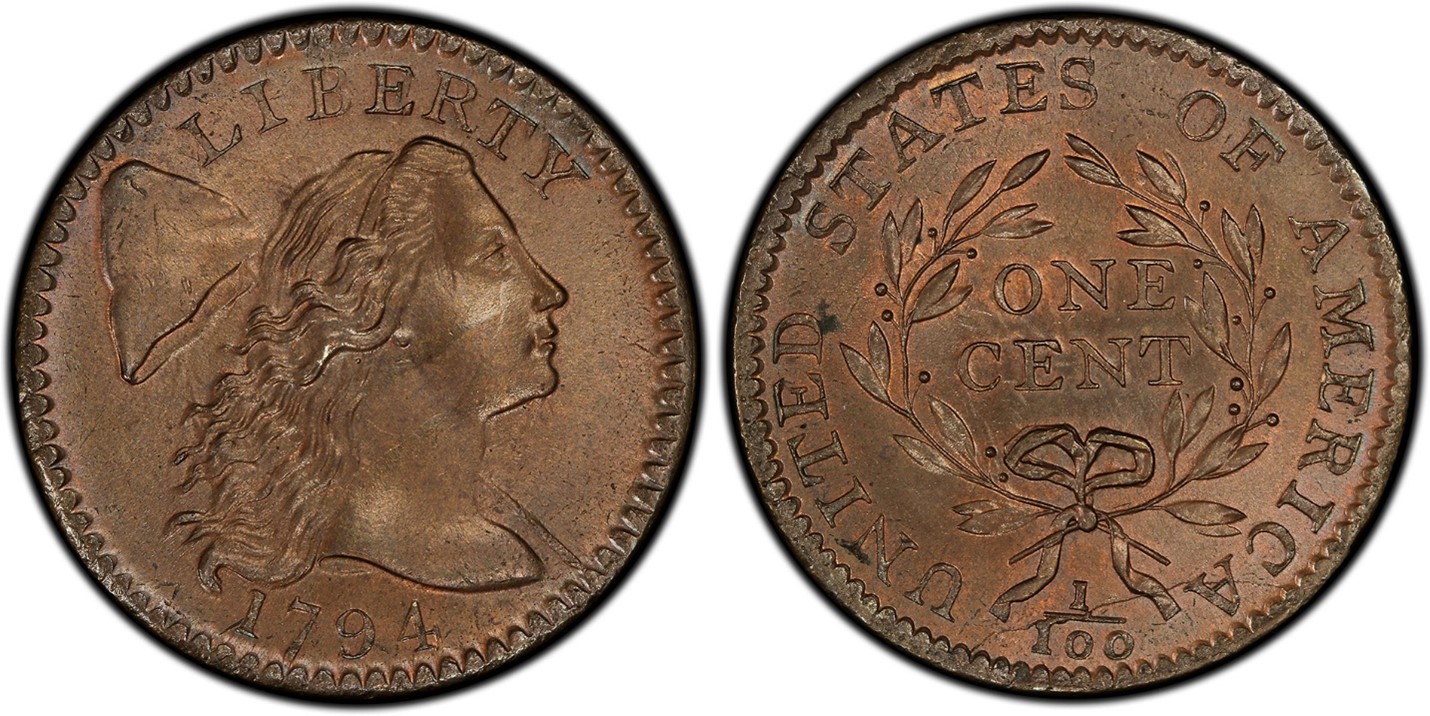
However, I did find one primary source that can give a clue to the relative value of items. It comes from Theophile Cazenove, a Dutchman who traveled through New Jersey and Pennsylvania in 1794 looking for investment opportunities for Dutch bankers. At his various stops in Morris County, Cazenove recorded the prices of farms, livestock, and even labor.
Sometimes the prices were in pounds, other times they were in dollars. When he included both prices for one item, I did some very simple math and found that it took eight shillings to make one dollar, and that $2.50 equaled one pound. According to the online conversion applications, one pound in 1790 equaled 167.58 pounds today. One dollar in 1790 equaled 32.20 dollars in today’s money.
But without doing any math or conversions if we look at the prices Cazenove listed we can see what items were more expense than other ones. From that we can also assume the more expensive items were more highly valued.
Keep in mind, on the local level in 18th century America, it was not a cash driven economy. Specie, Hard Money or coins, made of valuable metals such as silver and gold were in short supply in North America and used infrequently. Paper Money was rarely used, appearing briefly during periods of war when armies needed a large source of money to buy goods and services.
Emerging Revolutionary War welcomes back guest historian Evan Portman
Two future presidents walk into a Catholic church.
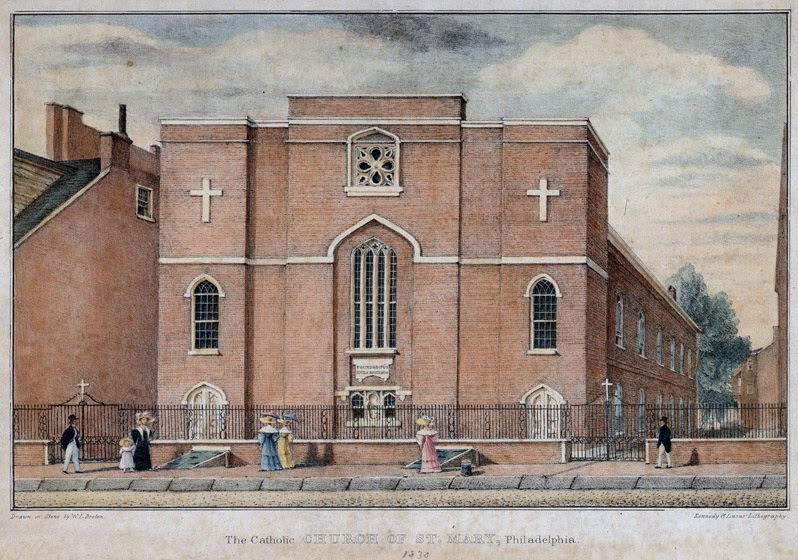
No, that’s not the beginning of a bad historical joke. It’s what happened on October 9, 1774, when George Washington and John Adams wandered into Old St. Mary’s Catholic Church while serving as delegates to the First Continental Congress in Philadelphia.
In September 1774, delegates from twelve of the thirteen colonies convened in Philadelphia for the purpose of discussing a response to Parliament’s recent Intolerable Acts. But after a month of debating (and bickering), Adams wrote that “the Business of the Congress is tedious, beyond Expression.”[1] Seeking a break from the monotony, Adams and Washington ventured to one of the oldest Catholic churches in the colonies. Established in 1763 by parishioners of Old St. Joseph’s, St. Mary’s Church grew from the need for a Catholic cemetery.
“[L]ed by Curiosity and good Company I strolled away to Mother Church or rather Grandmother Church, I mean the Romish Chappell,” Adams wrote to his wife Abigail that day.[2] The church stood just a few blocks south of the Congress’s meeting place at Carpenters’ Hall and starkly contrast anything the Protestant Adams had seen before. A descendant of some of America’s early Puritans, Adams was raised in the Congregational church of Braintree, Massachusetts, where “unfettered daylight through clear window glass allowed for no dark or shadowed corners, no suggestion of mystery.”[3] Old St. Mary’s could not have been more different. Light poured through several stained-glass windows before a large, ornate altar, behind which hung a dramatic depiction of Christ’s passion while burning candles and incense lit the nave.
Adams’s puritanical upbringing taught him to abhor such pageantry in the house of the Lord. He looked with pity upon “the poor Wretches, fingering their Beads, chanting Latin, not a Word of which they understood, their Pater Nosters and Ave Maria’s.” Even “their holy Water—their Crossing themselves perpetually—their Bowing to the Name of Jesus, wherever they hear it” appalled the young lawyer from Boston.[4]
Despite his disdain, some elements of the mass impressed and even moved, Adams. He described the priest’s homily as a “good, short, moral Essay upon the Duty of Parents to their Children, founded in Justice and Charity, to take care of their Interests temporal and spiritual.” Its brevity stood in stark contrast to the long-winded sermons of the Great Awakening, with which Adams would likely have been familiar. Even the priest’s flashy garments were noteworthy to the future president. “The Dress of the Priest was rich with Lace—his Pulpit was Velvet and Gold,” Adams noted.[5]
But most noteworthy of all was the “Picture of our Saviour in a Frame of Marble over the Altar at full Length upon the Cross, in the Agonies, and the Blood dropping and streaming from his Wounds.” That combined with the organ music, which Adams described as “most sweetly and exquisitely” was enough to move him. “This Afternoons Entertainment was to me, most awfull and affecting,” he confessed. But in the eighteenth century, the word “awful” did not mean what it does today. Adams quite literally meant that he was “full of awe” in observing the mass. He was so moved, in fact, that he wondered how “Luther ever broke the spell” of Catholicism.[6]
Perhaps Adams’s experience that day, 250 years ago, is indicative of the Revolution at large, as it brought together men from disparate backgrounds and regions. As a young man in Braintree, Adams likely never imagined he could be moved by a “papist ceremony,” nor could he probably have imagined signing his name on a document securing independence from his former country. In this way, the American Revolution made fantasy a reality, and the impossible, possible.
[1]“John Adams to Abigail Adams, 9 October 1774,” Founders Online, National Archives, https://founders.archives.gov/documents/Adams/04-01-02-0111. [Original source: The Adams Papers, Adams Family Correspondence, vol. 1, December 1761– May 1776, ed. Lyman H. Butterfield. Cambridge, MA: Harvard University Press, 1963, pp. 166–167.]
[3] David McCullough, John Adams, (New York: Simon & Schuster, 2001), 84.
[4] “John Adams to Abigail Adams, 9 October 1774,” Founders Online, National Archives, https://founders.archives.gov/documents/Adams/04-01-02-0111. [Original source: The Adams Papers, Adams Family Correspondence, vol. 1, December 1761– May 1776, ed. Lyman H. Butterfield. Cambridge, MA: Harvard University Press, 1963, pp. 166–167.]
Emerging Revolutionary War welcomes guest historian Evan Portman
Overlooking the Grand Parade at Valley Forge National Historical Park is a statue almost as solid as the man it portrays. Baron von Steuben helped transform the American army into an effective and efficient fighting force in the winter of 1777-1778, but he also aided the country nearly a century and a half later. Yes, Baron von Steuben helped the United States through World War I—or at least the social turmoil on the home front.
Friedrich Wilhelm August Heinrich Ferdinand Steuben was born in Prussia (modern day Germany) in 1730 and served in the Prussian army through the Seven Years’ War. By 1775, Steuben had accrued a considerable amount of debt (despite his stature within the aristocracy), so he sought a foreign military appointment. Failing to catch the eye of the British, French, or Austrians, the Baron set his sights on the fledgling American government. Congress arranged for Steuben to be paid, depending on the outcome of the war, and sent him to the winter encampment at Valley Forge. There, he began drilling the Continental army and instituted better hygiene and sanitation practices. He also wrote a drill manual, which he published in 1779 as Regulations for the Order and Discipline of the Troops of the United States. After the encampment at Valley Forge, Steuben participated in the Southern Campaign of the Revolutionary War. After the Siege of Yorktown, Congress awarded the Baron a tract of land in New York where he died in 1794.
Emerging Revolutionary War welcomes guest historian Nicholas Benevento.
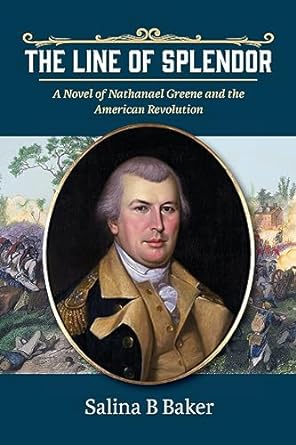
“The Line of Splendor: A Novel of Nathanael Greene and the American Revolution” is a historical novel written by Salina Baker. In her novel, she brings to life a figure who deserves more fame and recognition for his pivotal role in the Revolution. Nathanael Greene was a selfless general and leader who fought valiantly to defend his country and provide for his troops. He was a man who defied the odds and was placed in a position of power and leadership, a favorite of General George Washington. He was a man willing to put everything on the line for the independence and freedom of the United States.
Baker’s book picks up with Nathanael Greene’s life early in the 1770s when Nathanael is about the age of thirty. At this time, there were growing tensions in the American Colonies with Mother England. Shortly before the war broke out, Nathanael married his wife Caty in 1774, and Baker does a masterful job weaving their relationship into the story of his time in the war.
Baker’s work is a fascinating depiction of Nathanael Greene and the American Revolution. Readers of history often read facts and descriptions of events, which Baker provides. But she also takes the reader into the thoughts and conversations of Nathanael Greene, as well as other key figures in his life. Therefore, while this is a fiction novel, enthusiasts of this time period in American history would love this novel. Baker weaves in the history of the war, while also providing us with dialogue and feelings of Nathanael. Baker’s novel is a reminder to the reader that the generals and soldiers who fought in the Revolutionary War were not mythical figures who fought a war that would inevitably end in an American victory. These were real men with real emotions carrying their insecurities and flaws, while experiencing the highs and many lows of the war. Greene was central to many of the key battles early in the war, from the siege of Boston, to the debacle of New York, to the triumph of Washington’s crossing of the Delaware, to the trying times at Valley Forge. Greene held a tremendous weight on his shoulders throughout the war, especially when he led the Southern Army late in the war during the Southern Campaign.
Emerging Revolutionary War welcomes guest historian, Nathaniel Parry, a brief bio follows this post.
The American Revolution was a victory of liberty over tyranny made possible by a mixture of courage, grit, and virtue. It was also, however, a morally ambiguous affair with some of the main participants motivated as much by ambition as they were by idealism. While many of the founding generation prided themselves on their virtue, vice also played an important role in their rebellion against the British, and to fully appreciate this reality, it is useful to examine the role of alcohol, which turns up at many of the revolution’s key moments.
In ways sometimes subtle and often quite important, alcohol provided the impetus for the nation’s founding, belying the pristine image of an honorable rebellion of virtuous patriots against liberty-hating tyrants. From John Hancock celebrating the repeal of the Stamp Act in 1766 by “treat[ing] the Populace with a Pipe of Madeira Wine,” as one newspaper reported,[i] to militiamen wetting their whistles at Buckman Tavern before the Battle of Lexington and Concord,[ii] to General George Washington ordering “an extra ration of liquor to be issued to every man”[iii] in celebration of Britain’s recognition of America’s independence in 1783, alcohol pops up again and again during the revolutionary era. This was a reflection of the fact that drinking was an integral part of daily life in early America.
John Hancock and the Liberty Affair
With heavy drinking habits widespread among all classes and regions, the rum distillery industry flourished in the colonies, made possible by cheap imports of molasses from the West Indies. By one count, there were more than 150 rum distilleries in New England before the revolution, and throughout the colonies some five million gallons of rum were being produced.[iv] In order to ensure access to the cheapest molasses available and to bypass restrictive English regulations such as the Navigation Acts and 1733 Molasses Act, smuggling became rampant in the colonies, a problem that Parliament sought to address with the adoption of the Sugar Act in 1764. An attempt to crack down on smuggling and increase revenue, the Sugar Act had the effect of increasing the price of manufacturing rum and negatively affected the exporting capacity of New England distillers, leading to consternation among merchants. It also heavily taxed the formerly duty-free wine from Madeira, Portugal, which was popular throughout the colonies. This angered both merchants and consumers.[v]
Emerging Revolutionary War welcomes guest author Jim Bish as he describes the important events that happened in Williamsburg in May of 1774:
News of the Boston Tea Party reached London in January 1774 and Parliament reacted decisively passing the Boston Port Act on March 31, 1774, calling for the closing the port of Boston on June 1, 1774. News of the Boston Port Act reached Virginia before May 19th severely disrupting Virginia’s House of Burgesses planned business. After hearing the news about Boston, the Burgesses primary focus and action was a response to the Boston Port Act. Virginia Burgess Richard Henry Lee described his response to the news of the Port Bill to his brother, Arthur Lee, who resided in London, “We had been sitting in Assembly near three weeks, when a quick arrival from London brought us the Tyrannic Boston Port Bill, no shock of Electricity could more suddenly and universally move— Astonishment, indignation, and concern seized on all. The shallow Ministerial device was seen thro instantly, and every one declared it the commencement of a most wicked System for destroying the liberty of America, and that it demanded a firm and determined union of all the Colonies to repel the common danger.”
The Virginia capitol building as it appeared in 1774. (Wikipedia)
By May 24th the burgesses had drafted their response. According to Thomas Jefferson, “We were under conviction of the necessity of arousing our people from the lethargy into which they had fallen as to passing events; and thought that the appointment of a day of general fasting and prayer would be most likely to call up and alarm their attention . . . we cooked up a resolution, somewhat modernizing their phrases, for appointing the 1st day of June, on which the Port bill was to commence, for a day of fasting, humiliation and prayer, to implore heaven to avert from us the evils of civil war, to inspire us with firmness in support of our rights, and to turn the hearts of the King and parliament to moderation and justice.”
On May 26th, Purdie and Dixon’s Virginia Gazette published the House of Burgesses resolution and as ordered. Broadsides of the resolution were also published and probably preceded the newspapers printing. Governor Dunmore referred to the broadside printing when, on 26 May, he summoned the burgesses to the council room and thus addressed them: “I have in my hand a Paper published by Order of your House, conceived in such Terms as reflect highly upon his Majesty and the Parliament of Great Britain; which makes it necessary for me to dissolve you; and you are dissolved accordingly.”
Royal Governor Lord Dunmore. While politically at odds with many of the Burgesses, they remained personally cordial. The morning of the 26th, he ate breakfast with George Washington. On the evening of May 27th, the Burgesses attended a ball at the Governor’s Palace for Lady Dunmore.
Having been dissolved by the royal governor had certainly occurred before when there were grievances by Virginia’s House of Burgesses to either Parliament or the Crown. In 1765, Governor Fauquier dissolved the House of Burgesses when it passed a resolution against the Stamp Act. In May 1769 the Virginia House of Burgesses passed several resolutions condemning Britain’s stationing troops in Boston following the Massachusetts Circular Letter of the previous year. As a result, Governor Botetourt abruptly dissolved the General Assembly after the House of Burgesses adopted those measures. This time, the dissolution of the House seemed more worrisome. When the House of Burgesses were dissolved in 1769 much of the disagreement was about sending royal troops to Massachusetts. By 1774, troops had been in the Boston area for five years and now there was the deeper threat of using those troops to cease the livelihood of all Bostonians by closing down their means of trade, the harbor. It became clearly evident to the Virginia burgesses that if the Crown could take actions like this against Bostonians, they could also be used against Virginians.
To many of the burgesses, the dissolution of the House was surprising. This sentiment is revealed in a letter by George Washington to George William Fairfax on June 10, 1774 in which Washington states, “this Dissolution was as sudden as unexpected for there were other resolves of a much more spirited nature ready to be offered to the House wch. would have been unanimously adopted respecting the Boston Port Bill as it is calld but were withheld till the Important business of the Country could be gone through” Like earlier burgesses had done after being dissolved, most of the then, former-burgesses, agreed to meet at Raleigh Tavern. At least 89 of the previously assembled 120 Burgesses reconvened their extra-legal session in the Apollo Room at Raleigh Tavern a few blocks away as it was the largest facility to hold such a group.
The reconstructed Raleigh Tavern. The original burned in 1859. (Colonial Williamsburg)
On the following day of May 27, those “former burgesses” agreed to an association. They condemned Great Britain in that it had taken away their just, antient, and constitutional rights stating that the Boston Harbor bill is a most dangerous attempt to destroy the constitutional liberty and rights of all North Americans. The former burgesses charged that parliament was at fault for the purpose of raising a revenue, without the consent of the people and particular blamed the East India Company of attempting to ruin of America, by setting a precedent in favor of arbitrary taxation and as a result Virginia called for a boycott of the East India Company. They concluded by instructing the committee of correspondence to propose to the corresponding committees of the other colonies to appoint deputies to meet in Congress at such place, annually, as should be convenient to direct, from time to time, the measures required by the general interest. They declared that an attack on one colony should be considered as an attack on the whole. This “Former Burgesses Association” document was signed by the 89 former burgesses and printed in Williamsburg for all Virginians to read. There was rarely a more unified effort by deprived lawmakers in colonial Virginia. Before heading home to their respective counties, Virginia’s former burgesses were moving in a singular direction ignited by the Boston Port Act and now brought to a strong flame by the actions of Governor Dunmore.
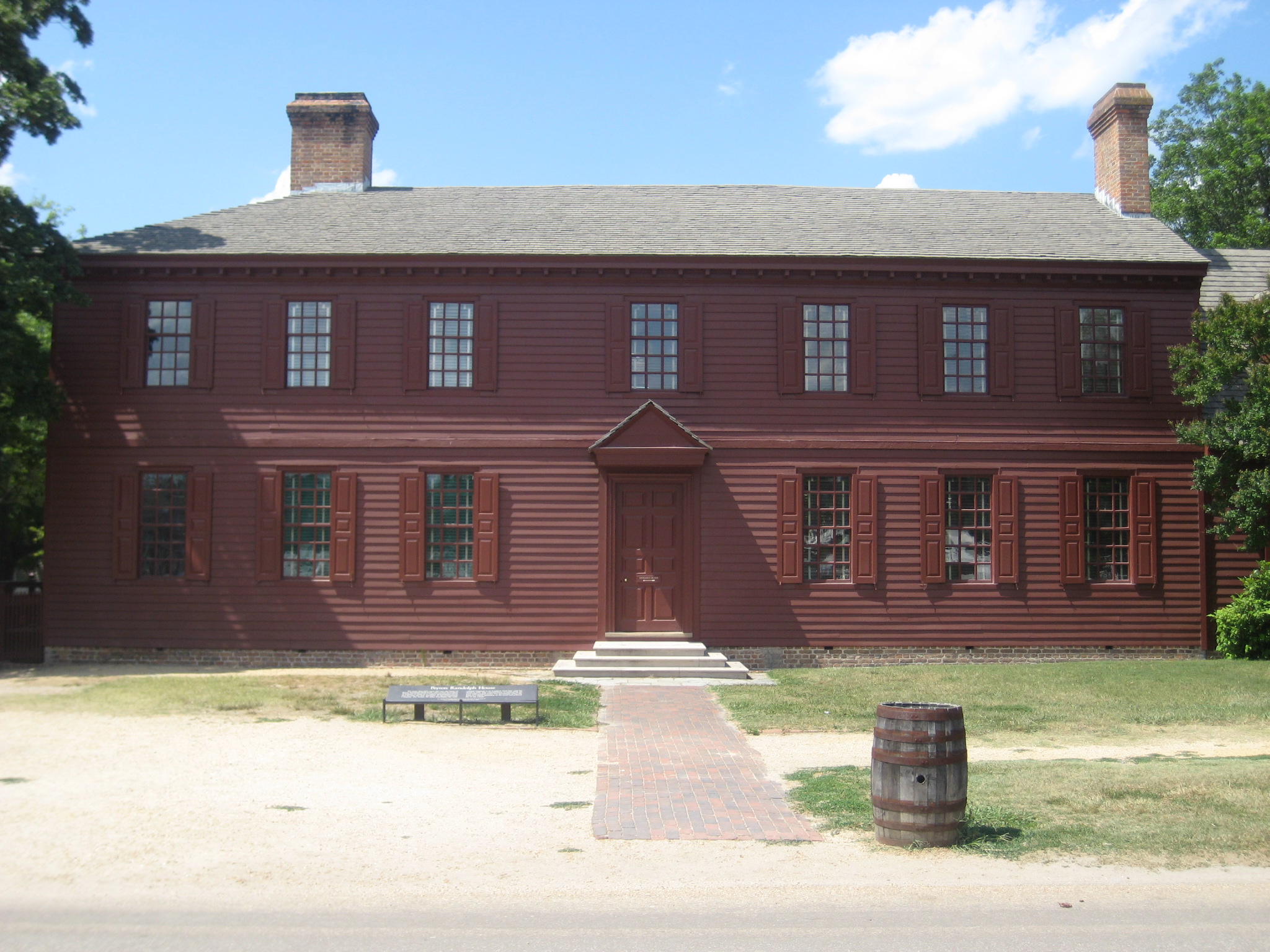
On May 30th, three days after issuing the Association document, Peyton Randolph received correspondence from three different committees, Boston, New York, and Annapolis concerning their request for action. Randolph decided to locate former Burgess members who had not yet returned to their home counties and he located twenty-five. Out of necessity, those twenty-five former burgesses served as members of the Committee of Correspondence for Virginia.
The Peyton Randolph House
The following day, those 25 former burgesses were much more detailed and stronger in their messaging from that which appeared in the 89 former-burgesses association document. After hearing the sentiments from Boston, Philadelphia, and Maryland the 25 former burgesses thought that “we ought to adopt the scheme of Nonimportation to a very large extent.” They also defined a date and place, August 1, 1774 in Williamsburg, for the former burgesses to meet as a legislative body. They stated, “We fixed this distant Day in Hopes of accommodating the Meeting to every Gentleman’s private Affairs, and that they might, in the mean Time, have an Opportunity of collecting the Sense of their respective Counties.”
Virginia was headed quickly towards Revolution . . .
Follow our Facebook page this Sunday and Monday as Emerging Revolutionary War historians and guests will be in Colonial Williamsburg on the 250th anniversary of the dissolution of the House of Burgesses and the gathering of the former Burgesses at the Apollo Room in the Raleigh Tavern.
Emerging Revolutionary War welcomes guest author Michael Aubrecht
At the time of the Revolutionary War it is estimated that there were over a half million African-Americans living in the thirteen colonies. As the rebellion’s patriotic call to fight for liberty grew, the British government sought to undermine the expanding Continental Army by soliciting slaves who ran away from their masters. By promising to grant them their freedom and security, the Redcoat ranks were able to boost their manpower on the battlefield instead of constantly relying on the importation of additional troops who took months to travel to the Americas from England. Some of these all-black units even flourished as in the example of the Royal Ethiopian Regiment and later, the Black Pioneers.
According to the Atlantic Canada Virtual Archives Website Black Loyalists in New Brunswick: “In November 1775, Virginia Governor Lord Dunmore, hoping to bolster the British war effort, encouraged slaves and indentured servants of the Patriots to join His Majesty’s army. Many did so. When the British evacuated their army from Boston to Halifax in 1776, a “Company of Negroes” was part of the entourage. British Commander-in-Chief Sir Henry Clinton extended the policy of appealing to African Americans in his Phillipsburg Proclamation of 1779 in which he offered security behind British lines to ‘every negro who shall desert the Rebel Standard.'”
Following the British Army’s surrender, it is estimated that nearly 35,000 loyalists fled the United States to settle north in the provinces of Canada including the maritime regions of New Brunswick and Nova Scotia. Nearly 3,500 free black loyalists were among them including many who had fought alongside the Redcoats on behalf of the English crown. New Brunswick saw thousands of African-Americans settle in as new citizens and many went on to fight again for Britain in the War of 1812. Despite their service to the king, many black loyalists and their families still faced racial discrimination, although it paled in comparison to the institution of slavery that continued to thrive in the southern United States.
Michael Aubrecht is the author of Thomas Jefferson and the Virginia Statute for Religious Freedom: Faith & Liberty in Fredericksburg.
Emerging Revolutionary War welcomes guest historian Eric Wiser to the blog.
This is a brief story of my first and memorable visit to the Camden Battlefield in South Carolina this September past. I am a husband and father living in the suburbs of Chicago. I make my living as an accountant. As rewarding as my career has been, it’s my strong interest in early American history that stirs my imagination. My pilgrimage to Camden was part of a visit to my friend Phil Kondos who moved to eastern Georgia with his family over a decade ago. Phil is a gifted musician and wonderful father and happens to share a mutual love of history. This narrative of our visit will hopefully inspire others to place Camden Battlefield on their bucket list.
My interest in the Battle of Camden mostly derives from having a Patriot ancestor who fought there. Pvt. Michael Wiser, a 23-year-old grist miller from Frederick County, Maryland, was with the First Maryland Brigade and captured by the British at Camden.[i]






 Emerging Revolutionary War Era