Emerging Revolutionary War welcomes back guest historians Karl G. Elsea and William W. Welsch
1778 sketch-map drawing of Battle of Trenton by Lt. Fischer (courtesy of William S. Stryker, The Battles of Trenton and Princeton, Riverside Press, Cambridge, 1988, page128)
The v. Knyphausen artillery detachment:
Lieutenant Friedrich Fischer was about 37 years old and had about 20 years military experience. He was the senior artillery officer in Trenton. For administrative purposes he saw to the needs of the men, and horses, and equipment for the artillery in Trenton. However, for tactical considerations he was a detachment commander to two three-pounder field guns and crews and horses and equipment assigned to support the v. Knyphausen Regiment. He was to follow their orders unless overridden by the Brigade leader, Colonel Rall. Lt. Fischer never made it to his assigned regiment. The reason was the rapid advance by the Patriots on all fronts.
Each regiment of the Hessians as they came to Trenton in mid-December was assigned a significant building, usually a church, to form its “center of gravity.” The v. Knyphausen regiment was assigned the Presbyterian church, the Jagers were assigned the Old Stone Barracks, the v. Lossberg regiment the English church, the dragoons were assigned the Quaker meeting house, and the Rall regiment several taverns. The Artillery was assigned the Methodist church at the northeast corner of Queen Street and Fourth Street. Thus, the artillery horses, harness, and limbers were at the Methodist church for the three detachments. Three of the neighboring houses to the Methodist church each contained the men for an artillery detachment.
Emerging Revolutionary War welcomes back guest historians Karl G. Elsea and William M. Welsch.
Part I
1770 drawing of Hessian three-pounder barrel (Drawing of Hessian three-pounder gun, dated 1770, at Kriegskarten from Hessisches Staatsarchiv Marburg, Germany at http://www.digam.net/?str=177)
The Rall Artillery Detachment:
It is well known that the Battle of Trenton saved the American Revolution from defeat. What is not well known is the story of two of the three Hessian artillery detachments and the description of their field guns. This series of articles tells the story of the three Hessian artillery engagements at the First Battle of Trenton. These three fights largely determined the victory for the patriots.
The field guns used by the patriots in the artillery engagement at Trenton were fairly well documented. The Patriots used British Armstrong design M1736 six-pounders, British commercial iron four-pounder barrels on Patriot designed carriages, and the Common Pattern British designed three-pounders (looked like scaled down six-pounders).
The Hessian three-pounder field guns were primarily designed to be beautiful, symmetric and fill both the roles of field (light) artillery and garrison (medium) artillery. The “brass” barrel was one caliber (caliber was equal to 3.01 English inch) thick at the breech, one half caliber thick at the muzzle, and was twenty calibers long from breech ring to muzzle. This symmetry came at a price, namely, the barrel alone weighted over 700 pounds. As a comparison, the 1776 designed British Congreve three-pounder barrel had a weight of 212 pounds and was 12.4 calibers long while the “Common” pattern three-pounder barrel used by the Patriots was 287 pounds and 14.5 calibers long.[i] This flaw in the Hessian guns concerning the weight required four horses to pull each gun and made each gun more vulnerable to sinking in mud. Field guns were supposed to be” light,” something these Hessian guns were not.
Emerging Revolutionary War welcomes guest historians Karl G. Elsea and William W. Welsch. Short bios of both historians are at the bottom of this part.
Part I:
The purpose of thisarticle is to further investigate General George Washington’s Christmas night crossing of the Delaware River in December, 1776, with added emphasis on the role of the artillery and horses This is the result of discussions and collaboration between the two authors.
In an earlier article published by The Journal of the American Revolution, the second author posed the question of just how difficult was the crossing. Given the weather, the river conditions, the expertise of the crews, and available original sources, this remains an unanswerable conundrum. However, new research is able to provide a better understanding of the challenges posed in crossing the cannons and horses.
In calculating the number of horses needed to move the artillery, authors have been initially tempted to use the numbers provided from John Muller’s Treatise on Artillery. Muller (about 1757) wrote that “A 3 pounder requires but 1 horse, a 6 pounder 2, a 12 pounder 3 of the light [field artillery] sort.” That quote assumed roads as they were in England and Europe, and relatively flat and firm, dry surfaces with well-fed and conditioned horses. Those conditions do not apply well for Revolutionary War America.[i]
There is a primary source that states a three-pounders was pulled by at least 2 horses. John Greenwood, a fifer in the 15th Continental, recorded “the ball … struck the fore horse that was dragging our only piece of artillery, a 3-pounder.”[ii] This was important information because a three-pounder gun could be pulled by a single horse according to Muller. Because the weather was rainy and sleety, with the ground becoming muddy, an extra horse was required. That Patriot three-pounder gun had at least two horses.
There were old expressions that give important insight into what a horse could pull. For example, “on flat, firm ground a horse or mule can pull its own weight ten hours a day, every day.” Also, “on rough ground a horse can pull half its weight with large wheels.”[iii] While those expressions offer what a well-fed horse could accomplish, we have no way of assessing the condition of the army’s horses, given that forage was a constant problem.
There was another issue concerning horses pulling in harness. Not all of their effort can be applied to the load being pulled. If there was more than one horse pulling a gun, then they were harnessed in tandem in America. The horse between the shafts for the limber was called the thill horse. In tandem the horse in front of the thill horse only had 3/4 of its draught applied to the load. If there was a horse before that one, then only half of that horse had the draught apply to the load. If there was a fourth horse in tandem, then only 1/4 of the draught can be applied. More than four horses in tandem provided no gain in pull and might make pulling harder. For example, cresting a hill with the Fore horse on down side and the Thill horse on the rise side of the hill would result in the forces being against each other.
There was another problem, if the ground was rough or muddy then one must reduce the draught for all the horses by half. If a horse had a rider, then that horse’s ability to pull a load was reduced by half.
A typical Colonial farm horse available for pulling battalion guns in Colonial America was probably between 14 and 15 hands tall and weighed between 850 and 1,000 pounds. Large draft horses like the Conestoga were not used on battalion guns, they were reserved for large wagons.
It seems very reasonable that each gun in Washington’s force had an extra horse added due to the conditions of the ground. With the information presented above, the following presents the math for a light six-pounder guns as used by Hamilton and Forest.
The “old” six-pounder (Armstrong design 1736) with carriage and limber and everything with which to utilize the gun weighted about 1,800 pounds. Adding 24 rounds of ready fixed ammunition adds 202 pounds for a grand total of 2002 pounds that must be pulled.[iv] The “old” six-pounder would normally be pulled by two horses according to Muller. The thill horse would provide about 1000 pounds of draught and the fore horse about 750 pounds for a total of 1750 pounds of draught with 2 horses. As the math suggests, there was a shortfall in draught (2002 vs 1750) which means that the horses would likely wear out in less than 10 hours of work. The shortfall noted could be significantly greater when the condition of the ground was considered. With the thill horse and two fore horses added as a pair, then an additional 750 pounds of draught was available (for a total of 2,500 pounds of draught). Because the army was moving by a road then the horses in front of the thill horse did not have to be in tandem and could be added as a pair. This calculation demonstrates the six-pounder likely had an additional horse. The calculations would be similar for the howitzers. That means the six-pounders, the four-pounders, and the howitzers each had three horses and the three-pounders each had two horses.
A typical colonial period ferry (flat) designed to carry a large farm wagon to market, as would be case at McKonkey’s and Johnson’s ferries, would typically be about 48 feet long and 9 feet wide. A light six-pounder gun with three horses (fore horses in a pair) would be almost 40 feet long. Same for the 5.5-inch howitzer. The track of a six-pounder would be 4 feet, 8 inches leaving some room on the side(s). A three-pounder gun with 2 horses (thill and fore) would be about 35 feet long. With that information one can see that each gun would require a trip on the ferry, and there would be some space along the side(s) for some artillerymen and/or horses.
At least seven artillery ammunition carts had to be used – one for each artillery company. In addition, Forest’s artillery company needed an additional cart because he had two types of cannon, and thus a cart for each type of cannon. It may be that Moulder also required two ammo carts to carry adequate ammunition for his three guns. Each cart with horses would require about 24 feet, so two carts could be taken on a ferry.
Thus, Knox’s artillery would require eighteen ferry trips to move all eighteen cannons, one for each cannon and team. Two trips required on a ferry for the four ammo carts (two carts per ferry) associated with Greene’s column (Forest, Hamilton, Bauman). Three trips required on a ferry for the five ammo carts (two carts per ferry) associated with Sullivan’s column (Sargent, Neil, Hugg, Moulder).
Company
Number and Type Cannon
Ferry Trips
Forest
Two 6-pounder gunsTwo 5.5-inch howitzersTwo ammo carts
222
Hamilton
Two 6-pounder gunsOne ammo cart
21/2
Bauman
Three 3-pounder gunsOne ammo cart
31/2
Sergeant
Two 6-pounder gunsOne ammo cart
21/2
Neil
Two 3-pounder gunsOne ammo cart
21/2
Hugg
Two 3-pounder gunsOne ammo cart
21/2
Moulder
Three 4-pounder gunsTwo ammo carts
31
[i] John Muller, A Treatise of Artillery the second edition (John Millan, Whitehall, London, 1768), 178.
[ii] John Greenwood, Revolutionary Services of John Greenwood of Boston and New York, 1775-1783, 40-41. “the first intimation I received of our going to fight was the firing of a 6- pound cannon at us, the ball from which struck the fore horse that was dragging our only piece of artillery a 3-pounder.” Retrieved from https://archive.org/details/revolutionaryser00gree/page/38/mode/2u
[iii] First author’s grandparents (paternal and maternal) farmed with horses in early 1900’s. Grandparent that farmed in Blue Ridge Mountain’s foothills and clay mud taught these expressions. The reader may find references to a horse pulling 1.5 times its weight on a road. That reference assumes roads with firm surfaces and includes, in its averaging of 1.5, roads with asphalt and concrete from more modern times.
[iv] Adrian B. Caruana, The Light 6-Pdr. Battalion Gun of 1776, (Alexandria Bay, NY: Museum Restoration Service, 1993), 14.
*Bios*
Karl G. Elsea graduated with a B.S. in Electrical Engineering from Va. Tech. and a MBA from UNCC. Son, daughter, and I participate in Revolutionary War reenactments. Have ridden horses most of my life. Was a coxswain in the U. S. Coast Guard and earned the Trident. Taught disadvantaged youth at a juvenile detention center. Own horses and pull a bronze four-pounder cannon and limber for living history.
William M. Welsch, a retired administrator at Montclair State University in New Jersey, is the current and founding president of the American Revolution Round Table of Richmond, and co-founder of the Congress of American Revolution Round Tables. He is a tour guide of Revolutionary War battlefields, frequent presenter and author of multiple articles on the Revolution. His interest areas include the Revolution in New Jersey, Pennsylvania and the generals of the Continental Army. Welsch served in the United States Marine Corps and is married with two daughters and five grandchildren.
Emerging Revolutionary War welcomes back guest historian Dan Welch.
It’s December 9, 1775. Not only was the future of the fledgling Patriot’s cause at stake, but the future of our yet-to-be created Supreme Court was as well.
Over the previous months, rebel forces in the area had been engaged with Lord Dunmore’s troops for control of military supplies in the colony of Virginia. This eventually led towards the area around Norfolk, where Dunmore’s forces had fortified a position opposite a river crossing that was strategic both militarily and economically. The position, south of Norfolk, at Great Bridge, was not uncontested. Just opposite Dunmore’s stockade, known as Fort Murray, on the other side of the river, rebel forces settled in, arriving on December 2.
Col. William Wofford, in command of the 2nd Virginia Regiment and about 100 men of the Culpeper Minutemen battalion, began entrenching their position opposite Fort Murray while more militia from surrounding Virginia counties and North Carolina marched towards their aid. As more men arrived, as well as several pieces of field artillery, Lord Dunmore grew wary. He believed his only course of action was to attack Wofford’s men and drive them from the field. The attack was set to begin by dawn’s early light on December 9, 1775.
Found in the ranks of Wofford’s command that morning as the battle opened was a father and son, Thomas and John Marshall. Thomas, a vestryman, High Sheriff, and a member of the House of Burgesses had brought his son with him into the patriot ranks from Fauquier County. By the time of the battle, Thomas, who had been active in the organizing and raising the Culpeper Minutemen, had been appointed its major. His son John, age 20, its first lieutenant.
John Marshall’s biographer later recounted the importance of this moment on the young nineteen-year-old, writing “The young soldier in this brief time saw a flash of the great truth that liberty can be made a reality and then possessed only by men who are strong, courageous, unselfish, and wise enough to act unitedly…He began to discern, though vaguely as yet, the supreme need of the organization of democracy.”
John Marshall went on to serve as the fourth Chief Justice of the United States Supreme Court in 1801. Marshall remained at the post for thirty-four years, and, during his tenure, the Marshall Court brought the role of the Supreme Court to the fore, issued more than 1,000 decisions, and set the precedent of handing down a single majority opinion. These accomplishments and influences are just some of many that Marshall had on the Court, the federal government, and American history. Today, on the 245th anniversary of the battle of Great Bridge, it’s interesting to pause, reflect, and wonder how very different the United States and the Supreme Court might have been had Colonel Wofford’s forces, among them John Marshall, been defeated that day at the “second Bunker’s Hill affair….”
Pictures of Great Bridge Battlefield and monuments.
Emerging Revolutionary War welcomes guest historian George Kotlik.
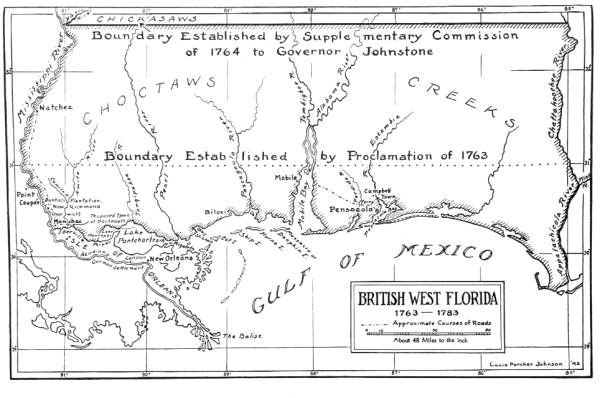
After the French & Indian War, the British Crown sought to regulate colonial westward settlement and expansion. This was done for a variety of reasons. First, British ministers believed that westward expansion would require administration over newly acquired territory.[1] British leaders also feared that unrestricted colonial expansion could lead to ungovernable colonies who would, over time, seek to split with Great Britain.[2] Most importantly, Britain had acquired Florida and almost all of the territory under New France east of the Mississippi River at the conclusion of the Seven Years’ War. British ministers sought to redirect western settlement towards Canada and the Florida’s.[3] Regulation of western land settlement also protected Indian lands from white encroachments. This measure sought to prevent further Indian wars.[4] The impositions placed on westward settlement infuriated colonial land speculators who sought to gain much wealth in acquiring western lands. After the Great War for Empire, George Washington and other veteran officers of that conflict were awarded land in exchange for their services to the Crown.[5] Many eyed lands in the Ohio Country, but after the October 7 Proclamation of 1763, most acreage in that vast wilderness lay out of reach. The account of Washington’s interest in North America’s western lands is popular and well-known. However, lesser known is the former British officer’s interest in West Florida land.[6]
Emerging Revolutionary War welcomes guest historian Kevin Pawlak
New York state has a rich American Revolution history. Battlefields at Saratoga, Oriskany, Fort Ticonderoga, Long Island, and more dot the state’s connection to our nation’s founding. But growing up in the western part of the state, those sites were at least a few hours’ drive.
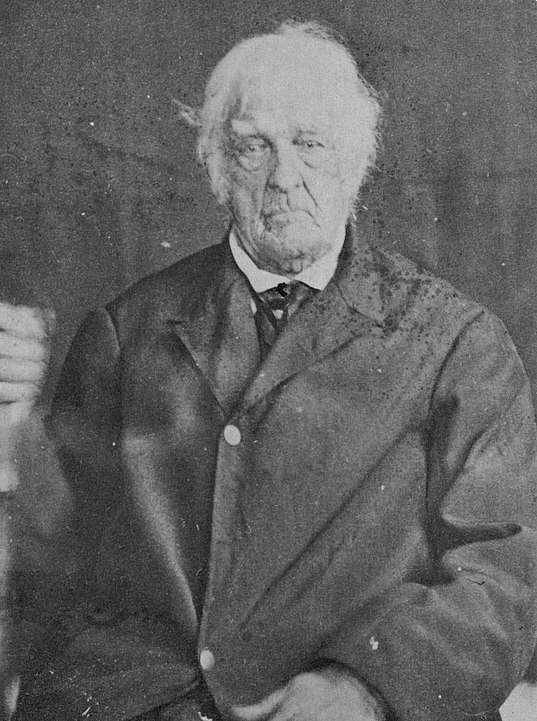
Recently, I discovered a neat story related to the American Revolution that was in my own home county—Orleans County. It is not a battlefield, though it is about a man who stood on those battlefields with George Washington’s Continental Army. Lemuel Cook, who died at the age of 107, spent the last thirty years of his life in the next town over from my hometown and died there. While he was not the last surviving veteran of the war for America’s independence, he was the last to claim a pension for his service.
Lemuel Cook
Ninety-one years prior to his death in 1866, the sixteen-year-old Connecticut native enlisted with the 2nd Continental Light Dragoons. He saw service with the dragoons at Brandywine and Yorktown.
Cook moved frequently after his service expired until he settled in Clarendon, New York in 1832. Cook’s devotion to the nation he helped create never waned until his dying days. He regularly attended town hall meetings and elections until a few years before his death. Souvenir seekers continually asked for the old veteran’s autograph, which he obliged. In 1861, a photographer captured this national treasure in a photograph.
Unfortunately, even Cook could not defeat Father Time. As he aged, his speech became “very fragmentary,” according to one newspaper. “He recalls the past slowly, and with difficulty, but when he has his mind fixed upon it, all seems to come up clear.” Despite his weariness, Cook’s spunk occasionally showed, “the old determination still manifesting itself in his look and words.” Specifically, during an interview in the midst of the American Civil War, Cook pounded his cane on the floor and proclaimed, “It is terrible, but terrible as it is the rebellion must be put down.” Incredibly, he lived to see the rebellion “put down” and died on May 20, 1866.
Cook’s grave, located in the Cook Cemetery on Munger Road in Clarendon, suffered damage in a windstorm in 2017 but was quickly fixed. In the same year, descendants and local historians unveiled a state historic marker alerting passersby to this unique niche of Revolutionary War history in a place far from the famous battlefields that achieved our nation’s independence.
George Washington’s first presidential cabinet included many luminaries of the American Revolutionary era; Thomas Jefferson as Secretary of State and Alexander Hamilton as Secretary of the Treasury to just name two. When studying the formation of the present United States government and the creation of cabinets that serve the president, we tend to gloss over it, as a sort of bygone conclusion, that this was a natural product out of this creation.
A closer reading of the United States Constitution, however, does not include the executive branch having a cabinet of secretaries to assist the president. George Washington, as first president, was entirely on his own in creating one, and the first cabinet meeting was not called into session until two and a half years into his first term.
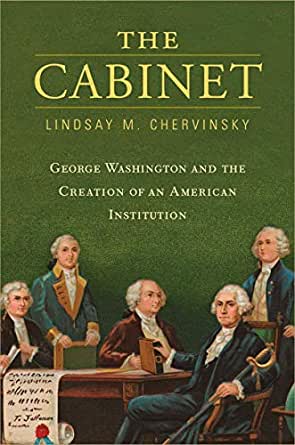
The creation of this American institution is the basis of this week’s “Rev War Revelry” as Emerging Revolutionary War welcomes historian and author Dr. Lindsay Chervinsky as she discusses the history in and surrounding her publication, The Cabinet, George Washington and the Creation of an American Institution.
When discussing the importance of the cabinet, Chervinsky said:
“The best way to better understand the creation of the presidency, presidential leadership, or Washington’s legacy is through the cabinet.”
But this story isn’t just one about the early Founding Era. As Chervinsky writes in her work, “we can’t evaluate the cabinet without examining Washington’s use of councils of war from the Revolution. He developed critical management strategies in the councils that he replicated as president. The war shaped Washington as president.”
Chervinsky is an early American historian and is currently the Scholar-in-Residence at the Institute for Thomas Paine Studies at Iona College and a Senior Fellow at the International Center for Jefferson Studies. In addition, she is teaches courses on the presidency at George Washington University’s School of Media and Public Affairs.
For a sneak peak into the book and its history, click here to access Chervinsky’s talk at the Virginia Historical Society.
Emerging Revolutionary War welcomes guest historian Joshua Shepherd
Mural of the action on November 4, 1791
For most history enthusiasts, a visit to a battlefield is simply a diversion that very often takes place during an annual vacation. But the pleasant surroundings of America’s historic parks belie the terrifying sights that greeted a battlefield’s first visitors.
On December 24, 1793, a detachment of American troops under the command of Major Henry Burbeck arrived at an insignificant knoll deep in the wilderness of present-day Ohio. Tasked with constructing a timber fortification on the site, the troops first had to attend to the unenviable task of clearing the remains of over six hundred men who had been killed there two years earlier. Burbeck reported that the battlefield “had a very melancholy appearance – nearly in the space of 350 yards lay 500 skull bones – 300 of which we buried.” Most of the skulls, it was reported, appeared to have been smashed by tomahawk blows.
Emerging Revolutionary War welcomes back guest historian Gabriel Neville.
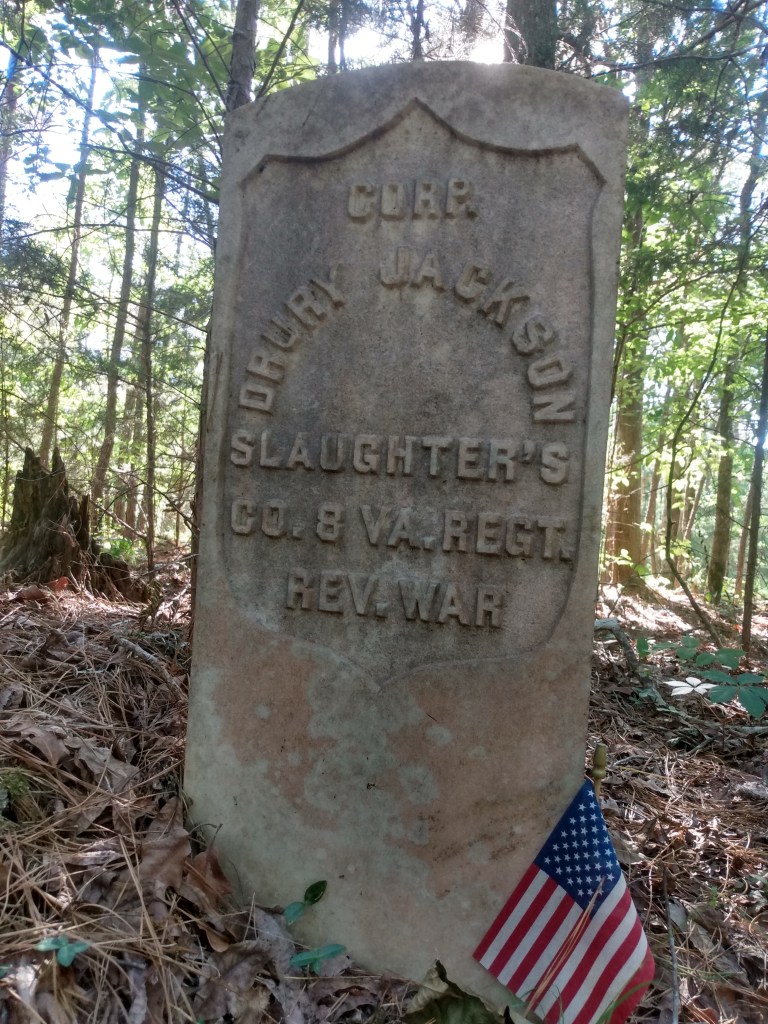
Thirty years ago, Dutch Henderson was “stomping through the woods” near Lake Sinclair in central Georgia when he stumbled upon an old gravestone. Some might have thought it an odd spot for a grave, but Dutch knew the history of the area and it made sense. In fact, the setting told him the man six feet under had played an important role in American history.
The inscription on the marker read: “CORP. DRURY JACKSON, SLAUGHTER’S CO. 8 VA. REGT. REV. WAR.” Why was this headstone for a Revolutionary War soldier all alone in the woods near a lake? Time changes things. Neither the lake nor the woods were there when Drury Jackson died. Back then the grave was on cleared ground overlooking the Oconee River. Depressions in the soil still reveal to the trained eye that Drury was buried in proper cemetery. The river became a lake in 1953 when it was dammed up to create a 45,000-kilowatt hydroelectric generating station. When Dutch found the grave, the cemetery had been neglected and reclaimed by nature. Today it is in a copse of trees surrounded by vacation homes.
The mysterious headstone for veteran Drury Jackson provides no dates to help us identify the man in the ground. (Dutch Henderson)
Dutch spends his free time studying local history and conducting archeology. He has made some important finds, including a string of frontier forts along what was once the “far” side of the Oconee. He’s pretty sure that Drury’s burial in that spot is an important clue to his life in the years following the Revolutionary War. From there, however, things get complicated.[1]
A genealogy site sporting a photo of the headstone tells us that Drury Jackson was born in Brunswick County, Virginia on February 2, 1745, married Lucy Dozier and then Nancy Ann Kennedy, and died in Wilkes County, Georgia before 1794. This seems possible, but Wilkes County is about seventy miles northeast of the grave. Another source tells us that Drury Jackson was born in 1767 in Franklin County, Tennessee, married Lucy B. Myrick, and died in Baldwin County, Georgia in 1823. This seems more likely, since the grave is in Baldwin County.
So, which of the two men is the right Drury Jackson? The easy assumption is that the stone properly belongs to the one who died nearby. The grave marker itself is of no help. It provides neither the date of his birth nor the date of his death. Moreover, it is the kind of marker that was issued after 1873 by the federal government for the graves of veterans of the Civil and Spanish-American wars (and the unmarked graves of veterans of earlier wars). It is clear that the marker was placed there long after the man’s death by descendants or others in the community.[2]
So, you have a relative that fought in the American Revolution and you want to know more… now what? Joining an organization, such as the Daughters of the American Revolution (DAR), is a lengthy and detail-oriented process. It takes patience and perseverance. Before beginning the process, I attended a research seminar hosted by the local chapter to learn about the specific requirements for applying. If you have any experience with records, the one consistent theme is that records do not consistently capture the same information. Some death records do not list birth-dates, birth records do not always list both parents, and worst-case scenario, many records can be lost, stolen or severely damaged.
As I mentioned in part 1, my grandmother provided me with a box of documents detailing the Bitely heritage. The materials she gave me was helpful for pointing my path forward, but it lacked the necessary vital records for completing the application. Luckily, each chapter has a registrar that guides you through finding the right resources and completing the paperwork accurately. The registrar in my chapter was a seasoned member of DAR and walked me step by step through the process. Together, we reviewed the documents from my box, made a family tree and contacted the Michigan vital records department for appropriate birth, death and marriage certificates for each generation between John and me. Thankfully, both New York and Michigan had the records I needed, in good condition and had the required information on them to meet DAR standards. If you hit a snag in the process, there’s an entire community of DAR women who are trained to help you through this. Reach out, we will help!
Here is a sample of the documents passed down to me in the family history box. This helped start the journey for learning more about my heritage.








 Emerging Revolutionary War Era