Join Emerging Revolutionary War this Sunday as we discuss the role of digital history in 2020 with another public history group: the Sons of History.
The Sons of History describe their concept via their website as:
“Literally, we are just two guys who love history. We also understand the importance of knowing history and learning from it. But more important than knowing and learning history, we believe we should be teaching it to others.” (https://www.thesonsofhistory.com/)”
Through a website, podcast, and social media, the Sons of History teach numerous aspects of American history to the general public in a similar fashion that ERW does.
We’ll discuss more who they are, why they got into doing digital history, what time periods they cover, and the powerful stories of the past that both ERW and Sons of History tell the public. Also, how and why they matter today.
So, set your schedule for Sunday evening and tune in at 7 pm ET on ERW’s Facebook page for the next historian happy hour.
Emerging Revolutionary War welcomes back guest historian Kevin Pawlak
On October 15, 1781, British General Charles Cornwallis penned a note to his superior officer General Sir Henry Clinton. Cornwallis told Clinton that American and French forces seized two redoubts, 9 and 10, along the York River the previous night. “My Situation now becomes very critical,” he glumly said. Before his army, entrenched outside of Yorktown, “shall soon be exposed to an Assault in ruined Works,” Cornwallis desperately sought to break the Allied stranglehold slowly bleeding his army. The general turned to Lt. Col. Robert Abercrombie to break the Allied lines anyway he could.
Map of the Allies’ Second Parallel and Abercrombie’s Sortie (from Jerome Greene, The Guns of Independence)
Starting on April 19, 2020, Emerging Revolutionary War debuted a “Rev War Revelry” on Sunday evenings. The goal was to create a virtual historian happy hour since the outbreak of COVID-19 curtailed many in-person gatherings at pubs, bars, historic venues, or conferences.
Every Sunday since, Emerging Revolutionary War historians, either by ourselves or with noted scholars and guest historians, have discussed, debated, and shared their viewpoints on a range of topics.
We have also listened to our audience and one of the consistent comments and/or suggestion has been to transfer the live videos from our Facebook page to a YouTube channel. Well, we have finally listened!
Emerging Revolutionary War now has a YouTube channel and all our “Rev War Revelry” videos are uploaded on them. There are two playlists for you to click through. One is titled “Author Interviews” and includes every author that has been interviewed on our program. The other category is simply listed “Rev War Revelry” and includes all the other round table historian happy hour discussions.
We hope you continue to enjoy our programs and subscribe to our channel. To head straight to our YouTube channel, click here.
Press Release from our friends at American Battlefield Trustand their Liberty Trail Initiative
In 1757, during the French and Indian War, Lieutenant Emanuel Hess, a Swiss engineer serving in the British 60th Regiment of Foot, designed a series of fortifications to surround Charles Town, South Carolina. Central to this plan was Charles Town’s Horn Work, a large gate flanked by horn-shaped half-bastions covering three city blocks. Before this plan could be fully executed, the threat of a French attack on Charles Town was contained by British victories in Canada and funding for building the fortification system was withdrawn.
However, the Revolutionary War brought a new threat to Charles Town — this time from the British, and work to fortify the city was resumed by determined Patriots. The Horn Work, with its 30-foot-high walls constructed from an oyster-shell cement called tabby, became the centerpiece of the city’s defensive line and the headquarters for American commanding officers.
Beginning in late March 1780, the British laid siege to Charles Town and trapped the American forces in the city. On May 12, 1780, American Generals Benjamin Lincoln and William Moultrie — standing under the Horn Work’s arched gateway — surrendered to the British, in what was the largest American surrender of the war. The fight for American independence looked bleak on that day, but the resolve of the Patriots in the coming months would turn the tide toward victory.
Modern-Day Archeology
In the years following the Revolutionary War, the tabby walls of the Horn Work were dismantled to make way for the growth of the city. Today, all that remains above ground of the once towering structure is a small remnant in Charleston’s Marion Square — a vibrant urban park located in the heart of downtown Charleston and named for Revolutionary War general and backcountry tactician, Francis Marion. Yet, just a foot under the surface of Marion Square, there is much more to discover about the Horn Work.
In February of this year, graduate students from the Clemson/College of Charleston Historic Preservation program, working on behalf of the American Battlefield Trust and South Carolina Battleground Trust’s Liberty Trail, commenced an archeological study to fully document the exact footprint of the Horn Work for the first time. This study was undertaken in partnership with many organizations, including the Charleston County Library, the Charleston Museum, the South Carolina Institute of Archaeology and Anthropology and the Washington Light Infantry and Sumter Guards.
More than 250 years after work began to build the Horn Work, these graduate students utilized modern technology, including ground penetrating radar, to ensure the protection of this important historic resource and enhance future endeavors to tell its story.
Charleston Gateway
While no period drawings or plans of the Horn Work are known to have survived, the findings of this archeological study, together with historical research on comparable tabby fortifications built in the same area and time by the same engineer, have made it possible to create a rendering of the Horn Work for the first time. With this rendering complete, we are now able to explore a variety of opportunities to interpret the Horn Work in the very place it once stood.
Our goal is to create an outdoor exhibit in Marion Square utilizing an array of interpretive techniques, including physical signage, in-ground markers tracing the footprint of the Horn Work, and Augmented Reality — all designed to bring the Horn Work and the Siege of Charleston to life for visitors. Augmented Reality, in particular, presents a chance to use cutting-edge 21st Century technology to tell this 18th Century story.
Just as the Horn Work was the gateway into Charleston before and during the Revolutionary War, we now seek to create a gateway into the Liberty Trail through Marion Square, which will encourage visitation to battlefields throughout South Carolina and beyond.
Mention the following words to any casual student or enthusiast of the American Revolutionary War and we can almost guarantee what the first word(s) or topic out of their mouths will be.
Virginia.
1781.
American Revolution.
If you are thinking, Yorktown, or Siege of Yorktown or Surrender of Yorktown, then our rhetorical question above is correct.
Most people know about the Siege and Surrender at Yorktown, but Virginia was a hot spot of activity the summer leading up to Yorktown. With British troops, led by the likes of Benedict Arnold, William Phillips, Alexander Leslie, and lastly by Lord Charles Cornwallis in the Old Dominion throughout the year and American leaders like the Marquis de Lafayette and Baron von Steuben, Virginia saw very active campaigning ranging through most of the central and eastern parts of the colony.
That is why you need to tune in and Join Emerging Revolutionary War this Sunday, on our Facebook page, at 7p.m EST for the next “Rev War Revelry” as we discuss the events leading up to Yorktown in October 1781.
We will cover actions such as Spencer’s Ordinary, Green Spring, Gloucester Point and of course Yorktown.
ERW will be joined by historians J. Michael Moore, Kirby Smith and Drew Gruber. All three live and work in the “Historic Triangle” of Virginia. The three gentlemen all have researched, led tours and have written published works about this important period of the American Revolution.
Map by Michel du Chesnoy (1746-1804)
This will be a precursor to ERW’s annual fall trip, when we will visit Gloucester Point, Spencer’s Ordinary, Green Sping and Yorktown (which we invite you to follow along with on our Facebook page).
The hottest part of the hotttest temperature engagement in the American Revolution happened on June 28, 1778 at Monmouth Court House in New Jersey. The portion that gets the most attention out of this entire battle was the supposedly heated exchange between General George Washington and his second-in-command, General Charles Lee.
What ensued was the end of an American military career, as Lee would face a court martial, a suspension from duty, and a fall into obscurity. Historians have sorted through the primary sources of the time period to reconstruct what exactly happened on that balmy June day.
Yet, for the first time, a dedicated study, from the lens of both a historian and a practicing attorney, brings into focus the details of that fateful day in New Jersey. That topic, his new book, and historian Christian McBurney will be the focal point of this week’s “Rev War Revelry” as a Facebook live, this Sunday at 7 p.m. EST.
McBurney, an attorney in Washington D.C. and president of the George Washington American Revolution Round Table of Washington D.C. will speak on his latest publication, George Washington’s Nemesis, The Outrageous Treason and Unfair Court Martial of Major General Charles Lee during the Revolutionary War. This book is one of five that McBurney has written on the subject of the American Revolution.
For more information on those books, click here. To read up or read the synopsis of the book at the center of the historian happy hour this Sunday, click here.
We look forward to welcoming you this Sunday; whether you read the book or on the fence about adding this volume to your expanding library or just want to know the history behind this last major battle in the northern theater in the American Revolution. Or all three! Remember to bring your comments, questions, and a favorite beverage to sip on as you tune in.
After last week’s riveting discussion on the pivotal battle of Kings Mountain, Emerging Revolutionary War decided to stay in the Palmetto State again this week. We have two special guests and historians joining “Rev War Revelry” so set a reminder to tune in on this Sunday, on our Facebook page, at 7pm EST.
From the American Battlefield Trust Catherine Noyas will join the revelry and discuss land acquisition in regards to the American Revolution around Camden, including the new visitor center that will open in spring 2021. She will give highlights on the work being done and the history behind the various initiatives.
From the South Carolina Battlefield Preservation Trust comes historian Doug Bostick. Their mission coalesces with the American Battlefield Trust with the shared goal of preserving the hallowed ground of the Palmetto State. Along with promoting the military history of the state as well.
There will also be mention of the Liberty Trail, so tune in to learn more about that program as well!
We hope you can join us for a chat on preservation, interpretation, and military history on Sunday evening.
On October 7, 1780, patriot militia, some coming from over the Appalachian Mountains descended on a Loyalist militia force in northwest South Carolina. This pro-British force, commanded by the only British regular on the field that day, Major Patrick Ferguson retreated onto Kings Mountain.
American fought American.
On that hilltop one of the pivotal battles of the American Revolutionary War unfolded. The ramifications reverberated through the southern theater of operations, played a part on the psyche of civilians and militia, and added luster to the burgeoning backwoods, frontier American persona.
Emerging Revolutionary War focuses in on the Battle of Kings Mountain this Sunday, on the next “Rev War Revelry.” Join us on our Facebook page at 7 p.m. EST for a historian happy hour, as we discuss, dissect, imbibe, and provide commentary on this strategic battle, the national park there, and the campaigns that decided this theater of operation.
On October 4, 1777, General George Washington’s Continental Army struck the British outpost at Germantown, Pennsylvania. Less than a month after the Battle of Brandywine and approximately a week after the loss of their capital, Philadelphia.
Initially successful, Washington’s forces got bogged down by fog and British holdouts in a stone structure called Cliveden. What started so promising did end in a tactical defeat for the Americans. Yet, coming days before the climatic battle in New York, dubbed Saratoga collectively, the cause of American independence was buoyed.
Although outshone in the annals of history by Saratoga, the setback at Germantown proved decisive in the French court, especially with the French foreign minister, who saw that the simple fact that Washington could regroup following Brandywine and come within some bad luck and fog of defeating the British was testament to resolve of the American effort for independence.
To cut through the fog and discuss the campaign, engagement, and repercussions of the Battle of Germantown, Emerging Revolutionary War invites back historian and author Michael C. Harris this Sunday for the next installment of “Rev War Revelry” at 7pm EST on our Facebook page.
He will join a duo of ERW historians. In addition, his publication, Germantown: A Military History of the Battle of Philadelphia, October 4, 1777, is now available through the publisher, Savas Beatie, LLC. Click here to order.
We look forward to hearing your comments, questions, and/or opinions this Sunday. So, set a side an hour-ish–as you know historians can get to talking and lose track of time easily, especially when books are also involved–for this historian happy hour.
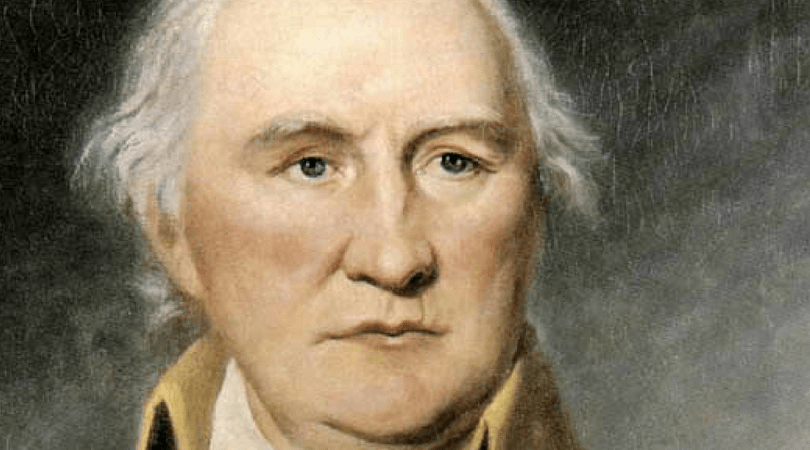
In the pantheon of American military leaders, Daniel Morgan’s place is definitely warranted. Innovative rifleman, heroic actions, backwoodsman, skillful tactician, and charismatic leader. He performed admirably at the Battle of Quebec in the winter of 1775, led the American forces at one of the climatic and complete victories of the war at the Battle of Cowpens in 1781, and distinguished himself in many a field and campaign in between.
For those reasons and a further discussion into the life and career of this American military hero, Emerging Revolutionary War invites you to listen and chime in during the next “Rev War Revelry” this Sunday at 7pm EST on our Facebook page.
In addition to the cadre of Emerging Revolutionary War historians, including Rob Orrison and Travis Shaw, there will be another talking head this weekend.
Joining ERW this Sunday will be historian Nathan Stalvey. He is the Director of the Clarke County Historical Association and a member of the Virginia Association of Museums Council. He started his 20-year career at the University of South Carolina’s McKissick Museum where he worked as the Curator of Traveling Exhibitions and Design. Nathan then served as the Director of Exhibitions and Head of Collections at the Louisville Slugger Museum & Factory in Louisville, Kentucky prior to his hiring in 2014 as the Director at CCHA. As Director, he oversees the operations of both a museum in downtown Berryville, as well as the historic 18th-century Burwell-Morgan Mill in Millwood.
As Daniel would have enjoyed an adult beverage in his day, make sure to bring one to this “Rev War Revelry” Sunday night!










 Emerging Revolutionary War Era