When one thinks of December 1776 in American Revolutionary War history, one’s mind immediately goes to Washington crossing the Delaware River and the Battle of Trenton, fought on December 26th. Historians refer to that engagement as the beginning of the “Ten Crucial Days” that culminated with the American victory at the Battle of Princeton on January 3, 1777.
However, days prior, American militia under Colonel Samuel Griffin fought an engagement with Hessian troops under the command of Colonel Carl von Donop. The actions occurred on December 22 and 23, 1776. Although the American forces were pushed out of their positions, the end result was the occupation of Bordentown by Donop and his troops, approximately 10 miles from their fellow Hessian comrades at Trenton.
To discuss these engagements, collectively known as the Battle of Iron Works Hill, Emerging Revolutionary War welcomes historian Adam Zelinski to “Rev War Revelry.” Zelinski is a writer and published historian and has worked on various projects with the American Battlefield Trust and the American Revolution Museum in Philadelphia. He will also speak on some exciting news coming out of the Iron Works battlefield too.
Emerging Revolutionary War looks forward to you tuning in, this Sunday, at 7 p.m. EST on our Facebook page as we discuss another component of the 1776 campaign season as we prepare for our inaugural bus tour of the Trenton and Princeton battlefields next month (only 4 tickets left!). If you can’t make it on Sunday night, you will be able to find it later (along with all our videos) on our YouTube page.
Our monthly recap of what our good friend and fellow historian Tom Hand has written on his blog, AmericanaCorner. Also, check out Emerging Revolutionary War’s YouTube page for a “Rev War Revelry” with Tom Hand done earlier this month.
September 21st: Americans with a Shared Future Meet at the Stamp Act Congress
The Stamp Act Congress was held in New York in 1765 in response to the Stamp Act, a piece of legislation passed by Parliament. The Act itself and the events that transpired because of it would prove to be hugely impactful on the destiny of America. Read it here.
September 14th: Fort Ticonderoga: A Key Component in America’s Quest for Independence
Fort Ticonderoga in upstate New York is arguably the best-preserved fort from the 1700s in North America. It was the site of several engagements in both the French and Indian War and the American Revolution. Its military significance is matched only by the natural beauty that surrounds the site. Read it here.
September 7th: British Colonies Work Together During the Albany Congress of 1754
The Albany Congress was held in the summer of 1754 and represents the first time the British colonies in North America ever attempted joint action. Unlike the conventions held in later decades, which focused on pushing back against England, the goal of this conference was to help the British in their fight against the French and their Indian allies. Read it here.
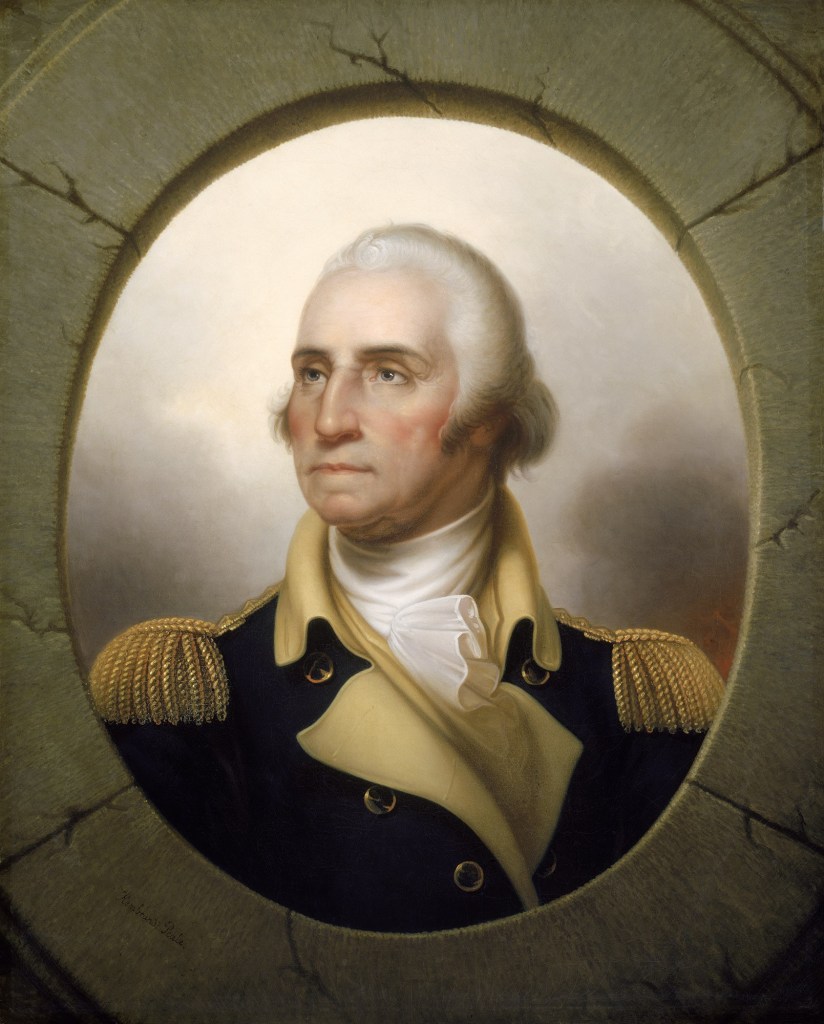
George Washington and John Adams, arguably, were America’s two most influential Founding Fathers. While General Washington was fighting for our country on the fields of battle, John Adams was fighting for it in the halls of the Continental Congress and overseas in the palaces of Europe.
As our first two Presidents, they guided our young nation through the formative first dozen years of life under the United States Constitution. They wisely and bravely set the example for others to follow.
Join Emerging Revolutionary War this Sunday at 7 p.m. EDT on our Facebook page for this week’s “Rev War Revelry” as we discuss the contributions of George Washington and John Adams to America’s fight for independence. Tom Hand will join ERW to discuss how these two men helped to shape our great nation.
Tom is the creator and publisher of Americana Corner, a site he started in 2020 to celebrate the positive stories, great events, and inspirational leaders who helped create and shape our country. Tom is a West Point graduate who founded Gilman Cheese Corporation after leaving the military.
Tom sold the business and now spends most of his time writing for Americana Corner and helping charities with a focus on early America. Tom serves on the Board of Trustees for the American Battlefield Trust and the National Park Foundation’s National Council.
Please join ERW historians and Tom Hand on September 5 for this lively discussion. We look forward to seeing you.
Here is what our friend, Tom Hand was up to in August on his blog, Americana Corner. Be sure to join us on Sunday, September 5th at 7pm as we host our next ERW Happy Hour where we will talk with Tom about his passion for early American history, some of his thoughts on our Founders and learn more about his project Americana Corner.
August 24th: George Washington Discourages Debt and Foreign Entanglements
In his Farewell Address, President Washington shared his thoughts on several topics, including our national debt and the need for our country to remain fiscally prudent. Read it here.
August 17th: George Washington Calls for Unity in Farewell Address
After eight years in office, President Washington was ready to step down. He had planned to retire at the end of his first term but was talked out of it. During this second run at saying goodbye to public life, Washington was determined to finally retire. Read it here.
August 10th: Washington’s Farewell Address: One of Our Nation’s Most Significant Documents
George Washington’s Farewell Address is one of the greatest documents in our nation’s history. It was a letter written by President Washington to his fellow citizens as he neared the end of his second term as President. Read it here.
August 3rd: Pickney’s Treaty Opens Up the Mississippi, Encouraging Westward Expansion
The Treaty of San Lorenzo, also known as Pinckney’s Treaty, was an agreement signed on October 27, 1795 between the United States and Spain. It settled a dispute between the two nations over the boundary of Spanish Florida and granted navigation rights on the Mississippi River to Americans. Read it here.
Like a modern-day Nathanael Greene or Edward Carrington, Andrew Waters spends his days trekking the waterways of the Carolina high country. Just like those famous military leaders, Andrew Waters does the surveying of these waterways and their tributaries for his day job; as a land and water conservationist.
During this career, Waters first learned about the “Race to the Dan” the pivotal retrograde movement in 1780 that saved Greene’s army from the pursuing British force under Lord Charles Cornwallis. Having the unique perspective from his training and an interest in the history of the time period, he had the perfect combination to pen a complete history of the “Race to the Dan.” Published by Westholme Publishing in October 2020, the title, To The End of the World, Nathanael Greene, Charles Cornwallis, and the Race to the Dan fills a much needed gap in the historiography of the the American Revolution in the southern theater.
This Sunday, at 7p.m. EDT, on Emerging Revolutionary War’s Facebook page, join us in an interview with Waters, discussing this book, Nathanael Greene’s leadership, and any questions you may have about this subject. Remember that favorite beverage and we look forward to you tuning as we welcome historian and author Andrew Waters to the next installment of the “Rev War Revelry.”
On both banks of the Hudson River, in 1776, sat two forts the patriots hoped would stop any British excursions up the waterway. Named for the top two military leaders of the Continental army–George Washington and Charles Lee–the fortifications both fell to the British by late November of that same year.
Join Emerging Revolutionary War this Sunday, at 7 p.m. EDT on our Facebook page as the forts become the focal point for this week’s “Rev War Revelry.” Joining ERW will be Charlie Dewey who will help break down and discuss the implications of these actions in November 1776.
Dewey, an officer in the New York Army National Guard and a graduate of the Virginia Military Institute has been a museum educator and special events coordinator for Fort Lee Historic Park since May 2018. He has been publishedin the Journal of the American Revolution along with being the author of various other scholarly articles on the Revolutionary time period.
Fort Washington, the last toehold of the Americans on Manhattan Island that fell and Fort Lee, the beginning of the long trek by Washington’s army across New Jersey late in 1776 have a unique part in American Revolutionary history. We look forward to you joining us this Sunday for this historian happy hour.
In June 1778, the Continental army marched out of their winter encampment in Valley Forge, Pennsylvania and headed toward New Jersey in pursuit of the retreating British army. The past six months, from December 1777 to June 1778, ushered in a period of suffering, renewal, and change.
Valley Forge is imprinted into the psyche of Americans as the the toughest winter of the entire American Revolution. In fairness, it was one of many tough winters that the Continental army survived. However, the reasons why this winter stands out will be part of the discussion of this Sunday evening’s “Rev War Revelry” which can be found on Emerging Revolutionary War’s Facebook page at 7 pm. EDT.
This week’s historian happy hour includes a discussion with Philip S. Greenwalt author of the recently released Emerging Revolutionary War Series title, The Winter that Won the War. This is the fourth volume in the series, with previous ones covering Lexington and Concord, Trenton and Princeton, and Monmouth.
Greenwalt will discuss how the Valley Forge winter was the intersection of various issues and how the decisions made and the determination of survival by the army made this the winter that won the war.
Tune in as well to hear how you can purchase a copy of this book to take with you as you plan that summer trip to Valley Forge and the Philadelphia area!
The Star-Spangled Banner and the burning of Washington City are the enduring legacies of the 1814 Chesapeake Campaign. These two events provide contrasting impressions of the American experience in the War of 1812. One conjures up an image of an American flag resiliently flying above Fort McHenry’s ramparts, denying the British entry into Baltimore. The other marks a low point in the American war effort, when politicians fled the nation’s capital followed by British soldiers, who burned many government buildings in the new nation’s capital city.
War along the Chesapeake Bay was not a limited episode in the War of 1812. There, Americans and British soldiers waged a hard and destructive war against one another. They fought pitched battles at Bladensburg and North Point. This campaign, remembered in popular memory for the creation of a national anthem and the burning of a nation’s capital, is more complex than just these two events.
Join Emerging Revolutionary War historians and guest historians John Nathan McDonald and George Best as we discuss the causes, movements, and impact of the 1814 Chesapeake Campaign. So, with your favorite beverage log onto our ERW Facebook page for the next historian happy hour as we discuss the obscure War of 1812 this Sunday, May 30, at 7 pm.
Approximately one year ago, Emerging Revolutionary War began a historian happy hour virtual chat on Sunday evenings. The goal was to share our passion for history, connect with each other during the pandemic, and have an excuse to drink a beer. Pretty much what we would be doing if we could gather in person.
Fast forward one year and the “Rev War Revelry” that was created has now become a fixture of our Sunday evenings; well every other Sunday after 36-consecutive weeks from April 2020 to November 2020.
The brain trust at Emerging Revolutionary War convened to discuss what we should do for the one-year anniversary. One logical conclusion came up. A return to Massachusetts!
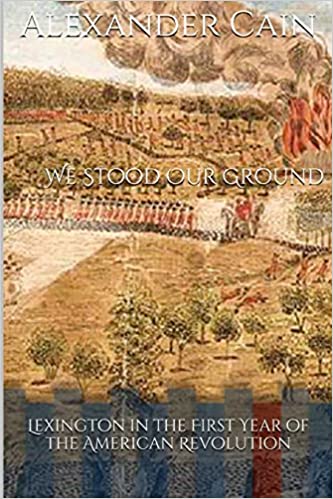
ERW welcomes guest historian Alex Cain, a Lexington historian and author, who will discuss what the Massachusetts town was like in 1775, the details of what happened on both April 18 and 19, 1775, and the misconceptions that sprung up from the beginning of the American Revolution. Of course, we welcome comments and questions through the hour.
Thank you for being part of the “Rev War Revelry” experience as we enter the second year of the historian happy hour. We look forward to seeing you on Sunday evening at 7pm EST on our Facebook page with your favorite beverage and question in hand.
The program can be accessed through Emerging Revolutionary War’s Facebook page. For those that cannot make the program when it is live, there will be a recording posted to our YouTube page within a few days following.
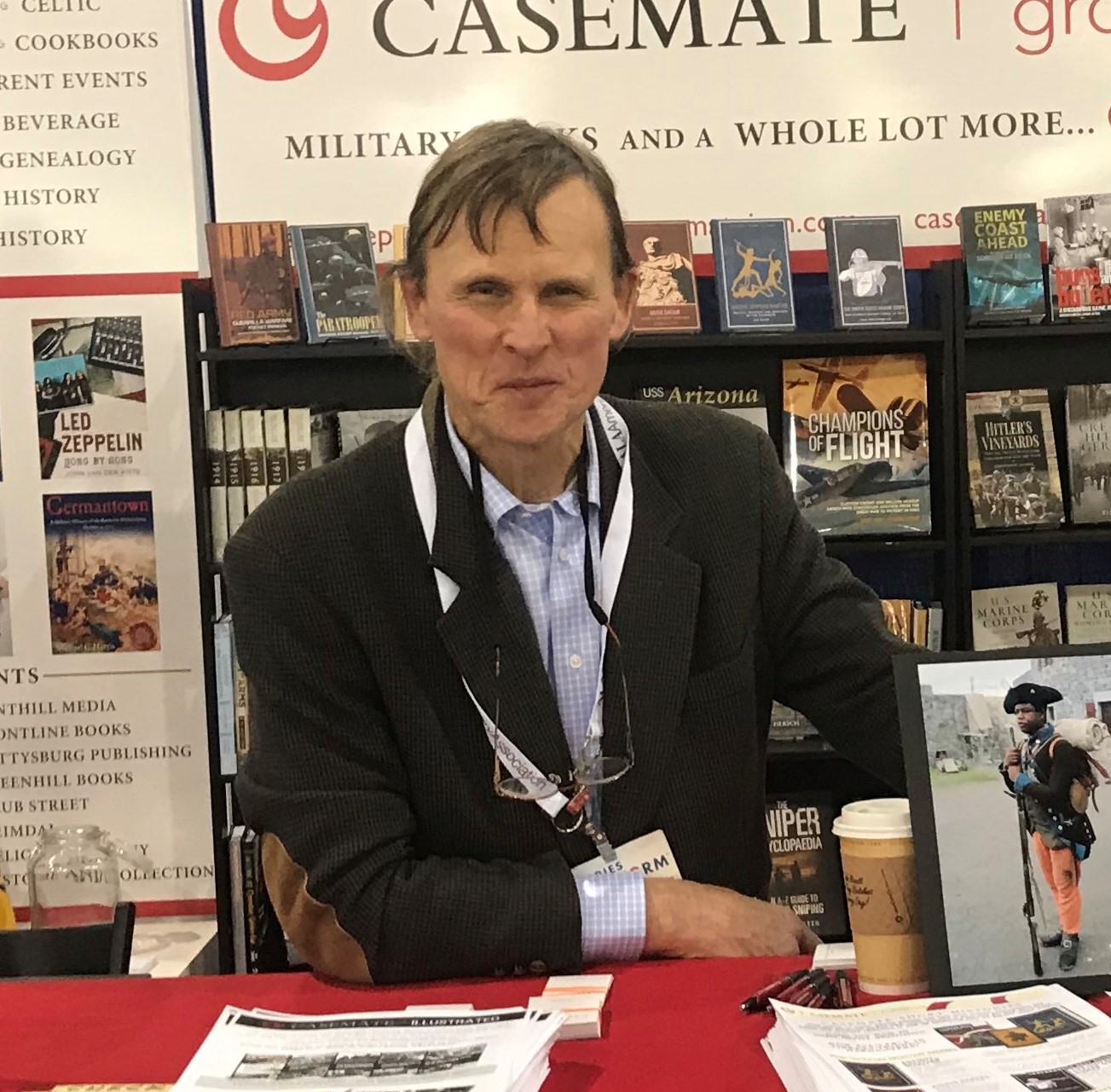
Over the next few months, we will be highlighting the speakers and topics for our 2021 Symposium, Hindsight is 2020: Revisiting Misconceptions of the Revolution, taking place on May 22nd. Due to the COVID 19 pandemic, the Symposium will be virtual. Today we highlight historian and author John U. Rees who will be covering a much overlooked and misunderstood part of the Revolution, the role of African American Continental soldiers during the war.
John Rees is an independent writer and researcher specializing in the common soldiers’ experience during the War for American Independence, and North American soldiers’ food, 1755 to the modern era. Since 1986 he has produced almost 200 monographs on these and associated subjects. His work has been published in a number of journals and books, including Military Collector & Historian, the Oxford Encyclopedia of American Food and Drink, and the Thomson Gale edition of Boatner’s Encyclopedia of the American Revolution. His first book, “They Were Good Soldiers”: African Americans Serving in the Continental Army, 1775-1783 was published by Helion Books in 2019.
A list of his publications, plus a number of complete works, may be viewed online at https://tinyurl.com/JohnURees-articles . He will be presenting his talk “They Were Good Soldiers”: An Overview of African Americans in the Continental Army at the May symposium.
Do you believe the study of African American soldiers in the American Revolution has been overlooked and why?
To my mind the core cause for this lack of knowledge is American willingness to gloss over history, in this case American history. Add to that, many of our fellow citizens, past and present, through wilfulness, mis-education, or lack of caring, think of the American Revolution as a white man’s conflict, with little to no contribution by Americans of African descent. Artwork and films portraying the period have done little to disabuse us of that notion.
I think, in the 1960s and 70s, many Americans knew of Crispus Attucks’ participation and death in the 1770 Boston Massacre; I know I learned of him as a child in the early 60s. Others may have seen the U.S. Postal Service stamp in the mid-70s featuring Massachusetts African American soldier Salem Poor, but other than those instances most people didn’t (and don’t) really consider black participation on either side of the American Revolution. It also seems that when Americans do become aware of their role as soldiers, they learn about the “black” 1st Rhode Island Regiment (which only existed for two and half years of an eight-year war), when the greatest number of African Americans fighting for the cause of American independence were in integrated units. And then, there were the black women and children, among the hundreds of women and children who accompanied the troops and contributed to their welfare, who no one is aware of.
What first attracted you to the study of early American history?
My parents, especially my mother, were avid readers, and I followed suit very early on. I read many of the Landmark history and biography books, and those likely guided my interest in stories of individual people in extraordinary circumstances. I loved military history early on, and in my pre-teens focused on the Second World War; I then moved on to the Napoleonic era and the American Civil War, all the while reading a great deal of fiction. In 1984 I got involved with Revolutionary War living history, and the fact I had a hard time getting answers about the unit we portrayed led me to begin researching that regiment.
I had the good fortune to live very close to the David Library of the American Revolution, and in 1986 I produced my first (never published) manuscript. As I pored through books and microfilmed manuscript collections, I came across tidbits of interesting information I then had no need of; I copied it and put it aside for possible future use. It was not until 1990 that my first article was published; since that year until now I’ve published almost 200 articles, mostly on the Revolutionary War, but a substantial number on military food and other miscellaneous subjects. At some point in the 1990s I realized that the Revolutionary period was a relatively wide-open field for anyone who wished to study and write about it.
What keeps you involved in the study of this history?
There remain so many stories to tell, too many “small things forgotten,” I still want to write about, I feel the era is still wide open for anyone who wishes to focus on it.
What is the biggest myth about African American soldiers in the Continental Army, and how did it come about?
Likely that the segregated 1st Rhode Island Regiment is the best example of African American soldiers’ participation in the war, when, in fact, the largest proportion of African Americans served in integrated units, in the Continental Army and state militias. Add to that, there were two other segregated regiments during the war, one in the French Army that served for four to five years, and one Loyalist regiment, that existed for only a year.
Do you think there are common misconceptions of the era of the American Revolution among the American people? If so, what are they and have they ever affected your work?
My short list contains two things, one pertaining to Revolutionary ideals, the other to the military side. First is the contention by many people that it was a conservative Revolution, when in actuality the core concepts were quite radical, and significant portion of Revolutionaries retained that radical view, during and after the Revolutionary period.
Regarding the military aspects, I think the idea is still common that American militia forces won the War of the Revolution, which was not the case, and (okay a third item) that the American troops fought using innovative tactics (you know, fighting from behind walls and trees), and the Crown forces were militarily conservative. The facts are too long to go into, but on the last point I highly recommend Matthew Springs book With Zeal and With Bayonets Only.
Why do you think it is important for us to study the Revolutionary Era?
At this point in our country’s history, it seems we, as a society, need go back and look at our beginning, to see how both leaders and other participants comported themselves and sacrificed attempting to gain not only independence from Britain, but in support of the high ideals of the 1776 Declaration.
On a lesser, but to me still important, note, we need to study the lives of ordinary people of every side – civilian and military; men, women, and children of all creeds and colors – in order to gain a truer understanding of our founding era, and, perhaps, ourselves.
Join us for our SECOND annual Emerging Revolutionary War Symposium, co-hosted by Gadsby’s Tavern Museum, speakers and topics include:
Michael Harris on Misconceptions of Battle of Brandywine Vanessa Smiley on Myths of the Southern Campaigns Travis Shaw on American Loyalists John U Rees on African American Continental Soldiers Mark Maloy on myths of the Battle of Trenton
Our registration fee is now only $40 per person and $20 for students. This will allow us to broaden our audience with the virtual program. We hope that 2022 will allow us to come together again in Alexandria for our third annual symposium. To register, visit: https://shop.alexandriava.gov/Events.aspx
Stay tuned as we highlight our speakers and their topics in future blog posts.






 Emerging Revolutionary War Era