Though it is most commonly associated with its Civil War history, Jefferson County, West Virginia, boasts a large amount of Revolutionary War history, too. One does not have to travel far in the county to stumble on a Washington family home (there were ten, seven still stand) or find Washington family members buried in the Zion Episcopal Cemetery in Charlestown, the county seat (this cemetery supposedly boasts more Washington family graves than any other place in the United States).
Beyond Washington, though, Jefferson County can claim at least two other well-known Revolutionary War generals on its citizen rolls: Horatio Gates and Charles Lee. Both of their countryside estates still stand today but are privately owned.
Traveller’s Rest (Library of Congress)
Traveller’s Rest, built by Horatio Gates in 1773, stands west of Kearneysville in the western section of the county. Gates employed carpenter John Ariss for the wooden portions of the construction project, a man who also worked on many of the local Washington homes. Gates lived at Traveller’s Rest until his service in the Continental Army took him away from his home. Following his defeat at the Battle of Camden in 1780 and his subsequent sidelining by the Continental Congress, Gates returned to his plantation, where he lived quietly. In 1790, the former general freed his slaves, sold the house, and moved to New York, where he died in 1806.
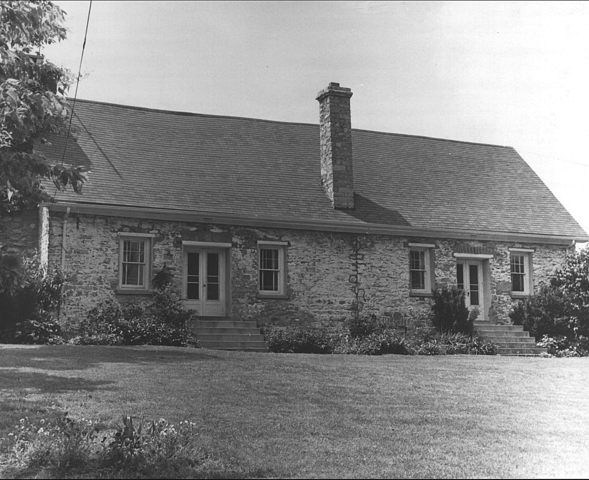
Three miles south of Gates lived Charles Lee at Prato Rio, a Portuguese phrase meaning “Stream on the meadow.” Lee did not build his home but purchased the 1733 structure in 1774 after some urging from Gates. Following his own sacking in the wake of the Battle of Monmouth, Lee returned to his home in 1779, a place he referred to as “The Hut.” Lee spent his last years there quietly surrounded by his three dogs, Father, Son, and Holy Ghost. Supposedly, when he learned of a possible visit from George Washington, Lee attached a note to his door that read, “No dinner cooked here to-day.”
Lee’s house was less conventional than Gates’ home. The inside contained no walls—only chalk lines delineated the different rooms. Lee remarked, “I can sit in any corner, and give orders, and overlook the whole, without moving my chair.”
Prato Rio (West Virginia State Historic Preservation Office)
While both homes can be seen from public roads today, they are not open to the public. Please respect the owners’ privacy.
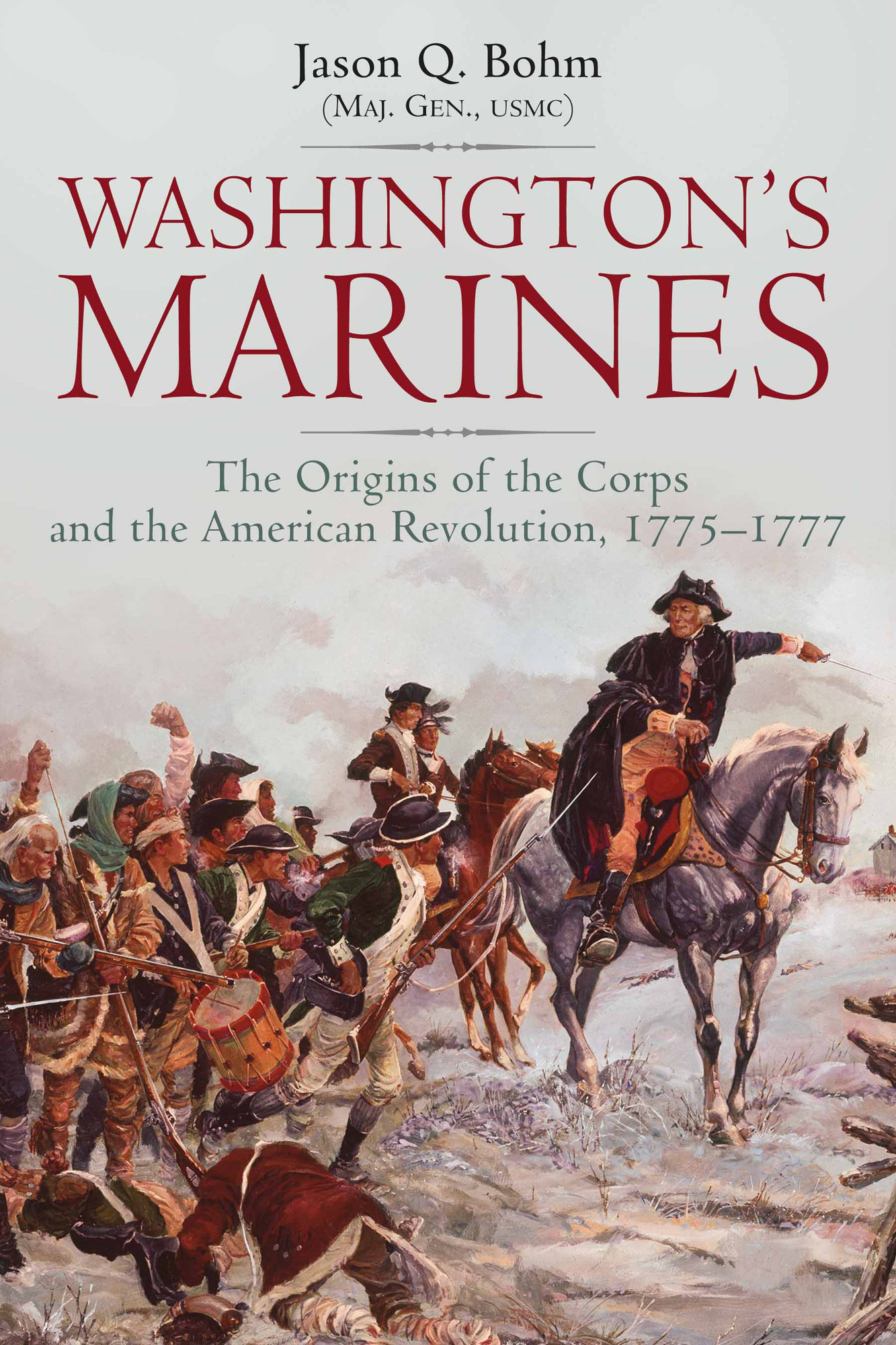
Join author Jason Bohm for a discussion of his new book published by Savas Beatie, Washington’s Marines: The Origins of the Corps and the American Revolution, 1775-1777, on Sunday night, August 20, 2023, at 7 pm. Bohm’s book examines the Marine Corps’ humble beginnings and what it achieved during the early years of the American Revolution. Jason Bohm’s eye-opening Washington’s Marines tells of the Corps’ origins and achievements in the early years of the Revolutionary War.
Grab a drink and join us to learn more about the early history of the United States Marine Corps!
All Rev War Revelries can be found LIVE on our Facebook page, or a week later on our YouTube and Spotify channels.
Major General Jason Q. Bohm is a Marine with more than 30 years of service. An infantryman by trade, he has commanded at every level from platoon commander to commanding general in peacetime and war. Bohm also served in several key staff positions, including as a strategic planner with the Joint Chiefs of Staff, Director of the Marine Corps Expeditionary Warfare School, House Director, Marine Corps Office of Legislative Affairs, U.S. House of Representatives, and Chief of Staff of U.S. Naval Striking and Support Forces, NATO. Bohm has a bachelor’s degree in marketing, a master’s degree in military studies, and a master’s degree in national security studies. Jason has written several articles for the Marine Corps Gazette and won various writing awards from the Marine Corps Association. He is the author of From the Cold War to ISIL: One Marine’s Journey (Naval Institute Press, 2019).
“The Shot Heard Round the World” on April 19, 1775, put the American colonies into a fever pitch and a war footing, but 18th-century travel limitations naturally caused that word to spread slowly. It did not reach the town of Mecklenburg, in Berkeley County, Virginia (now Shepherdstown, in Jefferson County, West Virginia) for 21 days. On May 10, Mecklenburg’s citizens learned of the fights between colonists and British soldiers at Lexington and Concord. Coupled with news of Virginia royal governor Lord Dunmore’s removal of powder from the magazine in Williamsburg, Mecklenburg’s citizens prepared to offer whatever aid they could to their fellow beleaguered colonists.
The rallying point for the Beeline March
The militia in Mecklenburg strapped on their accouterments and began to drill. On June 10, the drilling militia was welcomed to the property of Colonel William Morgan, just outside town, for a barbecue. Songs were sung and all those present made a pledge that they would return to the same spot in Morgan’s Grove fifty years from that day.
Following the patriotic fanfare, the men returned to drilling, wondering if they might have the chance to face the British. A decision made in far-off Philadelphia soon promised Berkeley’s militiamen that chance. On June 14, the Continental Congress declared that “six companies of expert riflemen, be immediately raised in Pennsylvania, two in Maryland, and two in Virginia.” Once formed and equipped, “each company…shall march and join the army near Boston, to be there employed as light infantry, under the command of the chief Officer in that army.”
The Virginia companies went to Daniel Morgan, who organized his company in Winchester, and Hugh Stephenson, the leader of the company rendezvousing at Mecklenburg. Joining soldiers signed one-year enlistments. Henry Bedinger, one of Stephenson’s men, recorded that “none were received but young men of Character, and of sufficient property to Clothe themselves completely, find their own arms, and accoutrements, that is, an approved Rifle, handsome shot pouch, and powder-horn, blanket, with such decent clothing as should be prescribed.” It took less than seven days to raise each company to the strength of 100 men. Only the delay in getting enough rifles to arm the entire Mecklenburg company prevented them from leaving immediately after filling the ranks.
Once mustered, Stephenson and Morgan agreed to meet in Frederick, Maryland, and march to Boston together. On July 15, Morgan’s men marched first, stealing a step on the Mecklenburg men, who left Morgan’s Grove on July 17. “Morgan having the start we used every exertion to overhaul him, in Vain, altho’ we marched (always in single file) from 30 to 36 miles a number of days,” said Bedinger.
Food and cheering citizens greeted Stephenson’s men along the march and kept their marching feet moving at the blistering pace needed to catch Morgan. Only two men failed to make the entire march (one was court-martialed, and the other was accidentally wounded). On August 11, after a march of over 500 miles in 25 days and just behind Morgan’s men, Stephenson’s company halted in front of General George Washington in Cambridge. When the Mecklenburg riflemen saw the general, they “presented their arms to him as he slowly rode by us looking attentively and affectionately at the soldiers from his native state. When he shook hands with our captain, it was said they both shed tears.”
Stephenson’s Company reporting to General Washington at Cambridge (My Ride to the Barbecue)
The march has gone down in history as the Beeline March due to the quick and direct nature of the expedition to augment the Continental forces in front of Boston. Fifty years later, the pledge made on June 10, 1775, was kept, though the numbers of Stephenson’s company were considerably smaller. Five decades after the march, only five participants still lived; just two returned to Morgan’s Grove to commemorate the feat. One of them was Michael Bedinger, who recorded his experiences in the Beeline March. At the anniversary ceremony, he sang “two patriotic songs…the very same that had been sung at that spot fifty years before.”
Today, two markers commemorate the Beeline March’s genesis. In Morgan’s Grove Park, a marker dedicated in 1988 marks the “Shepherdstown Rally Point” (Mecklenburg was later renamed Shepherdstown). Down the road from the park in Elmwood Cemetery, a 1932 monument erected by the Daughters of the American Revolution sits with the names of the commissioned and non-commissioned officers of Stephenson’s company.
For a burgeoning armed force that was seeking to stand up to one of the world’s most powerful military forces, the Beeline March showed the spirit of the American soldier in the early days of the Revolutionary War.
The Saratoga Campaign and Battle of Saratoga sit near the top of numerous “Turning Points of the Revolutionary War” lists. It is a story that has been told many times. New research has shed additional light on the campaign’s well-known and trivial parts.
Join Saratoga National Historical Park interpreter and historian Eric Schnitzer for Emerging Revolutionary War’s Revelry on October 2, 2022, at 7 pm to learn about new research being conducted about the campaign.
We hope you can join us on Sunday at 7 p.m EDT on our Facebook page for this historian happy hour.