“I remember all the accounts there given of the battle fields and struggles for the liberties of the country, and none fixed themselves upon my imagination so deeply as the struggle here at Trenton, New Jersey. The crossing of the river; the contest with the Hessians; the great hardships endured at that time, all fixed themselves on my memory more than any single revolutionary event.” – Abraham Lincoln, Trenton, NJ, February 21, 1861
The Civil War generation of Americans knew the story of George Washington and the Revolutionary War very well. Their letters and writings often harkened back to the days of 1776. However, now almost 250 years, the stories and battlegrounds of that war are often overlooked or forgotten.
Here is your opportunity to visit some of the most important and overlooked battlefields in the United States. Emerging Civil War’s sister site, Emerging Revolutionary War, is offering a special two-day tour of the Trenton and Princeton battlefields.
In ten days, George Washington orchestrated an ingenious military campaign that shocked the British empire and saved the Patriot cause in the American Revolution. Frederick the Great remarked that the campaign was “the most brilliant of any recorded in the annals of military achievement.”
John Trumbull’s painting depicts the mortal wounding of General Hugh Mercer, but one of those Americans mortally wounded was Lt. Bartholomew Yates.
Perhaps one of the most tragic and brutal stories from the Ten Crucial Days is the death of young Lieutenant Bartholomew Yates. Yates was an 18 year old officer in the 1st Virginia Regiment. He was originally from Gloucester County, Virginia, where his father Reverend Robert Yates was a minister of Petsworth Parish. He fought with his regiment at the Battle of Harlem Heights and at Trenton and Assunpink Creek.
However, he met his gloomy end at Princeton. The fighting on the fields south of the New Jersey town was brief but bloody. The 1st Virginia Regiment was in General Hugh Mercer‘s brigade that was the first engage the British at Princeton. The British 17th Regiment of Foot and Mercer’s men slugged it out in musket volleys in the William Clarke orchard. Shortly after the opening of the battle, Mercer discovered his 350 man brigade was greatly outnumbered and out matched. He ordered his men to retreat as the British lowered their bayonets and charged at Mercer’s men. Mercer’s men broke and ran. The British fell upon those Americans who were wounded or left behind.
Major John Fleming, commanding the 1st Virginia Regiment, had just ordered his men to dress their ranks when he was shot and killed. Mercer, on foot as his horse had been wounded, drew his sword and prepared to fight to the death. The British soldiers clubbed him on the head and bayoneted him seven times, mortally wounding him.
Yates was among those killed in the William Clarke orchard in a most brutal manner that many witnesses remembered. Captain John Chilton of the 3rd Virginia wrote, “Lieut. Yates had got a slight wound in the thigh which threw him into the hands of the enemy who immediately butchered him with the greatest Barbarity.” Dr. Benjamin Rush, who would treat many of the wounded after the battle described Lt. Yates’s death in terrifying detail:
“he received a wound in his side, which brought him to the ground. Upon seeing the enemy advance toward him, he begged for quarters; a British soldier stopped, and after deliberately loading his musket, by his side, shot him through the breast. Finding that he was still alive, he stabbed him in thirteen places with his bayonet; the poor youth all the while crying for mercy. Upon the enemy being forced to retreat, either the same or another soldier, finding he was not dead, struck him with a butt of a musket on the side of his head. He languished a week in the greatest anguish, and then died (I declare it upon my honour, as a man and a physician) of the wounds he received after he fell and begged for quarter.”
After reading this title you may assume this is a quote about the year 2020, but this is actually a quote from financier of the Revolution Robert Morris in a letter to George Washington describing the year 1776. While the year 1776 started with much promise and hope with the capture of Boston and the passage of the Declaration of Independence, the second half of the year saw the Patriot cause nearly destroyed.
After losing New York City and a long string of battles, Washington’s Continental Army had shrunk from more than 23,000 men to just around 5,000 by December. Washington breathed life into the dying cause at Trenton on the day after Christmas, defeating a Hessian garrison. This glimmer of hope was almost crushed by the fact that most of his army’s enlistments expired on January 1st, and his army was on the verge of dissolution. As General Cornwallis and a large British army marched towards Washington and his army at Trenton, Washington needed to convince his veterans to hold on. It led to one of the most dramatic moments of the Revolution, which occurred on New Year’s Eve, 1776.
Washington receiving a salute at Trenton.
While many of Washington’s brave men believed they had done their duty, at this moment, they were needed more than ever before. All day on December 31, 1776, Washington’s generals appealed to the soldiers through impassioned speeches to reenlist. Washington authorized an exorbitant $10 bounty to those men who agreed to remain. Despite all these exhortations, very few men were agreeing to stay on. Finally, in one of the most affecting scenes of his life, Washington himself personally appealed to the patriotism of the men who had campaigned by his side.
Washington paraded Gen. John Sullivan’s and Gen. Nathanael Greene’s divisions just outside Trenton. He entreated the men to stay on just a few weeks more. He asked those who wished to reenlist to move forward, but at that point no one moved. Sergeant Nathaniel Root of the 20th Continental Regiment (Connecticut) remembered that the men were “worn down with fatigue and privation” and had their “hearts fixed on home.” Washington, pleading with his brave soldiers wheeled his horse in front of the men and declared to them:
“My brave fellows, you have done all I asked you to do, and more than could be reasonably expected; but your country is at stake, your wives, your houses and all that you hold dear. You have worn yourselves out with fatigues and hardships, but we know not how to spare you. If you will consent to stay only one month longer, you will render that service to the cause of liberty and to your country which you probably never can do under any other circumstances. The present is emphatically the crisis which is to decide our destiny.”
Moved by their commander’s words, more than two hundred of these men stepped forward to stay on and fight. The combination of patriotic pleas and hard currency helped persuade many more to stay. Washington retained a force of about 3,000 men from his army. These veterans would prove invaluable in the coming days, and some of them would tragically pay the ultimate price in the coming days.
America has persevered through many terrible years, and we shall again. The men who persevered in the winter of 1776-1777 give us hope. Happy New Year, from all of us at Emerging Revolutionary War!
Everyone has heard about how Washington crossed the Delaware River on Christmas night in 1776, but now you can learn the fuller story. We’ll be talking on the 244th anniversary of the actual Ten Crucial Days, which occurred between December 25, 1776 and January 3, 1777. We’ll discuss the important events that occurred and look at some of the myths, misconceptions and lesser-known people involved. Additionally, we’ll talk about the sites where these important actions occurred and what you can see there today.
So, grab your favorite drink, this Christmastime season, and settle in to learn more about the ten days that saved the Revolution and changed the course of American history.
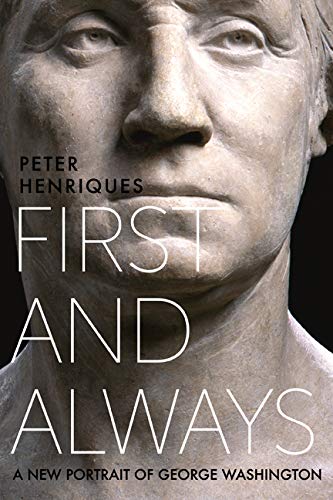
On December 13, 2020 at 7 p.m. Emerging Revolutionary War historian Mark Maloy will sit down and talk with preeminent George Washington historian Dr. Peter Henriques to discuss his latest book about the indispensable man of the Revolution, First and Always: A New Portrait of George Washington. Peter Henriques is Professor of History, Emeritus, at George Mason University and gave the keynote address at the inaugural Emerging Revolutionary War Symposium in May of 2019. You can watch this discussion live on our Facebook page.
George Washington is without a doubt the most important man in the story of America’s founding. Henriques has studied Washington for decades and in 2006 published a book Realistic Visionary: A Portrait of George Washington. Rather than a biography that covers everything in Washington’s life, both Realistic Visionary and now First and Always are “portraits.” They are broken up into individual stand-alone essays and delve in depth into some of the most interesting and at times controversial aspects of Washington’s life. Among these are Washington’s relationships with his mother, fellow Founding Fathers, and slavery. The result is a deeper and fuller understanding of who George Washington really was.
To get a signed copy of Dr. Henriques new book First and Always, you can send $27.95 to 13704 Heritage Valley Way, Gainesville, VA, 20155.
Additionally, we will be talking with Dr. Henriques on the 221st anniversary of the final illness of George Washington. Washington became ill on December 13, 1799 and died late in the evening on December 14, 1799. Henriques is an expert on the death of George Washington and the author of a book The Death of George Washington: He Died as He Lived that explores the final days of George Washington, so we will also discuss Washington’s death. We hope you are able to join us! If you miss the live talk, you will still be able to watch it on either our Facebook page or YouTube page in the future.
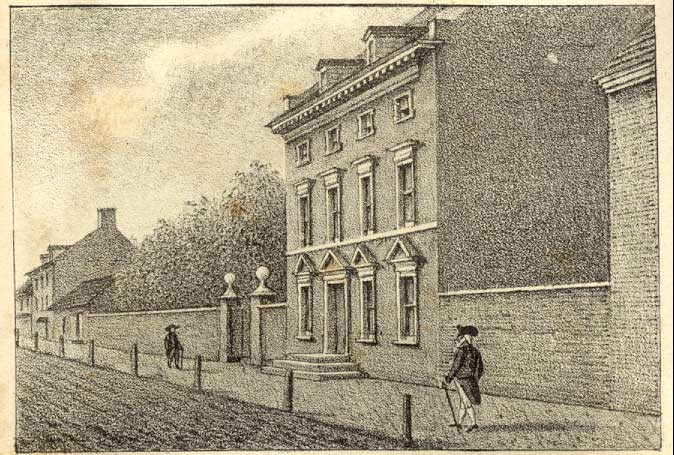
One of the worst epidemics in American history occurred in the then capital of the United States, Philadelphia, in the late summer and fall of 1793. The yellow fever epidemic of 1793 killed almost 10% of the city’s population and forced the young government of the United States and President George Washington to seek shelter away from Philadelphia.
“Girard’s Heroism” depicts Philadelphian Stephen Girard personally taking victims of the 1793 yellow fever epidemic into his carriage to be taken to a hospital.
The 18th century was full of epidemics including smallpox, typhus, influenza, measles, and yellow fever. Yellow fever (also referred to as ‘the bilious fever’) was a brutal disease to contract and suffer. Once a person got yellow fever they would come down with aches and a fever. The disease would then attack the liver causing jaundice which turned the person’s skin a yellow color (hence the name yellow fever). Shortly after that, they would begin to bleed from the mouth, nose, and eyes and vomit black blood. It would usually only take a few days for the person to die from the disease. Almost 50% of all those who contracted the disease died.
Yellow fever arrived in Philadelphia in the spring of 1793 when a ship carrying French refugees from the Haitian Revolution arrived from the Caribbean. In an era before germ theory, there were numerous erroneous thoughts as to the cause of this epidemic and how it spread. Many people assumed the fever was caused by putrid air from rotting produce on the docks since this is where the first cases appeared. Others blamed the refugees for bringing the disease into the city.
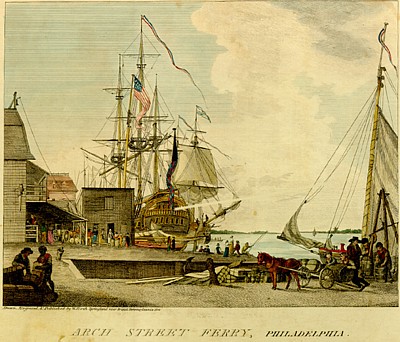
Arch Street Docks in Philadelphia
Among the early victims of the disease was a member of the President’s house. Polly Lear, the 23-year-old wife of George Washington’s secretary, Tobias Lear, died from yellow fever on July 28, 1793. Washington was personally devastated and attended her funeral the following day at Christ Church in Philadelphia, the only funeral he would attend during his presidency. Polly was given a funeral similar to a state funeral, with her pallbearers being Alexander Hamilton, Thomas Jefferson, and Henry Knox. Even though the fever would claim the lives of people close to George Washington, he, himself, never described fear or anxiety of catching the disease.
The President’s House in Philadelphia.
By August of 1793, cases of yellow fever in Philadelphia reached a point where local doctors declared an epidemic. About 20 people were dying every day of the disease. The College of Physicians in the city gave recommendations to slow the spread of the fever. They believed it was contagious from infected people and travelled through the air. People wore vinegar-soaked cloths around their mouths and noses, stayed in their homes, stopped shaking hands, kept distance on the streets from others, and lit bonfires in the city streets hoping the smoke would kill the disease in the air. People ceased to visit those afflicted with the fever, and the houses of those who had the fever were marked for all to avoid. They also sought to quickly bury people who died from the fever to try and stop the spread. People fled the city in droves. Nearly 20,000 people ultimately escaped the city. Washington described the city as “almost depopulated by removals and deaths.”
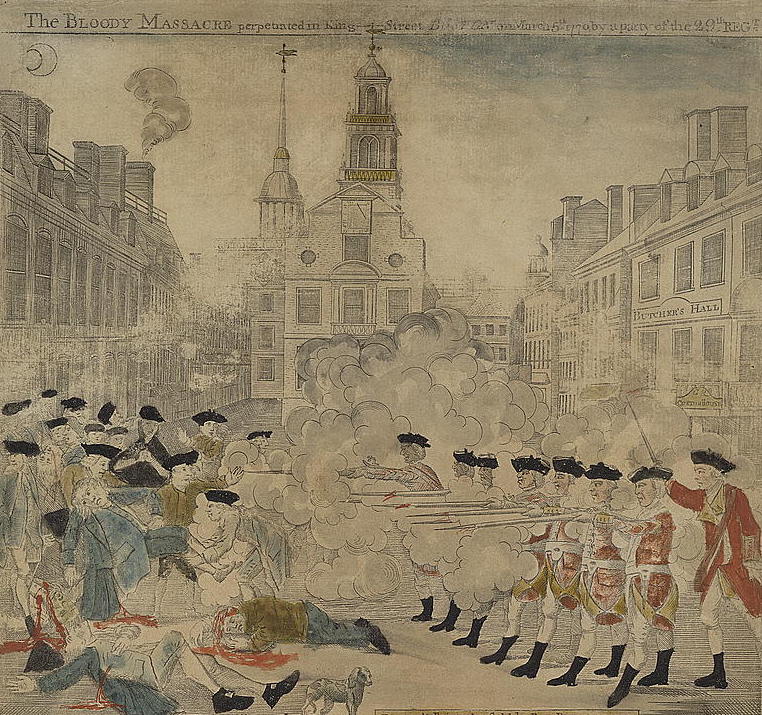
A detail from Paul Revere’s print of the “Bloody Massacre.” This widely circulated image gave the impression that the British soldiers fired in unison on command into a peaceful assembly. (Library of Congress)
“Fire if you dare, G-d damn you, fire and be damned!” the crowd of hundreds of Bostonians yelled as they pressed in around the nine British soldiers guarding the Custom House in Boston on the evening of March 5, 1770. The violence that was about to erupt in downtown Boston had been brewing for almost two years when British regular soldiers first entered Boston in 1768. It had gotten especially bad after February 22, 1770, when Christopher Seider, an 11-year-old boy, was killed while protesting with a group in front of the home of a loyalist. Thousands of Bostonians turned out for the boy’s funeral and the tension and distrust between the civilians and the British soldiers grew larger.
The presence of British regular troops in the streets of Boston enraged colonists, who now felt they were being occupied by a foreign army. It was just eleven days after Seider’s death, on March 5, 1770 when Private Hugh White of the 29th Regiment of Foot took up a sentry post outside of the Custom House on King Street in downtown Boston. The Custom House had taken on symbolic meaning as the center of British taxation. As a young wigmaker’s apprentice, Edward Garrick, passed the sentry, he yelled at a British officer that he had not paid his bill for a wig. The sentry, White, reprimanded the young man. The two engaged in a heated conversation when Private White swung his musket at Garrick, hitting him on the side of the head.
Word traveled through the streets about the altercation and a large mob began to descend on the lone British sentry at the Custom House. As the mob of people began to grow larger and larger, the sentry called for reinforcements. Seven British soldiers of the 29th Regiment of Foot, under the command of Captain Thomas Preston, marched to the sentry’s defense with fixed bayonets. As the nine British soldiers stood guard near the steps to the Custom House, passions enflamed and dozens more people joined the crowd surrounding the soldiers. Bells began ringing in the city and more people came out of their homes and into the streets. The crowd was estimated to have grown to as many as 300 or 400 people. They were yelling at the soldiers, shouting profanities and insults at the soldiers. Others threw rocks, paddles, and snowballs at the besieged men. One of those protestors near the soldiers was a former slave named Crispus Attucks. The crowd continued to hurl verbal abuse and challenged the soldiers repeatedly to fire their weapons. Preston’s men loaded their muskets in front of the crowd.
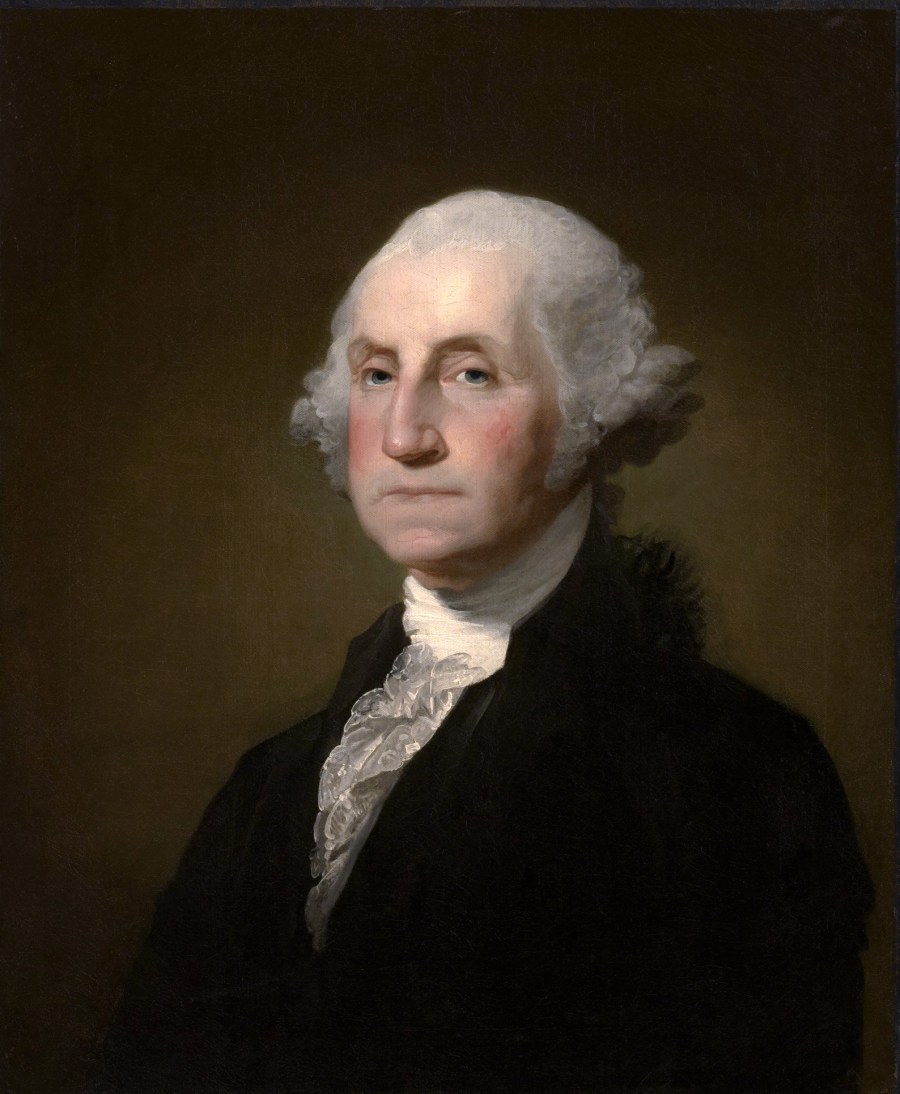
George Washington by Gilbert Stuart, 1797. Washington was a familiar face in Alexandria from his boyhood days until his death. (Wikimedia Commons)
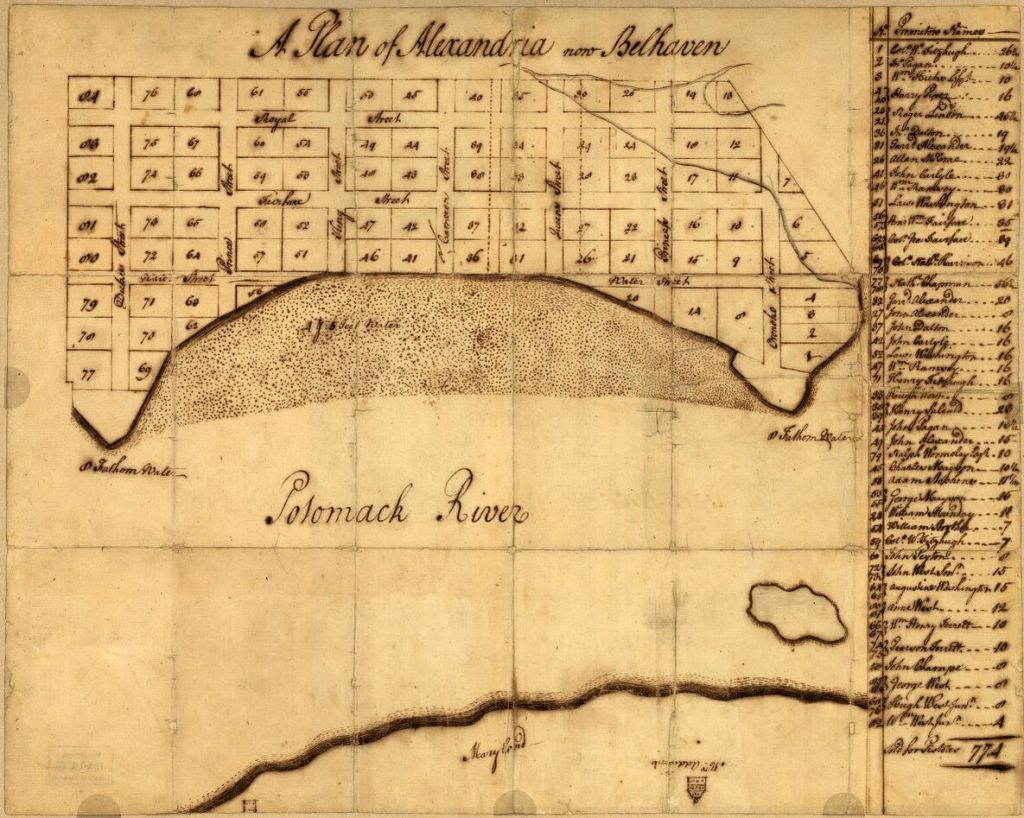
Alexandria, Virginia, often thought of as merely a suburb of Washington, D.C., is actually one of the most historic towns in the United States. The town, founded in 1749, predates the nation’s capital and the nation itself. While most towns and cities (such as Charleston, Philadelphia, New York or Boston to name a few) set aside museums, parks, and houses where George Washington may have spent an evening or had a meal, Alexandria, Virginia has the distinction of being Washington’s hometown. Washington’s home, Mount Vernon, is only nine miles south of Alexandria. Washington literally helped survey and lay out the very streets of the town in 1748. Washington spent a considerable amount of time of his life with friends and family at Alexandria and became a leading citizen in the town.
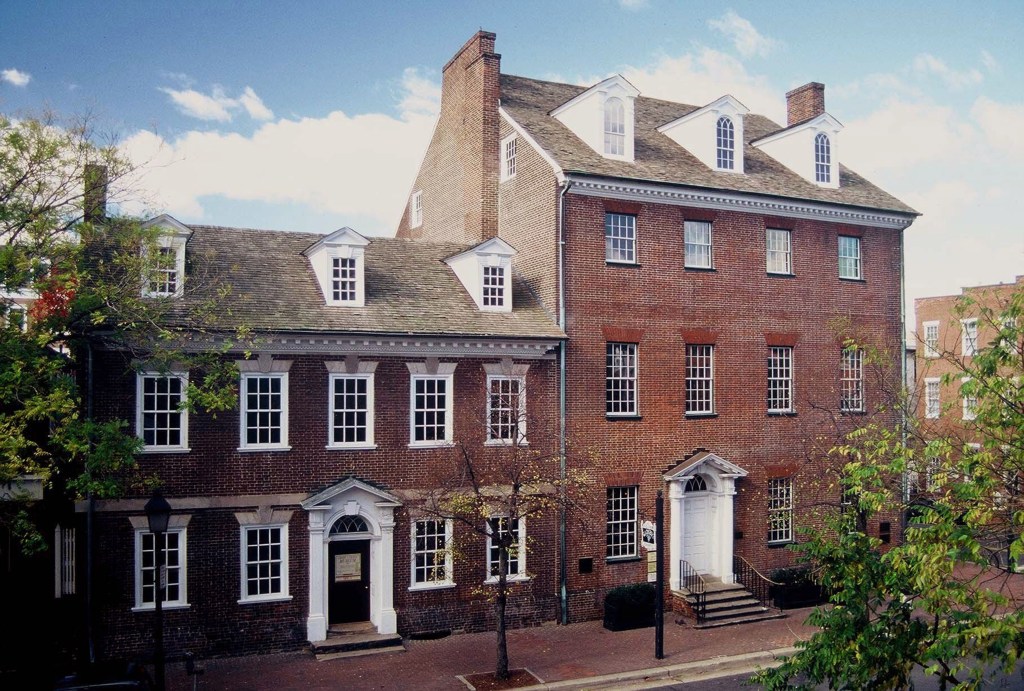
A map of Alexandria drawn by George Washington in 1749. (Library of Congress)Gadsby’s Tavern, where not only Washington, but John Adams, Thomas Jefferson and James Madison dined. (City of Alexandria)
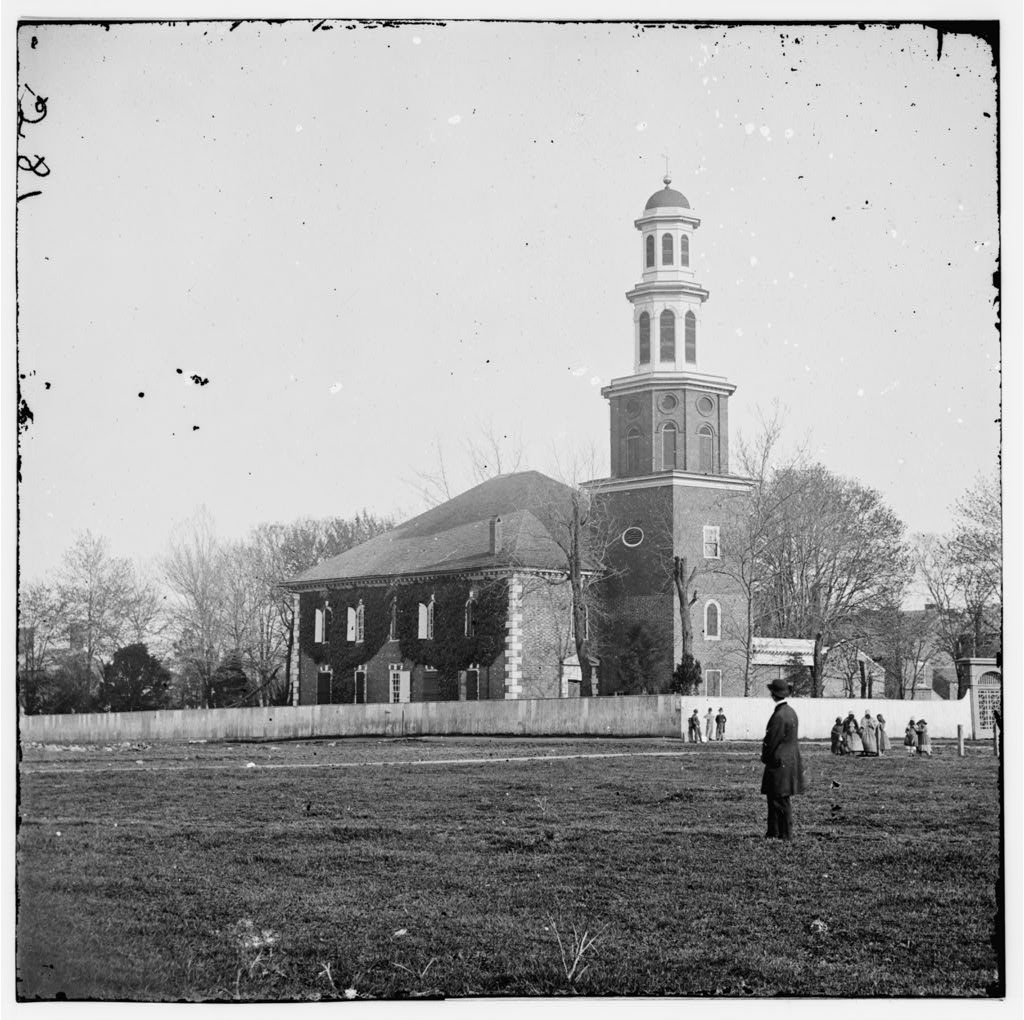
Today, visitors can see numerous places that had a close association with George Washington and the American Revolution there. Gadsby’s Tavern was where Washington dined frequently throughout his life and where he celebrated his birth night ball, a tradition that continues to this very day. Nearby, a replica of George Washington’s townhome sits today on Cameron Street where his original townhome once stood. Just two blocks from there is Christ Church, where Washington worshipped and was a vestryman. Despite the fact that this is a beautiful and historic building where Washington worshipped, the modern congregation there has sought to distance their association with Washington (because he was a slaveowner) by moving a plaque located in the church.
Christ Church as it appeared in 1861. (Library of Congress)A replica of Washington’s townhouse on the original site, which is actually available to stay at through vrbo. (TripAdvisor)
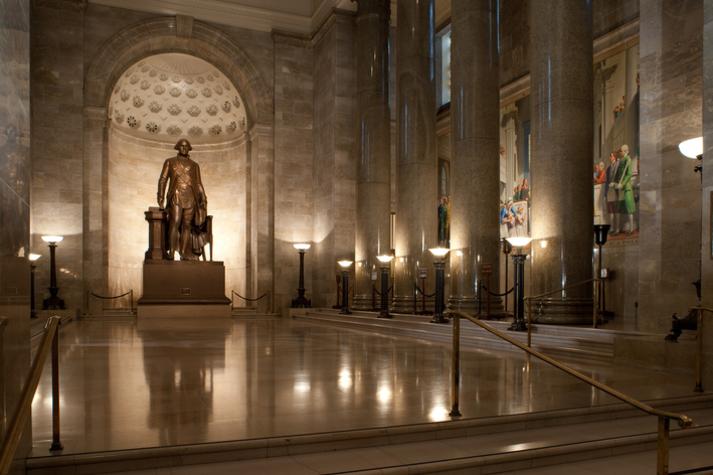
Washington was also a member of the local Masonic lodge. Today, the entire town of Alexandria is anchored on the west end by a massive Masonic Temple dedicated to memory of George Washington. Inside is a large statue of Washington and museum that includes many Washington relics and mementoes, including the trowel Washington used to lay the cornerstone of the U.S. Capitol building.
The interior of the Masonic Temple in Alexandria, Virginia, complete with a statue to Washington. (Visit Alexandria)
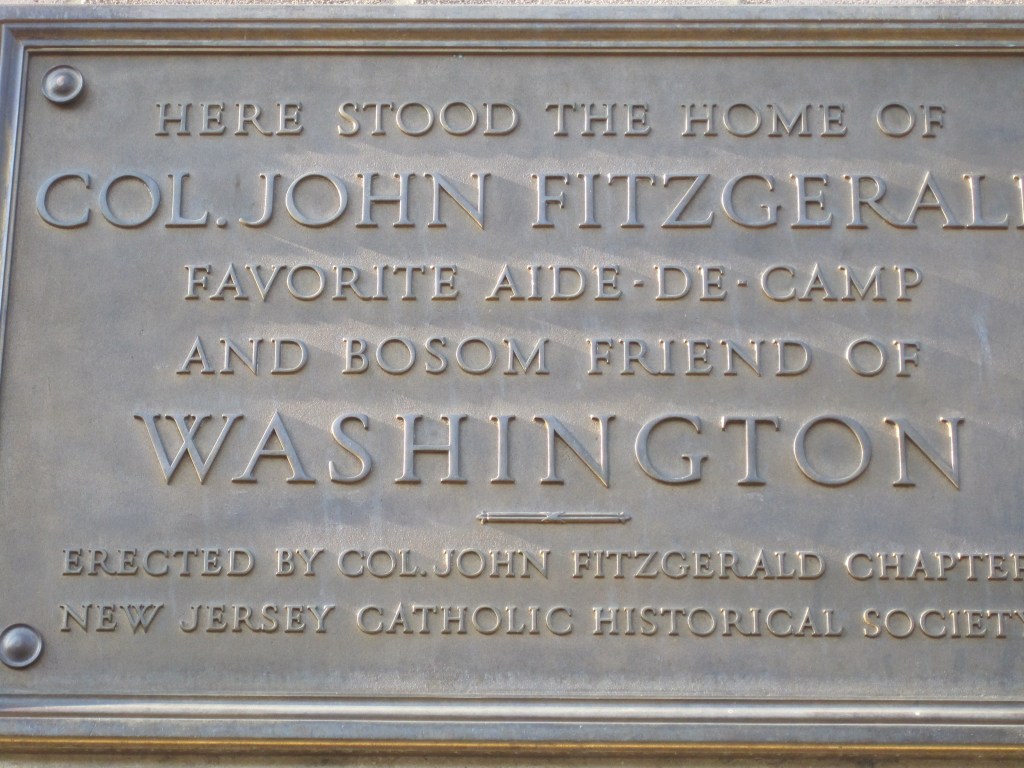
In addition to all of these Washington sites, the town of Alexandria has even more Revolutionary War history. The men from Alexandria largely joined the 3rd Virginia Regiment in 1776 when the war broke out. One of the town’s most prominent citizens was a “broad-shouldered Irishman” named John Fitzgerald. Fitzgerald would become a captain in the 3rd Virginia Regiment. In November of 1776, Fitzgerald was promoted to Lieutenant Colonel and joined Washington’s headquarters as an aide-de-camp. Fitzgerald would be by Washington’s side at Trenton, Princeton, Brandywine, Germantown, Valley Forge, and was wounded at Monmouth. While many Alexandrians would go on to fight in the war across the country, the war came to Alexandria in 1781. In April of 1781, a British raiding party was sailing up the Potomac River towards Alexandria. Col. John Fitzgerald rallied the local Virginia militia soldiers and marched down to Jones Point to scare off the British. The British never landed and sailed away. Later in life, Fitzgerald would become famous for founding the first Catholic Church in Virginia (St. Mary’s) and became mayor of the town. Today, multiple plaques in the city honor Col. Fitzgerald. While John Fitzgerald was undoubtedly a true hero of the Revolutionary War, the town has chosen to remove his name from a square on the waterfront because he was a slaveowner.
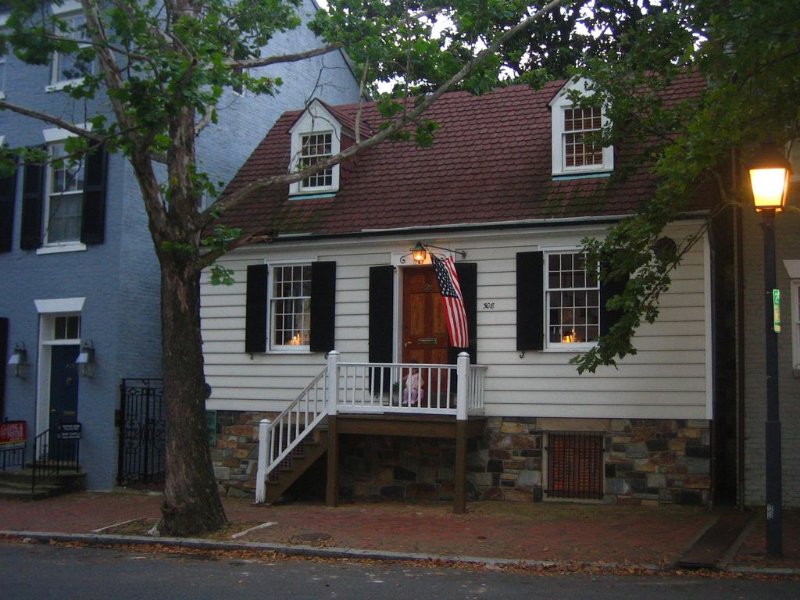
A plaque on King Street in Alexandria, Virginia for Col. John Fitzgerald. (Author’s Photo)
On the northern side of the town, a state historic marker
denotes the location of where part of Washington’s army encamped while marching
to Yorktown in 1781. In addition to
Christ Church, you can also visit the First Presbyterian Church, where memorial
services were held for Washington in 1799 and where his personal physician who
attended to him all his life, Dr. James Craik is buried. In the Churchyard you can also see the Tomb
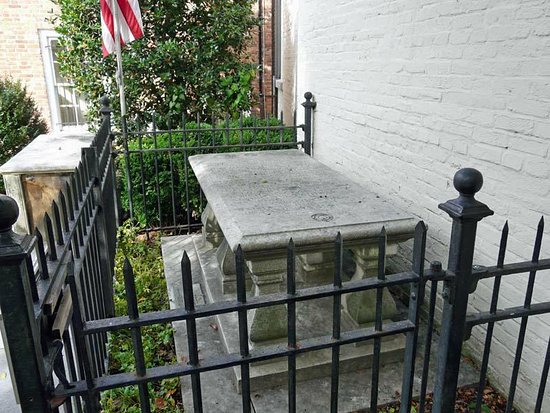
of the Unknown Revolutionary War Soldier.
The Tomb of the Unknown Revolutionary War Soldier. (TripAdvisor)
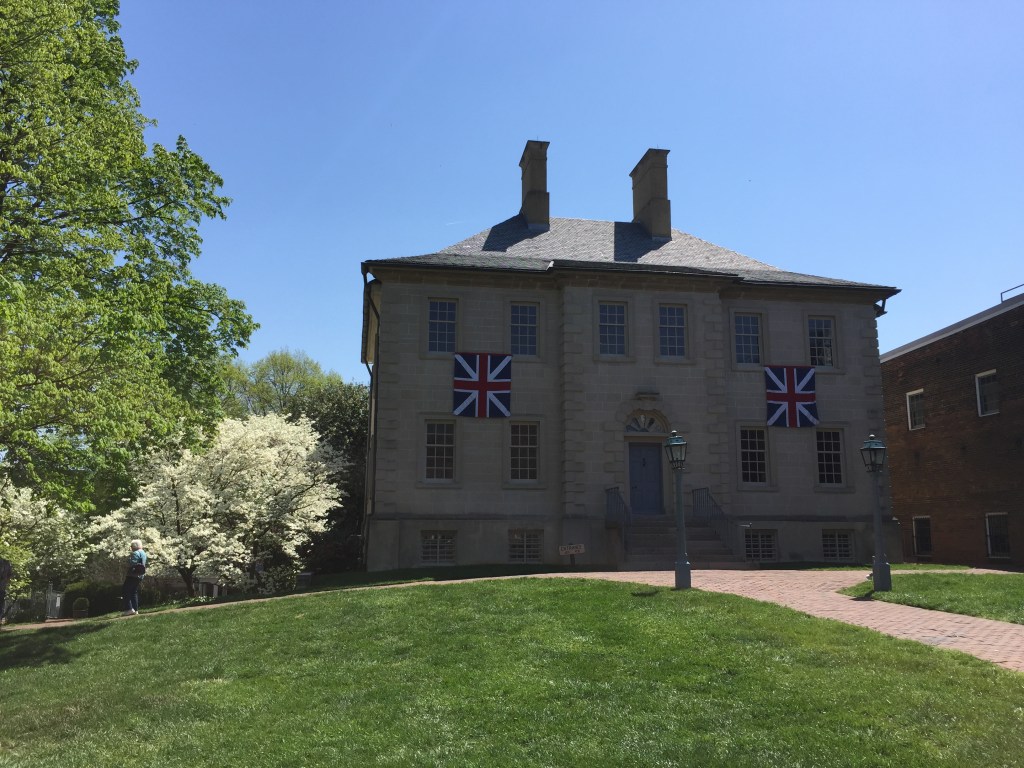
In Alexandria also stands Carlyle House, where General Edward Braddock launched his ill-fated expedition into Pennsylvania during the French and Indian War in 1755. It was also the home of George William Carlyle, a 17-year-old boy who valiantly died during the Revolutionary War in South Carolina at the Battle of Eutaw Springs in 1781. Another person who called Alexandria home, Light-Horse Harry Lee, served with Carlyle at the battle and described him as “the gallant young Carlyle of Alexandria.” Today, Light-Horse Harry Lee has a bar named after him today in Alexandria. In addition to his important service as an officer in the Revolutionary War, Lee became famous as the man who eulogized his fellow Alexandrian George Washington as “first in war, first in peace, and first in the hearts of his countrymen.” He was also the father of Robert E. Lee, who would grow up in Alexandria.
Carlyle House from the Front (Eric Sterner)
Robert E. Lee would attend the same church as Washington and married into Martha Washington’s family, making his home at nearby Arlington House (which was not only a home, but the nation’s first memorial to George Washington). Robert E. Lee said of Alexandria: “There is no community to which my affections more strongly cling than that of Alexandria, composed of my earliest and oldest friends, my kind school-fellows, and faithful neighbors.”
Alexandria’s expansive history associated with George Washington and the Revolutionary War is only rivaled by its important history during the American Civil War. Alexandria was the scene of the first deaths of that war in 1861 and was the longest occupied town in the war.
The Lyceum, Alexandria’s History Museum, where the inaugural Emerging Revolutionary War Symposium will be held on September 28, 2019. (City of Alexandria)
With such an extensive George Washington and Revolutionary War history, the town makes the perfect location for the inaugural Emerging Revolutionary War Symposium later this month. We hope you make the effort to come to this historic town and learn about how these men and women transitioned from colonists to Americans. While you are in town, we hope you get a chance to visit some of the numerous Revolutionary War and Washington sites!
One of the great unsung heroes of the American Revolution was an Irish Catholic colonel in the Continental Army who called Alexandria, Virginia home. His name was John Fitzgerald and he would be by George Washington’s side during some of the most dramatic moments of the Revolutionary War. Unfortunately, today in his adopted hometown, people are working to erase his gallant memory.
George Washington conferring with an aide-de-camp. (U.S. Army Center of Military History)
In 1769 John Fitzgerald sailed from the emerald green fields of County Wicklow, Ireland to the southern British colonial town of Alexandria, Virginia. Fitzgerald left a country that was firmly under the domination of British and Protestant rule. Despite making up a majority of the residents of the country, Irish Catholics were treated as second class subjects in Ireland. What Fitzgerald would find in colonial Virginia would not have been that much different as many British colonists had anti-Catholic sentiments. Fitzgerald would find it illegal for him to openly worship in Virginia. He would be forced to celebrate Catholic mass in his private home.
Despite the prejudices he faced, Fitzgerald became a merchant in Alexandria and would soon become good friends with the prominent local citizen, George Washington. As tensions began to build between Great Britain and the American colonies, Fitzgerald would become an early proponent of the patriot cause. As early as 1774, Fitzgerald had joined the local patriot militia, the Fairfax Independent Company, as an officer.
In early 1776, Fitzgerald became a captain in the 3rd Virginia Regiment of the Continental Line, and was promoted to major that fall. In November, Fitzgerald was promoted to Lieutenant Colonel and joined Washington’s headquarters as an aide-de-camp. Fitzgerald joined his staff at one of the darkest moments of the entire war. Fitzgerald joined as what was left of Washington’s army was retreating across the state of New Jersey. Washington’s army was dissolving before his very eyes. From 24,000 men that August, by December Washington only counted about 3,000 men. In this trying time, Fitzgerald would be by Washington’s side as the revolution seemed near an end. He would then join Washington and his men as they crossed the Delaware River on Christmas night and took part in the pivotal battles at Trenton and Princeton. (Read about these important battles in my book “Victory or Death: The Battles of Trenton and Princeton”)
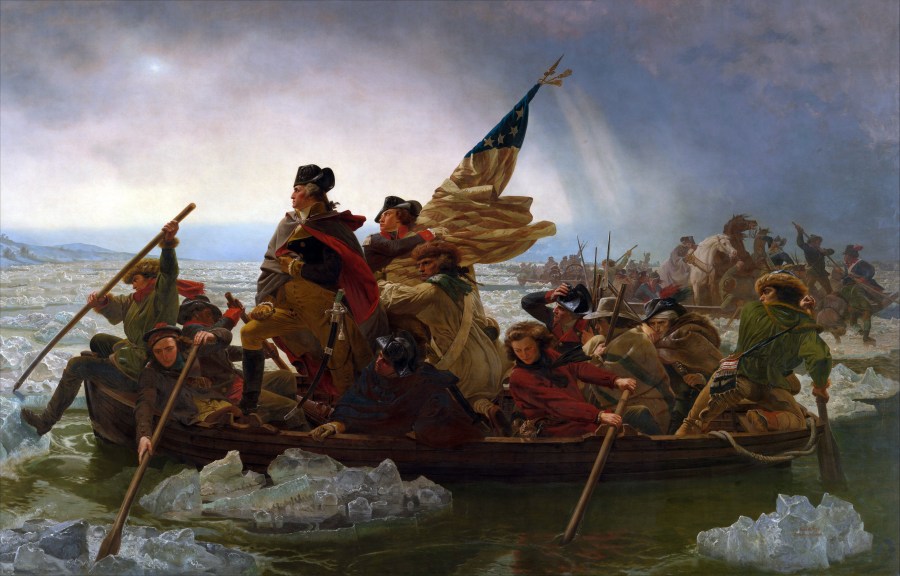
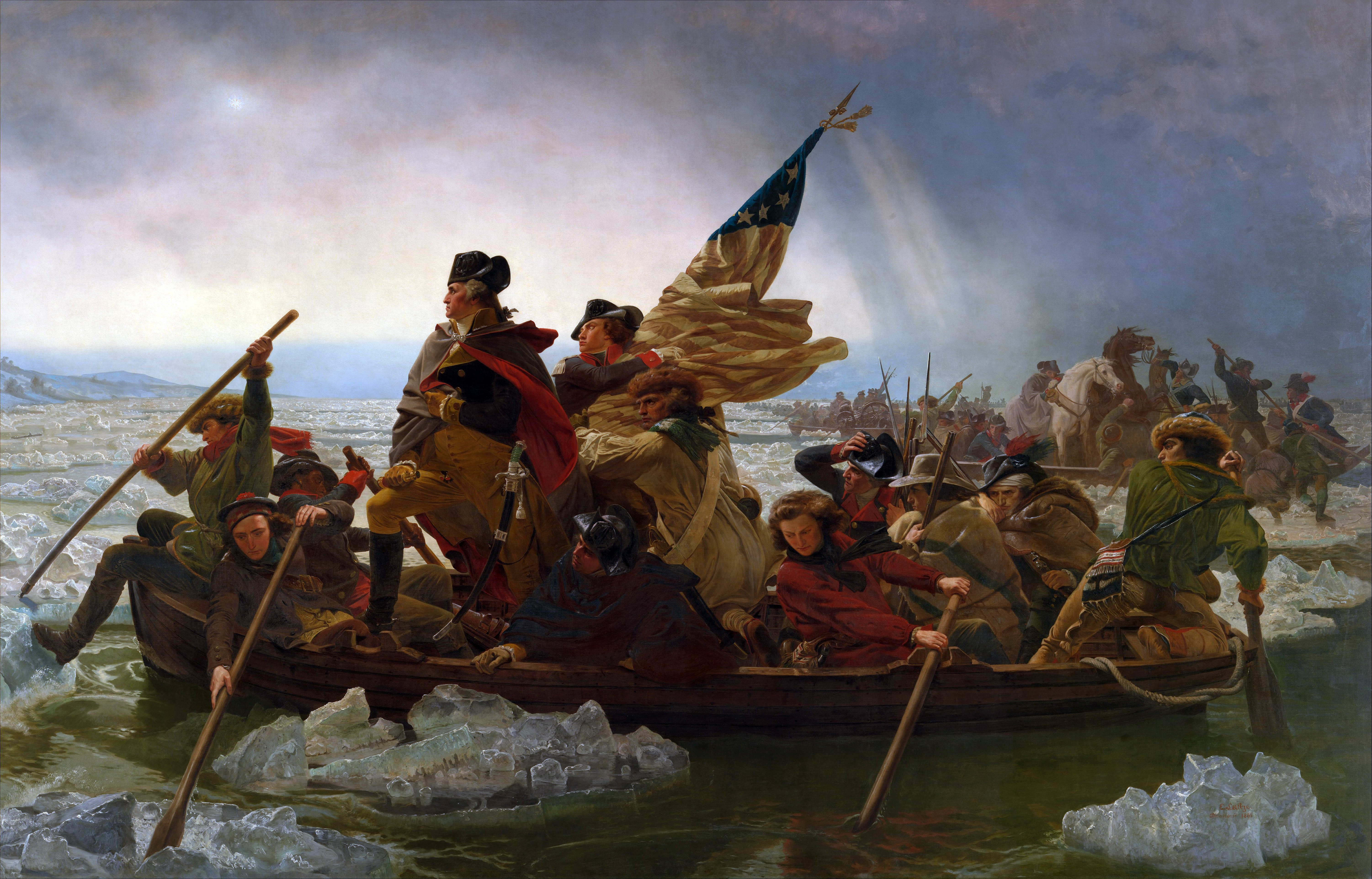
Washington Crossing the Delaware, by Emanuel Gottlieb Leutze. Washington had crossed the Delaware River on the night of December 25 to attack Trenton. (The Metropolitan Museum of Art)
Early on the morning of December 26, 1776, George Washington and his 2,400 man army went running into the Hessian occupied village of Trenton, New Jersey. It was snowing hard that morning and the one American soldier recalled that “we advanced, and although there was not more than one bayonet to five men, orders were given to ‘Charge bayonets and rush on!’ And rush on we did.” Continue reading “Victory or Death”→








 Emerging Revolutionary War Era