Mercer’s Grenadier Militia

RevWarWednesdays-header


Emerging Revolutionary War and Revolutionary War Wednesday is pleased to welcome back guest historian Drew Gruber.

Part 1

When we think about American militia during the Revolutionary War, the image of an untrained rifle-toting citizen turned soldier comes to mind. This stereotype of the American soldier, popularized by movies like The Patriot is not completely false but such generalizations should give us pause and inspire us to investigate the roll of American militia, independent companies, and ‘irregular’ troops a bit closer. For example, how was it that on October 3, 1781 a group of Virginia militiamen defeated an elite British force? The story of Lieutenant Colonel John Mercer’s Grenadier Militia during the battle at Seawell’s Ordinary has been told and retold since 1781, however the formation of this illustrious group is often ignored and deserves a closer look. Continue reading “Mercer’s Grenadier Militia”

“They Fought Because They Would Not Be Slaves”

RevWarWednesdays-headerRevolutionary War Wednesday and Emerging Revolutionary War is pleased to welcome guest historian Mark Maloy this week. 

African-Americans fought for the Americans during the Revolutionary War, right?  Many of us remember learning about Crispus Attucks dying during the Boston Massacre or have heard the oft-repeated saying that the Continental Army was the last integrated American army until the Korean War.

In this lithograph published in 1855, Crispus Attucks is portrayed front and center.  Crispus Attucks was lauded as the first martyr in the War for Independence much from the insistence of abolitionists like William C. Nell.  A Crispus Attucks Day was created in Boston in 1858 and a memorial placed for him and the other victims on Boston Common after the Civil War.  Despite all this, according to John Adams (who defended the British soldiers in court), Attucks was a rabble-rouser who actually helped precipitate the massacre.
In this lithograph published in 1855, Crispus Attucks is portrayed front and center. Crispus Attucks was lauded as the first martyr in the War for Independence much from the insistence of abolitionists like William C. Nell. A Crispus Attucks Day was created in Boston in 1858 and a memorial placed for him and the other victims on Boston Common after the Civil War. Despite all this, according to John Adams (who defended the British soldiers in court), Attucks was a rabble-rouser who actually helped precipitate the massacre.

Continue reading ““They Fought Because They Would Not Be Slaves””

ERW Weekender – Yorktown

RevWarWednesdays-header


Rev War Wednesday and Emerging Revolutionary War is pleased to welcome guest historian Kate Gruber. 

Let me guess– you are a Rev War Nerd who is the best friend of/dating/married to a Civil War Nut.

I recognize the symptoms. You have often thought that the third person in your relationship might just be Shelby Foote.  Hardtack is just not something you can get voluntarily excited about. The idea of blue and grey is not nearly as appealing as red and blue. You have been dragged to Gettysburg when you really wanted to check out Valley Forge.

Friends, you are not alone. I myself am a Nerd married to a Nut, and I am here to tell you that your problems might just be solved by spending some quality time in historic Yorktown, Virginia. Continue reading “ERW Weekender – Yorktown”

The Other German

RevWarWednesdays-header

Baron Frederich Wilhelm August Heinrich Ferdinand Steuben or Frederich Wilhelm Ludolf Gerhard Augustin von Steuben or more simply Baron von Steuben, may be the most recognizable German to serve with the American army during the American Revolution.*

Portrait of Baron Johann de Kalb  (by Charles W. Peale)
Portrait of Baron Johann de Kalb
(by Charles W. Peale)

His merits, pedigree, and how he came to America has been questioned and studied by many scholars and historians.

Another German has not fared so well in terms of recognition of his invaluable services to the American cause.

This post is about that other German-speaking military officer. He did something von Steuben did not.

Baron Johann von Robais de Kalb not only offered his services to the fledgling American Continental Army, he also gallantly gave his life for his adopted-cause.

Born June 19, 1721 in Huttendorf, near Erlangen in Bavaria, de Kalb led a life of privilege, learning multiple languages before earning a commission in the French army in the Loewendal Regiment. He served admirably in the War of Austrian Succession and the Seven Years War, in the later, he won the Order of Military Merit and gained his baronetcy.

Continue reading “The Other German”

Mr. Jefferson’s library: “a necessity of life”

RevWarWednesdays-header

Part three in a four-part series

tjstudy“I cannot live without books,” Thomas Jefferson wrote to John Adams in June of 1815. The former president had just packed his personal library—some 6,700 volumes—into a wagon train and shipped it north to the nation’s capital. He’d sold the collection to Congress for $23,950 to replace the collection burned by the British during the War of 1812.

His collection was, Jefferson rightly believed, “the choicest collection of books in the United States.”

And now he was left virtually bookless. Continue reading “Mr. Jefferson’s library: “a necessity of life””

Fashion in the Historic Triangle

RevWarWednesdays-headerWhen one heads to the Historic Triangle of Jamestown-Williamsburg-Yorktown, Virginia becoming immersed in early American History is almost a given.

At the same time, when one is looking for fashion in the area, the Premium Outlets in Williamsburg would usually be the direction one would head.

However, thanks to Jamestown Settlement and Yorktown Victory Center, fashion and American history come together. But, the clothing styles does not end with just Colonial American history, as fashion from British military uniforms to Native American and West African cultures will also be on display. Continue reading “Fashion in the Historic Triangle”

Jefferson: The Man Who Moved Mountains

RevWarWednesdays-header

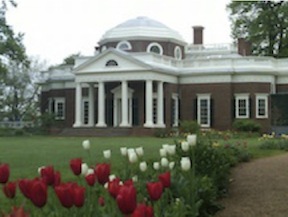
Montecello TulipsThe second in a four-part series

He leveled the top of the mountain with gunpowder.

He began the project in 1768, when he was twenty-five. He had his slaves literally sheer off the tip of the mountaintop, peeling away soil rich in iron and clay, revealing bedrock of a local variety known as Catoctin greenstone.

On the flattened plane, he built his dream home. Over the next fifty-eight years, Thomas Jefferson would significantly remodel the house twice more as his personal tastes evolved. The house has a splash of Cavalier Virginia to it, but it also has touches of the classical and the continental.

Jefferson called it “my essay in architecture.” He named his “essay” Monticello. Continue reading “Jefferson: The Man Who Moved Mountains”

James Monroe at War

RevWarWednesdays-header


Part Two

With an excess of officers in the Continental Army and little prospect of getting a field command, James Monroe resigned his commission in 1779.  He became a Lieutenant-Colonel of Virginia forces, but was unable to recruit enough men to form a new regiment.  In 1780 he went to North Carolina as a military observer for Governor Thomas Jefferson, with whom he had begun the study of law. Continue reading “James Monroe at War”

James Monroe at War

RevWarWednesdays-header


Part One

Emerging Revolutionary War is honored to welcome guest historian Scott H. Harris, Director of the James Monroe Museum.

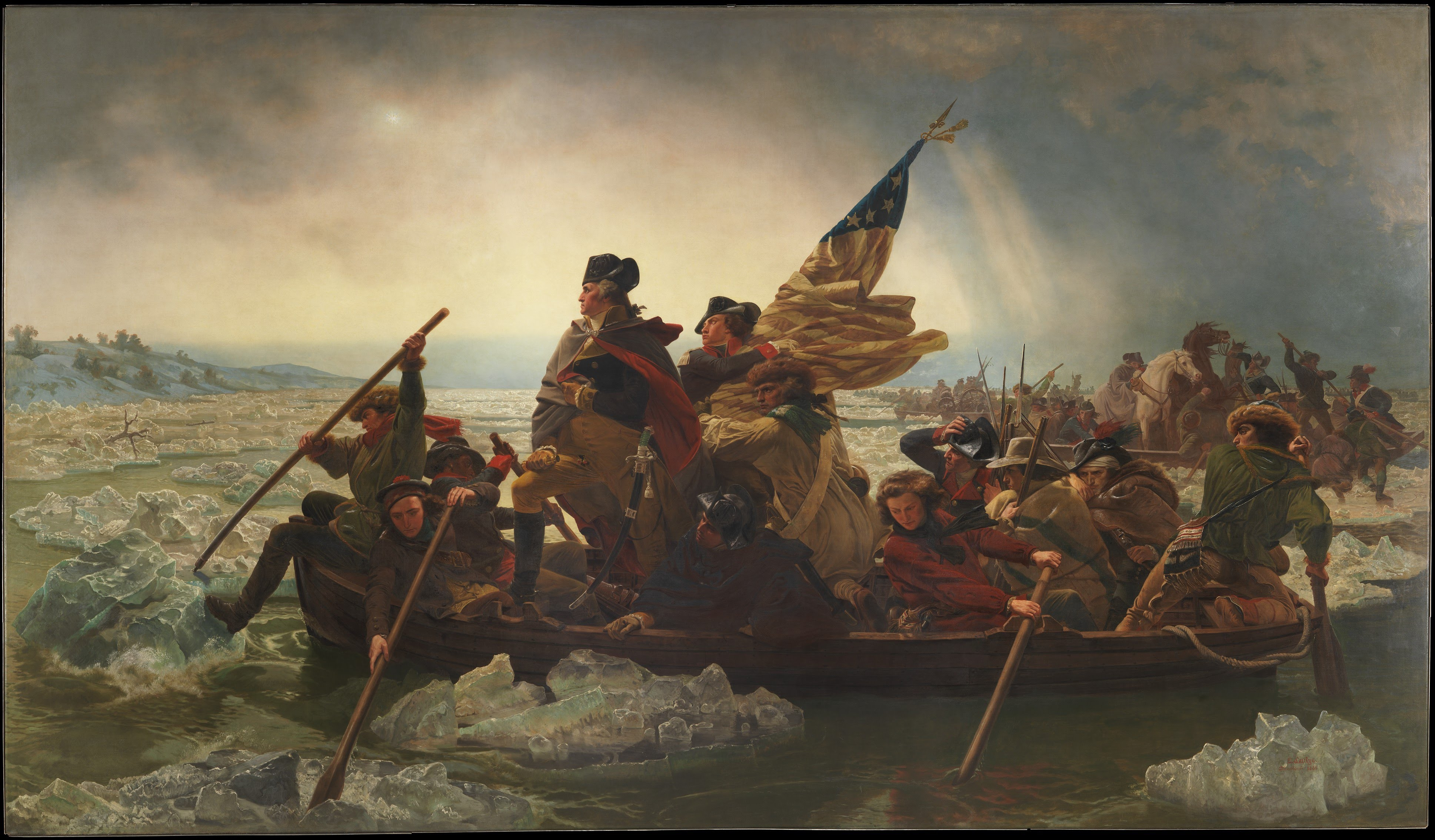
It is one of the great exploits of the American Revolution.  On the night of December 25, 1776, General George Washington led the Continental Army across the icy Delaware River to attack a Hessian garrison at Trenton, New Jersey.  Young Lieutenant James Monroe held the flag behind Washington as they were rowed across the freezing river (standing up).

Emanuel Gottlieb Leutze, Washington Crossing the Delaware.  Oil on canvas, 1851.  Only two figures in this fictitious image are identified—General George Washington and Lieutenant James Monroe (holding flag).
Emanuel Gottlieb Leutze, Washington Crossing the Delaware. Oil on canvas, 1851. Only two figures in this fictitious image are identified—General George Washington and Lieutenant James Monroe (holding flag).


Except, that’s not what happened.

Continue reading “James Monroe at War”

Inspired By the Americans

RevWarWednesdays-header

On December 16, 1773, in Boston, Massachusetts harbor, American colonists belonging to the Sons of Liberty stole aboard trade vessels anchored in the water. In protest to recently passed British legislation, the Native American dressed Sons of Liberty dumped 342 chests of tea into the water.

The Boston Tea Party became a prominent and well-known defiant act by the Americans on the road to the American Revolution.

Unbeknownst to the Adams, Warrens, and Hancock’s of the American Revolution, this particular form of protest–attacking the purse strings of the governing power–would resonate 75 years later, 3,284 miles, and one continent away. Continue reading “Inspired By the Americans”