Christmas Night, 1776: How Did They Cross? The Horses:

Emerging Revolutionary War welcomes guest historians Karl G. Elsea and William W. Welsch. Short bios of both historians are at the bottom of this part.

Part I:

The purpose of this article is to further investigate General George Washington’s Christmas night crossing of the Delaware River in December, 1776, with added emphasis on the role of the artillery and horses   This is the result of discussions and collaboration between the two authors.

In an earlier article published by The Journal of the American Revolution, the second author posed the question of just how difficult was the crossing.  Given the weather, the river conditions, the expertise of the crews, and available original sources, this remains an unanswerable conundrum.  However, new research is able to provide a better understanding of the challenges posed in crossing the cannons and horses.

In calculating the number of horses needed to move the artillery, authors have been initially tempted to use the numbers provided from John Muller’s Treatise on Artillery.  Muller (about 1757) wrote that “A 3 pounder requires but 1 horse, a 6 pounder 2, a 12 pounder 3 of the light [field artillery] sort.”  That quote assumed roads as they were in England and Europe, and relatively flat and firm, dry surfaces with well-fed and conditioned horses. Those conditions do not apply well for Revolutionary War America.[i]

There is a primary source that states a three-pounders was pulled by at least 2 horses. John Greenwood, a fifer in the 15th Continental, recorded “the ball … struck the fore horse that was dragging our only piece of artillery, a 3-pounder.”[ii] This was important information because a three-pounder gun could be pulled by a single horse according to Muller. Because the weather was rainy and sleety, with the ground becoming muddy, an extra horse was required. That Patriot three-pounder gun had at least two horses.

There were old expressions that give important insight into what a horse could pull. For example, “on flat, firm ground a horse or mule can pull its own weight ten hours a day, every day.” Also, “on rough ground a horse can pull half its weight with large wheels.”[iii]  While those expressions offer what a well-fed horse could accomplish, we have no way of assessing the condition of the army’s horses, given that forage was a constant problem.

There was another issue concerning horses pulling in harness. Not all of their effort can be applied to the load being pulled. If there was more than one horse pulling a gun, then they were harnessed in tandem in America. The horse between the shafts for the limber was called the thill horse. In tandem the horse in front of the thill horse only had 3/4 of its draught applied to the load. If there was a horse before that one, then only half of that horse had the draught apply to the load. If there was a fourth horse in tandem, then only 1/4 of the draught can be applied. More than four horses in tandem provided no gain in pull and might make pulling harder. For example, cresting a hill with the Fore horse on down side and the Thill horse on the rise side of the hill would result in the forces being against each other.

 There was another problem, if the ground was rough or muddy then one must reduce the draught for all the horses by half. If a horse had a rider, then that horse’s ability to pull a load was reduced by half.

A typical Colonial farm horse available for pulling battalion guns in Colonial America was probably between 14 and 15 hands tall and weighed between 850 and 1,000 pounds. Large draft horses like the Conestoga were not used on battalion guns, they were reserved for large wagons.

It seems very reasonable that each gun in Washington’s force had an extra horse added due to the conditions of the ground. With the information presented above, the following presents the math for a light six-pounder guns as used by Hamilton and Forest.

The “old” six-pounder (Armstrong design 1736) with carriage and limber and everything with which to utilize the gun weighted about 1,800 pounds. Adding 24 rounds of ready fixed ammunition adds 202 pounds for a grand total of 2002 pounds that must be pulled.[iv] The “old” six-pounder would normally be pulled by two horses according to Muller. The thill horse would provide about 1000 pounds of draught and the fore horse about 750 pounds for a total of 1750 pounds of draught with 2 horses. As the math suggests, there was a shortfall in draught (2002 vs 1750) which means that the horses would likely wear out in less than 10 hours of work. The shortfall noted could be significantly greater when the condition of the ground was considered. With the thill horse and two fore horses added as a pair, then an additional 750 pounds of draught was available (for a total of 2,500 pounds of draught). Because the army was moving by a road then the horses in front of the thill horse did not have to be in tandem and could be added as a pair. This calculation demonstrates the six-pounder likely had an additional horse. The calculations would be similar for the howitzers.  That means the six-pounders, the four-pounders, and the howitzers each had three horses and the three-pounders each had two horses.

A typical colonial period ferry (flat) designed to carry a large farm wagon to market, as would be case at McKonkey’s and Johnson’s ferries, would typically be about 48 feet long and 9 feet wide. A light six-pounder gun with three horses (fore horses in a pair) would be almost 40 feet long. Same for the 5.5-inch howitzer. The track of a six-pounder would be 4 feet, 8 inches leaving some room on the side(s). A three-pounder gun with 2 horses (thill and fore) would be about 35 feet long. With that information one can see that each gun would require a trip on the ferry, and there would be some space along the side(s) for some artillerymen and/or horses.

At least seven artillery ammunition carts had to be used – one for each artillery company. In addition, Forest’s artillery company needed an additional cart because he had two types of cannon, and thus a cart for each type of cannon. It may be that Moulder also required two ammo carts to carry adequate ammunition for his three guns. Each cart with horses would require about 24 feet, so two carts could be taken on a ferry.

Thus, Knox’s artillery would require eighteen ferry trips to move all eighteen cannons, one for each cannon and team.  Two trips required on a ferry for the four ammo carts (two carts per ferry) associated with Greene’s column (Forest, Hamilton, Bauman).  Three trips required on a ferry for the five ammo carts (two carts per ferry) associated with Sullivan’s column (Sargent, Neil, Hugg, Moulder).

CompanyNumber and Type CannonFerry Trips
ForestTwo 6-pounder guns Two 5.5-inch howitzers Two ammo carts2 2 2
HamiltonTwo 6-pounder guns One ammo cart2 1/2
BaumanThree 3-pounder guns One ammo cart3 1/2
SergeantTwo 6-pounder guns One ammo cart2 1/2
NeilTwo 3-pounder guns One ammo cart2 1/2
HuggTwo 3-pounder guns One ammo cart2 1/2
MoulderThree 4-pounder guns Two ammo carts3 1

[i] John Muller, A Treatise of Artillery the second edition (John Millan, Whitehall, London, 1768), 178.

[ii] John Greenwood, Revolutionary Services of John Greenwood of Boston and New York, 1775-1783, 40-41. “the first intimation I received of our going to fight was the firing of a 6- pound cannon at us, the ball from which struck the fore horse that was dragging our only piece of artillery a 3-pounder.” Retrieved from https://archive.org/details/revolutionaryser00gree/page/38/mode/2u

[iii] First author’s grandparents (paternal and maternal) farmed with horses in early 1900’s. Grandparent that farmed in Blue Ridge Mountain’s foothills and clay mud taught these expressions. The reader may find references to a horse pulling 1.5 times its weight on a road. That reference assumes roads with firm surfaces and includes, in its averaging of 1.5, roads with asphalt and concrete from more modern times.

[iv] Adrian B. Caruana, The Light 6-Pdr. Battalion Gun of 1776, (Alexandria Bay, NY: Museum Restoration Service, 1993), 14.

*Bios*

Karl G. Elsea graduated with a B.S. in Electrical Engineering from Va. Tech. and a MBA from UNCC. Son, daughter, and I participate in Revolutionary War reenactments. Have ridden horses most of my life. Was a coxswain in the U. S. Coast Guard and earned the Trident. Taught disadvantaged youth at a juvenile detention center. Own horses and pull a bronze four-pounder cannon and limber for living history.

William M. Welsch, a retired administrator at Montclair State University in New Jersey, is the current and founding president of the American Revolution Round Table of Richmond, and co-founder of the Congress of American Revolution Round Tables. He is a tour guide of Revolutionary War battlefields, frequent presenter and author of multiple articles on the Revolution. His interest areas include the Revolution in New Jersey, Pennsylvania and the generals of the Continental Army. Welsch served in the United States Marine Corps and is married with two daughters and five grandchildren.

The Supreme Court at Risk

Emerging Revolutionary War welcomes back guest historian Dan Welch.

It’s December 9, 1775. Not only was the future of the fledgling Patriot’s cause at stake, but the future of our yet-to-be created Supreme Court was as well. 

Over the previous months, rebel forces in the area had been engaged with Lord Dunmore’s troops for control of military supplies in the colony of Virginia. This eventually led towards the area around Norfolk, where Dunmore’s forces had fortified a position opposite a river crossing that was strategic both militarily and economically. The position, south of Norfolk, at Great Bridge, was not uncontested. Just opposite Dunmore’s stockade, known as Fort Murray, on the other side of the river, rebel forces settled in, arriving on December 2.

Col. William Wofford, in command of the 2nd Virginia Regiment and about 100 men of the Culpeper Minutemen battalion, began entrenching their position opposite Fort Murray while more militia from surrounding Virginia counties and North Carolina marched towards their aid. As more men arrived, as well as several pieces of field artillery, Lord Dunmore grew wary. He believed his only course of action was to attack Wofford’s men and drive them from the field. The attack was set to begin by dawn’s early light on December 9, 1775.

Found in the ranks of Wofford’s command that morning as the battle opened was a father and son, Thomas and John Marshall. Thomas, a vestryman, High Sheriff, and a member of the House of Burgesses had brought his son with him into the patriot ranks from Fauquier County.  By the time of the battle, Thomas, who had been active in the organizing and raising the Culpeper Minutemen, had been appointed its major. His son John, age 20, its first lieutenant.

John Marshall’s biographer later recounted the importance of this moment on the young nineteen-year-old, writing “The young soldier in this brief time saw a flash of the great truth that liberty can be made a reality and then possessed only by men who are strong, courageous, unselfish, and wise enough to act unitedly…He began to discern, though vaguely as yet, the supreme need of the organization of democracy.”

John Marshall went on to serve as the fourth Chief Justice of the United States Supreme Court in 1801. Marshall remained at the post for thirty-four years, and, during his tenure, the Marshall Court brought the role of the Supreme Court to the fore, issued more than 1,000 decisions, and set the precedent of handing down a single majority opinion.  These accomplishments and influences are just some of many that Marshall had on the Court, the federal government, and American history.  Today, on the 245th anniversary of the battle of Great Bridge, it’s interesting to pause, reflect, and wonder how very different the United States and the Supreme Court might have been had Colonel Wofford’s forces, among them John Marshall, been defeated that day at the “second Bunker’s Hill affair….”

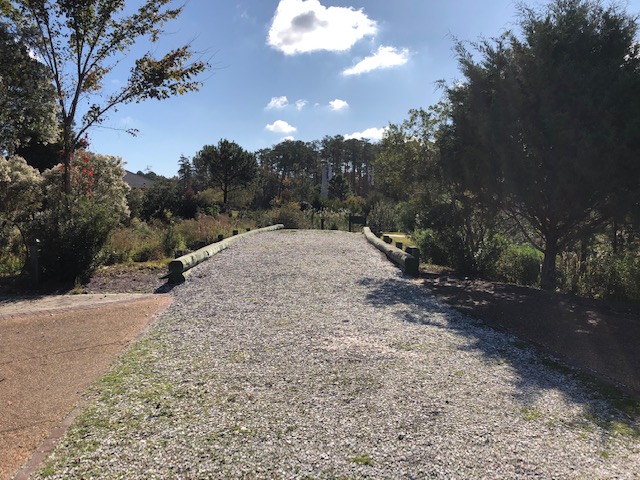
Pictures of Great Bridge Battlefield and monuments.

East Florida Rangers

When thirteen North American colonies rebelled against the British crown, the future state of Florida was not part of that movement. In fact, the settled part of the future 27th state of the United States was partitioned into East and West Florida. Both colonies also declined an invitation to send delegates to the Continental Congress.

East & West Florida colonies

West Florida, spanned from slightly east of Pensacola, which was the capital, across to Louisiana and included parts of modern Alabama, Louisiana, Florida, and Mississippi. East Florida, spanned the rest of northern Florida from the Apalachicola River to the Atlantic seaboard and down the peninsula. The capital was located at St. Augustine, founded in 1565 by the Spanish.

During the American Revolution, both East and West Florida would play a role as the rebellion spread into a world conflict, bringing into the fighting the European nations of France and Spain. In East Florida, St. Augustine would send north British soldiers to assist in operations in Georgia and South Carolina and also house American prisoners, including three Signers of the Declaration of Independence; Arthur Middleton, Edward Rutledge, and Thomas Heyward, Jr. Other prisoners, both Americans and French were also confined to the town too.

Continue reading “East Florida Rangers”

Abercrombie’s Sortie

Emerging Revolutionary War welcomes back guest historian Kevin Pawlak

On October 15, 1781, British General Charles Cornwallis penned a note to his superior officer General Sir Henry Clinton. Cornwallis told Clinton that American and French forces seized two redoubts, 9 and 10, along the York River the previous night. “My Situation now becomes very critical,” he glumly said. Before his army, entrenched outside of Yorktown, “shall soon be exposed to an Assault in ruined Works,” Cornwallis desperately sought to break the Allied stranglehold slowly bleeding his army. The general turned to Lt. Col. Robert Abercrombie to break the Allied lines anyway he could.

Map of the Allies’ Second Parallel and Abercrombie’s Sortie (from Jerome Greene, The Guns of Independence)
Continue reading “Abercrombie’s Sortie”

“Rev War Revelry” Tackles Virginia 1781

Mention the following words to any casual student or enthusiast of the American Revolutionary War and we can almost guarantee what the first word(s) or topic out of their mouths will be.

Virginia.

1781.

American Revolution.

If you are thinking, Yorktown, or Siege of Yorktown or Surrender of Yorktown, then our rhetorical question above is correct.

Most people know about the Siege and Surrender at Yorktown, but Virginia was a hot spot of activity the summer leading up to Yorktown. With British troops, led by the likes of Benedict Arnold, William Phillips, Alexander Leslie, and lastly by Lord Charles Cornwallis in the Old Dominion throughout the year and American leaders like the Marquis de Lafayette and Baron von Steuben, Virginia saw very active campaigning ranging through most of the central and eastern parts of the colony.

That is why you need to tune in and Join Emerging Revolutionary War this Sunday, on our Facebook page, at 7p.m EST for the next “Rev War Revelry” as we discuss the events leading up to Yorktown in October 1781.

We will cover actions such as Spencer’s Ordinary, Green Spring, Gloucester Point and of course Yorktown.

ERW will be joined by historians J. Michael Moore, Kirby Smith and Drew Gruber. All three live and work in the “Historic Triangle” of Virginia. The three gentlemen all have researched, led tours and have written published works about this important period of the American Revolution.

Map by Michel du Chesnoy (1746-1804) 

This will be a precursor to ERW’s annual fall trip, when we will visit Gloucester Point, Spencer’s Ordinary, Green Sping and Yorktown (which we invite you to follow along with on our Facebook page).

Savannah, an International Engagement

Last week I wrote about the various German principalities that contributed manpower to the British attempt to subdue the colonies. I ended the post with:

“An introduction to another aspect of how the American Revolution had far reaching international complications and commitments.”

I figured this week I would return to that theme and share a portion of the Battle of Savannah in 1779, from the perspective of how many nationalities had native sons take part in the fighting.

Besides the three obvious nationalities; British, German, French, and American, the following countries represented; Ireland, Haiti, Poland, Sweden and Switzerland.

The British commander was General Augustine Prevost, who was born in the Republic of Geneva on August 22, 1723 and like an older brother joined the British army. He saw action in the French and Indian War with the 60th Regiment of Foot and at the conclusion of that conflict even served a brief term as governor of West Florida.

During the American Revolution he was ordered to invade Georgia in 1778 and had taken command at Savannah in January 1779, although he wanted to resign in favor of a younger officer to take charge. His replacement was captured while enroute to relieve Prevost, thus the Genevan was still in charge during the subsequent siege and fighting in September and October 1779.

Curt von Stedingk, hailed from Swedish Pomerania in 1746 and by the time of the Siege of Savannah he had been tabbed to lead part of the offensive. He made it to the British entrenchments where he valiantly placed the American standard. Stedingk was wounded in the fighting. He received a decoration from the French and after the American Revolution George Washington invited him into the Society of Cincinnati. This created some controversy in his native Sweden as the king, Gustav III forbade Stedingk from wearing the ribbon and medal as it was from his service to a “revolting people.” He went on to have a long military career, including fighting Napoleon at the Battle of Leipzig.

Henri Christophe, the only monarch of the Kingdom of Haiti, was a drummer boy in a French regiment during the Siege of Savannah. The unit, the Chasseurs-Volontaires de Saint-Domingue was comprised of various ethnicities hailing from the island of Saint Domingue. Christophe may have been wounded around Savannah. He would distinguish himself in the Haitian Revolution before claiming his kingdom and naming himself monarch on March 28, 1811.

Casimir Pulaski, nicknamed “the father of American cavalry” was mortally wounded by canister while attempting to rally retreating French forces. The grapeshot that felled the Warsaw, Poland native is on display in Savannah or Charleston, depending on what account you believe; or possibly neither? He never regained consciousness and died on board the ship Wasp two days after his wound on October 11.

Arthur Dillon and his “Wild Geese” Irish Regiment, in the employ of the French, also took part in the failed attempt to subdue Savannah. Dillon, born in 1750, continued in the French service until being executed in Paris in 1794 due to his royalist leanings.

With such an international cast of personas, which did include rank-and-file from the countries not listed, the Siege of Savannah showed the global reverberations the conflict had. The preserved plot of land pays homage to this fact, which, if nothing else brings you to want to visit the city, is reason enough!

“Rev War Revelry” Heads to Kings Mountain

On October 7, 1780, patriot militia, some coming from over the Appalachian Mountains descended on a Loyalist militia force in northwest South Carolina. This pro-British force, commanded by the only British regular on the field that day, Major Patrick Ferguson retreated onto Kings Mountain.

American fought American.

On that hilltop one of the pivotal battles of the American Revolutionary War unfolded. The ramifications reverberated through the southern theater of operations, played a part on the psyche of civilians and militia, and added luster to the burgeoning backwoods, frontier American persona.

Emerging Revolutionary War focuses in on the Battle of Kings Mountain this Sunday, on the next “Rev War Revelry.” Join us on our Facebook page at 7 p.m. EST for a historian happy hour, as we discuss, dissect, imbibe, and provide commentary on this strategic battle, the national park there, and the campaigns that decided this theater of operation.

(courtesy of NC Encyclopedia)

“Rev War Revelry” The Importance of Germantown

On October 4, 1777, General George Washington’s Continental Army struck the British outpost at Germantown, Pennsylvania. Less than a month after the Battle of Brandywine and approximately a week after the loss of their capital, Philadelphia.

Initially successful, Washington’s forces got bogged down by fog and British holdouts in a stone structure called Cliveden. What started so promising did end in a tactical defeat for the Americans. Yet, coming days before the climatic battle in New York, dubbed Saratoga collectively, the cause of American independence was buoyed.

Although outshone in the annals of history by Saratoga, the setback at Germantown proved decisive in the French court, especially with the French foreign minister, who saw that the simple fact that Washington could regroup following Brandywine and come within some bad luck and fog of defeating the British was testament to resolve of the American effort for independence.

To cut through the fog and discuss the campaign, engagement, and repercussions of the Battle of Germantown, Emerging Revolutionary War invites back historian and author Michael C. Harris this Sunday for the next installment of “Rev War Revelry” at 7pm EST on our Facebook page.

He will join a duo of ERW historians. In addition, his publication, Germantown: A Military History of the Battle of Philadelphia, October 4, 1777, is now available through the publisher, Savas Beatie, LLC. Click here to order.

We look forward to hearing your comments, questions, and/or opinions this Sunday. So, set a side an hour-ish–as you know historians can get to talking and lose track of time easily, especially when books are also involved–for this historian happy hour.

Augustin Mottin De La Balme’s Disastrous Detroit Campaign, Autumn 1780

Junction of Saint Mary’s, Saint Joseph’s, and Maumee Rivers/Kekionga (Indiana Historical Society)

The Revolutionary War has more than its share of adventurers, rogues, soldiers-of-fortune, and risk-takers.  Augustin Mottin De La Balme combined all these characteristics in his person.  In November 1780, they brought the Frenchman and his soldiers to a horrible end outside the Miami Village of Kekionga, near the confluence of the Saint Joseph, Saint Mary’s, and Maumee Rivers in modern Fort Wayne, Indiana.

La Balme was born in France in 1736, entered the Gendarmerie in 1757, served in the seven Years War, gained experience in the cavalry, received an army appointment in 1763, and retired with a pension in 1773.  He wrote several books on cavalry training and tactics, but finding his fortunes stalled, left for America in 1777 with a letter of introduction from Benjamin Franklin, just one more French officer seeking rank, advancement, and his fortune in the war against Great Britain.[i]  Major General William Heath, who met him in Boston, wrote Washington, “We swarm with French Officers at this Place, Two arrived in the Ship on Sunday at this Place  They are much Superior to any that I have as yet Seen, One is an Engineer The other a Captain of Cavalry, They are Gentlemen of Education, Sense and Genius, The Captain has with him Two Treatises on the Discipline and management of the Horse, written by himself, and much Approved by all the Generals in the French Service.”[ii]  Despite a glut of would-be foreign officers, La Balme received a commission as a Lieutenant Colonel and then Colonel and Inspector General of Cavalry.  Dissatisfied with the appointment, he resigned, focused his attention on mobilizing Frenchmen still living in North America, and kept petitioning Congress to find useful work for him.  Eventually, Congress tried to pay him off and send him home, but the French officer stayed, trying his hand at various schemes to contribute, including mobilizing Indians in Maine to attack the British.  That short-lived campaign accomplished nothing, but resulted in La Balme’s capture and eventual escape.[iii]

Continue reading “Augustin Mottin De La Balme’s Disastrous Detroit Campaign, Autumn 1780”

240 Years ago Today in South Carolina: Lt. Col. Johann Christian Senf’s Journal and the Battle of Camden

Today 240 years ago in the back country of South Carolina, General Horatio Gates and his “Grand Army” were encamped around Rugeleys Mills South Carolina. He had come a long way in a short amount of time with his army from Deep Creek, NC. The men were ill fed, mostly poorly trained militia but he needed to strike a win for the American cause in the South. What he planned that evening is still debated today.

Gates had only been in command of the re comprised Southern Continental Army for a few weeks. He was tasked with turning around a disastrous year for the Americans in South Carolina. Most of the Southern army was captured at Charleston in May 1780 and then a bloody defeat of Virginia forces on May 29th at Waxhaws. American partisans such as Moultrie and Sumter had found some success, but the Continental Congress worried that they were about to lose the southern colonies. Something had to be done and many believed (though Washington and his supporters wanted Nathaniel Greene) the hero of Saratoga was the man for the job.

Now that Gates had brought his army so close to the British post at Camden, SC he needed intelligence on his next move. There could be no misstep, he was only 12 miles from the British at Camden. At that time, Gates believed he outnumbered the British under Lord Rawdon, but what he was soon to find out is he over inflated his own numbers and now Lord Cornwallis was in command. Gates’ force was still slightly larger, but it was mostly made up for militia. The British army comprised of some of the best units in North American. A very different situation indeed.

Gates ordered his engineer Lt. Col. Johann Christian Senf and Virginian Lt. Col. Charles Porterfield southward towards Camden. Senf was to find a suitable location for the American army to march and set up a defensive position. Gates had no illusions to attacking the British at Camden, and most likely he hoped they would abandon Camden all together. Senf wrote “reconnoitering a deep creek 7 miles in front was found impassable 7 miles to the right and about the same distance to the left, only at the place of the Ford interjects the great road”. (1) This creek was Saunder’s Creek and it is where Gates decided to move his “Grand Army” and await developments from Thomas Sumter who he had sent on a mission along the Wateree River in the flank and rear of Camden.

Continue reading “240 Years ago Today in South Carolina: Lt. Col. Johann Christian Senf’s Journal and the Battle of Camden”