One of the first infamous miltiary units in Virginia during the American Revolution was the Culpeper Minute Men. Remebered and memorialized throughout the years, we welcome James Bish back to discuss the history of the men, the unit and what role they played in the early days of the Revolution in Virginia.
Jim will also talk about some of the upcoming commemorative events planned around the 250th anniversary of the formation of the Culpeper Minutemen. To learn more about the events, visit: https://culpepermuseum.com/culpeper-minutemen-250th-anniversay-week/ . This Rev War Revelry is recorded and will be posted to our Facebook page on Sunday, October 5th at 7pm. It will also be posted to our You Tube and Spotify channels.
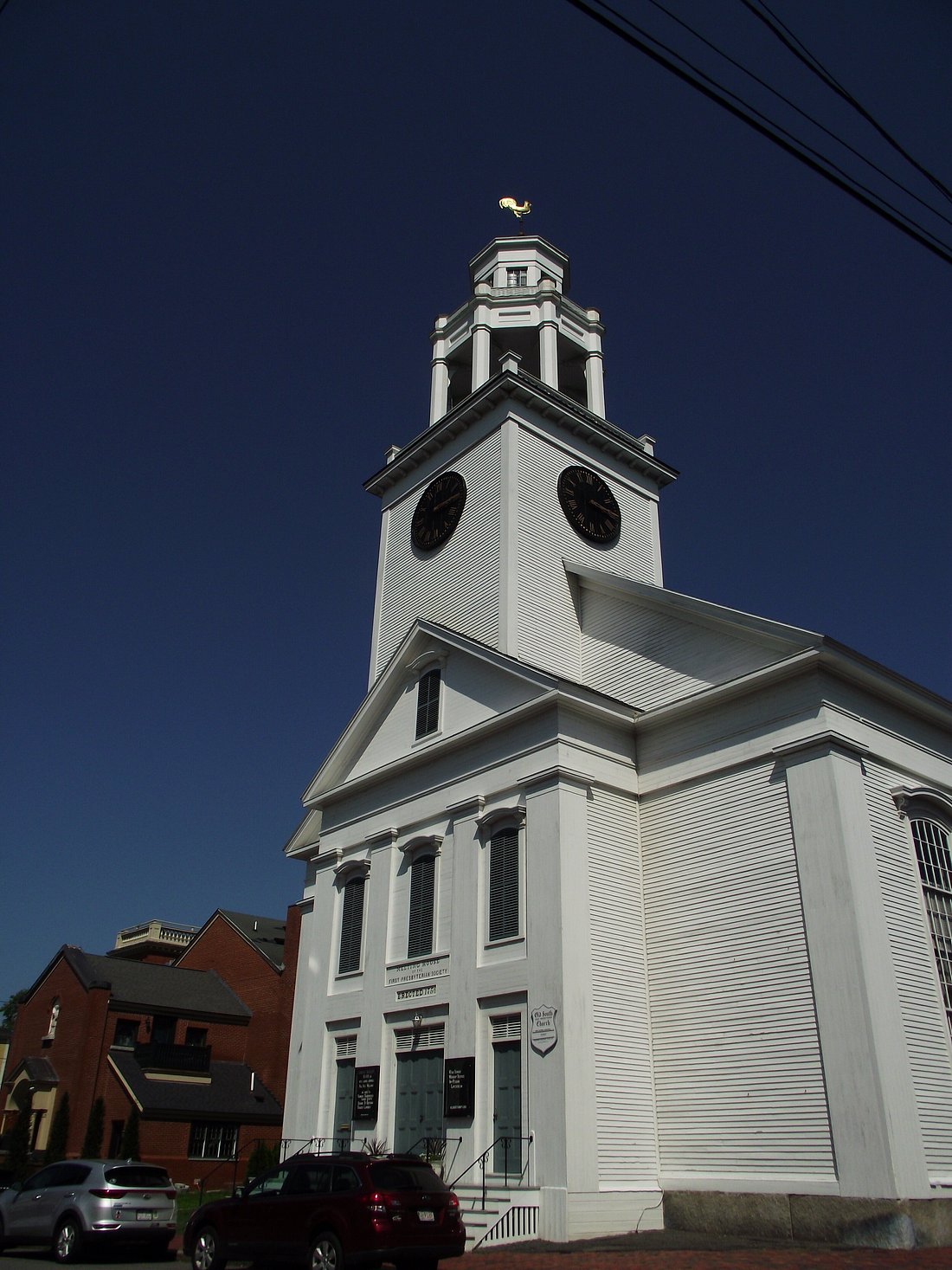
Modern view of the “Old South Presbyterian Church, Newburyport, MA
As Benedict Arnold assembled his small army of 1,100 men in Newburyport for his bold cooridinated strike on Canada (with General Richard Montgomery attacking via Montreal), there was one last stop before the men boarded the boats in the Merrimack River. From here they would hug the coast on their way to Maine, then overland to Quebec. It was a bold strategy for the inexperienced army and army commander. Though the was just started in April, and peace was still spoken by many political leaders, Washington approved this first American offensive. Strike the British forces in the Canadian colonies, with the hope of encouraging their northern colonial neighbors to join their cause.
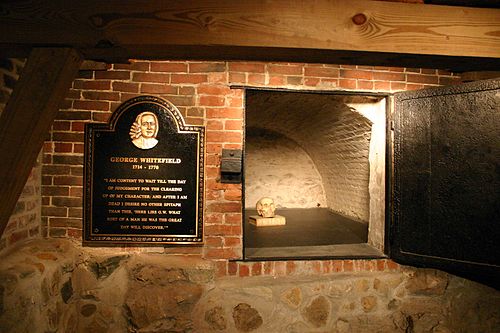
Arnold felt it was appropriate that his mission have the blessing of God, so hundreds of men squeezed into the First Presbyterian Church (now called Old South Presbyterian Church). One of the largest churches in the city, it was the spiritual home of the Great Awakening in New England. Here, evangelist preacher George Whitefield, preached from when the church was built in 1756 until his death in 1770. Whitefield was buried in the crypt of the church. His fame was well known to Arnold and others, Whitefield is considered one of the founders Methodism and a great public speaker.
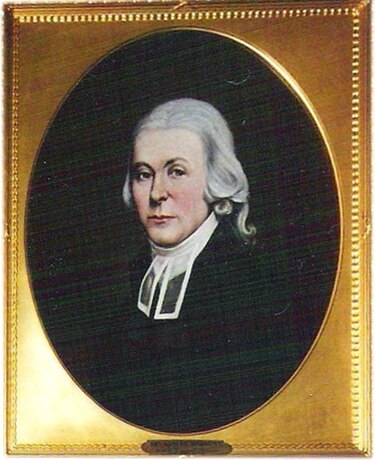
What men could not fit into the church pressed up against the doors and windows. Today’s service, held on Wednesday, September 20, was a dedication service. To bless the men and their task at hand. Reverand Samuel Spring, a popular orator in his own right, and he was now to serve as chaplain of Arnold’s small army on its way to Canada.
The scene was recounted in J. T. Headley’s, 1864 “The Chaplains and Clergy of the Revolution“:
Reverand Samuel Spring
“There sat the fearless Arnold, the bold rifleman, Morgan, and a host of other brave men, who, notwithstanding their dauntless courage, felt that the perils of the untrodden, mysterious wilderness, they were about to penetrate, might be too great for human energy and endurance, and the hour come, that their only hope would rest in the God whose spirit the chaplain [Samuel Spring] invoked as their guide and stay. The citizens, who crowded the gallery, never forgot that sermon. It became the talk of the place, and was the cause of his eventually settling over them as their pastor.”
After the sermon, a surreal experience took place. Soon, someone on Arnold’s staff wanted to go to the crypt and see the tomb of Whitefield. Headley quoted Rev. Spring:
“I preached over the grave of Whitefield. After the service the general officers gathered around me. Some one requested a visit to Whitefield’s tomb. The sexton was hunted up, the key procured, and we descended to his coffin. It had lain in the tomb six years, but was in good preservation. The officers induced the sexton to take off the lid of the coffin. The body had nearly all returned to dust. Some portions of his grave-clothes remained. His collar and wristbands, in the best preservation, were taken and carefully cut in little pieces, and divided among them.”
A modern view of the crypt of Rev. George Whitefield
Headley continued; “The chaplain, with the haughty Arnold, the chivalrous Morgan, and group of officers, gathered in the dark vault around the tomb of Whitefield, formed a scene worthy of a painter. The clank of steel had a strange sound around the sainted sleeper, while the hallowed atmosphere filled all hearts with solemn awe and reverence.”
Now, with their good luck token from the grave of Whitefield, Arnold and his staff made their way to the shore where his men were boarding their boats in the Merrimack River. Arnold and his men saw their mission blessed by God, and wanted to tie their cause with that of the Great Awakening. They believed their cause was right and just. The process of visiting a tomb and taking pieces of a dead man’s clothing may seem a tad bit of “macbre” to us today, to Arnold it was a way to bless his mission. One that he believed would bring him and his men glory.
Two hundred fifty years ago Culpeper residents were uneasy. Virginians were in a war of words with their mother country, as evidenced by the published Culpeper Resolves of 1774 against England’s abuses. Little did they know that by the end of 1775 fighting men from Culpeper would be at the forefront to depose the British government from Virginia forever.
On March 23, 1775 Patrick Henry rose to speak at the Second Virginia Revolutionary Convention held at Richmond’s Saint John’s Church. The Convention’s presiding officer, Peyton Randolph, gave Henry the floor as debate swirled concerning approving a resolution forming and arming of Virginia Patriot militia forces. In attendance were Culpeper’s representatives Henry Pendleton and Henry Field Jr. as were Fauquier County’s representatives, and future Culpeper Minutemen, Thomas Marshall and James Scott. Henry stated:
Romanticsized version of Henry’s speech at St. John’s Church
“Gentlemen may cry, Peace, Peace but there is no peace. The war has actually begun! The next gale that sweeps from the north will bring to our ears the clash of resounding arms! Our brethren are already in the field! Why stand we here idle? What is it that gentlemen wish? What would they have? Is life so dear, or peace so sweet, as to be purchased at the price of chains and slavery? Forbid it, Almighty God! I know not what course others may take; but as for me, give me liberty or give me death!
Thomas Marshall later told his son, also future Culpeper Minutemen and U.S. Chief Justice John Marshall, that the speech was “one of the boldest, vehement, and animated pieces of eloquence that had ever been delivered.”
As Henry predicted a gale did come down from the north in the form of British troops trying to control arms and gunpowder stockpiles on April 19 in Lexington and Concord, Massachusetts, resulting in the first bloodshed of what Henry predicted as “the clash of resounding arms.” Just weeks earlier, William Legge, Earl of Dartmouth, Britain’s Secretary of State for the colonies, issued a warning to the Royal Governors and suggested they take control of such gunpowder and weapon strongholds. He especially targeted the governors of Massachusetts and Virginia.
News of the events in Massachusetts was still over a week away in Virginia when early in the morning of April 21, colonists in Williamsburg awoke to find royal marines removing the gunpowder from the public powder magazine. Virginia’s Royal Governor, John Murray, Earl of Dunmore, ordered the aggression respecting Dartmouth’s warning. This “Gunpowder Incident”, ignited the already simmering spark of discontent and suspicion between Dunmore and the patriot colonists.
Henry quickly formed some local militias into companies near Williamsburg and requested militia’s throughout the colony to muster. In northern Virginia, Fredericksburg became the rendezvous location for local militias. In Culpeper County men from throughout the area quickly assembled in their traditional muster and drilling location of Major Philp Clayton’s field by Mountain Run, today’s Yowell Meadow Park. Once organized, Culpeper Captain Edward Stevens marched his Culpeper militiamen to Fredericksburg joining other county militias.
Dunmore was well aware that Henry was actively recruiting militias to march on Williamsburg. Henry publicly called for Dunmore to return the powder or pay for its value, £330 (near $18,000 today) or patriot forces would march against him. As the situation escalated, Dunmore reportedly said, “I have once fought for the Virginians, and by God I will let them see that I can fight against them.” On May 3, after over ten days of maneuvering, Dunmore agreed to Henry’s monetary demands as peace was preserved. Militia’s throughout the colony, including those of Culpeper in Fredericksburg, were ordered to return to their home counties. The Gunpowder Incident proved to be a milestone event in Virginia’s turn towards revolution. As 1775 moved into summer open rebellion against royal authority began and Culpeper residents prepared for the upcoming conflict.
Earlier, in March 1775, Culpeper County representatives, Henry Field Jr. and Henry Pendleton, attended the Second Virginia Convention where Peyton Randolph, Richard Henry Lee, George Washington, Patrick Henry, Richard Bland, Benjamin Harrison, and Edmund Pendleton were selected as delegates representing Virginia at the Second Continental Congress. Field and Pendleton knew the representatives well from their years in the House of Burgesses. They especially knew George Washington who earlier served as Culpeper County’s first surveyor and Edmund Pendleton was Henry Pendleton’s uncle. On May 10, 1775, the Second Continental Congress convened in Philadelphia.
After the Battles of Lexington and Concord and Virginia’s gunpowder incident, the first order of business for the Congress was to prepare for war. On June 14, 1775, Congress voted to establish the Continental Army which incorporated patriot forces already in place in Massachusetts and New York while also raising the first ten companies of Continental Army troops on a one-year enlistment. These included two regiments of Virginia riflemen, one raised from Berkeley County (now in West Virginia) led by Captain Hugh Stephenson and the other from Frederick County led by Daniel Morgan, along with rifle regiments from Pennsylvania and Maryland. The very next day, Congress unanimously elected George Washington as commander-in-chief of the Continental Army and he immediately departed for Boston.
Meanwhile, Boston area patriots learned that the British were planning to fortify the unoccupied hills surrounding the city, which, if successful, would give the British control of Boston Harbor. Patriot leader William Prescott quickly responded, utilizing his 1,200 troops to occupy and build defense works on Bunker and nearby Breed’s Hill. At daybreak on June 17, the British mounted an attack against them. The Boston patriots fought gallantly, and enacted tremendous casualties upon the British, but eventually they ran out of ammunition allowing the British to control the high ground of the Peninsula. Newly assigned commander, George Washington, had just arrived in New York on his way to Boston when he received news of the battle and the death of patriot Major General Joseph Warren (for whom Warrenton, Virginia was later named).
Monument dedicated to the Culpeper Minute Men muster site in Yowell Meadow Park, Culpeper, VA
On July 8th, 1775, Congress directed each of the colonies to start forming land and naval military units. Virginia’s Third Convention assembled in Richmond on July 17, 1775 and began drafting legislation for the defense of Virginia titled, “An Ordinance for raising and embodying a sufficient force for the defense and protection of this Colony.” Following the guidance of Congress, an ordinance was worked upon to create a Committee of Safety to govern Virginia and to prepare for war. Although the details of the legislation took over a month to form, the earliest specifics created 16 military districts from Virginia’s 62 counties. Each military district was to support a 68-man regular, or rifle, company and a ten-company minute battalion of 500 men in preparation for war.
On August 21, 1775 “An Ordinance for raising and embodying a sufficient force for the defense and protection of this Colony.” was read for a third and final time and then passed unanimously by the delegates of Virginia’s Third Convention. On August 25th Alexander Purdie’s Virginia Gazette published the ordinance as directed by the Convention. Delegates worked strenuously on the ordinance for over five weeks before getting passage. George Mason wrote, “I have not since I came to this place, except the fast-day of Sunday, had an hour which I could call my own – this is hard duty.” This was by far the largest ordinance produced by any of the Conventions as it contained over 13,000 words and took up six pages of Purdie’s eight-page Gazette. Earlier readings of the ordinance alerted many leaders throughout Virginia to begin the process of recruiting, possibly as early as late July and certainly by the first week of August, to fulfill the legislation’s manpower needs. The ordinance created 16 military districts including the Culpeper District, which also included Orange and Fauquier County.
This legislation meant that the Culpeper Military District was now tasked with providing manpower of almost 600 men including officers. In August, the local delegates, Thomas Marshall and James Scott from Fauquier County, Field and Pendleton from Culpeper, and Thomas Barbour and James Taylor from Orange returned home to aid in the recruitment throughout their district. For the first time, Fauquier, Culpeper, and Orange County men were recruiting for war, not against the Native Americans, the French, or the Spanish. This time they were recruiting for war against their own British empire.
Each military district was to raise one 68-man regular or rifle company in addition to the 500 man minute battalion, rank and file, from the age of 16 to that of 50, to be divided into ten companies plus officers. Every man enlisted was required to “furnish himself with a good rifle, if to be had, otherwise a tomahawk, common firelock bayonet, pouch, or cartouche box, and three charges of powder and ball.” If the minute-man was not able to furnish his arms, they were to be supplied at public expense. Six privates were allowed one shared tent from the public supply. For pay, the Battalion Colonel was allowed 15 shillings per day, Lt. Colonel 12 shillings, and a Major 10 shillings. The pay for Captains and lower ranks was the same as Culpeper’s Regular Company at 6 shillings per day, Lieutenants at 4 shillings, Ensigns at 3 shillings and Privates earning one shilling and four pence per day. The difference in pay came from days a year in service. Both privates for the regular rifle company and the minute battalion were enlisted for a year’s service. However there was certainty that the rifle company would be away from home during the year while the minute battalion might not get called up, meaning that they would be paid for local drilling of 76 days per year instead of 360. As a result, the regular rifle company recruits expected to earn a yearly pay of 480 shillings/year while a minute battalion privates were guaranteed 101 shillings, that is of course unless the minute company was activated, which the Culpeper Minute Battalion was.
In the newly formed Culpeper Military District local leaders met and made commitments for recruiting individual companies and decided to meet on September 1st in the central county of Culpeper at the traditional militia muster site of Philip Clayton’s property just west of Culpeper Court House. It seems clear that some of the most experienced riflemen and former militia veterans would make up the district’s needs for the 68-man rifle company that would be incorporated into either Patrick Henry’s 1st Virginia Regiment or William Woodford’s 2nd Second Virginia Regiment. Certainly military district rifle competitions pushed the expert riflemen toward the rifle company. However, some expert riflemen appreciating the idea of remaining at home most of the time, chose to stay in the minute battalion. Because of its size, recruitment for the manpower needs for the ten-company minute battalion was going to be the greatest challenge.
In Fauquier County, Delegates Thomas Marshall and James Scott began recruiting officers and in turn, those officers were charged with recruiting the needed manpower for each company to fulfill Fauquier’s obligations. Besides Marshall and Scott, officers placed in charge of recruiting their own companies included William Pickett, John Chilton, William Blackwell, George Johnston, Elias Edmunds, Francis Triplett, and William Payne. Orange County leaders Lawrence Taliaferro, Richard Taylor, Joseph Spencer, John Williams, and Willliam Taliaferro began recruiting their own companies. In Culpeper County, highest ranking militia officers, John Green and Edward Stevens, took the lead in recruitment efforts. Other Culpeper leaders recruiting included Abraham Buford, John Jameson, William McClanahan, George Slaughter, Philip Clayton, and James Slaughter. Their upcoming muster on September first at Clayton’s Field would determine how effective their August recruitment efforts were.
As the September first rendezvous approached, recruiting captains from each of the three counties of Orange, Culpeper, and Fauquier made plans to meet at Clayton’s muster field along Mountain Run. It appears that the many recruitment captains had their specific areas in the region they had recruited. In Culpeper, Abraham Buford recruited in southwestern Culpeper County (today’s Madison County), John Jameson recruited close to the village of Culpeper Courthouse, William McClanahan northwestern Culpeper County into present day Rappahannock County. James Slaughter recruited in the area of Culpeper Courthouse and south and east to the Rapidan River. John Green recruited the northeastern areas of the county.
In Orange County Joseph Spencer recruited in southeastern Orange. His recruits journey to Clayton’s muster field has been recorded. Spencer made an initial rendezvous location of his recruits at “Porter’s Old Courthouse” probably on August 31st. In 1775 this property was owned by Charles Porter and it had been the site of the first Orange County Courthouse from 1738 until 1749 before the courthouse was moved to near present-day Orange. The first courthouse location today is on the eastern side of Route 522 just northeast, and on the hill, from E.V. Baker’s Store. From that location it is roughly 12 miles to Clayton’s muster field, roughly a half-day march. It is assumed that other recruiters made rendezvous in a similar fashion, however many of the recruits in Culpeper County probably just sent word to directly meet at Clayton’s field.
Most of the Culpeper Military District recruits likely arrived by September 1, but some probably lingered into the next few days. There the recruited men would have been sworn in, given rank, and told their paygrade. The Committee of Safety would have also been involved fulfilling the officer ranks and in reducing the number of minute battalion companies and captains to ten. Some of the recruiting captains filled senior officer ranks and their recruits were assimilated into other companies to complete their needed numbers. Certainly rifle competitions were held and most of those who were most skilled filled into John Green’s Rifle Company. There appears to have been enough good riflemen above the 68 needed for the rifle company and they were placed in a variety of the battalion companies. John Green of Culpeper County led the rifle company as Captain with Richard Taylor of Orange 1st Lt. and John Eustice of Fauquier as 2nd Lt. The senior leaders of the Minute Battalion were Col. Lawrence Taliaferro from Orange, Lt. Col. Edward Stevens from Culpeper, and Major Thomas Marshall from Fauquier. The 10 Battalion Company Captains included Abraham Buford, John Jameson, William McClanahan, and John Williams, all from Culpeper; William Blackwell, John Chilton, William Pickett, and James Scott from Fauquier; and William Payne and Joseph Spencer of Orange.
Sixteen year old recruit, Philip Slaughter penned a diary account of which we get an image as to what Clayton’s muster site appeared. According to Slaughter,
Modern interpretation of the Culpeper Minute Men Flag, courtesy of the Sons of the American Revolution
“Some had tents, and others huts of plank, etc. The whole regiment appeared according to order in hunting shirts made of strong, brown linen, dyed the color of the leaves of the trees, and on the breast of each hunting shirt was worked in large white letters the words, ‘Liberty or Death’ and all that could procure for love or money bucks’ tails, wore them in their hats. Each man had a leather belt around his shoulders, with a tomahawk and scalping knife. The flag had in the center a rattlesnake coiled in the act to strike. Below it were the words, ‘Don’t tread on me.’ At the sides, ‘Liberty or Death’ and at the top, ‘The Culpeper Minute Men.’
The According to Culpeper’s Ensign David Jameson, the Culpeper Battalion “was raised in less than three weeks.” The men on Clayton’s field proved to be special in liberating Virginia from the British. Leadership on the field was not in shortage. On that field was a brother (Ambrose Madison) to a future president (James Madison), a father (Richard Taylor) to a future president (Zachary Taylor) and future Chief Justice of the U.S. Supreme Court (John Marshall) among countless other state leaders. Slaughter also stated, “During out encampment an express arrived from Patrick Henry, commandant of the First Virginia Continental Regiment, by order of the committee of safety, then sitting in the city of Williamsburg, requesting the Minute Men to march immediately to that city. The Minute Men immediately made ready.” It is not known for sure when the Virginia’s Committee of Safety issued the request to “March immediately,” but John Green’s Regular Rifle Company certainly left Culpeper in late September for the 140-mile march of roughly six days arriving by October 4. The Culpeper Minute Battalion followed a few weeks later and arrived in Williamsburg by October 23.
Between late September and mid-October 1775, over 600 Culpeper Military District recruits marched from the muster and drilling site of “Clayton’s Old Field” in response to Patrick Henry’s request of immediate mobilization to Williamsburg for the protection of Virginia. The Culpeper deployment proved to be by far the largest deployment from any location in Virginia in 1775-76 to answer the call of defending the Commonwealth from the British. While every Virginia Military District fulfilled their requirements for a regular company, Culpeper’s “Minutemen” were Virginia’s only fully-manned minute battalion to respond in Virginia’s critical hour of need. After arriving at Williamsburg, Culpeper’s expert riflemen immediately moved into action against Lord Dunmore’s Royal and Loyalists forces. The rifle company was immediately pressed into action guarding James River crossings while the minute battalion was immediately ordered to protect the local magazine, and like the rifle company, James River crossings. Upon arriving Slaughter continued to tell about their arrival in Williamsburg stating, “Many people hearing that we were from the backwoods, near the Indians, and seeing out dress, were as much afraid of us for a few days as if we had been Indians; but finding that we were orderly and attentive in guarding the city, they treated us with great respect.”
Although there were many “riflemen” in the battalion, Slaughter also stated, “The Minute Men were chiefly armed with fowling-pieces and squirrel-guns.” Upon arrival, Col. William Woolford designated Captain Abraham Buford, and a hand-selected company of minute battalion riflemen, to move immediately, marching through the night of October 26, to defend Hampton from attack by a British naval squadron. Hampton would be there first of several weeks of fighting Lord Dunmore and his mixed force of Regulars, Loyalists and former slaves.
For more information on commemorative events this fall commemorating the Culepeper Minute Men, visit the Culpeper Museum at https://culpepermuseum.com/
Emerging Revolutionary War welcomes back guest historian Michael Aubrecht
As someone who enjoys the occasional cocktail I am admittedly curious as to the rumored excessive-drinking habits of our Founding Fathers.
After conducting a casual examination, I think it would be fair to say that their wealth, power, and the period in which they lived in made alcohol a mainstay in their daily lives. Most of these gentlemen were the political playboys of their day and we already know that many of them had a penchant for wine, women and song. Today most people assume that the common table wine was the preferred beverage of colonial times and that most folks simply enjoyed it as a compliment to meals.
According to research conducted by Stanton Peele, the Founders had a much broader palette when it came to engaging in the Spirit of ‘76. Simply put, these boys liked to party:
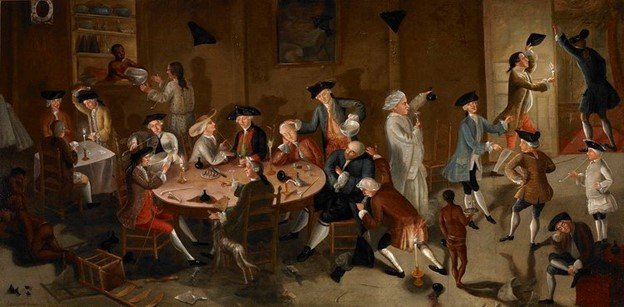
How do we know the Founding Fathers as a group drank a lot? Well, for one thing, we have records of their imbibing. In 1787, two days before they signed off on the Constitution, the 55 delegates to the Constitutional Convention partied at a tavern.
According to the bill preserved from the evening, they drank 54 bottles of Madeira, 60 bottles of claret, eight of whiskey, 22 of porter, eight of hard cider, 12 of beer and seven bowls of alcoholic punch. That’s more than two bottles of fruit of the vine, plus a few shots and a lot of punch and beer, for every delegate. Clearly, that’s humanly impossible.
Join us this Sunday at 7pm on our Facebook page as we welcome historian and author Gabe Neville back to Rev War Revelry. Gabe has just finished and published one of the most comprehensive Revolutionary War unit histories ever written. Focusing on the Eighth Virginia Regiment, Neville’s book titled “The Last Men Standing, The Eighth Virignia Regiment” is a must have for anyone’s library. We will talk with Gabe about his research, interesting tidbits of his book and what let him to this project.
This presentation witll be LIVE at 7pm on Sunday, August 24th. Tune in and share any thoughts or questions in the chat. Gabe is always a fun chat, so grab a drink and enjoy learning about his in depth research on the 8th Virginia Regiment.
Emerging Revolutionary War welcomes guest historian and reviewer Al Dickenson
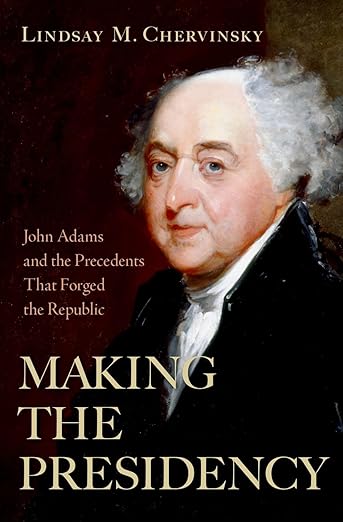
No president has an easy job. But imagine holding the position of president immediately after undoubtedly the best president the United States has ever had.
That was John Adams’ conundrum. Additionally, it is the subject of renowned historian Lindsey Chervinsky’s new book, Making the Presidency: John Adams and the Precedents That Forged the Republic. Initially released last year, in the midst of a politically fraught election season, Chervinsky places the modern world into a context we should all understand better: the history of the 1790s.
After a brief introduction regarding the Revolutionary War, the early republic, and George Washington’s presidency, readers are thrown into John Adams’ presidency. Federalists opposing Democratic-Republicans (commonly referred to as simply “Republicans” in Chervinsky’s text, as they referred to themselves), the Americans opposing the French, the North opposing the South, Federalists opposing Federalists: it seemed there could be no peace in the nation so split apart. Yet the nation stood for another 220 years. Why is that?
Chervinsky argues that the reason we are a nation today relies on how John Adams served his presidency, specifically the power sharing he enacted in his cabinet amongst Republicans (like Vice President Thomas Jefferson), Federalists (like Secretary of State Timothy Pickering), and Archfederalists (like Secretary of War James McHenry), the successful navigation of foreign affairs (see the ongoing French Revolution, specifically the XYZ Affair), and the peaceful transfer of power.
The final focus of Chervinsky’s book, Adams’ loss in the 1800 election, perhaps offers the most original outlook on Adams’ presidency. Being the loser of the election, and being the first incumbent president to lose an election, historians have often treated Jefferson a little kindlier than Adams. Where Chervinsky’s work shines, however, is in showing how these great, powerful men, the leaders of their respective parties, differed in how they saw power, and in how they wielded it.
Little scholarship focuses on Jefferson’s machinations to gain the presidency. Rarely researched are his Virginia and Kentucky Resolutions, which called for nullifying federal law, even though these ideas were eventually adapted into various Confederate causes and mentalities in the following decades. Nor are the essentially political and emotional blackmail Jefferson laid on Federalist members of Congress who refused to vote for him over Aaron Burr. Jefferson threatened the members of Congress with, in essence, secession of Republican states if they did not pick a president soon, given that this was the only election in American history where the House of Representatives made the presidential selection. The dirty tricks of politics manifested themselves in this election, including smear campaigns against Adams and unfounded warnings that the Federalist Party would forego the will of the people and simply appoint a new, Federalist president.
Compare this to John Adams, who, while certainly desirous of a second term, largely laid low during the turmoil occurring on the other side of the Capitol. When presented with suggestions to keep himself as president, he refused. When asked to annul the election, Adams refused. When asked to stand for himself and campaign in the final months of the election season, and during the contingent election in the House between Jefferson and Burr, Adams refused and stayed silent. He did not cling to power, nor did he view his opinion better than that of the American people who voted for a Republican and the House members who would choose the next presidency. Though he was a lame duck president in every sense of the word, he held true to his convictions of propriety in politics, though privately he fumed.
In this way, though history often sheds more light on the winner, makes historians wonder what other ways “losers” of an election may have impacted our politics and history. An interesting study question for any intrigued historian, but one that Chervinsky shows is vital to understanding American history and modern politics alike.
Emerging Revolutionary War welcomes back Jeffrey Collin Wilford Part I, click here. Part II, click here.
Major Andre’s Reckoning
Along the way from Tarrytown, New York, to West Point, Benjamin Tallmadge conversed almost nonstop with the freshly captured British prisoner John André and learned much about the youthful officer. It was perhaps Major Tallmadge’s background as George Washington’s chief intelligence officer as well as recollections illuminated by the light of André’s charisma, that helped begin to paint a picture of an honorable soldier. After countless hours of conversation during their journey north he became convinced that André’s “Head was in fault, & not his heart.” Tallmadge commented later that André was “a most delectable Companion. It often drew tears from my Eyes to find him so pleasant & agreeable in Conversation on different Subjects, when I reflected on his future fate, & that too, as I believed, so near at hand—” In the short time the two spent together Tallmadge seemed to have grown extremely fond of the British Major.
One can sympathize with Tallmadge’s point of view. After all, André was merely another victim of the traitor Arnold. He had intended to meet him on board the Vulture but when Arnold failed to show he was forced to go ashore with Smith. After the Vulture was scared off by artillery and Arnold convinced him to don civilian clothes, plying him with incriminating materials and sending him through enemy territory, the stage was set. In his testimony, he said it was General “Clinton’s directions not to go within an Enemy post or to quit my own dress.“ Even so, by his own admission, it was the ruling of the military Proceedings that “he changed his Dress within our Lines and under a feigned Name and in a Disguished [sic].”
Perhaps Tallmadge’s sympathies toward André were accentuated by his hatred for Arnold. Tallmadge’s characterization of André becomes clearer in a simple personal act from his testimony when he stated that “André kept reviewing his shabby Dress, & finally remarked to me that he was positively ashamed to go to the Head Qrs of the American Army in such a plight. I called my Servant, & directed him to bring my Dragoon Cloak, which I presented to André. This he refused to take for some time, but I insisted on it, & he finally put it on & rode in it to Tappan.”
By the time they made Tappan, André was under heavy guard and imprisoned at Mabie’s Tavern. Just a few hundred feet away, Washington convened 14 of his top military officers who, over two days of testimony, found André guilty and sentenced him to death. On October 1st André personally requested from Washington the honor of a firing squad over a “gibbet.” Knowing the favor could not be granted, Washington opted to ignore the request.
On October 2nd, just before noon, André appeared on the stoop of Mabie’s Tavern. Four officers were present to escort the convicted spy to his final judgment. One of the four officers was Captain Lieutenant John Van Dyk, with just six months separating this moment from his own capture by the British off the coast of New Jersey. “There were about six steps which led into the stoop of the house, on the light of these, one American officer with myself were standing when Major André came out of the front door of the house in regimentals, hooking his arm with the two American officers (his attendants) one on his right and left. He ran down the steps of the stoop as quickly and lively as though no execution was to take place, and immediately fell into the centre of the guard, a place assigned him.”
André exits Mabie’s Tavern on the day of execution. (copyright: New York Public Library)
Escorting André with his four guards was also Major Benjamin Tallmadge. “I walked with him to the place of execution, and parted with him under the gallows, entirely overwhelmed with Grief, that so gallant an officer, & so accomplished a Gentleman should come to such an ignominious End.” Echoing that sentiment in writing nine days after his execution was Alexander Hamilton, saying “Never perhaps did any man suffer death with more justice, or deserve it less.”
Mabie’s Tavern today (Wilford)
When André had turned the corner to see the gallows before him, Van Dyk recorded his statement. “Gentlemen, I am disappointed, I expected my request…would have been granted.” According to Van Dyk, preparations were made and André’s final words when asked if he had any were “I have nothing more to say, gentlemen, but this, you all bear me witness, that I meet my fate as a brave man.” With that came the untimely end of Major John André who was then cut down and not allowed to fall to the ground and “every attention and respect was paid to Major André that it is possible to pay a man in his situation.” He was placed in a simple coffin and buried in a shallow grave close to the site. Over the following 40 years, a peach tree grew above the grave, ostensibly from a peach given to André by a woman as he marched to his execution.
When the Duke of York requested the return of his remains in 1821 it was not without fear of a backlash, specifically from the residents of Tappan. Many felt it was an affront to the memory of George Washington. British consul James Buchanan found that the protestations dissipated quickly after he agreed to buy those who were against the idea a drink at the local inn. The bones were then dug up with the root of the peach growing through the skull’s eye socket. They were placed in a mahogany ossuary and shipped by way of a British mail ship called a packet to New York City where they awaited their return to London.
Captain, now Colonel, John Van Dyk, 67 years old and working for the New York Customs House near the docks of the North (Hudson) River heard about the impending exhumation and, using his connections with influential New Yorker John Pintard, requested a dialog with Buchanan. Through the British consul, he obtained a penned introduction to the captain of the packet where André’s bones lay. Van Dyk made his way to the North River and found the captain just leaving to go back aboard the packet. Upon handing him the introduction from Buchanan, the captain requested that he return at 10 o’clock the following morning and a barge would be waiting to take him to the ship.
Coincidentally, that same day Dr. Valentine Mott, considered by many to be the greatest surgeon of his time, was treating one of Van Dyk’s children and heard of Van Dyk’s plan. Naturally, he was invited along for the next morning’s visit. That day, the two reached the docks just before 10 o’clock and met the barge which took them to the ship. “We went together on board the Packet. The bones were in a superb urn, and we were permitted to handle them. I mentioned the circumstances, as I have related them above, to the Captain [about André’s execution] — bid him goodbye, and we came on shore.” Van Dyk’s motivations for wanting to visit the remains of André are lost to history and probably best understood by those who experienced the emotions of that fateful day in American history.
Amidst a boat of mail destined for England, John André left New York for the last time, traveling back to London where his remains were repatriated. His ossuary was emptied of its contents and his remains were buried in Westminster Abbey with the inscription “universally beloved and esteemed by the Army in which he served, and lamented even by his foes, now lay alongside medieval kings, Renaissance statesmen, and Georgian poets.” Arnold and his wife Peggy lived the rest of their lives post-Revolution in London, reviled by most, and are buried just 3 miles away at St. Mary’s Church in Battersea, in a vault that sits behind a wall in a basement kindergarten classroom.
[Original source: The Papers of George Washington, Revolutionary War Series, vol. 28, 28 August–27 October 1780, edited by William M. Ferraro and Jeffrey L. Zvengrowski, 291–296. Charlottesville: University of Virginia Press, 2020.]
[Original source: The Papers of George Washington, Revolutionary War Series, vol. 28, 28 August–27 October 1780, edited by William M. Ferraro and Jeffrey L. Zvengrowski, 277–283. Charlottesville: University of Virginia Press, 2020.]
[Original source: The Papers of George Washington, Revolutionary War Series, vol. 22, 1 August–21 October 1779, edited by Benjamin L. Huggins, 745–746. Charlottesville: University of Virginia Press, 2013.]
[Original source: The Papers of George Washington, Revolutionary War Series, vol. 28, 28 August–27 October 1780, edited by William M. Ferraro and Jeffrey L. Zvengrowski, 303–311. Charlottesville: University of Virginia Press, 2020.]
Van Dyk, John. “Major André, Letter of Col. Van Dyk to John Pintard, August 27, 1821.” Historical Magazine 7, no. 8 (August 1863): 250-252.
Van Dyk, John. “Major André.” Martinsburg Gazette, August 20, 1835.
Emerging Revolutionary War welcomes back guest historian Eric Wiser
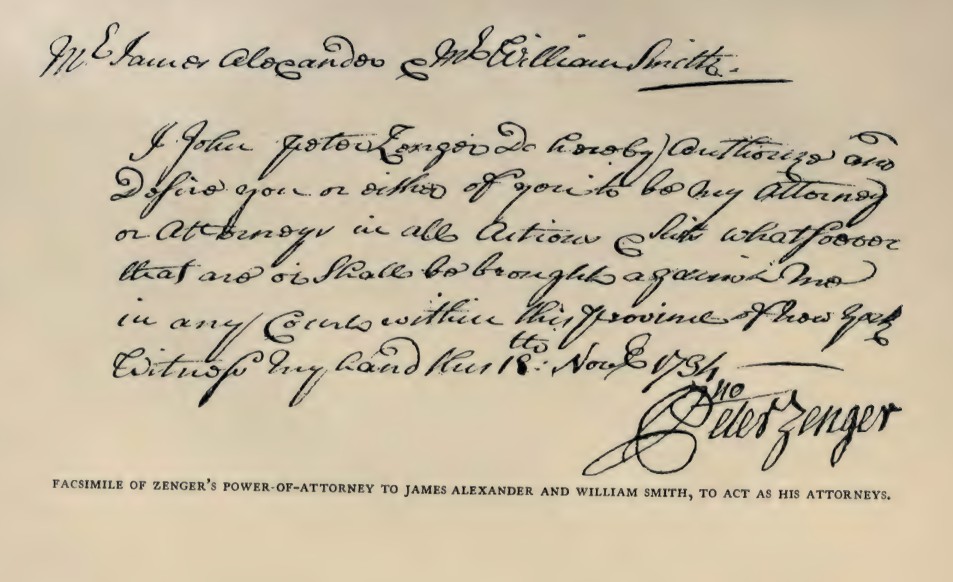
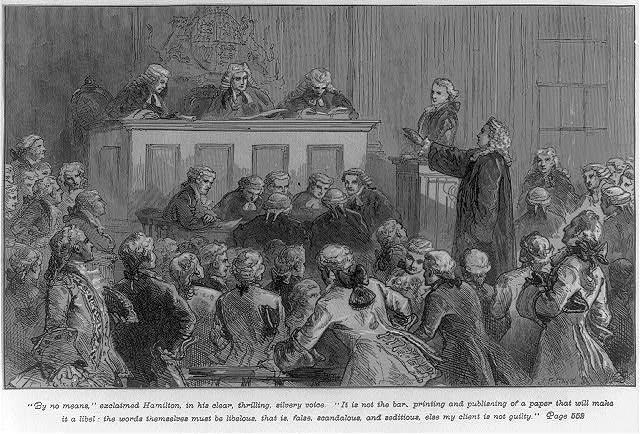
On August 4, 1735 printer John Peter Zenger was acquitted of seditious libel in a dramatic trial before a crowded courtroom in New York’s City Hall. Zenger languished nine months in jail before his acquittal for “printing and publishing a false, scandalous and seditious libel, in which His Excellency the Governor of this Province, who is the King’s immediate representative…” Zenger’s odds were long given New York Supreme Court’s disbarment of his original attorneys in the pre-trial stage. Aggrieved Royal Gov. William Cosby had a legitimate claim under English Common Law that he was seditiously libeled.[1]
Zenger’s fame as an early martyr of freedom of the press is well known. In terms of America’s founding, it’s difficult to imagine independence without the dissemination of ideas through pamphlets and newspapers. Benjamin Franklin, a printer himself whose own brother James was imprisoned by authorities in Massachusetts a decade before Zenger, commented on freedom of the press: “This sacred Privilege is so essential to free Governments, that the Security of Property, and the Freedom of Speech always go together; and in those wretched Countries where a Man cannot call his Tongue his own, he can scarce call any Thing else his own.”[2]
Despite being thirty-years before the Stamp Act of 1765, the Zenger trial and political conditions surrounding it have seedlings sprouting growth in the Revolution. The substance of these can be traced to the colonial grievances inspired by acts of Parliament which in turn became articulated in the Declaration of Independence. Factionalism between supporters of Crown representatives and those opposed was present in the Zenger episode in nascent form. The rhetoric expressed by Zenger’s attorneys is indistinguishable from the much of the lofty language in the Revolution less “independence.”
Emerging Revolutionary War welcomes back Jeffrey Collin Wilford For Part I, click here.
General Benedict Arnold’s Betrayal
On the morning of September 21, 1780, while Captain John Van Dyk, only recently freed from the prison ship Jersey, was guarding West Point as part of Colonel John Lamb’s artillery unit, the HMS Vulture arrived at Haverstraw Bay and anchored just off Teller’s Point. Two men pressing apples at a cider mill on the shore became alarmed at the presence of a British warship on the river north of the “neutral ground,” and a barge disembarking from it filled with Redcoats. Not knowing their intent, both decided to take matters into their own hands and opened fire on the soldiers. John “Rifle Jack” Peterson, a veteran of the Battle of Saratoga, received his nickname due to his superior marksmanship. The other, Moses Sherwood was just 19 years old and a friend of Jack Peterson. Both were enlisted in the Westchester County militia. Their relationship was very close as Rifle Jack had held Sherwood’s father in his arms as he died at Saratoga three years earlier.
Croton (Teller’s) Point today – (Wilford)
Several of their shots hit their mark, wounding soldiers and prompting the barge to return to the Vulture which opened fire with a barrage of grapeshot on the two men as they crouched behind rocks. This signaled to the pair that the ship was within cannon range and they quickly made their way in the darkness to Fort Lafayette ten miles to the north to secure a cannon from the officer in charge, Colonel James Livingston.
Cannon that fired on the Vulture Peekskill Museum (Wilford)
At Peterson and Sherwood worked with several other soldiers to lug the 4-pounder back to the point while, unbeknownst to them, André slipped away from the Vulture. He made his way from the Vulture to shore, at around midnight, with Loyalist Joshua Hett Smith who had been instructed to gather him from the ship. His destination was a clandestine meeting on the river bank with American General Benedict Arnold, the famous war hero of Saratoga who had been plotting for months to turn against the cause of American independence. What was clear, by André’s account, was that this meeting was to be a fairly quick round-trip between the Vulture and shore under cover of darkness.
Instead, an unraveling of the circumstances dictated that he shed all previous warnings from British General Sir Henry Clinton to stay dressed in his regimental uniform, avoid enemy checkpoints, and not possess any incriminating papers. André admitted this to Clinton in a letter written after his capture and dated September 29, 1780 stating, “The Events of coming within an Enemys posts and of Changing my dress which led me to my present Situation were contrary to my own Intentions as they were to your Orders.” This would force him to become, in his own words, “involuntarily an impostor.”
As negotiations on the riverbank dragged on, likely due to Arnold’s negotiations around rank and compensation, daybreak drew near. Fearing discovery, and clearly against André’s original plan, they moved their talks to the home of Smith, which overlooked the river and the Vulture at anchor. During the meeting at Smith’s house, Arnold eventually handed over the defensive plans of the Continental Army’s citadel, West Point, and the minutes from General George Washington’s September 6th War Council meeting that created a vulnerability for the Americans that could have proved catastrophic.
It is easy to understand why West Point was so significant to the British. It was crucial, not just as a military installation situated on the banks of the Hudson between New England and the Southern Colonies, but as a symbol of American strength and resolve. Perched on the high ground overlooking the Hudson, West Point had been there to thwart British attempts to dominate the 300-mile-long river which would have allowed them to effectively cut off the rebels of New England from the rest of the colonies. Losing West Point would have taken an important strategic foothold away from the Americans. The potential of losing General Washington in the process would have also dealt a severely damaging blow to the American cause, if not ending the war altogether.
While the Arnold and André negotiations were taking place, a contingent of men, along with Peterson and Sherwood, had dragged the 4-pounder to Teller’s Point into position on the riverbank within range of the Vulture.
Early in the morning, awakened by cannon fire, the conspirators at Smith’s house could see the Americans in the distance opening fire on the ship. Though he did not immediately know it, this would permanently separate André from his only means of a safe escape. Hit several times and stranded in the middle of the Hudson by a slack tide and unfavorable winds, the Vulture endured the cannon fire but eventually cut her cables to drift with the currents south to Dobbs Ferry.
As a result of the retreat of the Vulture, an alternative plan was devised to get André back to the British lines. On the morning of the 22nd, in disguise and with a pass written by Arnold to travel unmolested behind American lines under the alias John Anderson, he and Smith began the overland trek back to British-occupied New York City. Arnold returned to his home at West Point. What was clear from André’s later testimony was that he felt like this change of plan made him a victim of circumstance saying he “thought it was settled that in the way I came I was also to return.”
What were the motivations for the thirty-nine-year-old hero of Saratoga, who had risen through the military ranks to become one of Washington’s most effective field generals, to give up not only West Point, but his reputation in history? Much has been written, but what is known is that he had been living a life well beyond his means. His wife Peggy Shippen, half his age and from a prominent Philadelphia Loyalist merchant family, had a taste for luxury. To woo the 19-year-old, Arnold openly lived a life of excess while in Philadelphia which turned more than a few heads, wondering if he had secretly been trading with the British.
Benedict Arnold was also known for his self-assured nature and temper. Infighting within certain circles of the military, and his discovery that several junior officers had received promotions ahead of him, provided him even more motivation to turn. Arnold felt the military did not display the respect that was due a war hero and this sentiment was on display in a letter to Washington on May 5, 1779. “Having made every sacrifice of fortune and blood, and become a cripple in the service of my country, I little expected to meet the ungrateful returns I have received of my countrymen.” Perhaps the influence placed upon him by his relationship with Peggy due to her father’s position, and his criticism of the American cause added more weight to his self-imposed need to betray his country. Consequently, he began to develop a plan to turn over West Point to British General Sir Henry Clinton, with Major John André as the British intermediary.
The second day treading enemy soil was rather uneventful as André and Smith carefully made their way south to the original King’s Ferry which crossed the Hudson between Stony Point and Verplanck, the site of the former Fort Lafayette. The crossing was a nerve-wracking affair for André as this was the main ferry crossing for all Continental troops and supplies just outside of the watchful eye of the British forces in New York City 45 miles to the south. Following the Crom-Pond Road, the journey was slow and deliberate, befitting a spy and his Loyalist guide. As nightfall approached, they bedded down at a farmhouse before continuing their journey early the next morning.
Isaac Underhill House – Where André ate his last breakfast (Wilford)
The pair continued to make their way along the Croton River until reaching the southernmost lines of the Continental Army where Smith left André just after finishing their breakfast at the Isaac Underhill house. By the time André had reached Tarrytown, New York, by way of the Albany Post Road, a road he had been told to avoid, his luck had run out. Isaac Underhill House – Where André ate his last breakfast (Wilford)
At 9 o’clock on the morning of September 23, 1780, André was stopped by three militiamen at Clark’s Kill, a stream that today marks the boundary between Sleepy Hollow and Tarrytown, New York. According to André, he “was taken by three Volunteers who not Satisfied with my pass riffled me and finding papers Made me a prisoner.” Isaac Van Wart, John Paulding, and David Williams would go on to be considered heroes by most, but certainly not by all. One of their leading detractors was the person George Washington entrusted with returning André to West Point and ultimately Tappan for trial, Major Benjamin Tallmadge. Tallmadge was Washington’s chief intelligence officer and he believed the three militiamen were “of that class of person who passed between both armies.” He felt they lacked the very character he would end up heaping upon André.
André Capture Site (Wilford)
While the circumstances surrounding Major John André’s capture unfolded in Tarrytown, General Arnold, aware that his treacherous plot had been uncovered, and leaving behind his baby and a hysterically distraught Peggy Shippen, raced to avoid capture and meet up with the HMS Vulture. Upon his return from a meeting with French General Rochambeau at Hartford Connecticut, Washington, unaware of any involvement by Shippen, allowed her to return to her family in Philadelphia, perhaps letting go of an important bargaining chip in the process. It would later be learned that she might have been complicit in her husband’s treason. While she openly denied it, an admission from Theodosia Burr, Aaron Burr’s wife, that she admitted to her involvement as well as a £500 annual pension from King George III would suggest this.
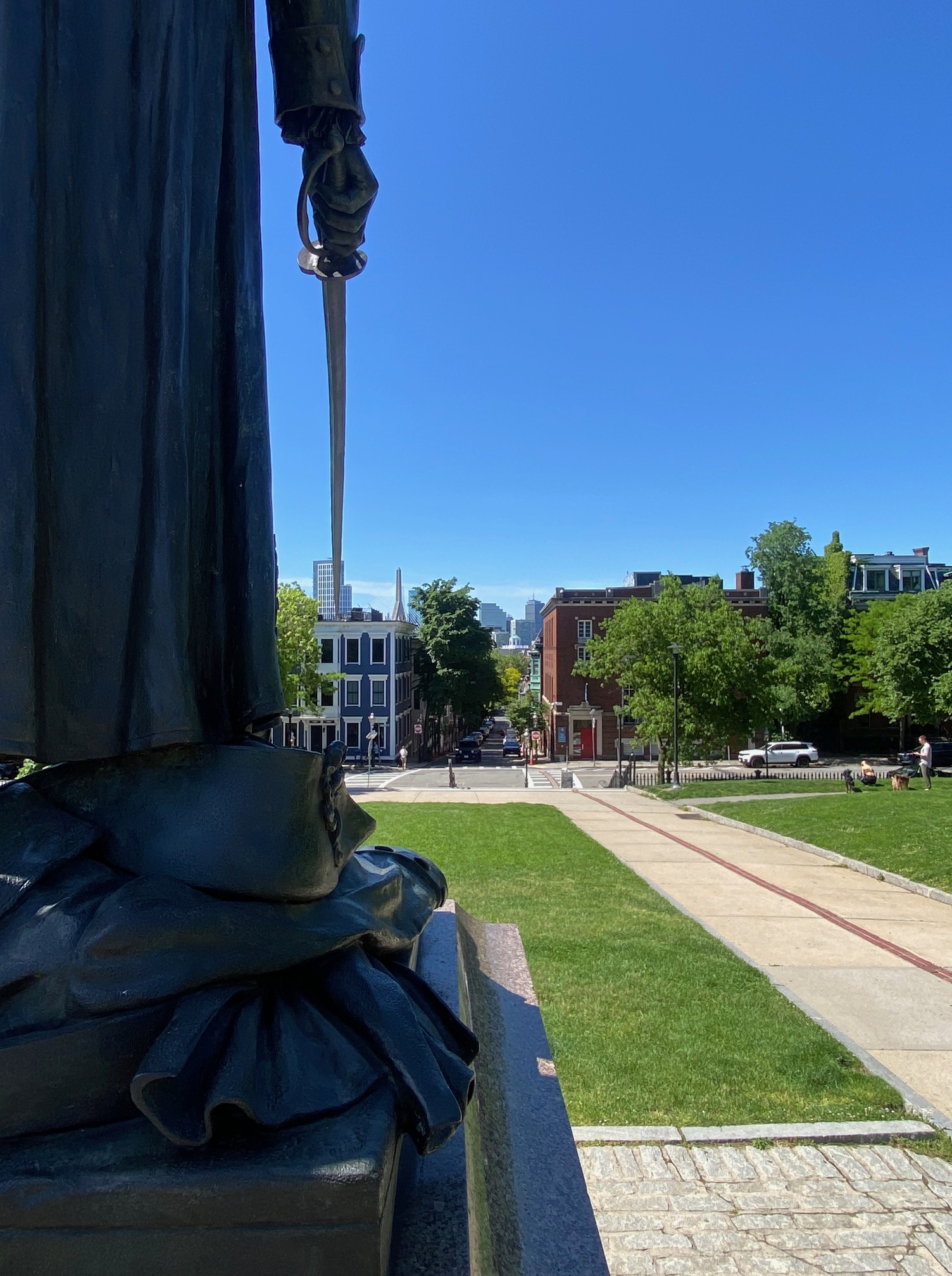
Dedicated in 1881 and made of bronze, the statue of Colonel William Prescott stands over nine feet tall. Although the man who stood steadfast on the earthen parapet of Bunker Hill was not quite that tall. Yet, on June 17, 1775, the men of New England looked up to the approximately 50-year-old that day.
A National Park Service page on Colonel Prescott and Bunker Hill is titled, “A Glorious Immortality.”An account that was passed down about the Massachusetts militia officer vividly describes why he deserves that moniker.
“The breast work or redoubt was only constructed of such earth as the party had thrown up after the middle of the night and was not more than breast high to a man of medium height. Colonel Prescott being a very tall man, six feet and two or three inches in height, his head and shoulders and a considerable portion of his body must have been exposed during the whole of the engagement. He wore a three-cornered cocked hat and a ban-yan or calico coat. After one of his men was killed by cannon ball, Prescott, perceiving that this had made some of the soldiers sick at heart, mounted tile para-pet and walked leisurely around it, cheering his soldiers by approbation and humor. His clothing was repeatedly spattered with the blood and the brains of the killed and wounded.”
Leadership. Example. Personal bravery. He was also one of the last to leave the earthwork as the British captured it.
He now stands, in bronze, watching over the scene where he proved he was a match for the moment.










 Emerging Revolutionary War Era