Did the Battle of Moores Creek Bridge help keep the British away from the southern colonies during the first half of the war?
Months before its colonies officially adopted their Declaration of Independence, the British army was reaching a critical juncture in its war strategy: with the colonies in rebellion, where should they focus their attentions? The war was picking up steam and the British were looking for a stronghold in the colonies that would gain them resources such as men and supplies. They turned their eyes south.
The general impression of the southern colonies was that they were poorer and weaker than their sister colonies in the north. They also had been receiving word of heavy Loyalist sympathies in both the backcountry of South Carolina and the coastal areas of North Carolina, where large populations of German and Scottish immigrants had settled. Indeed, by the fall of 1775, Loyalist recruitment seemed to be quite successful. One evidence of this was at the First Battle of Ninety Six in November 1775, when nearly 2,000 Loyalists met a paltry force of not quite 600 patriots. Though this first Revolutionary War battle south of New England ended in a truce, British confidence was high.
The Royal Governor of South Carolina, Lord William Campbell, had fled the colonies by September 1775, leaving the colony mostly in the hands of the Patriots. That made the ultimate goal at this point in the southern colonies to capture the wealthy and strategic port of Charleston, South Carolina. Meanwhile, the Royal Governor of North Carolina, Josiah Martin, convinced British commanders to target key points along their route through his colony as they advanced on their mission. And as 1775 turned into 1776, plans were set in motion.
On January 10, Martin issued a proclamation calling on all subjects loyal to the Crown to take up arms against the rebellion in the colony. Authority was given to Loyalist leaders throughout the colony to recruit militia and gather all necessary provisions to muster in Brunswick, NC.
A copy of Josiah Martin’s Proclamation from January 10, 1776. Library of Congress.
By mid-February, a contingent of several thousand loyalists was gathered at Cross Creek, NC, preparing to march towards their goal. Among those recruited were the famed Scotch Highlanders. Though not all joined the Loyalist cause, the Highlanders’ reputations as fierce warriors preceded the impending war in the colonies. This reputation may have stemmed from the Jacobite rebellion in the 1740s as well as British assumptions at the time that the HIghlands were a lawless land due their clan-based culture.
Loyalists weren’t the only militias stirring along the Carolina coast. Patriot militias had begun forming at the first news of Loyalists gathering as early as August 1775. In fact, some of those militias formed in Wilmington, NC became the foundation of the 1st North Carolina Regiment of the Continental Army and in February 1776, they were led by Colonel James Moore. At that time, they were joined by additional militiamen from the surrounding area, led by Alexander Lillington and Richard Caswell. Their goal was two-fold: protect Wilmington and prevent the Loyalist forces from reaching the coast.
By February 20, 1776, a clash between the British and Patriot forces was inevitable. British commander Donald MacDonald began to move his 1,600 men from Cross Creek towards his rendezvous point at Brunswick, only to find his way impeded along the Black River by Caswell’s blockade. On February 25, MacDonald had managed to get across the river and Caswell moved his 1,000 Patriots back to Moores Creek Bridge. There they set up defensive earthworks, prepped their two artillery pieces, and prepared for battle.
A map of the Moores Creek campaign, February 1776. NPS/Moores Creek National Battlefield.
At 1:00 am on February 27, 1776, MacDonald’s second-in-command, Donald McLeod, led the British troops on their march towards the Patriot position. Arriving at an abandoned camp on the west side of the bridge around 5:00 am, a brief exchange of fire alerted the Loyalists to the Patriot sentries guarding the bridge, and ultimately, the Patriot forces lying in wait.
McLeod with 50 men attempted to cross the bridge and attack the Patriot defensive position, but the attempt was futile and disastrous. Heavy musket fire coupled with a barrage of two artillery units killed 30 almost immediately, including McLeod. The remaining Loyalists quickly retreated and the battle was over almost as quickly as it had begun.
Bill Ballard’s drawing of the decisive moment during the Battle of Moores Creek Bridge. NPS/Moores Creek National Battlefield.
So how important were these three approximate minutes of battle? This Patriot victory struck a huge blow to Loyalist recruitment in North Carolina – so much so that two months later, North Carolina’s delegates to Continental Congress were the first to vote for independence. And it created a rippling effect throughout the southern colonies, as one by one the royal governors were displaced and revolution took hold.
No longer could the British see the Carolinas as easy targets. They abandoned this initial southern strategy to focus their resources on the war in the northern colonies. For the next three years, significant battles and events that we learn about today took place, thanks in part to the dominating Patriot showing at the Battle of Moores Creek Bridge.
If you’re interested in learning more about the Battle of Moores Creek Bridge, I strongly encourage you to visit Moores Creek National Battlefield’s website as well as their very active Facebook page. Both offer a wealth of information and additional resources for folks to explore.
In March 1781, General Charles Lord Cornwallis finally caught up with his antagonist, General Nathanael Greene and his joint Continental and militia forces in North Carolina. On March 15, 1781, the British scored a pyrrhic victory over the American forces, securing the field but losing approximately 25% of their field force in the process.
With the victory, Cornwallis was forced to retreat to the North Carolina coast, to Wilmington, where he could rest and refit. He then led his forces north and into Virginia, to his destiny at Yorktown.
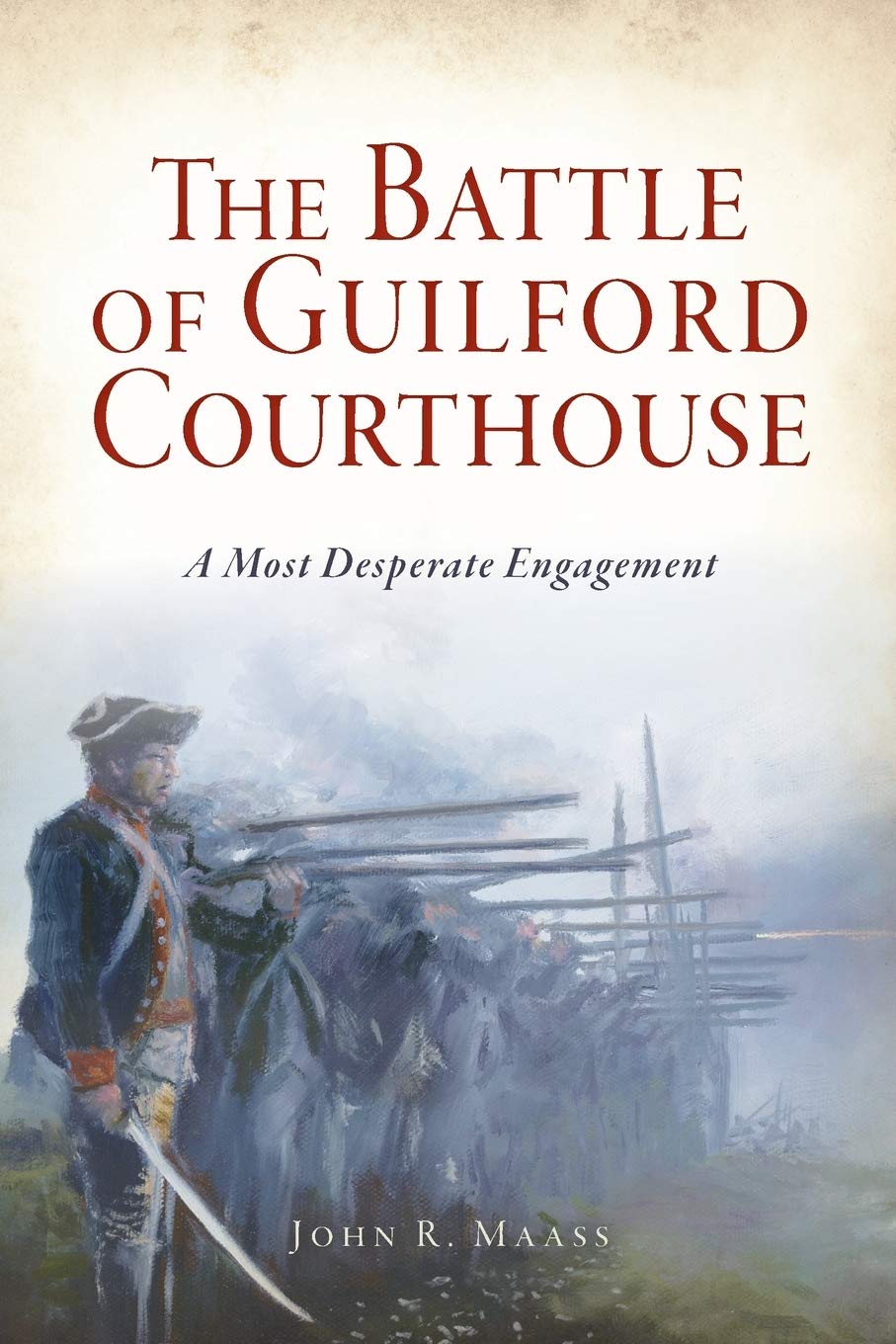
Yet, the road to Guilford Court House, for both sides, started in South Carolina, across the entire breadth of North Carolina, and into the southern reaches of Virginia before returning to the Old North State. This road and the history of the campaign, along with the March 15th engagement, unfolds in a new history by Dr. John Maass, author and historian, currently at the U.S. Army Center of Military History in Washington D.C.
His book, The Battle of Guilford Court House, A Most Desperate Engagement will be the focus of this week’s “Rev War Revelry.” The book is now available from book retailers and online. We hope you can join us this Sunday, at 7 p.m. EST, for our next installment of a historian happy hour.
To access, just head to Emerging Revolutionary War’s Facebook page, go to the “Events” tab and follow the prompt at 7 p.m.
Emerging Revolutionary War welcomes back guest author Drew Gruber.
Since Arnold’s raid in January the situation for Virginians in the Spring of 1781 was deplorable and growing worse. Keeping soldiers shod and fed (besides properly armed and equipped) proved difficult. For example, Gen. Baron von Steuben noted that despite receiving 100,000 cartridges the Virginians simply lacked cartridge boxes to store them or even an adequate number of muskets to fire them. In Virginia, a colony defined by its deep waterways finding vessels to move men and supplies was also a major piece of the puzzle.
The Chesapeake Bay and navigable rivers provided quick access into the interior of Virginia and both sides vied to control them. Previous campaigns in Virginia and along the Bay highlighted why towns like Portsmouth, near the confluence of the James River, and the Chesapeake Bay could help armies control large swaths of the largest and most prosperous colony. Of course, access to vessels of a variety of sizes was necessary to ensure the control of not only Virginia but Coastal North Carolina and Maryland.
Gloucester Point 1755, inset from original owned by the Mariners Museum.
Thankfully by March 1781 Virginians had an upper hand over their adversaries not only in the number of boats but the means to outfit, repair, and support an ad-hoc navy. It was the culmination of years of effort and ingenuity which began just after Virginia declared its independence.
Alongside Virginia’s establishment of a system of public stores and the creation of a standing army a shipyard was on the short-list of priorities for the fledgling independent state. In June 1776 the Virginia Committee of Safety empowered shipbuilder John Herbert to “examine all such places upon the James River or its branches…proper and convenient for erecting ship-yards…”1 Herbert selected a bend in the Chickahominy River just a dozen miles west of Williamsburg.
The Virginia State Navy appears to have been amorphous and inconsistently armed between June 1776 and the spring of 1781. At various points it consisted of about a dozen ships, although the term ‘ship’ may be generous descriptions for some of these vessels.2 According to Charles Paulin’s Navy of the American Revolution despite Virginia leadership’s zeal to fund additional ships, marines, and infrastructure to support coastal defense, the vessels were largely undermanned and poorly armed. To our modern sensibilities and perhaps to the men and women of the Revolutionary era the names of the “armed boats” which comprised Virginia’s navy are less than inspiring. For instance, the ships Experiment and the Dolphin don’t give off an air of martial prowess but still sound better when compared to my personal favorite, the Fly.
Still, the Virginia General Assembly pushed to create and maintain a more effective naval system and in 1777 appointed James Maxwell as Superintendent. He apparently oversaw the operation at the various shipyards, rope works, foundries and all the materials and men needed to create and maintain an effective navy. Maxwell’s base of operations at the Chickahominy yard included over 150 acres of stores, barracks, and other infrastructure essential to the maintenance and creation of a vast flotilla.
Although the Chickahominy yard was ably led and with copious old growth timber at their disposal the lack of manpower persisted. Maxwell reported to Virginia’s Gov. Jefferson that in outfitting two vessels they relied on volunteers.3 In the same letter to the governor, Maxwell noted that the term of service for the crew of the Jefferson expired and he was “detaining them Against their will.” Despite setbacks and the shortage of able bodies the shipyard kept Virginia float.
The information available in the papers of Williamsburg Public Store and the Calendar of State Papers provides a snapshot into the day-to-day operations in the naval yard.4 However, a letter written in February 1781 provides the best insight into the effectiveness of the operation. Capt. Beesly Edgar Joel wrote Gov. Jefferson from Williamsburg commenting that the Dragon (a much better name) was under water rendering it, obviously, unfit for service. Within five days it was floating and on day six was sailing down the James River.5 In an era obviously devoid of pneumatic lifts this quick turnaround speaks volumes as to the facility’s capabilities despite its handicaps.
Early American Shipyard, image from Abbot’s 1908, “American Merchant Ships and Sailors.”
Maxwell’s operation at the Navy Yard grew slightly by March 1781 as the state prepared for what was certain to be an intense spring campaign. Maxwell reported that he had 96 guns with the majority being four pounders but lamented that his full compliment of sailors should be 590 whereas he had 78 men to staff 7 ships. Two additional ships were ready but had no crew to speak of while 4 of his operable boats had less than 10 men serving on them.6 This would have to suffice.
That same month, reports flooded into Richmond from various points near the Chesapeake Bay that British reinforcements had arrived in Portsmouth to support Arnold. Within a few short days various Virginia arsenals, warehouses, and even shipyards were being instructed to police up their men and materials and move them west out of the possible path of destruction. Virginia could not afford another disastrous raid like the one they experienced in January.
As predicted, British Gen. Phillips left Portsmouth on April 18th, with over two dozen boats and approximately 2,000 men. It happened quickly. Virginian Rodham Kenner recalled their retreat as Phillips combined force sailed west up the James River.
“the whole of our little fleet which was in this part of the Bay was driven up James River a much Superior British force, and into the Chickahominy River to what was called the Ship Yard: whilst our little fleet composed of the following Vessels to wit the Ship Dragon, the Brigg Jefferson and the Thetis a 36 gun Ship”7
The following morning, on April 19, British Col. John Simcoe landed at Burwell’s Ferry with a force of Jagers, light infantry and the Queen’s Rangers. The Ferry, located at the confluence of the James and Chickahominy rivers sat scarcely a few miles from Maxwell’s shipyard. Phillips ordered Simcoe to “beat up any party who might be in ambuscade there.”8 Finding no ambush this elite force quickly marched across the Virginia Peninsula towards Williamsburg.
Burwell’s Ferry Landing, photo from “The Post Script” published in April 2020 by Kate Gruber
A small force of Virginians, apparently under the command of Maj. Armistead briefly skirmished with Simcoe’s men as they pushed east towards Williamsburg.9 Simcoe’s men continued east along the old Yorktown road as various Virginia militia units melted away before them eventually arriving in Yorktown itself. As this was unfolding British Lt. Col. Robert Abercromby (Ambercombie) with his light infantry paddled up the Chickahominy towards the shipyard. Over a dozen flat boats, supported by perhaps as many as a dozen additional vessels turned into the mouth of the Chickahominy River from the James River – a few miles of the shipyard.
Although few primary source accounts describe the British attack on the shipyard Virginia pensioner Joseph Saunders provided the best description so far. Although he was recalling the event almost fifty years after the fact, his deposition has a surprising amount of detail.
“They sent a number of gun boats up to our shipyard to destroy what was there. I had filled my galley with naval stores to take up the River to conceal them but wind and tide being against me could not go on, came to, put a spring on my cable, and awaited their arrival. It was not long before they came in sight and as soon as near enough I discharged my cannon at them, sunk my vessel, and made my escape to shore…”10
Arnold’s report to Henry Clinton is rather vague as was Virginia’s Lt. Governor David Jameson when he wrote James Madison seven days later on April 28. “When they went into Wbg some of their Vessels with the flat Bottomed Boats moved up to Chickahominy—while there they destroyed the Ship Yard, the Thetis, the Stores &c. &c.”11 Besides untold stores, and raw and finished materials, at least two large vessels were destroyed, either at the hands of their own crew or Ambercromby’s amphibious infantrymen. Besides the limited contemporary reports from soldiers, sailors, and Virginia legislators, myriad archaeological reports highlight the effectiveness of the British raid.
The inferno of the burning yard, ships, stores, and supplies was so large that it could be seen several miles away later that evening. James Innes, commanding Virginia militia who were fleeing west towards New Kent County, recalled in his letter to Thomas Jefferson that, “They possessed themselves of the Ship Yard about 4 o’Clocke yesterday, and I am apprehensive from the fire discoverd in that Quarter last night they have totally destroyed it.”12
According to William Lowrie, the Dragon was “burnt by the British at Chickahominy Ship yard.”13 Both Lowrie and Saunders have ties to the Dragon and it must have been difficult to watch the ship which had served the cause of liberty for almost five years slip beneath the surface. In fact, The Dragon was approximately 81 feet long and roughly matches the size of a one of the two vessels still sitting in the bottom of the bottom of the Chickahominy River today.14 The second vessel which has also been surveyed in myriad cultural resource reports is substantially shorter and has been hypothesized to be either the Lewis or Safeguard.15 In fact, on March 20th 1781 Saunders was placed in command of the Lewis which he scuttled almost a month later a few yards from the wharf at the shipyard.16
Artist interpretation of vessel Remains, “Historical and Arcehaological Investigation of the Chickahmoiny Shipyard Site,” a thesis by Jeffrey D. Morris, C. 2000., Pg. 109
Today the site of the shipyard is on private property and the underwater resources are protected by the Code of Virginia § 10.1-2214 which empowers the Virginia Marine Resources Commission with the authority to permit underwater archaeological investigations and makes recovery of underwater archaeological materials illegal without a permit. Trespassing on both land and water is unlawful which helps protect the known and unknown archaeological resources. Without stronger primary source materials like pensions, maps, and letters from soldiers and citizens artifacts become the key to understanding many Revolutionary War events like this one. Every button, nail, and cannonball when professionally recovered and systemically documented will provide us with the best chance to fully understanding how this shipyard contributed to the war for American independence.17
Maxwell’s shipyard never recovered however the Virginia State Navy has escaped wholesale destruction and would live to fight another day. As Phillip’s soldiers and sailors moved west up the James River, with the smoke from the Shipyard bellowing another naval showdown was brewing closer to Richmond.
Sources:
Naval Document of the American Revolution, Page 342
Paullin, Charles O., Navy of the American Revolution. (1906). Page 413
“Capt: Jas: Maxwell to the Governor, January 1, State Ship Yard.” Calendar of Virginia State Papers. Vol. 1., Page 409.
Williamsburg Public Store records, transcribed by Katherine Egner Gruber. Unpublished.
“B. Edgar Joel to the Governor, February 9, Williamsburg.” Calendar of Virginia State Papers, Vol. 1., Page 501. A day later, after hiring a pilot the Dragon ran aground and sat on the bar for three days and returned to the ship yard.
“To Thomas Jefferson from James Maxwell, 26 April 1781,” Founders Online, national Archives, last modified November 26, 2017
A letter from Thomas Jefferson to Benjamin Harrison on April 22nd notes the two ships in the Chickahominy as the Lewis and Safeguard.
To find out more about underwater archaeology check out the Maritime Heritage Chapter of the Archaeological Society of Virginia. https://maritimeheritageva.org/
Emerging Revolutionary War welcomes back guest historian Dan Welch.
It’s December 9, 1775. Not only was the future of the fledgling Patriot’s cause at stake, but the future of our yet-to-be created Supreme Court was as well.
Over the previous months, rebel forces in the area had been engaged with Lord Dunmore’s troops for control of military supplies in the colony of Virginia. This eventually led towards the area around Norfolk, where Dunmore’s forces had fortified a position opposite a river crossing that was strategic both militarily and economically. The position, south of Norfolk, at Great Bridge, was not uncontested. Just opposite Dunmore’s stockade, known as Fort Murray, on the other side of the river, rebel forces settled in, arriving on December 2.
Col. William Wofford, in command of the 2nd Virginia Regiment and about 100 men of the Culpeper Minutemen battalion, began entrenching their position opposite Fort Murray while more militia from surrounding Virginia counties and North Carolina marched towards their aid. As more men arrived, as well as several pieces of field artillery, Lord Dunmore grew wary. He believed his only course of action was to attack Wofford’s men and drive them from the field. The attack was set to begin by dawn’s early light on December 9, 1775.
Found in the ranks of Wofford’s command that morning as the battle opened was a father and son, Thomas and John Marshall. Thomas, a vestryman, High Sheriff, and a member of the House of Burgesses had brought his son with him into the patriot ranks from Fauquier County. By the time of the battle, Thomas, who had been active in the organizing and raising the Culpeper Minutemen, had been appointed its major. His son John, age 20, its first lieutenant.
John Marshall’s biographer later recounted the importance of this moment on the young nineteen-year-old, writing “The young soldier in this brief time saw a flash of the great truth that liberty can be made a reality and then possessed only by men who are strong, courageous, unselfish, and wise enough to act unitedly…He began to discern, though vaguely as yet, the supreme need of the organization of democracy.”
John Marshall went on to serve as the fourth Chief Justice of the United States Supreme Court in 1801. Marshall remained at the post for thirty-four years, and, during his tenure, the Marshall Court brought the role of the Supreme Court to the fore, issued more than 1,000 decisions, and set the precedent of handing down a single majority opinion. These accomplishments and influences are just some of many that Marshall had on the Court, the federal government, and American history. Today, on the 245th anniversary of the battle of Great Bridge, it’s interesting to pause, reflect, and wonder how very different the United States and the Supreme Court might have been had Colonel Wofford’s forces, among them John Marshall, been defeated that day at the “second Bunker’s Hill affair….”
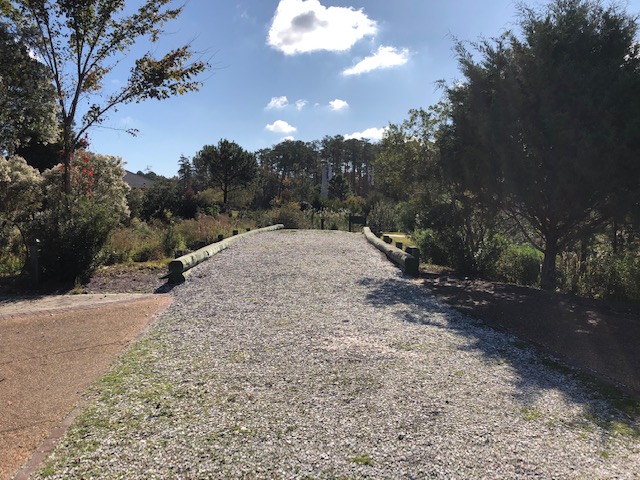
Pictures of Great Bridge Battlefield and monuments.
When thirteen North American colonies rebelled against the British crown, the future state of Florida was not part of that movement. In fact, the settled part of the future 27th state of the United States was partitioned into East and West Florida. Both colonies also declined an invitation to send delegates to the Continental Congress.
East & West Florida colonies
West Florida, spanned from slightly east of Pensacola, which was the capital, across to Louisiana and included parts of modern Alabama, Louisiana, Florida, and Mississippi. East Florida, spanned the rest of northern Florida from the Apalachicola River to the Atlantic seaboard and down the peninsula. The capital was located at St. Augustine, founded in 1565 by the Spanish.
During the American Revolution, both East and West Florida would play a role as the rebellion spread into a world conflict, bringing into the fighting the European nations of France and Spain. In East Florida, St. Augustine would send north British soldiers to assist in operations in Georgia and South Carolina and also house American prisoners, including three Signers of the Declaration of Independence; Arthur Middleton, Edward Rutledge, and Thomas Heyward, Jr. Other prisoners, both Americans and French were also confined to the town too.
Although the American Revolutionary War staggered into a period of inaction after the Battle of Monmouth Court House in June 1778, General George Washington, in charge of all Continental forces, remained steadfast in New York until the late summer of 1781. Even though the principal actions of the war moved to the southern colonies, resulting in catastrophic losses at Charleston, Waxhaws, and Camden in 1780 through 1781, Washington did his utmost to quell British incursions, reinforce public opinion, and provide whatever succor he could from a distance. What is evidence of his mindset and depth of concern for this theater of operations?
Simple. Look at the general officers he dispatched south from the main army to help the American cause in the Carolinas and Virginia. The list includes some of the most trusted officers that served Washington.
First, Benjamin Lincoln, who met his fate at Charleston, but had served ably in the north, even working in the tense environment of the Saratoga campaign, between the volatile Benedict Arnold and the complacent Horatio Gates.
Second, Nathanael Greene, who had overcome growing pains, the recommendation to hold onto Fort Washington in New York in 1776 comes to mind, to swallowing his pride and taking the thankless job of quartermaster general during the winter that won the war at Valley Forge. Greene was probably second to Washington in understanding the political, social, economic, even the geographical components of warfare. Although a decisive battlefield victory constantly eluded him, his leadership at Guildford Court House set in motion Lord Charles Cornwallis’s eventual demise at Yorktown in October of that same year.
Moving into the Old Dominion, Washington dispatched Baron von Steuben with Greene to recruit, train, gather supplies, and provide the steady hand that the Prussian born leader had shown so admirably at Valley Forge. As inspector general of the Continental army, Washington’s orders sending the baron south was a major testament to the importance of stopping British incursions into Virginia.
Following the baron, was another European born officer, the Marquis de Lafayette, one of Washington’s favorites. This independent field command showed the growing confidence in the young Frenchman who responded admirably to the task at hand, doing what he can and for the most part, swallowing his brashness, except at Green Spring when he precipitously attacked what he thought was a rearguard of the British. Yet, his actions, coupled with the next general to be discussed, helped keep Cornwallis in the area of operations that would lead to his demise.
“Mad Anthony” Wayne and his Pennsylvania Continentals were also ordered south to join Lafayette in campaigning in Virginia. Wayne, arguably the best combat general in the Continental army, bordering on reckless to his critics though, had masterminded the storming of Stony Point, the last major action in the northern theater. Lafayette and he would be a solid tandem as they worked with limited resources and supplies in the summer of 1781 to contain the British.
Besides these general officers of high rank, “Light Horse” Harry Lee also was sent south to assist Greene and militia, most notably Francis Marion. The partnership between Lee and Marion worked as close to perfection as humanly possible and a model for regular and militia force combined operations.
Another cavalry commander that was sent for duty in the southern colonies was a second cousin of George Washington, William. In charge of light dragoons, mounted infantry who could dismount to fight as infantry, he served admirably in the southern army until his capture at the Battle of Eutaw Springs on September 8, 1781.
William Washington
This list, not intended to be exhaustive but just exploratory, is an example of the importance the southern theater had to the strategic mindset of George Washington. Although the Virginian was fixated on the recapture of New York City until the opportunity to ensnare Cornwallis at Yorktown presented itself, he provided an amazing array of officers of capability to quelling British intensions in the southern theater.
Feel free to comment below on other officers that were sent south that played vital role in the ultimate American victory in this theater of operations.
Emerging Revolutionary War welcomes back guest historian Kevin Pawlak
On October 15, 1781, British General Charles Cornwallis penned a note to his superior officer General Sir Henry Clinton. Cornwallis told Clinton that American and French forces seized two redoubts, 9 and 10, along the York River the previous night. “My Situation now becomes very critical,” he glumly said. Before his army, entrenched outside of Yorktown, “shall soon be exposed to an Assault in ruined Works,” Cornwallis desperately sought to break the Allied stranglehold slowly bleeding his army. The general turned to Lt. Col. Robert Abercrombie to break the Allied lines anyway he could.
Map of the Allies’ Second Parallel and Abercrombie’s Sortie (from Jerome Greene, The Guns of Independence)
Mention the following words to any casual student or enthusiast of the American Revolutionary War and we can almost guarantee what the first word(s) or topic out of their mouths will be.
Virginia.
1781.
American Revolution.
If you are thinking, Yorktown, or Siege of Yorktown or Surrender of Yorktown, then our rhetorical question above is correct.
Most people know about the Siege and Surrender at Yorktown, but Virginia was a hot spot of activity the summer leading up to Yorktown. With British troops, led by the likes of Benedict Arnold, William Phillips, Alexander Leslie, and lastly by Lord Charles Cornwallis in the Old Dominion throughout the year and American leaders like the Marquis de Lafayette and Baron von Steuben, Virginia saw very active campaigning ranging through most of the central and eastern parts of the colony.
That is why you need to tune in and Join Emerging Revolutionary War this Sunday, on our Facebook page, at 7p.m EST for the next “Rev War Revelry” as we discuss the events leading up to Yorktown in October 1781.
We will cover actions such as Spencer’s Ordinary, Green Spring, Gloucester Point and of course Yorktown.
ERW will be joined by historians J. Michael Moore, Kirby Smith and Drew Gruber. All three live and work in the “Historic Triangle” of Virginia. The three gentlemen all have researched, led tours and have written published works about this important period of the American Revolution.
Map by Michel du Chesnoy (1746-1804)
This will be a precursor to ERW’s annual fall trip, when we will visit Gloucester Point, Spencer’s Ordinary, Green Sping and Yorktown (which we invite you to follow along with on our Facebook page).
Last week I wrote about the various German principalities that contributed manpower to the British attempt to subdue the colonies. I ended the post with:
“An introduction to another aspect of how the American Revolution had far reaching international complications and commitments.”
I figured this week I would return to that theme and share a portion of the Battle of Savannah in 1779, from the perspective of how many nationalities had native sons take part in the fighting.
Besides the three obvious nationalities; British, German, French, and American, the following countries represented; Ireland, Haiti, Poland, Sweden and Switzerland.
The British commander was General Augustine Prevost, who was born in the Republic of Geneva on August 22, 1723 and like an older brother joined the British army. He saw action in the French and Indian War with the 60th Regiment of Foot and at the conclusion of that conflict even served a brief term as governor of West Florida.
During the American Revolution he was ordered to invade Georgia in 1778 and had taken command at Savannah in January 1779, although he wanted to resign in favor of a younger officer to take charge. His replacement was captured while enroute to relieve Prevost, thus the Genevan was still in charge during the subsequent siege and fighting in September and October 1779.
Curt von Stedingk, hailed from Swedish Pomerania in 1746 and by the time of the Siege of Savannah he had been tabbed to lead part of the offensive. He made it to the British entrenchments where he valiantly placed the American standard. Stedingk was wounded in the fighting. He received a decoration from the French and after the American Revolution George Washington invited him into the Society of Cincinnati. This created some controversy in his native Sweden as the king, Gustav III forbade Stedingk from wearing the ribbon and medal as it was from his service to a “revolting people.” He went on to have a long military career, including fighting Napoleon at the Battle of Leipzig.
Henri Christophe, the only monarch of the Kingdom of Haiti, was a drummer boy in a French regiment during the Siege of Savannah. The unit, the Chasseurs-Volontaires de Saint-Domingue was comprised of various ethnicities hailing from the island of Saint Domingue. Christophe may have been wounded around Savannah. He would distinguish himself in the Haitian Revolution before claiming his kingdom and naming himself monarch on March 28, 1811.
Casimir Pulaski, nicknamed “the father of American cavalry” was mortally wounded by canister while attempting to rally retreating French forces. The grapeshot that felled the Warsaw, Poland native is on display in Savannah or Charleston, depending on what account you believe; or possibly neither? He never regained consciousness and died on board the ship Wasp two days after his wound on October 11.
Arthur Dillon and his “Wild Geese” Irish Regiment, in the employ of the French, also took part in the failed attempt to subdue Savannah. Dillon, born in 1750, continued in the French service until being executed in Paris in 1794 due to his royalist leanings.
With such an international cast of personas, which did include rank-and-file from the countries not listed, the Siege of Savannah showed the global reverberations the conflict had. The preserved plot of land pays homage to this fact, which, if nothing else brings you to want to visit the city, is reason enough!
After last week’s riveting discussion on the pivotal battle of Kings Mountain, Emerging Revolutionary War decided to stay in the Palmetto State again this week. We have two special guests and historians joining “Rev War Revelry” so set a reminder to tune in on this Sunday, on our Facebook page, at 7pm EST.
From the American Battlefield Trust Catherine Noyas will join the revelry and discuss land acquisition in regards to the American Revolution around Camden, including the new visitor center that will open in spring 2021. She will give highlights on the work being done and the history behind the various initiatives.
From the South Carolina Battlefield Preservation Trust comes historian Doug Bostick. Their mission coalesces with the American Battlefield Trust with the shared goal of preserving the hallowed ground of the Palmetto State. Along with promoting the military history of the state as well.
There will also be mention of the Liberty Trail, so tune in to learn more about that program as well!
We hope you can join us for a chat on preservation, interpretation, and military history on Sunday evening.










 Emerging Revolutionary War Era