Parliament Reacts to the Throwing of the Tea

December 16, 1773, was deep into the rear-view mirror. A new year had begun, and February 1774 lay close to the horizon. Yet, for the British Parliament, the events of what later became known as the Boston Tea Party were still very much breaking news. Word had just reached London of what had happened in Boston. Now, how would the Crown and those in parliamentary power react to this shocking news?

Read more: Parliament Reacts to the Throwing of the Tea

Most contemporary sources of the period, as well as a litany of works in the historiography of the subject, contend that Britian’s reaction to what happened in December 1773, and thus their course in handling the situation in 1774, was done so prematurely and without much rational debate and discussion. Historian Jon Ferling suggests, “the myth arose that its government, under Prime Minister Frederick, Lord North, had acted in haste.” The myth had grown during the numerous setbacks the British later suffered during the war itself. And, in the wake of their ultimate defeat, many contemporaries across the pond argued that Britain’s leaders, “had failed to comprehend the gravity of the challenge,” i.e., using the military might of their nation to quell the rebellious colonies in 1774.

If one was to examine the proceedings of Parliament during this period 250 years ago, however, they would not find hasty decisions being made based on emotional reactions to the news out of Boston the previous month. This is especially so when the use of the country’s military resources was debated as an option to deal with the rowdy and disobedient Bostonians. Nothing could be farther for the truth contends Ferling, noting that the use of their military to enforce Crown law in the colonies began in the opening days of 1774, even before the throwing of the tea reached London. Not only was this thought discussed and debated in Parliament, but the reactions the colonists would have was also heavily considered. Some openly debated that such a strong application of Britain’s military in Boston, the Massachusetts Colony, and other coercive actions, may indeed spark yet another war in North America. These arguments were then quickly followed by questions of whether Britian could win in another conflict on this continent so soon after the French and Indian War; a conflict that had drained Britain’s finances and depleted her military ranks.  

As January 1774 concluded 250 years ago, and February was just days away, these larger questions on how Parliament and the Crown should react to the Boston Tea Party and course-correct those in colonies in open rebellion against Britain were continually debated. It was not until March 1774 that a decision was made. North, and thus Parliament, opted to avoid the potential for outright war by utilizing their military might first. Instead, they chose a route of punitive measures, the Coercive Acts (also known as the Intolerable Acts). As part of this legislation, certain parts would solely focus on Massachusetts as punishment for the events of December 16, 1773, in Boston. These acts also included closing Boston Harbor until the destroyed tea’s worth had been repaid, and Gen. Thomas Gage, commander of the British Army in America, installed as the colonial governor of Massachusetts. Gage contended that these refractory Bostonians would “be lions while we are lambs; but if we take the resolute part, they will prove very meek, I promise you.”

In the end, however, this course of action was not made in haste at all, but rather after nearly four full months after the throwing of the tea in Boston harbor. And, one could argue that North and Parliament initially sought to refrain from the sole use of  Britain’s military might, rather opting for legislative settlement to the issues that arose from Massachusetts. But, as history played out 250 years ago in 1774, as historian Ferling contends, “Britain, of course, miscalculated hugely.”
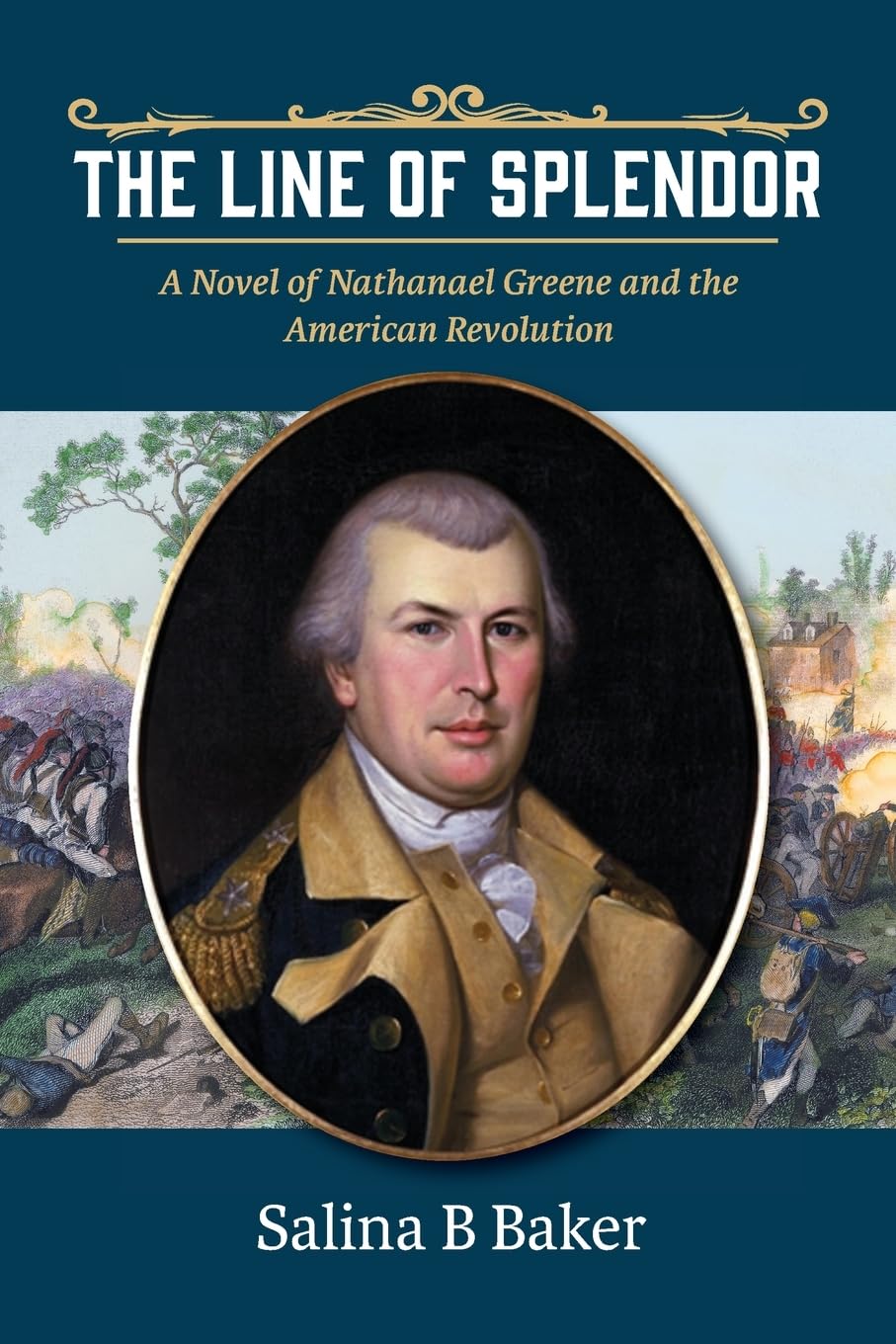

Rev War Revelry: The Line of Splendor: A Novel of Nathanael Greene with Author Salina Baker

From the hard lessons learned on the battlefields of New York, to his appointment as Quartermaster General during the harsh winter at Valley Forge, his role in convicting the British spy who colluded to obtain the plans to West Point, to the godsend who took command of the ragged remnants of the Southern Continental Army, Nathanael Greene’s complex perseverance and brilliant strategies broke military doctrines.

Join ERW LIVE this Sunday at 7pm as we welcome author Salina Baker to discuss her historic novel about Nathanael Greene. We will discuss the life of Greene, his wartime experiences, why he has been forgotten by many and why she found his life story so interesting. Grab a drink and join in on the conversation!

My Pilgrimage to Camden

Emerging Revolutionary War welcomes guest historian Eric Wiser to the blog.

This is a brief story of my first and memorable visit to the Camden Battlefield in South Carolina this September past.  I am a husband and father living in the suburbs of Chicago. I make my living as an accountant. As rewarding as my career has been, it’s my strong interest in early American history that stirs my imagination. My pilgrimage to Camden was part of a visit to my friend Phil Kondos who moved to eastern Georgia with his family over a decade ago.  Phil is a gifted musician and wonderful father and happens to share a mutual love of history. This narrative of our visit will hopefully inspire others to place Camden Battlefield on their bucket list.  

My interest in the Battle of Camden mostly derives from having a Patriot ancestor who fought there. Pvt. Michael Wiser, a 23-year-old grist miller from Frederick County, Maryland, was with the First Maryland Brigade and captured by the British at Camden.[i]  

Continue reading “My Pilgrimage to Camden”

Tour Opportunity with Historian Michael Harris on Battle of the Clouds and Battle of Paoli

On May 25th, kick off your Memorial Day weekend this year with a Revolutionary Tour led by me. Highlights of this half day tour will include the Battle of the Clouds locations, the Paoli Battlefield, and a visit to Valley Forge to discuss the September 18, 1777 skirmish that took place there.

This car pooling tour will leave from Valley Forge at 8am and end at the same location.

Cost: $35 per person.

I will have copies of my books available to be signed as well (cost of any books additional).

A minimum of 10 people will need to pre-register for this tour to take place.

There is no registration limit though.

To participate, please contact me directly. mharris28thpa@gmail.com

Happy Washington’s Birthday!

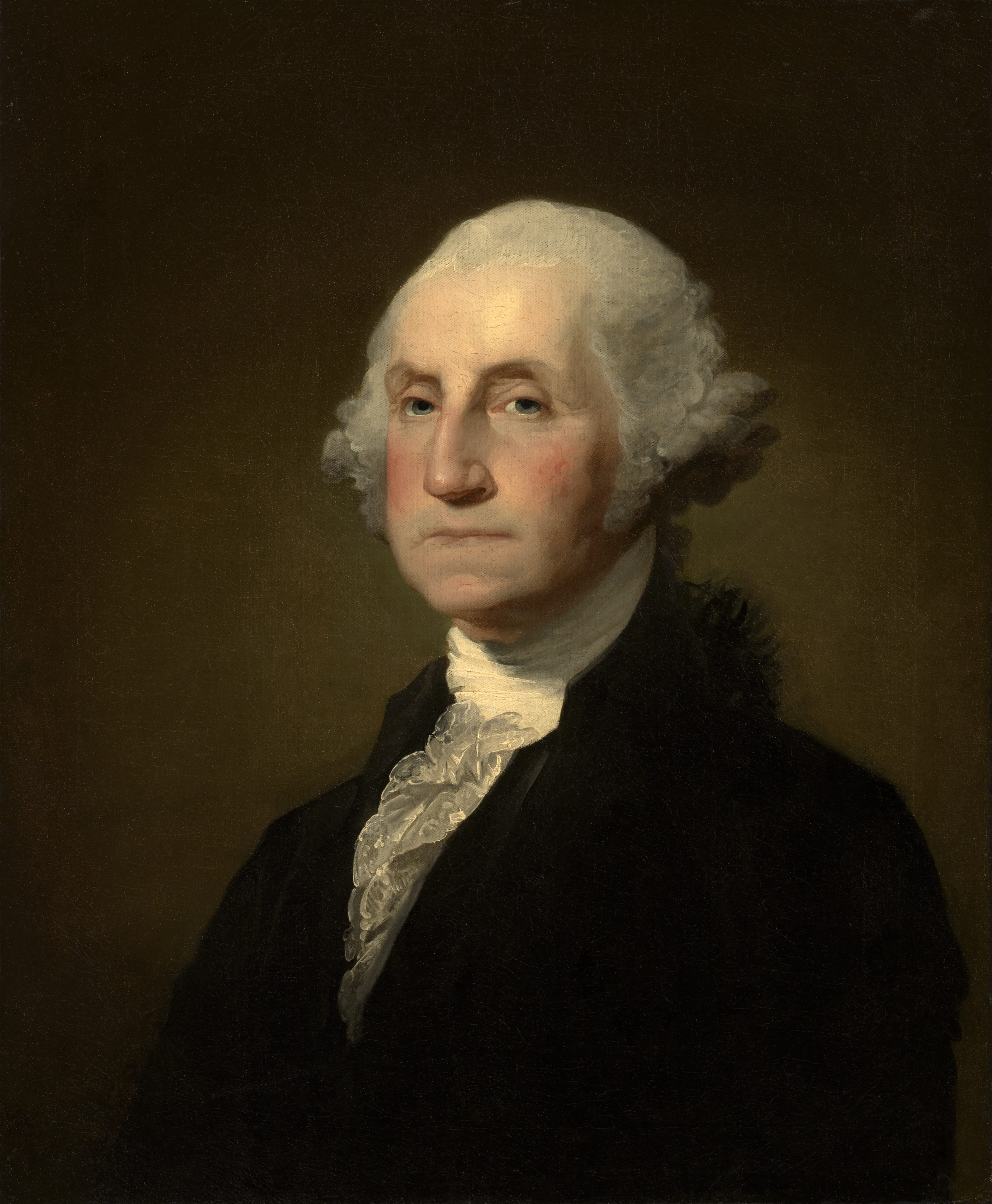
Today we celebrate George Washington’s Birthday.  You read that correctly.  While most people refer to this Monday holiday as ‘Presidents Day’, the federal holiday (and many state holidays) only celebrates one President of the United States: George Washington.

Washington’s birthday celebrations go back to the time when Washington was living.  Washington was born on February 11, 1731, but with the changing from the Julian calendar to the Gregorian calendar, it was shifted to February 22, 1732 in 1752.  (Check out a video of us visiting the site of Washington’s birth!) While there are no records of how he and his family celebrated the day privately, the first real public celebration of his birthday occurred at Valley Forge in 1778.  A fife and drum corps serenaded the commanding general outside his headquarters building at the Potts House during that dreadful winter.  Historically, the colonists had celebrated annually the birthday of the King, so it was symbolic for the Continentals to celebrate Washington’s birthday instead during the war.

After becoming President of the United States, large public celebrations of Washington’s birthday occurred across the country including large ones in Philadelphia and New York.  These celebrations included the ringing of church bells, feasts, toasts, artillery firings, and fireworks.

Continue reading “Happy Washington’s Birthday!”

Rev War Revelry: The Tory War of 1781 with Historian and Author Patrick O’Kelley

Join ERW at 7pm on February 18, 2024 as we chat with historian and author Patrick O’Kelley about the brutal civil war that broke out in North Carolina in 1781. Whigs (commonly known as Patriots, supporting American Independence) and Tories (supporting loyalty to Great Britain) fought a brutal and bloody war against each other in eastern/central North Carolina called “The Tory War.” Maj. Gen. Nathanael Green, wrote that the war in the Carolinas ‘Nothing but blood and slaughter has prevailed among the Whigs and Tories, and their inveteracy against each other must, if it continues, depopulate this part of the country.’

Patrick O’Kelley has authored numerous books on the American Revolution, including his four volume all encompassing series on South Carolina in the American Revolution titled “Nothing But Blood and Slaughter: The Revolutionary War in the Carolinas” and ““Be Cool and Do Mischief: Francis Marion’s Orderly Book.” His extensive research on the war in the South is a go too for many interested in the events in the Carolinas. Grab a drink and join us live on our Facebook page to discuss this often overlooked brutal part of the American Revolution. We will also discuss other topics that Patrick is researching and working on. See everyone this Sunday at 7pm!

On This Date in 1778: A Treaty with France

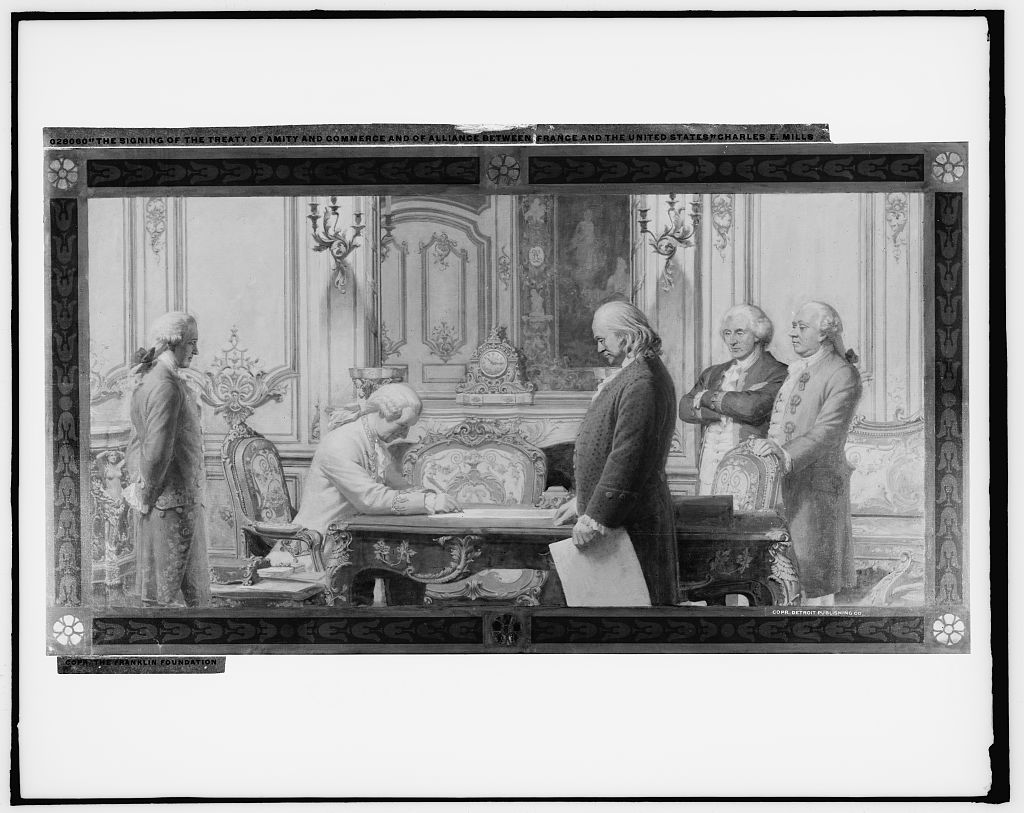
On this date in 1778, the fledgling American states officially found their great ally in France. The signings of the Treaty of Alliance and Treaty of Amity and Commerce gave new life to the cause of independence from Britain as Louis XVI pledged his support to the Americans.

An economic and military alliance with Britain’s age-old adversary had been long in the making.  Early in the conflict, the French were hesitant to openly support the rebellion, instead opting to provide covert aid in the form of ammunition, weapons, and clothing. Following the adoption of the Declaration of Independence in July 1776, Benjamin Franklin of Pennsylvania, Silas Deane of Connecticut, and Arthur Lee of Virginia, were dispatched overseas to Versailles to engage in diplomatic talks with the French foreign minister, Charles Gravier, comte de Vergennes. The success of these discussions would hinge on the battlefield performances of the American armies.

The following year was full of ups and downs for the Northern Army and Main Army. Although George Washington, commanding the latter force, had lost yet another major city when Philadelphia fell to the British in September 1777, his earlier victories at Trenton and Princeton had already impressed those on the other side of the Atlantic Ocean. Furthermore, in October, an audacious offensive by Washington against the British at Germantown, though ultimately a defeat, demonstrated promise to the French that the Americans could sustain the conflict. In the end, however, it was the Northern Army’s victory over General John Burgoyne at Saratoga and the subsequent surrender of over 6,000 British and German soldiers on October 17 that secured the alliance.

The Signing of the Treaty of Amity and Commerce and of Alliance between France and the United States. Photograph of a painting by Charles E. Mills. c[between 1900 and 1920], Library of Congress

When news arrived of the American triumph at Saratoga, Vergennes worked feverishly to persuade King Louis XVI that the time had come to openly support the fight against Britain. On February 6, 1778, the Treaties of Alliance and of Amity and Commerce were officially signed. At its conclusion, Deane and Franklin hastily penned a letter to President Henry Laurens of the Continental Congress to inform the governing body of the world-changing news:

Passy, near Paris, Feby. 8th. 1778.

Honourable Sir,                    

We have now the great Satisfaction of acquainting you and the Congress, that the Treaties with France are at length compleated and signed. The first is a Treaty of Amity and Commerce, much on the Plan of that projected in Congress; the other is a Treaty of Alliance, in which it is stipulated that in Case England declares War against France, or occasions War by attempts to hinder her Commerce with us, we should then make common Cause of it, and join our Forces and Councils, &c. &c. The great Aim of this Treaty is declared to be, to “establish the Liberty, Sovereignty, and Independency absolute and unlimited of the United States as well in Matters of Government as Commerce.” And this is guaranteed to us by France together with all the Countries we possess, or shall possess at the Conclusion of the War; In return for which the States guarantee to France all its Possessions in America. We do not now add more particulars, as you will soon have the whole by a safer Conveyance; a Frigate being appointed to carry our Dispatches. We only observe to you and with Pleasure; that we have found throughout this Business the greatest Cordiality in this Court; and that no Advantage has been taken or attempted to be taken of our present Difficulties, to obtain hard Terms from us; but such has been the King’s Magnanimity and Goodness, that he has proposed none which we might not readily have agreed to in a State of full Prosperity and established Power. The Principle laid down as the Basis of the Treaty being as declared in the Preamble “the most perfect Equality and Reciprocity,” the Privileges in Trade &c. are mutual and none are given to France, but what we are at Liberty to grant to any other Nation. On the whole we have abundant Reason to be satisfied with the Good Will of this Court and the Nation in general, which we therefore hope will be cultivated by the Congress, by every means that may establish the Union, and render it permanent. Spain being slow, there is a separate and secret Clause by which she is to be received into the Alliance upon Requisition; and there is no doubt of the Event. When we mention the Good Will of this Nation to our Cause we may add that of all Europe, which having been offended by the Pride and Insolence of Britain, wishes to see its Power diminished. And all who have received Injuries from her are by one of the Articles to be invited into our Alliance. With our hearty Congratulations, and our Duty to the Congress, we have the honour to be, very respectfully, Sir Your most obedient humble Servants

B Franklin

Silas Deane[1]

When news of the treaties finally reached the American army encamped at Valley Forge, Gen. Washington designated May 6, 1778 as a day for “rejoicing throughout the whole Army.”


[1] “Franklin and Silas Deane to the President of Congress, 8 February 1778,” Founders Online, National Archives, https://founders.archives.gov/documents/Franklin/01-25-02-0487. [Original source: The Papers of Benjamin Franklin, vol. 25, October 1, 1777, through February 28, 1778, ed. William B. Willcox. New Haven and London: Yale University Press, 1986, pp. 634–635.]

Transcribe Revolutionary War Veteran Pensions

The National Archives and the National Park Service recently announced a collaborative project that allows members of the public to transcribe Revolutionary War Pension Files. This initiative has been launched in celebration of the upcoming 250th anniversary of America’s independence.

During the Revolutionary War, the Continental Congress offered pensions to American soldiers for their service. Later, they extended the pensions to the widows and orphans of deceased soldiers. Each pension file contains a wealth of information about the common Continental or militia soldier who fought for American independence.

As you might expect, the public transcription project is a large undertaking. The National Archives reports that they have 2,322,134 objects digitally scanned and ready for transcription.

If you want to help keep the story of a Revolutionary War Patriot alive and accessible, consider joining the National Archives’ Citizen Archivist program to get started today. For more information and to sign up, visit https://www.archives.gov/citizen-archivist/missions/revolutionary-war-pension-files.

Rev War Revelry: “Their Immortal Honour Made a Brave Defense” Maryland Continental Line

“Given the order to defend the American withdrawal from Long Island, the Maryland Line saved the Continental Army from annihilation in the first major battle of the war.” wrote historian Ryan Polk.

Tench Tilghman, staff officer to George Washington and a native Marylander wrote about his fellow soldiers, “bore the palm…by behaving with as much Regularity as possible.”

Furthermore, if you Google “Battle of Guilford Court House” the image used by Wikipedia depicts an artist’s rendition of the 1st Maryland defending Nathanael Greene’s last line during the March 1781 engagement. The particular image is below.

The Continental Maryland Line was one of the preeminent stalwarts of the American army, both in the northern and southern theaters of the war. Join Emerging Revolutionary War historians in a discussion about the men from the Old Line State and their military acumen during the American Revolutionary War. The discussion will also highlight their memory and memorialization. We hope you can join us Sunday at 7 p.m. EST on the Facebook page of Emerging Revolutionary War.

“Rev War Revelry” Battle of Bunker Hill and Memory with Dr. Paul Lockhart

The Battle of Bunker Hill is routinely mentioned in the pantheon of memorable American military victories. Although myths of the engagement have obscured some of the history, much like the smoke of battle, the patriot victory on June 17, 1775, was another pivotal moment in the early stages of what became the American Revolutionary War.

To discuss the engagement, ramifications, and interpretation of the battle, Emerging Revolutionary War welcomes historian Dr. Paul Douglas Lockhart, Professor of History at Wright State and author of “The Whites of Their Eyes, Bunker Hill, the First American Army, and the Emergence of George Washington.” A full biography of Dr. Lockhart, including his other works, is at the bottom of this post.

As a teaser, this may be the first time in “Rev War Revelry” history that we mention Artemas Ward, who according to Dr. Lockhart is the “unsung hero of the battle (and indeed of 1775).” Come hear why! And full disclosure, I agree.

We hope you can join us on Sunday, January 21 at 7 p.m. EDT on Emerging Revolutionary War’s Facebook page for the next installment of the popular “Rev War Revelry.” Be ready to ask questions as you sip your favorite beverage during this historian happy hour.

Biography of Dr. Lockhart

“Paul Douglas Lockhart is Professor of History at Wright State University in Dayton, Ohio, where he has taught since earning his PhD in 1989. A native of Poughkeepsie, New York, Lockhart completed the PhD at Purdue University, where he studied military history with the late Gunther Rothenberg, the renowned Napoleonic scholar, and early modern European history with Charles Ingrao. He has seven single-author books to his credit. Four of them deal with the history of Scandinavia during the “Age of Greatness,” including Denmark, 1513-1660: The Rise and Decline of a Renaissance Monarchy, published by Oxford University Press in 2007. He is probably better known for his books on military history: The Drillmaster of Valley Forge: The Baron de Steuben and the Making of the American Army (2008), The Whites of Their Eyes: Bunker Hill, The First American Army, and the Emergence of George Washington (2011), and most recently his study of the parallel evolution of warfare and firearms: Firepower: How Weapons Shaped Warfare (2021). Wright State has awarded him the Brage Golding Distinguished Professorship and the Trustees’ Award for Faculty Excellence, the University’s highest academic honor. The Ohio Academy of History named him Distinguished Historian for 2020-21, and in 2021 he was elected to membership in The Royal Society for Danish History for his contributions to the history of Denmark, an honor rarely accorded to foreigners. He lives in Centerville, Ohio, with his family.”