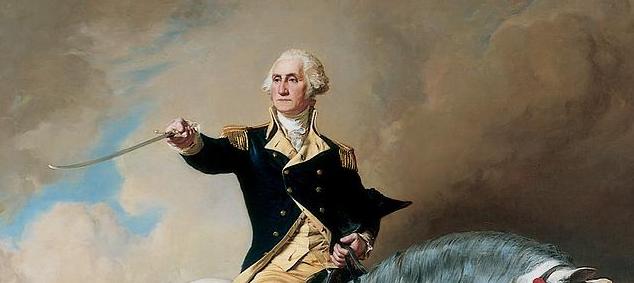
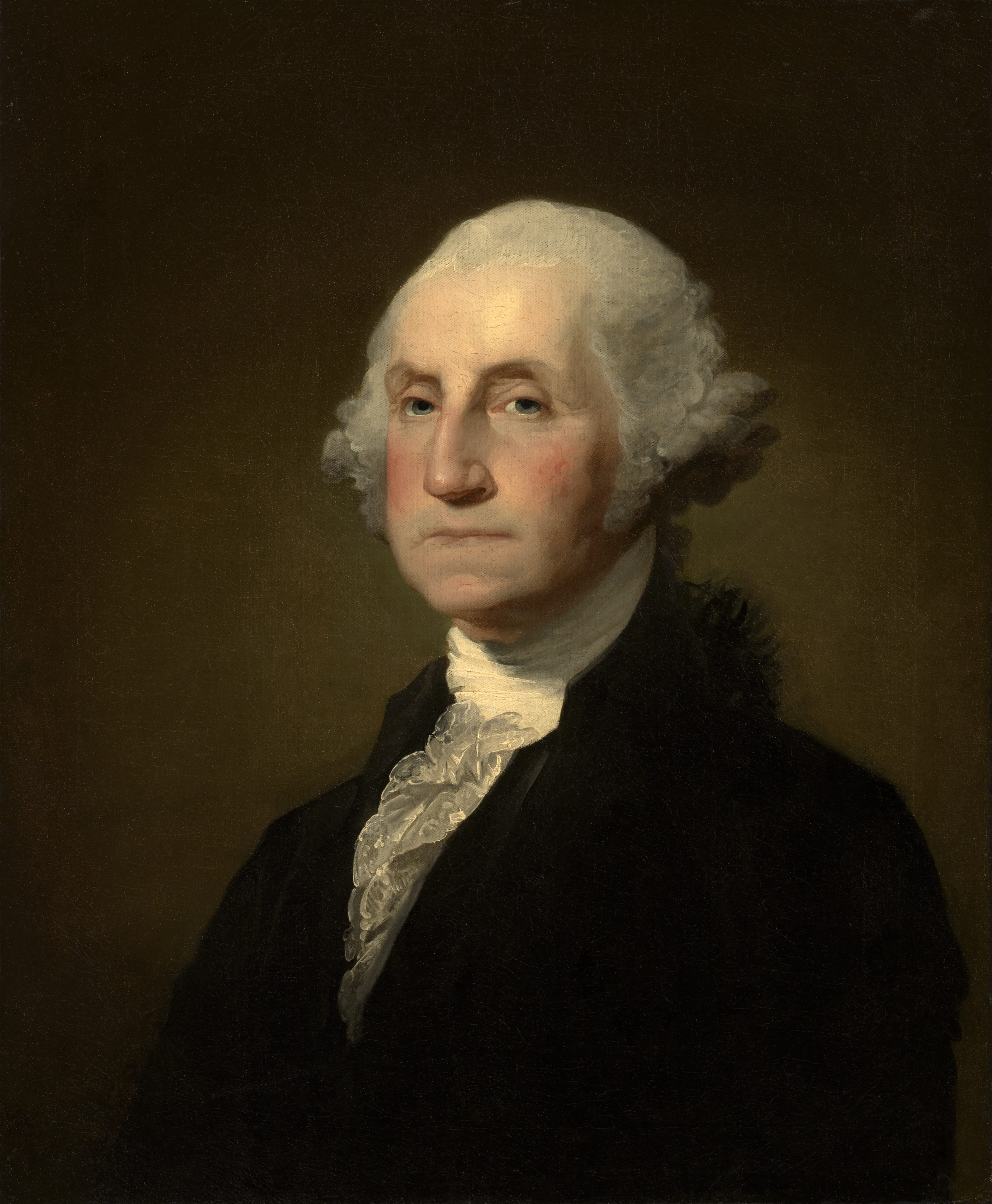
Happy Washington’s Birthday (observed) from all of us at Emerging Revolutionary War. Though commonly incorrectly referred to as Presidents Day, the federal holiday is specifically for George Washington only. The indispensable man of America’s founding, Washington was “first in war, first in peace, and first in the hearts of his countrymen.” Born on February 22, 1732, the holiday is observed every year on the third Monday in February.
We hope you celebrate the day maybe by enjoying Washington’s favorite breakfast of “hoecakes swimming in butter and honey,” or making the journey to a Washington related site such as Mount Vernon, Ferry Farm, or his birthplace. Last year ERW historians Mark Maloy and Rob Orrison were able to be at his birthplace at the same time he was born (check out the video here). His hometown of Alexandria is holding a parade in his honor as well. If you are not nearby these sites, Mount Vernon is hosting special virtual programming. Be sure to also check out our interview with Tom Hand on the character of Washington we hosted last night. We hope you enjoy the day and remember George Washington on his holiday!
On February 11, 1731/32 George Washington was born at Popes Creek Plantation in the Northern Neck of Virginia. Seems like we have the date wrong? Actually, George had two birthdays, one in the old style calendar and one with the change to the new style, which pushed his birthday to February 22, 1732. According to his mother, Mary Ball, the first date, February 11, was the real date–regardless of the calendar change–and is what is written in the Washington family bible.
That fact and story and so much more will be the focus of this “Rev War Revelry” as Emerging Revolutionary War welcomes back historian Tom Hand of Americana Corner. Tom will join us in a discussion of all things George Washington as we celebrate the 290th birthday of this great American. The talk will broadcast live on Sunday, February 20 at 7 p.m. ET on our Facebook page. If you are unable to join live, you can catch it on our Facebook page, YouTube page, and podcast later.
In the throes of the winter of 1778, spent at Valley Forge, General George Washington and his staff formulated a mountain of paperwork to multiple recipients of the American cause. On February 16, 1778, Alexander Hamilton composed a letter for the commander-in-chief of the Continental army to a gentleman who had moved from the military to the political ranks; George Clinton of New York.
George Clinton
He had seen service in the Hudson Highlands and had been commissioned a brigadier general in the Continental army on March 25, 1777. Later that same year both governor and lieutenant governor of New York, formally resigning the latter and accepting the former on July 30, 1777. In that capacity, he received the letter, excerpts below, from Valley Forge.
“It is with great reluctance, I trouble you on a subject, which does not properly fall within your province; but it is a subject that occasions me more distress, than I have felt, since the commencement of the war; and which loudly demands the most zealous exertions of every person of weight and authority, who is interested in the success of our affairs.”I mean the present dreadful situation of the army for want of provisions and the miserable prospects before us, with respect to futurity. It is more alarming, than you will probably conceive, for to form a just idea, it were necessary to be on the spot.2 For some days past, there has been little less, than a famine in camp. A part of the army has been a week, without any kind of flesh & the rest three or four days.3 Naked and starving as they are, we cannot eno⟨ugh⟩ admire the incomparable patience and fidelity of the soldiery, that they have not been, ere this, excited by their sufferings, to a general mutiny and dispersion. Strong symptoms however of discontent have appeared in particular instances; and nothing but the most active effort⟨s⟩ every where, can long avert so shocking a catastrophe.
Washington then asks for any help or supplies that Clinton can send his way, even though the army is outside the state lines of New York. Washington’s mindset is that the cause of the army in Pennsylvania is the cause of American independence and that Clinton, who had served would recognize that and do his utmost to provide what he can.
“I am calling upon all those, whose stations and influence enable them to contribute their aid upon so important an occasion, and from your well known zeal, I expect every thing within the compass of your power, and that the abilities and resources of the state over which you preside, will admit. I am sensible of the disadvantages it labours under, from having been so long the scene of war, and that it must be exceedingly drained by the great demands to which it has been subject, But though you may not be able to contribute materially to our relief, you can perhaps do something towards it; and any assistance, however trifling in itself, will be of great moment, at so critical a juncture, and will conduce to keeping the army together, ’till the Commissary’s department can be put upon a better footing, and effectual measures concerted to secure a permanent and competent supply. What methods you can take, you will be the best judge of; but if you can devise any means to procure a quantity of cattle or other kind of flesh, for the use of this army, to be at camp in the course of a month, you will render a most essential service to the common cause.“
Not only did Clinton receive this missive from Washington, dated February 16, but the following day Gouverneur Morris from a camp committee established by the Continental Congress also sent the New York governor a letter asking for any assistance he could provide for the army at Valley Forge.
These letters underscore the seriousness of the plight of the army encamped at Valley Forge as the winter slowly turned to spring. The action at Washington’s headquarters and from the camp committee helped create a path forward through that pivotal winter. To learn more about what transpired during those six months from December 1777 to June 1778, follow the link above to the “2022 Bus Tour” and join Emerging Revolutionary War on our second annual bus tour November 11-13, 2022.
The entire letter from Washington (Hamilton) to George Clinton can be found here.
The link to register for the Third annual Emerging Revolutionary War Symposium on September 24, 2022 is now live! To register for this year’s symposium visit: https://shop.alexandriava.gov/EventPurchase.aspx
The Lyceum in historic Alexandria, VA
Emerging Revolutionary War is excited to continue our partnership with Gadsby’s Tavern Museum and The Lyceum of Alexandria, VA to bring to you a day-long Symposium focusing on the American Revolution. The theme for 2022 is “The World Turned Upside: The American Revolution’s Impact on a Global Scale.” The American Revolution created waves across the world with its lasting impacts felt even today. This symposium will study the effects of this revolution that transformed governments and the governed across the globe.
King Louis XVI
Our speakers and topics include:
Dr. Lindsay Chervinsky: “Peace and Inviolable Faith with All Nations”: John Adams, Independence, and the Quest for Neutrality.
Dr. Norman Desmarais: “Reevaluating Our French Allies”
Kate Gruber: “A Retrospective Revolution: England’s Long 17th Century and the Coming of Revolution in Virginia”
Scott Stroh: “George Mason and the Global Impact of the Virginia Declaration of Rights”
Eric Sterner: “Britain, Russia, and the American War”
We will be highlighting each speaker and their topics in the coming weeks. Registration fee is only $60 per person and $50 for Office of Historic Alexandria members and students. If you feel more comfortable attending virtually, the fee is $30. Again, to register visit: https://shop.alexandriava.gov/EventPurchase.aspx
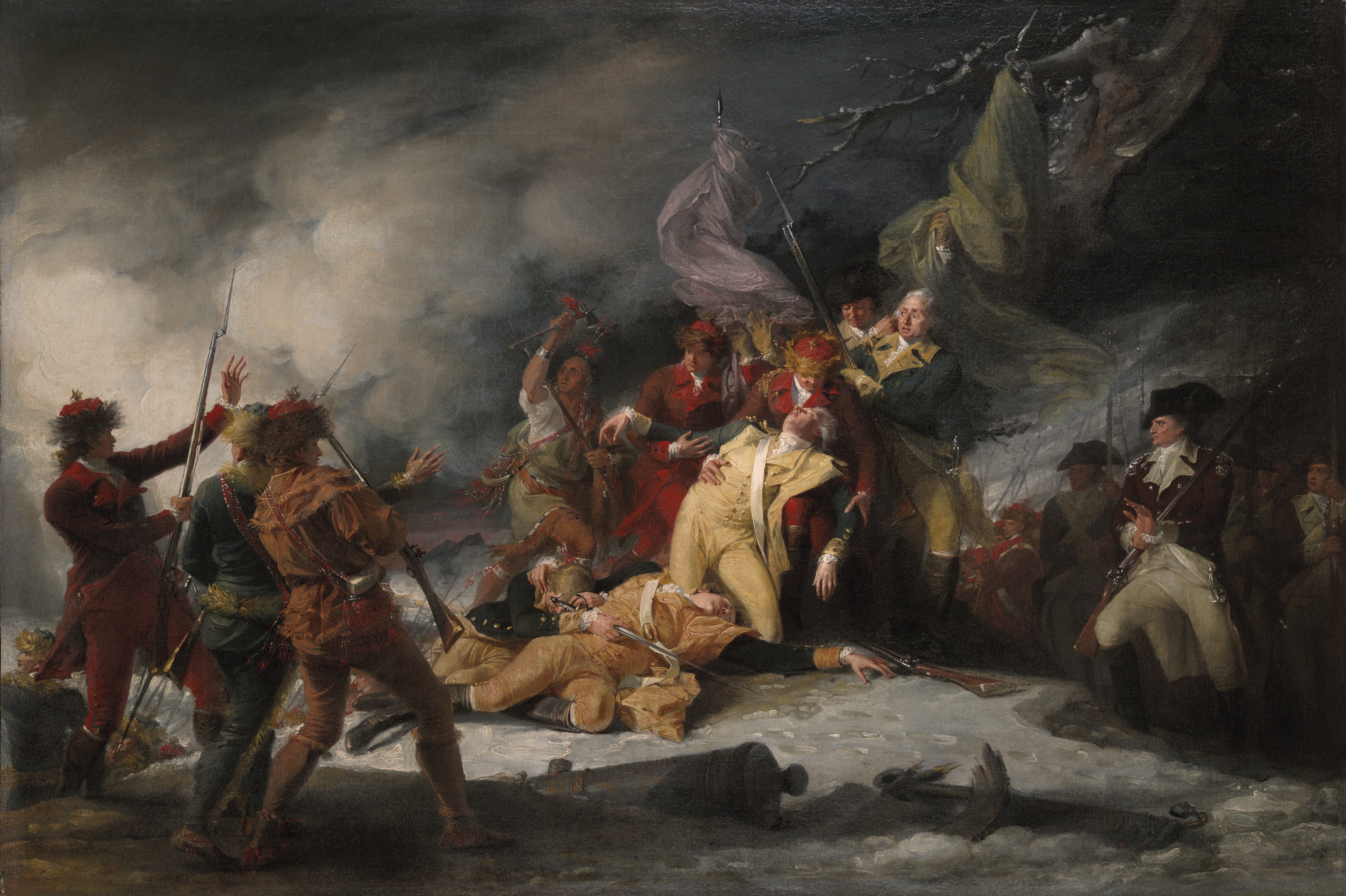
This Sunday, February 6, at 7 p.m., join ERW historians and guests as we discuss General Richard Montgomery and Colonel Benedict Arnold’s epic campaigns through the north to capture Quebec and claim Canada as the 14th colony.
One of the most difficult tasks when researching the French and Indian War is uncovering primary sources that can answer the age-old question in military history: Why did men fight? What were their motives for answering the call and sustaining the struggle? What were their observations and opinions regarding the events that surrounded them?
The letter included here in this post, written by Lieutenant Colonel Nathan Whiting of the 2nd Connecticut Provincial Regiment to his wife on August 1, 1755, during the Crown Point Expedition in New York is a rarity. Not only is it filled with raw emotion, but it also highlights a soldier’s fears and concerns relating to news of the war elsewhere, as well as his hopes for the coming days and weeks. The most fascinating aspect, however, is how the letter closes with the precise reasons for why Whiting was fighting—Duty to himself, his country, and his God. The commonly cited theme of duty, honor, and country is a constant in why men fight and sustain. Even in the French and Indian War, a conflict that did not involve a fight for independence, to preserve the Union, or to free the world from oppression, Whiting’s motives were still consistent.
Here is his letter:
My dearest wife,
I am here much Longer than I expected When I left you[.] Tis unhappy on many Accounts that we have delayed so long, but know not that it could be prevented. [W]e have orders now to March and . . . tis probable I shall not have opportunity to write you again till I get to the Carrying Place [the future site of Fort Edward along the Hudson River] I doubt your tender concern for me my dear will fill you with too many uneasy apprehensions & fears for my Safety Which I fear will be much increased upon hearing of the unhappy disaster of General [Edward] Braddock [at the battle of the Monongahela] but Let Not that trouble you my dear[.] God is my Safeguard and defense & I Trust has better things in store for his people than to give them all a prey Into the hands of their enemys—we are never more discouraged on Account of that defeat but Rather Animated with the greater Resolution to go on, we may have more enemys to encounter so that we may want more Strength, or our conquests will be more Glorious or our defeat less Shameful but the Latter I hope & believe Will Not be the Case. Pray make your Self as easy as possible I know your Dayly prayers are for my preservation Let it be an article of them that it not be obtained by any unworthy means, but in the prosecution of the Duty I owe at this time to my Self, my Country & my God.
Whiting, a New Haven merchant and veteran of King George’s War, led the 2nd Connecticut Regiment with distinction at the battle of Lake George on September 8, 1755, the culmination of the British campaign to capture Fort Saint-Frédéric (Crown Point) along Lake Champlain. Another post highlighting that action can be found here.
On Sunday, January 23, Emerging Revolutionary War will journey, virtually, into the heart of the Mohawk Valley of New York in a discussion with Brian Mack of the Fort Plain Museum and Historical Park.
Established in 1961 the museum and park now encompasses over 75 acres and includes the site of Fort Plain/Fort Rensselaer, the foundation of a Revolutionary era bridge, the Fort Rensselaer Redoubt and works constructed by British forces, along with sites of colonial farmsteads, industry, and settlement. The museum also covers a wide era of the history of the area.
Mack lives out his passion for his family & for history in everything he does. A family vacation always includes a stop to a historic site or two. He is involved with the Fort Plain Museum & Historical Park as a member of their Board of Trustees, a Board member with The Stone Arabia Preservation & Battlefield, and a Board Member with The Mohawk Country Association. Most recently, he joined the Board with the Dr. Joseph Warren Foundation.
We look forward to a great discussion about the American Revolution in the Mohawk Valley of New York with Brian this Sunday, at 7 p.m. on Emerging Revolutionary War’s Facebook page.
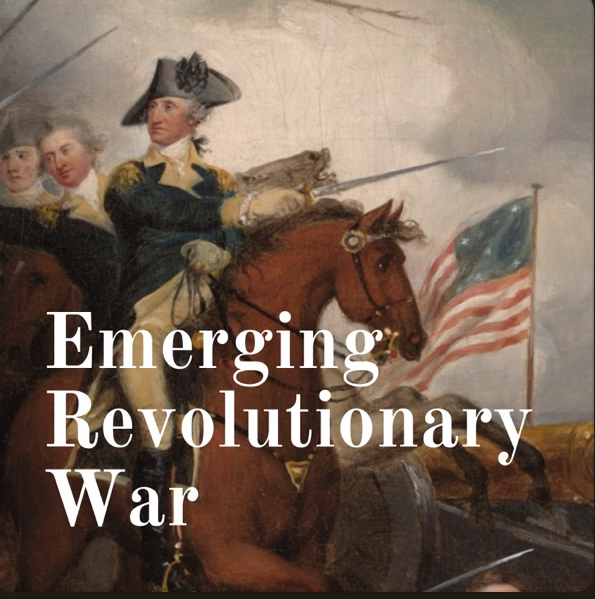
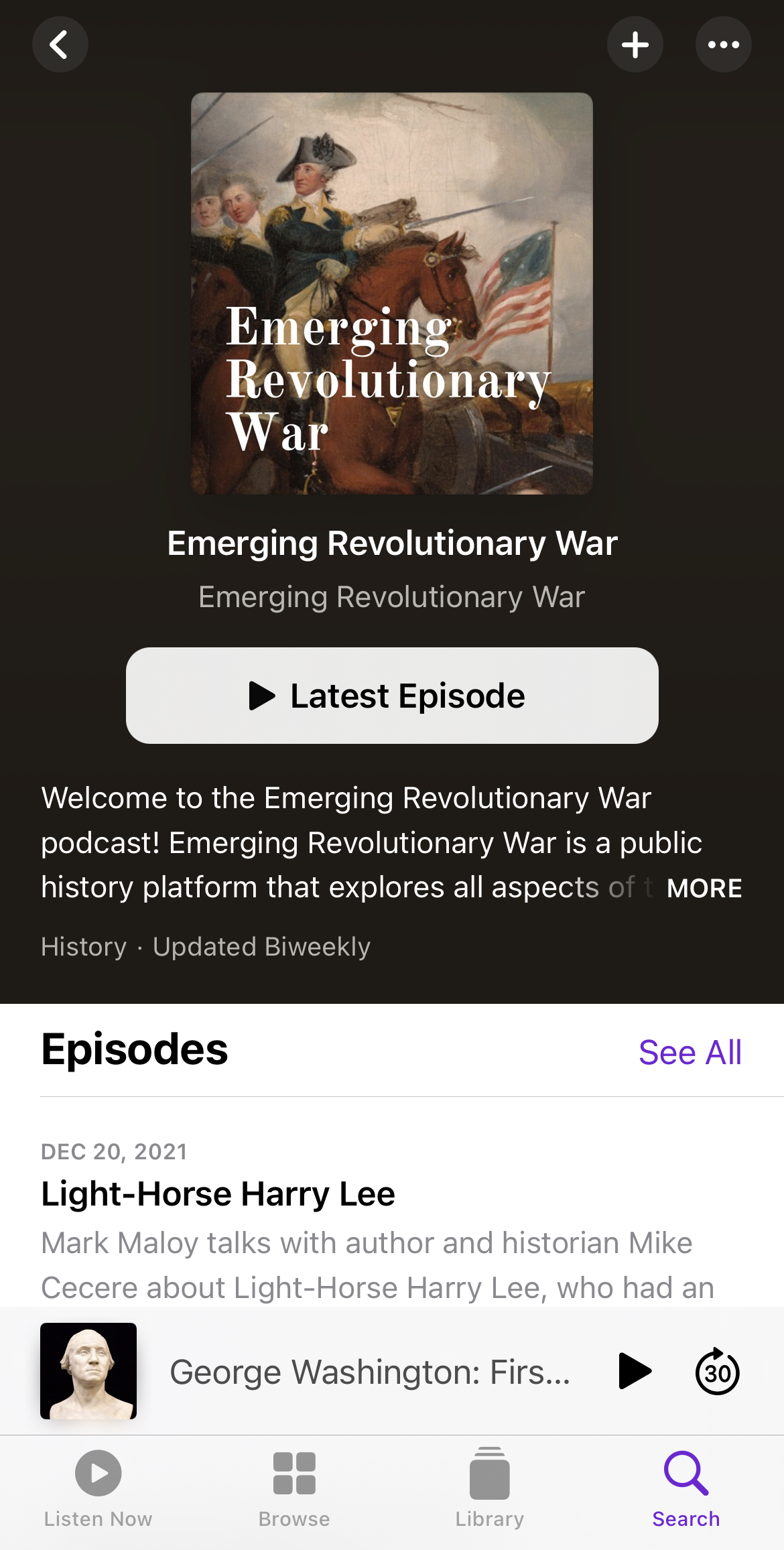
A new year and a new way to follow Emerging Revolutionary War! For 2022, we’re proud to unveil the Emerging Revolutionary War Podcast! We have taken the audio from our “Rev War Revelry” discussions (available on Facebook and YouTube) and have used them to create a new podcast. Now you can listen wherever you are, through Spotify and Apple Podcasts, to these engaging and interesting discussions with Emerging Revolutionary War historians and guests. We have all the programs from 2020 available in podcast form now and will be adding all of 2021 over the next few weeks. Now you can listen to discussions with Emerging Revolutionary War historians any time on your mobile device and on the go!
On January 17, 1781, General Daniel Morgan and his mixed force of Continental soldiers and militia defeated the British under the command of Lieutenant Colonel Banastre Tarleton. This victory for the patriots in northwestern South Carolina had major implications on the southern theater and the main British force under General Lord Charles Cornwallis. The battle, named after the use of the fields in which it was fought, Cowpens, also included one of the only instances in American history of a successful double envelopment.
On Sunday, at 7 p.m. EDT, Emerging Revolutionary War will be joined by American Battlefield Trust’s Kristopher White, Deputy Director of Education and Daniel Davis, Education Manager, in a discussion about the history and preservation of the Battle of Cowpens.
Round out your January weekend by joining us on our Facebook page for this live historian happy hour.
Merry Christmas from all of us at Emerging Revolutionary War! One of our favorite Christmas movies to watch is the movie “The Crossing”. In this movie, Jeff Daniels portrays George Washington on the eve of the battle of Trenton. The movie depicts the situation in December of 1776 and dramatizes the crossing of the Delaware River and the Battle of Trenton.
Join Emerging Revolutionary War historians Mark Maloy, Dan Welch, and Kevin Pawlak as we host a watch party of the movie. You can tune in live on Sunday, December 26, 2021 (the 245th anniversary of the crossing and the battle) on our Facebook page at 7 p.m. ET.
As we watch the movie, we will comment on and explore what the movie gets right, wrong, our favorite scenes and lines, and take questions about the movie and actual events themselves. It should prove to be an entertaining and fun experience, so grab that glass of Madeira (“God be praised, it has been a year since I have tasted such Madeira.”) and join us in watching “The Crossing”.









 Emerging Revolutionary War Era