2021 Symposium Highlight: Vanessa Smiley

Over the next few months, we will be highlighting the speakers and topic for our 2021 Symposium, Hindsight is 2020: Revisiting Misconceptions of the Revolution, taking place on May 22nd .

Today we continue with historian Vanessa Smiley who will be covering the myths and misconceptions of the Southern Campaigns during the American Revolution.  

See Vanessa as she discusses an aspect of the Southern Campaign on March 7 at 7p.m. on Emerging Revolutionary War’s Facebook Live as part of the “Rev War Revelry” historian happy hour!

Vanessa Smiley is an historian and interpreter whose roots began at National Park Service Civil War and Rev War sites. Her Rev War park experience includes serving as the Chief of Interpretation at the Southern Campaign of the American Revolution Parks Group in South Carolina, an acting assignment as Superintendent at Guilford Courthouse NMP, and Chief of Interpretation at Morristown NHP. Vanessa is currently the Project Manager of Interpretive Media Development for the National Capital Area at Harpers Ferry Center. She received her undergraduate degree in Historic Preservation from the University of Mary Washington and her Master’s degree in Resource Interpretation from Stephen F. Austin State University.

Outside of her work with the NPS, Vanessa enjoys researching family histories, studying material and social culture of the 18th and 19th centuries, listening to podcasts, reading true crime, drinking craft beer, and attempting to make the perfect sangria. She and her husband live in Morgan County, West Virginia on their small farm where they run a nonprofit animal sanctuary.

She will be presenting her talk From the Bottom Up: Myths and Misconceptions of the Southern Theater at the May symposium.

 Why do you believe the Southern Campaigns were so significant to the outcome of the American Revolution?

The simplest way to describe why I believe the Southern Campaigns were so significant to the War’s outcome is: it was a grassroots effort. What I mean is that while the Continental Army shouldered plenty, it was the combination of local efforts of the militia and determined civilians who turned the tide of the war when the British looked to the southern colonies, especially in the second half of the war. All one has to do is to look at two key battles, Kings Mountain and Cowpens, to see the impact of militia integrity, courage, and resolve.

Some point to the politics of Boston and New York as a driving force behind the start of the war. But the taverns and town halls of Charleston and Savannah were no less significant in adding fuel to the revolutionary fire. There is also the added dichotomy of our first true American civil war that played out in the backcountry of the Carolinas. Here were literal neighbors, brothers, cousins, and friends taking up arms to serve their respective causes and finding themselves on opposite sides. These dynamics were one driving force behind the militias that had such an impact during the Southern Campaigns.

What first attracted you to the study of early American history? What keeps you involved in the study of this history? Do you find these things are the same or different?

I give credit to my love of history to my high school history teacher, who embodied the archetype of the quintessential eccentric and genius history connoisseur striving to bring history alive. He immersed us in the history of the 18th and 19th century through first person accounts, visits to historical sites, and the dramatics of storytelling. He also armed me with the intellectual tool of piecing out the relevancy of events and people of the past, and that’s what has kept me interested in studying history for the past two decades.

While my work at historic sites for the National Park Service provided an easy outlet for my historian brain, I sought those historical connections and resources even outside of work because of that drive to understand the past. It’s a little bit different now than before though. I don’t get to be as immersed as I once was (no traipsing through cemeteries at night to feel the chill and terror of the Underground Railroad) and instead my mind goes to educating the public on the importance of our history. That’s why I’m so appreciative for Emerging Revolutionary War!

What is the biggest myth about the war in the South? How do you think it came about?

That the war was won in the north and not the south! I’ll go into more detail on this one during my presentation, but I’ll tease a little bit here. One part of the answer to the second question might lie with our public education system. In studying the state education curriculums of various states, I found that there is a stronger emphasis on the beginnings of the war than the war’s end. And so the Southern theater gets very little, if any, attention when kids study the war in school. The exception used to be in certain states like South Carolina, where the battles of Cowpens and Kings Mountain were directly referenced in the state standards. Since the standards updated in 2020, this no longer seems to be the case.

You’ll have to wait for my presentation to dive a little deeper into this myth with me!

Do you think there are common misconceptions of the era of the American Revolution among the American people? If so, what are they and have they ever affected your work?

There certainly are, and the ones that have affected my work the most center around that idea of the often-overlooked Southern Campaigns for most Americans. Ask any random person to name a Revolutionary War battle or event and the majority will name something from the northern colonies. Every now and then you get a Charleston, and if you consider Virginia part of the south, then a Yorktown for sure. But as I’m sure has become obvious already, I strive to educate about the rich history of the Rev War in the south.

Why do you think it is important for us to study the Revolutionary Era? 

No matter which political, social, or economic side you’re on nowadays, we can all agree we are living in our own revolutionary time. And we find ourselves looking back to our nation’s founding for understanding and guidance, namely things like our national ideals and governmental processes. But we are a different people and a different nation than what we were then. We should not take everything from 240 years ago at face value. By studying and investigating the past, we can understand how and why decisions were made at the time. And perhaps we can extract an element, or life lesson, that can be applied to our modern times.

I believe that while history does not repeat itself, it does rhyme. By understanding the past, we may know our future.

Join us for our SECOND annual Emerging Revolutionary War Symposium. Due to the COVID 19 pandemic, we postponed the 2020 Symposium to May 22, 2021 with the same topics and speakers. Co hosted by Gadsby’s Tavern Museum, speakers and topics include:


Michael Harris on Misconceptions of Battle of Brandywine
Vanessa Smiley on Myths of the Southern Campaigns
Travis Shaw on American Loyalists
John U Rees on African American Continental Soldiers
Mark Maloy on myths of the Battle of Trenton

Stay tuned as we highlight our speakers and their topics in future blog posts.

UPDATE: The 2021 Symposium will now be virtual. Though conditions with the pandemic are improving, we do not believe we will be able to have the event in person by May, so we have decided to be virtual. Due to this shift, we are also dropping the price! Now the full day symposium is $40 per person and $20 for students. This allows for guests from all across the country to learn about African American soldiers, Loyalists, and Drunken Hessians. Buy your ticket today!

To register visit: https://shop.alexandriava.gov/Events.aspx

The Battle of Moores Creek Bridge: How Three Minutes Affected Three Years of War Strategy

Did the Battle of Moores Creek Bridge help keep the British away from the southern colonies during the first half of the war?

Months before its colonies officially adopted their Declaration of Independence, the British army was reaching a critical juncture in its war strategy: with the colonies in rebellion, where should they focus their attentions? The war was picking up steam and the British were looking for a stronghold in the colonies that would gain them resources such as men and supplies. They turned their eyes south.

The general impression of the southern colonies was that they were poorer and weaker than their sister colonies in the north. They also had been receiving word of heavy Loyalist sympathies in both the backcountry of South Carolina and the coastal areas of North Carolina, where large populations of German and Scottish immigrants had settled. Indeed, by the fall of 1775, Loyalist recruitment seemed to be quite successful. One evidence of this was at the First Battle of Ninety Six in November 1775, when nearly 2,000 Loyalists met a paltry force of not quite 600 patriots. Though this first Revolutionary War battle south of New England ended in a truce, British confidence was high.

The Royal Governor of South Carolina, Lord William Campbell, had fled the colonies by September 1775, leaving the colony mostly in the hands of the Patriots. That made the ultimate goal at this point in the southern colonies to capture the wealthy and strategic port of Charleston, South Carolina. Meanwhile, the Royal Governor of North Carolina, Josiah Martin, convinced British commanders to target key points along their route through his colony as they advanced on their mission. And as 1775 turned into 1776, plans were set in motion.

On January 10, Martin issued a proclamation calling on all subjects loyal to the Crown to take up arms against the rebellion in the colony. Authority was given to Loyalist leaders throughout the colony to recruit militia and gather all necessary provisions to muster in Brunswick, NC.

A copy of Josiah Martin’s Proclamation from January 10, 1776.
Library of Congress.

By mid-February, a contingent of several thousand loyalists was gathered at Cross Creek, NC, preparing to march towards their goal. Among those recruited were the famed Scotch Highlanders. Though not all joined the Loyalist cause, the Highlanders’ reputations as fierce warriors preceded the impending war in the colonies. This reputation may have stemmed from the Jacobite rebellion in the 1740s as well as British assumptions at the time that the HIghlands were a lawless land due their clan-based culture.

Loyalists weren’t the only militias stirring along the Carolina coast. Patriot militias had begun forming at the first news of Loyalists gathering as early as August 1775. In fact, some of those militias formed in Wilmington, NC became the foundation of the 1st North Carolina Regiment of the Continental Army and in February 1776, they were led by Colonel James Moore. At that time, they were joined by additional militiamen from the surrounding area, led by Alexander Lillington and Richard Caswell. Their goal was two-fold: protect Wilmington and prevent the Loyalist forces from reaching the coast.

By February 20, 1776, a clash between the British and Patriot forces was inevitable. British commander Donald MacDonald began to move his 1,600 men from Cross Creek towards his rendezvous point at Brunswick, only to find his way impeded along the Black River by Caswell’s blockade. On February 25, MacDonald had managed to get across the river and Caswell moved his 1,000 Patriots back to Moores Creek Bridge. There they set up defensive earthworks, prepped their two artillery pieces, and prepared for battle.

A map of the Moores Creek campaign, February 1776.
NPS/Moores Creek National Battlefield.

At 1:00 am on February 27, 1776, MacDonald’s second-in-command, Donald McLeod, led the British troops on their march towards the Patriot position. Arriving at an abandoned camp on the west side of the bridge around 5:00 am, a brief exchange of fire alerted the Loyalists to the Patriot sentries guarding the bridge, and ultimately, the Patriot forces lying in wait. 

McLeod with 50 men attempted to cross the bridge and attack the Patriot defensive position, but the attempt was futile and disastrous. Heavy musket fire coupled with a barrage of two artillery units killed 30 almost immediately, including McLeod. The remaining Loyalists quickly retreated and the battle was over almost as quickly as it had begun.

Bill Ballard’s drawing of the decisive moment during the Battle of Moores Creek Bridge.
NPS/Moores Creek National Battlefield.

So how important were these three approximate minutes of battle? This Patriot victory struck a huge blow to Loyalist recruitment in North Carolina – so much so that two months later, North Carolina’s delegates to Continental Congress were the first to vote for independence. And it created a rippling effect throughout the southern colonies, as one by one the royal governors were displaced and revolution took hold. 

No longer could the British see the Carolinas as easy targets. They abandoned this initial southern strategy to focus their resources on the war in the northern colonies. For the next three years, significant battles and events that we learn about today took place, thanks in part to the dominating Patriot showing at the Battle of Moores Creek Bridge.


If you’re interested in learning more about the Battle of Moores Creek Bridge, I strongly encourage you to visit Moores Creek National Battlefield’s website as well as their very active Facebook page. Both offer a wealth of information and additional resources for folks to explore.

2021 ERW Symposium Update

Though the current health conditions are improving as they relate to the COVID-19 pandemic, we decided that our 2021 symposium will have to be virtual. We felt that by May, restrictions for groups will still be limited and we wanted to make a decision soon so that our speakers and registrants can plan accordingly. The date is still set for May 22, 2021 but time for some good news. Our registration fee is now only $40 per person and $20 for students. This will allow us to broaden our audience with the virtual program. We hope that 2022 will allow us to come together again in Alexandria for our third annual symposium.

More information on our speakers, topics and how to register is below!

“Rev War Revelry” Author Interview: John Maass

In March 1781, General Charles Lord Cornwallis finally caught up with his antagonist, General Nathanael Greene and his joint Continental and militia forces in North Carolina. On March 15, 1781, the British scored a pyrrhic victory over the American forces, securing the field but losing approximately 25% of their field force in the process.

With the victory, Cornwallis was forced to retreat to the North Carolina coast, to Wilmington, where he could rest and refit. He then led his forces north and into Virginia, to his destiny at Yorktown.

Yet, the road to Guilford Court House, for both sides, started in South Carolina, across the entire breadth of North Carolina, and into the southern reaches of Virginia before returning to the Old North State. This road and the history of the campaign, along with the March 15th engagement, unfolds in a new history by Dr. John Maass, author and historian, currently at the U.S. Army Center of Military History in Washington D.C.

His book, The Battle of Guilford Court House, A Most Desperate Engagement will be the focus of this week’s “Rev War Revelry.” The book is now available from book retailers and online. We hope you can join us this Sunday, at 7 p.m. EST, for our next installment of a historian happy hour.

To access, just head to Emerging Revolutionary War’s Facebook page, go to the “Events” tab and follow the prompt at 7 p.m.

Leveling, Pointing, and Elevating Field Guns

Emerging Revolutionary War welcomes back guest historian Karl G. Elsea

If you want to know the process of how field guns were fired in a battle such as Trenton or Monmouth, watching the National Park Service or re-enactors fire a cannon, you will only get part of the story. Important parts of the procedure are almost always missing. Here is a more complete presentation of the process; and, how leveling, pointing (aiming), and elevating a field gun were performed.

Major William Congreve said it best in his instructional training works at the Royal Military Repository in the late 1700’s: “It is of the utmost Consequence to the Service to fire so as to do Execution, for Shot flying over the Enemies head only hardens them and discourages your own Troops.” “Rounds must never be fired with-out pointing the Gun carefully each time and paying great attention to the Elevation.”[i]

After the commands, unlimber piece (un-attach the gun from the limber), take off apron (remove the vent cover), take out tompion (remove the “plug” at the muzzle of the gun), the gunners would perform the following activity with-out a specific command. This was a critical function and is not usually shown when firing a gun. It was to level the piece. As stated in their training, “and which ever Wheel stands too high, the Earth must be loosened in the rear, and the Gun drawn gently back until the Bubble rest in the Center of the Tube.”[ii] The science was simple, the trunnions on the barrel must be level or the barrel will move in a non-vertical plane and thus be off target. Leveling the gun was of great importance. The Artillerist’s Companion 1778 states it was an artillerist’s function, “Quadrating a piece [barrel] mounted, is to see whether it be directly placed, and equally poised in the carriage, which may be found by a gunner’s instrument called a level or perpendicular.”[iii]

The following picture shows what was called the Gunner’s level or the Spirit Level. It was the quintessential instrument carried by gunners to level the gun. In a cylinder in the middle of the gunner’s level was a vial and when the trunnions are level the bubble in the vial will be in the middle. At that point the gun was leveled.

(Author’s Level and Photograph)

The next activity was sometimes required to point the gun and it also required the Gunner’s Level. The level could be used to place a noticeable mark indicating the top of the base ring and the top of the muzzle ring. These two marks constitute what was called the “centre” [center] line of the cannon. The activity of marking the “centre” line was performed immediately after leveling the cannon unless the points or the line were already marked on the cannon. This line on the barrel was called the “gun metal line.” On many of the guns of the period the metal line marks were discretely engraved into the design on the barrel. For example, on this patriot cast Byers’ gun the base ring line, touch hole, and liberty pole mark one end of the “gun metal line.”

After these tasks (leveling and marking) were complete the gun was ready for pointing (aiming).  With regards to the Patriot’s drill, there was a distinct difference between the primary source drills of William Stevens and Louis de Tousard. Stevens records that “Take Aim” happens after the command “Prime.”[iv] In Tousard’s drill “Take Aim” takes place before “Prime.”[v] There was a reason for these differences, and it depended on how the gun was primed. The use of a priming tube, whether tin, reed, or quill, could potentially block the sighting line. Tousard’s drill avoided this problem by sighting before the priming tube was inserted. It should be noted the centre line passed over the touch hole. It was noteworthy that the British drill specifically mentions pointing before the tube was inserted into the touch hole. The British drills for a six-pounder stated, “The man who serves the Vent … not put the tube in until the Gun is pointed.”[vi] With regards to Steven’s drill, the priming likely consisted of using powder to touch off the charge, thus the “take aim” command could take place after priming. Using powder only to prime did not block the sighting line. Tousard’s drill assumed tubes were used in priming. British and Patriots used tubes as the preferred manor in priming field guns.

(Author’s Photograph)

Last came the task of elevating the gun barrel. The need for proper elevation of the barrel was demonstrated by noting the psychological impact of cannon fire as shown in the following contemporary quote, “it having been often proved that Soldiers have been more alarmed and put in confusion, by seeing Shot hopping to them, than by having double the Number of their Comrades killed by their sides without seeing it.”[vii] That quote showed the importance for shot to land and bounce somewhat in front of the soldiers. Elevation was adjusted to accomplish that task.

For elevation the gunners would know their individual piece and the characteristics concerning how the various types of shot with varying powder charges would fall. The Officers would likely have some recordation measuring the needed elevation for the distance to first graze. First graze was the range at which the shot would first touch the ground. That recordation would allow the gunners to know what elevation to use for their barrel.

The gunners would also know what the dispart (half the difference between the diameter of the base ring and muzzle ring) was for their individual gun. Dispart was the key to understanding that aiming the gun on the centre line automatically elevates the barrel. Dispart could be quickly measured in the field by placing the vent pick into the touch hole until it reached the bottom, and then subtract that measurement taken at the muzzle from the bottom of the tube to the top of the muzzle ring. As noted above, when the cannon was aimed using the centre line (“gun metal line”) then the resulting cannon ball strike on level ground was called the “Common range.”  Common range was different from “point blank range” which was the distance when a cannon ball first touches ground when fired from a level barrel on level ground.

There was an exception to aiming and elevating the gun. The exception was if a gun were to be overrun. British training materials stated, “Case Shot may be fired as quick as the Dragropemen can draw the Gun up to its proper Position in the Interval again, which will allow the Non Commissioned Officer a sufficient time to direct the Gun nearly to the Center of the Enemies Battalion and give a pretty good guess at the Elevation.”[viii]


[i] Adrian B. Caruana, The Light 6-Pdr. Battalion Gun of 1776, (Alexandria Bay, NY: Museum Restoration Service, 1993), 27.

[ii] Caruana,33.

[iii] T. Fortune, The Artillerist’s Companion 1778, (London: Whitehall, 1993), (Alexandria Bay, NY: Museum Restoration Service, 1992), 9.

[iv] William Stevens, A System for the Discipline of the Artillery of the United States of America, (New York: William A. Davis, 1797), 68.

[v] Louis de Tousard, Artillerist’s Companion on Elements of Artillery, (Philadelphia: C and A Conrad and Co., 1809), 140-141.

[vi] Adrian B. Caruana, The Light 6-Pdr. Battalion Gun of 1776, (Alexandria Bay, NY: Museum Restoration Service, 1993), 29.

[vii] Caruana, 27.

[viii] Caruana, 27.

Inspiration

Merriam-Webster’s two two definitions of inspiration are “an aspiring agent or influence” and “the quality or state of being influenced.” Being a military historian that has spent a portion of his graduate school and adult life studying the American Revolution, there are a multiple examples of people, events, or circumstances that would fit that Merriam-Webster definition.

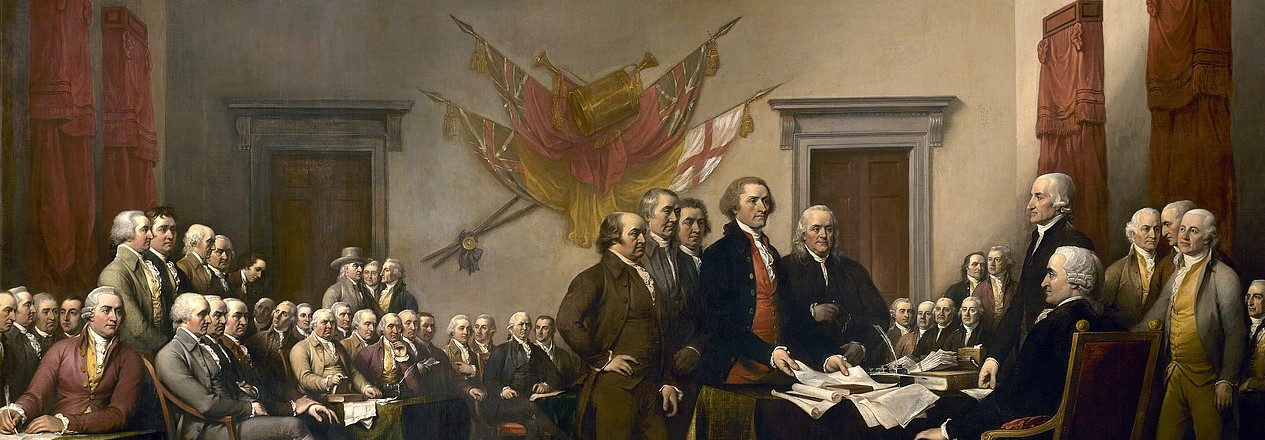
The 56-men who affixed a signature to the Declaration of Independence in the summer of 1776 and the gravity of what that meant.

Thomas Paine’s The American Crisis comes to mind during the bleak December 1776 days as George Washington’s army hurriedly moved through New Jersey.

George Washington’s personal heroics, at Princeton in January of 1777 and Monmouth Court House in June 1778, defying his own personal demise to rally the troops he led.

The tales of suffering, at Valley Forge, Morristown, and through the heat of a Carolinas campaign by the common soldier, many whose names are lost to history.

Recently, I have been looking for inspiration, I think most of us are, with how 2020 ended and the beginning of 2021, but this post is not about straying into current politics, viewpoints, or stances on the pandemic. This is more personal.

The pandemic has afforded me the opportunity to read more, as I am sure my fellow history enthusiasts and bookophiles can relate to. Those readings reawakened a question I tried to tackle as a graduate student a decade ago at George Mason University.

What inspired the men from Maryland to fight for American independence?

Or more accurately:

What did not inspire the men from Maryland to fight for American independence?

I ruled out pay, patriotism (at the start), and other tangible benefits. I gleaned from some of the primary sources that have survived, the chance to create a new life, for the soldiers themselves or their loved ones at home was a major motivator to serve. Family was the spark of inspiration.

On this date, that is something I can really relate to. My father, who will be celebrating his 71st trip around the sun, is battling dementia. He will know that this date, February 8, is his birthday, but will struggle to remember anything else. Yet, he was surprised to see his name in a book recently, one that I sent to him, one that I had helped in the editorial process. To see him reading it, cherishing it, and tearing up with happiness at the simple recognition of his name and mine, is an inspiration to myself.

So, he was and is an inspiration, half the duo of sparking my passion of American history (any guesses on the other half)?

What or who is your inspiration as we enter the second month of 2021?

Happy Birthday Dad, from the history enthusiast you helped create.

If curious, he is reading A Handsome Flogging: The Battle of Monmouth, June 28,1778 by William R. Griffith IV

“Rev War Revelry” Big Game Halftime Historian Happy Hour

This Sunday, a football game will be played in Tampa, Florida between a team named after pirates and another as the name given to Native American leaders. There will be a halftime entertainment. Just slightly different than previous years.

No, we are not talking about the pandemic restrictions that will limit access to the stadium and change the landscape of the halftime show there.

Emerging Revolutionary War is the change. When the whistle blow for the end of the second quarter, change your view from the television screen to the computer screen, click onto our Facebook site and tune into the Big Game Halftime Historian Happy Hour where our historians will discuss the connections between the teams, locales, and who is the GOAT of early American history.

This shortened historian happy hour will still pack the same level of camaraderie, entertainment, and historical tales that you are used to with “Rev War Revelry.”

See you Sunday, 7pm EST, and remember your drink of choice!

2021 Symposium Highlight: Mark Maloy: “Drunk Hessians and Other Myths of the Ten Crucial Days”

Over the next few months, we will be highlighting the speakers and topic for our 2021 Symposium, Hindsight is 2020: Revisiting Misconceptions of the Revolution, taking place on May 22nd at The Lyceum in the City of Alexandria, VA. Today we start with historian and author Mark Maloy who will be covering the myths and misconceptions from the Battle of Trenton, 1776.

Historian Mark Maloy at Mount Vernon

Mark Maloy is a historian currently working for the National Park Service in Virginia. He holds an undergraduate degree in History from the College of William and Mary and a graduate degree in History from George Mason University. He has worked at numerous public historic sites and archaeological digs for the past ten years. He is an avid Revolutionary War reenactor and resides in Alexandria, Virginia with his wife, Lauren, and son, Samuel. He is a regular contributor to the blog Emerging Revolutionary War.

Mark’s first book, Victory or Death” The Battles of Trenton and Princeton, was released by Savas Beatie in 2018. His next book will be about Charleston, SC during the American Revolution and will be released late this year or early 2022. Both are part of Savas Beatie’s Emerging Revolutionary War series.

He will be presenting his talk: “Drunk Hessians and Other Myths of the Ten Crucial Days” at the May symposium.

Why do you believe the Battle of Trenton was a significant event in the American Revolution?

 The Battle of Trenton was not just A significant event in the American Revolution, it was THE significant event of the American Revolution.  This was because of the crisis the recently declared independent country was facing in December of 1776.  The Americans had lost nearly every battle up until this point, confidence in General George Washington (and the United States) was at an all-time low, and the remnants of the Continental Army were evaporating.  Thomas Paine declared “These are the times that try men’s souls.”  The events at Trenton (and the following week at Assunpink Creek and Princeton) changed the entire course of the war and the new nation.  This military campaign saved the Revolution.  As one British historian aptly summed up the campaign: “it may be doubted whether so small a number of men ever employed so short a space of time with greater or more lasting results upon the history of the world.”

What first attracted you to the study of early American history? What keeps you involved in the study of this history? Do you find these things are the same or different?

Historic sites first attracted me to the study of history, and they continue to keep me involved.  As a child growing up in northern Virginia, I first learned of early American history by visiting sites such as Mount Vernon and Gunston Hall.  The power of visiting the places where history occurred was incredibly moving.  It moved me to pursue a career in archaeology and public history, and I currently work for the National Park Service.  Surprised at the lack of national recognition for the Trenton and Princeton battlefields, I worked to publish a book about the significant campaign in 2018 that offers readers a self-guided tour of the places where the history occurred.

What is the biggest myth about the Battle of Trenton, and how did it come about?

I think the biggest myth of the Battle of Trenton is the story that the Hessian soldiers were drunk and helpless when the patriots attacked on December 26, 1776.  This is actually a very old myth that probably dates to the time period.  Shortly after the embarrassing defeat, British officers began pedaling this story to denigrate the Hessian soldiers and the stories grew from there.  While the story is fun to recount, it actually ends up belittling the actions of Washington and his soldiers.  While the Hessians were surprised, they put up a tough fight, and the actual battle is often overlooked by the general public who probably think it was more an assault on a band of drunkards than the stand up fight it turned out to be.

Do you think there are common misconceptions of the era of the American Revolution among the American people? If so, what are they and have they ever affected your work?

There are plenty of misconceptions of the Revolution.  Some would argue too many.  The whole period is often awash in romantic hagiography.  Stories of wooden teeth, cherry trees, and Betsy Ross flags surround the stories of the founding of the country.  While these myths can make it difficult to learn what actually occurred, they serve as important touchstones to access the real history.  While the image of Washington Crossing the Delaware is full of historical inaccuracies, it is an image many Americans have seen or can relate to, and the essence of the painting still displays the important themes of the event.  So, while they can be burdensome, they can also play important roles in learning about the past.

Why do you think it is important for us to study the Revolutionary Era? 

Our nation was born during the Revolution.  It was during this time period we laid our highest ideals of self-government and liberty; ideals we still hold dear 250 years later.  To better understand our country (the people, the institutions, the principles) we must study the Revolution.  But in order for this nation to be born, a war had to be fought.  Often times the military history of the Revolution is overlooked as the causes, ideals, and effects are studied more deeply.  I think the military story of the war needs to be studied more, as there would be no country without the military victory, which was one of the most improbable triumphs in history. 

Join us for our SECOND annual Emerging Revolutionary War Symposium. Due to the COVID 19 pandemic, we postponed the 2020 Symposium to May 22, 2021 with the same topics and speakers. Co hosted by Gadsby’s Tavern Museum, speakers and topics include:


Michael Harris on Misconceptions of Battle of Brandywine
Vanessa Smiley on Myths of the Southern Campaigns
Travis Shaw on American Loyalists
John U Rees on African American Continental Soldiers
Mark Maloy on myths of the Battle of Trenton

Stay tuned as we highlight our speakers and their topics in future blog posts.

Registration is $60 per person, $50 for Office of Historic Alexandria members and students.

To register visit: https://shop.alexandriava.gov/Events.aspx

“God willing and the Creek don’t rise.”

If you are from a certain geographical area of the United States the title of this post is a saying you have heard numerous times. Heck, you may even use it yourself. I’ll admit that I have found usage of this American style vernacular a few instances in my lifetime.

Did you know that there is one version that connects the popular saying to a figure in American history and has its origin dating back into the 18th century?

While reading a history of Osceola, I came across the mention of Benjamin Hawkins and as many of you know, did some internet research, consulted other books on the Seminoles, Creeks, and other Native Americans and the research took off from there. This is just a brief overview of Hawkins and his possible, albeit tenuous, connection to this saying.

A possible first mention of the saying above is attributed to Hawkins, whose name probably does not ring a bell for a large segment of people, historians included. Hawkins, born in North Carolina on August 15, 1754 into a family of six, was a gifted individual who attended the College of New Jersey, now known as Princeton University with an aptitude for linguistics, which apparently including learning Native American dialects.

Continue reading ““God willing and the Creek don’t rise.””

Engagement at Osborne’s Landing, VA

During the Revolutionary War, the individual states formed their own navies for local defense and military operations.  These state navies existed simultaneously with the Continental Navy. Like many state navies, Virginia’s began when the war started and there was a need to defend the state’s coastline and waterways, just as troops were organized to defend its land. The Virginia State Navy patrolled the Chesapeake Bay, provided security on its rivers, and even went to Europe and the Caribbean to bring back supplies.

After several years of inactivity, by 1781 the war had returned to Virginia. British troops occupied Portsmouth and used it as a base for raids. Governor Thomas Jefferson scrambled to get the state’s defenses ready.

British forces under General Benedict Arnold capture the fledging capital of Richmond, where he dispersed local militia and destroyed supplies. Arnold withdrew to the British base at Portsmouth, but the redcoats would soon be back in the area.

Marching south with reinforcements from New Jersey was General Lafayette. By late April he reached Hanover Court House, and continued on towards Richmond. 

On April 8 General Phillips from Portsmouth up the James River to City Point. From there they moved on to Petersburg. The town was an important crossroads, port, and supply base for the Continental army. Generals Friedrich Von Steuben and Peter Muhlenberg had been gathering militia here, and they made a stand just south of the town on April 25. The British drove the defenders back, and the Americans retreated to Richmond. Phillips followed, intending to again capture the state capital.

As part of the British advance, General Arnold with the 76th, 80th, and some Jaegers (German riflemen) and Queen’s Rangers moved towards Osborn’s Landing on the James River. They arrived on April 27 and incredibly, won a naval battle without a navy!

Osborn’s Landing was a wharf about a dozen miles south of Richmond on the west bank of the James River. Assembled here were several merchant ships and the entire Virginia State Navy- nine warships with severely understrength crews. Across the river on the eastern bank were local militia from Henrico County.

This sketch of the engagement was drawn by British officer John Simcoe

Arnold sent a message to the American commander (whose identity is not recorded), “offering one half the contents of their cargoes in case they did not destroy any part.” The nameless American commander sent word, in answer, “We are determined and ready to defend our ships, and will sink them rather than surrender.” With that Arnold took them up on their offer.

The Queen’s Rangers and Hessian Jaegers charged down to the wharf, while the two British infantry regiments provided covering fire. Arnold also deployed two 3-pound and two 6-pound guns, which opened fire on the American ships “with great effect.” The Tempest became a primary target, and the Jaegers advanced, “by a route partly covered with ditches, within thirty yards of her stern.” The rifle fire prevented the crews from properly manning their guns on deck.

British artillery fire severed the rigging of the Tempest, and she began to drift, so the crew abandoned the ship. The other warships were also taking fire, and their crews abandoned them as well. Along with the Tempest, the other large warships lost were the Renown and the Jefferson.

The British destroyed the entire Virginia State Navy, and captured twelve private ships with 2,000 hogsheads of tobacco, flour, rope, and other supplies- all without a single ship of their own in the fight.

Phillips arrived at the town of Manchester, opposite Richmond, and Arnold’s forces joined them after moving up from Osborn’s. The British prepared to cross the shallow river and take the capital for the second time in three months. Yet the arrival of Lafayette on the high ground above the river convinced the British to turn back.   

There are few reminders of the Revolution in the Richmond-Petersburg area. Today the site of Osborn’s Landing is inaccessible. Across the river, on the eastern shore, is a county boat landing and picnic area, with historic markers about the engagement. Ironically, Governor Thomas Jefferson’s grandfather, also named Thomas Jefferson, was born at Osborne’s Landing in 1677.