2022 Braddock Road Preservation Association Seminar

Our friends at the Braddock Road Preservation Association are pleased to announce that registration for their 2022 French and Indian War Symposium this November in Jumonville, PA, has officially opened. Below is the itinerary for the event which will include a bus tour and lectures by distinguished historians. If you would like to attend you can register at https://braddockroadpa.org/seminar/2022-seminar-registration/.

2022 SEMINAR SCHEDULE

The BRPA is returning to our pre-pandemic schedule and in person at Jumonville in 2022. We will offer an optional bus tour on Friday followed by an evening reception/program at Jumonville and a full schedule of presenters on Saturday. Optional lodging will again be available at Jumonville.

Friday – November 4, 2022

7:00 AM – Buses arrive at Jumonville

7:30 AM – Buses departs

– Friendly Fire site

– Westmoreland Museum of Art

– Braddock Battlefield Museum

– Fort Necessity National Battlefield

– Dunbar’s Camp

4:30 PM – Bus Tour Ends

Friday evening 

6:00 pm – Optional Dinner at Jumonville

7:00 pm – Doors open for Wesley Hall Friday evening reception at Jumonville

7:30 pm – Dr. Jonathan Burns, Juniata College: “The Search for the 1758 Friendly Fire Incident Site at Ligonier”

Saturday – Nov. 5, 2022

8:00 am Registration – Coffee and Donuts

9:00 am Dr. David Preston, The Citadel: “Braddock’s Defeat and St. Clair’s Defeat: A Retrospective:

10:30 am Christian Fearer, Joint Chiefs of Staff, The Pentagon: “Those Loose, Idle, Self Willed and Ungovernable Persons: Virginia’s First Regiment”

12:30 pm Family Style Lunch (optional)

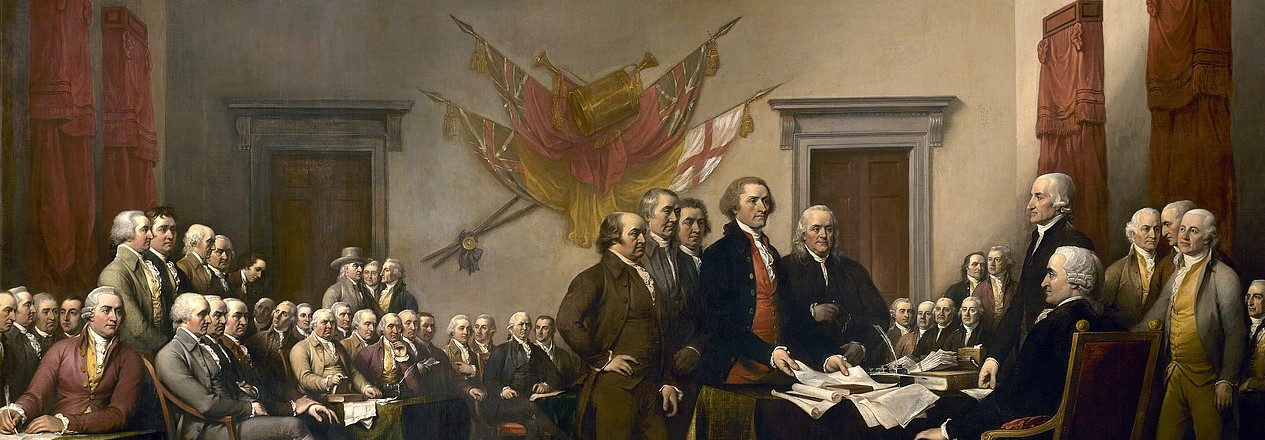
1:45 pm Martin West, Author and Historian: “Wielding the Club of Hercules: Benjamin West and the Painting of History”

3:15 pm Dr. Walter Powell, BRPA, Moderator: “The F&I War in Film and Literature: Some Highlights” Panel Discussion

5:00 pm Seminar Concludes

Lodging options at Jumonville are as follows 

Rates below are per person and linens are included (no daily change in linen service)

(accommodations in the Inn – extremely limited availability)

Single Occupancy – $110/Thursday night $175/Friday night  $135/Saturday night  

Double Occupancy – $90/Thursday night $150/Friday night  $115/Saturday night 

(accommodations in Wash Lodge – available Thursday night – Saturday night)

Single Occupancy – $95/1 night $155/2 nights  $200/3 nights  

Double Occupancy or more – $75/1 night $120/2 nights  $170/3 nights

2022 SEMINAR COST 

Bus tour & seminar – $200/person   

Friday bus tour only – $125/person   

History seminar only – $100/person   $35/student

Friday optional diner at Jumonville – $20/person

Saturday optional lunch at Jumonville – $12/person

2022 Symposium Speaker Spotlight: Kate Egner Gruber

We are happy to welcome Kate Egner Gruber to our Third Annual Symposium on the American Revolution, co-hosted with Gadsby’s Tavern Museum, The Lyceum and Emerging Revolutionary War. This year’s theme is “The World Turned Upside: The American Revolution’s Impact on a Global Scale. We asked Kate to answer a few questions about their talk and their passion for history.

Kate Egner Gruber is the acting director of curatorial services for the Jamestown-Yorktown Foundation, where she works with a team to grow the collection and broaden the interpretation of early American history at Jamestown Settlement and the American Revolution Museum at Yorktown. Kate is a graduate of the University of Mary Washington’s Historic Preservation program, where she focused on archaeology and material culture, and holds her masters degree in early American history from the College of William and Mary.

What first attracted you to the study of early American history? What keeps you involved in the study of this history? Do you find these things are the same or different?   

I never know how to answer this question. The past has always been a presence in my life—whether I was digging up holes in my mom’s backyard looking for buried treasure (sorry, Mom), enthralled with the stories behind the old things in my grandmother’s upstairs room, or lost in my imagination about the landscape I called home.

I like to say that history doesn’t change—but our relationship to it does. This is what keeps me involved in the study of history of today. There’s always something new to learn, new perspectives to consider, new lenses through which to view the past. This is what keeps me motivated and eager to keep diving in.

Why do you think it is important for us to study the Revolutionary Era?  

What we learn about the past helps us better understand our present and create a more perfect union for the future.

What do you think was the most significant foreign impact on the American Revolution? 

As someone who studies both 17th and 18th century history, my perspective on this question is flipped—I think the most significant impact on the American Revolution was the colonies’ shared 17th history in the growing English and (later) British empire.

What are some of the important lessons of the American Revolution do you think are still relevant today?

From England’s Glorious Revolution to America’s Glorious Cause, we’re still negotiating our rights to life, liberty, and the pursuit of happiness—or in the words of John Locke, life, liberty, and property!

What was it about the American Revolution that elicited such global interest

Some of the founders saw their American Revolution through the lens of the English Civil Wars and Glorious Revolution, all of which had global consequences. The American Revolution isn’t just American history—it’s world history! 

Join us for our Third annual Emerging Revolutionary War Symposium on September 24, 2022. Emerging Revolutionary War is excited to continue our partnership with Gadsby’s Tavern Museum and The Lyceum of Alexandria, VA to bring to you a day-long Symposium focusing on the American Revolution.

Registration fee is now only $60 per person and $50 for OHA members and students. If you feel more comfortable attending virtually, the fee is $30. To register visit: https://shop.alexandriava.gov/EventPurchase.aspx

“If General Howe attempts…”

On December 19, 1777 a bedraggled, underfed, undersupplied, and hemorrhaging manpower, the Continental army trudged into their permanent winter encampment at Valley Forge. Located approximately 20 miles from Philadelphia, General George Washington’s army would recuperate, revitalize, re-train, and march out six months later a different military force.

Meanwhile, the British army, victors of Brandywine and survivors of Germantown ensconced themselves in the colonial capital of the rebellious colonies after its peaceful fall on September 26, 1777. Commanded by Sir General William Howe the British were better fed, better equipped, and in theory better suited to continue conducting military operations to quell the rebellion.

Which begs the question, why did Howe not attack Valley Forge?

Sir William Howe

Although historians have grappled with this, there are a number of reasons why Howe did not press the issue during the winter months, some range from personal to logistical to how warfare was conducted in the 18th century.

Was Howe frustrated at Washington for not taking the bait at White Marsh in early December 1777 to fight outside defensive works and envisioned the same reticence would be shown by the Virginian if the British attempted an offensive action toward Valley Forge?

Or was Howe simply a man of his time and war was not practiced in winter when there were so many variables one could not control, chiefly the unpredictability of Mother Nature?

Was Howe already worried about his reception and defense when he arrived back in England? Only willing to take a low risk-high reward gambit, which he attempted in May 1778 at Barren Hill?

One of his own soldiers, Captain Richard Fitzpatrick in a letter to Charles Fox penned the following;

               “If General Howe attempts anything but securing his army for the winter I shall
consider him, after what has happened in the north, a very rash man. But if he
lets himself be governed by General Grant I shall not be surprised if we get
into some cursed scrape.”[1]

Or does this one paragraph explain the main reason behind no winter campaigning, “what has happened in the north.” A clear implication to the disaster of the other field army operating in the northern American colonies, Burgoyne’s that capitulated at Saratoga in October 1777.

Although we will never know for certain, this is a question that has come up in conversations, at book talks, and around the national park at Valley Forge. This is a question Emerging Revolutionary War will grapple with on our second annual bus tour, which will include Valley Forge, this November. Check the link “Bus Tour 2022” on the black banner above to secure your ticket and partake in the ongoing debate on why Howe did not attack. Limited tickets remain.

[1] Urban, Mark. “Fusiliers: The Saga of a British Redcoat Regiment in the American Revolution (Walker & Company: Manhattan, 2007).

The Conway Cabal and the Politics on the Road to Monmouth with Dr. Mark Edward Lender

Join us this Sunday night as we discuss the Conway Cabal with award winning historian Dr. Mark Edward Lender, author of Cabal! The Plot Against General Washington. We will discuss details of the “cabal” and the politics that impacted the events surrounding the battle of Monmouth and George Washington, himself.

This free Zoom event will begin at 7 p.m. and will be broadcasted live on our Facebook page: https://www.facebook.com/emergingrevwar

Monmouth Monday: Lee Starts a War of Letters with Washington

Major General Charles Lee’s role in the battle of Monmouth Courthouse and his subsequent court-martial is perhaps one of the Revolutionary War’s most controversial subjects. His conduct during the battle on June 28, 1778 can be both ridiculed and praised. Although he failed to pin the enemy rearguard into place before Washington could arrive with the rest of the American army, he successfully organized a delaying force at the Hedgerow that temporarily slowed the British pursuit and provided time for the army to form a strong defensive line atop Perrine Ridge. When the guns fell silent and the British retired from the field, Lee, then four miles away at Englishtown, immediately began to grow angry and slighted by the famous confrontation that occurred between himself and the commander-in-chief when the latter arrived on the field earlier that afternoon. It is possible that Lee’s performance would have avoided severe scrutiny—after all, Monmouth had been a tactical victory for the Continental Army. However, the eccentric and egotistical Lee could not bite his tongue. In a series of incredible letters addressed to Washington, he sealed his ultimate fate. Choosing honor above all else, Lee criticized and downright offended his superior. By the end of the exchange Lee demanded, “that on the first halt, I may be brought to trial.” Washington obliged him.

Washington Arrives on the Monmouth Battlefield

Below is the first letter written by Lee in the correspondence that would eventually lead to his removal from the army:

Camp English Town [30 June 1778]

Sir

From the knowledge I have of your Excys character—I must conclude that nothing but the misinformation of some very stupid, or misrepresentation of some very wicked person coud have occasioned your making use of so very singular expressions as you did on my coming up to the ground where you had taken post2—They implyed that I was guilty either of disobedience of orders, of want of conduct, or want of courage. Your Excellency will therefore infinitely oblige me by letting me know on which of these three articles you ground your charge—that I may prepare for my justification which I have the happiness to be confident I can do to the army, to the Congress, to America, and to the world in general. Your excellency must give me leave to observe that neither yourself nor those about your person, could from your situation be in the least judges of the merits or demerits of our measures—And to speak with a becoming pride, I can assert that to these manouvers the success of the day was entirely owing—I can boldly say, that had we remained on the first ground, or had we advanced, or had the retreat been conducted in a manner different from what it was, this whole army and the interests of America would have risked being sacrificed. I ever had (and hope ever shall have the greatest respect and veneration for General Washington) I think him endowed with many great and good qualities, but in this instance I must pronounce that he has been guilty of an act of cruel injustice towards a man who certainly has some pretensions to the regard of every servant of this country—And I think Sir, I have a right to demand some reparation for the injury committed—and unless I can obtain it, I must in justice to myself, when this campaign is closed, [(]which I believe will close the war) retire from a service at the head of which is placed a man capable of offering such injuries. But at the same time in justice to you I must repeat that I from my soul believe, that it was not a motion of your own breast, but instigaged by some of those dirty earwigs who will for ever insinuate themselves near persons in high office—for I really am convinced that when General Washington acts from himself no man in his army will have reason to complain of injustice or indecorum. I am, Sir, and hope I ever shall have reason to continue your most sincerely devoted humble servt

Charles Lee1

To hear more stories like Charles Lee’s and to walk the ground in which he fought, join Emerging Revolutionary War historians Billy Griffith and Phillip S. Greenwalt this November on a bus tour covering the winter encampment at Valley Forge and the Monmouth campaign. More in formation can be found on our website, www.emergingrevolutionarywar.org, or on our Facebook page, https://www.facebook.com/events/632831987720200/?acontext=%7B%22event_action_history%22%3A[%7B%22surface%22%3A%22page%22%7D]%7D

[1] “To George Washington from Major General Charles Lee, 30 June 1778,” Founders Online, National Archives, https://founders.archives.gov/documents/Washington/03-15-02-0651. [Original source: The Papers of George Washington, Revolutionary War Series, vol. 15, May–June 1778, ed. Edward G. Lengel. Charlottesville: University of Virginia Press, 2006, pp. 594–595.]

Americana Corner

Emerging Revolutionary War checks in with Tom Hand and Americana Corner. Here is what has has been published on that blog for the month of July.

Ben Franklin Enters Politics
July 26, 2022

Benjamin Franklin retired from an active role in his printing business in 1748 at the age of 42. His work had made him a wealthy man, and he decided to devote the remainder of his life to civic improvements and governmental affairs. Franklin became a member of the Philadelphia City Council that same year, beginning a period of more than four decades of involvement in American politics and statecraft.

Read More

Virginia’s House of Burgesses, British America’s First Elected Legislature
July 19, 2022

The Colony of Virginia was established at Jamestown by the Virginia Company in 1607 as a for-profit venture by its investors. To bring order to the province, Governor George Yeardley created a one-house or unicameral General Assembly on July 30, 1619.

Read More

How Colonial America Was Governed
July 12, 2022

When the English began to settle North America in the 1600’s, the leaders of the various colonies had different motives. While all colonies exercised their authority in the King’s name, they were not created in the same mold, and some had more autonomy than others. In fact, there were three different types of colonies: royal, self-governing, and proprietary.

Read More

Ben Franklin, America’s First Man of Science
July 5, 2022

Benjamin Franklin was one of the world’s foremost inventors and scientists in the 1700s. His creative genius and inventiveness led to many significant discoveries that made living life easier for all. Moreover, he was proof positive that brilliant minds existed in British America, despite its backwoods reputation in Europe.

Read More

2022 Symposium Speaker Highlight: Scott Stroh

We are happy to welcome Scott Stroh to our Third Annual Symposium on the American Revolution, co-hosted with Gadsby’s Tavern Museum, The Lyceum and Emerging Revolutionary War. This year’s theme is “The World Turned Upside: The American Revolution’s Impact on a Global Scale. We asked Scott to answer a few questions about their talk and their passion for history.

Scott Stroh was born in Philadelphia, PA, but family roots along the Chesapeake Bay fostered a deep love of Virginia history at a young age. Mr. Stroh Graduated from Randolph-Macon College in Ashland, VA with a BA in History and Education in 1992 and from Middle Tennessee State University in Murfreesboro, TN with a MA in History and Museum Studies in 1997.

Mr. Stroh served as Curator of Collections and Interpretation at the Anacortes Museum in Anacortes, WA, as Curator at Historic Spanish Point in Osprey, FL, as Executive Director of the Roanoke Island Commission in Manteo, NC, as Florida’s State Historic Preservation Officer and Director of Historical Resources, and as Executive Director of the Milwaukee County Historical Society. He was appointed Executive Director of Gunston Hall in June 2013.

What first attracted you to the study of early American history? What keeps you involved in the study of this history? Do you find these things are the same or different?  

Growing up in Philadelphia I fell in love with history and, in particular, early American history as a child.  Even at a young age, I was very interested in the people who defined this period and I voraciously read biographies about anybody living during that period of time. My favorite museum was also Franklin Court, in part because they had a large room with telephones that allowed you to call and “talk” with the Founders, but also with lesser known figures like Absalom Jones (first African American to be ordained a priest in the Episcopal of the United States). These moments, and others like them, were defining experiences of my childhood and directly contributed to my career in museums.

I remain involved with this history not only because of my role at Gunston Hall, but perhaps more importantly because I believe learning about and understanding this history is essential to being an informed and productive citizen today.

Continue reading “2022 Symposium Speaker Highlight: Scott Stroh”

“That his northern laurels would be turned into southern willows” Major General Horatio Gates Arrives to take command in North Carolina, July 25, 1780

Opportunity knocked for Horatio Gates with the fall of Charleston, South Carlina in May 1780. A devastating loss for the Americans, with nearly 6,000 men of the Southern Army under Benjamin Lincoln surrendered to Sir Henry Clinton. Unless something wasn’t done soon, the entire southern colonies could fall and the revolution along with it. Congress needed someone who could inspire men to join the war effort and a trusted leader with a positive record. Washington put Nathaniel Greene’s name forward, but Congress in a rare move went against Washington’s wishes and appointed Horatio Gates as commander of the Southern Department on June 13th

Major General Horatio Gates, ca. 1794 by Gilbert Stuart

The road from his victory at Saratoga to the Southern Department wasn’t an easy one for Gates. He sought independent field command and many believe he wanted Washington’s position as commander in chief. His allies in Congress and the Continental Army lobbied heavily on Gates’ behalf and were able to have Gates appointed to the powerful Board of War (the defacto Department of Defense). Though an important role (and serving as Washington’s civilian superior), Gates believed he belonged in the field.  Though his role in the famous “Conway Cabal” is still debated today, he was implicated via letters in criticizing Washington’s leadership. Whether his involvement was real or not, the relationship between him and Washington (and Washington’s inner circle) was seriously damaged. Due to the situation, Gates resigned from the Board of War and accepted appointment as department commander of the Northern Department. In this role he was responsible to look after the New York Highlands and watch from British incursions from Canada or New York city. Gates was unhappy in this role and proposed another American invasion of Canada. Washington and Congress disagreed and rejected his plans. He disliked his task of dealing with enemy native tribes in the region and dragged his feet in following orders. Finally, that fall, Gates took command of American forces in New England with his headquarters in Boston. Though excited by this appointment, he quickly realized that this post was not where the action would be. The British left Boston in 1776 and since the city was peaceful and not a welcome place for a man seeking glory and military action. Finally, after much frustration, Gates asked to return to his farm in Virginia and arrived there by December 1779. Gates found himself a hero without an army and continued to brood over his situation.

Continue reading ““That his northern laurels would be turned into southern willows” Major General Horatio Gates Arrives to take command in North Carolina, July 25, 1780”

George Washington and the Middlebrook Winter Encampment of 1778-1779

Join us for another installment of Rev War Revelry this Sunday, July 24, 2022 at 7 p.m. ET over on our Facebook page! Emerging Revolutionary War will be joined by Paul Soltis, historian with the New Jersey State Park Service at the Wallace House and Old Dutch Parsonage State Historic Sites. The Wallace House served as George Washington’s headquarters during the winter at Middlebrook, New Jersey in 1778-1779. While most Americans have heard of Valley Forge, the winter cantonment at Middlebrook is often overlooked. We’ll discuss the important historic events that occurred there and what visitors to the area can see today.

Can’t make it this weekend? You can catch this and all our previous Sunday night chats on our YouTube page and our podcast!

Brief Book Review: Hero of Two Worlds, the Marquis de Lafayette in the Age of Revolution by Mike Duncan

Mike Duncan
Public Affairs Publishing
$30.00

I admit, I was skeptical when I saw the book on the bookshelf of my local bookstore and then again at the county library. Another biography on the Marquis de Lafayette? Was one truly needed? Four days later with the book finished and now laying beside me as I type this review I can emphatically say “yes” that this biography was needed about the most celebrated Frenchman in the history of the United States.

Having read previously a biography solely on Lafayette and another where a historian compared him as a revolutionary brother to Thomas Jefferson, I had a baseline knowledge of the marquis. Mike Duncan, popular history podcaster and New York Times-Bestselling Author provides a very readable, engaging biography that moves gracefully through Lafayette’s life, more graceful than supposedly the young Frenchman’s first dance at Versailles in front of Marie Antoinette.

After a brief but concise overview of the young Lafayettes’s formative years, Duncan dedicates the majority of the narrative of how the Frenchman became the “hero of two worlds.” From how he navigated his escape to America in 1777 to the ideals he brought back to France and his hopefulness for creating a better homeland. One of the values of Duncan’s work is his ability to find the inner workings of Lafayette’s demeanor and mindset. This is done by looking at his peers and their criticalness of how the Frenchman navigated the shifting sands of the turbulent French political scene from 1789 through the Napoleon era.

I greatly enjoyed the writing style and the blend of popular and academic historical scholarship that Duncan effortlessly moved between throughout the narrative. This work is definitely a must read for anyone looking for that introductory book about the Marquis de Lafayette. For those who have a little more foundational knowledge there may be limited new material but the primary sources from contemporaries adds a much-needed element of constructing the two worlds that Lafayette moved between.

To walk the footsteps of Lafayette at Valley Forge, join Emerging Revolutionary War in November for our Second Annual Emerging Revolutionary War Bus Tour. Click the “2022 Bus Tour” link on the black bar above to secure your ticket.