


One of the worst epidemics in American history occurred in the then capital of the United States, Philadelphia, in the late summer and fall of 1793. The yellow fever epidemic of 1793 killed almost 10% of the city’s population and forced the young government of the United States and President George Washington to seek shelter away from Philadelphia.

The 18th century was full of epidemics including smallpox, typhus, influenza, measles, and yellow fever. Yellow fever (also referred to as ‘the bilious fever’) was a brutal disease to contract and suffer. Once a person got yellow fever they would come down with aches and a fever. The disease would then attack the liver causing jaundice which turned the person’s skin a yellow color (hence the name yellow fever). Shortly after that, they would begin to bleed from the mouth, nose, and eyes and vomit black blood. It would usually only take a few days for the person to die from the disease. Almost 50% of all those who contracted the disease died.
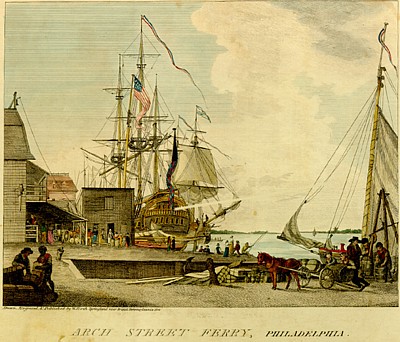
Yellow fever arrived in Philadelphia in the spring of 1793 when a ship carrying French refugees from the Haitian Revolution arrived from the Caribbean. In an era before germ theory, there were numerous erroneous thoughts as to the cause of this epidemic and how it spread. Many people assumed the fever was caused by putrid air from rotting produce on the docks since this is where the first cases appeared. Others blamed the refugees for bringing the disease into the city.
Among the early victims of the disease was a member of the President’s house. Polly Lear, the 23-year-old wife of George Washington’s secretary, Tobias Lear, died from yellow fever on July 28, 1793. Washington was personally devastated and attended her funeral the following day at Christ Church in Philadelphia, the only funeral he would attend during his presidency. Polly was given a funeral similar to a state funeral, with her pallbearers being Alexander Hamilton, Thomas Jefferson, and Henry Knox. Even though the fever would claim the lives of people close to George Washington, he, himself, never described fear or anxiety of catching the disease.
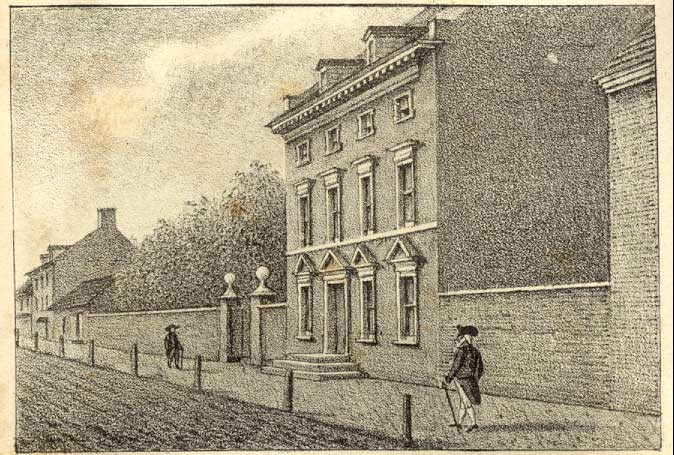
By August of 1793, cases of yellow fever in Philadelphia reached a point where local doctors declared an epidemic. About 20 people were dying every day of the disease. The College of Physicians in the city gave recommendations to slow the spread of the fever. They believed it was contagious from infected people and travelled through the air. People wore vinegar-soaked cloths around their mouths and noses, stayed in their homes, stopped shaking hands, kept distance on the streets from others, and lit bonfires in the city streets hoping the smoke would kill the disease in the air. People ceased to visit those afflicted with the fever, and the houses of those who had the fever were marked for all to avoid. They also sought to quickly bury people who died from the fever to try and stop the spread. People fled the city in droves. Nearly 20,000 people ultimately escaped the city. Washington described the city as “almost depopulated by removals and deaths.”
Continue reading ““Bring Out Your Dead”: The Yellow Fever Epidemic of 1793”
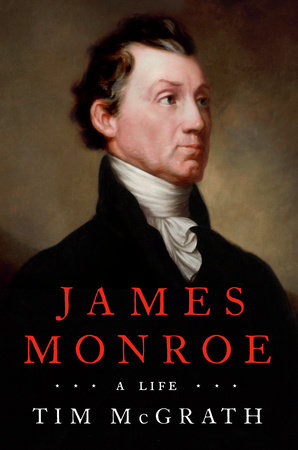 Tim McGrath has written two award-winning winning books about the early history of the United States Navy: Give Me a Fast Ship and John Barry. For his third book, he switched gears to tackle an oft-overlooked soldier, lawyer, politician, and president: James Monroe. In what will likely be the definitive Monroe biography, McGrath tackles the entirety of our fifth president’s life. Born in 1758, Monroe joined the American army in the Revolution’s early days until he was sidelined with a serious wound at



 Emerging Revolutionary War Era