The hottest part of the hotttest temperature engagement in the American Revolution happened on June 28, 1778 at Monmouth Court House in New Jersey. The portion that gets the most attention out of this entire battle was the supposedly heated exchange between General George Washington and his second-in-command, General Charles Lee.
What ensued was the end of an American military career, as Lee would face a court martial, a suspension from duty, and a fall into obscurity. Historians have sorted through the primary sources of the time period to reconstruct what exactly happened on that balmy June day.
Yet, for the first time, a dedicated study, from the lens of both a historian and a practicing attorney, brings into focus the details of that fateful day in New Jersey. That topic, his new book, and historian Christian McBurney will be the focal point of this week’s “Rev War Revelry” as a Facebook live, this Sunday at 7 p.m. EST.
McBurney, an attorney in Washington D.C. and president of the George Washington American Revolution Round Table of Washington D.C. will speak on his latest publication, George Washington’s Nemesis, The Outrageous Treason and Unfair Court Martial of Major General Charles Lee during the Revolutionary War. This book is one of five that McBurney has written on the subject of the American Revolution.
For more information on those books, click here. To read up or read the synopsis of the book at the center of the historian happy hour this Sunday, click here.
We look forward to welcoming you this Sunday; whether you read the book or on the fence about adding this volume to your expanding library or just want to know the history behind this last major battle in the northern theater in the American Revolution. Or all three! Remember to bring your comments, questions, and a favorite beverage to sip on as you tune in.
When I was in elementary school, my father who worked for the Department of Defense was tasked with a job in Wiesbaden, Germany. Located in the central part of the country, the town was located in the German province of Hesse. Never thought much of the connection between this province and the founding of the country whose government my father was actively employed with at the time. To cut myself some slack I was nine years old when we moved to Deutschland.
Fast-forward to graduate school and my studies focused on the social and military world of the Maryland Line and the American Revolutionary War in general. One does not have to do too much research to find “Hessian” in a publication about battles and campaigns from the conflict. Furthermore, one always hears a line similar to the following…
“Although known generally as Hessians, soldiers under this label actually hailed from multiple German principalities”
“Grouped together as ‘Hessians’ the mercenaries hailed from other German states besides Hesse-Kassel”
To be honest, never thought more of it, then a trip in December to Mount Vernon where a display in their museum showing the various German states brought the idea back to the forefront where the question lingered. With a few other projects, interruptions that 2020 brought, and my curiosity was subdued for the last nine months.
Hessian soldiers (courtesy of Hessian State Archive)
Until the term “Hessians” popped up again, fortunately, on a weekend, when I had time to go down the proverbial research rabbit hole.
Approximately 34,000 German soldiers were hired by King George III to augment the British army in their subduing of the rebellious colonies. Numbers range from 12,000 on the low-end to 18,000 on the high-end of that number consisting of soldiers from the Landgraviate (or Principality) of Hesse-Kassel. Chief among the reasons that this principality furnished 35% to 53% of the total soldiery could be attributed to the fact that Frederick II, ruler of Hesse-Kassel was an uncle to the British monarch. Secondly, 7% of the adult male population this small principality was already under arms and was ready for deployment; being well-supplied and equipped for foreign service.
Sharing a name with the larger landgraviate, was Hesse-Hanau, a semi-autonomous principality that did not wait for the British government to come calling for troops. After news reached the German state of the bloody engagement at Bunker Hill, the rule of Hesse-Hanau Landgrave William offered King George III a regiment of infantry. Volunteers also flocked to the chance of service in America, with many relocating permanently at the end of hostilities, rather than returning. Numbers from Hanau list 2,422 men who served the British in the American Revolution.
Continuing the familial connection, Brunswick-Wolfenbuttel, with King George III’s sister, Augusta married to the heir of Duke Charles I, the use of soldiers from this German principality was another guarantee. As early as 1775, the duke sent an offer of troops to King George III and 4,000 sons of Wolfenbuttel would cross the Atlantic.
In a controversial clause, the British government agreed to pay a certain fee for every soldier of Duke Charles’s killed in battle, with three wounded Wolfenbuttel soldiers equaling one killed. In return, King George III and his forces would be repaid for any soldier that deserted or fell ill outside what was listed as an “uncommon malady.”
When he heard news of this stipulation, Frederick the Great of Prussia, supposedly snickered that “cattle tax” on all the soldiers passing through Prussia en-route to British service “because though human beings they had been sold as beasts.”
Ansbach-Bayreuth under Margrave Charles Alexander, deeply in debt, gave the British cause 2,361 soldiers to subdue the rebellion in North America to help rescue his finances. This proved unsuccessful in the long run as he would eventually sell his dual margraviates to Prussia in 1791 and life off the sale in England.
Waldeck, under Prince Frederich Karl August had three standing regiments ready for foreign service as part of their governing structure. One of these regiments helped in the defense of Pensacola, along with companies being stationed in Mobile and Baton Rouge, probably the move diverse, geographically, of any of the German regiments in the American war. Waldeckers, numbering 1,225, served in the various theaters of the American Revolution.
Five battalions from Hanover, the ancestral lands of King George III’s family saw service in Minorca and Gibraltar which freed British troops in those duty stations for service in North America.
Anhalt-Zerbst, in 1777, agreed to send 1,160 men to buttress British forces in North America, including garrisoning New York City in 1780.
From Saratoga to Yorktown, from Quebec to New York City, these German mercenaries aided the cause of the British, providing much-needed manpower in an attempt to recover the rebellious American colonies. However, the cause of freedom from King George III that prompted the rebellion resonated with thousands of these German soldiers, who decided to stay after the war or after exchange when captured, or walked away in service. In fact, slightly over 50%, around 17,300 actually returned to their German home principalities upon the conclusion of the war in 1783.
Map of German states 1789 yet one can see the various German principalities and their respective sizes that contributed soldiers to the British effort to subdue their rebellious colonies.
An introduction to another aspect of how the American Revolution had far reaching international complications and commitments.
After last week’s riveting discussion on the pivotal battle of Kings Mountain, Emerging Revolutionary War decided to stay in the Palmetto State again this week. We have two special guests and historians joining “Rev War Revelry” so set a reminder to tune in on this Sunday, on our Facebook page, at 7pm EST.
From the American Battlefield Trust Catherine Noyas will join the revelry and discuss land acquisition in regards to the American Revolution around Camden, including the new visitor center that will open in spring 2021. She will give highlights on the work being done and the history behind the various initiatives.
From the South Carolina Battlefield Preservation Trust comes historian Doug Bostick. Their mission coalesces with the American Battlefield Trust with the shared goal of preserving the hallowed ground of the Palmetto State. Along with promoting the military history of the state as well.
There will also be mention of the Liberty Trail, so tune in to learn more about that program as well!
We hope you can join us for a chat on preservation, interpretation, and military history on Sunday evening.
On October 7, 1780, patriot militia, some coming from over the Appalachian Mountains descended on a Loyalist militia force in northwest South Carolina. This pro-British force, commanded by the only British regular on the field that day, Major Patrick Ferguson retreated onto Kings Mountain.
American fought American.
On that hilltop one of the pivotal battles of the American Revolutionary War unfolded. The ramifications reverberated through the southern theater of operations, played a part on the psyche of civilians and militia, and added luster to the burgeoning backwoods, frontier American persona.
Emerging Revolutionary War focuses in on the Battle of Kings Mountain this Sunday, on the next “Rev War Revelry.” Join us on our Facebook page at 7 p.m. EST for a historian happy hour, as we discuss, dissect, imbibe, and provide commentary on this strategic battle, the national park there, and the campaigns that decided this theater of operation.
Every year the historians of Emerging Revolutionary War take a fall trip to research, visit Revolutionary War sites/battlefields and to promote our museum partners and preservation. The trip usually is a follow up to our Annual Symposium, but with the COVID-19 pandemic, that has been moved to May 22nd (you can get more information on speakers, topics and registration on our Symposium link from our main page).
The ERW Crew recreates the surrender scene at Saratoga last fall.
After much discussion, we have decided to keep our annual fall trip tradition, but a more scaled back version. Don’t worry there will still be revelry and Facebook lives! Our original plan was to head to North and South Carolina, as a follow up to our visit there in 2018. In lieu of COVID-19, we have decided to keep it more “local” by focusing on sites in and around Yorktown, VA (many of our contributors are based in Virginia and Maryland). We will visit sites such as Gloucester, Yorktown, Spencer’s Ordinary, Green Spring, Great Bridge and Williamsburg.
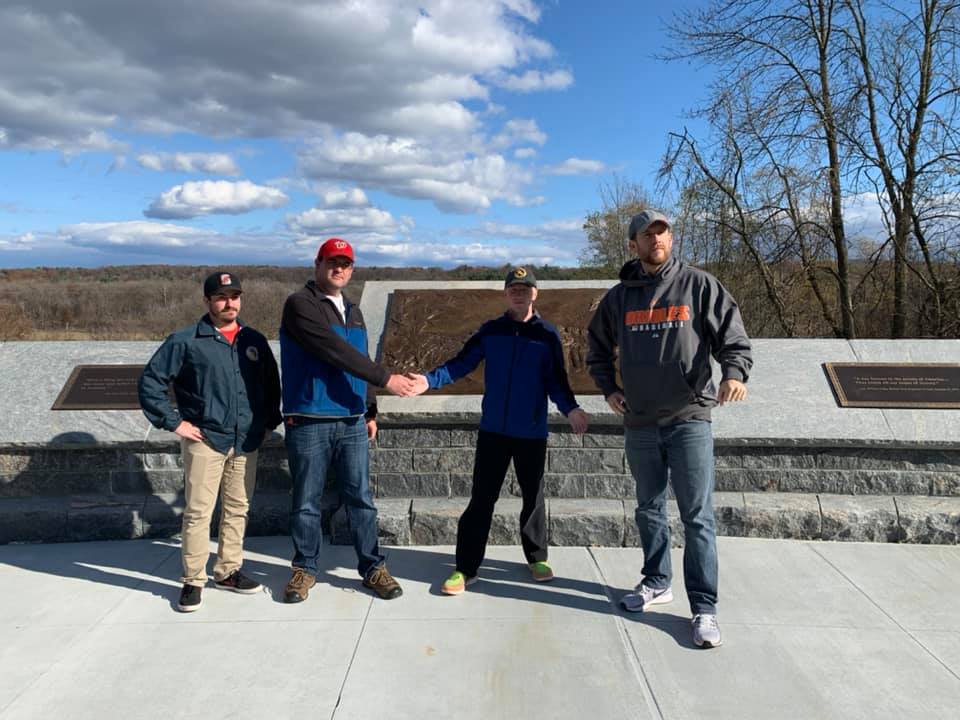
Memorial at Green Spring Battlefield
We will be posting FB Live videos the entire trip, bringing you some behind the scenes opportunities with our museum partners, some exclusive talks with historians and we will wrap up the trip with a special Sunday Night Rev War Revelry. Stay tuned to our blog and social media pages starting on November 6th and continuing on to our Sunday Night Rev War Revelry on November 8th.
Our goal is not just to share with you great information and encourage support for historic sites/museums but also to share with you the fun and passion we have for interpreting the events around the American Revolution. As a public history focused effort, we feel making history fun and accessible leads to a great appreciation for our shared history. We hope you join us virtually on our trip this November.
Over a week had passed since Major John Andre became the Continental Army’s prisoner near Tarrytown, New York, captured by three ragged militiamen who were probably more interested in robbing him than uncovering his intentions. For a time he had been incarcerated at Robinson House, the now defector Benedict Arnold’s former Hudson Highlands headquarters, and was eventually taken to the main American camp at Tappan, New York. There, Andre awaited his trial as a spy and eventual fate.
During his time held as a prisoner in Tappan, Andre accumulated an impressive group of intrigued and sympathetic followers, including Alexander Hamilton. Later describing his impression of the British officer to Colonel John Laurens, Hamilton wrote,
There was something singularly interesting in the character and fortunes of André. To an excellent understanding well improved by education and travel, he united a peculiar elegance of mind and manners, and the advantage of a pleasing person. ’Tis said he possessed a pretty taste for the fine arts, and had himself attained some proficiency in poe[try], music and painting. His knowle[d]ge appeared without ostentation, and embellished by a diffidence, that rarely accompanies so many talents and accomplishments, which left you to suppose more than appeared. His sentiments were elevated and inspired esteem. They had a softness that conciliated affection. His elocution was handsome; his address easy, polite and insinuating.[1]
Andre’s “elegance of mind and manner” was not enough to save him from the gallows, however, and on September 29, 1780, he was sentenced to be hanged by a board of fourteen American general officers. No witnesses were called to the stand. Andre’s previously written confession, and his admission that he had not entered American lines under a flag of truce was enough for the decision to be made. The next day, a letter was forwarded by George Washington to Henry Clinton informing him of his adjutant-general’s fate. He would be spared, however, if the British turned over Arnold. Clinton was forced to decline the ultimatum, citing military policy to his subordinates that a deserter such as Arnold must be protected. It was probably one of the most difficult responses the British general had to give in his career.
Andre’s execution was set to be carried out at 5 p.m. on October 1, but news of a delegation’s arrival sent by Clinton to make one final effort to prevent the hanging postponed it. One of the delegates, General James Robertson, met with General Nathanael Greene, and further information about Andre’s mission was forwarded to Washington. The American commander in chief would not be swayed, however. Andre would hang the next day.
This self-portrait was drawn by Andre, October 1, 1780, while he awaited his execution in Tappan, NY the next day. Wikimedia.
After first learning of the verdict issued to him by the board, Andre accepted his fate and was determined that he would face it as a gentleman and a soldier. As part of his last order of business on earth, he penned a heartfelt letter of appreciation and loyalty to Henry Clinton. Then, he made a plea to Washington that he may be executed by firing squad like a soldier rather than hanged as a spy:
Bouy[e]d above the terror of death, by the consciousness of a life devoted to honourable pursuits, and stained with no action that can give me remorse, I trust that the request I make to your Excellency at this serious period, and which is to soften my last moments, will not be rejected. Sympathy towards a soldier will surely induce your Excellency, and the military tribunal, to adapt the mode of my death to the feelings of a man of honour. Let me hope, Sir, that if aught in my character impresses you with esteem towards me, if aught in my misfortunes marks me as the victim of policy, and not of resentment, I shall experience the operation of these feelings in your breast, by being informed that I am not to die on a gibbet.[2]
Andre’s request was ignored. At 12 p.m., October 2, he would hang.
The morning of his execution, Andre breakfasted at Washington’s table, and as noon approached, he was led by an escort and fife and drum to the gallows, “with as much ease and cheerfulness of countenance as if he had been going to an assembly,” recalled Major Benjamin Tallmadge, who had become an admirer of the prisoner like Hamilton.[3] He was dressed in his scarlet, gold-laced coat, and upon approaching the gallows was seen to lean back for a brief moment as if in shock to learn that his request to Washington for a military execution had been denied.
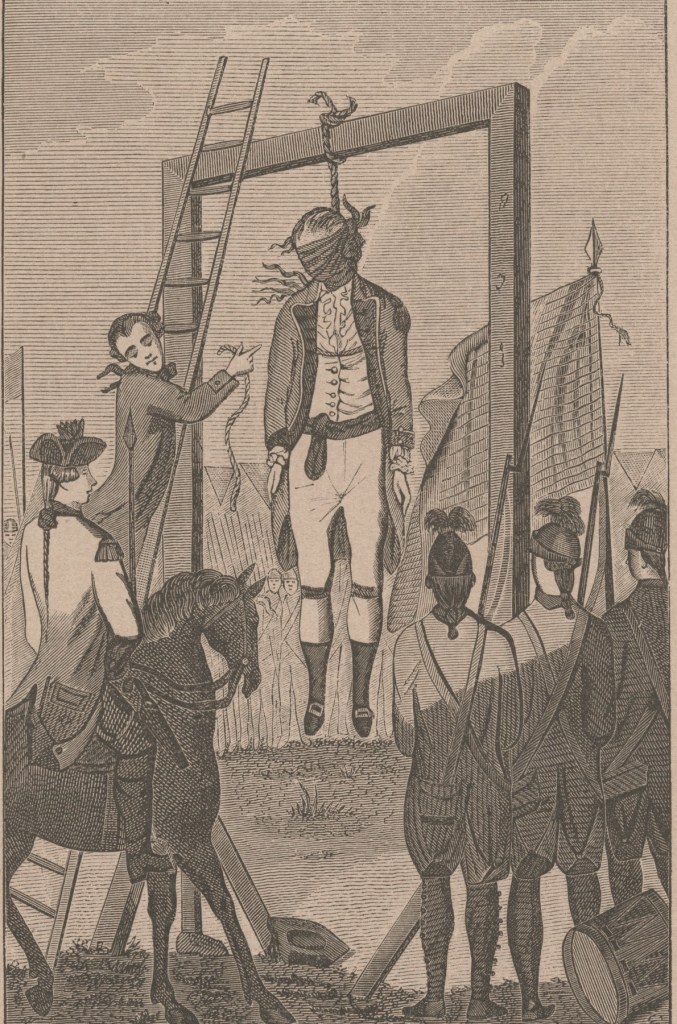
Despite this cold revelation, Andre continued on to the gallows. After struggling at first to climb the cart below the rope, he mounted it, and from the executioner’s grasp he took the noose and tied it around his own neck, then he covered his eyes with a handkerchief. The crowd surrounding him, including Maj. Tallmadge, was seen teary-eyed and sobbing. It was one more dramatic scene in the Revolutionary War, and Andre would not make it easier for anyone to witness. Lifting the blindfold, he spoke his final words, a request: “All I request of you, gentlemen, is that you will bear witness to the world that I die like a brave man.” With that, the wagon was pulled out from beneath his feet, and with one great swing and several fleeting moments, he was gone.
The Execution of Major Andre, October 2, 1780. New York Public Library.
Major Andre’s fate was a tragedy within a tragedy. Caught up within the story of an American hero’s tragic descent towards treason, Andre became a victim of one of the darkest tales in our history. Unlike Benedict Arnold, however, whose legacy had been tarnished forever, Andre was remembered as a hero, a martyr even, by the British, and romanticized by many Americans alike. Regardless, the two men will forever be linked by history. Two-hundred and forty years later, that has not changed.
On October 4, 1777, General George Washington’s Continental Army struck the British outpost at Germantown, Pennsylvania. Less than a month after the Battle of Brandywine and approximately a week after the loss of their capital, Philadelphia.
Initially successful, Washington’s forces got bogged down by fog and British holdouts in a stone structure called Cliveden. What started so promising did end in a tactical defeat for the Americans. Yet, coming days before the climatic battle in New York, dubbed Saratoga collectively, the cause of American independence was buoyed.
Although outshone in the annals of history by Saratoga, the setback at Germantown proved decisive in the French court, especially with the French foreign minister, who saw that the simple fact that Washington could regroup following Brandywine and come within some bad luck and fog of defeating the British was testament to resolve of the American effort for independence.
To cut through the fog and discuss the campaign, engagement, and repercussions of the Battle of Germantown, Emerging Revolutionary War invites back historian and author Michael C. Harris this Sunday for the next installment of “Rev War Revelry” at 7pm EST on our Facebook page.
He will join a duo of ERW historians. In addition, his publication, Germantown: A Military History of the Battle of Philadelphia, October 4, 1777, is now available through the publisher, Savas Beatie, LLC. Click here to order.
We look forward to hearing your comments, questions, and/or opinions this Sunday. So, set a side an hour-ish–as you know historians can get to talking and lose track of time easily, especially when books are also involved–for this historian happy hour.
Emerging Revolutionary War welcomes guest historian Kevin Pawlak
New York state has a rich American Revolution history. Battlefields at Saratoga, Oriskany, Fort Ticonderoga, Long Island, and more dot the state’s connection to our nation’s founding. But growing up in the western part of the state, those sites were at least a few hours’ drive.
Recently, I discovered a neat story related to the American Revolution that was in my own home county—Orleans County. It is not a battlefield, though it is about a man who stood on those battlefields with George Washington’s Continental Army. Lemuel Cook, who died at the age of 107, spent the last thirty years of his life in the next town over from my hometown and died there. While he was not the last surviving veteran of the war for America’s independence, he was the last to claim a pension for his service.
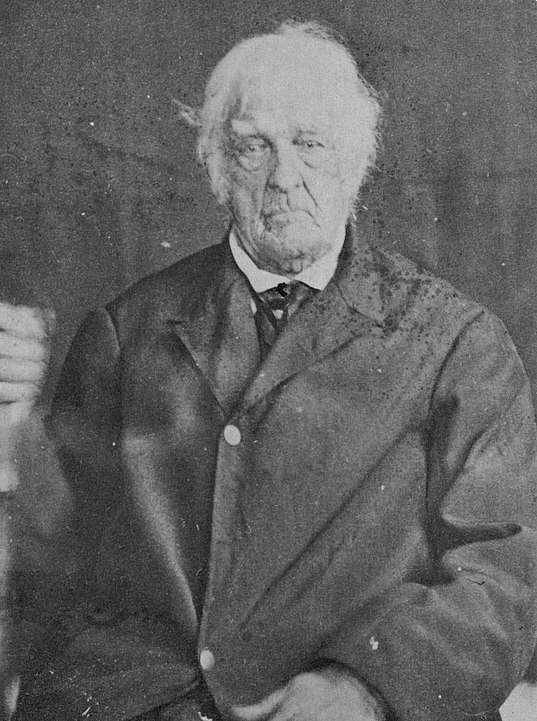
Lemuel Cook
Ninety-one years prior to his death in 1866, the sixteen-year-old Connecticut native enlisted with the 2nd Continental Light Dragoons. He saw service with the dragoons at Brandywine and Yorktown.
Cook moved frequently after his service expired until he settled in Clarendon, New York in 1832. Cook’s devotion to the nation he helped create never waned until his dying days. He regularly attended town hall meetings and elections until a few years before his death. Souvenir seekers continually asked for the old veteran’s autograph, which he obliged. In 1861, a photographer captured this national treasure in a photograph.
Unfortunately, even Cook could not defeat Father Time. As he aged, his speech became “very fragmentary,” according to one newspaper. “He recalls the past slowly, and with difficulty, but when he has his mind fixed upon it, all seems to come up clear.” Despite his weariness, Cook’s spunk occasionally showed, “the old determination still manifesting itself in his look and words.” Specifically, during an interview in the midst of the American Civil War, Cook pounded his cane on the floor and proclaimed, “It is terrible, but terrible as it is the rebellion must be put down.” Incredibly, he lived to see the rebellion “put down” and died on May 20, 1866.
Cook’s grave, located in the Cook Cemetery on Munger Road in Clarendon, suffered damage in a windstorm in 2017 but was quickly fixed. In the same year, descendants and local historians unveiled a state historic marker alerting passersby to this unique niche of Revolutionary War history in a place far from the famous battlefields that achieved our nation’s independence.
Two riders rode determinedly to Benedict Arnold’s headquarters at the Robinson House across the Hudson River from West Point on the morning of September 25, 1780. The lead courier, Lt. Allen, who had initially been accompanying the captured “John Anderson,” carried with him the letters written by Lt. Col. Jameson informing Arnold of Maj. John Andre’s capture and his subsequent retrieval and return to the American camp at South Salem; the second rider possessed the incriminating papers found on Andre relating to West Point, as well as a newly signed confession the British officer had penned the day before admitting who he was. The second set of documents was meant for George Washington, who was to arrive at Robinson House to meet with Arnold and inspect the fortifications that day. It was a race against time between the two horsemen, and Arnold’s rider had the lead.
Washington was due to arrive at Robinson House for breakfast with Benedict and Peggy Arnold, but he chose to take a quick detour and inspect several American redoubts before continuing on his path from Fishkill, New York, where he had spent the evening. Instead, two of his aides, James McHenry and Samuel Shaw, were sent ahead to inform the couple to begin breakfast without him. Upon their arrival, the men sat down with the general to eat, informing him that the commander in chief would be there shortly. During this, Peggy remained upstairs.
After a few moments, Arnold excused himself from the table and stepped away to issue some daily orders. It was at this time when the walls of Benedict Arnold’s world began to close in on him. Lieutenant Allen had arrived with the news of Andre’s capture and transfer to the American camp at South Salem. The letter from Jameson also informed Arnold that the dispatches Andre carried were forwarded to Washington. If his treasonous plot had not yet been discovered, it was only a matter of time before it was. McHenry and Shaw had shown no signs of suspicion, but did Washington already know?
As the reality of the situation overtook Arnold, he ordered his horse saddled and his boat’s crew to man the vessel below on the Hudson, and told one of his aides, David Franks, that he was travelling upriver to West Point and would be back shortly—he was preparing to make a hasty escape. Before leaving Robinson House, he quickly found Peggy and explained to her that his life was in danger and he needed to leave (if Peggy was truly part of the plot, then what was actually said will probably never be known and was left out of later recollections to avoid incriminating her as well), he then mounted and spurred his horse down toward the river. After entering his barge, he ordered the crew to take him downriver to Stony Point, where he had business to attend to. As the vessel began to sail, an armed American boat passed closely by, and the quick-thinking Arnold told its crew to go up to Robinson House and inform Washington when he arrived that he would be back before dinner. They continued south, and even outran the other craft when it turned around and began to follow them in the other direction.
Arnold’s escape to the Vulture
When Arnold’s crew finally reached Stony Point, his request of them changed dramatically. Offering up two gallons of rum, he ordered his boatmen to carry him further downriver to the enemy vessel Vulture, which was originally supposed to carry Andre to the British lines. Instead, Arnold would be the one who boarded the boat and made his way to New York City, in the process taking the Americans who had just sailed him to safety as prisoners. Arnold’s defection was complete, but his plot to turn over West Point had been foiled.
An hour so after Arnold made his escape, Washington arrived at Robinson House. The commander in chief made his way across the river and was disgusted by the condition of the American defenses. The absence of Arnold perplexed him, but he did not think anything of it until he and his subordinates returned to the general’s headquarters and were greeted by the arrival of the second messenger carrying the Andre documents. Arnold’s treachery was thus revealed to the American high command, and immediately Washington ordered several aides to move downriver and see if the traitor’s vessel had been held up. It was too late, however. Arnold was gone, and as the reality of his betrayal began to set in for Washington (who had always been one of Arnold’s most ardent supporters) the general turned to the Marquis de Lafayette and asked him, “Whom can we trust now?”
Although Arnold had beat a hasty retreat to New York City, Peggy still remained behind at Robinson House. From the Vulture’s deck, her husband had scribbled off a message to Washington pleading with him for her safety and declaring her ignorance to the entire scheme. There are many versions of what transpired next, but according to the American officers at Robinson House, Peggy Arnold broke down in hysterics, seemingly going mad at the news of her husband’s treason. According to Col. Richard Varick, one of Arnold’s aides who was recovering from a fever in the house, a shriek was heard and the staff officer found Peggy with her hair “disheveled and flowing about her neck; [in] her morning gown with few other clothes remain[ing] on her—too few to be seen even by a gentleman of the family, much less by many strangers.” She then proceeded to ask if he had ordered her child to be killed and to “spare her innocent babe.”[1]
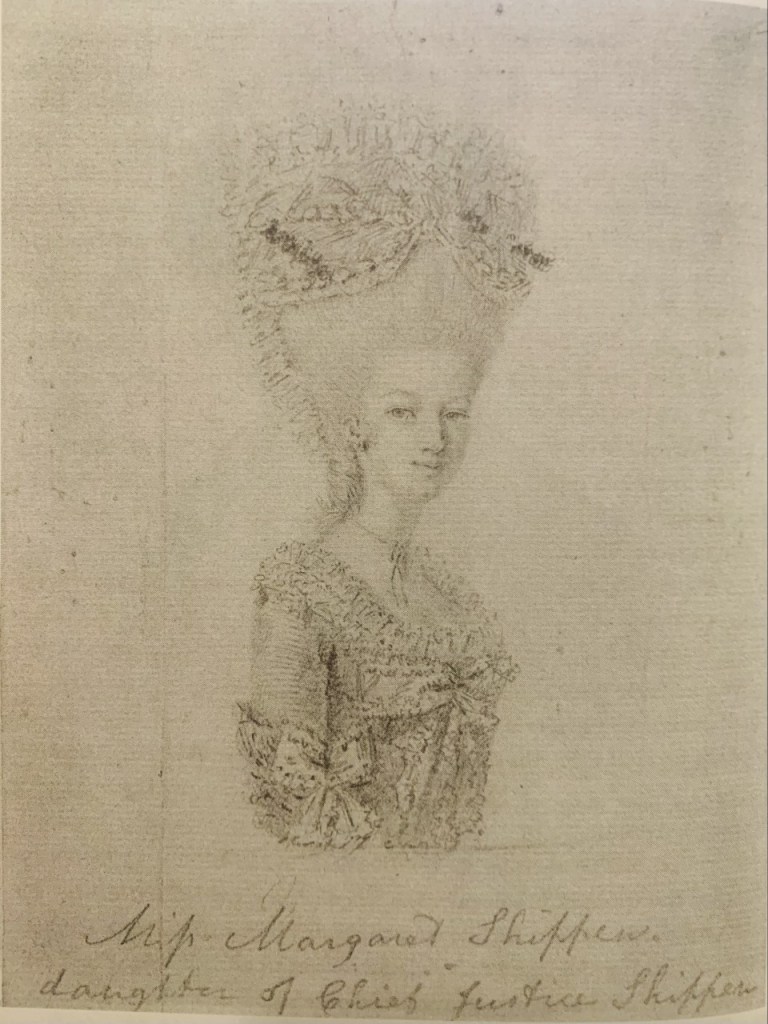
Pencil drawing of Peggy Shippen done by then Capt. John Andre during the British occupation of Philadelphia
It has been long debated if this was a genuine outburst of hysteria for Peggy, or if she was putting on a show to shield her own involvement in the plot. Multiple times Peggy was calmed down by the American officers arriving at the house, but her outbursts commenced again. Screaming about her husband, she was assured that he would return soon from West Point with Gen. Washington. Pointing to the ceiling she cried, “the spirits have carried [him] up there, they have put hot irons in his head!”[2] Then the hot iron went from Arnold’s head to her own and only Washington could remove it. With this, the general was brought in to see and she accused him of being an imposter. Peggy’s frenzy continued into the early evening when finally she regained control of herself and but still felt the despair of what had happened that day. If this was all a ploy, she had forced Washington, Lafayette, Alexander Hamilton, Varick, and countless to fall hook, line, and sinker for it. She was safe.
That evening, Washington and those who accompanied him sat down for dinner and pondered the gravity of the situation. It is impossible to image the anger, betrayal, despair, and heaviness that they must have felt. The American Hannibal was now the American Judas.
“Arnold has betrayed us. Whom can we trust now?”
[1] Quoted in Stephen Brumwell, Turncoat: Benedict Arnold and the Crisis of American Liberty (Yale University Press: New Haven, CT, 2018), 278.
In the pantheon of American military leaders, Daniel Morgan’s place is definitely warranted. Innovative rifleman, heroic actions, backwoodsman, skillful tactician, and charismatic leader. He performed admirably at the Battle of Quebec in the winter of 1775, led the American forces at one of the climatic and complete victories of the war at the Battle of Cowpens in 1781, and distinguished himself in many a field and campaign in between.
For those reasons and a further discussion into the life and career of this American military hero, Emerging Revolutionary War invites you to listen and chime in during the next “Rev War Revelry” this Sunday at 7pm EST on our Facebook page.
In addition to the cadre of Emerging Revolutionary War historians, including Rob Orrison and Travis Shaw, there will be another talking head this weekend.
Joining ERW this Sunday will be historian Nathan Stalvey. He is the Director of the Clarke County Historical Association and a member of the Virginia Association of Museums Council. He started his 20-year career at the University of South Carolina’s McKissick Museum where he worked as the Curator of Traveling Exhibitions and Design. Nathan then served as the Director of Exhibitions and Head of Collections at the Louisville Slugger Museum & Factory in Louisville, Kentucky prior to his hiring in 2014 as the Director at CCHA. As Director, he oversees the operations of both a museum in downtown Berryville, as well as the historic 18th-century Burwell-Morgan Mill in Millwood.
As Daniel would have enjoyed an adult beverage in his day, make sure to bring one to this “Rev War Revelry” Sunday night!











 Emerging Revolutionary War Era