Emerging Revolutionary War welcomes guest historian and reviewer Al Dickenson
No president has an easy job. But imagine holding the position of president immediately after undoubtedly the best president the United States has ever had.
That was John Adams’ conundrum. Additionally, it is the subject of renowned historian Lindsey Chervinsky’s new book, Making the Presidency: John Adams and the Precedents That Forged the Republic. Initially released last year, in the midst of a politically fraught election season, Chervinsky places the modern world into a context we should all understand better: the history of the 1790s.
After a brief introduction regarding the Revolutionary War, the early republic, and George Washington’s presidency, readers are thrown into John Adams’ presidency. Federalists opposing Democratic-Republicans (commonly referred to as simply “Republicans” in Chervinsky’s text, as they referred to themselves), the Americans opposing the French, the North opposing the South, Federalists opposing Federalists: it seemed there could be no peace in the nation so split apart. Yet the nation stood for another 220 years. Why is that?
Chervinsky argues that the reason we are a nation today relies on how John Adams served his presidency, specifically the power sharing he enacted in his cabinet amongst Republicans (like Vice President Thomas Jefferson), Federalists (like Secretary of State Timothy Pickering), and Archfederalists (like Secretary of War James McHenry), the successful navigation of foreign affairs (see the ongoing French Revolution, specifically the XYZ Affair), and the peaceful transfer of power.
The final focus of Chervinsky’s book, Adams’ loss in the 1800 election, perhaps offers the most original outlook on Adams’ presidency. Being the loser of the election, and being the first incumbent president to lose an election, historians have often treated Jefferson a little kindlier than Adams. Where Chervinsky’s work shines, however, is in showing how these great, powerful men, the leaders of their respective parties, differed in how they saw power, and in how they wielded it.
Little scholarship focuses on Jefferson’s machinations to gain the presidency. Rarely researched are his Virginia and Kentucky Resolutions, which called for nullifying federal law, even though these ideas were eventually adapted into various Confederate causes and mentalities in the following decades. Nor are the essentially political and emotional blackmail Jefferson laid on Federalist members of Congress who refused to vote for him over Aaron Burr. Jefferson threatened the members of Congress with, in essence, secession of Republican states if they did not pick a president soon, given that this was the only election in American history where the House of Representatives made the presidential selection. The dirty tricks of politics manifested themselves in this election, including smear campaigns against Adams and unfounded warnings that the Federalist Party would forego the will of the people and simply appoint a new, Federalist president.
Compare this to John Adams, who, while certainly desirous of a second term, largely laid low during the turmoil occurring on the other side of the Capitol. When presented with suggestions to keep himself as president, he refused. When asked to annul the election, Adams refused. When asked to stand for himself and campaign in the final months of the election season, and during the contingent election in the House between Jefferson and Burr, Adams refused and stayed silent. He did not cling to power, nor did he view his opinion better than that of the American people who voted for a Republican and the House members who would choose the next presidency. Though he was a lame duck president in every sense of the word, he held true to his convictions of propriety in politics, though privately he fumed.
In this way, though history often sheds more light on the winner, makes historians wonder what other ways “losers” of an election may have impacted our politics and history. An interesting study question for any intrigued historian, but one that Chervinsky shows is vital to understanding American history and modern politics alike.
Fort Mercer. Fort Mifflin. The Whitemarsh Campaign. Names of battles and maneuvers that “receive but scant attention in the literature of the American Revolution.” Until now. Award-winning author and historian Michael C. Harris returns to Emerging Revolutionary War to discuss his latest book.
Finishing the trilogy, started with Brandywine, continued with Germantown, and now Fighting for Philadelphia. Just released by Savas Beatie this month!
Enjoy this pre-recorded “Rev War Revelry” and get a synopsis of why this book is needed on your bookshelf. Join Emerging Revolutionary War Sunday at 7 p.m. EDT.
On August 2, 1775, the Second Continental Congress wrapped up its summer session 250 years ago. Philadelphia’s heatwave that summer—described as “Very Close & Hot”—was too much for the delegates. “We have sat much longer than expected,” one Congressman grumbled. “We are all exhausted.”
The Congress had been working tirelessly since its session began on May 10, 1775. In just 12 weeks, the body accomplished an impressive list of tasks, many of which escalated the growing tension with Great Britain:
Declared a state of military readiness across the colonies
Appealed to Canadians for support in the Revolution
Raised companies of riflemen in Pennsylvania, Maryland, and Virginia to reinforce the Boston Army
Elected George Washington as Commander-in-Chief
Appointed four major generals and eight brigadier generals
Adopted the Olive Branch Petition in a final effort for peace
Released the “Declaration of the Causes and Necessities of Taking Up Arms”
Rejected Lord North’s Plan for Reconciliation
Established a postal department
Appointed commissioners to negotiate peace with Indian tribes
Rather than resting from the sessions of the last 12 weeks, many members of the Second Continental Congress continued to work tirelessly to support the colonies’ efforts against Great Britain. Many returned home to ensure these measures were implemented at the local level. But there was still uncertainty about how King George III would respond to the Olive Branch Petition. Would the King accept the offer of peace? Only time would tell.
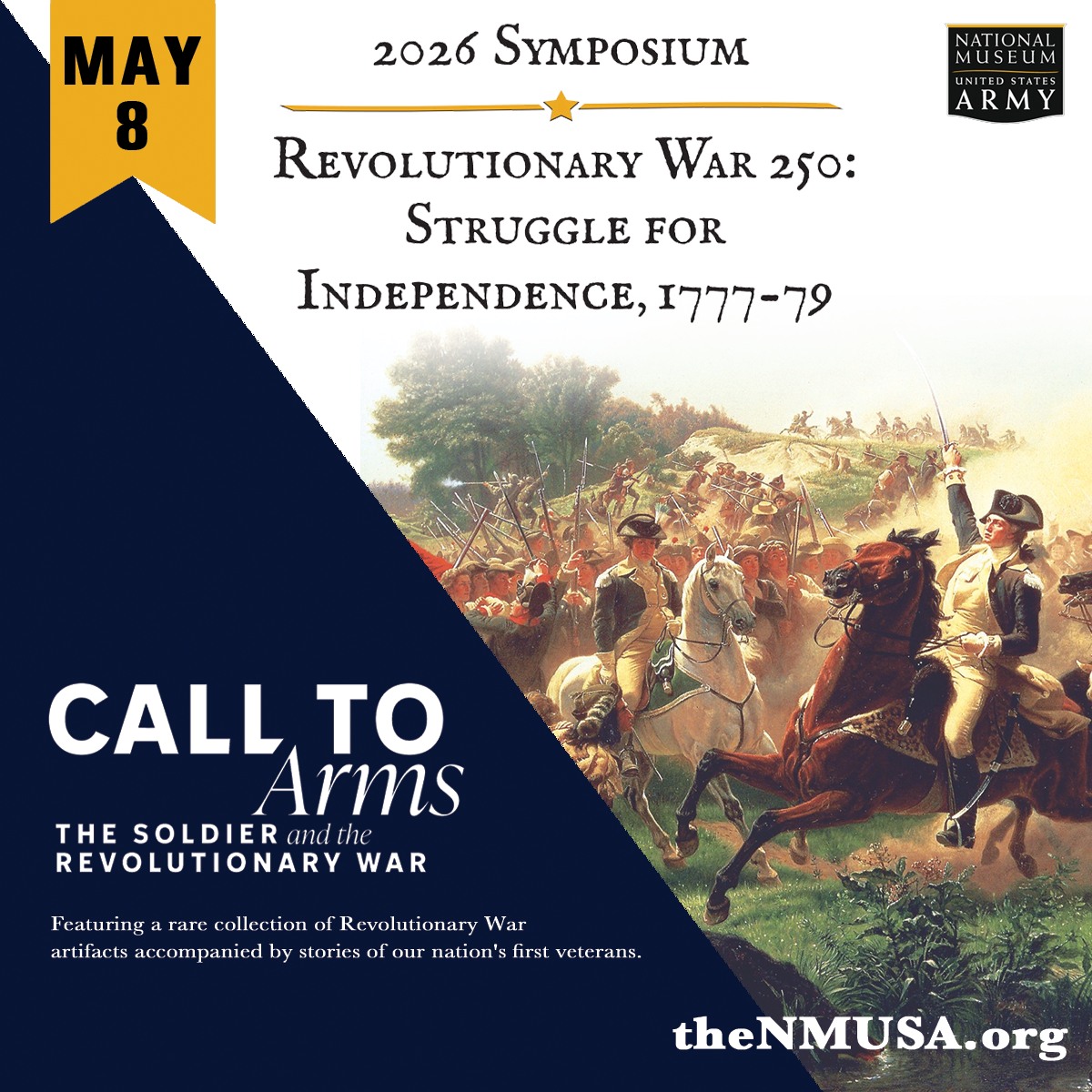
The National Museum of the United States Army in northern Virginia is well worth a visit. Covering the history of the U.S. Army from colonial beginnings to current operations, it is one of the most impressive museums I’ve seen. Several large galleries focus on major periods of the army’s history, such as the Revolution, Civil War, World War I, World War II, Korea and Vietnam, the Cold War, and current conflicts.
Recently the museum opened a special exhibit on the establishment of the army and the Revolution: “Call To Arms: The Soldier and the Revolutionary War.” It is absolutely outstanding. The exhibit brings together rare items from the army’s collection as well as from museums across the country. The assembly of artifacts is amazing: a cannonball from Trenton, examples of every major type of rifle and musket, a Ferguson Rifle, the sword Cornwallis surrendered at Yorktown, several rare original uniforms, and pistols owned by George Washington.
Flags from the era are extremely rare, and here one can see four original Revolutionary War flags. One of the highlights is that of the Rhode Island Regiment, which has not been out of the state since the Revolution ended.
I’m normally not big on technology but the exhibit featured two well done battle map videos, one on Bunker Hill, the other on Yorktown. A looping video in one corner covered soldier life in camp and on the march, dispelling myths and going into detail about medical care, rations, and more.
For more information about the exhibit, and the museum itself, visit their website:
The “Shot Heard Round the World” on April 19, 1775, hurled the American colonies into a fever pitch and a war footing. But in the 18th century, slow travel and communication meant the news spread gradually. It took 21 days for word of the fighting at Lexington and Concord to reach the town of Mecklenburg, in Berkeley County, Virginia (now Shepherdstown, in Jefferson County, West Virginia).
On May 10, the citizens of Mecklenburg learned of the battles between colonial militiamen and British troops. Combined with reports that Virginia’s royal governor, Lord Dunmore, had seized gunpowder from the magazine in Williamsburg, the townspeople prepared to support their fellow patriots in any way they could.
Local militia members began to drill and ready themselves for action. On June 10, they gathered on the property of Colonel William Morgan, just outside of town, for a patriotic barbecue. Songs were sung, and those present made a solemn pledge to return to the same spot—Morgan’s Grove—fifty years later to commemorate the day.
The rallying point for the Beeline March
After the festivities, drilling resumed, though the men still wondered whether they’d truly be called to arms. That call came on June 14, when the Continental Congress resolved that “six companies of expert riflemen be immediately raised in Pennsylvania, two in Maryland, and two in Virginia.” Once formed and equipped, the companies were to “march and join the army near Boston, to be there employed as light infantry under the command of the chief Officer in that army.”
Virginia’s quota fell to two experienced frontiersmen: Daniel Morgan, who raised a company in Winchester, and Hugh Stephenson, who assembled his company at Mecklenburg. The recruits signed one-year enlistments.
Henry Bedinger, one of Stephenson’s men, noted that “none were received but young men of character, and of sufficient property to clothe themselves completely, find their own arms and accoutrements—that is, an approved rifle, handsome shot pouch and powder-horn, blanket, with such decent clothing as should be prescribed.” It took fewer than seven days to raise a full complement of 100 men. Only a delay in procuring enough rifles kept the company from marching immediately.
Stephenson and Morgan agreed to rendezvous in Frederick, Maryland, before continuing to Boston. Morgan’s men departed first, on July 15. Stephenson’s company followed from Morgan’s Grove on July 17.
“Morgan having the start, we used every exertion to overhaul him—in vain,” wrote Bedinger, “although we marched (always in single file) from 30 to 36 miles a number of days.”
Along the way, Stephenson’s men were greeted by cheering citizens and well-supplied with food. Their grueling pace—averaging over 20 miles per day—became legendary. Only two men failed to complete the full journey: one was court-martialed, the other accidentally wounded.
On August 11, after marching more than 500 miles in just 25 days, Stephenson’s company arrived in Cambridge, Massachusetts, just behind Morgan’s men. There, they halted before General George Washington.
Stephenson’s company reporting to General Washington at Cambridge (My Ride to the Barbecue)
As the riflemen presented arms, Bedinger recalled, the general “slowly rode by us looking attentively and affectionately at the soldiers from his native state. When he shook hands with our captain, it was said they both shed tears.”
The journey became known as the Beeline March for its quick and direct route to join the Continental Army. Fifty years later, on June 10, 1825, the veterans honored their pledge to return to Morgan’s Grove. Of the original company, only five men were still alive, and just two were able to attend the reunion. One of them was Michael Bedinger, who recalled the events of 1775 and sang “two patriotic songs…the very same that had been sung at that spot fifty years before.”
Today, two markers commemorate the Beeline March’s origin. In Morgan’s Grove Park, a 1988 monument marks the “Shepherdstown Rally Point.” Down the road, in Elmwood Cemetery, a 1932 monument erected by the Daughters of the American Revolution lists the names of the commissioned and non-commissioned officers of Stephenson’s company.
For a fledgling armed force preparing to challenge one of the world’s greatest military powers, the Beeline March demonstrated the resolve, discipline, and patriotic fervor of early American soldiers—and set a standard for those who would follow.
Emerging Revolutionary War welcomes back Jeffrey Collin Wilford Part I, click here. Part II, click here.
Major Andre’s Reckoning
Along the way from Tarrytown, New York, to West Point, Benjamin Tallmadge conversed almost nonstop with the freshly captured British prisoner John André and learned much about the youthful officer. It was perhaps Major Tallmadge’s background as George Washington’s chief intelligence officer as well as recollections illuminated by the light of André’s charisma, that helped begin to paint a picture of an honorable soldier. After countless hours of conversation during their journey north he became convinced that André’s “Head was in fault, & not his heart.” Tallmadge commented later that André was “a most delectable Companion. It often drew tears from my Eyes to find him so pleasant & agreeable in Conversation on different Subjects, when I reflected on his future fate, & that too, as I believed, so near at hand—” In the short time the two spent together Tallmadge seemed to have grown extremely fond of the British Major.
One can sympathize with Tallmadge’s point of view. After all, André was merely another victim of the traitor Arnold. He had intended to meet him on board the Vulture but when Arnold failed to show he was forced to go ashore with Smith. After the Vulture was scared off by artillery and Arnold convinced him to don civilian clothes, plying him with incriminating materials and sending him through enemy territory, the stage was set. In his testimony, he said it was General “Clinton’s directions not to go within an Enemy post or to quit my own dress.“ Even so, by his own admission, it was the ruling of the military Proceedings that “he changed his Dress within our Lines and under a feigned Name and in a Disguished [sic].”
Perhaps Tallmadge’s sympathies toward André were accentuated by his hatred for Arnold. Tallmadge’s characterization of André becomes clearer in a simple personal act from his testimony when he stated that “André kept reviewing his shabby Dress, & finally remarked to me that he was positively ashamed to go to the Head Qrs of the American Army in such a plight. I called my Servant, & directed him to bring my Dragoon Cloak, which I presented to André. This he refused to take for some time, but I insisted on it, & he finally put it on & rode in it to Tappan.”
By the time they made Tappan, André was under heavy guard and imprisoned at Mabie’s Tavern. Just a few hundred feet away, Washington convened 14 of his top military officers who, over two days of testimony, found André guilty and sentenced him to death. On October 1st André personally requested from Washington the honor of a firing squad over a “gibbet.” Knowing the favor could not be granted, Washington opted to ignore the request.
On October 2nd, just before noon, André appeared on the stoop of Mabie’s Tavern. Four officers were present to escort the convicted spy to his final judgment. One of the four officers was Captain Lieutenant John Van Dyk, with just six months separating this moment from his own capture by the British off the coast of New Jersey. “There were about six steps which led into the stoop of the house, on the light of these, one American officer with myself were standing when Major André came out of the front door of the house in regimentals, hooking his arm with the two American officers (his attendants) one on his right and left. He ran down the steps of the stoop as quickly and lively as though no execution was to take place, and immediately fell into the centre of the guard, a place assigned him.”
André exits Mabie’s Tavern on the day of execution. (copyright: New York Public Library)
Escorting André with his four guards was also Major Benjamin Tallmadge. “I walked with him to the place of execution, and parted with him under the gallows, entirely overwhelmed with Grief, that so gallant an officer, & so accomplished a Gentleman should come to such an ignominious End.” Echoing that sentiment in writing nine days after his execution was Alexander Hamilton, saying “Never perhaps did any man suffer death with more justice, or deserve it less.”
Mabie’s Tavern today (Wilford)
When André had turned the corner to see the gallows before him, Van Dyk recorded his statement. “Gentlemen, I am disappointed, I expected my request…would have been granted.” According to Van Dyk, preparations were made and André’s final words when asked if he had any were “I have nothing more to say, gentlemen, but this, you all bear me witness, that I meet my fate as a brave man.” With that came the untimely end of Major John André who was then cut down and not allowed to fall to the ground and “every attention and respect was paid to Major André that it is possible to pay a man in his situation.” He was placed in a simple coffin and buried in a shallow grave close to the site. Over the following 40 years, a peach tree grew above the grave, ostensibly from a peach given to André by a woman as he marched to his execution.
When the Duke of York requested the return of his remains in 1821 it was not without fear of a backlash, specifically from the residents of Tappan. Many felt it was an affront to the memory of George Washington. British consul James Buchanan found that the protestations dissipated quickly after he agreed to buy those who were against the idea a drink at the local inn. The bones were then dug up with the root of the peach growing through the skull’s eye socket. They were placed in a mahogany ossuary and shipped by way of a British mail ship called a packet to New York City where they awaited their return to London.
Captain, now Colonel, John Van Dyk, 67 years old and working for the New York Customs House near the docks of the North (Hudson) River heard about the impending exhumation and, using his connections with influential New Yorker John Pintard, requested a dialog with Buchanan. Through the British consul, he obtained a penned introduction to the captain of the packet where André’s bones lay. Van Dyk made his way to the North River and found the captain just leaving to go back aboard the packet. Upon handing him the introduction from Buchanan, the captain requested that he return at 10 o’clock the following morning and a barge would be waiting to take him to the ship.
Coincidentally, that same day Dr. Valentine Mott, considered by many to be the greatest surgeon of his time, was treating one of Van Dyk’s children and heard of Van Dyk’s plan. Naturally, he was invited along for the next morning’s visit. That day, the two reached the docks just before 10 o’clock and met the barge which took them to the ship. “We went together on board the Packet. The bones were in a superb urn, and we were permitted to handle them. I mentioned the circumstances, as I have related them above, to the Captain [about André’s execution] — bid him goodbye, and we came on shore.” Van Dyk’s motivations for wanting to visit the remains of André are lost to history and probably best understood by those who experienced the emotions of that fateful day in American history.
Amidst a boat of mail destined for England, John André left New York for the last time, traveling back to London where his remains were repatriated. His ossuary was emptied of its contents and his remains were buried in Westminster Abbey with the inscription “universally beloved and esteemed by the Army in which he served, and lamented even by his foes, now lay alongside medieval kings, Renaissance statesmen, and Georgian poets.” Arnold and his wife Peggy lived the rest of their lives post-Revolution in London, reviled by most, and are buried just 3 miles away at St. Mary’s Church in Battersea, in a vault that sits behind a wall in a basement kindergarten classroom.
[Original source: The Papers of George Washington, Revolutionary War Series, vol. 28, 28 August–27 October 1780, edited by William M. Ferraro and Jeffrey L. Zvengrowski, 291–296. Charlottesville: University of Virginia Press, 2020.]
[Original source: The Papers of George Washington, Revolutionary War Series, vol. 28, 28 August–27 October 1780, edited by William M. Ferraro and Jeffrey L. Zvengrowski, 277–283. Charlottesville: University of Virginia Press, 2020.]
[Original source: The Papers of George Washington, Revolutionary War Series, vol. 22, 1 August–21 October 1779, edited by Benjamin L. Huggins, 745–746. Charlottesville: University of Virginia Press, 2013.]
[Original source: The Papers of George Washington, Revolutionary War Series, vol. 28, 28 August–27 October 1780, edited by William M. Ferraro and Jeffrey L. Zvengrowski, 303–311. Charlottesville: University of Virginia Press, 2020.]
Van Dyk, John. “Major André, Letter of Col. Van Dyk to John Pintard, August 27, 1821.” Historical Magazine 7, no. 8 (August 1863): 250-252.
Van Dyk, John. “Major André.” Martinsburg Gazette, August 20, 1835.
Pennsylvania State House, ca. 1770. Courtesy of the National Park Service
On May 10, 1775, the delegates convened their Second Continental Congress in Philadelphia. Unlike the First Continental Congress held a year before, this Congress had more delegates and met in the Pennsylvania State House and not Carpenters Hall. Also, events spiraled out of control since 1774, and the northern colonies were in outright rebellion with the battles of Lexington and Concord and the capture of Fort Ticonderoga. The delegates dived into several heavy topics as now blood was shed and an army of several thousand besieged the British in Boston.
Just before the Congress met John Adams wrote “our prospect of a Union of the Colonies, is promising indeed. Never was there such a Sprit.” It is evident that there were many discussions in the taverns around Philadelphia among the delegates that showed the feelings of many had changed since 1774. Though there were still a large portion of the colonies that were not ready to give up reconciliation with Great Britain. This tug in pull between men like John Adams and men like John Dickenson (more on the side of reconciliation) is shown in two documents passed by the Congress in early July. The “Olive Branch Petition” and the “Declaration of the Causes and Necessity of Taking Up Arms” reflect the mixed views of the Congress and the colonies as a whole of —conciliation and confrontation. Together, they illustrate the ideological crossroads at which the colonies stood, torn between loyalty to the British Crown and the growing necessity of armed resistance.
The “Olive Branch Petition”, drafted primarily by John Dickinson of Pennsylvania and approved by the Continental Congress on July 5, 1775, was a final attempt by the colonies to avoid a full-scale war with Great Britain. Despite the ongoing military engagements at Lexington, Concord, and Bunker Hill, many colonial leaders still hoped for a peaceful resolution to the growing conflict. The petition expressed loyalty to King George III and implored him to intervene in the escalating tensions caused by his ministers and Parliament.
John Dickinson was the leader of the moderates of the Second Continental Congress. Dickinson has the distinction of serving in the Congress as a representative from Pennsylvania and then Deleware. Courtesy of the National Park Service.
The document was rooted in the belief that reconciliation was still possible. It portrayed the colonies as loyal subjects who had been forced into resistance by the oppressive acts of the British government. The petition requested the King to repeal the Coercive Acts and halt hostilities, suggesting that harmony could be restored without further bloodshed.
Key to understanding the “Olive Branch Petition” is the deep-seated colonial belief in the distinction between the King and Parliament. Many colonists viewed Parliament as the source of tyranny but retained faith in the monarch as a potential protector. This petition, therefore, was not revolutionary but reformist. It sought to open a dialogue rather than sever ties.
However, the petition was rejected outright by King George III, who had already declared the colonies in open rebellion in August 1775 (before the Olve Branch petition arrived in London). He refused to read the document and issued the Proclamation of Rebellion, affirming Britain’s intent to suppress the colonial uprising by force. Many believed that the blood shed at Bunker Hill (226 killed and 828 wounded) combined with the fighting on April 19th backed the King into a corner. How could he accept peace when British soldiers were killed by rebels, especially since by the time he received the petition all the colonies were under arms against him. The rejection marked a turning point: it signaled the end of any realistic hopes for a peaceful compromise and pushed more colonists toward the idea of independence.
In stark contrast, the “Declaration of the Causes and Necessity of Taking Up Arms”, approved on July 6, 1775, just one day after the “Olive Branch Petition”, presented a much more assertive stance. Drafted by a committee including Thomas Jefferson and John Dickinson, the document aimed to justify the colonies’ decision to resist British authority through armed force.
The Declaration opened with a powerful assertion of the colonists’ natural rights and their entitlement to resist tyranny. It traced the history of British oppression, citing the Intolerable Acts, the imposition of taxes without consent, the quartering of troops, and the use of military force to suppress civil liberties. Unlike the Olive Branch Petition, which appealed to the King’s mercy, this document framed the conflict as a necessary defense of liberty and justice.
Although it still professed allegiance to the Crown, the Declaration was far more militant in tone. It acknowledged the seriousness of taking up arms but asserted that the colonies had been left with no other choice. It stated:
“Our cause is just. Our union is perfect. Our internal resources are great, and, if necessary, foreign assistance is undoubtedly attainable.”
This language revealed a shift in colonial thinking—from grievances to justification, from negotiation to resistance. The document was an attempt to rally public support and unify the colonies behind a common cause, portraying the struggle not as a rebellion but as a righteous defense against despotism.
Courtesy of Special Collections, University of Delaware Library
The coexistence of these two documents reflects the political complexity and emotional turmoil of the time. The Continental Congress, representing a wide spectrum of colonial opinion, tried to navigate between diplomacy and defiance. The “Olive Branch Petition” sought to appeal to moderates and loyalists who feared war, while the Declaration of the Causes aimed to galvanize patriots and articulate a coherent justification for resistance.
This dual approach was not merely political hedging but a reflection of genuine uncertainty. Many colonists still considered themselves British and hoped to remain within the empire, albeit under reformed governance. At the same time, the continued military aggression from Britain made armed resistance increasingly inevitable.
Ultimately, the failure of the “Olive Branch Petition” and the intensification of British military efforts helped consolidate revolutionary sentiment. The rejection by King George III confirmed to many that reconciliation was no longer possible. Over the following months, radical voices like Thomas Paine’s in Common Sense would build upon the groundwork laid by the “Declaration of the Causes” and push for full independence, culminating in the Declaration of Independence in July 1776.
The “Olive Branch Petition” and the “Declaration of the Causes and Necessity of Taking Up Arms” encapsulate the American colonies’ transition from loyal subjects to revolutionaries. They demonstrate how, in the face of unyielding imperial power, a people once desperate to avoid conflict found themselves compelled to fight. These documents not only reflect the diplomatic and ideological struggles of the Revolutionary era but also serve as enduring symbols of the tension between peace and justice in times of crisis.
On July 3, 1775 George Washington formally took command of the Continental Army in Cambridge, Massachusetts. Appointed Commander-in-Chief by the Second Continental Congress on June 15, 1775, Washington arrived in Cambridge on July 3, 1775 and assumed command of a disorganized and poorly supplied force besieging British troops in Boston. His leadership would begin the transformation of colonial militias into a unified fighting force capable of challenging British military power.
Washington’s assumption of command occurred at a time when the American colonies were transitioning from protest to open rebellion. The battles of Lexington and Concord in April 1775 had already ignited armed conflict, and the Battle of Bunker Hill in June had demonstrated that colonial forces could stand up to British regulars, though at great cost. Washington understood the gravity of his new role. In a letter to the President of Congress, he wrote humbly, “I am truly sensible of the high Honor done me in this Appointment… I do not think myself equal to the Command I am honored with.” This characteristic modesty was paired with a strong sense of duty and resolve.
Washington assumes command at Cambridge, Courtesy Library of Congress
On July 3, Washington appeared before his troops on Cambridge Common, dressed in a blue coat with buff facings, signifying his Virginian roots. There is no official transcript of a speech he may have delivered that day, but contemporary accounts describe a solemn and determined atmosphere. One observer, Reverend William Emerson, noted in his diary, “General Washington… is a tall and noble-looking man, commanding the respect of all who see him.”
Washington immediately set to work imposing discipline, organizing supply chains, and creating a chain of command. Though former commander of the army, Major General Artemus Ward, worked hard on instilling discipline, he was not a man that instilled a lot of confidence. Washington was appalled by the state of the army, writing in frustration to Congress: “The Army… is in a very improper condition to carry on a vigorous War.” He introduced regular drills, uniform codes, and standardized procedures, striving to turn the disparate bands of militiamen into a functioning army. As historian David McCullough noted, “It was Washington’s presence alone that gave the army cohesion.”
Despite his military inexperience—Washington never commanded an army of this size—he brought a unifying vision and moral authority. His appointment was also politically astute, bridging the regional divide between New England and the southern colonies. A Virginian leading New England troops sent a clear message of unity in the face of British oppression.
Marker commemorating Washington on the Cambridge Common, photo by William Griffith
The Cambridge encampment remained Washington’s headquarters until March 1776, when he successfully forced the British evacuation of Boston by fortifying Dorchester Heights with cannons brought from Fort Ticonderoga. This early strategic victory, achieved without major bloodshed, was a major morale boost and affirmed Congress’s faith in their commander.
In retrospect, July 3, 1775, was the beginning of an enduring legacy of leadership and a love of Washington by his men and officers. Through discipline, vision, and personal integrity, he began shaping a ragtag collection of volunteers into the Continental Army, laying the groundwork for American independence.
Emerging Revolutionary War welcomes back guest historian Eric Wiser
On August 4, 1735 printer John Peter Zenger was acquitted of seditious libel in a dramatic trial before a crowded courtroom in New York’s City Hall. Zenger languished nine months in jail before his acquittal for “printing and publishing a false, scandalous and seditious libel, in which His Excellency the Governor of this Province, who is the King’s immediate representative…” Zenger’s odds were long given New York Supreme Court’s disbarment of his original attorneys in the pre-trial stage. Aggrieved Royal Gov. William Cosby had a legitimate claim under English Common Law that he was seditiously libeled.[1]
Zenger’s fame as an early martyr of freedom of the press is well known. In terms of America’s founding, it’s difficult to imagine independence without the dissemination of ideas through pamphlets and newspapers. Benjamin Franklin, a printer himself whose own brother James was imprisoned by authorities in Massachusetts a decade before Zenger, commented on freedom of the press: “This sacred Privilege is so essential to free Governments, that the Security of Property, and the Freedom of Speech always go together; and in those wretched Countries where a Man cannot call his Tongue his own, he can scarce call any Thing else his own.”[2]
Despite being thirty-years before the Stamp Act of 1765, the Zenger trial and political conditions surrounding it have seedlings sprouting growth in the Revolution. The substance of these can be traced to the colonial grievances inspired by acts of Parliament which in turn became articulated in the Declaration of Independence. Factionalism between supporters of Crown representatives and those opposed was present in the Zenger episode in nascent form. The rhetoric expressed by Zenger’s attorneys is indistinguishable from the much of the lofty language in the Revolution less “independence.”