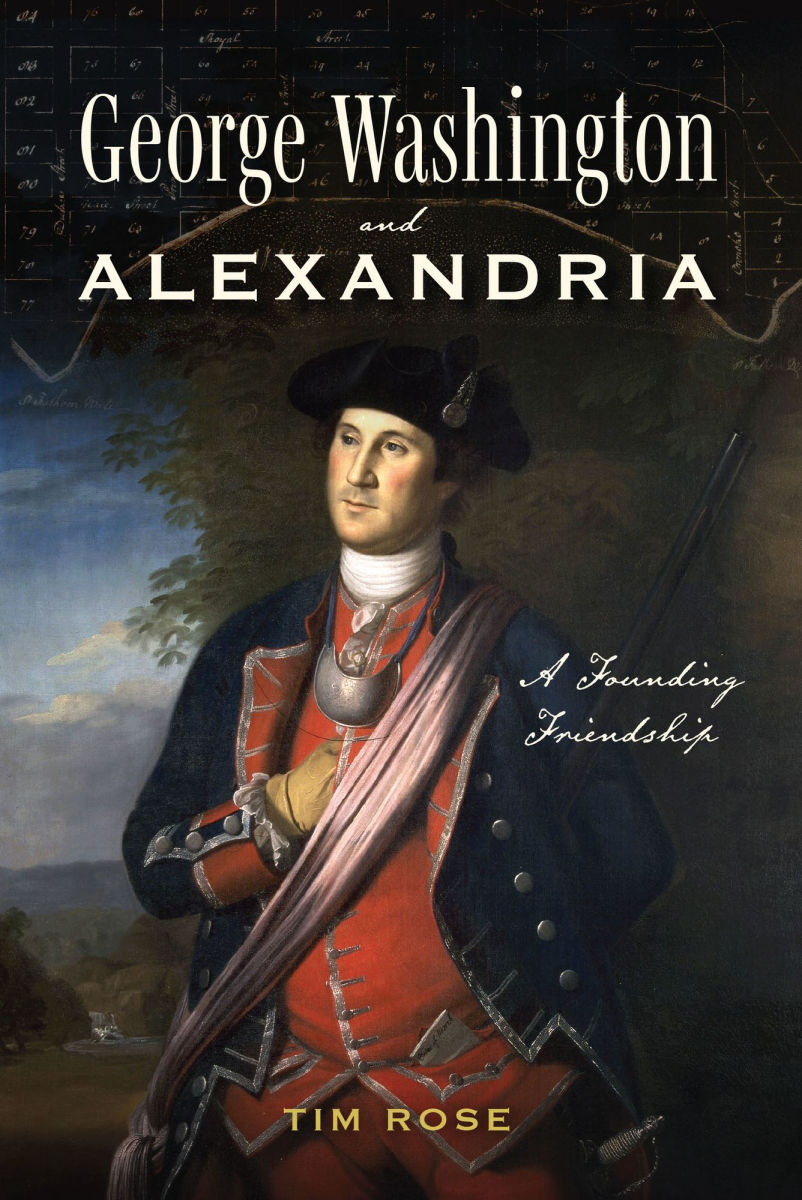
Join us this Sunday night at 7pm as we return LIVE for our next installment of Rev War Revelry. We welcome author and historian Tim Rose to discuss his new book on George Washington and his relationship with his hometown of Alexandria, VA (George Washington and Alexandria: A Founding Friendship – History Press). Tim is a local tour guide and will highlight the people and places that shaped Washington’s life. Grab a drink (or hot chocolate if you are on the eastern part of the country) and submit comments and questions via the live chat as we live stream on our Facebook page.
In November 1775, as the American colonies were deep in rebellion against Britain, General George Washington faced not only the British army but also the task of shaping a new American identity. One revealing moment came on November 5, 1775, when Washington, then commander-in-chief of the Continental Army, issued an order forbidding his soldiers from celebrating Guy Fawkes Day, also known as Pope’s Day in colonial New England. This event—often overlooked in histories of the Revolution—offers insight into Washington’s leadership, his moral sensibilities, and his vision for the cause of American independence.
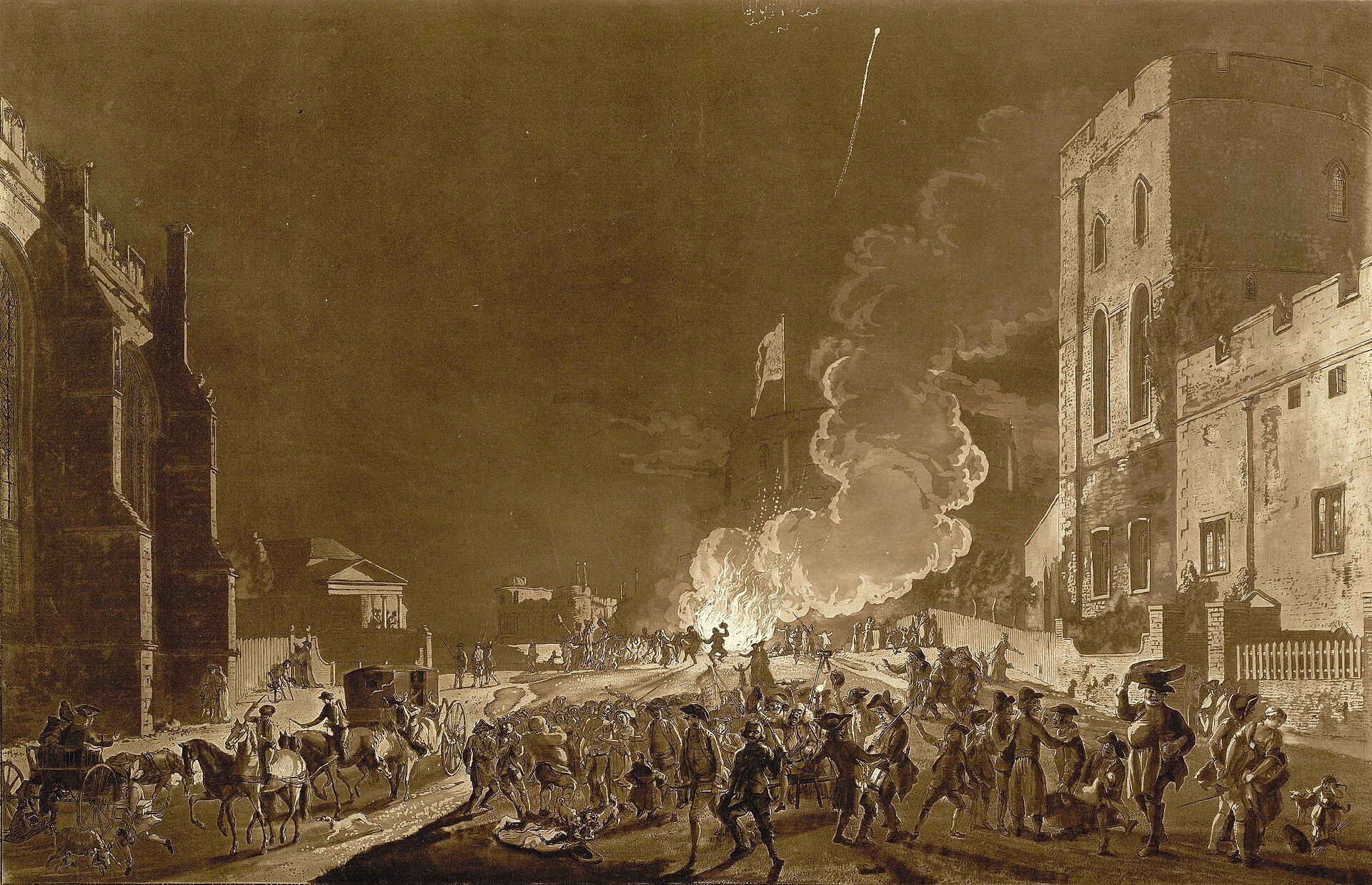
Guy Fawkes Night at Windsor Castle, 1775
Guy Fawkes Day had long been an English and colonial holiday commemorating the failed Gunpowder Plot of 1605, when Catholic conspirator Guy Fawkes attempted to blow up Parliament and assassinate King James I. In Protestant England and its colonies, November 5 became a day of noisy anti-Catholic demonstrations, bonfires, and the burning of effigies of the Pope and Fawkes. In Boston and other colonial towns, rival street gangs—often from the North and South Ends—would parade effigies, fight, and engage in destructive celebrations. It was, in short, a day of raucous Protestant triumphalism and sectarian hatred.
By 1775, however, the American Revolution had changed the stakes. The Continental Army, drawn from thirteen diverse colonies, was fighting not merely as British subjects in revolt but as Americans united against tyranny. Washington recognized that this unity could not rest on religious prejudice. Moreover, the colonies were seeking crucial support from Catholic France and from Catholic Canadians in Quebec. Anti-Catholic displays risked alienating potential allies. Thus, on November 5, 1775, Washington issued a General Order that firmly condemned the planned festivities.
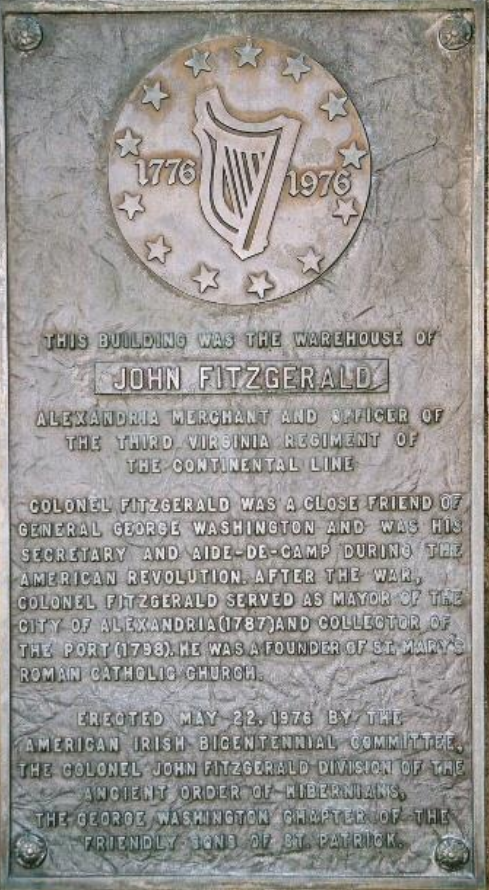
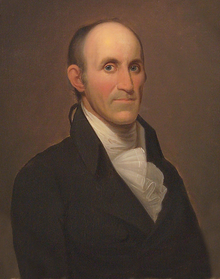
John Fitzgerald, an Irish Catholic immigrated to Alexandria in 1773. He became good friends with Washington and like many other Catholics, provided great service to Washington. For a time he served as an aide-de-camp to Washington.
Washington’s order read, in part, that “at such a juncture, and in such circumstances, to be insulting their religion is so monstrous, as not to be suffered or excused.” He called on his troops to remember that “we are contending for the rights of mankind” and that the cause required dignity and respect for all faiths. The general’s tone combined moral rebuke with strategic foresight. By discouraging Pope’s Day, he sought to replace narrow sectarian loyalties with a broader, inclusive patriotism.
This moment also reflects Washington’s character and leadership style. He understood the importance of discipline and order in an army composed largely of volunteers. The elimination of destructive, drunken celebrations helped reinforce his insistence on professionalism. But more importantly, Washington saw the American cause as grounded in universal principles of liberty and justice—principles incompatible with the kind of bigotry Pope’s Day embodied.
In retrospect, Washington’s handling of Guy Fawkes Day in 1775 stands as an early statement of religious tolerance in American political life. His decision to forbid anti-Catholic celebrations prefigured later American commitments to freedom of conscience and the separation of church and state. What might have seemed a minor disciplinary order was, in fact, a symbolic act of leadership: it transformed an old English custom of division into an American lesson in unity. Through it, Washington began to shape not just an army, but a nation.
Emerging Revolutionary War welcomes guest historian Kenneth Bancroft
“Nothing but War is talked of…This cannot be redressing grievances, it is open rebellion…”1
250 years ago on October 20, 1775 a 25 year old Englishman wrote these words in Alexandria, Virginia, noting that “everything is in confusion…soon they will declare Independence.”2.Nicholas Cresswell had arrived in America a year and a half prior to that entry in a journal that he kept to chronicle his venture to “shape his course in the world” and set up a new life inVirginia, “as I like the situation of that Colony the best.”3 He was aware of grumblings from colonials, but his focus was on land and his adventure had him traveling and trading with the Native Americans in the Ohio country and experiencing the slave culture in the colonies, especially the horrific sugar plantations in Barbados.
But what his journal is most known for is his observations and critique of the revolutionary world from Virginia to New York in 1774 through 1777. Cresswell’s misfortune, among others, was that he arrived in America seeking opportunity just as the Imperial Crisis over the Intolerable Acts had began. News of, and reaction to the closure of the port of Boston frequently disrupted his schemes and social life. As an Englishman still loyal to the Crown, his Revolutionary War journal offers a unique outsider look at the costs of the conflict in the country and towns as opposed to the more common tomes of soldier life.
“No prospect of getting home this winter, as I am suspected of being a Spy.”4 Cresswell’s tenure in America was tenuous. Unsuccessful in trying to establish himself with land and basically broke, he blamed his misfortune on the “Liberty Mad”5 political climate that considered him a ‘Tory’ who would not commit to the cause. His penchant for getting into drunken political arguments did not help and kept getting him in trouble with local Committees of Safety.
“Am determined to make my escape the first opportunity.”6By that point Cresswell knew it was time to forgo his quest and return to England, but the question was how, especially with non- importation measures and the war closing ports. What followed next for Cresswell was an amazing account of encounters with revolutionary notables and locations such as Thomas Jefferson, Patrick Henry, and British General Howe in Philadelphia, Williamsburg, and New York respectively. Ultimately, Cresswell was able to secure passage back to England where he reluctantly picked up where he left off by order of his father to “shear or bind corn.”7
1 Nicholas Cresswell, The Journals of Nicholas Cresswell, 1774-1777, (North Charleston, South Carolina: reprinted 2024), 97.
The Journals of Nicholas Cresswell was first published in 1924 and offers a candid account of the American Revolution from a viewpoint not typically explored. Its accounts of mustering militia, salt shortages, political pulpits, and anti-Tory riots and fights add color to our revolutionary origins. Add to that Cresswell’s experiences with the Native Americans in the Ohio country and the plantations in Barbados which further inform our understanding of our colonial past. Join Cresswell’s journey! To read more about Cresswell’s journey click here. The blog is an online platform and resource to follow his daily posts as they occurred 250 years ago. Keyword search features and research links are featured as well. Follow along on Facebook, too, at Nicholas Cresswell Journals.
The odds are good that you haven’t been able to visit some of your favorite Revolutionary War sites during the Covid-19 pandemic. Many of these locations rely on foot traffic for their annual income and may be struggling to stay afloat amidst various state lockdowns and a smaller number of visitors. (We left out many national, state, and local parks, which sometimes have access to government funds. But, they often have partnerships with non-profit foundations that provide vital support for their activities.) So, we decided to start a list of museums and parks that you can help out now and visit as circumstances allow. No doubt it will grow. The list does not constitute a solicitation or endorsement, but many of our historians visited some of these museums in the past and found them really helpful to our own work. (You may need to copy and paste some links.) If you search our “weekender” posts, there are even more sites to support and visit when you can.
When he arrived in Alexandria, Virginia in October 1775, Nicholas Cresswell, an Englishman visiting the colonies in search opportunity, found himself in dire straits. The war had cut off his father’s money, while his loyalist principles strained his acquaintances and put him in an awkward position. He summed it up: “if I enter into any sort of business I must be obliged to enter into the service of these rascals and fight against my Friends and Country if called upon. On the other hand, I am not permitted to depart the Continent and have nothing if I am fortunate enough to escape the jail. I will live as cheap as I can and hope for better times.”[i]
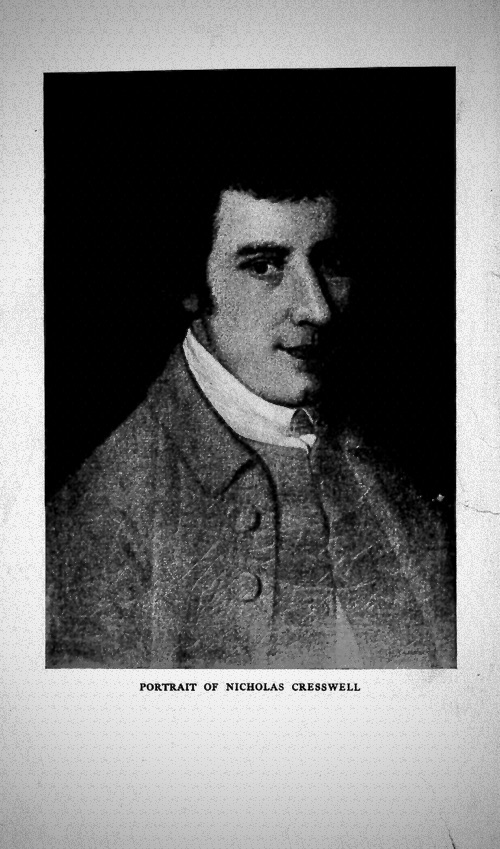
Nicholas Cresswell from the Frontispiece of his Memoir (Library of Congress)
For some Englishman, the political conflict between the United Kingdom and its American colonies was an afterthought that should not interfere with their plans to build a future based on American wealth. Nicholas Cresswell was one such person. He traveled to the colonies on the eve of the American Revolution and returned home in 1777, having kept an extensive diary of his travels, experiences, thoughts, and conditions in America during the war’s first years. Along the way, he met some of the most colorful and interesting people who played prominent roles in the war: George Rogers Clark, Delaware Indian leaders White Eyes and Killbuck, Thomas Jefferson, Patrick Henry, William Howe, Robert Rogers, and Charles Lee to name a few. Since its publication, Cresswell’s journal has become a touchstone for historians looking for insight into those people, how a loyal Englishman like Cresswell saw the world and the Americans around him interpreted events. In particular, he recounts the feelings and treatment of loyalists trapped in America during the war. With that in mind, reviewing Cresswell’s diary might help spread the word about a worthwhile primary resource.
When you mention the name “Charles Lee” in many Revolutionary War circles, one immediately thinks of Maj. Gen. Charles Lee. Though there was another Charles Lee and it can be argued provided more contributions to the United States than the British born military general.
Charles Lee, Courtesy of Department of Justice
Charles Lee was born in 1758 on his father’s plantation Leesylvania in Prince William County, Virginia. The 2,000-acre farm that sat on the Potomac River and neighbored other Potomac River families such as the Fairfaxes, Washingtons and Masons. Charles’ father, Henry Lee II, a political colleague and friend of George Washington, Charles was one of eight siblings and five males that would solidify the Lee family’s role as leaders in politics and society. Continue reading “George Washington’s “Favorite” Charles Lee”→
William Griffith’s examination of the Carlyle House Congress last month (The Carlyle House Congress and Britain’s Military Objectives for 1755) reminded me that I had been remiss in not visiting the site. So, the family and I set off for Alexandria, VA and a visit to John Carlyle’s home.
It will be hard to describe in modern terms the celebrity of Marie-Joseph Paul Yves Roch Gilbert du Motier de Lafayette, Marquis de Lafayette (aka LaFayette) in 18th century America.
The young Marquis was fascinated with the American ideal of revolution and against the wishes of the French monarchy, in 1776 he cast his lot with the American patriots. His relationship with George Washington and other American leaders played a major role in the American-French alliance that brought about American independence. Continue reading “The Return of L’Hermoine”→




 Emerging Revolutionary War Era