On October 7, 1780, patriot militia, some coming from over the Appalachian Mountains descended on a Loyalist militia force in northwest South Carolina. This pro-British force, commanded by the only British regular on the field that day, Major Patrick Ferguson retreated onto Kings Mountain.
American fought American.
On that hilltop one of the pivotal battles of the American Revolutionary War unfolded. The ramifications reverberated through the southern theater of operations, played a part on the psyche of civilians and militia, and added luster to the burgeoning backwoods, frontier American persona.
Emerging Revolutionary War focuses in on the Battle of Kings Mountain this Sunday, on the next “Rev War Revelry.” Join us on our Facebook page at 7 p.m. EST for a historian happy hour, as we discuss, dissect, imbibe, and provide commentary on this strategic battle, the national park there, and the campaigns that decided this theater of operation.
On October 4, 1777, General George Washington’s Continental Army struck the British outpost at Germantown, Pennsylvania. Less than a month after the Battle of Brandywine and approximately a week after the loss of their capital, Philadelphia.
Initially successful, Washington’s forces got bogged down by fog and British holdouts in a stone structure called Cliveden. What started so promising did end in a tactical defeat for the Americans. Yet, coming days before the climatic battle in New York, dubbed Saratoga collectively, the cause of American independence was buoyed.
Although outshone in the annals of history by Saratoga, the setback at Germantown proved decisive in the French court, especially with the French foreign minister, who saw that the simple fact that Washington could regroup following Brandywine and come within some bad luck and fog of defeating the British was testament to resolve of the American effort for independence.
To cut through the fog and discuss the campaign, engagement, and repercussions of the Battle of Germantown, Emerging Revolutionary War invites back historian and author Michael C. Harris this Sunday for the next installment of “Rev War Revelry” at 7pm EST on our Facebook page.
He will join a duo of ERW historians. In addition, his publication, Germantown: A Military History of the Battle of Philadelphia, October 4, 1777, is now available through the publisher, Savas Beatie, LLC. Click here to order.
We look forward to hearing your comments, questions, and/or opinions this Sunday. So, set a side an hour-ish–as you know historians can get to talking and lose track of time easily, especially when books are also involved–for this historian happy hour.
Emerging Revolutionary War welcomes guest historian Kevin Pawlak
New York state has a rich American Revolution history. Battlefields at Saratoga, Oriskany, Fort Ticonderoga, Long Island, and more dot the state’s connection to our nation’s founding. But growing up in the western part of the state, those sites were at least a few hours’ drive.
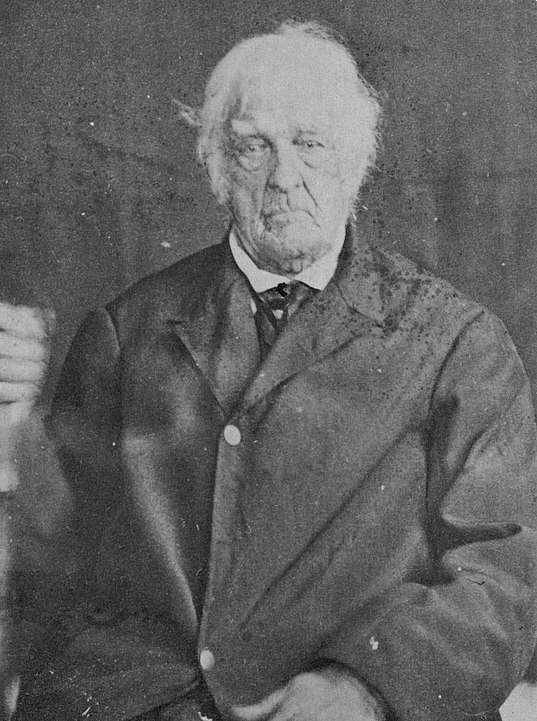
Recently, I discovered a neat story related to the American Revolution that was in my own home county—Orleans County. It is not a battlefield, though it is about a man who stood on those battlefields with George Washington’s Continental Army. Lemuel Cook, who died at the age of 107, spent the last thirty years of his life in the next town over from my hometown and died there. While he was not the last surviving veteran of the war for America’s independence, he was the last to claim a pension for his service.
Lemuel Cook
Ninety-one years prior to his death in 1866, the sixteen-year-old Connecticut native enlisted with the 2nd Continental Light Dragoons. He saw service with the dragoons at Brandywine and Yorktown.
Cook moved frequently after his service expired until he settled in Clarendon, New York in 1832. Cook’s devotion to the nation he helped create never waned until his dying days. He regularly attended town hall meetings and elections until a few years before his death. Souvenir seekers continually asked for the old veteran’s autograph, which he obliged. In 1861, a photographer captured this national treasure in a photograph.
Unfortunately, even Cook could not defeat Father Time. As he aged, his speech became “very fragmentary,” according to one newspaper. “He recalls the past slowly, and with difficulty, but when he has his mind fixed upon it, all seems to come up clear.” Despite his weariness, Cook’s spunk occasionally showed, “the old determination still manifesting itself in his look and words.” Specifically, during an interview in the midst of the American Civil War, Cook pounded his cane on the floor and proclaimed, “It is terrible, but terrible as it is the rebellion must be put down.” Incredibly, he lived to see the rebellion “put down” and died on May 20, 1866.
Cook’s grave, located in the Cook Cemetery on Munger Road in Clarendon, suffered damage in a windstorm in 2017 but was quickly fixed. In the same year, descendants and local historians unveiled a state historic marker alerting passersby to this unique niche of Revolutionary War history in a place far from the famous battlefields that achieved our nation’s independence.
Benedict Arnold, the mere mention of the name seems permanently intertwined with the word “treason.” His name has even made it into popular vernacular, being called a “Benedict Arnold” as an insult. Yet, there is more to the man than just that infamous moment along the banks of the Hudson River in West Point, New York in 1780.
Prior to that turning point, Arnold was one of the greatest battlefield leaders the Americans had at that rank. His inspiring leadership on the field of battle at Saratoga led to a climactic charge and one of the greatest monuments to a leader on any hallowed ground. He survived the cold and assaults in Canada in the winter of 1776 as well.
After being a turncoat he was a menace in Virginia in 1781, raiding in Richmond and the Tidewater of Virginia. One of ERW’s historians will discuss Arnold’s role in the state capital of Virginia.
A lot to unpack and that is why this Sunday, at 7pm, live on our Facebook page, Emerging Revolutionary War historians will be joined by Dr. Powell, who spoke on the French and Indian War with us back in June, to discuss Benedict Arnold. So, bring those pre-conceived notions but an open mind to fully appreciate Arnold. This “Rev War Revelry” will discuss the before reasons for, and the after of his switching allegiances.
The majority of military history enthusiasts, besides having a rows upon rows of books and publications gracing one room (or multiple rooms) of their dwellings, also house another collection.
Movies, films, documentaries that detail on screen the history of the American Revolution and the founding era of the United States. We can all name a few off the top of our head. We all have debated, either internally, with our significant others and family members, fellow history aficionados, or online about the historical accuracy or portrayal of those events.
This Sunday, join the Emerging Revolutionary War crew of historians in discussing this very same topic. During our historian happy hour, the ERW crew will debate, provide commentary and opinion, or possibly, just remonstrate on how the movie The Patriot is the most smeared film centered on American history that was ever produced.
With the slate of historians on tap for Sunday evening, you never know what will be debated and discussed. A safe bet is the mention of George Washington and who has depicted America’s founding father the most accurately on the big screen.
This Sunday, besides the beverage or choice, one may want to attain or make their favorite movie snack as well and tune in to ERW’s Facebook page for this lively “Rev War Revelry” discussion.
The majority of the study of the American Revolution centers on the main theaters of the war, chiefly east of the Appalachian Mountains and on the high seas. Obviously. Yet, what is considered today the Midwest or Great Lakes region saw action that had an impact on the outcome of the war, American independence, British occupation, and Native American life.
Termed “the west” this area encompassed the future states of Tennessee, Kentucky, Ohio, Missouri, Arkansas, and others along the Mississippi River and Great Lakes.
This area will be the focus of the next “Rev War Revelry” on Sunday, August 23 at 7 p.m. EST on our Facebook page. Join Emerging Revolutionary War historians, historian and Gabe Neville, of the 8th Virginia blog who will return for more discussion and revelry.
Joining us this evening will be another historian making his debut on “Rev War Revelry.” That newcomer is Joe Herron, Chief of Interpretation at George Rogers Clark National Historical Park in Vincennes, Indiana.
So, grab your favorite drink and join us for an evening talking the likes of George Rogers Clark, Daniel Boone, and the personas and campaigns of the American west during the American Revolution.
If you tuned into our “Rev War Revelry” with historian and author John U. Rees on Sunday, you may have heard him mention a few links and a blog where he adds information that did not make it into the book. Or has come to light since the publication of his history “They Were Good Soldiers: African-Americans in the Continental Army, 1775-1783.”
John was nice enough to provide the following as a follow-up for those interested in reading more into the subject.
African Americans Serving in the Armies of the Revolution (PDF, click here).
Book:
“They Were Good Soldiers”,
Additional post-publication updates and information:
List of soldiers and women featured in the book.
African American soldier-servants.
African American women with the army.
Author interviews pertaining to the book.
Entries for blog:
“More ‘Good Soldiers’”:
Revised percentages for 1778 army “Return of Negroes.”
Officers’ observations of black Continental soldiers.
Ranney’s painting “Cowpens” and black cavalry soldiers.
List of soldiers and women featured in the book.
Black Continental soldiers at the Battle of Monmouth.
Printed 19th century remembrances of black veterans
Articles:
Articles the book was based on including African Americans in Southern Continental regiments plus transcribed pension files used for that study.
Jeffrey Brace, African slave and Continental soldier
Other authors:
Black soldier motivations (Scoggins)
Loyalist Ethiopian Regiment (Copeland)
Black soldiers at New Windsor cantonment (Thorenz)
Hannah Till, wartime servant to Washington (Cole)
Thomas Carney, Maryland Continental (Calder)
Black Hessians (Jones)
Military role of black Loyalists (Braisted)
Author Discussion ERW Facebook Live:
To watch the interview with John, click over to Emerging Revolutionary War’s Facebook page and click on the “Videos” tab. To access the page, click here.
The two of soldiers on the left, drawn in 1781 by French Sublieutenant Jean-Baptiste-Antoine de Verger, Royal Deux-Ponts Regiment, are a private of the Rhode Island Regiment, and a soldier of Hazen’s Canadian Regiment. The next in line is a Virginia rifleman, while the last man is a Continental artileryman. Howard C. Rice and Anne S.K. Brown, eds. and trans., The American Campaigns of Rochambeau’s Army 1780, 1781, 1782, 1783, vol. I (Princeton, N.J. and Providence, R.I.,: Princeton University Press, 1972), between pages 142-143 (description on page xxi). Anne S.K. Brown Military Collection, Brown University.
Baron Ludwig von Closen, aide–de–camp to French General Rochambeau, wrote in July 1781:
“I had a chance to see the American Army, man for man. It is really painful to see those brave men, almost naked with only some trousers and little linen jackets, most of them without stockings, but, would you believe it, very cheerful and healthy in appearance … It is incredible that soldiers composed of men of every age, even children of fifteen, of whites and blacks, unpaid and rather poorly fed, can march so fast and withstand fire so steadfastly’.”
During the American Revolution, African-Americans, both freed and enslaved, fought for the patriots. Some wielded muskets in militia outfits whereas others were part of the Continental army. African-Americans were there from the Siege of Boston through the end of the conflict. In fact, until the Korean War the American Revolution was the last time a United States military force was integrated in time of war.
Although publications have been printed about the 1st Rhode Island or comparative studies between Africans that served for the British or patriots. However, the field needed a dedicated study of African-Americans that served in the Continental army. Enter John U. Rees.
A lifelong Bucks County, Pennsylvanian who has studied and written about the soldiery of the American Revolution for the past three decades. He is published many times over and this Sunday, he will join Emerging Revolutionary War at 7 p.m. on “Rev War Revelry.”
The discussion will include his new book, “They Were Good Soldiers’: African-Americans Serving in the Continental Army, 1775-1783.” Which is now available for purchase online. ‘They Were Good Soldiers’: African Americans Serving in the Continental Army, 1775-1783 begins by discussing the inclusion and treatment of black Americans by the various Crown forces (particularly British and Loyalist commanders, and military units). The narrative then moves into an overview of black soldiers in the Continental Army, before examining their service state by state. Each state chapter looks first at the Continental regiments in that state’s contingent throughout the war, and then adds interesting black soldiers’ pension narratives or portions thereof. The premise is to introduce the reader to the men’s wartime duties and experiences. The book’s concluding chapters examine veterans’ post-war fortunes in a changing society and the effect of increasing racial bias in the late eighteenth and early nineteenth centuries.
Besides the book dialogue, a general conversation about the roles of African-Americans in the American Revolutionary period. So, find your favorite brew, bring your questions and insights, and join John Rees and ERW on Sunday evening on our Facebook page.
Emerging Revolutionary War welcomes guest historian Dwight Hughes
The recent disastrous conflagration aboard the USS Bonhomme Richard (LHD-6) in San Diego harbor brings to mind the original warship by that name and its fiery fate, a tale excellently told in a previous post by Eric Sterner (“I Have not Yet Begun to Fight!” or Words to that Effect (September 23, 1779)). “Bonhomme Richard” means “good man Richard” in French. So, who is Richard? What was good about him? Why is his name on a man-of-war?
The United States Navy likes to carry forward the labels of famous vessels. This is one of the oldest and most revered monikers in navy history, originally assigned in 1779 by Captain John Paul Jones to a rather decrepit French merchantman armed with a motley collection of guns. The French government donated the former Duc De Duras to Jones to sail against their mutual enemies, the British.
John Paul Jones
Jones famously engaged the powerful frigate HMS Serapis on September 23, 1779 in English waters off Flamborough Head, Yorkshire. The ships grappled together and blasted away at point blank range. Both were battered and ablaze in sinking condition with many casualties when the British captain surrendered. With Bonhomme Richard going down fast, the Americans took over Serapis and managed to save her.
John Paul Jones became the “Father of the U. S. Navy” (or one of them). Bonhomme Richard entered legend as the warship that won and sank. She and her successors also represent those rare U. S. Navy vessels whose names are rendered in a foreign language.
This Sunday, at 7 p.m. join Emerging Revolutionary War on our Facebook page for a happy hour historian discussion on the play. 1776. Joining ERW historians, will be historian Liz Williams from Historic Alexandria.
And making her debut on “Rev War Revelry” will be Rebecca Grawl from “DC by Foot” and a “Tour of Her Own.” Welcome Rebecca!
For those unfamiliar, the play, “1776” premiered on Broadway in 1969 but has a longer history than just that debut. One can easily guess the synopsis of the production; centering around the pivotal year in American history that same year. A revival of the play is on tap for next spring.
A few weeks ago we had a discussion on “Hamilton” so we hope you are ready for another discussion about American Revolutionary history on the stage and screen. Remember to grab your favorite brew and a place of comfort and sit back and enjoy your Sunday night with Emerging Revolutionary War as the historians harangue, mildly, the history and play “1776.”






 Emerging Revolutionary War Era