Fredericktown, Maryland, August 1, 1775, a gentleman on business wrote to his contact in Philadelphia the following observation of a company of volunteers answering the call to head north to Boston to join what would become the Continental Army
“Notwithstanding the urgency of my business, I have been detained three days in this place by an occurrence truly agreeable. I have had the happiness of seeing Captain Michael Cresap marching at the head of a formidable company of upwards of 130 men, form the mountains and backwoods, painted like Indians, armed with tomahawks and rifles and dressed in hunting shirts and moccasins, and though some of them had travelled near eight hundred miles from the banks of the Ohio, they seemed to walk light an easy and not with less spirit than at the first hour of their march. Health and vigour, after what they had undergone, declared them to be intimate with hardships and familiar with danger. Joy and satisfaction, were visible in the crowd that met them. Had Lord North been present, and been assured that the brave leader could raise thousands of such to defend his country, what think you, would not the hatchet and block had intruded upon his mind? I had an opportunity of attending the Captain during his stay in Town, and watched the behavior of his men, and the manner in which he treated them; for it seems that all who go out to war under him do not only pay the most willing obedience to him as their commander, but in every instance of distress look up to him as their friend or father. A great part of his time was spent in listening to and relieving their wants, without any apparent sense of fatigue and trouble. When complaints were before him he determined with kindness and spirit, and on every occasion condescended to please without losing is dignity.”
esterday the Company were supplied with a small quantity of powder from the magazine, which wanted airing, and was not good for rifles ; in the evening, however, they were drawn out to show the gentlemen of the town their dexterity at shooting. A clap board, with a mark the size of a dollar, was put up ; they began to fire at it off band, and the bystanders were surprised, few shots being made that were not close to or in the paper. When they had shot for a time in this way, some lay on their backs, some on their breast or side, others ran twenty or thirty steps, and firing, appeared to be equally certain of the mark. With this performance the company were more than satisfied, when a young man took up a board in his hand, not by the end, but by the side, and holding it up, his brother walked to the distance, and very coolly shot into the white ; laying down bis rifle, he took the board, and holding it as it was held before, the second brother shot as the former had done. By this exercise I was more astonished than pleased. But will you believe me, when I tell you, that one of the men took the board, and placing it between hia legs, stood with his back to the tree while another drove the centre. What wonld a regular army of considerable strength in the forests of America do with one thousand of these men, who want nothing to preserve their health and courage but water from the spring, with a little parched corn, with what they can easily procure in hunting ; and who wrapped in their blankets, in the damp of night, would choose the shade of a tree for their covering, and the earth for their bed.”
Although a depiction of the 1st Maryland at Guilford C.H in 1781 some of these men are dressed similar to the riflemen mentioned above (wikipedia)
*Account is in “Papers Relating Chiefly To the Maryland Line During the Revolution” Thomas Balch, editor. pgs. 6-7.
Emerging Revolutionary War welcomes guest historian Nicholas Benevento.
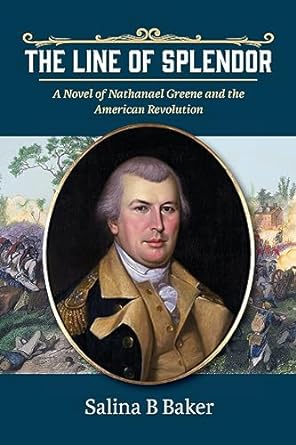
“The Line of Splendor: A Novel of Nathanael Greene and the American Revolution” is a historical novel written by Salina Baker. In her novel, she brings to life a figure who deserves more fame and recognition for his pivotal role in the Revolution. Nathanael Greene was a selfless general and leader who fought valiantly to defend his country and provide for his troops. He was a man who defied the odds and was placed in a position of power and leadership, a favorite of General George Washington. He was a man willing to put everything on the line for the independence and freedom of the United States.
Baker’s book picks up with Nathanael Greene’s life early in the 1770s when Nathanael is about the age of thirty. At this time, there were growing tensions in the American Colonies with Mother England. Shortly before the war broke out, Nathanael married his wife Caty in 1774, and Baker does a masterful job weaving their relationship into the story of his time in the war.
Baker’s work is a fascinating depiction of Nathanael Greene and the American Revolution. Readers of history often read facts and descriptions of events, which Baker provides. But she also takes the reader into the thoughts and conversations of Nathanael Greene, as well as other key figures in his life. Therefore, while this is a fiction novel, enthusiasts of this time period in American history would love this novel. Baker weaves in the history of the war, while also providing us with dialogue and feelings of Nathanael. Baker’s novel is a reminder to the reader that the generals and soldiers who fought in the Revolutionary War were not mythical figures who fought a war that would inevitably end in an American victory. These were real men with real emotions carrying their insecurities and flaws, while experiencing the highs and many lows of the war. Greene was central to many of the key battles early in the war, from the siege of Boston, to the debacle of New York, to the triumph of Washington’s crossing of the Delaware, to the trying times at Valley Forge. Greene held a tremendous weight on his shoulders throughout the war, especially when he led the Southern Army late in the war during the Southern Campaign.
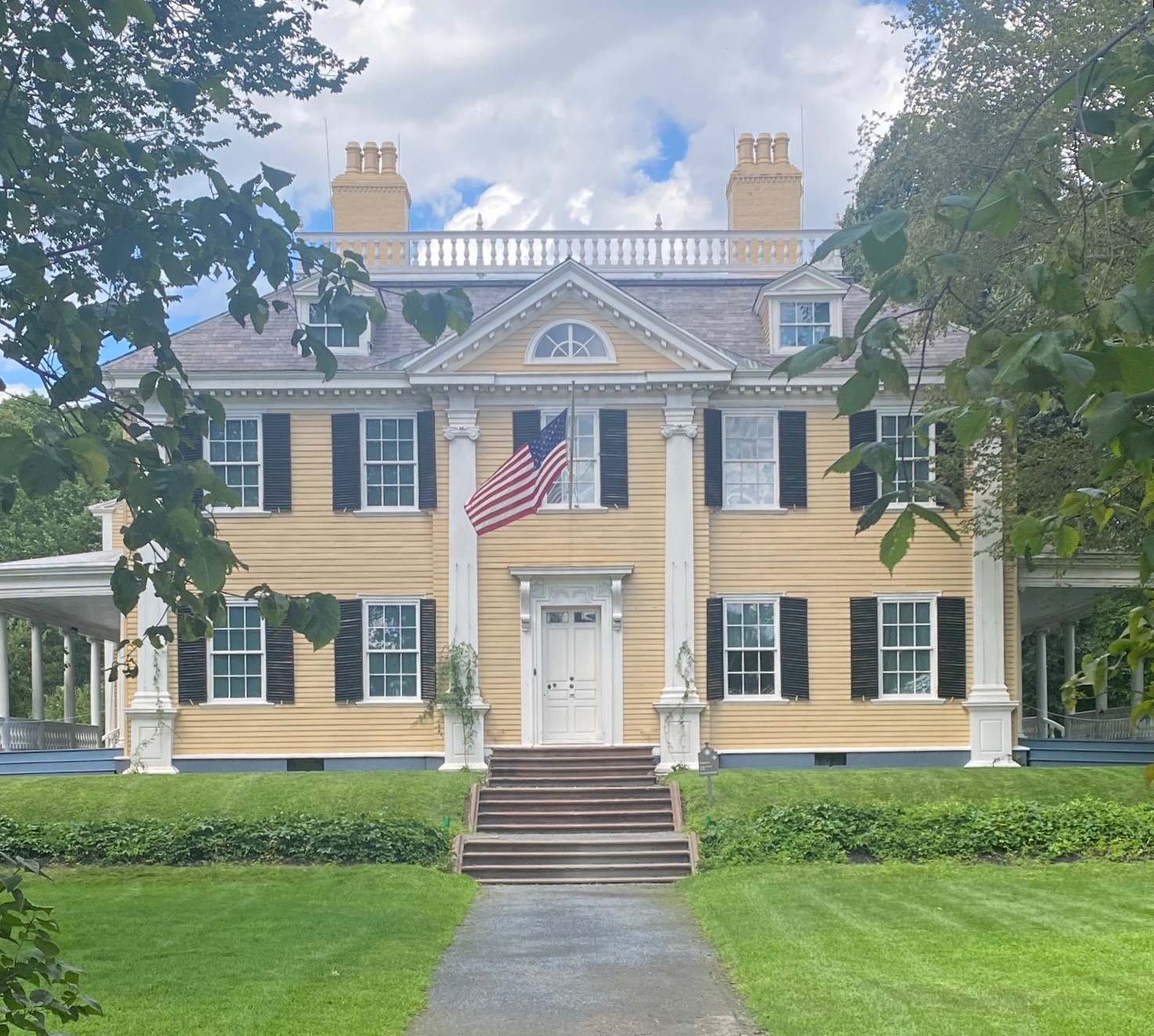
On June 15, 1775, George Washington was appointed by the Second Continental Congress as commander-in-chief of the Continental Army. Approximately a month later he rode into Cambridge, Massachusetts, to the house below, to assume command over that army. After he met the officers at Jonathan Hastings House near Harvard College campus, learning about operations and the siege. He was then directed toward an opulent residence standing about a mile away. Named the Vassall-Craigie-Longfellow residence, this place would become the focal point of the effort against the British in Boston. Washington moved in. He spent the next nine months in residence, overseeing the Siege of Boston and the British evacuation.
From this house, Washington began putting his footprints on the army and met some of the officers that became instrumental in securing American independence. This included the Rhode Islander Nathanael Greene and Massachusetts native and bookseller Henry Knox among others. Martha Washington, in December 1775, traveled over 440 miles from Mount Vernon to Cambridge to winter with her husband in this house. The making of Washington, the general, started here.
The power of place.
Today, the house preserved by the National Park Service today can be toured, click here for information.
Approximately 5,000 African-American or Black soldiers fought for the patriot cause in the American Revolution. Some joined state militias, some joined the Continental Army, and some sailed the seas with the fledgling navies of the United Colonies. William and Benjamin Frank were two of those 5,000. Both were free Blacks from Rhode Island who enlisted in the 2nd Rhode Island Regiment in 1777. Their father was a veteran of the French and Indian War, so the family was well-established in military tradition.
The 2nd Rhode Island fought and defended Fort Mercer during the campaigns of 1777 and survived harsh winters at Valley Forge and Morristown before returning to Rhode Island to literally defend the hearth and home from the British. Author and historian Dr. Shirley L. Green, adjunct professor at the University of Toledo, a 26-year veteran of the law enforcement community, and current Director of the Toledo Police Museum in Ohio, “takes the reader on a journey based on her family’s history, rooted in its oral tradition.”
Her book Revolutionary Blacks, Discovering the Frank Brothers, Freeborn Men of Color, Soldiers of Independence was published by Westholme Publishing in November 2023.
Furthermore, Dr. Green puts “together the pieces of the puzzle through archival research, interviews, and DNA evidence” to authenticate and expand the family history. The end result is a very readable and needed addition to the historiography of the American Revolution. Her ability to tell “a complex account of Black life during the Revolutionary Era demonstrates that free men of color…demonstrates that free men of color shared with white soldiers the desire to improve their condition in life and to maintain their families safely in postcolonial North America.”
Emerging Revolutionary War looks forward to an engaging and informative discussion with Dr. Green, this Sunday, at 7 p.m. EDT on our Facebook page. We hope you can tune in for this next episode of Emerging Revolutionary War’s “Rev War Revelry.”
For more information about the book and to order a copy, click here.
“Given the order to defend the American withdrawal from Long Island, the Maryland Line saved the Continental Army from annihilation in the first major battle of the war.” wrote historian Ryan Polk.
Tench Tilghman, staff officer to George Washington and a native Marylander wrote about his fellow soldiers, “bore the palm…by behaving with as much Regularity as possible.”
Furthermore, if you Google “Battle of Guilford Court House” the image used by Wikipedia depicts an artist’s rendition of the 1st Maryland defending Nathanael Greene’s last line during the March 1781 engagement. The particular image is below.
The Continental Maryland Line was one of the preeminent stalwarts of the American army, both in the northern and southern theaters of the war. Join Emerging Revolutionary War historians in a discussion about the men from the Old Line State and their military acumen during the American Revolutionary War. The discussion will also highlight their memory and memorialization. We hope you can join us Sunday at 7 p.m. EST on the Facebook page of Emerging Revolutionary War.
The Battle of Bunker Hill is routinely mentioned in the pantheon of memorable American military victories. Although myths of the engagement have obscured some of the history, much like the smoke of battle, the patriot victory on June 17, 1775, was another pivotal moment in the early stages of what became the American Revolutionary War.
To discuss the engagement, ramifications, and interpretation of the battle, Emerging Revolutionary War welcomes historian Dr. Paul Douglas Lockhart, Professor of History at Wright State and author of “The Whites of Their Eyes, Bunker Hill, the First American Army, and the Emergence of George Washington.” A full biography of Dr. Lockhart, including his other works, is at the bottom of this post.
As a teaser, this may be the first time in “Rev War Revelry” history that we mention Artemas Ward, who according to Dr. Lockhart is the “unsung hero of the battle (and indeed of 1775).” Come hear why! And full disclosure, I agree.
We hope you can join us on Sunday, January 21 at 7 p.m. EDT on Emerging Revolutionary War’s Facebook page for the next installment of the popular “Rev War Revelry.” Be ready to ask questions as you sip your favorite beverage during this historian happy hour.
Biography of Dr. Lockhart
“Paul Douglas Lockhart is Professor of History at Wright State University in Dayton, Ohio, where he has taught since earning his PhD in 1989. A native of Poughkeepsie, New York, Lockhart completed the PhD at Purdue University, where he studied military history with the late Gunther Rothenberg, the renowned Napoleonic scholar, and early modern European history with Charles Ingrao. He has seven single-author books to his credit. Four of them deal with the history of Scandinavia during the “Age of Greatness,” including Denmark, 1513-1660: The Rise and Decline of a Renaissance Monarchy, published by Oxford University Press in 2007. He is probably better known for his books on military history: The Drillmaster of Valley Forge: The Baron de Steuben and the Making of the American Army (2008), The Whites of Their Eyes: Bunker Hill, The First American Army, and the Emergence of George Washington (2011), and most recently his study of the parallel evolution of warfare and firearms: Firepower: How Weapons Shaped Warfare (2021). Wright State has awarded him the Brage Golding Distinguished Professorship and the Trustees’ Award for Faculty Excellence, the University’s highest academic honor. The Ohio Academy of History named him Distinguished Historian for 2020-21, and in 2021 he was elected to membership in The Royal Society for Danish History for his contributions to the history of Denmark, an honor rarely accorded to foreigners. He lives in Centerville, Ohio, with his family.”
Welcome to the first “Rev War Revelry” of 2024! To kick off the new year, Emerging Revolutionary War is joined by Tom Hand, author, historian, and founder of Americana Corner. However, in the later stages of 20234, Tom added published book author to his lengthy list of accomplishments. His book, American Triumph is now available via his website.
The book, “masterly blends the personal experiences and historic milestones” of three luminaries of the early Republic, Benjamin Franklin, George Washington, and John Adams. The book, with a plethora of graphics, sidebars, and informational tidbits aims to provide a “captivating collection of stories” for the “everyday American.”
We look forward to a lively and friendly discussion with Tom. Hope you can tune in, to Emerging Revolutionary War’s Facebook page at 7 p.m. EDT this Sunday, January 7th.
For those that write and research it can be a personal albeit lonely endeavor. Hours spent in libraries or archives, humped over your computer or pad and pencil taking copious notes. Eyes going bleary or cross-eyed trying to decipher 18th century handwriting or microfilmed pieces of primary data. But, at the same time, it is such a rewarding experience, is it not? Uncovering the past, shedding light on the personalities that comprise the fabric of American history. Maybe even finding overlooked accounts or information that changes the narrative or promotes a fuller picture?
For me, I enjoy finding quotes or descriptions that creates a better understanding of the world in which the soldiers and civilians of the American Revolutionary or American Civil War periods lived. Anything that humanizes them more I feel makes them relatable. Breathes life into who they were, instead of just what comes through in official dispatches, reports, or polished accounts they left behind. One way is to read the accounts of fellow officers or compatriots as they discuss or describe their fellow comrades-in-arms.
Or there is just Israel Putnam. The patriot general who on April 19, 1775 when hearing of the British march to Lexington and Concord famously left his plow in a half plowed farm field to rush from Connecticut to Massachusetts. In the process he rallied his militia and stuck around for the siege that followed the first shots of what would become the American Revolution.
Israel Putnam
That is where I picked up his tale. Researching an upcoming volume of the Emerging Revolutionary War Series. (Stay tuned for what that will be in the upcoming months. Yes, “vague booking” and self-promotion happening!) During the siege of Boston he was asked in a meeting of general officers about the “expediency of intrenching” as a few of the gathered were doubtful of its efficacy on the psyche of the volunteer militia.
Putnam’s response fit the mold mentioned above, of providing a human touch to the notes of that meeting and a bit of 18th century humor for added measure.
The general responded, “earnest in his advocacy of the measure” that,
“The Americans are not at all afraid of their heads, though very much afraid of their legs: if you cover these, they will fight for ever.”
Time and defensive tactics would uncover the truth of that statement.
In closing, what is a favorite line, anecdote that is not well known from the American Revolutionary period that resonates with you?
There are arguably many moments along the road towards war with England that greatly shaped that road’s trajectory. Perhaps among the top contenders on that list would be the Boston Tea Party. Join historian Benjamin Carp and ERW’s Dan Welch as we dig in with the author of one of the best books on that pivotal moment. Dr. Benjamin L. Carp is the author of The Great New York Fire of 1776: A Lost Story of the American Revolution, and Defiance of the Patriots: The Boston Tea Party and the Making of America (2010), which won the triennial Society of the Cincinnati Cox Book Prize in 2013; and Rebels Rising: Cities and the American Revolution (2007). His book, Defiance of the Patriots, will be the focus of Sunday’s book chat.
With Richard D. Brown, he co-edited Major Problems in the Era of the American Revolution, 1760-1791: Documents and Essays, 3rd ed. (2014). He has written about nationalism, firefighters, Benjamin Franklin, and Quaker merchants in Charleston. He has also written for Colonial Williamsburg, the Wall Street Journal and the Washington Post. He previously taught at the University of Edinburgh and Tufts University. He was born and raised in New York State and each of his parents earned two CUNY degrees. See you Sunday at 7 p.m. EDT on Emerging Revolutionary War’s Facebook page!
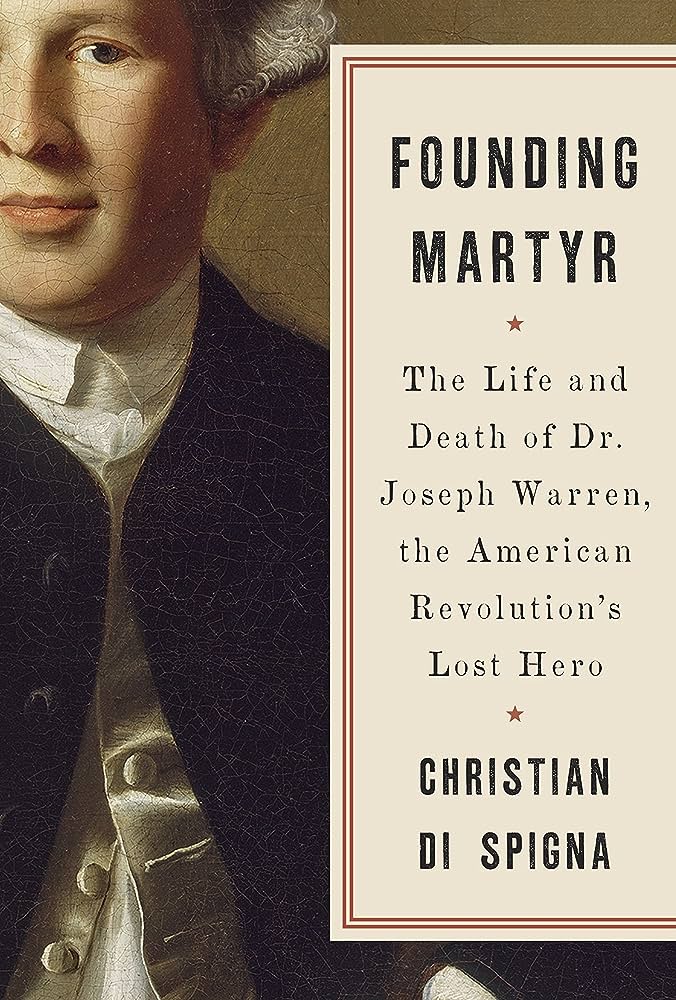
Dr. Joseph Warren is considered by many “the lost hero of the American Revolution.” Warren was the brainchild of the revolution movement in Boston. Warren was involved in almost every major insurrectionary act in the Boston area for a decade, from the Stamp Act protests to the Boston Massacre to the Boston Tea Party, and his incendiary writings included the famous Suffolk Resolves, which helped unite the colonies against Britain and inspired the Declaration of Independence.
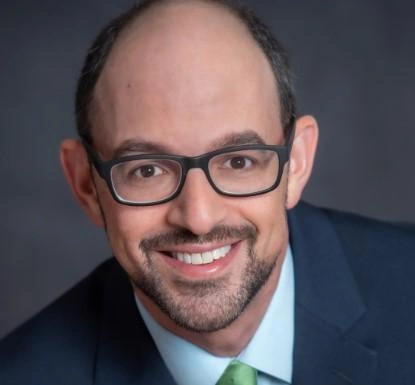
Joining Emerging Revolutionary War will be historian and author Christian Di Spigna. He is the author of Founding Martyr: The Life and Death of Dr. Joseph Warren, the American Revolution’s lost hero. He is the Executive Director of the Dr. Joseph Warren Foundation and is the vice chairman for the Revolution 250 committee of Massachusetts Freemasons. He also serves on the board of the Bunker Hill Monument Association.
As we approach the 250th commemoration of the Boston Tea Party, we will focus on Warren’s life, his role in the Boston Tea Party and his lasting impact on the Revolution. Grab a drink and join us as we talk with author and historian Di Spigna about Warren, the patriot who once said…
“When Liberty is the prize, who would shun the warfare? Who would stoop to waste a coward thought on life?”
See you Sunday at 7 p.m. EDT on Emerging Revolutionary War’s Facebook page!





 Emerging Revolutionary War Era