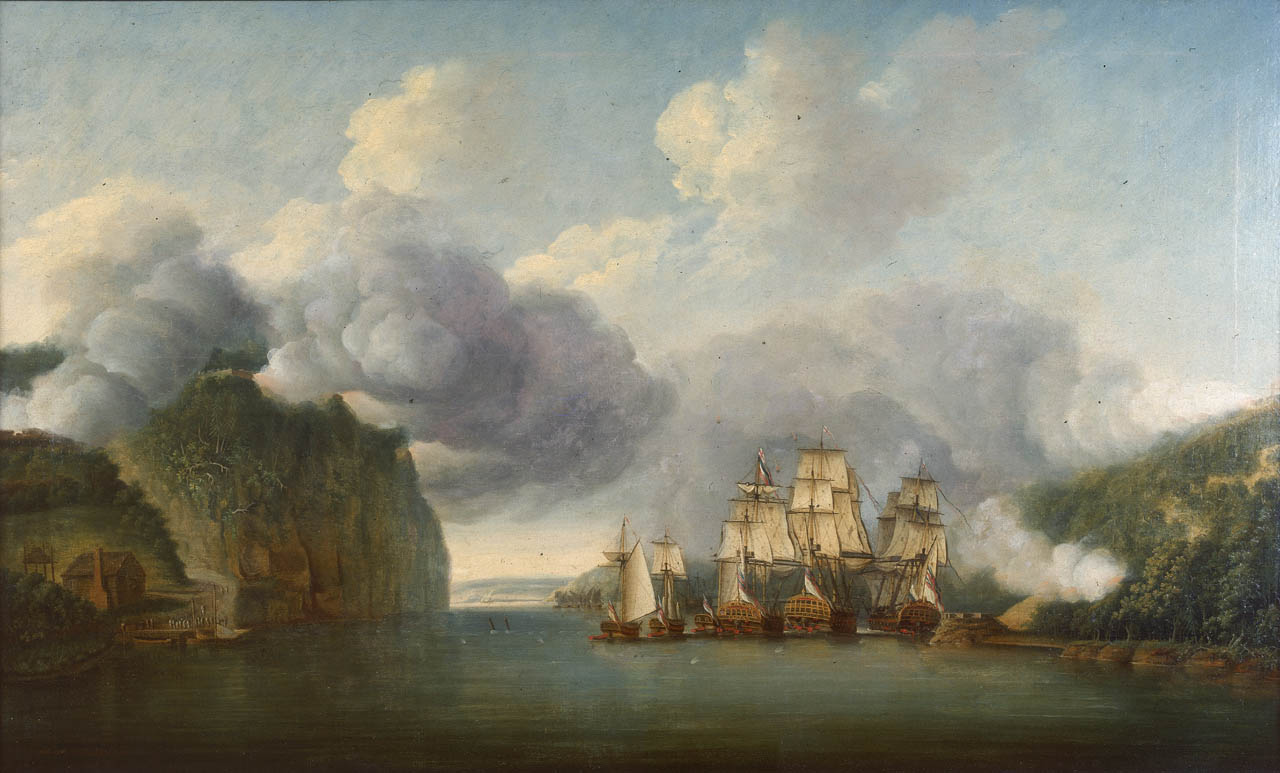

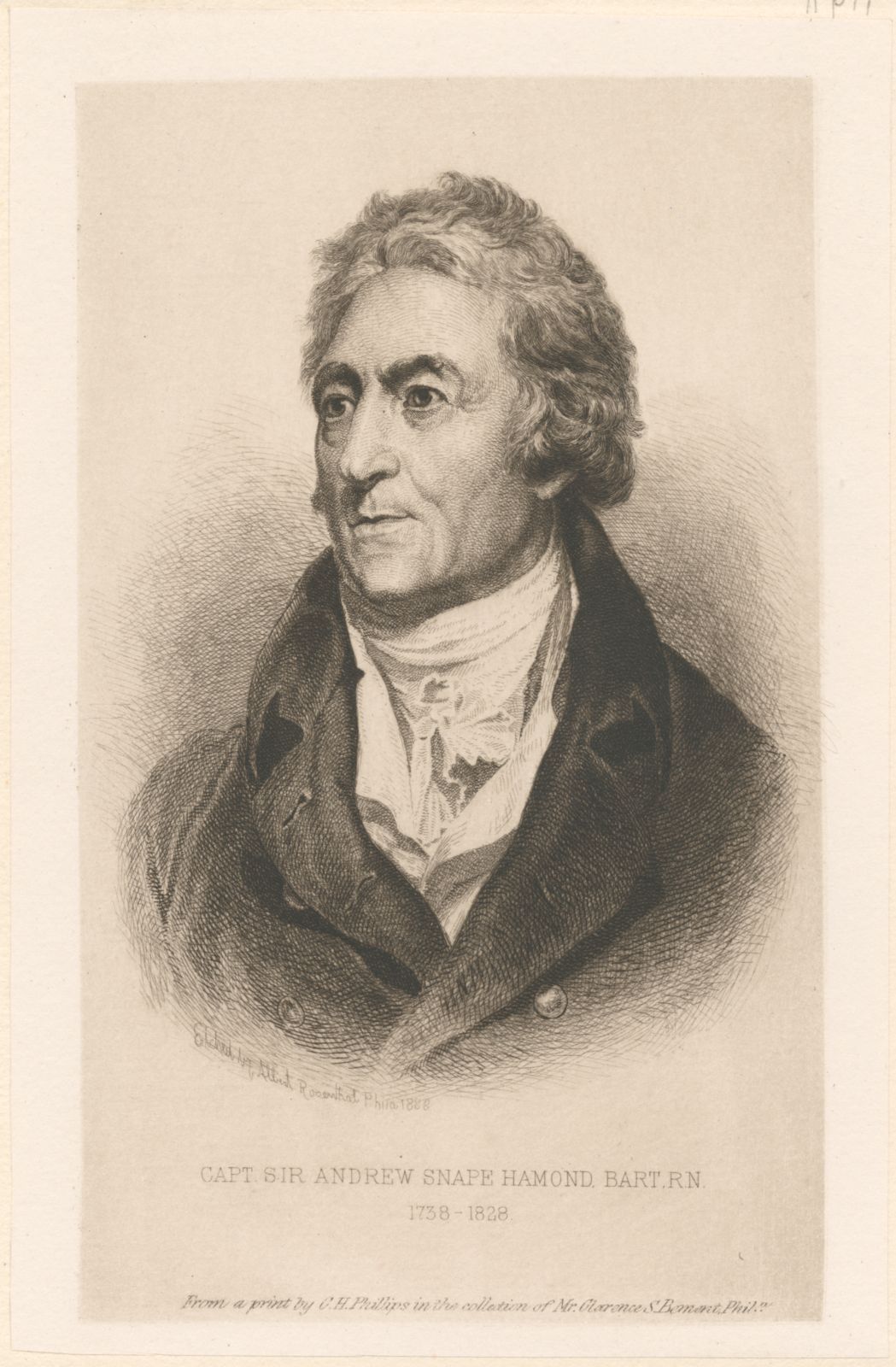
Captain Andrew Snape Hamond commanded the fifth-rate Royal Navy’s Roebuck. Although her 44-guns and rating technically qualified her for a position in a line of battle, a fifth-rate was among the smallest vessels considered for such a role in the Royal Navy. Yet, in February 1776, when Roebuck began operating off the American coast, she was one of the larger ships available to Vice Admiral of the Blue Molyneaux Shuldham, who had replaced Admiral Samuel Graves as the commander of the North American station.
Rather than adding to the growing flock of vessels in Boston, Shuldham sent Hamond and Roebuck south to patrol the colonial coasts, enforce the Coercive Acts, and stop ships smuggling gunpowder and arms. The task was all the more difficult since fighting had broken out and colonial governments had collapsed everywhere. Royal Governors fled to Royal Navy vessels, from which they attempted to preserve some modicum of British authority and rally loyalists to the king’s cause. Roebuck was not on station long before orders from Graves arrived and directed the captain to move his ship to the mouth of Delaware Bay and patrol the bay and river.[1] An aggressive sort, he exchanged fire with Delaware’s militia near Lewes at the capes on April 7, and then took his little flotilla up the Delaware fought Pennsylvania’s little navy near Wilmington on May 8-9.
Then it was down to the Chesapeake for the summer to provide some backbone to Royal Navy vessels operating in the lower Chesapeake Bay in support of Lord Dunmore, the royal governor, who had built his own little flotilla of ships to house loyalists and their defenders, but Hamond considered the task impossible. He wasn’t happy with it and wrote an acquaintance in August, “I have been under the absolute necessity of giving to Lord Dunmore & his floating Town, consisting of a fleet of upwards of 90 Sail, destitute of almost every material to Navigate them, as well as seamen, has given full employment for three Ships, for these three months past, to prevent them from falling into the hands of the Enemy.”[2] But, the assignment also convinced him that the Chesapeake was ripe for offensive naval operations, particularly if combined with significant land forces.
Shortly after penning his letter, Hamond and Roebuck departed Virginia, bound for New York. His crew was sick, as were the soldiers and civilians crowded aboard Dunmore’s ships and swampish haven on Gwynne’s Island. Lord Dunmore, for one, was grateful for Hamond’s service in the Chesapeake. As the vessel sailed north, Dunmore penned a letter to Lord George Germain, counting illness among his own forces, but praising Roebuck as “well regulated, and as clean a Ship as any in the Navy,” also noting that many of its crew were ill.[3] Once in New York, Hamond and his vessel supported the Army’s landings and advance on American positions on Long Island.
Continue reading “Captain Andrew Snape Hamond, R.N. and Roebuck in the Summer of 1776”