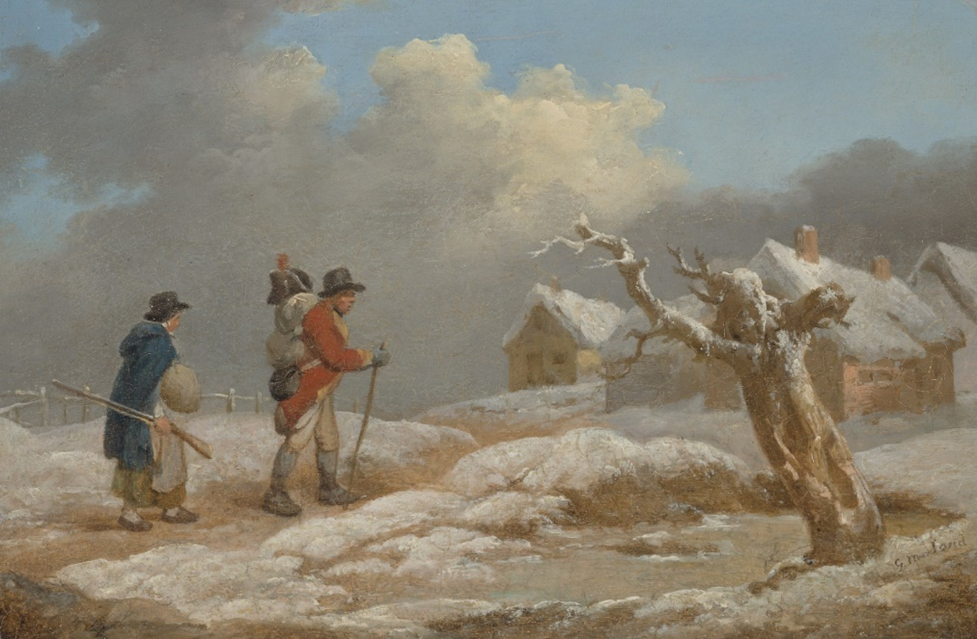
“…there never was a more ridiculous expedition…” Oswego Raid 1783 – Part I

Emerging Revolutionary War welcomes back guest historian Eric Olsen. Eric is a historian with the National Park Service at Morristown National Historical Park. Click here for more information about the site.

Years ago, while I was looking at a list of disabled Revolutionary War veterans from Rhode Island I noticed some curious things. The list didn’t provide much information. It just gave the name and age of the veteran, their disability and how they were injured. At first, I was excited because I found a couple of guys who were wounded at the battle of Springfield in June 1780. But then I noticed a number of other men whose information seemed a little odd.

Several men were listed as having lost toes. Those same men had all lost their toes at a place called Oswego. Their wounds had all occurred in February 1783. A couple of the men even had the same unusual name of “Prince.”  For me this raised several questions which required more research.

Fort Ontario at Oswego in 1759

Where in the World is Oswego?

It turns out Oswego is a town in New York state on the eastern shore of Lake Ontario where it connects with the Oswego River. The name “Oswego” comes from the Iroquois word meaning “pouring out place” which is appropriate since it is where the Oswego River flows out into Lake Ontario. Heading inland, the Oswego River connects with the Oneida River which flows out of Oneida Lake.

In the 18th century lakes and rivers were the interstate highways of the day. Boats traveling on water could travel faster and carry heavier loads than wagons could on dirt roads. As a result, settlements developed along waterways and forts were built at strategic points where waterways connected.

The British originally established Oswego as a trading post on the northwest side of the mouth of the Oswego River. It was first fortified in 1727 and was known as the Fort of the Six Nations or Fort Oswego. By 1755 Fort Ontario was built on the opposite side of the river to bolster the area’s defenses during the French and Indian War. That fort was destroyed by the French in 1756 and rebuilt by the British in 1759. During the Revolutionary War, the fort was the starting point for St. Leger’s march against Fort Stanwix in 1777. Later the fort was abandoned by the British and destroyed by the Americans in 1778. The British returned and rebuilt the fort in 1782.

Continue reading ““…there never was a more ridiculous expedition…” Oswego Raid 1783 – Part I”

The Death and Life of Bazabeel Norman, Veteran & “Man of Color”

Emerging Revolutionary War welcomes back guest historian Eric Olsen. Eric is a historian with the National Park Service at Morristown National Historical Park. To learn more about the site, click here.

The following obituary of a Revolutionary War veteran appeared in a Marietta, Ohio newspaper in 1830.“Saturday, July 24, 1830

Casualty – On Saturday evening last, Mr. Bazil Norman of Roxbury township, a man of color, left his house to go to watch a deer lick, and not returning in the course of the night, the next day a search was commenced under the belief that some accident had befallen him; after a diligent search by his family and neighbors, he was found dead having fallen from a precipice about twelve feet.  From appearances he had been to the lick and stayed the usual time, and late in the evening attempted to return, by the aid of a torch-light; having a narrow pass to descend between some rocks about a half mile from his house, he missed his way a few yards, fell, and broke is neck. Mr. Norman was aged about 73 – was a soldier in the revolutionary war, and at the time of his death received a pension from the United States.” -American Friend & Marietta Gazette, July 24, 1830.

Bazabeel Norman was an African American private in the Maryland Line of the Continental Army and most likely part of the 1779-1780 encampment at Jockey Hollow. I haven’t been able to find any muster rolls or service records to confirm this, but fortunately Norman did apply for a veteran’s pension in 1818 in which he summarized his military service.

“ enlisted in fall of the year 1777 into the company of Capt. Richard Anderson as a private soldier in the regiment commanded by Col. John Gumby in the Maryland line and served my Country against the common enemy until the close of the war…I was in the battles of Monmouth, Camden, Cowpens, Guilford Courthouse & Eutaw Springs. I am now 67 years old…”

In 1818 the only veterans who could apply for a pension were for men who were infirm or indigent. Bazabeel Norman apparently fit the requirements and was granted a pension. But too many men were granted pensions and Congress suspected that undeserving men were cheating the system. In 1820 veterans who had been granted pensions in 1818 were now required to make a list of their possessions and prove they were needy. In his July 25, 1820 application, Norman summarized his family life.

“As to my family I have none at home but my wife, one son & a Grand child, an orphan. My wife is 63 years of age & very infirm, my son wants only about a month of being 21 years of age. My Grandchild is a Girl about eight years old & very weakly. The rest of my children are of age & doing for themselves. I am by occupation a farmer but owing to age & infirmity I am unable to do very little toward supporting myself.”

After his death in 1830 his wife “Fortune” applied for and obtained a widow’s pension [W 5429]. In her application, she mentioned that they were married before the end of the war but did not provide any more interesting information.

The only reason I was able to research Bazabeel Norman was because of an email from Michael Shaver, Acting Chief of Interpretation of Morristown NHP & Thomas Edison NHP. I’m quoting from his email, because frankly I never heard of the person he makes reference to and it easier than rewriting his email. Michael wrote, “A few weeks ago on the PBS series, Finding Your Roots, one of the genealogies that Henry Louis Gates was exploring was that of actress, Rebecca Hall. Hall, the daughter of Sir Peter Hall, founder of the Royal Shakespeare Company, and Maria Ewing, an American-born opera star of the 1970s and 1980s.  Hall has appeared in Iron Man 3 and last year’s King Kong movie, along with a host of highly acclaimed independent films. What prompted her appearance on the program was her directorial debut of the Netflix film, Passing. Hall now lives in Brooklyn and the Hudson Valley…

At about 30 minutes in, Gates is taking Hall back into the earlier generations of her family. He closes out with the discovery of Bazabeel “Basil” Norman, a free black from Maryland at about 36 minutes who was discovered through documentation of a veteran’s land grant in Ohio in 1818.

Basil Norman came from Frederick County, Maryland joined the 7th Regiment in the fall of 1777, under the command of Colonel John Gumby, in the company commanded by Captain Richard Anderson “and served my country against the common enemy until the close of the war under the continental establishment and discharged under a general order.

So Norman was probably hung his hat in Jockey Hollow.”

A big shout out/thank you to Michael for the tip which has revealed another African American soldier from Jockey Hollow.

Sources:

American Friend & Marietta Gazette, July 24, 1830, page 3, column 1, Ancestry online

Pension Application of Bazabeel Norman and his widow Fortune Norman, W5429, National Archives, Fold 3, Ancestry Online.

Finding Your Roots | Hidden in the Genes | Season 8 | Episode 1 | PBS

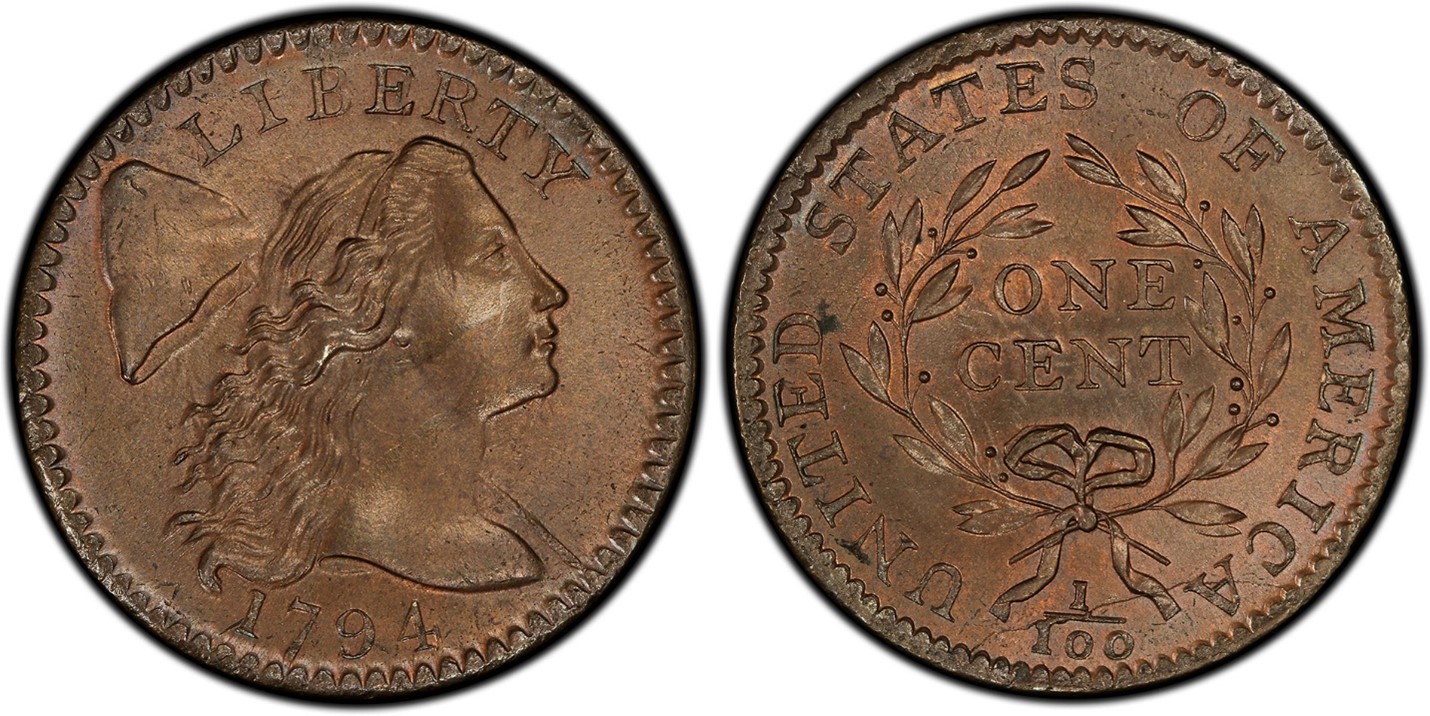
The Price is Right: Comparing Prices in 1794

Emerging Revolutionary War welcomes back guest historian Eric Olsen. Eric is a historian with the National Park Service at Morristown National Historical Park. Click here to learn more about this site.


Visitors always want to know, “How much did “that” cost back then?” We used to tell them because of inflation and the conversion from pounds to dollars it was really hard to give a definitive answer. It is even harder to figure during the American Revolution when the value of the dollars changed dramatically just over the course of a few months. There are all sorts of fancy conversion sites on the internet today but since math was not my strong point, I don’t know how accurate they are. 

One book tried another approach to explain 18th century vs. modern prices. “A person today, purchasing the same product made the same way out of materials made the same way, will pay roughly the same percentage of their wages for the product as a person of equal economic status in the past would have. For comparison, at the present time [1997 book] an average shop rate runs thirty-five dollars an hour for labor. If you make ten dollars an hour, this costs you three and a half hours of work, and the same ratio applied to a craftsman making thirty pounds a year or two pence per hour.” Makes sense but seems a bit too complicated.

However, I did find one primary source that can give a clue to the relative value of items. It comes from Theophile Cazenove, a Dutchman who traveled through New Jersey and Pennsylvania in 1794 looking for investment opportunities for Dutch bankers. At his various stops in Morris County, Cazenove recorded the prices of farms, livestock, and even labor.

Sometimes the prices were in pounds, other times they were in dollars. When he included both prices for one item, I did some very simple math and found that it took eight shillings to make one dollar, and that $2.50 equaled one pound. According to the online conversion applications, one pound in 1790 equaled 167.58 pounds today. One dollar in 1790 equaled 32.20 dollars in today’s money.

But without doing any math or conversions if we look at the prices Cazenove listed we can see what items were more expense than other ones. From that we can also assume the more expensive items were more highly valued.   

Keep in mind, on the local level in 18th century America, it was not a cash driven economy. Specie, Hard Money or coins, made of valuable metals such as silver and gold were in short supply in North America and used infrequently. Paper Money was rarely used, appearing briefly during periods of war when armies needed a large source of money to buy goods and services.

Continue reading “The Price is Right: Comparing Prices in 1794”

Sir Henry Clinton’s Close Encounter

Emerging Revolutionary War welcomes the contribution of Eric Olsen, Park Ranger/Historian at Morristown National Historical Park

Military history tends to be a lot of “so and so’s” brigade advanced on the left wing, while “what’s his face’s” division withdrew.” Lots of movements of large faceless masses of soldiers. Personally, I prefer the little personal stories of individuals in the face of battle. Here is one such story from the battle of Monmouth in June 1778. 

Sir Henry Clinton

I recently ran across this little tidbit in a July 7, 1778, letter written by the Adjutant General of the Hessian forces in America, Major Carl Leopold Baumeister. He described an incident during the battle of Monmouth involving the British commander in chief, Sir Henry Clinton. “General Clinton in the thickest fire, was saved by one of his adjutants, Captain Sutherland, when a rebel colonel aimed at him, but missed. Captain Sutherland’s horse was wounded. Another adjutant, Lloyd, stabbed the colonel.”

The story sounded vaguely familiar. Then I recalled something I’d read written by a British officer named Thomas Anbury. He was a prisoner of war, part of Burgoyne’s captured “Convention Army.” Anbury and the other prisoners were being held near Charlottesville, Virginia. At a place called Jones’s Plantation, Anbury related the following story on May 12, 1779,

“A very singular circumstance took place in that battle [Monmouth], which fully marks the coolness and deliberation, though in the heat of action, of Sir Henry Clinton: As he was reconnoitering, with two of his Aide de Camps, at the short turning of two roads, they met with an American officer, exceedingly well mounted upon a black horse, who, upon discerning them, made a stop, and looked as if he wished to advance to speak to them, when one of Sir Henry Clinton’s Aid de Camps fired a pistol at him, and he instantly rode off. Sir Henry was much displeased at his Aide de Camp, and censured him for being so hasty, adding, he was confident that the man wished to speak to him, and perhaps, might have given intelligence that would have been very essential, remarking, that when he was in Germany last war, and reconnoitering with Prince Ferdinand, a man rode up in a familiar manner, and gave such intelligence as decided the fate of the day.”

To read more about the Battle of Monmouth, check out “A Handsome Flogging, the Battle of Monmouth, June 28, 1778 by William Griffith, part of the Emerging Revolutionary War Series.

Unhappy Catastrophes: The American Revolution in Central New Jersey

It is that time again, for another Emerging Revolutionary War Sunday Night Happy Hour! This will be our 50th Sunday Night Happy Hour! There is no better way to celebrate than to talk about New Jersey in the American Revolution.

Robert M. Dunkerly

New Jersey was one of the most fought over areas during the American Revolution. Most know of the battles of Trenton, Princeton and Monmouth, but central New Jersey witnessed many small battles and important events during the Revolution. This area saw it all: from spies and espionage, to military encampments like Morristown and Middlebrook, to mutinies, raids, and full blown engagements like Bound Brook and Springfield. This part of New Jersey saw more action during the Revolution than anywhere else in the young nation. A full understanding of the war demands a study of these events and places.

We welcome historian and author Robert Dunkerly who has authored the latest ERW book titled “Unhappy Catastrophes: The American Revolution in Central New Jersey, 1776-1782” due out later this year. This talk coincides with our bus tour this November of Trenton and Princeton and will provide a good backdrop on the situation in New Jersey in 1776.

This Sunday, August 22nd at 7pm we will go live on our Facebook page. We look forward to this lively discussion and we encourage questions and comments via the chat box. “See” you this Sunday!

Uncovering the Continental Army in Morristown

Part of an ongoing series of about the Continental Army in Morristown, New Jersey. For the first post, click here.

Across the street from the Ford Mansion, the elegant home of the Jacob Ford, Jr. and his family, and the headquarters for George Washington during the winter encampment of 1779-1780, sits a small boulder with a iron plaque plastered on the side.IMG_0027

Erected in 1932 by the Tempe Wicke Society Children of the American Revolution, the monument commemorates the Life Guards that served as Washington’s headquarters command during the American Revolution. Although the unit went by different names and reorganized at least twice, including once during the winter encampment at Morristown, the company, numbering approximately 150 men, would be around for the duration of the war. Continue reading “Uncovering the Continental Army in Morristown”

Uncovering the Continental Army in Morristown

Part of an ongoing series about the Continental Army in Morristown, New Jersey. To read previous posts, click here.

All that remains is a historical marker, on the side of North Park Place across the street from Morristown Green. For a few months, between January 1777 and May 1777, in this location, the headquarters of the Continental Army was located. Within that headquarters, obviously, was George Washington.

IMG_3024
Arnold’s Tavern historic sign (author’s collection)

Although no specific date of construction exists, it is believed that Arnold’s Tavern was built by Samuel Arnold between 1735 and 1750. By the time of the American Revolution owned by the son, Colonel Jacob Arnold. The structure was three stories high, with a wide hallway that bisected the building, a front and back parlor, barroom, dining room, and kitchen. Continue reading “Uncovering the Continental Army in Morristown”

Uncovering the Continental Army in Morristown

Part of an ongoing series of about the Continental Army in Morristown, New Jersey. For the first post, click here.

“The smallpox has made such head in every quarter that I find it impossible to keep it from spreading thro’ the whole army the natural way.” General George Washington wrote in February 1777.

By the time the Continental Army was encamped in Morrristown, Washington had become a firm believer in the inoculations for smallpox for the entire army. The inoculation process would entail the following: Continue reading “Uncovering the Continental Army in Morristown”

Uncovering the Continental Army in Morristown

Approximately one month ago, I took a temporary detail assignment to Morristown National Historical Park. The national park preserves the winter cantonments of the Continental Army during the American Revolution; including the harshest winter, weather-wise, of the entire war, in 1779-1780.

For parts of multiple winters and even during the campaigning season, Washington’s forces would come to Morristown, situated behind the Watchung Mountains, which provided safety but also a perch to monitor the British in the New York City.

The town still bears witnesses to this rich legacy of housing soldiers, with historic buildings and signs dotted around the spiraling town. On a walk the other day, I came across the house below, with a small plaque situated on the front of the dwelling.

IMG_2771

The home saw soldiers use it for their encampments throughout the majority of the war years. On his return to the United States the Marquis de Lafayette was welcomed with a reception in the building as well, which is in the photo below.

IMG_2772

Morristown is filled with tidbits of history from the American Revolution and I as spend the next few months there as a park ranger, I will share what I come across. So, stay tuned as I uncover the history of the place that “Saved America” according to the park’s unofficial slogan.


North Jersey American Revolution Round Table

Two of the most significant battles of the war happened in the state of New Jersey; Trenton and Princeton. The harshest winter of the war for the Continental Army was at Morristown, New Jersey. Maybe it is only fitting that the largest American Revolution Round Table is also located in the Garden State.

NJARRT
North Jersey American Revolution Round Table

The North Jersey American Revolution Round Table is now on its ninth year as an organization and according to Secretary Rich Rosenthal, they are known for their “caliber of speakers and membership participation.”

Meetings are held the second Thursday of every month at the Washington’s Headquarters Museum Great Hall. All facets of the American Revolutionary War and era are discussed with, of course, “special emphasis” on New Jersey and Morristown’s role in the history of the United States.

Guests are certainly welcome. “We meet at a National Park facility [Morristown National Historical Park]–there is no admission!”

For more information, consult the following website by clicking here. An email newsletter is also available to keep up-to-date on events of the non-profit round table.