Rev War Revelry: “God Save Benedict Arnold” with Author Jack Kelly

Join us this Sunday evening at 7:00 p.m. on our Facebook page for an author interview with Jack Kelly to discuss his new book, God Save Benedict Arnold: The True Story of America’s Most Hated Man.

Benedict Arnold committed treason― for more than two centuries, that’s all that most Americans have known about him.

Yet Arnold was much more than a turncoat―his achievements during the early years of the Revolutionary War defined him as the most successful soldier of the era. GOD SAVE BENEDICT ARNOLD tells the gripping story of Arnold’s rush of audacious feats―his capture of Fort Ticonderoga, his Maine mountain expedition to attack Quebec, the famous artillery brawl at Valcour Island, the turning-point battle at Saratoga―that laid the groundwork for our independence.

Arnold was a superb leader, a brilliant tactician, a supremely courageous military officer. He was also imperfect, disloyal, villainous. One of the most paradoxical characters in American history, and one of the most interesting. GOD SAVE BENEDICT ARNOLD does not exonerate him for his treason―the stain on his character is permanent. But Kelly’s insightful exploration of Arnold’s career as a warrior shines a new light on this gutsy, fearless, and enigmatic figure. In the process, the book offers a fresh perspective on the reasons for Arnold’s momentous change of heart.

Rev War Revelry: “Tea: Consumption, Politics, and Revolution, 1773-1776” with author and historian James R. Fichter

Join us this Sunday night at 7pm as we welcome James R. Fichter to our popular Sunday night Rev War Revelry!

In Tea, James R. Fichter reveals that despite the so-called Boston Tea Party in 1773, two large shipments of tea from the East India Company survived and were ultimately drunk in North America. Their survival shaped the politics of the years ahead, impeded efforts to reimburse the company for the tea lost in Boston Harbor, and hinted at the enduring potency of consumerism in revolutionary politics.

Tea protests were widespread in 1774, but so were tea advertisements and tea sales, Fichter argues. The protests were noisy and sometimes misleading performances, not clear signs that tea consumption was unpopular. Revolutionaries vilified tea in their propaganda and prohibited the importation and consumption of tea and British goods. Yet merchant ledgers reveal these goods were still widely sold and consumed in 1775. Colonists supported Patriots more than they abided by non-consumption. When Congress ended its prohibition against tea in 1776, it reasoned that the ban was too widely violated to enforce. War was a more effective means than boycott for resisting Parliament, after all, and as rebel arms advanced, Patriots seized tea and other goods Britons left behind. By 1776, protesters sought tea and, objecting to its high price, redistributed rather than destroyed it. Yet as Fichter demonstrates in Tea, by then the commodity was not a symbol of the British state, but of American consumerism.

Grab your favorite drink and tune in. If you are not able to tune in on Sunday, the video will be placed on our YouTube and podcast channels.

“Rev War Revelry” Book Chat with Benjamin Carp

There are arguably many moments along the road towards war with England that greatly shaped that road’s trajectory. Perhaps among the top contenders on that list would be the Boston Tea Party. Join historian Benjamin Carp and ERW’s Dan Welch as we dig in with the author of one of the best books on that pivotal moment. Dr. Benjamin L. Carp is the author of The Great New York Fire of 1776: A Lost Story of the American Revolution, and Defiance of the Patriots: The Boston Tea Party and the Making of America (2010), which won the triennial Society of the Cincinnati Cox Book Prize in 2013; and Rebels Rising: Cities and the American Revolution (2007). His book, Defiance of the Patriots, will be the focus of Sunday’s book chat.

With Richard D. Brown, he co-edited Major Problems in the Era of the American Revolution, 1760-1791: Documents and Essays, 3rd ed. (2014). He has written about nationalism, firefighters, Benjamin Franklin, and Quaker merchants in Charleston. He has also written for Colonial Williamsburg, the Wall Street Journal and the Washington Post. He previously taught at the University of Edinburgh and Tufts University. He was born and raised in New York State and each of his parents earned two CUNY degrees. See you Sunday at 7 p.m. EDT on Emerging Revolutionary War’s Facebook page!

“Rev War Revelry” Founding Martyr Dr. Joseph Warren

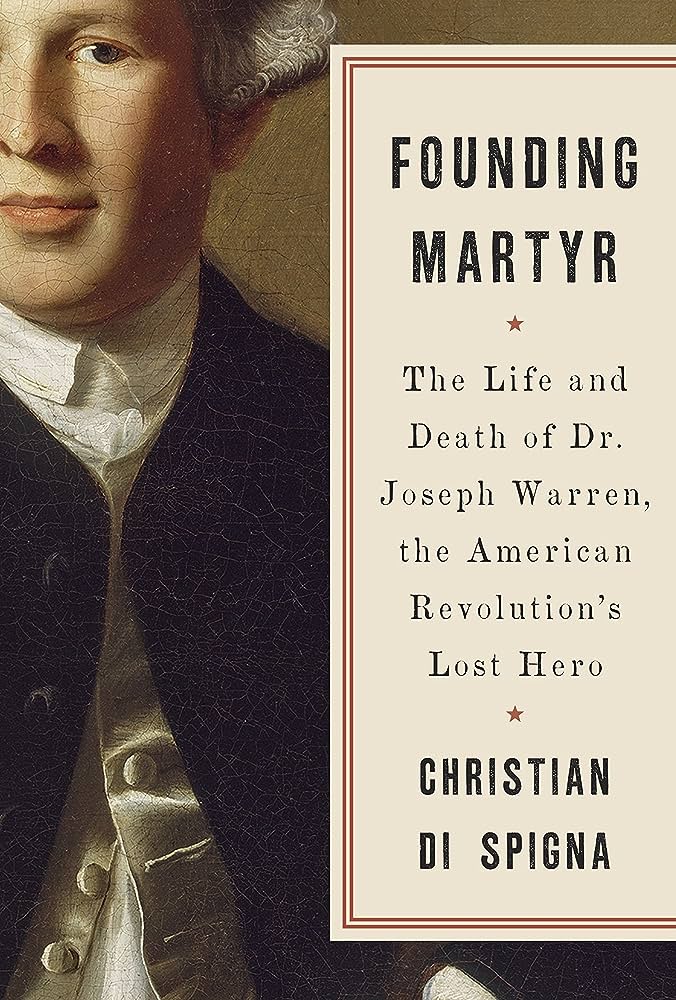
Dr. Joseph Warren is considered by many “the lost hero of the American Revolution.” Warren was the brainchild of the revolution movement in Boston. Warren was involved in almost every major insurrectionary act in the Boston area for a decade, from the Stamp Act protests to the Boston Massacre to the Boston Tea Party, and his incendiary writings included the famous Suffolk Resolves, which helped unite the colonies against Britain and inspired the Declaration of Independence.

Joining Emerging Revolutionary War will be historian and author Christian Di Spigna. He is the author of Founding Martyr: The Life and Death of Dr. Joseph Warren, the American Revolution’s lost hero. He is the Executive Director of the Dr. Joseph Warren Foundation and is the vice chairman for the Revolution 250 committee of Massachusetts Freemasons. He also serves on the board of the Bunker Hill Monument Association.

As we approach the 250th commemoration of the Boston Tea Party, we will focus on Warren’s life, his role in the Boston Tea Party and his lasting impact on the Revolution. Grab a drink and join us as we talk with author and historian Di Spigna about Warren, the patriot who once said…

“When Liberty is the prize, who would shun the warfare? Who would stoop to waste a coward thought on life?”

See you Sunday at 7 p.m. EDT on Emerging Revolutionary War’s Facebook page!

Rev War Revelry: Washington’s Marines: A Discussion with Author and Historian Maj. Gen. Jason Bohm

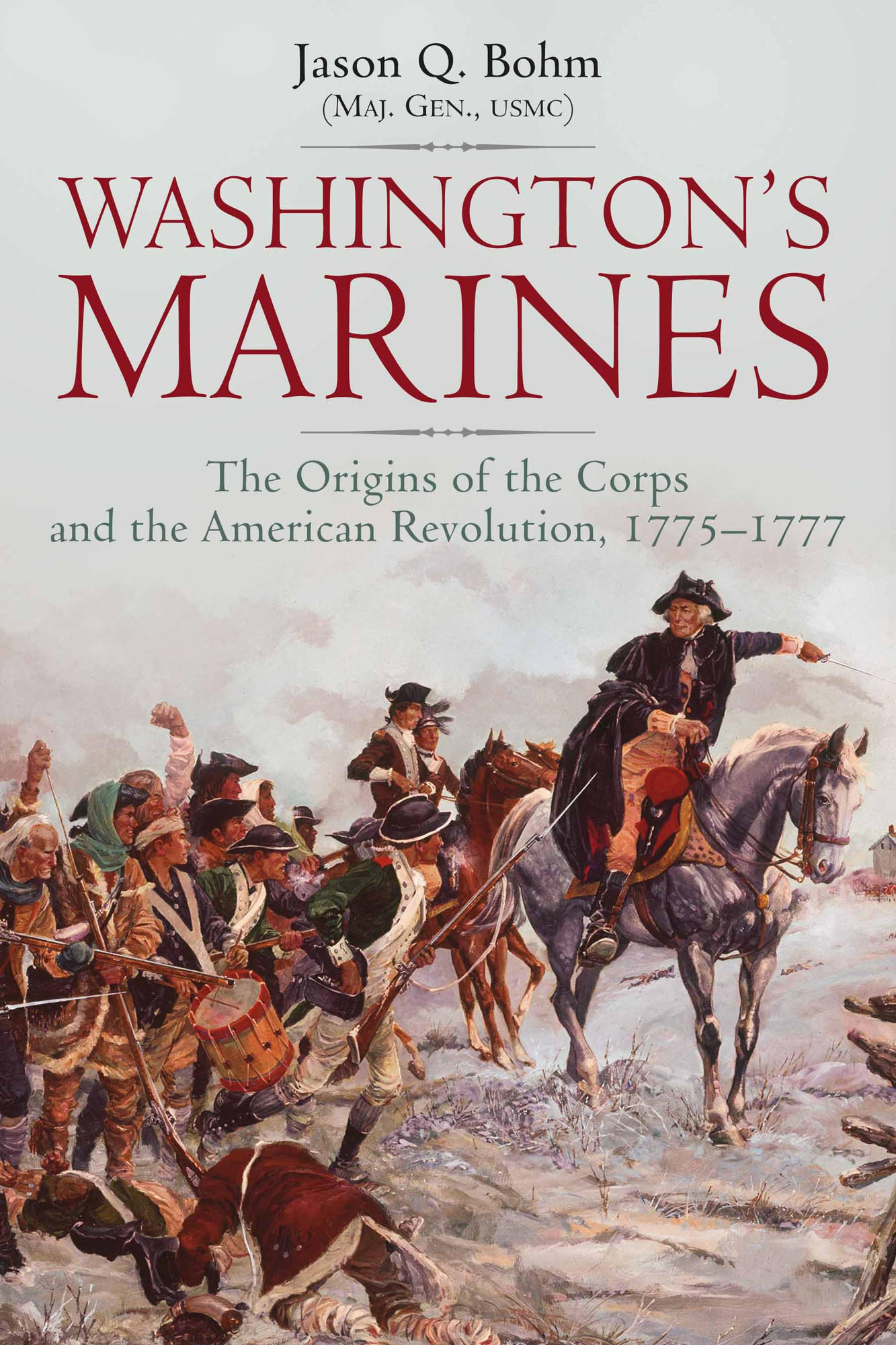
Join author Jason Bohm for a discussion of his new book published by Savas Beatie, Washington’s Marines: The Origins of the Corps and the American Revolution, 1775-1777, on Sunday night, August 20, 2023, at 7 pm. Bohm’s book examines the Marine Corps’ humble beginnings and what it achieved during the early years of the American Revolution. Jason Bohm’s eye-opening Washington’s Marines tells of the Corps’ origins and achievements in the early years of the Revolutionary War.

Grab a drink and join us to learn more about the early history of the United States Marine Corps!

All Rev War Revelries can be found LIVE on our Facebook page, or a week later on our YouTube and Spotify channels.

Major General Jason Q. Bohm is a Marine with more than 30 years of service. An infantryman by trade, he has commanded at every level from platoon commander to commanding general in peacetime and war. Bohm also served in several key staff positions, including as a strategic planner with the Joint Chiefs of Staff, Director of the Marine Corps Expeditionary Warfare School, House Director, Marine Corps Office of Legislative Affairs, U.S. House of Representatives, and Chief of Staff of U.S. Naval Striking and Support Forces, NATO. Bohm has a bachelor’s degree in marketing, a master’s degree in military studies, and a master’s degree in national security studies. Jason has written several articles for the Marine Corps Gazette and won various writing awards from the Marine Corps Association. He is the author of From the Cold War to ISIL: One Marine’s Journey (Naval Institute Press, 2019).

“Rev War Revelry” Battlefields!

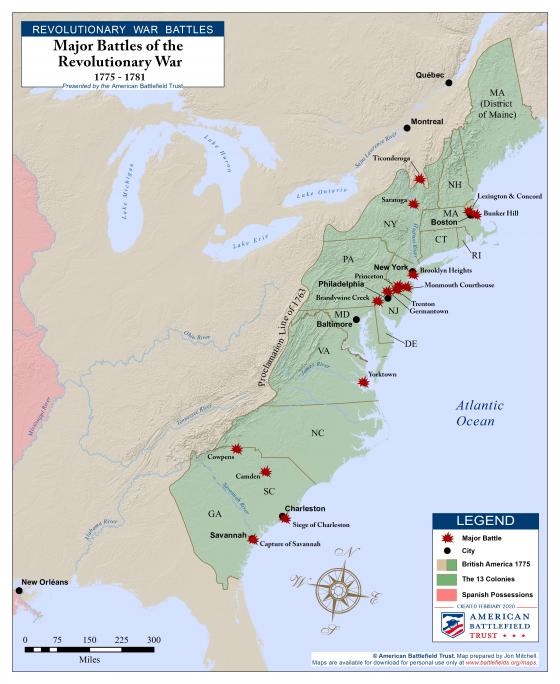
Lexington and/or Concord or both? Same question, Trenton or Princeton or both? Guilford Court House? Yorktown Battlefield? Ask any historian or history enthusiast of the American Revolutionary War period what their favorite battlefield is and you may get one of the places above. Or some other hallowed ground.

This Sunday, at 7 p.m. EDT, join Emerging Revolutionary War on our Facebook page for a panel discussion on our favorite battlefields of the American Revolution. Discussion will also include the successes, pitfalls, or failure of preservation and what one can see or not see at these sites. We look forward to a lively conversation and your comments on what is the battlefield of choice.

“Rev War Revelry” Sails into Boston Harbor to talk Tea Party

On December 16, 1773, a protest orchestrated by the Sons of Liberty in Boston, Massachusetts turned words into action. Upset over recently passed legislation and the belief that “no taxation without representation” 116 people dumped 342 chests of tea owned by the British East India Company into Boston Harbor. The event was one of the milestones on the way to the American Revolution and American independence. As the Boston Tea Party, as it is known to history, closes in on its 250th anniversary, Emerging Revolutionary War will invite Evan O’Brien, the creative director for the Boston Tea Party Ships and Museum this Sunday, June 25, evening for the next “Rev War Revelry.”

We hope you can join us at 7 p.m. EDT on Emerging Revolutionary War’s Facebook page for a discussion of the history behind and on December 16, 1773 and the efforts to commemorate and interpret that time frame. If you are contemplating venturing up to Boston in December to be in the city for the 250th anniversary of this event, you will not want to miss this discussion, as Evan will share some of what the museum has been planning to commemorate when Boston Harbor became a “tea-pot.”

“Our Flag Was Still There…” Book Talk on “Rev War Revelry”

On September 14, 1814, United States forces defending Fort McHenry in Baltimore repelled the British attempt to capture the city. Flying defiantly over the brick parapets was a 30 x 42 -foot the following day, clearly seen by the British and one captive American, Francis Scott Key. Over 100 years later the poem Key began writing on September 15 became the national anthem of the United States of America. But, what about the flag that the military commander of Fort McHenry, Major George Armistead had made? Well, this iconic flag became a part of the Armistead family for almost the next century as well.

Now, historian Tom McMillan, who has written on another member of the Armistead family, returns with his latest publication, Our Flag Was Still There: The Star-Spangled Banner that Survived the British and 200 Years–and the Armistead Family Who Saved It. This fascinating read, tracing the flag and its intertwined connection with the Armistead family, will be the subject of this week’s “Rev War Revelry.” McMillan gave a bit of a teaser to entice you to listen in on Emerging Revolutionary War’s Facebook page Sunday at 7 p.m. EDT.

OUR FLAG WAS STILL THERE details the improbable two-hundred-year journey of the original Star-Spangled Banner — from Fort McHenry in 1814, when Francis Scott Key saw it, to the Smithsonian in the 21st century – thanks to three generations of an enduring military family, the Armistead’s, who defended, kept, hid, and ultimately donated the most famous flag in American history.”

We hope you grab your favorite beverage and tune in. The book is now available for purchase and Tom will have details on how to attain a copy!

Celebrate Mother’s Day with Emerging Revolutionary War!

The Mary Ball Washington Monument and grave site, Fredericksburg, VA

Happy Mother’s Day to all the moms out there! In honor of Mother’s Day, Emerging Revolutionary War welcomes will be welcoming historians and staff from the Washington Heritage Museums to tonight’s Rev War Revelry. WHM manages and operates the home and grave site of Mary Ball Washington, the mother of George Washington located in Fredericksburg, VA.

The relationship between George Washington and his mother has been of interest in historians. Their relationship was complicated and much debated by Washington contemporaries and historians today. Mary never remarried when her husband passed (rare for the time period) and mostly lived on her own in Fredericksburg. She also was not afraid to complain about her lack of resources and once applying to the Virginia General Assembly for financial support (to much frustration from George Washington). We will cover many of the myths and interpretations of Mary and her relationship with her son.

So grab a drink and join us as we discuss Mary Ball Washington, her relationship with her son George and what the Washington Heritage Museums are doing today to interpret and preserve her story. Our revelry tonight is previously recorded so we could spend time with the mom’s in our life, but as always we will respond to any comments and questions posted.

“Rev War Revelry” Before the Dawn’s Early Light: Bladensburg and the Prelude to Fort McHenry

This Sunday, join Emerging Revolutionary War as we explore the prelude to Fort McHenry and the actions in Maryland and Washington D.C. in the summer of 1814. Joining Emerging Revolutionary War will be the American Battlefield Trust’s Senior Education Manager, Dan Davis.

This historian happy hour will discuss the first part of the campaign that eventually led to the climactic Battle of Baltimore, which included both the unsuccessful British attempts at Fort McHenry and North Point. Before that success for American arms, the United States suffered through the defeat at Bladensburg and the capture of the nation’s capital.

We hope you can join us on our Facebook page, on Sunday, April 30th at 7 p.m. EDT .